1. Search Result
Search Result
Results for "

MLKL phosphorylation

" in MedChemExpress (MCE) Product Catalog:
Cat. No. Product Name Target Research Areas Chemical Structure
  • HY-177119

    PROTACs RIP kinase Mixed Lineage Kinase Infection Inflammation/Immunology
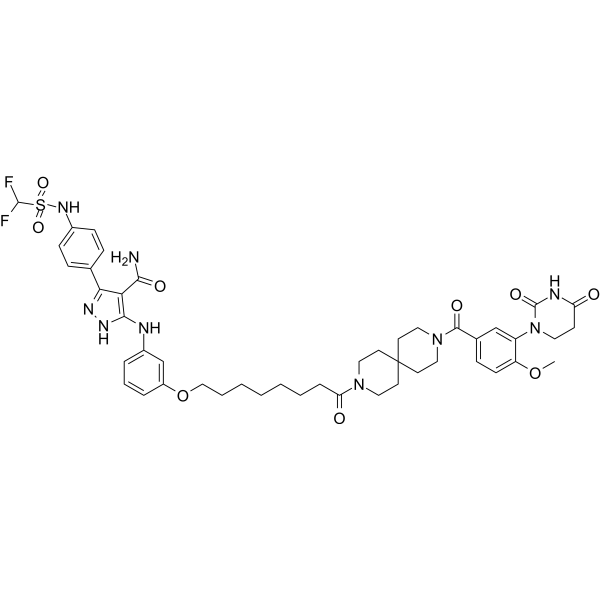
    ZBP1 Covalent PROTAC-1 is a covalent Z-DNA binding protein 1 ZBP1 PROTAC degrader, with its DC50 being 25.69 nM. ZBP1 Covalent PROTAC-1 integrates the ligand that recruits the VHL E3 ubiquitin ligase and the DNA aptamer (Aptamer Z3) with the specific Zα domain that can bind to ZBP1, which has a high affinity (KD = 2.71 nM) with ZBP1. After degrading ZBP1, the phosphorylation levels of downstream signaling molecules RIPK3 and MLKL significantly decrease. ZBP1 Covalent PROTAC-1, encapsulated by nano-liposomes, significantly improves the survival rate of mice infected with influenza A virus (IAV) after administration via the trachea .
    ZBP1 Covalent PROTAC-1
  • HY-156119

    Mixed Lineage Kinase Necroptosis Metabolic Disease Cancer
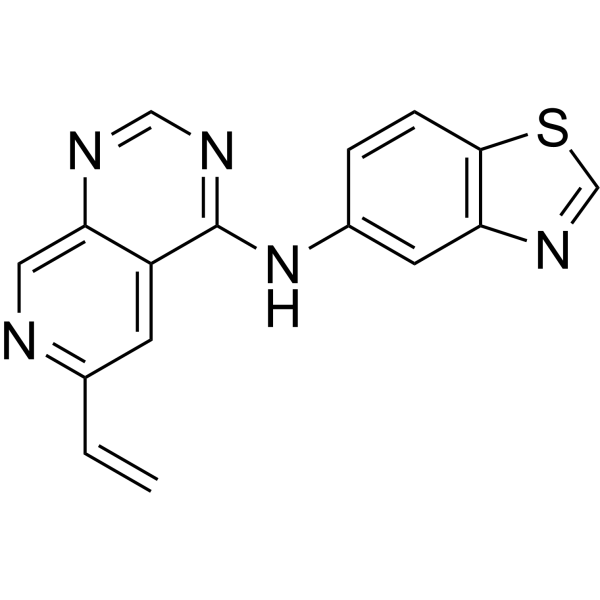
    MLKL-IN-6 (compound P28) is a mixed lineage kinase inhibitor targeting Mixed Lineage Kinase domain-like (MLKL). MLKL-IN-6 inhibits cell necrosis. MLKL-IN-6 inhibits MLKL phosphorylation and oligomerization during cell necrosis, inhibits immune cell death, and reduces the expression of adhesion factors. MLKL-IN-6 has low cytotoxicity, and it inhibits hepatic stellate cell activation, reduces liver fibrosis marker levels, and has anti-fibrotic effects .
    MLKL-IN-6
  • HY-149393

    Mixed Lineage Kinase RIP kinase Cancer
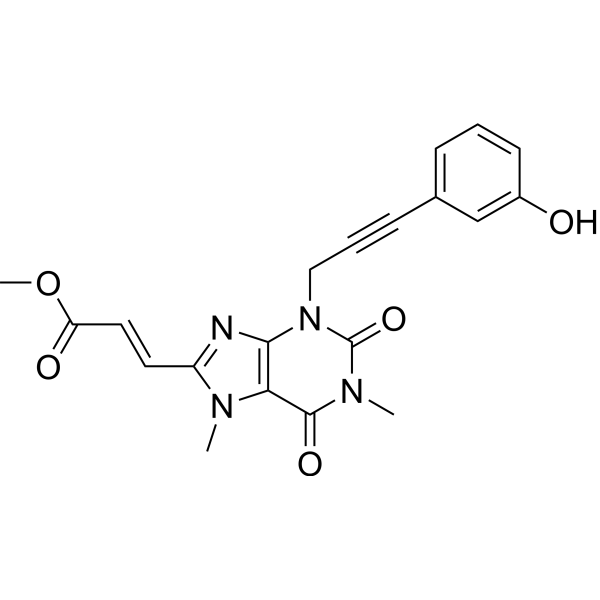
    RIPK3-IN-3 (compound 20) is a selective inhibitor of RIP kinase RIPK3 (IC50=10 nM). RIPK3 mediates the phosphorylation of Mixed Lineage Kinase (MLKL) and causes necroptosis, while RIPK3-IN-3 inhibits p-MLKL oligomerization and thereby inhibits necroptosis. RIPK3-IN-3 also downregulates CXCL5 secretion and inhibits AsPC-1 cell migration and invasion .
    RIPK3-IN-3
  • HY-173185

    RIP kinase Necroptosis Inflammation/Immunology
    RIP1-IN-1 is an orally active RIP1 inhibitor with strong RIP1 binding affinity (Kd: 110 nM). RIP1-IN-1 exhibits strong anti-necroptosis activity. RIP1-IN-1 effectively inhibits the formation of necrosomes by blocking the phosphorylation of RIP1, RIP3 and MLKL signaling pathways. RIP1-IN-1 inhibits necroptosis and can be used in the study of acute liver injury .
    RIP1-IN-1
  • HY-151542

    Mixed Lineage Kinase Necroptosis RIP kinase Neurological Disease
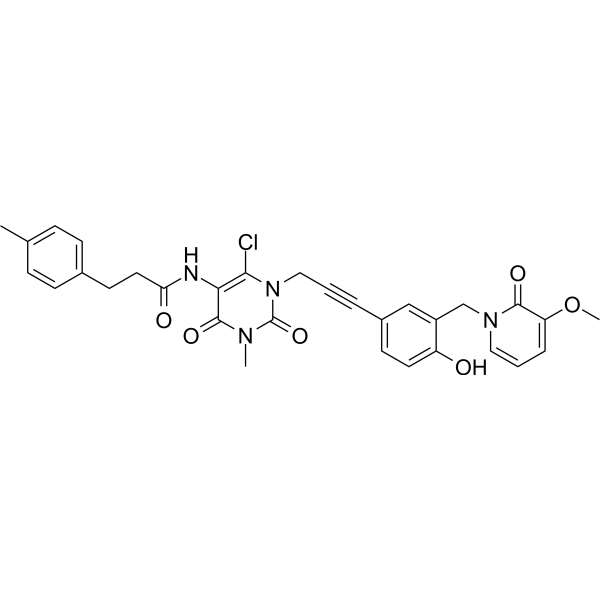
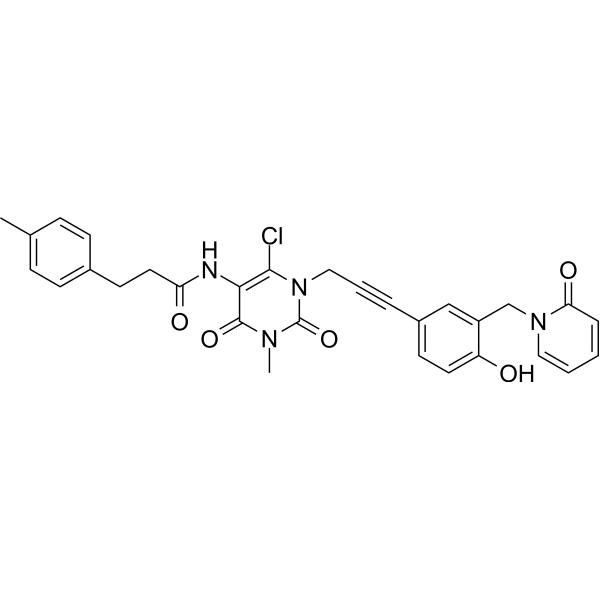
    MLKL-IN-4 (compound 56) is a potent MLKL (Mixed lineage kinase domain-like protein) inhibitor. MLKL-IN-4 inhibits necroptosis in HT-29 cells and acts downstream of MLKL phosphorylation, with EC50 of 82 nM . MLKL-IN-4 is a click chemistry reagent, it contains an Alkyne group and can undergo copper-catalyzed azide-alkyne cycloaddition (CuAAc) with molecules containing Azide groups.
    MLKL-IN-4
  • HY-151541

    Mixed Lineage Kinase Necroptosis Neurological Disease
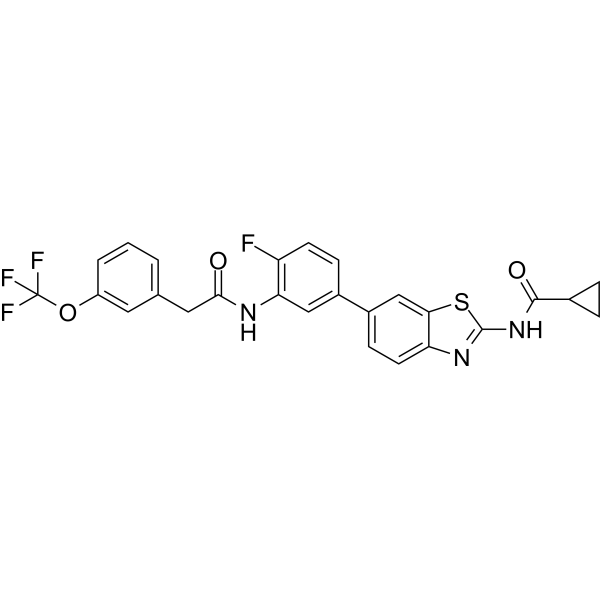
    MLKL-IN-3 (compound 66) is a potent MLKL (Mixed lineage kinase domain-like protein) inhibitor. MLKL-IN-3 inhibits necroptosis in HT-29 cells and acts downstream of MLKL phosphorylation, with EC50 of 31 nM . MLKL-IN-3 is a click chemistry reagent, it contains an Alkyne group and can undergo copper-catalyzed azide-alkyne cycloaddition (CuAAc) with molecules containing Azide groups.
    MLKL-IN-3
  • HY-157039

    RIP kinase Necroptosis Mixed Lineage Kinase Inflammation/Immunology
    RIPK1-IN-17 is an orally active, selective RIPK1 inhibitor (Kd = 17 nM) and shows no significant inhibition to RIPK3. RIPK1-IN-17 specifically inhibits necroptosis rather than apoptosis by inhibiting RIPK1, RIPK3, and MLKL phosphorylation. RIPK1-IN-17 protects mice from hypothermia and death. RIPK1-IN-17 can be used for the study of necroptosis-related diseases such as inflammatory response syndrome (SIRS) .
    RIPK1-IN-17
  • HY-178464

    RIP kinase Mixed Lineage Kinase Necroptosis Neurological Disease Inflammation/Immunology
    RIPK1-IN-34 is a selective, brain-penetrant RIPK1 inhibitor (IC50 = 126.70 nM) with almost no inhibitory effect on RIPK3 (IC50 > 10, 000 nM). RIPK1-IN-34 offers substantial neuroprotection by inhibiting the phosphorylation of RIPK1, RIPK3, and mixed lineage kinase domain-like pseudokinase (MLKL) within the necroptosis pathway. RIPK1-IN-34 shows the neuroprotective effect in a rat middle cerebral artery occlusion (MCAO) model. RIPK1-IN-34 can be used for the study of anti-acute ischemic stroke (AIS) .
    RIPK1-IN-34
  • HY-176407

    Necroptosis Inflammation/Immunology Cancer
    ZYH-23 is a potent necroptosis inhibitor. ZYH-23 blocks necroptosis by inhibiting RIPK1, RIPK3, and MLKL phosphorylation via HSP90 targeting .
    ZYH-23
  • HY-149052

    RIP kinase Mixed Lineage Kinase Necroptosis Inflammation/Immunology
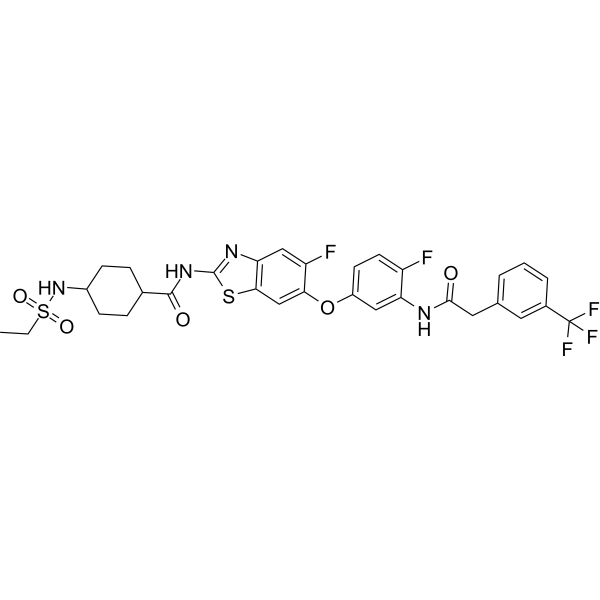
    SZM-1209 is an orally active, potent and specific RIPK1 inhibitor, with a Kd of 85 nM. SZM-1209 exhibits high anti-necroptotic activity (EC50=22.4 ± 8.1 nM). SZM-1209 shows anti-SIRS (systemic inflammatory response syndrome), and anti-ALI (acute lung injury) effects .
    SZM-1209
  • HY-181596

    RIP kinase Mixed Lineage Kinase Apoptosis Inflammation/Immunology
    WJH-C19 is an orally active RIPK1 inhibitor with an IC50 of 5.7 nM. WJH-C19 inhibits the RIPK1/RIPK3/MLKL signaling axis, blocks RIPK1 phosphorylation, suppresses the phosphorylation of downstream RIPK3 and MLKL, disrupts necrosome formation, and exhibits protective effects against necroptosis (Apoptosis) in multiple cell lines. WJH-C19 ameliorates symptoms of inflammatory bowel disease in a mouse colitis model by regulating the necroptosis pathway. WJH-C19 alleviates inflammation and bone destruction in a mouse model of rheumatoid arthritis. WJH-C19 is applicable to research related to inflammatory bowel disease and rheumatoid arthritis .
    WJH-C19
  • HY-180806

    RIP kinase Apoptosis Cardiovascular Disease Neurological Disease
    RIPK1-IN-39 (compound 2) is a potent and selective RIPK1 inhibitor (IC50 = 69.40 nM) exhibiting >100-fold selectivity over RIPK3 (IC50 = 6946 nM). RIPK1-IN-39 protects HT-22 and HT-29 cells from necroptosis by inhibiting the phosphorylation and activation of the RIPK1-RIPK3-MLKL pathway. RIPK1-IN-39 demonstrates neuroprotective effects in a rat model of middle cerebral artery occlusion (MCAO). RIPK1-IN-39 can be used for acute ischemic stroke (AIS) research .
    RIPK1-IN-39
  • HY-179680

    RIP kinase Necroptosis Mixed Lineage Kinase Lactate Dehydrogenase Interleukin Related Inflammation/Immunology
    RIPK1-IN-38 is an orally active RIPK1 inhibitor with an IC50 value of 27 nM. RIPK1-IN-38 can inhibit the phosphorylation of RIPK1 and its downstream signaling molecules RIPK3 and MLKL. RIPK1-IN-38 exhibits anti-necroptotic activity. RIPK1-IN-38 has excellent anti-inflammatory efficacy in both the SIRS model and GVHD model. RIPK1-IN-38 can be used for the research of inflammatory and immune-related diseases .
    RIPK1-IN-38
  • HY-183781

    RIP kinase Necroptosis Inflammation/Immunology
    RIPK1-IN-41 is an orally active RIPK1 inhibitor with an IC50 of 92 nM and a KD of 106.8 nM. RIPK1-IN-41 reduces the phosphorylation level of RIPK1, inhibits necrosome formation, blocks the activation of RIPK3 and MLKL, maintains mitochondrial and lysosomal functions, preserves cell membrane integrity, and suppresses necroptosis. RIPK1-IN-41 alleviates hypothermia and multi-organ damage in a mouse model of systemic inflammatory response syndrome induced by mTNF-α. RIPK1-IN-41 is applicable to research related to systemic inflammatory response syndrome .
    RIPK1-IN-41
  • HY-183564

    RIP kinase Necroptosis Interleukin Related Inflammation/Immunology
    RIPK1/RIPK3-PPI-IN-1 is an orally active dual-target inhibitor of RIPK1/RIPK3, with a Kd value of 2.4 nM for RIPK1 and 24 nM for RIPK3. RIPK1/RIPK3-PPI-IN-1 inhibits the phosphorylation of RIPK1, RIPK3 and MLKL, thereby suppressing necroptosis. RIPK1/RIPK3-PPI-IN-1 restores body temperature, improves survival rate, and reduces IL-1β/IL-6 levels in serum and multiple organs of Mus musculus, thus alleviating TNF-α-induced systemic inflammatory response syndrome. RIPK1/RIPK3-PPI-IN-1 can be used in research related to systemic inflammatory response syndrome .
    RIPK1/RIPK3-PPI-IN-1

Inquiry Online

Your information is safe with us. * Required Fields.

Salutation


Country or Region *

Applicant Name *


Organization Name *

Department *


Email Address *


Product Name *

Cat. No.


Requested quantity *

Phone Number *


Remarks

Inquiry Online

Inquiry Information

Product Name:
Cat. No.:
Quantity:
MCE Japan Authorized Agent:

