

Search Result
Results for "
MS-1
" in MedChemExpress (MCE) Product Catalog:
2
Isotope-Labeled Compounds
| Cat. No. |
Product Name |
Target |
Research Areas |
Chemical Structure |
-
- HY-12288
-
|
RPC-1063
|
LPL Receptor
|
Neurological Disease
Inflammation/Immunology
|
|
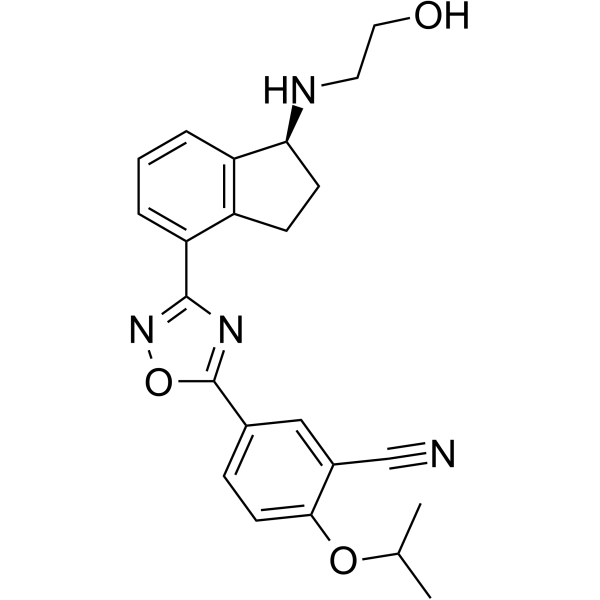
Ozanimod (RPC-1063) is a CNS-penetrant sphingosine 1-phosphate (S1P) receptor modulator that binds with high affinity selectively to S1P receptor subtypes 1 (S1P1) and 5 (S1P5). Ozanimod has modulate effect for hS1P1 and hS1P5 receptor with EC50s of 1.03 nM and 8.6 nM, respectively. Ozanimod can be used for the research of relapsing multiple sclerosis (MS) .
|
-
-
- HY-12288A
-
|
RPC-1063 hydrochloride
|
LPL Receptor
|
Neurological Disease
Inflammation/Immunology
|
|
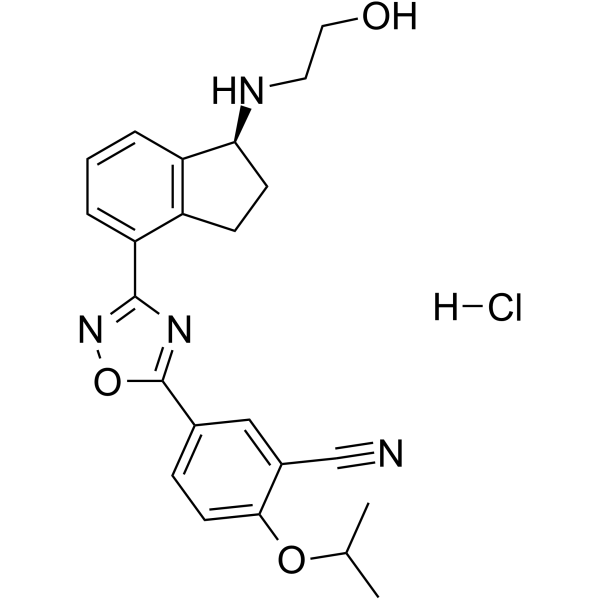
Ozanimod (RPC-1063) hydrochloride, a sphingosine 1-phosphate (S1P) receptor modulator that binds with high affinity selectively to S1P receptor subtypes 1 (S1P1) and 5 (S1P5). Ozanimod hydrochloride has modulate effect for hS1P1 and hS1P5 receptor with EC50s of 1.03 nM and 8.6 nM, respectively. Ozanimod hydrochloride can be used for the research of relapsing multiple sclerosis (MS) .
|
-
-
- HY-157414
-
|
|
Biochemical Assay Reagents
|
Others
|
|
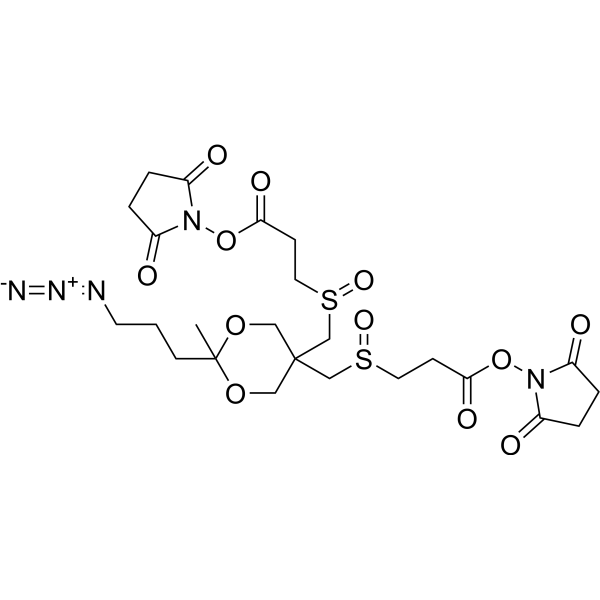
Azide-A-DSBSO crosslinker is a mass spectrometry (MS) cleavable, membrane permeable, homobifunctional, azide-labeled, acid-cleavable crosslinking peptide. Azide-A-DSBSO crosslinker crosslinks proteins via NHS ester reaction with lysine residues. Azide-A-DSBSO crosslinker can be used to study protein-protein interactions by cross-linking mass spectrometry (XL-MS) [1] .
|
-
-
- HY-109192
-
Tolebrutinib
Maximum Cited Publications
7 Publications Verification
SAR442168; PRN2246
|
Btk
|
Neurological Disease
|
|
Tolebrutinib (SAR442168) is a potent, selective, orally active and brain-penetrant inhibitor of Bruton tyrosine kinase (BTK), with IC50s of 0.4 and 0.7 nM in Ramos B cells and in HMC microglia cells, respectively. Tolebrutinib exhibits efficacy in central nervous system immunity. Tolebrutinib can be used for the research of multiple sclerosis (MS) .
|
-
-
- HY-P5982
-
|
|
Phosphatase
|
Neurological Disease
|
|
PTPσ Inhibitor, ISP can bind to recombinant human PTPs and inhibits PTPσ signaling. PTPσ Inhibitor, ISP can penetrate the membrane and relieves the chondroitin sulfate proteoglycan (CSPG)-mediated axonal sprouting inhibition in spinal cord injury model. PTPσ Inhibitor, ISP enhances remyelination in LPC-induced demyelinated spinal cord. PTPσ Inhibitor, ISP also promotes oligodendrocyte progenitor cells (OPCs) migration, maturation, remyelination, and functional recovery in animal models of Multiple Sclerosis (MS) .
|
-
-
- HY-158415
-
|
|
ATP Synthase
EHD Protein
|
Cancer
|
|
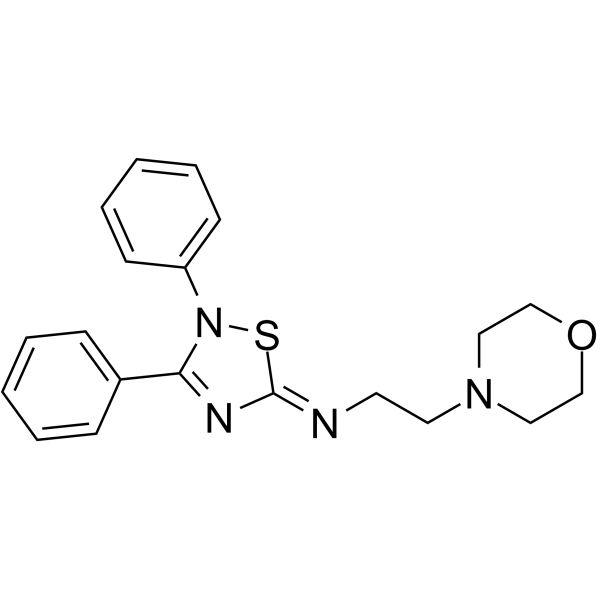
ATPase-IN-4 (Compound MS1) inhibits the ATPase activity of EHD4 (IC50: 0.92 μM). ATPase-IN-4 also inhibits EHD2 enzymatic activity [1]
|
-
-
- HY-150307
-
|
|
Protein Arginine Deiminase
|
Inflammation/Immunology
|
|
KP-302 (Compound 23) is a selective inhibitor of protein arginine deaminase PAD2 with a Ki of 60 μM. KP-302 also reverses physical disability in the EAE mouse model of multiple sclerosis (MS) and eliminates T cell infiltration in the brain. KP-302 can be studied in research as a disease-modifying agent for MS .
|
-
-
- HY-P10532
-
|
|
PKC
|
Others
Inflammation/Immunology
|
|
Myelin basic protein, MBP (68-86) is the portion of the 68th to 86th amino acid residues in the MBP protein sequence. Myelin basic protein, MBP (68-86) can act as an autoantigen, triggering the immune system to attack its own myelin. Myelin basic protein, MBP (68-86) is used as one of the immunogens in the experimental autoimmune encephalomyelitis (EAE) animal model to study immune responses associated with multiple sclerosis (MS) .
|
-
-
- HY-34611
-
|
N-Boc-L-2,4-diaminobutyric acid; Boc-Dab-OH
|
Drug Intermediate
ASCT
|
Neurological Disease
Cancer
|
|
Boc-L-2,4-Diaminobutyric acid (N-Boc-L-2,4-diaminobutyric acid; Boc-Dab-OH) is a versatile synthetic starting material with a cleavable protecting group. Boc-L-2,4-Diaminobutyric acid not only reduces the backbone cleavage rate by protecting the side-chain γ-amino group, but also triggers intramolecular cyclization of self-immolative linkers under acidic cleavage conditions, thus constructing stimuli-responsive materials. Boc-L-2,4-Diaminobutyric acid is also an important building block for bioactive molecules. It can be used in the synthesis of ASCT2 (SLC1A5) inhibitors and carboxynorspermine, and can also serve as an internal standard to support the quantitative detection of specific intracellular amino acids by UPLC-QQQ-MS .
|
-
-
- HY-172967
-
|
|
Toll-like Receptor (TLR)
|
Neurological Disease
|
|
SARM1-IN-5 (compound 1-23-a) is a SARM1 inhibitor. SARM1-IN-5 can be used in the study of axonal degeneration related diseases such as Alzheimer’s disease, Parkinson’s disease, amyotrophic lateral sclerosis (ALS), and multiple sclerosis (MS) .
|
-
-
- HY-E70271
-
|
6Z,9Z,12Z-Octadecatrienoyl-coenzyme A; γ-Linolenoylcoenzyme A; 6Z,9Z,12Z-Octadecatrienoyl-CoA
|
Endogenous Metabolite
|
Metabolic Disease
|
|
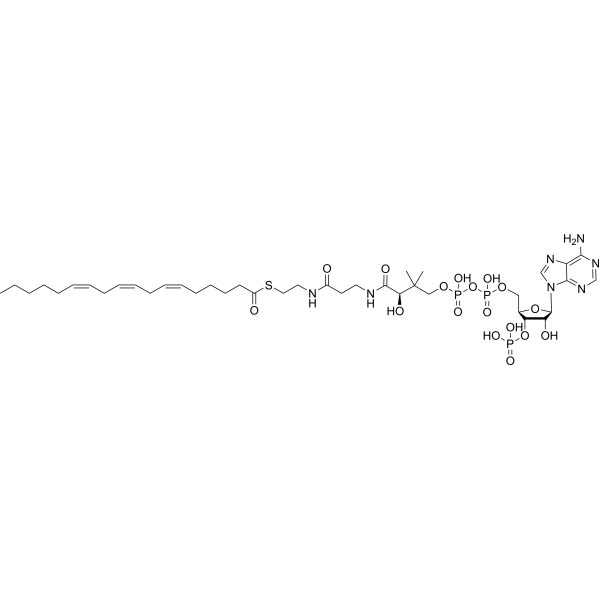
γ-Linolenoyl-CoA (C18:3(n6)-CoA) is a fatty acyl-CoA that can be used for lipidomics analysis of fatty acid-coenzyme A (FA-CoA) through LCMS/MS .
|
-
-
- HY-128879
-
|
|
Phosphodiesterase (PDE)
GSK-3
|
Neurological Disease
|
|
VP3.15 is a potent, orally bioavailable and CNS-penetrant dual phosphodiesterase (PDE)7- glycogen synthase kinase (GSK)3 inhibitor, with IC50s of 1.59 μM and 0.88 μM for PDE7 and GSK-3, respectively. VP3.15 has neuroprotective and neuroreparative activities, thus as potential combined anti-inflammatory and pro-remyelinating therapies for multiple sclerosis (MS) .
|
-
-
- HY-119221
-
|
|
LPL Receptor
|
Neurological Disease
Inflammation/Immunology
|
|
AUY954 is an oral active and selective sphingosine-1-phosphate receptor 1 agonist with the EC50 values of 1.2 nM, 0.9 nM >10,000 nM, 1,210 nM, >1,000 nM, and 340 nM for hS1P2, mS1P2, S1P2, S1P3, S1P4, and S1P5 receptors, respectively. AUY954 can be used for study of experimental autoimmune neuritis [1] .
|
-
-
- HY-P11706
-
|
|
Bcl-2 Family
|
Cancer
|
|
MS-1 peptide is a peptide for BH3 profiling. MS-1 peptide triggers higher depolarization of mitochondrial membrane in melanoma cells pre-treated with Encorafenib (HY-15605). MS1 peptide can be used for the research of BRAF V600E melanoma [1].
|
-
-
- HY-N15952
-
-
-
- HY-158725
-
|
|
Endogenous Metabolite
|
Others
|
|
N-Octadecenoyl-(cis-9) -Sulfatide is a glycolipid found in the brains of mice. N-Octadecenoyl-(cis-9) -Sulfatide can be used as a standard for the determination of C18:13 '-mergogalactosyllactose in dry blood stains of patients with chromatic leukodystrophy (MLD) by ultra-high performance liquid chromatography-mass spectrometry (UPLC-MS) .
|
-
-
- HY-176731
-
|
|
P2X Receptor
|
Neurological Disease
|
|
MSK-9 is a positive allosteric modulator of the P2X4 receptor with dual activities of enhancing ion conductance and delaying receptor inactivation. MSK-9 stabilizes the open state of the P2X4 receptor through rigid 3-piperidinyl and hydrophobic menthyl substituents. MSK-9 can be used in the study of multiple sclerosis (MS) .
|
-
-
- HY-12288R
-
|
RPC-1063 (Standard)
|
Reference Standards
LPL Receptor
|
Neurological Disease
Inflammation/Immunology
|
|
Ozanimod (Standard) is the analytical standard of Ozanimod. This product is intended for research and analytical applications. Ozanimod (RPC-1063), a sphingosine 1-phosphate (S1P) receptor modulator that binds with high affinity selectively to S1P receptor subtypes 1 (S1P1) and 5 (S1P5). Ozanimod has modulate effect for hS1P1 and hS1P5 receptor with EC50s of 1.03 nM and 8.6 nM, respectively. Ozanimod can be used for the research of relapsing multiple sclerosis (MS) .
|
-
-
- HY-14977
-
|
|
LPL Receptor
|
Inflammation/Immunology
|
|
CS-0777-P, the phosphorylated form of CS-0777, acts as a potent and selective modulator of the S1P receptor-1 (S1P1). It exhibits approximately 320-fold higher agonist activity for human S1P1 compared to S1P3, with an EC50 of 1.1 nM. In pharmacological studies, CS-0777-P demonstrated significant effects in vitro as an S1P1 and S1P3 agonist, leading to lowered peripheral blood lymphocyte counts and suppressive effects on experimental autoimmune encephalomyelitis (EAE) in rats. Pharmacokinetic studies in rats revealed rapid lymphocyte count reductions following oral administration, making CS-0777 a promising candidate currently undergoing clinical trials for the treatment of multiple sclerosis (MS) .
|
-
-
- HY-179558
-
|
|
PD-1/PD-L1
|
Cancer
|
|
MS1-96 is an orally active PD-L1 (programmed death-ligand 1) degrader. MS1-96 effectively reduced PD-L1 protein levels across multiple colorectal cancer (CRC) cell lines. MS1-96 directly binds to PD-L1 (KD = 2.58 μM) and enhances the interaction between HIP1R and PD-L1, thereby altering the intracellular trafficking of PD-L1 within clathrin-coated vesicles. MS1-96 induces abnormal N-glycosylation of PD-L1, destabilizing the protein and hastening its lysosome-mediated degradation. MS1-96 can be used for the study of colorectal cancer [1].
|
-
-
- HY-108353S
-
-
-
- HY-155789
-
|
Ceramide trihexoside (d18:1/17:0); Gb3(d18:1)(C17:0)
|
Biochemical Assay Reagents
|
Others
|
|
C17 Globotriaosylceramide (d18:1/17:0) is a sphygosine lipid that can be used to quantify Globotriaosylceramide in plasma and urine of patients with Fabry disease by gas chromatography-mass spectrometry (GC-MS) .
|
-
-
- HY-101266A
-
|
DS-3032 tosylate
|
MDM-2/p53
|
Cancer
|
|
Milademetan tosylate is the tosylate salt form of Milademetan (HY-101266). Milademetan tosylate is an orally active inhibitor for MDM2. Milademetan tosylate arrests the cell cycle at G1 pahse, induces the apoptosis Milademetan tosylate restores the p53 activity by targeting the p53-MDM2 interaction, and exhibits anticancer activity against Merkel cell carcinoma (MCC) [1].
|
-
-
- HY-P1052A
-
|
|
PKC
|
Inflammation/Immunology
|
|
Myelin Basic Protein(87-99) TFA is an encephalitogenic peptide that induces basic protein-specific T cell proliferation. Myelin Basic Protein(87-99) TFA causes a Th1 polarization in peripheral blood mononuclear cells with is implicated of multiple sclerosis (MS) .
|
-
-
- HY-144126
-
|
|
LPL Receptor
|
Inflammation/Immunology
|
|
S1P1 agonist 5 is a selective and orally active S1P1 agonist. S1P1 agonist 5 inhibits the lymphocyte egress from the lymphoid tissue to the peripheral blood. S1P1 agonist 5 has the potential for the research of multiple sclerosis (MS) .
|
-
-
- HY-130229
-
|
(±)5,6-DiHETrE lactone
|
Drug Derivative
|
Cardiovascular Disease
|
|
5,6-DiHET lactone ((±)5,6-DiHETrE lactone) is a lactonized form of 5,6-EET and 5,6-DiHET. In solution, 5(6)-EET degrades into 5(6)-DiHET and 5(6)-δ-lactone, which can be converted to 5(6)-DiHET and quantified by GC-MS.1 5,6-DiHET potently induces vasodilation of isolated canine coronary arterioles, with 41 and 100% inhibition occurring at 0.01 and 100 pM, respectively. It also induces vasodilation in isolated human microvessels and increases intracellular calcium levels in a dose-dependent manner, an effect that can be blocked by the nitric oxide scavenger L-NAME.
|
-
-
- HY-RS25604
-
|
|
Small Interfering RNA (siRNA)
|
Others
|
|
Abra Rat Pre-designed siRNA Set A contains three designed siRNAs for Abra gene (Rat), as well as a negative control, a positive control, and a FAM-labeled negative control.
|
-
Abra Rat Pre-designed siRNA Set A
-
- HY-P11561
-
|
|
Biochemical Assay Reagents
|
Others
|
|
NFLINETAR is a peptide from egg proteins. NFLINETAR can be used as a marker peptide for the detection of egg allergens using UHPLC-MS/MS .
|
-
-
- HY-P11560
-
|
|
Biochemical Assay Reagents
|
Others
|
|
YLLDLLPAAASHR is a peptide from egg proteins. YLLDLLPAAASHR can be used as a marker peptide for the detection of egg allergens using UHPLC-MS/MS .
|
-
-
- HY-P11563
-
|
|
Biochemical Assay Reagents
|
Others
|
|
RPFYSNAPQEIFIQQGR is a peptide that can be isolated from peanut proteins. RPFYSNAPQEIFIQQGR can be used as a marker peptide for the detection of peanut allergens using UHPLC-MS/MS .
|
-
-
- HY-P11564
-
|
|
Biochemical Assay Reagents
|
Others
|
|
FNLAGNHEQEFLR is a peptide that can be isolated from peanut proteins. FNLAGNHEQEFLR can be used as a marker peptide for the detection of peanut allergens using UHPLC-MS/MS .
|
-
-
- HY-P11570
-
|
|
Biochemical Assay Reagents
|
Others
|
|
HQGLPQEVLNENLLR is a peptide that can be isolated from milk proteins. HQGLPQEVLNENLLR can be used as a marker peptide for the detection of milk allergens using UHPLC-MS/MS .
|
-
-
- HY-P11566
-
|
|
Biochemical Assay Reagents
|
Others
|
|
ISTLNSLTLPALR is a soybean peptide that can be isolated from soybean proteins. ISTLNSLTLPALR can be used as a marker peptide for the detection of soybean allergens using UHPLC-MS/MS .
|
-
-
- HY-P11569
-
|
|
Biochemical Assay Reagents
|
Others
|
|
LITLAIPVNKPGR is a soybean peptide that can be isolated from soybean proteins. LITLAIPVNKPGR can be used as a marker peptide for the detection of soybean allergens using UHPLC-MS/MS .
|
-
-
- HY-P11565
-
|
|
Biochemical Assay Reagents
|
Others
|
|
TANELNLLILR is a peanut peptide that can be isolated from peanut proteins. TANELNLLILR can be used as a marker peptide for the detection of peanut allergens using UHPLC-MS/MS .
|
-
-
- HY-P11567
-
|
|
Biochemical Assay Reagents
|
Others
|
|
EAFGVNMQIVR is a soybean peptide that can be isolated from soybean proteins. EAFGVNMQIVR can be used as a marker peptide for the detection of soybean allergens using UHPLC-MS/MS .
|
-
-
- HY-P11568
-
|
|
Biochemical Assay Reagents
|
Others
|
|
ELINLATMCR is a soybean peptide that can be isolated from soybean proteins. ELINLATMCR can be used as a marker peptide for the detection of soybean allergens using UHPLC-MS/MS .
|
-
-
- HY-P11556
-
|
|
Biochemical Assay Reagents
|
Others
|
|
LR-13 is a signature peptide identified from the egg white allergen ovalbumin (OVA). LR-13 can be used as a marker peptide for the detection of OVA allergens using UHPLC-MS/MS .
|
-
-
- HY-P11559
-
|
|
Biochemical Assay Reagents
|
Others
|
|
NIGELGVEK, derived from hen egg proteins, shows homology with peptides from Anas platyrhynchos (mallard duck) eggs. NIGELGVEK can be used as a marker peptide for the detection of egg allergens using UHPLC-MS/MS .
|
-
-
- HY-P11558
-
|
|
Biochemical Assay Reagents
|
Others
|
|
NIPFAEYPTYK, derived from hen egg proteins, shows homology with peptides from Anas platyrhynchos (mallard duck) eggs. NIPFAEYPTYK can be used as a marker peptide for the detection of egg allergens using UHPLC-MS/MS .
|
-
-
- HY-P11557
-
|
|
Biochemical Assay Reagents
|
Others
|
|
EALQPIHDLADEAISR, derived from egg yolk proteins, is an egg peptide found in both hen eggs and Coturnix japonica eggs. EALQPIHDLADEAISR can be used as a marker peptide for the detection of egg allergens using UHPLC-MS/MS .
|
-
-
- HY-W653727
-
|
Prochloraz-desimidazole-formylamino
|
Drug Metabolite
|
Others
|
|
BTS44596 (Prochloraz-desimidazole-formylamino) is a metabolite of the antifungal agent Prochloraz (HY-B0845). BTS44596 is one of the core target analytes for regulatory monitoring of Prochloraz residue limits in fruits and vegetables as well as for simultaneous detection via LC-MS/MS .
|
-
-
- HY-P11046
-
|
|
Interleukin Related
|
Inflammation/Immunology
|
|
IIIM1 is an orally active anti-inflammatory peptide. IIIM1 ameliorates the symptoms of experimental autoimmune encephalomyelitis (EAE) by stimulating the proliferation of regulatory T cells and inducing them to produce RA1, and regulating the cytokine balance. IIIM1 can be used in the research of multiple sclerosis (MS) .
|
-
-
- HY-172967A
-
|
|
Toll-like Receptor (TLR)
|
Neurological Disease
Inflammation/Immunology
|
|
(R)-SARM1-IN-5 is the (R)-enantiomer of SARM1-IN-5 (HY-172967). SARM1-IN-5 (compound 1-23-a) is a SARM1 inhibitor. SARM1-IN-5 can be used in the study of axonal degeneration related diseases such as Alzheimer’s disease, Parkinson’s disease, amyotrophic lateral sclerosis (ALS), and multiple sclerosis (MS) .
|
-
-
- HY-12288S
-
|
RPC-1063-d6
|
Isotope-Labeled Compounds
LPL Receptor
|
Neurological Disease
Inflammation/Immunology
|
|
Ozanimod-d6 (RPC-1063-d6) is the deuterium labeled Ozanimod (HY-12288). Ozanimod (RPC-1063) is a CNS-penetrant sphingosine 1-phosphate (S1P) receptor modulator that binds with high affinity selectively to S1P receptor subtypes 1 (S1P1) and 5 (S1P5). Ozanimod has modulate effect for hS1P1 and hS1P5 receptor with EC50s of 1.03 nM and 8.6 nM, respectively. Ozanimod can be used for the research of relapsing multiple sclerosis (MS) .
|
-
| Cat. No. |
Product Name |
Target |
Research Area |
-
- HY-P5982
-
|
|
Phosphatase
|
Neurological Disease
|
|
PTPσ Inhibitor, ISP can bind to recombinant human PTPs and inhibits PTPσ signaling. PTPσ Inhibitor, ISP can penetrate the membrane and relieves the chondroitin sulfate proteoglycan (CSPG)-mediated axonal sprouting inhibition in spinal cord injury model. PTPσ Inhibitor, ISP enhances remyelination in LPC-induced demyelinated spinal cord. PTPσ Inhibitor, ISP also promotes oligodendrocyte progenitor cells (OPCs) migration, maturation, remyelination, and functional recovery in animal models of Multiple Sclerosis (MS) .
|
-
- HY-P10532
-
|
|
PKC
|
Others
Inflammation/Immunology
|
|
Myelin basic protein, MBP (68-86) is the portion of the 68th to 86th amino acid residues in the MBP protein sequence. Myelin basic protein, MBP (68-86) can act as an autoantigen, triggering the immune system to attack its own myelin. Myelin basic protein, MBP (68-86) is used as one of the immunogens in the experimental autoimmune encephalomyelitis (EAE) animal model to study immune responses associated with multiple sclerosis (MS) .
|
-
- HY-34611
-
|
N-Boc-L-2,4-diaminobutyric acid; Boc-Dab-OH
|
Drug Intermediate
ASCT
|
Neurological Disease
Cancer
|
|
Boc-L-2,4-Diaminobutyric acid (N-Boc-L-2,4-diaminobutyric acid; Boc-Dab-OH) is a versatile synthetic starting material with a cleavable protecting group. Boc-L-2,4-Diaminobutyric acid not only reduces the backbone cleavage rate by protecting the side-chain γ-amino group, but also triggers intramolecular cyclization of self-immolative linkers under acidic cleavage conditions, thus constructing stimuli-responsive materials. Boc-L-2,4-Diaminobutyric acid is also an important building block for bioactive molecules. It can be used in the synthesis of ASCT2 (SLC1A5) inhibitors and carboxynorspermine, and can also serve as an internal standard to support the quantitative detection of specific intracellular amino acids by UPLC-QQQ-MS .
|
-
- HY-P3724
-
-
- HY-P1996
-
|
NBI-5788
|
Peptides
|
Neurological Disease
Inflammation/Immunology
|
|
Tiplimotide (NBI-5788) is an altered peptide ligand (APL) designed from an immunodominant region (83-99) of the neuroantigen myelin basic protein (MBP). Tiplimotide can selectively reduce the production of inflammatory cytokines by pathogenic T-cells. Tiplimotide can be used for the research of multiple sclerosis (MS) .
|
-
- HY-P11706
-
|
|
Bcl-2 Family
|
Cancer
|
|
MS-1 peptide is a peptide for BH3 profiling. MS-1 peptide triggers higher depolarization of mitochondrial membrane in melanoma cells pre-treated with Encorafenib (HY-15605). MS1 peptide can be used for the research of BRAF V600E melanoma [1].
|
-
- HY-P3541
-
|
MBP8298
|
Peptides
|
Neurological Disease
Inflammation/Immunology
|
|
Dirucotide (MBP8298) is a synthetic peptide that consists of 17 amino acids linked in a sequence identical to that of a portion of human myelin basic protein. Dirucotide can be used for the research in autoimmune disorder of the central nervous system, such as Multiple sclerosis (MS) .
|
-
- HY-P1052
-
|
|
Peptides
|
Inflammation/Immunology
|
|
Myelin Basic Protein(87-99) is an encephalitogenic peptide that induces basic protein-specific T cell proliferation. Myelin Basic Protein(87-99) causes a Th1 polarization in peripheral blood mononuclear cells with is implicated of multiple sclerosis (MS) .
|
-
- HY-P1052A
-
|
|
PKC
|
Inflammation/Immunology
|
|
Myelin Basic Protein(87-99) TFA is an encephalitogenic peptide that induces basic protein-specific T cell proliferation. Myelin Basic Protein(87-99) TFA causes a Th1 polarization in peripheral blood mononuclear cells with is implicated of multiple sclerosis (MS) .
|
-
- HY-P11561
-
|
|
Biochemical Assay Reagents
|
Others
|
|
NFLINETAR is a peptide from egg proteins. NFLINETAR can be used as a marker peptide for the detection of egg allergens using UHPLC-MS/MS .
|
-
- HY-P11560
-
|
|
Biochemical Assay Reagents
|
Others
|
|
YLLDLLPAAASHR is a peptide from egg proteins. YLLDLLPAAASHR can be used as a marker peptide for the detection of egg allergens using UHPLC-MS/MS .
|
-
- HY-P11563
-
|
|
Biochemical Assay Reagents
|
Others
|
|
RPFYSNAPQEIFIQQGR is a peptide that can be isolated from peanut proteins. RPFYSNAPQEIFIQQGR can be used as a marker peptide for the detection of peanut allergens using UHPLC-MS/MS .
|
-
- HY-P11564
-
|
|
Biochemical Assay Reagents
|
Others
|
|
FNLAGNHEQEFLR is a peptide that can be isolated from peanut proteins. FNLAGNHEQEFLR can be used as a marker peptide for the detection of peanut allergens using UHPLC-MS/MS .
|
-
- HY-P11570
-
|
|
Biochemical Assay Reagents
|
Others
|
|
HQGLPQEVLNENLLR is a peptide that can be isolated from milk proteins. HQGLPQEVLNENLLR can be used as a marker peptide for the detection of milk allergens using UHPLC-MS/MS .
|
-
- HY-P11566
-
|
|
Biochemical Assay Reagents
|
Others
|
|
ISTLNSLTLPALR is a soybean peptide that can be isolated from soybean proteins. ISTLNSLTLPALR can be used as a marker peptide for the detection of soybean allergens using UHPLC-MS/MS .
|
-
- HY-P11569
-
|
|
Biochemical Assay Reagents
|
Others
|
|
LITLAIPVNKPGR is a soybean peptide that can be isolated from soybean proteins. LITLAIPVNKPGR can be used as a marker peptide for the detection of soybean allergens using UHPLC-MS/MS .
|
-
- HY-P11565
-
|
|
Biochemical Assay Reagents
|
Others
|
|
TANELNLLILR is a peanut peptide that can be isolated from peanut proteins. TANELNLLILR can be used as a marker peptide for the detection of peanut allergens using UHPLC-MS/MS .
|
-
- HY-P11567
-
|
|
Biochemical Assay Reagents
|
Others
|
|
EAFGVNMQIVR is a soybean peptide that can be isolated from soybean proteins. EAFGVNMQIVR can be used as a marker peptide for the detection of soybean allergens using UHPLC-MS/MS .
|
-
- HY-P11568
-
|
|
Biochemical Assay Reagents
|
Others
|
|
ELINLATMCR is a soybean peptide that can be isolated from soybean proteins. ELINLATMCR can be used as a marker peptide for the detection of soybean allergens using UHPLC-MS/MS .
|
-
- HY-P11556
-
|
|
Biochemical Assay Reagents
|
Others
|
|
LR-13 is a signature peptide identified from the egg white allergen ovalbumin (OVA). LR-13 can be used as a marker peptide for the detection of OVA allergens using UHPLC-MS/MS .
|
-
- HY-P11559
-
|
|
Biochemical Assay Reagents
|
Others
|
|
NIGELGVEK, derived from hen egg proteins, shows homology with peptides from Anas platyrhynchos (mallard duck) eggs. NIGELGVEK can be used as a marker peptide for the detection of egg allergens using UHPLC-MS/MS .
|
-
- HY-P11558
-
|
|
Biochemical Assay Reagents
|
Others
|
|
NIPFAEYPTYK, derived from hen egg proteins, shows homology with peptides from Anas platyrhynchos (mallard duck) eggs. NIPFAEYPTYK can be used as a marker peptide for the detection of egg allergens using UHPLC-MS/MS .
|
-
- HY-P11557
-
|
|
Biochemical Assay Reagents
|
Others
|
|
EALQPIHDLADEAISR, derived from egg yolk proteins, is an egg peptide found in both hen eggs and Coturnix japonica eggs. EALQPIHDLADEAISR can be used as a marker peptide for the detection of egg allergens using UHPLC-MS/MS .
|
-
- HY-P11046
-
|
|
Interleukin Related
|
Inflammation/Immunology
|
|
IIIM1 is an orally active anti-inflammatory peptide. IIIM1 ameliorates the symptoms of experimental autoimmune encephalomyelitis (EAE) by stimulating the proliferation of regulatory T cells and inducing them to produce RA1, and regulating the cytokine balance. IIIM1 can be used in the research of multiple sclerosis (MS) .
|
| Cat. No. |
Product Name |
Category |
Target |
Chemical Structure |
| Cat. No. |
Product Name |
Chemical Structure |
-
- HY-108353S
-
|
|
|
Isoprenalin-d7 acetate is an internal standard for the determination of isoproterenol by GC- or LC-MS .
|
-
-
- HY-12288S
-
|
|
|
Ozanimod-d6 (RPC-1063-d6) is the deuterium labeled Ozanimod (HY-12288). Ozanimod (RPC-1063) is a CNS-penetrant sphingosine 1-phosphate (S1P) receptor modulator that binds with high affinity selectively to S1P receptor subtypes 1 (S1P1) and 5 (S1P5). Ozanimod has modulate effect for hS1P1 and hS1P5 receptor with EC50s of 1.03 nM and 8.6 nM, respectively. Ozanimod can be used for the research of relapsing multiple sclerosis (MS) .
|
-
| Cat. No. |
Product Name |
|
Classification |
-
- HY-RS25604
-
|
|
|
siRNAs
Rat Pre-designed siRNA Sets
|
|
Abra Rat Pre-designed siRNA Set A contains three designed siRNAs for Abra gene (Rat), as well as a negative control, a positive control, and a FAM-labeled negative control.
|
Your information is safe with us. * Required Fields.
Inquiry Information
- Product Name:
- Cat. No.:
- Quantity:
- MCE Japan Authorized Agent:

