9 Results for "

N27 Cells

" in MedChemExpress (MCE) Product Catalog:
Products (9)

9 Results for "N27 Cells" in MCE Product Catalog:

1
1 Cited Publications
Cat. No.: HY-155659
Purity:  99.86%
Research Areas:  

Neurological Disease

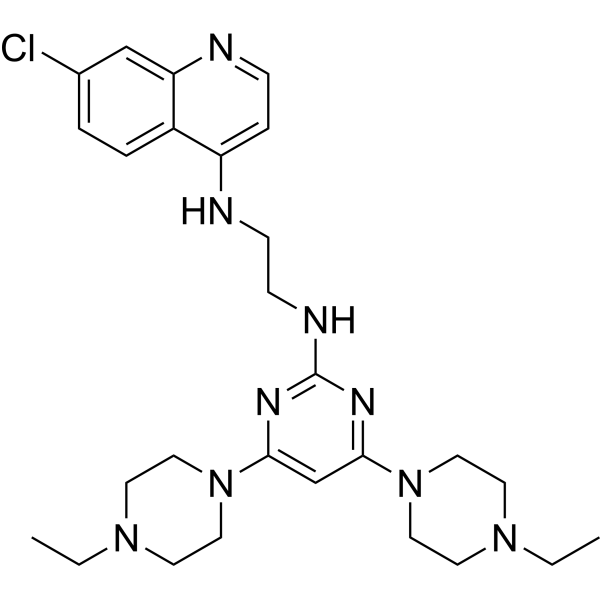
4A7C-301 is a blood-brain barrier-permeable Nurr1 agonist, with IC50 values of 48.22 nM and 107.71 nM for binding to Nurr1-LBD in the [ 3H]-CQ competition assay and TR-FRET assay, respectively. The EC50 of 4A7C-301 for activating Nurr1 transcriptional activity is 6.53 μM, and its EC50 in N27-A dopaminergic cells is approximately 0.2 μM. 4A7C-301 binds directly to Nurr1-LBD, enhances the transcriptional function of Nurr1, and restores the reduction of Nurr1 protein induced by MPP + or αSyn. 4A7C-301 alleviates oxidative stress and mitochondrial dysfunction, protects midbrain dopaminergic neurons, inhibits microglial activation, and restores impaired autophagic flux. 4A7C-301 can be used in studies related to neuroprotection and Parkinson's disease .
loading...
    loading...
Cat. No.: HY-B1914
CAS No.: 119168-77-3
Tebufenpyrad can induce mitochondrial dysfunction and oxidative damage. Tebufenpyrad induces dose-dependent cell death on N27 cells, with an EC50 value of 3.98 μM .
loading...
    loading...
Cat. No.: HY-W002438
CAS No.: 2380-86-1
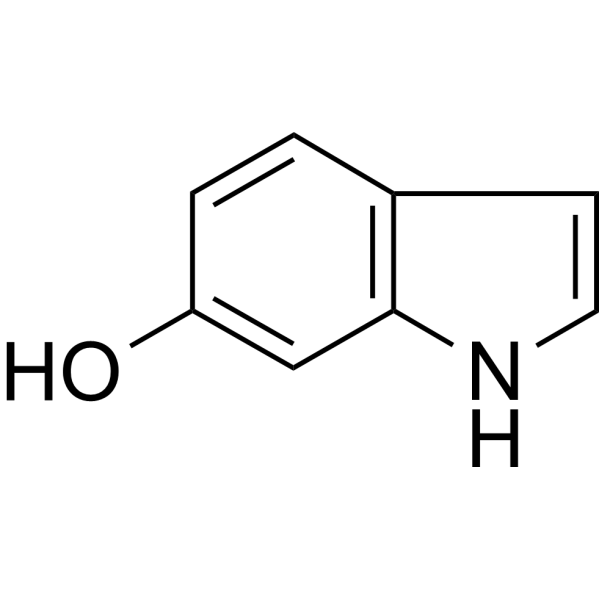
6-Hydroxyindole is an orally active, endogenous long-acting OATP1B1 inhibitor. 6-Hydroxyindole does not alter the cell surface expression or subcellular localization of OATP1B1. 6-Hydroxyindole protects cells against Ferroptosis. 6-Hydroxyindole possesses intrinsic radical-trapping antioxidant activity. 6-Hydroxyindole serves as a component of oxidative hair dyes. 6-Hydroxyindole can be used in research related to renal failure and neurodegenerative diseases .
loading...
    loading...
Cat. No.: HY-B1914R
CAS No.: 119168-77-3
Tebufenpyrad (Standard) is the analytical standard of Tebufenpyrad. This product is intended for research and analytical applications. Tebufenpyrad can induce mitochondrial dysfunction and oxidative damage. Tebufenpyrad induces dose-dependent cell death on N27 cells, with an EC50 value of 3.98 μM .
loading...
    loading...
Cat. No.: HY-B1914S
Tebufenpyrad-d3 is the deuterium labeled Tebufenpyrad (HY-B1914). Tebufenpyrad can induce mitochondrial dysfunction and oxidative damage. Tebufenpyrad induces dose-dependent cell death on N27 cells, with an EC50 value of 3.98 μM .
loading...
    loading...
Cat. No.: HY-113273B
CAS No.: 102783-61-9
Purity:  ≥96.0%
Target:  

Endogenous Metabolite

Research Areas:  

Metabolic Disease

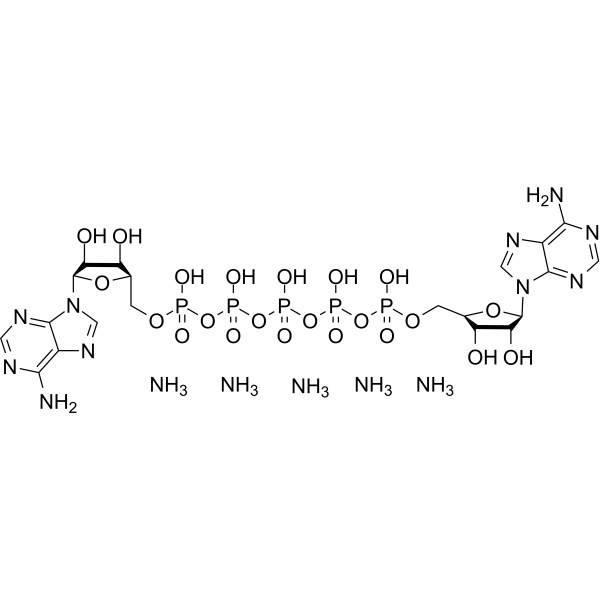
Diadenosine pentaphosphate pentaammonium is an endogenous vasoactive purine dinucleotide which has been isolated from thrombocytes. Diadenosine polyphosphates (ApnA, n=2–7) have been identified as constituents of secretory vesicles such as in platelets, chromaffin cells, Torpedo synaptic terminals and brain synaptosomes .
loading...
    loading...
Cat. No.: HY-113273C
CAS No.: 94108-02-8
Target:  

Endogenous Metabolite

Research Areas:  

Metabolic Disease

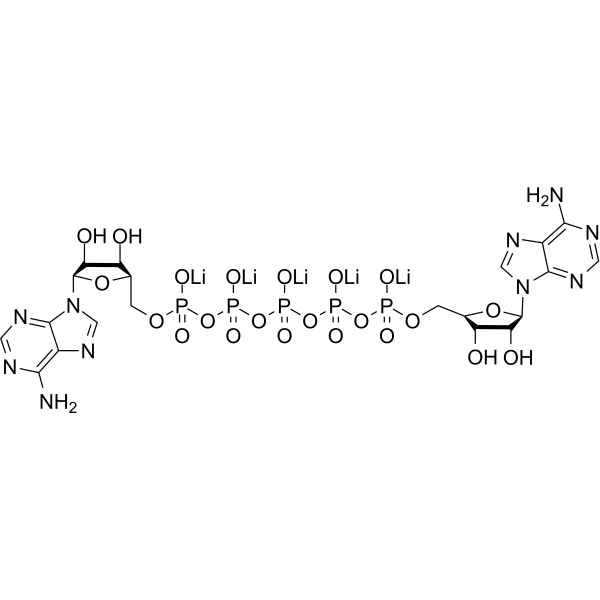
Diadenosine pentaphosphate pentalithium is an endogenous vasoactive purine dinucleotide which has been isolated from thrombocytes. Diadenosine polyphosphates (ApnA, n=2–7) have been identified as constituents of secretory vesicles such as in platelets, chromaffin cells, Torpedo synaptic terminals and brain synaptosomes .
loading...
    loading...
Cat. No.: HY-N12669
CAS No.: 387818-26-0
Curcumin monoglucoside is a flavonoid derivative possessing antioxidant, anti-apoptotic, neuroprotective effects, and antibacterial activity. Curcumin monoglucoside can be used in research on Parkinson's disease.
loading...
    loading...
Cat. No.: HY-W002438R
CAS No.: 2380-86-1
6-Hydroxyindole (Standard) is the analytical standard of 6-Hydroxyindole (HY-W002438). This product is intended for research and analytical applications. 6-Hydroxyindole is an orally active, endogenous long-acting OATP1B1 inhibitor. 6-Hydroxyindole does not alter the cell surface expression or subcellular localization of OATP1B1. 6-Hydroxyindole protects cells against Ferroptosis. 6-Hydroxyindole possesses intrinsic radical-trapping antioxidant activity. 6-Hydroxyindole serves as a component of oxidative hair dyes. 6-Hydroxyindole can be used in research related to renal failure and neurodegenerative diseases .
loading...
    loading...

