



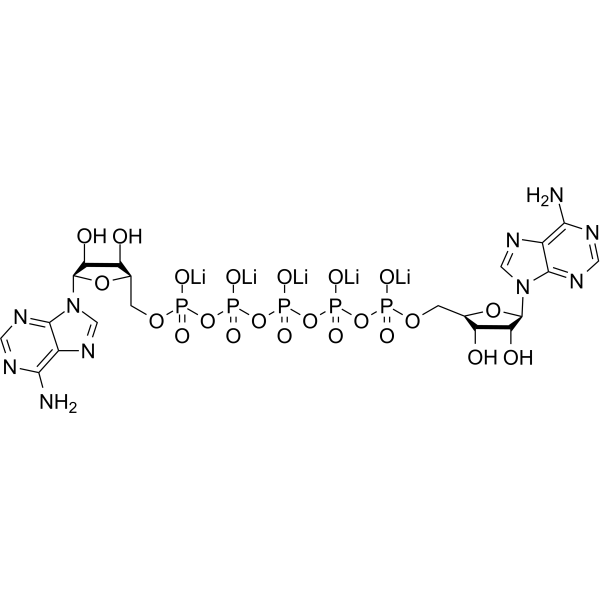
Diadenosine pentaphosphate pentalithium
Diadenosine pentaphosphate (Ap5A; P1,P5-Di(adenosine-5'-)pentaphosphate) pentalithium is an endogenous generated diadenosine polyphosphate, possessing the dual identities of intracellular alarm signal and extracellular signaling molecule. Diadenosine pentaphosphate regulates calcium signaling in the nervous, cardiac and peripheral sensory systems by activating P2X1/P2X3/P2Y receptor and RyR2 channels (EC50 = 140 μM). Diadenosine pentaphosphate can be used in studies related to intracellular calcium release channels, cardiovascular diseases and nociception (pain).
For research use only. We do not sell to patients.
- CAS No.: 94108-02-8
- Formula: C20H24Li5N10O22P5
- Molecular Weight:946.03
-
Storage:
Please store the product under the recommended conditions in the Certificate of Analysis.

To place orders, for customer services and technical support, please contact: MedChemExpress USA
Tel: 609-228-6898 E-mail: [email protected] [email protected]


-
 Biological Activity
-
Chemical Information
- Purity & Documentation
- References
-
 Help & FAQs


All Endogenous Metabolite Isoforms
More

Biological Activity
Description
IC50 & Target
|
Human Endogenous Metabolite |
In Vitro
Diadenosine pentaphosphate (100 μM) pentalithium elevates the intracellular calcium level of cultured human fetal astrocytes to 980 nM via P2 purinergic receptor-mediated extracellular calcium influx, as well as calcium release from IP3-sensitive and ryanodine-sensitive intracellular calcium stores[1].
Diadenosine pentaphosphate (100 μM; 5 sec) pentalithium increases the production of IP3 in cultured human fetal astrocytes by approximately 2-fold[1].
Diadenosine pentaphosphate (10 μM) pentalithium activates the IKACh current in isolated guinea pig atrial myocytes by stimulating P1 receptors[2].
Diadenosine pentaphosphate (100 μM) pentalithium induces local, transient increases in intracellular calcium in distal dendrites and dendritic growth cones of E18 mouse hippocampal neurons cultured in vitro, with no effect on calcium levels in axons or somatodendritic regions[5].
Diadenosine pentaphosphate (100 μM; 72 h) pentalithium exerts a negative regulatory effect on dendrite growth and quantity in E18 mouse hippocampal neurons cultured in vitro (in phenol red-free medium). After treatment with 100 μM for 72 h, it reduces the total dendrite length by 28.7% and the number of dendrites by 28.1%, but has no effect on axon length[5].
Diadenosine pentaphosphate (100 μM) pentalithium reduces dendritic length and number in cultured E18 mouse hippocampal neurons. Overexpression of P2X1 mimics this effect, while shRNA knockdown of P2X1 reverses the reduction in dendrite number but fails to rescue the decrease in dendrite length[5].
MedChemExpress (MCE) has not independently confirmed the accuracy of these methods. They are for reference only.


Chemical Information
-
CAS No. 94108-02-8
-
Molecular Weight 946.03
-
Formula C20H24Li5N10O22P5
-
SMILES
O[C@H]1[C@@H](O)[C@H](N2C3=NC=NC(N)=C3N=C2)O[C@@H]1COP(OP(OP(OP(OP(OC[C@@H]4[C@@H](O)[C@@H](O)[C@H](N5C6=NC=NC(N)=C6N=C5)O4)(O[Li])=O)(O[Li])=O)(O[Li])=O)(O[Li])=O)(O[Li])=O
-
Synonyms
Ap5A pentalithium; P1,P5-Di(adenosine-5'-)pentaphosphate pentalithium
-
Shipping
Room temperature in continental US; may vary elsewhere.
-
Storage
Please store the product under the recommended conditions in the Certificate of Analysis.


Purity & Documentation
References
[1]. L Giraldez, et al. Adenosine triphosphate and diadenosine pentaphosphate induce [Ca(2+)](i) increase in rat basal ganglia aminergic terminals. J Neurosci Res. 2001 Apr 15;64(2):174-82. [Content Brief]
[2]. Jesús Pintor, et al. Presence of diadenosine polyphosphates in human tears. Pflugers Arch. 2002 Jan;443(3):432-6. [Content Brief]

Calculators
Concentration (start) × Volume (start) = Concentration (final) × Volume (final)


Diadenosine pentaphosphate pentalithium Related Classifications
HY-113273C Related Classifications
 Powered by Bioz
Keywords
- Diadenosine pentaphosphate pentalithium
- 94108-02-8
- Ap5A pentalithium
- P1,P5-Di(adenosine-5'-)pentaphosphate pentalithium
- Endogenous Metabolite
- RyR2
- P2-type purinoceptors
- P1 purinoceptors
- P2X3
- IP3-sensitive intracellular stores
- I_KAch channels
- sheep cardiac ryanodine receptor
- heteromeric P2X2/3 purinoceptors
- ryanodine-sensitive intracellular stores
- P2X1
- Inhibitor
- inhibitor
- inhibit