



Diadenosine pentaphosphate pentasodium

Based on 1 Customer Validation
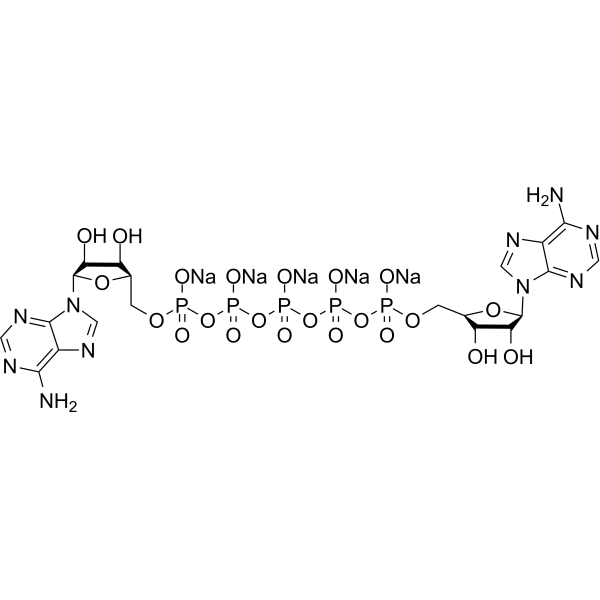
Diadenosine pentaphosphate (Ap5A; P1,P5-Di(adenosine-5'-)pentaphosphate) pentasodium is an endogenous generated diadenosine polyphosphate, possessing the dual identities of intracellular alarm signal and extracellular signaling molecule. Diadenosine pentaphosphate regulates calcium signaling in the nervous, cardiac and peripheral sensory systems by activating P2X1/P2X3/P2Y receptor and RyR2 channels (EC50 = 140 μM). Diadenosine pentaphosphate can be used in studies related to intracellular calcium release channels, cardiovascular diseases and nociception (pain).
For research use only. We do not sell to patients.
- Purity : 99.13%
- CAS No.: 4097-04-5
- Formula: C20H24N10Na5O22P5
- Molecular Weight:1026.28
-
Storage:
-20°C, sealed storage, away from moisture and light
* In solvent : -80°C, 6 months; -20°C, 1 month (sealed storage, away from moisture and light)

To place orders, for customer services and technical support, please contact: MedChemExpress USA
Tel: 609-228-6898 E-mail: [email protected] [email protected]


-
 Biological Activity
-
Chemical Information
-
Solvent & Solubility
- Protocols
- Purity & Documentation
- References
-
 Help & FAQs


-
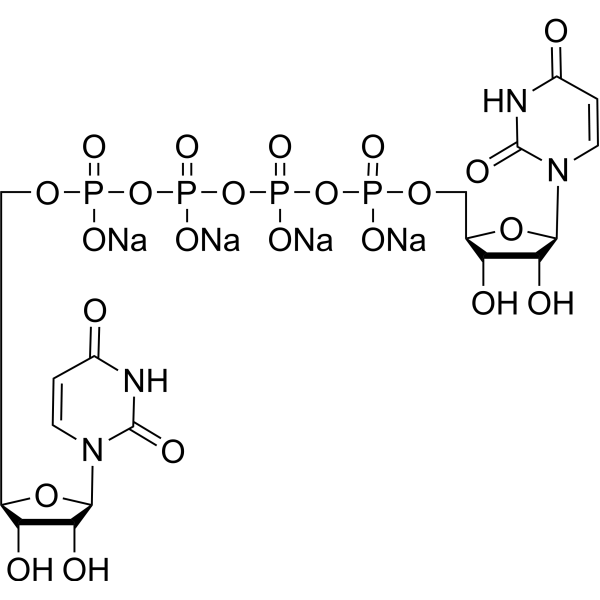
HY-B0606
Diquafosol tetrasodiumP2Y2 Receptor Agonist -

HY-N3518
Mulberroside FTyrosinase Inhibitor -
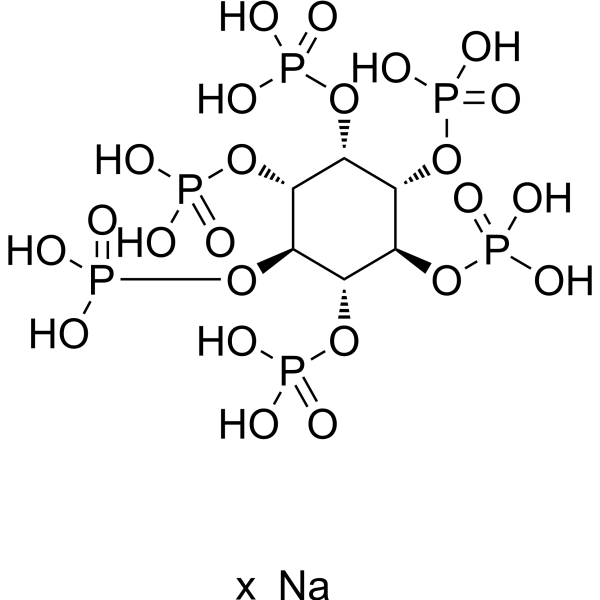
HY-N2581
Phytic acid sodium saltPyrophosphates Precursor -

HY-N2397
9''-Methyl salvianolate Bg5Rp Inhibitor -
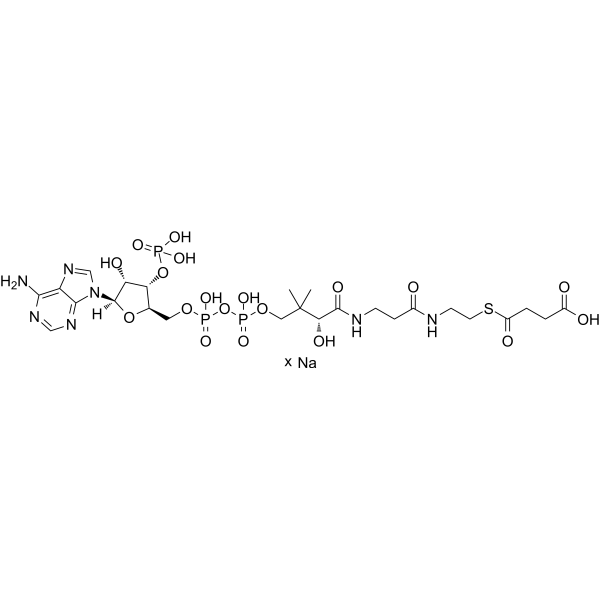
HY-137808
Succinyl-Coenzyme A sodiumCoenzyme A Derivative -

HY-W127758
Alginic acidHistamine Release Inhibitor -
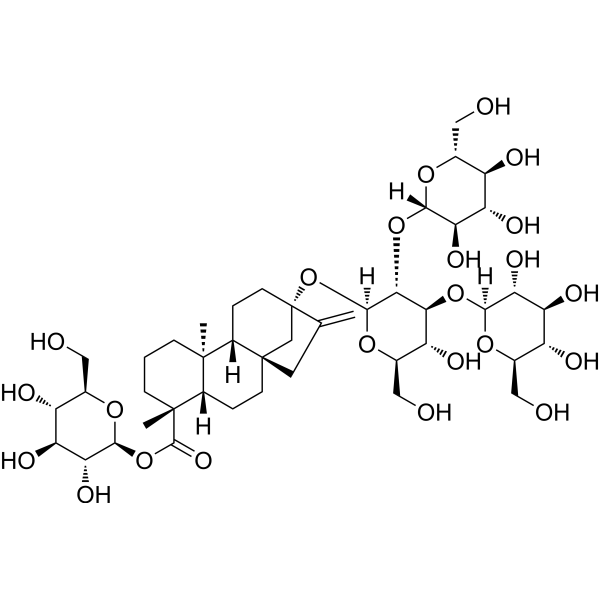
HY-N0466
Rebaudioside Aα-Glucosidase Inhibitor -

HY-117769
GSK837149AFASN Inhibitor -
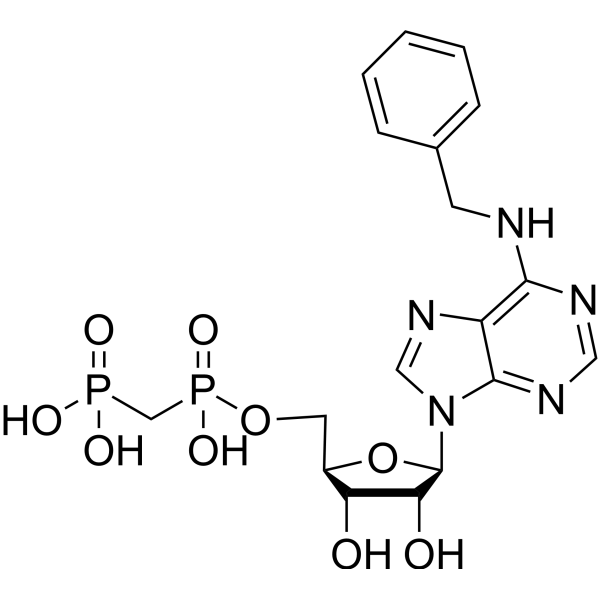
HY-100747
PSB-12379CD73 Inhibitor -

HY-N4148
Purpureaside CMCM6 Inhibitor -
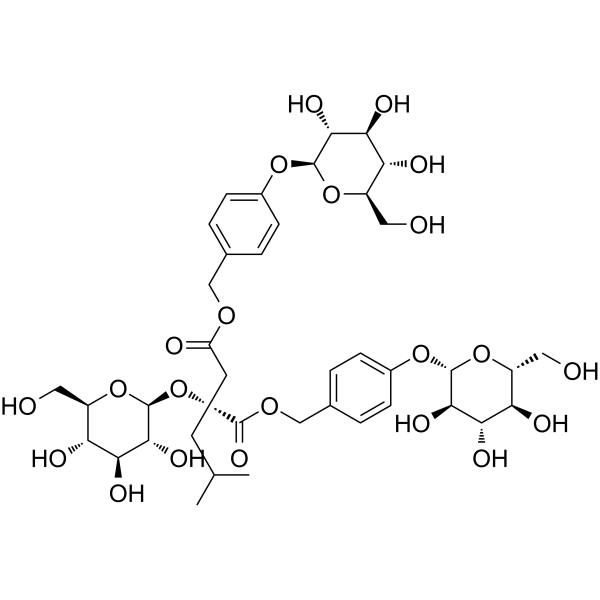
HY-125531
Dactylorhin ANO Inhibitor -
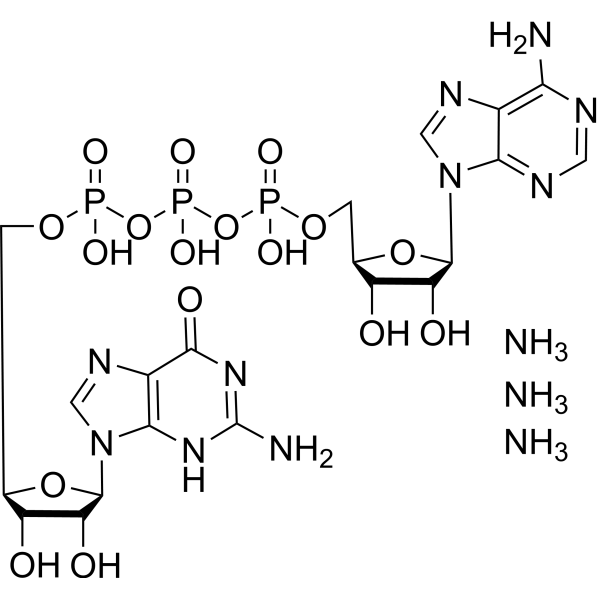
HY-139101A
Guanosine 5'-triphosphate-5'-adenosine triammoniumFluorescent Substrate Analog
All P2X Receptor Isoforms
More

Biological Activity
Description
IC50 & Target
|
p2x1 Receptor |
In Vitro
Diadenosine pentaphosphate (100 μM) pentasodium elevates the intracellular calcium level of cultured human fetal astrocytes to 980 nM via P2 purinergic receptor-mediated extracellular calcium influx, as well as calcium release from IP3-sensitive and ryanodine-sensitive intracellular calcium stores[1].
Diadenosine pentaphosphate (100 μM; 5 sec) pentasodium increases the production of IP3 in cultured human fetal astrocytes by approximately 2-fold[1].
Diadenosine pentaphosphate (10 μM) pentasodium activates the IKACh current in isolated guinea pig atrial myocytes by stimulating P1 receptors[2].
Diadenosine pentaphosphate (100 μM) pentasodium induces local, transient increases in intracellular calcium in distal dendrites and dendritic growth cones of E18 mouse hippocampal neurons cultured in vitro, with no effect on calcium levels in axons or somatodendritic regions[5].
Diadenosine pentaphosphate (100 μM; 72 h) pentasodium exerts a negative regulatory effect on dendrite growth and quantity in E18 mouse hippocampal neurons cultured in vitro (in phenol red-free medium). After treatment with 100 μM for 72 h, it reduces the total dendrite length by 28.7% and the number of dendrites by 28.1%, but has no effect on axon length[5].
Diadenosine pentaphosphate (100 μM) pentasodium reduces dendritic length and number in cultured E18 mouse hippocampal neurons. Overexpression of P2X1 mimics this effect, while shRNA knockdown of P2X1 reverses the reduction in dendrite number but fails to rescue the decrease in dendrite length[5].
MedChemExpress (MCE) has not independently confirmed the accuracy of these methods. They are for reference only. Further protocols information, click here.


Chemical Information
-
CAS No. 4097-04-5
-
Appearance Solid
-
Molecular Weight 1026.28
-
Formula C20H24N10Na5O22P5
-
Color White to off-white
-
SMILES
O[C@H]1[C@@H](O)[C@H](N2C3=NC=NC(N)=C3N=C2)O[C@@H]1COP(OP(OP(OP(OP(OC[C@@H]4[C@@H](O)[C@@H](O)[C@H](N5C6=NC=NC(N)=C6N=C5)O4)(O[Na])=O)(O[Na])=O)(O[Na])=O)(O[Na])=O)(O[Na])=O
-
Synonyms
Ap5A pentasodium; P1,P5-Di(adenosine-5'-)pentaphosphate pentasodium
-
Shipping
Room temperature in continental US; may vary elsewhere.
-
Storage
-20°C, sealed storage, away from moisture and light
* In solvent : -80°C, 6 months; -20°C, 1 month (sealed storage, away from moisture and light)


Solvent & Solubility
In Vitro:
H2O : 87.5 mg/mL (85.26 mM; Need ultrasonic)
DMSO : < 1 mg/mL (insoluble or slightly soluble)
Please refer to the solubility information to select the appropriate solvent. Once prepared, please aliquot and store the solution to prevent product inactivation from repeated freeze-thaw cycles.
Storage method and period of stock solution: -80°C, 6 months; -20°C, 1 month (sealed storage, away from moisture and light). When stored at -80°C, please use it within 6 months. When stored at -20°C, please use it within 1 month.
* Note: If you choose water as the stock solution, please dilute it to the working solution, then filter and sterilize it with a 0.22 μm filter before use.
Please refer to the solubility information to select the appropriate solvent. Once prepared, please aliquot and store the solution to prevent product inactivation from repeated freeze-thaw cycles.
Storage method and period of stock solution: -80°C, 6 months; -20°C, 1 month (sealed storage, away from moisture and light). When stored at -80°C, please use it within 6 months. When stored at -20°C, please use it within 1 month.
* Note: If you choose water as the stock solution, please dilute it to the working solution, then filter and sterilize it with a 0.22 μm filter before use.
Concentration (start) × Volume (start) = Concentration (final) × Volume (final)

Protocols
-
Calcium Spark Assay
Calcium sparks are localized, transient increases in intracellular calcium concentration ([Ca2+]i) that occur in cardiac myocytes and represent elementary events underlying excitation-contraction coupling. These events are generated by the coordinated opening of clusters of ryanodine receptors (RyRs) on the sarcoplasmic reticulum membrane, leading to a brief release of Ca2+ into the cytosol. The detection and analysis of calcium sparks provide insights into the mechanisms of calcium handling and signaling in cardiac cells. Imaging techniques using fluorescent calcium indicators such as Fluo-3 are employed to visualize these subcellular calcium transients with high spatial and temporal resolution. The protocol is based on established methodologies described in primary literature for both experimental measurement and automated analysis of calcium sparks.
-
Ca2+ Staining Technique
Ca2+ staining is an experimental technique that utilizes specific fluorescent probes (such as Fluo-4 AM, Fura-2, etc.) to qualitatively or quantitatively detect dynamic changes in intracellular Ca2+ concentrations; this is achieved by monitoring the changes in fluorescent signals generated when these probes bind to free intracellular calcium ions. The underlying principle relies primarily on the presence of chelating groups within the probe's molecular structure that possess high affinity for calcium ions.


Purity & Documentation
-
Data Sheet (277 KB)
-
SDS (252 KB)
- English - EN (252 KB)
- Français - FR (252 KB)
- Deutsch - DE (252 KB)
- Norwegian - NO (252 KB)
- Español - ES (252 KB)
- Swedish - SV (252 KB)
- Italian - IT (252 KB)
- Korean - KR (252 KB)
- Portuguese - PT (252 KB)
-
Handling Instructions (2659 KB)
References
[1]. Jacoby RP, et al. Analysis of the sodium chloride-dependent respiratory kinetics of wheat mitochondria reveals differential effects on phosphorylating and non-phosphorylating electron transport pathways. Plant Cell Environ. 2016;39(4):823-833. [Content Brief]
[2]. Lorenzo-Orts L, et al. Molecular characterization of CHAD domains as inorganic polyphosphate-binding modules. Life Sci Alliance. 2019;2(3):e201900385. Published 2019 May 27. [Content Brief]
[3]. Diez-Zaera M, et al. Diadenosine pentaphosphate regulates dendrite growth and number in cultured hippocampal neurons. Purinergic Signal. 2024;20(2):115-125. [Content Brief]
[4]. L Giraldez, et al. Adenosine triphosphate and diadenosine pentaphosphate induce [Ca(2+)](i) increase in rat basal ganglia aminergic terminals. J Neurosci Res. 2001 Apr 15;64(2):174-82. [Content Brief]
[5]. Jesús Pintor, et al. Presence of diadenosine polyphosphates in human tears. Pflugers Arch. 2002 Jan;443(3):432-6. [Content Brief]


Complete Stock Solution Preparation Table
Please refer to the solubility information to select the appropriate solvent. Once prepared, please aliquot and store the solution to prevent product inactivation from repeated freeze-thaw cycles.
Storage method and period of stock solution: -80°C, 6 months; -20°C, 1 month (sealed storage, away from moisture and light). When stored at -80°C, please use it within 6 months. When stored at -20°C, please use it within 1 month.
| Optional Solvent | Concentration Solvent Mass | 1 mg | 5 mg | 10 mg | 25 mg |
|---|---|---|---|---|---|
| H2O | 1 mM | 0.9744 mL | 4.8720 mL | 9.7439 mL | 24.3598 mL |
| 5 mM | 0.1949 mL | 0.9744 mL | 1.9488 mL | 4.8720 mL | |
| 10 mM | 0.0974 mL | 0.4872 mL | 0.9744 mL | 2.4360 mL | |
| 15 mM | 0.0650 mL | 0.3248 mL | 0.6496 mL | 1.6240 mL | |
| 20 mM | 0.0487 mL | 0.2436 mL | 0.4872 mL | 1.2180 mL | |
| 25 mM | 0.0390 mL | 0.1949 mL | 0.3898 mL | 0.9744 mL | |
| 30 mM | 0.0325 mL | 0.1624 mL | 0.3248 mL | 0.8120 mL | |
| 40 mM | 0.0244 mL | 0.1218 mL | 0.2436 mL | 0.6090 mL | |
| 50 mM | 0.0195 mL | 0.0974 mL | 0.1949 mL | 0.4872 mL | |
| 60 mM | 0.0162 mL | 0.0812 mL | 0.1624 mL | 0.4060 mL | |
| 80 mM | 0.0122 mL | 0.0609 mL | 0.1218 mL | 0.3045 mL |
* Note: If you choose water as the stock solution, please dilute it to the working solution, then filter and sterilize it with a 0.22 μm filter before use.


Diadenosine pentaphosphate pentasodium Related Classifications
HY-113273A Related Classifications
 Powered by Bioz
Keywords
- Diadenosine pentaphosphate pentasodium
- 4097-04-5
- Ap5A pentasodium
- P1,P5-Di(adenosine-5'-)pentaphosphate pentasodium
- P2X Receptor
- RyR2
- P2-type purinoceptors
- P1 purinoceptors
- P2X3
- IP3-sensitive intracellular stores
- I_KAch channels
- sheep cardiac ryanodine receptor
- heteromeric P2X2/3 purinoceptors
- ryanodine-sensitive intracellular stores
- P2X1
- Inhibitor
- inhibitor
- inhibit