


1. Search Result
Search Result
Results for "

OPTimization

" in MedChemExpress (MCE) Product Catalog:

126

Inhibitors & Agonists

31

Screening Libraries

4

Biochemical Assay Reagents

6

Peptides

18

MCE Kits

3

Inhibitory Antibodies

6

Natural
Products

1

Isotope-Labeled Compounds

6

Oligonucleotides

Cat. No. Product Name Target Research Areas Chemical Structure
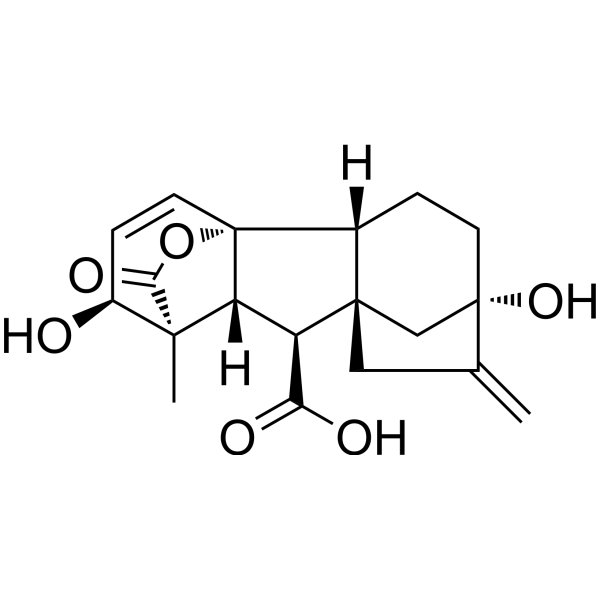
  • HY-N1964
    Gibberellic acid
    1 Publications Verification

    Gibberellin A3

    Environmental Pollutants Drug Derivative Metabolic Disease
    Gibberellic acid (GA3) is a natural plant growth regulator with oral bioactivity. Gibberellic acid governs multiple plant developmental events, including seed germination, cell elongation, floral organ formation, and rice spikelet fertility. Gibberellic acid optimizes root morphology and secondary metabolite production in Echinacea purpurea hairy roots, and serves as a bioactive seed priming agent to improve chilling stress tolerance in chickpea. Gibberellic acid mediates modulation of enzyme activity and secondary metabolism in plants and exerts tissue-specific regulatory effects on antioxidant systems and lipid peroxidation in rats. Gibberellic acid can be used in studies of plant growth, metabolism, and abiotic stress responses .
    Gibberellic acid
  • HY-W127512
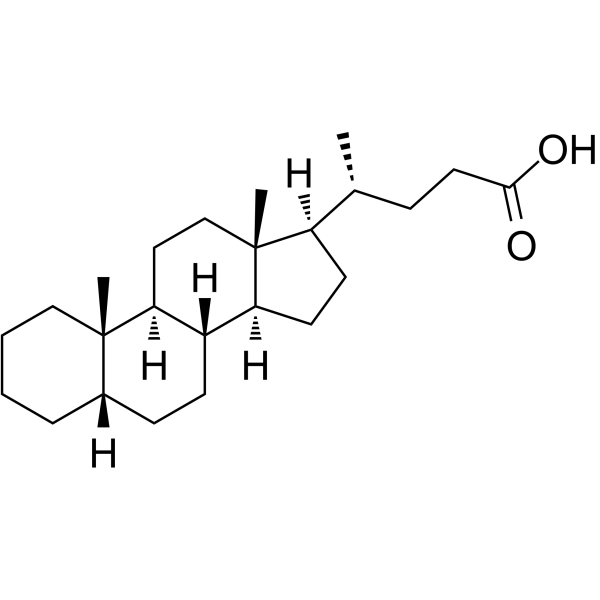
    5β-Cholanic acid
    1 Publications Verification

    Drug Intermediate Others
    5β-Cholanic acid is a hydrophobic modifier used to modify polymer carriers. 5β-Cholanic acid can improve the acid stability, cell penetration efficiency and drug sustained release ability of nanocarriers, and optimize the oral effectiveness of delivered molecules. 5β-Cholanic acid can covalently bind to Glycol chitosan (GC) to form a GC-CA conjugate, which optimizes the hydrophobic anchoring ability of nanoparticles and enables them to be stably adsorbed on the surface of PLGA nanoparticles. Such nanoparticles can resist dissociation in the gastric acid environment and maintain positive charge to enhance endocytic uptake by intestinal epithelial cells (such as Caco-2 cells). 5β-Cholanic acid can be used in the development of drug delivery systems .
    5β-Cholanic acid
  • HY-145605

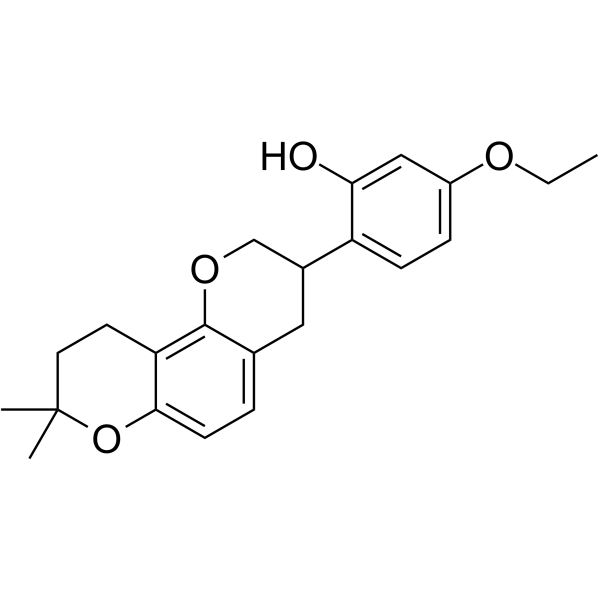
    HSG4112

    Reactive Oxygen Species (ROS) Bacterial PPAR Metabolic Disease
    Vutiglabridin (HSG4112), a racemic compound, is a potent anti-obesity agent . Vutiglabridin, an optimized structural analog of Glabridin, markedly supersedes Glabridin in weight reduction efficacy and chemical stability .
    Vutiglabridin
  • HY-W051140

    Disilver sulfate, 99%

    Environmental Pollutants Biochemical Assay Reagents Others
    Silver sulfate acts as an ethylene inhibitor and a shoot regeneration promoter. Silver sulfate promotes shoot proliferation in explants of the cherry rootstock CAB-6P. Silver sulfate is applicable to studies on the optimization of micropropagation for cherry rootstocks .
    Silver sulfate
  • HY-151798

    Adenylate Cyclase Others
    TDI-11861 is an orally active soluble sAC inhibitor optimized and designed based on TDI-10229 (HY-132298), with an IC50 of 3.3 nM and a KD of 1.4 nM. TDI-11861 has advantages such as high affinity, slow dissociation, and good pharmacokinetics. TDI-11861 can be used for research on male contraception and related sAC pharmacology .
    TDI-11861
  • HY-15975

    Parasite Infection
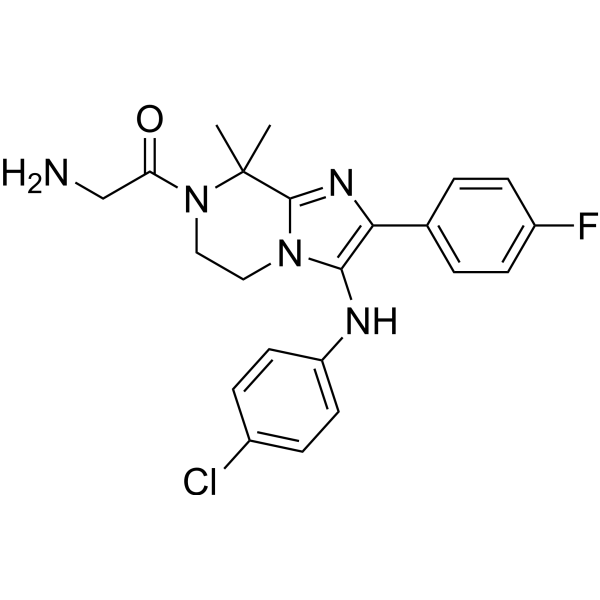
    GNF179 is an optimized 8,8-dimethyl imidazolopiperazine analog that exhibits antimalarial potency (IC50 of 4.8 nM against the multidrug resistant strain W2). GNF179 is orally active .
    GNF179
  • HY-P99030

    MGAH-22

    EGFR Cancer
    Margetuximab (MGAH22) is a chimeric anti-HER2 monoclonal antibody optimized Fc domain, with an EC50 value of 39.33 ng/mL. Margetuximab can be used for researching metastatic HER2-positive breast cancer .
    Margetuximab
  • HY-110079

    IPK Superfamily Cancer
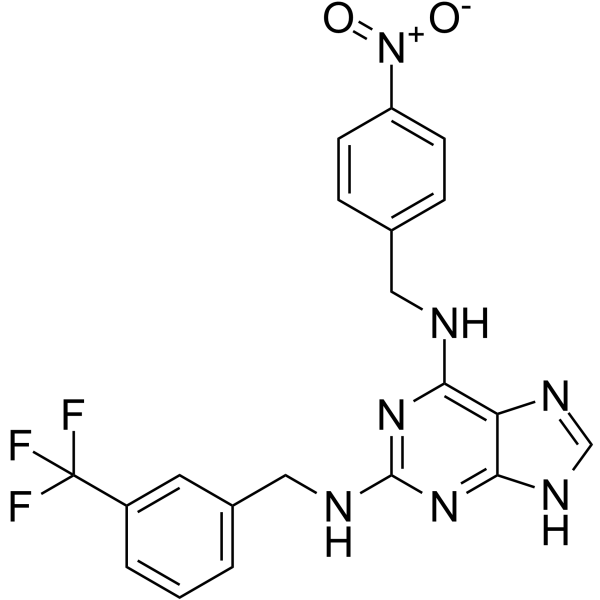
    TNP is a competitive, reversible inhibitor of IP6K1 and IP3K, with IC50s of 0.55 μM and 10.2 μM for IP6K1 and IP3K, respectively. TNP competitively binds to the ATP binding site of IP6K, inhibits the generation of 5-IP7, and thus relieves the inhibition of 5-IP7 on the AKT signaling pathway. TNP can enhance insulin sensitivity and promote thermogenesis in adipose tissue. TNP cannot effectively pass through the blood-brain barrier and is mainly used in the study of obesity, type 2 diabetes, and metabolic syndrome. However, TNP also inhibits CYP3A4 and may need further optimization[1][2][3].
    TNP
  • HY-P99562

    XmAb-18087

    CD3 Cancer
    Tidutamab (XmAb-18087) is a humanized and affinity-optimized bispecific antibody (bsAb) targeting SSTR2 binding domain and T-cell binding domain (CD3). Tidutamab possesses a full Fc domain to maintain long serum half-life.Tidutamab eliminates SSTR+ tumor cells by stimulating redirected T cellmediated cytotoxicity (RTcC) .
    Tidutamab
  • HY-P99304

    Anti-Human ERBB3 Recombinant Antibody

    EGFR PI3K Akt p38 MAPK Cancer
    Lumretuzumab (Anti-Human ERBB3 Recombinant Antibody) is a humanized anti-HER3 (ERBB3) monoclonal antibody. Lumretuzumab effectively inhibits the activity of key oncogenic signaling pathways such as PI3K/AKT and MAPK. Lumretuzumab has been optimized through glycosyl engineering to enhance antibody-dependent cell-mediated cytotoxicity (ADCC). Lumretuzumab can be used to study HER3-positive, HER2-low-expressing solid tumors, especially breast cancer .
    Lumretuzumab
  • HY-177554

    Biochemical Assay Reagents Cancer
    KB05yne is a site-selective, alkyne-functionalized electrophilic "probe" fragment probe designed for covalent ligand discovery, with preferential reactivity toward specific cysteine residues in proteins. KB05yne strongly labels wild-type target proteins (e.g., CDKN2AIP, HPCAL1) but does not label their cysteine-to-alanine mutants, confirming site-specific cysteine reactivity. KB05yne can be used for the discovery and optimization of site-specific covalent ligands, and is applicable to proteins with diverse structures and functions, especially in studies targeting cysteine residues in cancer-related or difficult-to-purify proteins .
    KB05yne
  • HY-110320

    Haspin Kinase DYRK Cancer
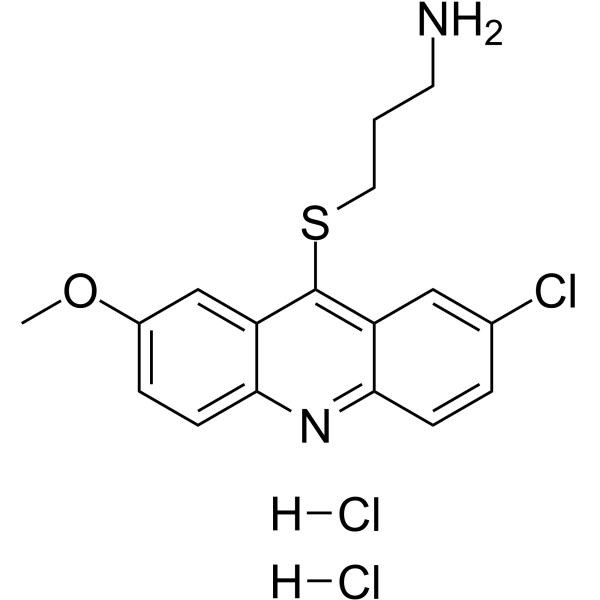
    LDN-209929 dihydrochloride is a potent and selective haspin kinase inhibitor (IC50=55 nM) with180-fold selectivity verses DYRK2 (IC50=9.9 μM). LDN-209929 is a optimized analogue of LDN-192960 (HY-13455) .
    LDN-209929 dihydrochloride
  • HY-153081

    Fluorescent Dye Others
    The eGFP circRNA will express green fluorescent protein, originally isolated from the jellyfish, Aequorea victoria. The eGFP is a commonly used direct detection reporter in mammalian cell culture, yielding bright green fluorescence with an emission peak at 509 nm. The eGFP circRNA is therefore ideal for monitoring and optimizing transfection efficiency and is recommended as a positive control for circular RNA transfections.
    eGFP circRNA
  • HY-137910

    Environmental Pollutants HPPD Herbicide Infection
    Tembotrione is a herbicide belonging to the HPPD (dioxygenase) inhibitor class with crop selectivity. Tembotrione effectively controls a variety of weeds including broadleaf and gramineous species by disrupting carotenoid synthesis, which leads to chlorophyll degradation and leaf whitening. Mixing Tembotrione with isoxaflutole or adding surfactants optimizes its efficacy and reduces phytotoxicity, with no residual impact on subsequent cruciferous crops, thus helping to increase maize grain yield. The activity of Tembotrione decreases under drought conditions, and under specific conditions (such as double-dose treatment), it may cause reversible yellowing and even yield reduction in crops such as poppy .
    Tembotrione
  • HY-P3187

    DNA/RNA Synthesis Others
    Exo-1,4-β-xylosidase is an exonuclease that specifically acts on the β-1,4 glycosidic bonds at the non-reducing ends of xylan and xylooligosaccharides. Exo-1,4-β-xylosidase is Ca 2+-dependent and reversibly binds to metal ions to catalyze the hydrolysis of β-1,4 glycosidic bonds, thereby degrading xylan to produce xylose. Exo-1,4-β-xylosidase can be used in research fields such as lignocellulose bioconversion, bioethanol production, and optimization of xylan saccharification processes .
    exo-β-1,4-Xylosidase, Cellulosimicrobium cellulans sp. 21
  • HY-W008201

    Drug Intermediate Inflammation/Immunology
    tert-Butyl 3-formylpyrrolidine-1-carboxylate is a drug intermediate that can be used for the synthesis nonpeptidic αvβ6 Integrin inhibitors .
    tert-Butyl 3-formylpyrrolidine-1-carboxylate
  • HY-100982

    trans-4-Hydroxycrotonic acid; trans-γ-Hydroxycrotonic acid; T‐HCA

    GABA Receptor Neurological Disease
    (E)-4-Hydroxycrotonic acid (T-HCA) is a high-affinity ligand for GHB binding sites, with a ki value of 1.1 μM. The introduction of diaryl substituents into (E)-4-Hydroxycrotonic acid significantly enhances its affinity for GHB binding sites, with ki values ranging from 0.023 to 0.075 μM. (E)-4-Hydroxycrotonic acid holds promise for optimizing GHB ligand structures and assisting in the development of effective three-dimensional pharmacophore models .
    (E) -4-Hydroxycrotonic acid
  • HY-153082

    Fluorescent Dye Others
    Firefly Luciferase circRNA will express a luciferase protein, originally isolated from the Photinus pyralis (Firefly). Firefly Luciferase circRNA is ideal for monitoring and optimizing transfection efficiency and is recommended as a positive control for circular RNA transfections.
    Firefly Luciferase circRNA
  • HY-163671

    GPR52 Neurological Disease
    PW0729 (compound 15b) is an orphan GPR52 agonist with potential applications in GPR52 activation, signaling bias, and neuropsychiatric and neurological disorders. The brain exposure characteristics of PW0729 need to be further optimized .
    PW0729
  • HY-W006187

    (Rac)-H-Phg(4-Me)-OH

    Glutaminase Cancer
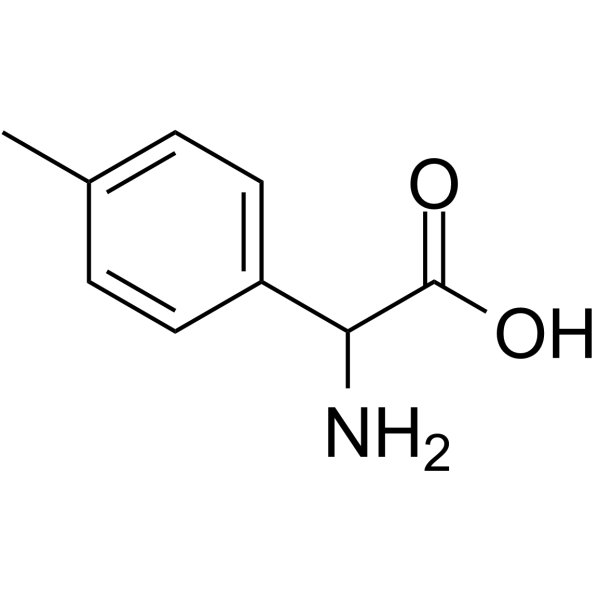
    2-Amino-2-(p-tolyl)acetic acid is used for optimizing azide skeleton, and is the intermediate in the synthesis of 1,3, 4-thiadiazole compounds. 1,3,4-thiadiazole compounds exhibit potential anti-cancer activity, and inhibit glutaminase (GLSI) .
    2-Amino-2-(p-tolyl)acetic acid
  • HY-167876

    PI3K Cancer
    PQR514 is a potent PI3K inhibitor with anticancer activity. PQR514 is able to inhibit cancer cell proliferation. PQR514 showed significant antitumor activity in the OVCAR-3 xenograft model, with the required concentration being approximately one-eighth that of PQR309. PQR514 has good pharmacokinetic properties and minimal brain penetration, making it an optimized candidate compound for inhibiting systemic tumors .
    PQR514
  • HY-154927

    Liposome Cancer
    DSPE-PEG-Cy5 is a fluorescent lipophilic PEG lipid. DSPE-PEG-Cy5 can insert into cell membranes and localize uniformly on them. DSPE-PEG-Cy5 can serve as a fluorescent model molecule to optimize and validate membrane insertion conditions for cell surface functionalization. DSPE-PEG-Cy5 can be used in research on drug delivery, cancer, and other fields .
    DSPE-PEG-Cy5
  • HY-163436

    FXR Cytochrome P450 RAR/RXR PPAR ROR Metabolic Disease
    F44-A13 is an orally active and highly selective farnesoid X receptor (FXR) antagonist with an IC50 value of 1.1 μM. F44-A13 can optimize cholesterol metabolism and reduce its activity by inducing CYP7A1 expression. F44-A13 reduces levels of cholesterol, triglycerides, and low-density lipoprotein cholesterol (LDL-C) in mouse models. F44-A13 can be used in the study of metabolic diseases associated with lipid disorders .
    F44-A13
  • HY-117380

    Neurokinin Receptor Neurological Disease
    SB 235375 is a potent and selective antagonist of the human neurokinin-3 (hNK-3) receptor designed by optimizing the structure of 2-phenyl-4-quinolinecarboxylic acid amide. SB 235375 displays high affinity for the hNK-3 receptor, with significantly higher binding affinities than hNK-2 and hNK-1 receptors. In vitro studies demonstrated its ability to block NK-3 receptor-mediated contraction and calcium mobilization, while in vivo, SB 223412 demonstrated oral and intravenous activity against NK-3 receptor-driven responses in animal models .
    SB 235375
  • HY-P4389

    GLP Receptor Metabolic Disease
    (Asp28)-Glucagon (1-29) (human, rat, porcine) is an optimized structure of glucagon, the 28th position is replaced by aspartic acid (Asp) which significantly increases the aqueous solubility of glucagon in a physiological pH buffer, has the same activity as glucagon .
    (Asp28)-Glucagon (1-29) (human, rat, porcine)
  • HY-130630

    mGluR Neurological Disease
    mGluR2 modulator 1 (compound 95) is a potent and BBB-penetrated mGluR2 (metabotropic glutamate receptor-2) positive allosteric modulator, with an EC50 of 0.03 μM. mGluR2 modulator 1 can be used for psychosis research .
    mGluR2 modulator 1
  • HY-P10365

    Adhesion G Protein-coupled Receptors (AGPCRs) Others
    Vmm-p15 is a peptide agonist optimized for the adhesion G protein-coupled receptor GPR64 (also known as ADGRG2 or HE6). The affinity of VPM-p15 with GPR64 is significantly higher than that of the original p15 peptide. The cAMP level induced by VMM-P15 increased significantly, activated GPR64, and triggered downstream Gs, Gq, and G12/13 signaling. VPM-p15 can be used to study the activation mechanism of adherent GPCR family members .
    VPM-p15
  • HY-124669

    Drug Derivative Cancer
    RTC-30 is an optimized phenothiazine with anti-cancer potency. RTC-30 contains a hydroxylated linker (N) that confers increased oral bioavailability .
    RTC-30
  • HY-119526

    Biochemical Assay Reagents Others
    Bismaleimide is a compound used to prepare aerogels with excellent heat resistance. By optimizing its use as a bridging moiety and the polarity of the solvent, aerogels with good properties can be produced.
    Bismaleimide
  • HY-139205

    Indoleamine 2,3-Dioxygenase (IDO) Mitochondrial Metabolism Inflammation/Immunology
    BMT-297376 is an optimized derivative of Linrodostat (HY-101560). BMT-297376 inhibits IDO1 and the ubiquinone (Q) site of mitochondrial respiratory chain complex I. BMT-297376 is suitable for tumor immunology-related research .
    BMT-297376
  • HY-157659

    WDR5 Others
    WDR5-MLL1 antagonist 1 (compound 47) is a compound optimized through protein crystal structure guidance. It has stronger antagonistic activity against WDR5-MLL interaction with a dissociation constant (Kd) of 0.3μM.
    WDR5-47
  • HY-N8326

    Others Others
    Maltononaose is a linear oligosaccharide consisting of 9 glucose units linked by alpha-1, 4-glucoside bonds. Maltononaose is used as a substrate to study the subsites affinity of glucoamylase. Maltononaose can be used to determine the activity of amylase and to optimize the process of starch hydrolysis .
    Maltononaose
  • HY-123952

    TRC-382

    EGFR Cancer
    RTC-5 (TRC-382) is an optimized phenothiazine with anti-cancer potency. RTC-5 demonstrates efficacy against a xenograft model of an EGFR driven cancer, its effects is attributed to concomitant negative regulation of PI3K-AKT and RAS-ERK signaling .
    RTC-5
  • HY-W583317

    Biochemical Assay Reagents Endogenous Metabolite
    sSPhos Pd G2 is a palladium catalyst with excellent cross-coupling reaction activity. sSPhos Pd G2 exhibits efficient catalytic ability in the synthesis of organic molecules and compounds. sSPhos Pd G2 can effectively promote the formation of CC bonds, optimize reaction conditions and increase yields. sSPhos Pd G2 is also used in a variety of transformation reactions, helping researchers develop new materials and compounds.
    sSPhos Pd G2
  • HY-177758

    PROTACs HDAC Cancer
    HDAC6 degrader-6 (Compound 11b) is a potent and selective HDAC6 PROTAC degrader with a DC50 of 1.9 nM. HDAC6 degrader-6 has no effect on the protein levels of other HDAC family members and does not degrade IKZF1, IKZF3, and GSPT1. HDAC6 degrader-6 can be used to study multiple myeloma (Pink: HDAC6 ligand (HY-177776); Blue: CRBN ligand (HY-W998281); Black: Linker) .
    PROTAC HDAC6 degrader 8
  • HY-P3187B

    DNA/RNA Synthesis Others
    exo-β-1,4-xylosidase, Bacteroides ovatus (EC.3.2.1.37) is an exonuclease that specifically acts on the β-1,4 glycosidic bonds at the non-reducing ends of xylan and xylooligosaccharides. exo-β-1,4-xylosidase is Ca 2+-dependent and reversibly binds to metal ions to catalyze the hydrolysis of β-1,4 glycosidic bonds, thereby degrading xylan to produce xylose. exo-β-1,4-xylosidase can be used in research fields such as lignocellulose bioconversion, bioethanol production, and optimization of xylan saccharification processes .
    exo-β-1,4-xylosidase, Bacteroides ovatus
  • HY-P3187A

    DNA/RNA Synthesis Others
    exo-β-1,4-xylosidase,Clostridium stercorarium (EC.3.2.1.37) is an exonuclease that specifically acts on the β-1,4 glycosidic bonds at the non-reducing ends of xylan and xylooligosaccharides. exo-β-1,4-xylosidase is Ca 2+-dependent and reversibly binds to metal ions to catalyze the hydrolysis of β-1,4 glycosidic bonds, thereby degrading xylan to produce xylose. exo-β-1,4-xylosidase can be used in research fields such as lignocellulose bioconversion, bioethanol production, and optimization of xylan saccharification processes .
    exo-β-1,4-xylosidase, Clostridium stercorarium
  • HY-144397

    Glucocorticoid Receptor Inflammation/Immunology
    LEO 134310 is a selective, non-steroidal glucocorticoid receptor (GR) agonist optimized for topical research., LEO 134310 showed high affinity (EC50 of 14 nM) in a GR binding assay. LEO 134310 can be used for skin diseases .
    LEO 134310
  • HY-178378

    Histone Methyltransferase GLP Receptor Reactive Oxygen Species (ROS) Autophagy Apoptosis Cancer
    G9a-IN-4 is a G9a inhibitor with high selectivity (IC50 = 32 nM). G9a-IN-4 shows high selectivity against the other tested lysine/arginine methyltransferases. G9a-IN-4 exhibits high enzymatic activity against G9a and more potent antiproliferative effects against all tested cancer cells. G9a-IN-4 significantly suppresses the H3K9me2 level. G9a-IN-4 triggers autophagy by inducing the production of ROS, thus leading to cell apoptosis and cell cycle arrest at G0/G1 in CT26 colon cells. G9a-IN-4 can be used for the study of colon cancer .
    G9a-IN-4
  • HY-W250315

    pectate sodium

    Glycosidase Bacterial Endogenous Metabolite Others
    Polypectate sodium is a major component of cell wall polysaccharides (pectins) and is used as a carbon source and inducer of polygalacturonase. Polypectate sodium can also be used to evaluate alkaline active and alkaline stable pectate lyases from Streptomyces spp. and to study the optimization of polygalacturonase production from Xanthophyllum spp. and reaction conditions .
    Polypectate sodium
  • HY-175000

    Ferroptosis Polo-like Kinase (PLK) MDM-2/p53 Endocrinology Cancer
    L14-8 is a potent ferroptosis inducer. L14-8 promotes PLK1 degradation via ubiquitination, increasing TP53 phosphorylation to enhance SAT1 transcription, thereby triggering ferroptosis and cancer cell death. L14-8 can be used for the study of advanced prostate cancer .
    L14-8
  • HY-149263

    Influenza Virus Virus Protease Infection
    HAA-09 is an orally active and potent anti-influenza agent, targeting the influenza PB2_cap binding domain. HAA-09 displays potent anti-influenza A virus activity, with an EC50 of 0.03 μM. HAA-09 shows polymerase inhibition, with an IC50 of 0.06±0.004 μM. HAA-09 blocks virus replication without causing obvious cytotoxicity .
    HAA-09
  • HY-135495

    Sodium Channel Histamine Receptor Inflammation/Immunology
    AM-0466 is a sodium channel inhibitor with nanomolar levels of NaV1.7 inhibitory activity. AM-0466 exhibits potent pharmacodynamic activity in a NaV1.7-dependent histamine-induced itch model. AM-0466 also showed significant analgesic effects in capsaicin-induced pain models. After optimizing its pharmacokinetic properties, AM-0466 was advanced into in vivo targeting and efficacy models for testing .
    AM-0466
  • HY-178358

    Drug Derivative Others
    JAX-44 is a potent root architecture modulator. JAX-44 maintains primary root length while substantially increasing lateral root numbers, thereby optimizing the plant’s overall root system. JAX-44 is the metabolic precursor of JAX-77 (HY-178359) and can be converted to Indole-3-butyric acid (IBA) (HY-N0186). JAX-44 can be used for auxin biology and root development research .
    JAX-44
  • HY-178282

    JAK Inflammation/Immunology
    JAK1-IN-19 (Compound 18) is a potent JAK1 inhibitor with IC50s of 0.02, 0.5, 91 and 0.2 nM against JAK1, JAK2, JAK3 and TYK2. JAK1-IN-19 exhibits improved rat and human intrinsic clearance. JAK1-IN-19 can be used for the studies of atopic dermatitis and other autoimmune diseases .
    JAK1-IN-19
  • HY-124446

    Carboxylesterase (CES) Metabolic Disease
    Dibromsalicil (Compound 31) is a carboxylesterase (CES) inhibitor with activity of 72.7 nM against hiCE (human intestinal carboxylesterase) and 53.5 nM against rCE (rabbit liver carboxylesterase). Dibromsalicil has almost no activity against hCE1 (human liver carboxylesterase) and cholinesterase .
    Dibromsalicil
  • HY-120181

    Isocitrate Dehydrogenase (IDH) Cancer
    AGI-14100 is a metabolically stable and orally available mIDH1 inhibitor (IC50=6 nM). The pharmacochemical optimization of AGI-14100 is aimed at eliminating hPXR activation, resulting in the final drug candidate AG-120. AG-120 can be used in the study of cancers carrying IDH1 mutations. The discovery and development of AGI-14100 can be used for further studies of mutant isocitrate dehydrogenase 1 (mIDH1) inhibitors .
    AGI-14100
  • HY-114322A

    PROTACs Epigenetic Reader Domain Others
    cis-VZ185 is a VHL-based PROTACs degrader with the activity of degrading BRD9 and BRD7. cis-VZ185 can be optimized from suboptimal compounds by optimizing the connection mode and linker, and has efficient, rapid and selective degradation of BRD9 and its homologous protein BRD7.
    cis-VZ185
  • HY-160985

    Parasite Others
    Lemidosul is an anti-trypanosomiasis compound that can be further optimized for its performance as an anti-trypanosomiasis drug by means of a computer-aided drug design (CADD) approach .
    Lemidosul
  • HY-138912

    Liposome Others
    Cho-Arg TFA is a steroid-based cationic lipid with an L-Arginine headgroup. Cho-Arg TFA shows a remarkably high optimized plasmid DNA transfection efficacy .
    Cho-Arg TFA

Inquiry Online

Your information is safe with us. * Required Fields.

Salutation


Country or Region *

Applicant Name *


Organization Name *

Department *


Email Address *


Product Name *

Cat. No.


Requested quantity *

Phone Number *


Remarks

Inquiry Online

Inquiry Information

Product Name:
Cat. No.:
Quantity:
MCE Japan Authorized Agent:

