1. Search Result
Search Result
Results for "

Pif

" in MedChemExpress (MCE) Product Catalog:

17

Inhibitors & Agonists

1

Fluorescent Dye

1

Recombinant Proteins

1

Isotope-Labeled Compounds

2

Antibodies

4

Oligonucleotides

Cat. No. Product Name Target Research Areas Chemical Structure
  • HY-121629

    PDK-1 Cancer
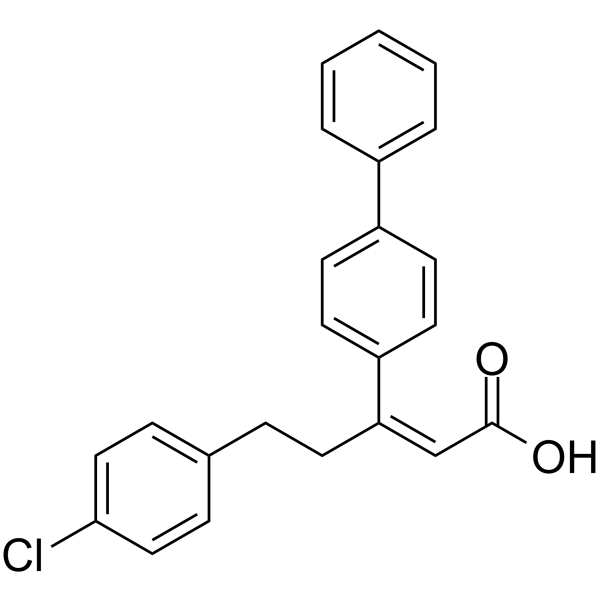
    PS210 is a potent and selective PDK1 activator with a Kd of 3 μM and targets the PIF-binding pocket of PDK1. PS210 is inactive against other protein kinases, including PDK1 downstream signaling components such as S6K, PKB/Akt or GSK3. In cells, the prodrug of PS210 (PS423) acts as a substrate-selective inhibitor of PDK1, inhibiting the phosphorylation and activation of S6K .
    PS210
  • HY-121246
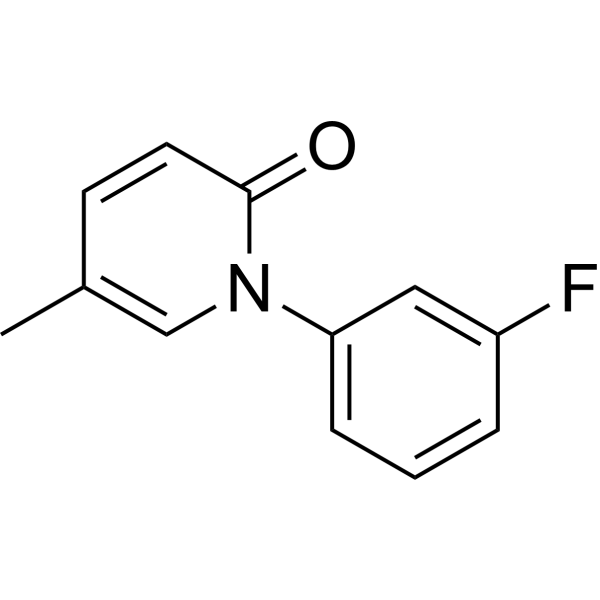
    Fluorofenidone
    1 Publications Verification

    AKF-PD

    ACSL Family NF-κB ERK TGF-beta/Smad Inflammation/Immunology Cancer
    Fluorofenidone (AKF-PD) is an orally active compound with anti-fibrotic, antioxidant, and anti-inflammatory pharmacological effects. Fluorofenidone downregulates the expression of ACSL4, upregulates GPX4 expression and inhibits the NF-κB signaling pathway to alleviate inflammation and fibrosis. Fluorofenidone ameliorates cholestasis and fibrosis by inhibiting hepatic Erk/-Egr-1 signaling and Tgfβ1/Smad pathway in mice. Fluorofenidone demonstrates protective effects against chronic lung injury in mice. Fluorofenidone can be used for the study of chronic obstructive pulmonary disease (COPD), pulmonary interstitial fibrosis (PIF) and non-small cell lung cancer (NSCLC) .
    Fluorofenidone
  • HY-114645

    PDK-1 Cancer
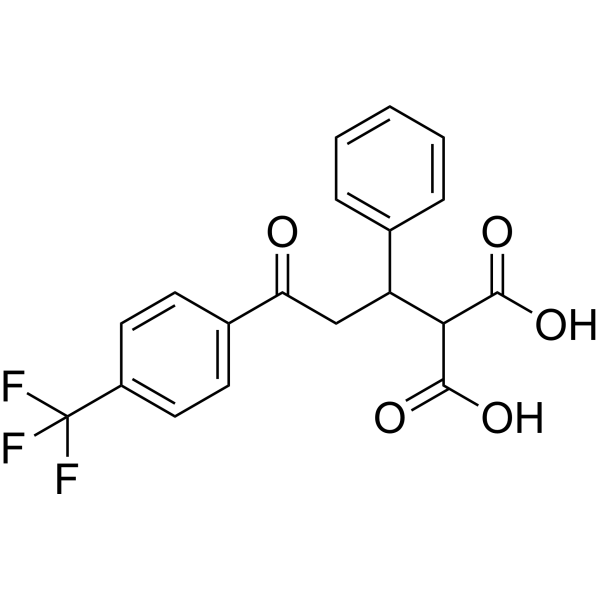
    PDK1-IN-RS2 is a mimic of peptide docking motif (PIFtide) and is a substrate-selective PDK1 inhibitor with a Kd of 9 μM. PDK1-IN-RS2 suppresses the activation of the downstream kinases S6K1 by PDK1 .
    PDK1-IN-RS2
  • HY-117809

    PDK-1 Cancer
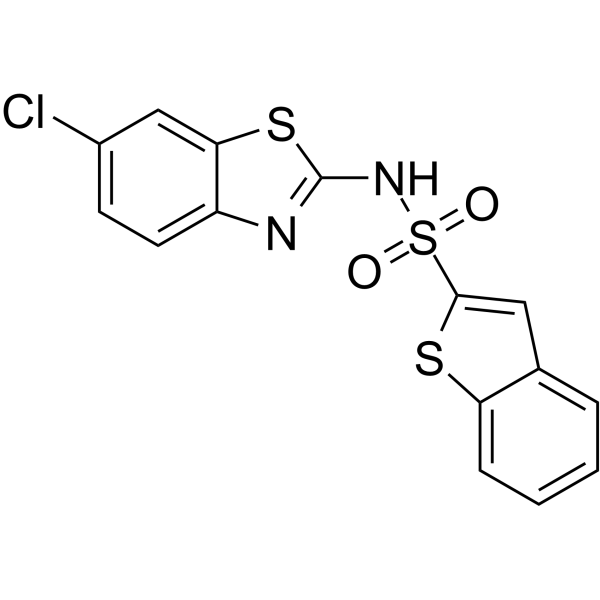
    PDK1-IN-2 is a small molecule inhibitor of 3-phosphoinositol-dependent protein kinase-1 (PDK1). PDK1-IN-2 inhibits the binding of PDK1 to its substrate by competitively binding to the PIF pocket of PDK1, thereby inhibiting the kinase activity and downstream signaling of PDK1. PDK1-IN-2 can be used for cell survival and proliferation in cancer .
    PDK1-IN-2
  • HY-13856

    PDK-1 Cancer
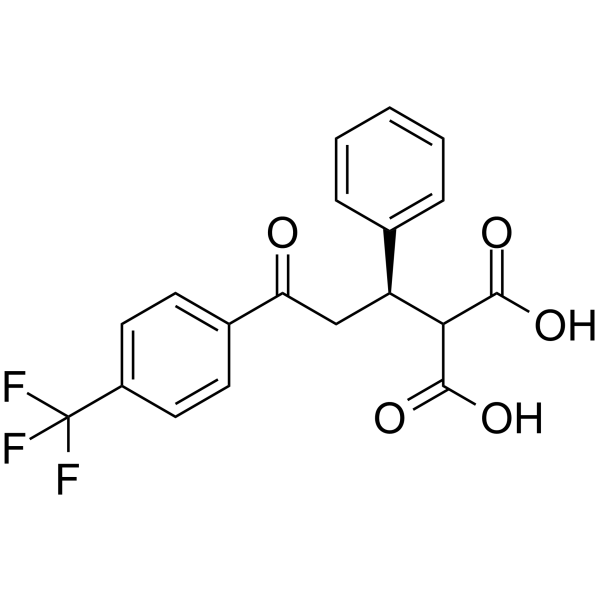
    (R)-PS210, the R enantiomer of PS210 (compound 4h-eutomer), is a substrate-selective allosteric activator of PDK1 with an AC50 value of 1.8 μM. (R)-PS210 targets to the PIF-binding pocket of?PDK1. PIF: The protein kinase C-related kinase 2 (PRK2)-interacting fragment .
    (R)-PS210
  • HY-W837864

    PDK-1 Others
    PDK1 allosteric modulator 1 is a molecule targeting PDK1 with a binding affinity of 8 μM. PDK1 allosteric modulator 1 is able to bind to the PIF pocket of PDK1, potentially affecting the biological activity of this kinase .
    PDK1 allosteric modulator 1
  • HY-175012

    DNA/RNA Synthesis Others
    PIF1-IN-1 (Compound 48) is an inhibitor of hPIF1 helicase (IC50 = 320 μM) .
    PIF1-IN-1
  • HY-RS10485

    Small Interfering RNA (siRNA) Others

    PIF1 Human Pre-designed siRNA Set A contains three designed siRNAs for PIF1 gene (Human), as well as a negative control, a positive control, and a FAM-labeled negative control.

    PIF1 Human Pre-designed siRNA Set A
    PIF1 Human Pre-designed siRNA Set A
  • HY-124060

    PDK-1 Cancer
    PS423 is a prodrug of PS210, acting as a substrate-selective inhibitor of PDK1, inhibiting the phosphorylation and activation of S6K. PS210 is a potent and selective PDK1 activator targeting the PIF binding pocket of PDK1 .
    PS423
  • HY-124308

    PKC Cancer
    PS315, a derivative of PS48 (HY-15967), is an allosteric PKC inhibitor by binding to the PIF-pocket of aPKC and inducing a displacement of the active site residue Lys111. PS315 inhibits the full-length and catalytic domain constructs of PKCζ (IC50=10 μM) and PKCη (IC50=30 μM). PS315 has anti-cancer activity .
    PS315
  • HY-RS25271

    Small Interfering RNA (siRNA) Others

    Pif1 Rat Pre-designed siRNA Set A contains three designed siRNAs for Pif1 gene (Rat), as well as a negative control, a positive control, and a FAM-labeled negative control.

    Pif1 Rat Pre-designed siRNA Set A
    Pif1 Rat Pre-designed siRNA Set A
  • HY-138206

    PGE1 isopropyl ester

    Prostaglandin Receptor Cardiovascular Disease
    Prostaglandin E1 isopropyl ester is an isopropyl ester form of prostaglandin E1 (HY-B0131). Prostaglandin E1 isopropyl ester exhibits a faster penetration flux than prostaglandin E1 .
    Prostaglandin E1 isopropyl ester
  • HY-RS03572

    Small Interfering RNA (siRNA) Others

    DCD Human Pre-designed siRNA Set A contains three designed siRNAs for DCD gene (Human), as well as a negative control, a positive control, and a FAM-labeled negative control.

    DCD Human Pre-designed siRNA Set A
    DCD Human Pre-designed siRNA Set A
  • HY-D3174

    Fluorescent Dye Metabolic Disease Inflammation/Immunology
    PiF is a fluorescent probe with high specificity for pancreatic β-cells (Ex/Em = 535 nm/565 nm), and its fluorescence signal increases significantly with elevated insulin concentrations in in vitro experiments. PiF enables visualization of rat and human islets transplanted via the portal vein in mouse livers with low liver background signals. The fluorine atom of PiF can be replaced by radioactive 18F to prepare a PET tracer. PiF can be used for research on type 1 diabetes .
    PiF
  • HY-121246R

    ACSL Family Reference Standards NF-κB ERK TGF-beta/Smad Inflammation/Immunology
    Fluorofenidone (Standard) is the analytical standard of Fluorofenidone (AKF-PD) (HY-121246). This product is intended for research and analytical applications. Fluorofenidone is an orally active compound with anti-fibrotic, antioxidant, and anti-inflammatory pharmacological effects. Fluorofenidone downregulates the expression of ACSL4, upregulates GPX4 expression and inhibits the NF-κB signaling pathway to alleviate inflammation and fibrosis. Fluorofenidone ameliorates cholestasis and fibrosis by inhibiting hepatic Erk/-Egr-1 signaling and Tgfβ1/Smad pathway in mice. Fluorofenidone demonstrates protective effects against chronic lung injury in mice. Fluorofenidone can be used for the study of chronic obstructive pulmonary disease (COPD), pulmonary interstitial fibrosis (PIF) and non-small cell lung cancer (NSCLC) .
    Fluorofenidone (Standard)
  • HY-121246S

    AKF-PD-d3

    Isotope-Labeled Compounds ACSL Family NF-κB ERK TGF-beta/Smad Inflammation/Immunology Cancer
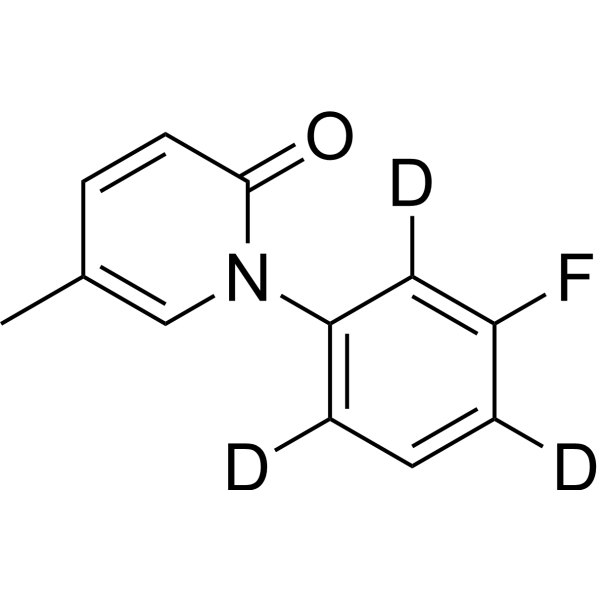
    Fluorofenidone-d3 (AKF-PD-d3) is deuterium labeled Fluorofenidone (AKF-PD) (HY-121246). Fluorofenidone is an orally active compound with anti-fibrotic, antioxidant, and anti-inflammatory pharmacological effects. Fluorofenidone downregulates the expression of ACSL4, upregulates GPX4 expression and inhibits the NF-κB signaling pathway to alleviate inflammation and fibrosis. Fluorofenidone ameliorates cholestasis and fibrosis by inhibiting hepatic Erk/-Egr-1 signaling and Tgfβ1/Smad pathway in mice. Fluorofenidone demonstrates protective effects against chronic lung injury in mice. Fluorofenidone can be used for the study of chronic obstructive pulmonary disease (COPD), pulmonary interstitial fibrosis (PIF) and non-small cell lung cancer (NSCLC) .
    Fluorofenidone-d3
  • HY-RS18782

    Small Interfering RNA (siRNA) Others

    Pif1 Mouse Pre-designed siRNA Set A contains three designed siRNAs for Pif1 gene (Mouse), as well as a negative control, a positive control, and a FAM-labeled negative control.

    Pif1 Mouse Pre-designed siRNA Set A
    Pif1 Mouse Pre-designed siRNA Set A

Inquiry Online

Your information is safe with us. * Required Fields.

Salutation


Country or Region *

Applicant Name *


Organization Name *

Department *


Email Address *


Product Name *

Cat. No.


Requested quantity *

Phone Number *


Remarks

Inquiry Online

Inquiry Information

Product Name:
Cat. No.:
Quantity:
MCE Japan Authorized Agent:

