19 Results for "

Proanthocyanidins

" in MedChemExpress (MCE) Product Catalog:
Products (19)

19 Results for "Proanthocyanidins" in MCE Product Catalog:

5
5 Cited Publications
Cat. No.: HY-N0794
CAS No.: 20347-71-1
Proanthocyanidin (Procyanidin) are a class of polyphenolic that are widely distributed in higher plants, consisted of an electrophilic flavanyl unit. Proanthocyanidin can be used as antioxidant and anti-cancers agent. Proanthocyanidin also exhibit anti-inflammatory, cardioprotective, antibacterial and antifungal properties, which can be used in the treatment of chronic venous insufficiency, capillary fragility, sunburn and retinopathy. .
loading...
    loading...
2
2 Cited Publications
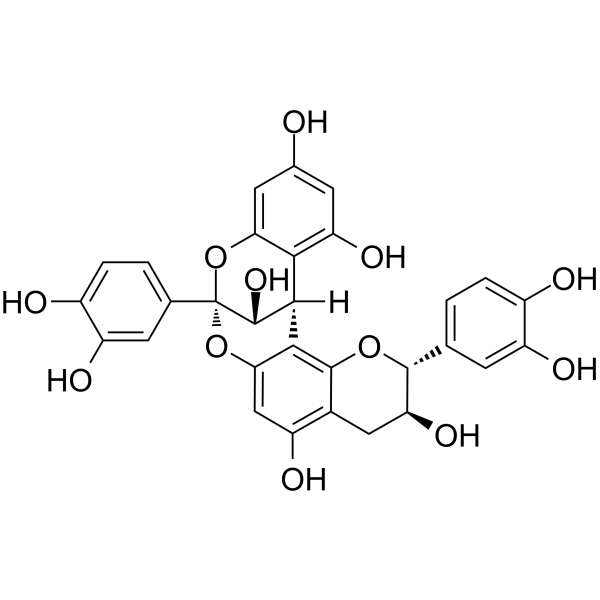
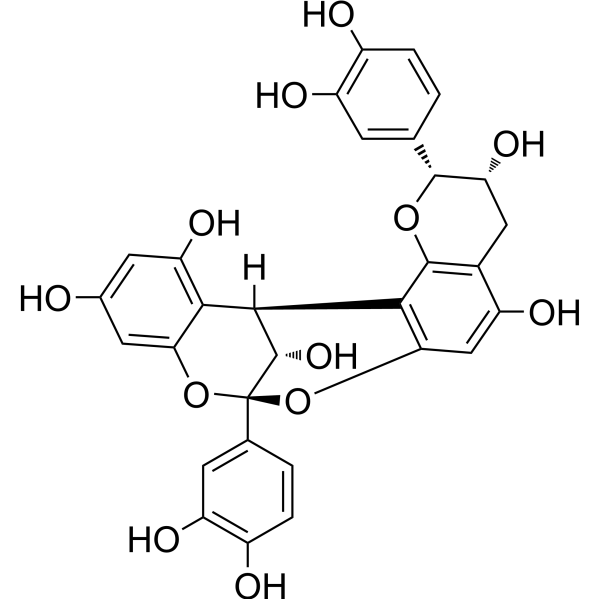
Cat. No.: HY-N2344
CAS No.: 103883-03-0
Synonyms: Proanthocyanidin A1
Procyanidin A1 (Proanthocyanidin A1) is a procyanidin dimer, which inhibits degranulation downstream of protein kinase C activation or Ca 2+ influx from an internal store in RBL-213 cells. Procyanidin A1 has antiallergic effects .
loading...
    loading...
1
1 Cited Publications
Cat. No.: HY-W016729
CAS No.: 6203-18-5
4-(Dimethylamino) cinnamaldehyde is a staining agent that reacts with flavan-3-ols and Proanthocyanidins (HY-N0794) bearing meta-dihydroxyl or trihydroxyl phenol structures to form a green chromophore. In acidic media, 4-(Dimethylamino) cinnamaldehyde undergoes a condensation reaction with aromatic primary amines to produce colored and stable quinoid protonated Schiff base salts. 4-(Dimethylamino) cinnamaldehyde can be used to determine indole products of apotryptophanase and tryptophanase, as well as for the detection and analysis of Proanthocyanidins, with the absorbance detection wavelength of the calibration curve set at 640 nm .
loading...
    loading...
Cat. No.: HY-130237
CAS No.: 88082-60-4
Purity:  97.25%
Cinnamtannin B-1 is a anthocyanidin. Cinnamtannin B-1 inhibits the osteoclast formation by inhibiting NF-kB signaling pathway and ROS generation. Cinnamtannin B-1 exhibits antioxidant, anti-inflammatory, antitumor and anti-platelet aggregation activities. Cinnamtannin B-1 is orally active .
loading...
    loading...
Cat. No.: HY-N4146
CAS No.: 111466-29-6
Proanthocyanidin A4 is a polyphenol found in a variety of plants. Proanthocyanidin A4 possesses anti-inflammatory effects .
loading...
    loading...
Cat. No.: HY-N11100
CAS No.: 226715-59-9
Geranin A is an A-type proanthocyanidin. Geranin A can be isolated from the antiprotozoal extract of Geranium niveum .
loading...
    loading...
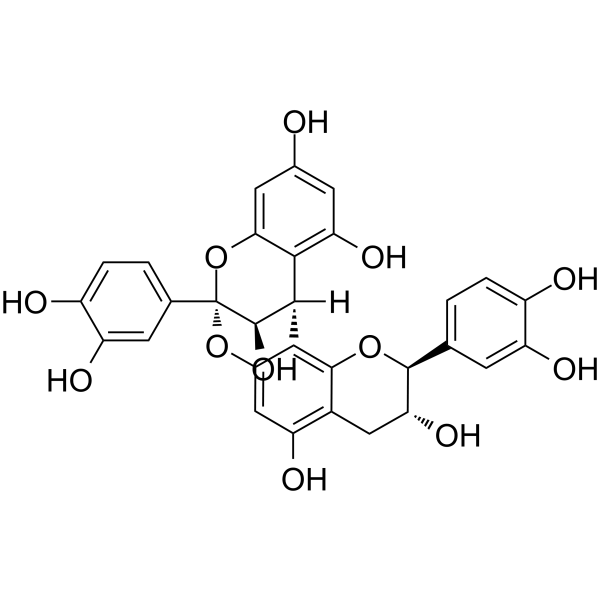
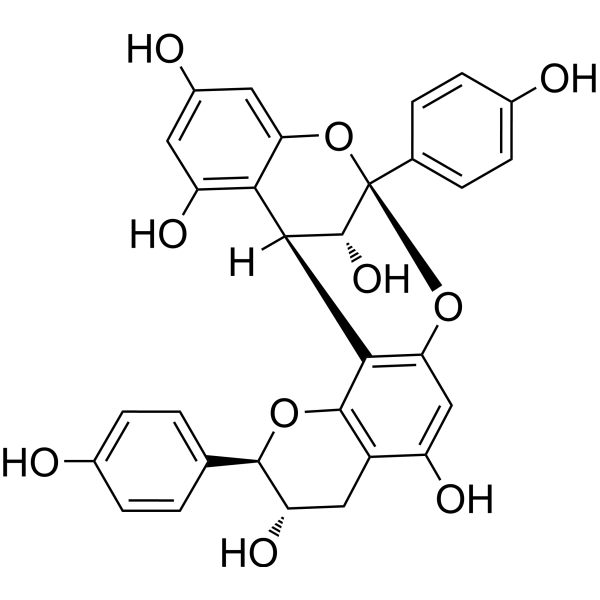
Cat. No.: HY-N4145
CAS No.: 86631-39-2
Synonyms: Cinnamtannin A3; Cinnamtannin II
Procyanidin A3 (Cinnamtannin A3; Cinnamtannin II) is a sub class of Proanthocyanidins (HY-N0794). Proanthocyanidin are a class of polyphenolic that are widely distributed in higher plants, consisted of an electrophilic flavanyl unit. Proanthocyanidin can be used as antioxidant and anti-cancer agent. Proanthocyanidin also exhibit anti-inflammatory, cardioprotective, antibacterial and antifungal properties, which can be used in the treatment of chronic venous insufficiency, capillary fragility, sunburn and retinopathy .
loading...
    loading...
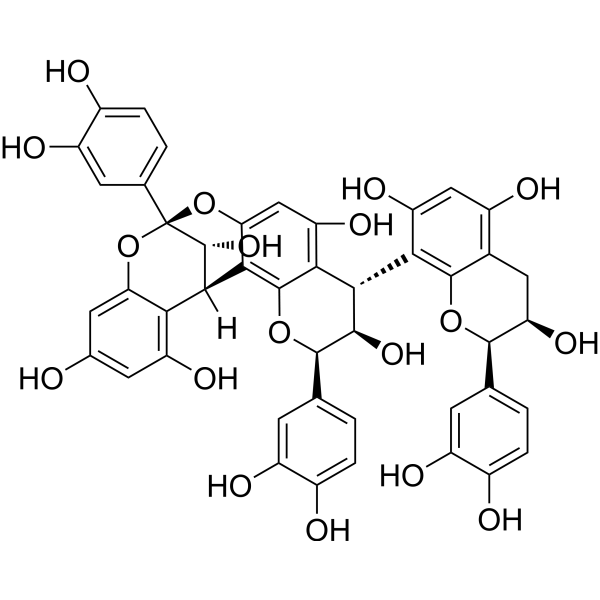
Cat. No.: HY-N16480
CAS No.: 651750-97-9
Synonyms: Lindetannin trimer
Lindetannin (Lindetannin trimer) is an A-type trimer of proanthocyanidin (HY-N0794) found in the bark of Cinnamomum trees. Proanthocyanidin are a class of polyphenolic that are widely distributed in higher plants, consisted of an electrophilic flavanyl unit. Proanthocyanidin can be used as antioxidant and anti-cancer agent. Proanthocyanidin also exhibit anti-inflammatory, cardioprotective, antibacterial and antifungal properties, which can be used in the treatment of chronic venous insufficiency, capillary fragility, sunburn and retinopathy .
loading...
    loading...
Cat. No.: HY-N4146R
CAS No.: 111466-29-6
Proanthocyanidin A4 (Standard) is the analytical standard of Proanthocyanidin A4. This product is intended for research and analytical applications. Proanthocyanidin A4 is a polyphenol found in a variety of plants. Proanthocyanidin A4 possesses anti-inflammatory effects .
loading...
    loading...
Cat. No.: HY-N11101
CAS No.: 111466-30-9
Procyanidin A5' is A dimerized proanthocyanidin type A .
loading...
    loading...
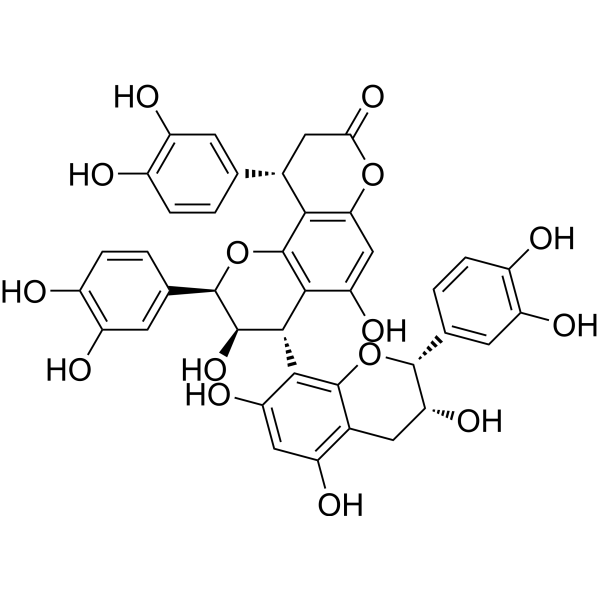
Cat. No.: HY-N7709
CAS No.: 85022-68-0
Cinchonain IIb is a proanthocyanidin. Cinchonain IIb has the effect of rational utilization of decreased cardiac function. Cinchonain IIb is isolated from natural hawthorn (Crataegus spp. ) .
loading...
    loading...
Cat. No.: HY-N16482
CAS No.: 1206883-80-8
Cassiatannin A is a tetramer of proanthocyanidin (HY-N0794) found in Cinnamomum cassia. Cassiatannin A shows COX-2 inhibitor activity with inhibition rate of 38, 52 and 97% at 10, 100 and 1000 μg/mL. Cassiatannin A can be used for the research of inflammation .
loading...
    loading...
Cat. No.: HY-N16481
CAS No.: 347406-26-2
Parameritannin A-1 is a tetrameric proanthocyanidin (PAC) that can be isolated from the bark of Parameria laevigata Moldenke (Apocynaceae). Parameritannin A-1 is a COX-2 inhibitor. Parameritannin A-1 also inhibits the activity of phospholipase A2 (PLA2) .
loading...
    loading...
Cat. No.: HY-N2344R
CAS No.: 103883-03-0
Synonyms: Proanthocyanidin A1 (Standard)
Procyanidin A1 (Standard) is the analytical standard of Procyanidin A1. This product is intended for research and analytical applications. Procyanidin A1 (Proanthocyanidin A1) is a procyanidin dimer, which inhibits degranulation downstream of protein kinase C activation or Ca2+ influx from an internal store in RBL-213 cells. Procyanidin A1 has antiallergic effects .
loading...
    loading...
Cat. No.: HY-130237R
CAS No.: 88082-60-4
Cinnamtannin B-1 (Standard) is the analytical standard of Cinnamtannin B-1. This product is intended for research and analytical applications. Cinnamtannin B-1 is a anthocyanidin. Cinnamtannin B-1 inhibits the osteoclast formation by inhibiting NF-kB signaling pathway and ROS generation. Cinnamtannin B-1 exhibits antioxidant, anti-inflammatory, antitumor and anti-platelet aggregation activities. Cinnamtannin B-1 is orally active .
loading...
    loading...
Cat. No.: HY-N20545
Synonyms: Blueberry Proanthocyanidins
Category:  

Extract

Target:  

Others

Blueberry extract (Blueberry proanthocyanidins) is an extract of blueberry (Vaccinium Section Cyanococcus) with antioxidant, anti-inflammatory and neuroprotective properties.
loading...
    loading...
Cat. No.: HY-N13200
Research Areas:  

Infection Cancer

Cranberry Extract is the extract of Cranberry, with content of 25% -50% Proanthocyanidins. Cranberry Extract exhibits anti-virus and antimicrbiol activity. Cranberry Extract suppresses fungal growth and biofilm formation. Cranberry Extract reduces NF-κB p65 phosphorylation, and PI3K/AKT signaling; increases caspase-8/9 activity to induce apoptosis, modulates oxidative stress, inflammation, and lipid profiles. Cranberry Extract exerts antiproliferative effects and induces cell cycle arrest. Cranberry Extract can be used for the research of infection and cancers .
loading...
    loading...
Cat. No.: HY-W714933
CAS No.: 78362-05-7
Synonyms: (4,8)-(+)-Gallocatechin-(+)-catechin
Target:  

Caspase Apoptosis

Research Areas:  

Inflammation/Immunology Cancer

Prodelphinidin B3 is a proanthocyanidin compound that exhibits significant anti-tumor activity. Prodelphinidin B3 induces cell cycle arrest at the G1/G0 phase in PC-3 cells, activates caspase-3, and promotes apoptosis. Prodelphinidin B3 can induce the differentiation of leukemia cells and synergistically enhance retinoic acid (HY-14649)-induced granulocytic differentiation and sodium butyrate (HY-B0350A)-induced monocytic differentiation in HL-60 cells. Prodelphinidin B3 also possesses antioxidant activity. Prodelphinidin B3 is used in research on prostate cancer and leukemia .
loading...
    loading...
Cat. No.: HY-N18905
CAS No.: 161713-86-6
α-D-Glucosyl hesperidin is an orally effective structural modification derivative of Hesperidin (HY-15337) with anti-apoptotic (apoptosis) and antioxidant activities. α-D-Glucosyl hesperidin upregulates the expression of the Bcl-2 gene, while downregulating the expressions of the Bax and caspase-3 genes. α-D-Glucosyl hesperidin increases total antioxidant capacity, SOD and catalase levels, and decreases malondialdehyde and glutathione levels. α-D-Glucosyl hesperidin improves sperm motility, viability and plasma membrane function, while restoring reproductive organ weight and seminiferous tubule structure. α-D-Glucosyl hesperidin increases fertility index and exerts a synergistic protective effect with Proanthocyanidins (HY-N0794) in male rats with testicular ischemia-reperfusion injury. α-D-Glucosyl hesperidin can be used in the research of testicular ischemia-reperfusion injury .
loading...
    loading...
  • 1

