1. Search Result
Search Result
Results for "

RAS GTPase

" in MedChemExpress (MCE) Product Catalog:

19

Inhibitors & Agonists

33

Recombinant Proteins

17

Antibodies

1

Oligonucleotides

Cat. No. Product Name Target Research Areas Chemical Structure
  • HY-13452
    CID-1067700
    10+ Cited Publications

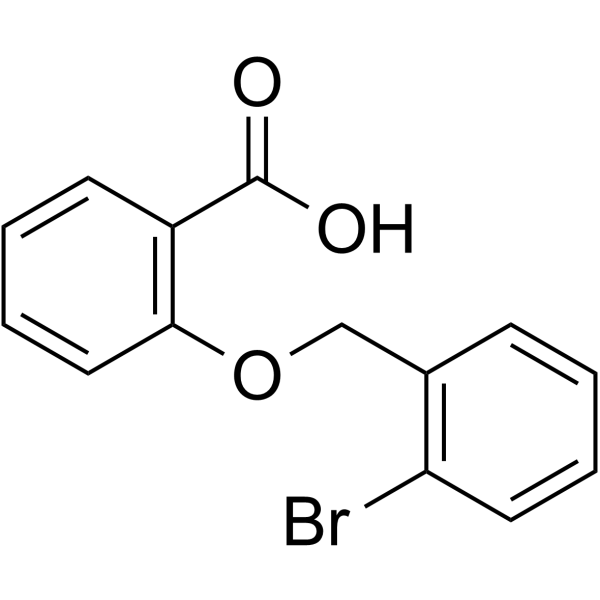
    ML282

    Ras Inflammation/Immunology
    CID-1067700 (ML282) is a pan GTPase inhibitor, and competitively inhibits Ras-related in brain 7 (Rab7) with a Ki of 13 nM.
    CID-1067700
  • HY-16659
    EHT 1864
    Maximum Cited Publications
    22 Publications Verification

    Ras Neurological Disease Cancer
    EHT 1864 is an inhibitor of Rac family small GTPases. EHT 1864 directly binds and impairs the ability of this small GTPase to engage critical downstream effectors required for growth transformation. The Kd values are 40, 50, 60, and 230 nM for Rac1, Rac1b, Rac2 and Rac3, respectively. EHT 1864 also potently inhibits other Rac-dependent transformation processes, Tiam1- and Ras-mediated growth transformation. EHT 1864 prevents Aβ 40 and Aβ 42 production in vivo. EHT 1864 dependently suppresses the release of migrasomes from podocytes induced by LPS, PAN, or HG .
    EHT 1864
  • HY-B0515
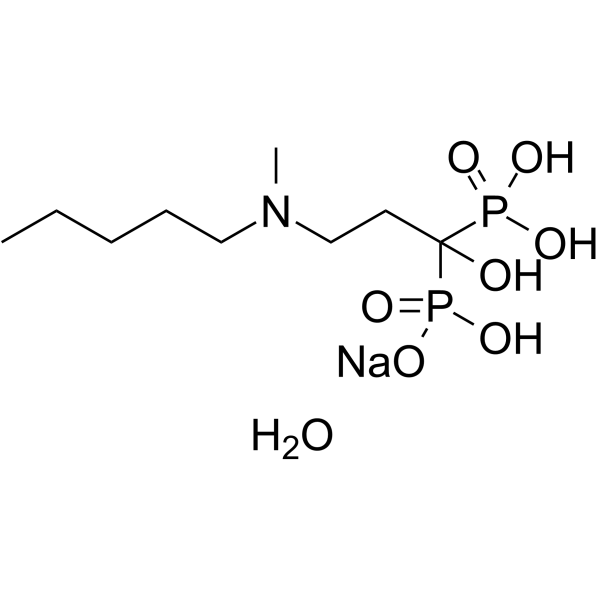
    Ibandronate Sodium Monohydrate
    1 Publications Verification

    BM-210955; RPR-102289A

    Apoptosis Metabolic Disease Cancer
    Ibandronate Sodium Monohydrate (BM-210955; RPR-102289A) is an orally active, selective inhibitor of farnesyl pyrophosphate synthase (FPP synthase). Ibandronate Sodium Monohydrate can block the mevalonate pathway to inhibit the isoprenylation modification of small GTPases (such as RAS, RHO family proteins), induce tumor cell apoptosis and inhibit bone resorption. Ibandronate Sodium Monohydrate inhibits tumor cell proliferation (such as ER + breast cancer cells), promotes the expression of the pro-apoptotic gene FAS, and can produce synergistic anti-tumor effects with anti-estrogen compounds. Ibandronate Sodium Monohydrate is used in the study of osteoporosis and bone metastatic tumors (such as breast cancer bone metastasis) .
    Ibandronate Sodium Monohydrate
  • HY-124306
    ML-099
    5 Publications Verification

    CID-888706

    Ras Cancer
    ML-099 (CID-888706) is a pan Ras-related GTPases activator that can activate Rac1, cell division cycle 42, Ras, Rab7, and Rab-2A .
    ML-099
  • HY-113849
    MLS-573151
    3 Publications Verification

    MLS000573151

    Ras Inflammation/Immunology
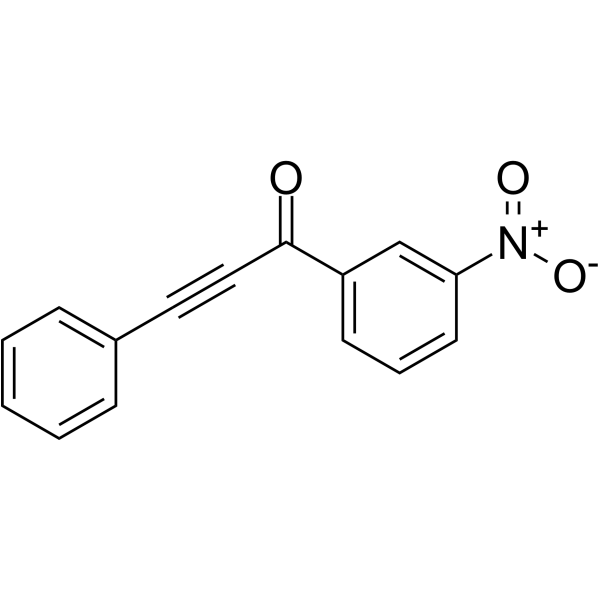
    MLS-573151 (MLS000573151) is a selective GTPase Cdc42 inhibitor with an EC50 of 2 μM. MLS-573151 is inactive against other GTPases family members, such as Rab2, Rab7, H-Ras, Rac1, Rac 2 and RhoA wild-type. MLS-573151 acts by blocking the binding of GTP to Cdc42 .
    MLS-573151
  • HY-129189

    Ras Cancer
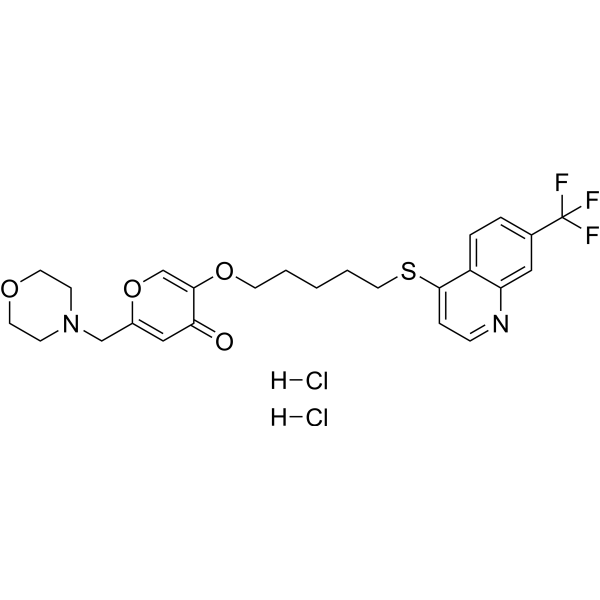
    RAS GTPase inhibitor 1 (example 51) is a RAS GTPase inhibitor with anti-tumor activity, extracted from patent WO2018212774A1. RAS GTPase inhibitor 1 (example 51) exhibits an EC50 less than 1 μM for at least one nucleotide exchange and an IC50 less than 1 μM in H727 cells .
    RAS GTPase inhibitor 1
  • HY-117149

    Ras Cancer
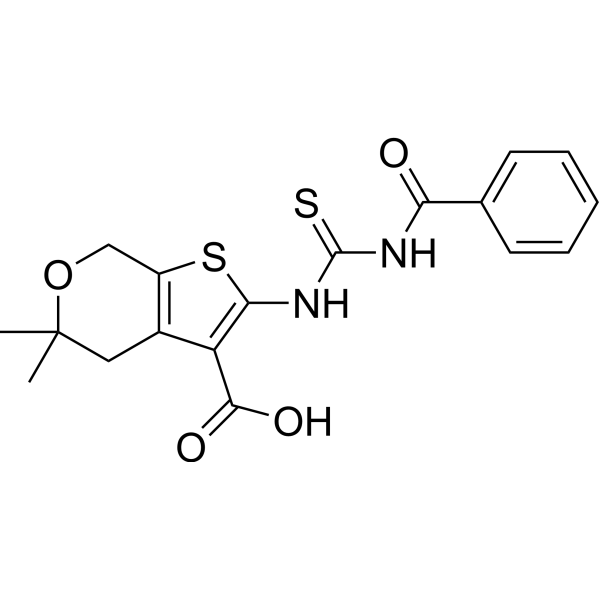
    MLS000532223 is a high affinity, selective inhibitor of Rho family GTPases, with EC50 values ranging from 16 μM to 120 μM. MLS000532223 prevents GTP binding to several GTPases .
    MLS000532223
  • HY-B0515B
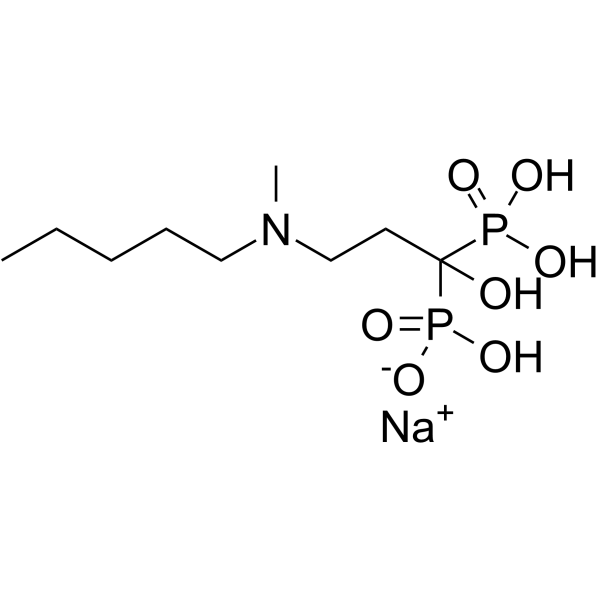
    Ibandronate Sodium
    1 Publications Verification

    Apoptosis Metabolic Disease Cancer
    Ibandronate Sodium is an orally active, selective inhibitor of farnesyl pyrophosphate synthase (FPP synthase). Ibandronate Sodium can block the mevalonate pathway to inhibit the isoprenylation modification of small GTPases (such as RAS, RHO family proteins), induce tumor cell apoptosis and inhibit bone resorption. Ibandronate Sodium inhibits tumor cell proliferation (such as ER+ breast cancer cells), promotes the expression of the pro-apoptotic gene FAS, and can produce synergistic anti-tumor effects with anti-estrogen compounds. Ibandronate Sodium is used in the study of osteoporosis and bone metastatic tumors (such as breast cancer bone metastasis) .
    Ibandronate Sodium
  • HY-118208
    ML-097
    2 Publications Verification

    CID-2160985

    Ras Cancer
    ML-097 (CID-2160985) is a pan Ras-related GTPases activator that can activate Rac1, cell division cycle 42, Ras, and Rab7 .
    ML-097
  • HY-178211

    Ras MEK ERK Akt Cancer
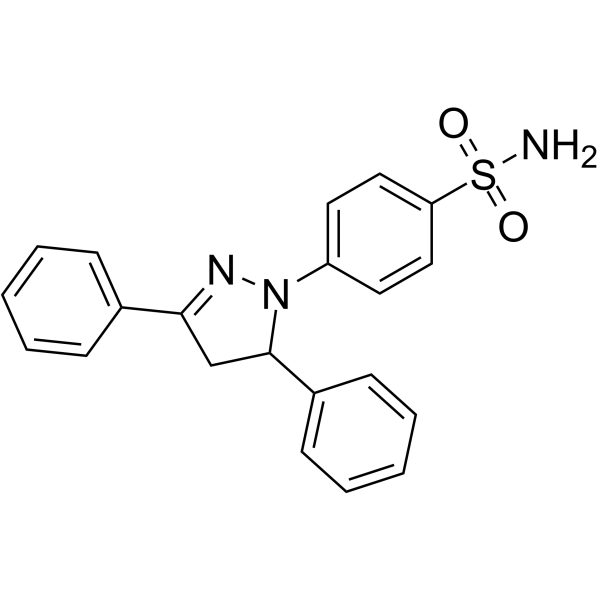
    SHY-867 is a pan RAS inhibitor. SHY-867 effectively prevents the binding of K-Ras proteins and other members of the Ras superfamily of small GTPases with EC50 values of 0.5-3 μM. SHY-867 effectively inhibits the phosphorylation of MEK, ERK1/2, and AKT downstream of K-Ras. SHY-867 inhibits the formation of the Ras-GTP activity complex. SHY-867 can be used to the studies of pancreatic cancer and non-small cell lung cancer .
    SHY-867
  • HY-170327
    ZCL279
    1 Publications Verification

    Ras Cancer
    ZCL279 is a small molecule modulator (SMM) that inhibits Cdc42-intersectin (ITSN) interaction. ZCL279 can activate Cdc42 (a cytoplasmic small GTPase in the Ras superfamily) at lower concentrations (<10 μM) and significantly inhibit it at higher concentrations (<10 μM) .
    ZCL279
  • HY-146223

    Ras p38 MAPK PI3K Apoptosis Cancer
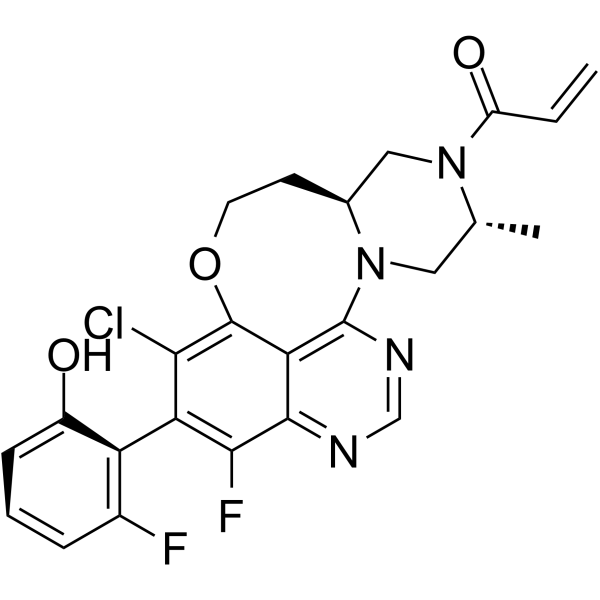
    AZD4625 is an orally active, selective irreversible, covalent allosteric GTPase KRASG12C inhibitor with an IC50 of 3 nM. AZD4625 can inhibit the MAPK pathway (with decreased pCRAF, pMEK, and pERK) and the PI3K pathway (with decreased pAKT and pS6), and induce cell apoptosis. AZD4625 has no binding and inhibition of wild-type RAS or isoforms carrying non-KRASG12C mutations. AZD4625 can be used for the study of KRASG12C mutant non-small cell lung cancer .
    AZD4625
  • HY-178194

    Ras MEK ERK Akt Cancer
    SHY-855 is a pan RAS inhibitor. SHY-855 effectively prevents the binding of K-Ras proteins and other members of the Ras superfamily of small GTPases with IC50 values of 0.3-5 μM. SHY-855 effectively inhibits the phosphorylation of MEK, ERK1/2, and AKT downstream of K-Ras. SHY-855 inhibits the formation of the Ras-GTP activity complex. SHY-855 can be used to the studies of pancreatic cancer and non-small cell lung cancer .
    SHY-855
  • HY-184359

    Ras Metabolic Disease Inflammation/Immunology Cancer
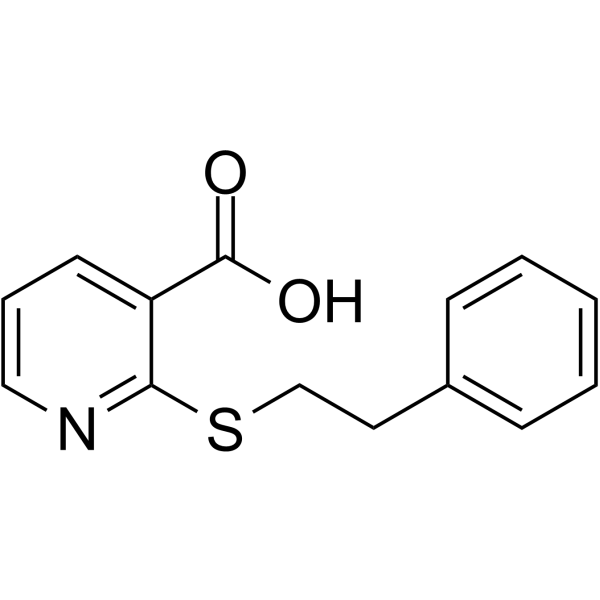
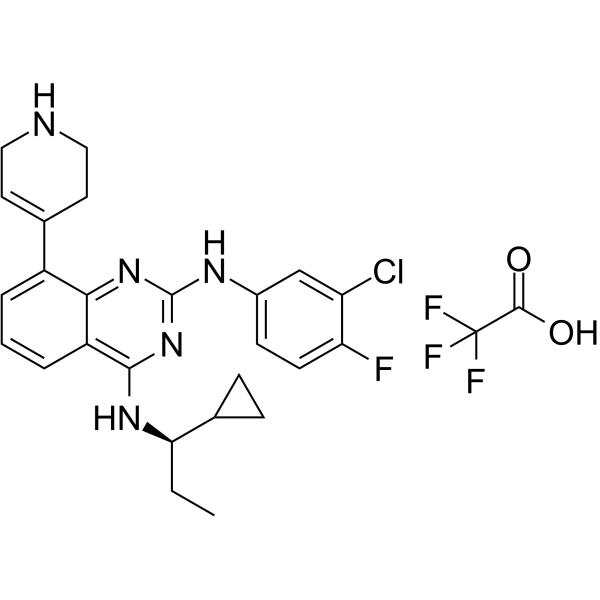
    RAS GTPase-IN-2 is a RAS GTPase inhibitor. RAS GTPase-IN-2 can be used in the research of cancer, ras-related autoimmune leukocytosis and certain types of mitochondrial dysfunction .
    RAS GTPase-IN-2
  • HY-113225B

    GTP tritris

    Endogenous Metabolite Exosomes Cancer
    Guanosine triphosphate tritris (GTP tritris) serves as a vital enhancer of myogenic cell differentiation and plays a critical role in modulating miRNA-myogenic regulator factors. It also facilitates the release of exosomes enriched with guanosine and guanosine-derived molecules, and is regarded as an activated precursor for RNA synthesis. In mitochondrial function, GTP participates in the import of proteins into the matrix, which is essential for various regulated pathways, and is involved in initiating peptide synthesis through the binding of formylmethionyl-tRNA to the ribosome, as well as polypeptide chain elongation. Additionally, GTP acts as a phosphate and pyrophosphate carrier that channels chemical energy into specific biosynthetic pathways. It activates signal transducing G proteins that regulate cellular processes such as proliferation and differentiation, and its hydrolysis by small GTPases, including Ras and Rho, is integral to both proliferation and apoptosis. Furthermore, the small GTPase Rab is instrumental in vesicle docking, fusion, and formation. Beyond signal transduction, GTP is an energy-rich precursor in the enzymatic biosynthesis of DNA and RNA.
    Guanosine triphosphate tritris
  • HY-146223A

    Ras PI3K p38 MAPK Apoptosis Cancer
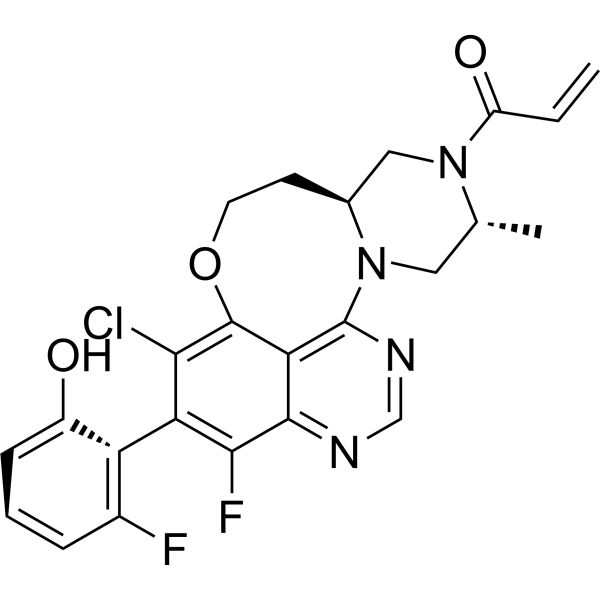
    (3R,10R,14aS)-AZD4625 is the isomer of AZD4625 (HY-146223), and can be used as an experimental control. AZD4625 is an orally active, selective irreversible, covalent allosteric GTPase KRASG12C inhibitor with an IC50 of 3 nM. AZD4625 can inhibit the MAPK pathway (with decreased pCRAF, pMEK, and pERK) and the PI3K pathway (with decreased pAKT and pS6), and induce cell apoptosis. AZD4625 has no binding and inhibition of wild-type RAS or isoforms carrying non-KRASG12C mutations. AZD4625 can be used for the study of KRASG12C mutant non-small cell lung cancer .
    (3R,10R,14aS)-AZD4625
  • HY-B0515R

    BM-210955 (Standard); RPR-102289A (Standard)

    Reference Standards Apoptosis Cancer
    Ibandronate Sodium Monohydrate (BM-210955; RPR-102289A) (Standard) is the analytical standard of Ibandronate Sodium Monohydrate (HY-B0515). This product is intended for research and analytical applications. Ibandronate Sodium Monohydrate (BM-210955; RPR-102289A) is an orally active, selective inhibitor of farnesyl pyrophosphate synthase (FPP synthase). Ibandronate Sodium Monohydrate can block the mevalonate pathway to inhibit the isoprenylation modification of small GTPases (such as RAS, RHO family proteins), induce tumor cell apoptosis and inhibit bone resorption. Ibandronate Sodium Monohydrate inhibits tumor cell proliferation (such as ER + breast cancer cells), promotes the expression of the pro-apoptotic gene FAS, and can produce synergistic anti-tumor effects with anti-estrogen compounds. Ibandronate Sodium Monohydrate is used in the study of osteoporosis and bone metastatic tumors (such as breast cancer bone metastasis) .
    Ibandronate Sodium Monohydrate (Standard)
  • HY-174717

    mRNA Cancer
    Human ERAS mRNA encodes the human ES cell expressed Ras (ERAS) protein, a constitutively active member of the small GTPase Ras protein family. ERAS may be involved in cancer and chemotherapy resistance.
    Human ERAS mRNA
  • HY-186087

    Ras ERK Cyclophilin Cancer
    RM-046 is an orally active, selective ternary complex inhibitor of KRAS Q61H (active form). RM-046 forms a ternary complex with cyclophilin A, binds to active KRAS Q61H in a non-covalent manner, blocks effector binding via steric hindrance and inhibits downstream signal transduction. RM-046 inhibits ERK phosphorylation and cancer cell proliferation, and induces sustained RAS pathway signal inhibition, anti-tumor activity and tumor regression in preclinical xenograft models. RM-046 can be used for the research of KRAS Q61H mutant cancers .
    RM-046

Inquiry Online

Your information is safe with us. * Required Fields.

Salutation


Country or Region *

Applicant Name *


Organization Name *

Department *


Email Address *


Product Name *

Cat. No.


Requested quantity *

Phone Number *


Remarks

Inquiry Online

Inquiry Information

Product Name:
Cat. No.:
Quantity:
MCE Japan Authorized Agent:

