
Search Result
Results for "
RNA delivery
" in MedChemExpress (MCE) Product Catalog:
22
Biochemical Assay Reagents
| Cat. No. |
Product Name |
Target |
Research Areas |
Chemical Structure |
-
- HY-B2247A
-
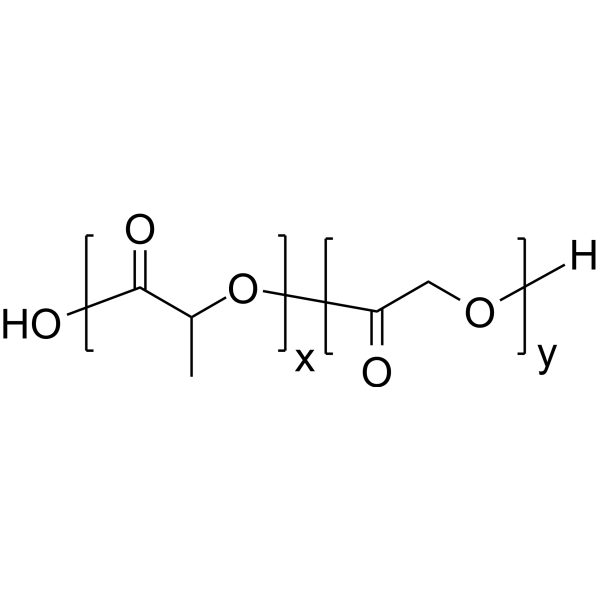
PLGA (75:25)
Maximum Cited Publications
6 Publications Verification
poly(lactic-co-glycolic acid) (75:25)
|
Biochemical Assay Reagents
|
Others
|
|
PLGA (75:25) is a low toxicity, biocompatible and biodegradable controlled drug delivery carrier, can achieve slow release in the organism. PLGA (75:25) is a copolymer of 75% poly lactic acid (PLA) and 25% poly glycolic acid (PGA). PLGA (75:25) has been extensively studied as delivery vehicles for agents, proteins and various other macromolecules such as DNA, RNA and peptides .
|
-
-
- HY-145799
-
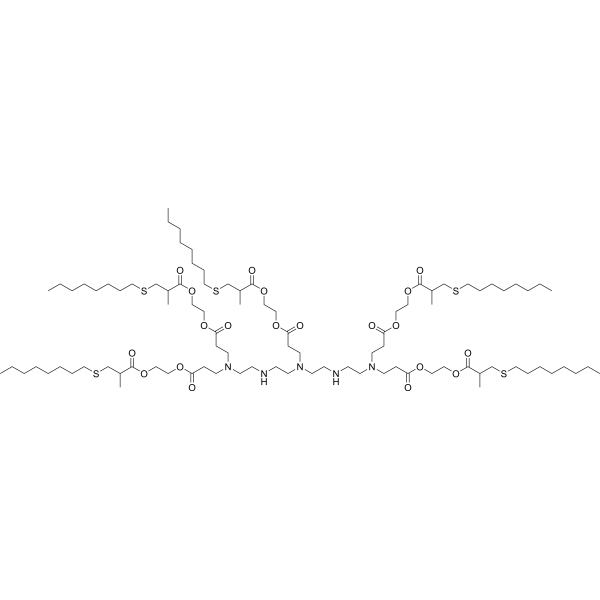
5A2-SC8
1 Publications Verification
|
Liposome
|
Cancer
|
|
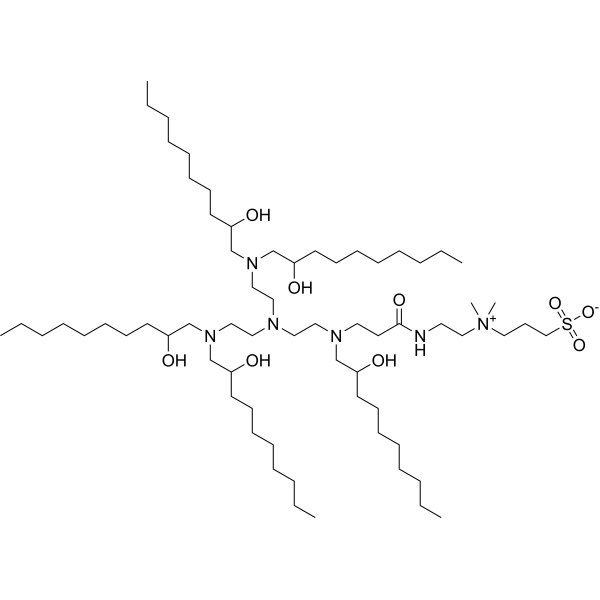
5A2-SC8 is an ionizable amino lipid in lipid nanoparticles (LNPs) that shows high delivery potential and low in vivo toxicity, enabling efficient delivery of small RNAs such as siRNA and miRNA into tumor cells. 5A2-SC8 LNPs can confer a unique delivery fate of RNA within the liver, thereby changing the therapeutic outcomes in cancer models .
|
-
-
- HY-112760
-
|
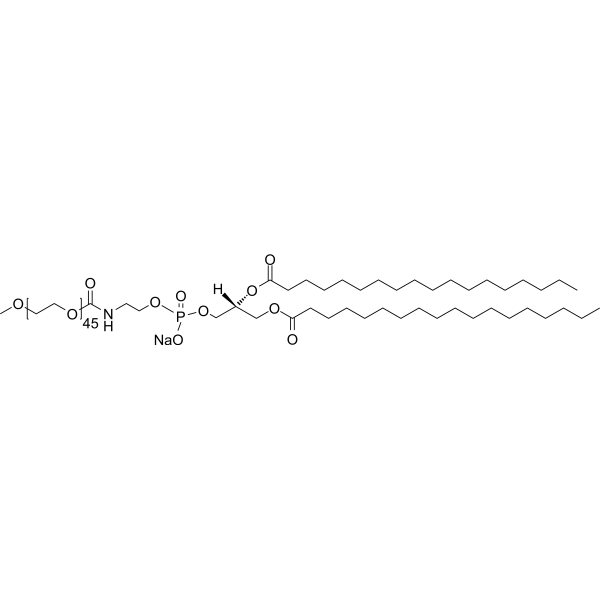
DSPE-mPEG2000 sodium; 1,2-Distearoyl-sn-glycero-3-phosphoethanolamine-N-[methoxy(polyethylene glycol)-2000] sodium
|
Liposome
|
Others
|
|
18:0 mPEG2000 PE (DSPE-mPEG2000) sodium is a conjugate of phospholipid and polyethylene glycol, and it can serve as an important PEG lipid component in lipid nanoparticles (LNPs). 18:0 mPEG2000 PE sodium can be used in the research of gene transfection, drug carriers and drug delivery .
|
-
-
- HY-151507
-
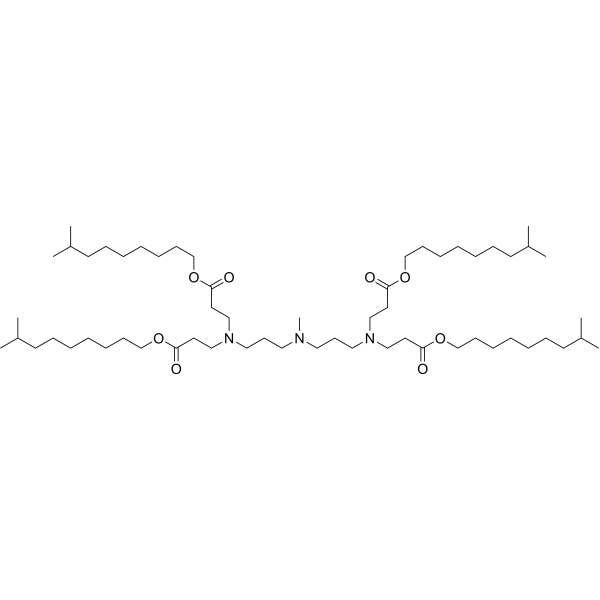
306Oi10
1 Publications Verification
|
Liposome
|
Others
|
|
306Oi10 is a branched ionizable lipid that can be used to construct lipid nanoparticles (LNPs) for delivering messenger RNA. The surface ionization of lipid nanoparticles is related to the effectiveness of mRNA delivery. The tail of 306Oi10 has a one-carbon branch, which provides it with stronger surface ionization compared to lipids with linear tails, thereby enhancing its mRNA delivery efficacy. 306Oi10 can be used in research related to mRNA delivery .
|
-
-
- HY-W440832
-
|
|
Liposome
|
Infection
|
|
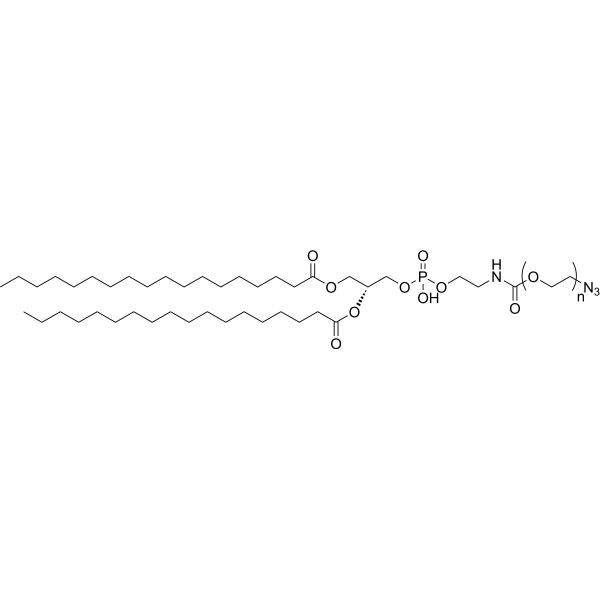
DSPE-PEG2000-azide is an azide containing lipid that can be used to form micelles as nanoparticles for drug delivery . DSPE-PEG2000-azide is a click chemistry reagent, it contains an Azide group and can undergo copper-catalyzed azide-alkyne cycloaddition reaction (CuAAc) with molecules containing Alkyne groups. It can also undergo strain-promoted alkyne-azide cycloaddition (SPAAC) reactions with molecules containing DBCO or BCN groups.
|
-
-
- HY-153229
-
|
|
mRNA
Biochemical Assay Reagents
|
Others
|
|
Firefly luciferase mRNA-LNP is a lipid nanoparticle (LNP) containing firefly luciferase mRNA. Firefly luciferase mRNA-LNP exhibits a stable nanostructure, in which LNP plays a key role in effectively protecting and transporting mRNA to cells. Luciferase is a bioluminescent reporter gene for gene regulation and functional studies. Firefly Luciferase mRNA-LNP expresses firefly luciferase protein after entering the cells, which is often used for promoter activity detection or dual fluorescent molecular complementation experiments. Firefly luciferase mRNA-LNP is studied in research for RNA delivery, cell viability, and translation efficiency .
|
-
-
- HY-145794
-
|
|
Liposome
|
Cancer
|
|
ZA3-Ep10 is a zwitterionic lipid used in lipid nanoparticles formulation for in vivo RNA delivery.
|
-
-
- HY-148859
-
-
-
- HY-153232
-
|
|
Fluorescent Dye
Liposome
|
Others
|
|
eGFP circRNA-LNP is a lipid nanoparticle (LNP) containing eGFP circRNA, suitable for assays of RNA delivery, translation efficiency, cell viability, etc. eGFP circRNA carries Enhanced Green Fluorescent Protein (Enhanced Green Fluorescent Protein) eGFP, which will express green fluorescent protein after entering the cell. eGFP is commonly used as a reporter gene detectable by fluorescence microscopy or flow cytometry .
|
-
-
- HY-147266
-
|
VIR-2218 sodium
|
Small Interfering RNA (siRNA)
HBV
|
Infection
|
|
Elebsiran (VIR-2218) sodium is a siRNA that targets and degrades hepatitis B virus (HBV) and hepatitis D virus (HDV) RNA transcripts. Elebsiran sodium leads to a significant decrease in HBV surface antigen (HBsAg) and a reduction in viral load. Elebsiran sodium binds to the sialic acid-depleted glycoprotein receptor (ASGPR) on the surface of liver cells through the GalNAc ligand, achieving liver-targeted delivery and demonstrating improved liver safety. Elebsiran sodium can be used for the study of chronic HBV/HDV infections .
|
-
-
- HY-153235
-
|
|
mRNA
SARS-CoV
Liposome
|
Infection
|
|
COVID-19 Spike Protein mRNA-LNP is a lipid nanoparticle (LNP) containing mRNA encoding COVID-19 Spike Protein. COVID-19 Spike Protein undertakes the functions of virus binding with host cell receptors, thereby mediating the entry of COVID-19 virus into cells. COVID-19 Spike Protein is an important site of action for host neutralizing antibodies and a key target for vaccine design. COVID-19 Spike Protein mRNA-LNP can be used for RNA delivery, vaccine formulation and design targeting SARS-CoV-2 .
|
-
-
- HY-154974
-
|
|
Liposome
|
Cancer
|
|
LNP Lipid-8 (11-A-M) is an ionizable single-tail multi-head lipid that can be used as a lipid nanoparticle (LNP) to deliver siRNA to T cells without targeting ligands. LNP Lipid-8 is more selective for T cells than other cell types such as hepatocytes. LNP Lipid-8 selectively delivers siRNA/sgRNA to T cells (especially CD8+ T cells) through endogenous lipid transport pathways, and can enter cells and release RNA through endocytosis to achieve gene silencing. LNP Lipid-8 loaded with GFP siRNA (siGFP) significantly led to GFP gene silencing in mouse models. LNP Lipid-8 showed good efficacy and safety in both cells and animals, without obvious liver targeting and toxicity. LNP Lipid-8 can be used for RNA delivery research in the fields of tumor immunotherapy and T cell-mediated autoimmune diseases .
|
-
-
- HY-D1719A
-
|
|
Fluorescent Dye
|
Cancer
|
|
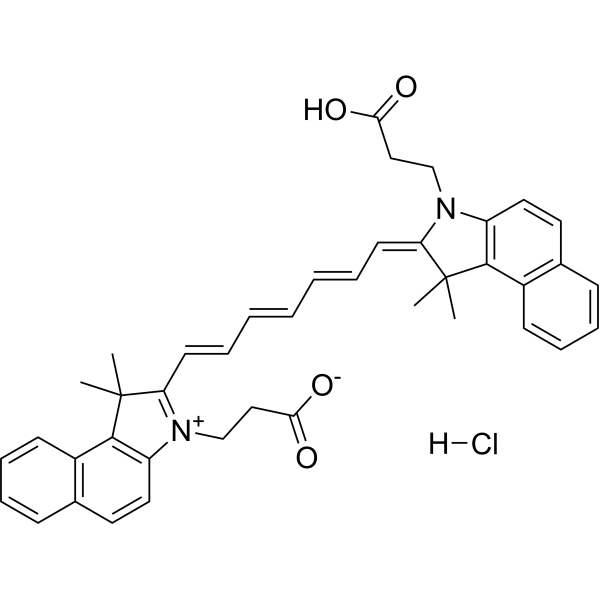
Cypate is a near-infrared fluorescent dye that belongs to the family of photosensitizers. Cypate has high photostability and optical properties, and is often used in near-infrared optical imaging, as well as optical imaging, tumor marking, and drug delivery. In addition, Cypate is also used as a molecular probe and combined with targeting molecules (such as CBT or small interfering RNA) to achieve efficient detection and imaging of specific cells or tissues .
|
-
-
- HY-164583
-
|
|
Phosphoramidites
DNA/RNA Synthesis
|
Others
|
|
DMTr-2'-O-C22-rA-3'-CE-Phosphoramidite is an RNA phosphoramidite monomer. DMTr-2'-O-C22-rA-3'-CE-Phosphoramidite allows site-specific introduction of a 2'-O-C22 lipophilic modification at adenosine positions to construct double-stranded RNA (dsRNA) molecules with extrahepatic delivery capability. DMTr-2'-O-C22-rA-3'-CE-Phosphoramidite supports target gene silencing in skeletal muscle, cardiac muscle and adipose tissue by enhancing the lipophilicity and tissue uptake efficiency of dsRNA. DMTr-2'-O-C22-rA-3'-CE-Phosphoramidite can be used for the construction and mechanism research of nucleic acid silencing molecules .
|
-
-
- HY-153231A
-
|
|
Fluorescent Dye
Liposome
|
Others
|
|
eGFP mRNA-LNP (500 ng/μL) is a lipid nanoparticle (LNP) containing eGFP mRNA. eGFP mRNA-LNP carries Enhanced Green Fluorescent Protein (eGFP), which will express green fluorescent protein after entering the cell. eGFP is commonly used as a reporter gene detectable by fluorescence microscopy or flow cytometry (excitation wavelength = 488 nm; emission wavelength = 535/40 bandpass). eGFP mRNA-LNP can be used for RNA delivery, translation efficiency and cell viability .
|
-
-
- HY-159067
-
|
DEAE-dextran, MW 500000 hydrochloride, from bacterial (Leuconostoc mesenteroides); Diethylaminoethyl-dextran, MW 500000 hydrochloride
|
Biochemical Assay Reagents
|
Cancer
|
|
DEAE-dextran, MW 500000 hydrochloride (DEAE-dextran, MW 500000 hydrochloride, from bacterial (Leuconostoc mesenteroides)) is a high-molecular-weight positively charged polymer that significantly enhances the uptake of viral RNA by tissue culture cells. When employed in the delivery system for "tumor immunity" RNA-splenocyte transfer, DEAE-dextran can markedly extend the lifespan of tumor-bearing animals, comparable to that of actively immunized animals. Furthermore, DEAE-dextran serves as a complexing agent for nucleic acids, forming composite particles with DNA/RNA for extensive applications in gene delivery. Additionally, DEAE-dextran can be utilized as a coating for liposomes .
|
-
-
- HY-164582
-
|
|
Phosphoramidites
DNA/RNA Synthesis
|
Others
|
|
DMTr-2'-O-C22-rC (Ac)-3'-CE-Phosphoramidite is an RNA phosphoramidite monomer. DMTr-2'-O-C22-rC (Ac)-3'-CE-Phosphoramidite enables site-specific introduction of 2'-O-C22 lipophilic modification at cytidine positions during oligonucleotide synthesis, which is used to construct double-stranded RNA (dsRNA) molecules with extrahepatic delivery capability. DMTr-2'-O-C22-rC (Ac)-3'-CE-Phosphoramidite supports target gene silencing in skeletal muscle, cardiac muscle and adipose tissue by enhancing the lipophilicity and tissue uptake efficiency of dsRNA. Construction and mechanism study of DMTr-2'-O-C22-rC (Ac)-3'-CE-Phosphoramidite nucleic acid silencing molecules .
|
-
-
- HY-145799A
-
|
|
Liposome
|
Cancer
|
|
5A2-SC8 TFA is an ionizable amino lipid in lipid nanoparticles (LNPs) that shows high delivery potential and low in vivo toxicity, enabling efficient delivery of small RNAs such as siRNA and miRNA into tumor cells. 5A2-SC8 TFA LNPs can confer a unique delivery fate of RNA within the liver, thereby changing the therapeutic outcomes in cancer models .
|
-
-
- HY-167015
-
|
|
Liposome
|
Others
|
|
1O14 is an ionizable lipid. The ability of ionizable lipids to form unstable non-bilayer structures at acidic pH is key for endosomal escape and cytosolic delivery of RNA. 1O14 can be used in the preparation of liposomes .
|
-
-
- HY-144016
-
|
|
Liposome
|
Others
|
|
16:0 EPC chloride, a P-O-ethyl derivative, is a saturated cationic lipid. 16:0 EPC chloride can serve as a DNA and RNA transfecting agent. 16:0 EPC chloride can be used as a co-adjuvant for preparing vaccines and promote drug delivery .
|
-
-
- HY-167012
-
|
|
Liposome
|
Others
|
|
306Oi9-cis2 is an ionizable lipid. The ability of ionizable lipids to form unstable non-bilayer structures at acidic pH is key for endosomal escape and cytosolic delivery of RNA. 306Oi9-cis2 can be used in the preparation of liposomes .
|
-
-
- HY-147266A
-
|
VIR-2218
|
HBV
Small Interfering RNA (siRNA)
|
Infection
|
|
Elebsiran (VIR-2218) is a siRNA that targets and degrades hepatitis B virus (HBV) and hepatitis D virus (HDV) RNA transcripts. Elebsiran leads to a significant decrease in HBV surface antigen (HBsAg) and a reduction in viral load. Elebsiran binds to the sialic acid-depleted glycoprotein receptor (ASGPR) on the surface of liver cells through the GalNAc ligand, achieving liver-targeted delivery and demonstrating improved liver safety. Elebsiran can be used for the study of chronic HBV/HDV infections .
|
-
-
- HY-159709
-
|
|
Liposome
|
Metabolic Disease
|
|
VL-422 is an ionizable cationic lipid. VL-422 delivers CRISPR complementary single-guide RNA (sgRNA) and Cas9 mRNA to enable in vitro and in vivo gene editing. LNPs containing VL-422 loaded with Cas9 mRNA and sgRNA targeting the ANGPTL3 gene induce the deletion of premature stop codons within the ANGPTL3 gene in the liver of cynomolgus monkeys. Loss-of-function of ANGPTL3 leads to decreased levels of LDL, HDL and cholesterol in plasma. The VL-422 delivery system can be used for the research of gene editing strategies targeting lipid metabolism diseases .
|
-
-
- HY-164581
-
|
|
Phosphoramidites
DNA/RNA Synthesis
|
Others
|
|
DMTr-2'-O-C22-rG (ibu)-3'-CE-Phosphoramidite is an RNA phosphoramidite monomer for oligonucleotide synthesis. DMTr-2'-O-C22-rG (ibu)-3'-CE-Phosphoramidite enables site-specific introduction of 2'-O-C22 lipophilic modification at guanosine positions to construct double-stranded RNA (dsRNA) molecules with extrahepatic delivery capability. DMTr-2'-O-C22-rG (ibu)-3'-CE-Phosphoramidite supports target gene silencing in skeletal muscle, cardiac muscle and adipose tissue by enhancing the lipid solubility and tissue uptake efficiency of dsRNA. DMTr-2'-O-C22-rG (ibu)-3'-CE-Phosphoramidite can be used for the construction and mechanism research of nucleic acid silencing molecules .
|
-
-
- HY-177531
-
|
|
Liposome
mRNA
|
Neurological Disease
Inflammation/Immunology
Cancer
|
|
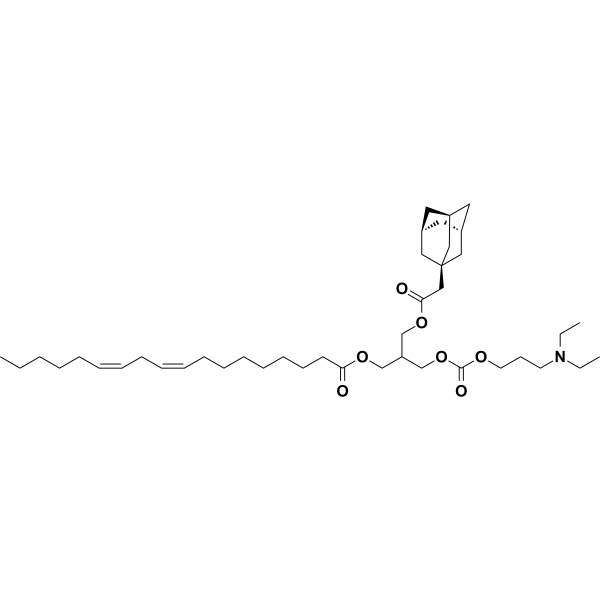
S-Ac7-DOG is a cationic lipid with biodegradability, low immunogenicity and high nucleic acid transfection capacity, which is commonly used to construct lipid nanoparticles for nucleic acid molecule delivery. S-Ac7-DOG can bind to mRNA, microRNA and self-amplifying RNA through electrostatic interaction. Lipid nanoparticles formed by S-Ac7-DOG enter cells via an energy-dependent endocytic pathway, release nucleic acid cargos, induce antigen-specific CD8 + T cell responses, promote the generation of precursor memory T cells, and regulate neuroinflammatory pathways. S-Ac7-DOG can be used in the research of retinal diseases, neuroinflammation and cancer .
|
-
-
- HY-151512
-
-
-
- HY-150117
-
|
|
Liposome
|
Others
|
|
Lipid 6 is an ionizable amino lipid. Lipid 6 can be used to synthesize lipid nanoparticles. Lipid 6 can be used in RNA delivery research .
|
-
-
- HY-156985
-
|
|
Isotope-Labeled Compounds
Liposome
|
Others
|
|
Lipid AX4 is an ionizable cationic lipid with the pKa of 6.89, and can be used the study for the formation of lipid nanoparticles (LNPs) for the delivery of mRNA in vivo .
|
-
-
- HY-172018
-
|
|
Liposome
|
Cancer
|
|
CP-LC-0729 is an ionizable cationic amino lipid efficient delivery of different kinds of RNA (mRNA, cRNA and saRNA) .
|
-
-
- HY-176754
-
|
|
Liposome
|
Metabolic Disease
Inflammation/Immunology
|
|
TCL065 is an ionizable lipid with a pKa of 6.3. TCL065 can be used to generate lipid nanoparticles (LNPs) for the delivery of mRNA as well as single-guide RNA (sgRNA) both in vitro and in vivo. TCL065-containing LNPs can studied in research for Duchenne muscular dystrophy and gene-editing technologies .
|
-
-
- HY-171113
-
|
|
Liposome
|
Cancer
|
|
CP-LC-1143 is an ionizable cationic amino lipid efficient delivery of different kinds of RNA (mRNA, cRNA and saRNA).
|
-
-
- HY-172014
-
|
|
Liposome
|
Cancer
|
|
CP-LC-0743 is an ionizable cationic amino lipid efficient delivery of different kinds of RNA (mRNA, cRNA and saRNA) .
|
-
-
- HY-172016
-
|
|
Liposome
|
Cancer
|
|
CP-LC-0867 is an ionizable cationic amino lipid efficient delivery of different kinds of RNA (mRNA, cRNA and saRNA) .
|
-
-
- HY-172015
-
|
|
Liposome
|
Cancer
|
|
CP-LC-1143 is an ionizable cationic amino lipid efficient delivery of different kinds of RNA (mRNA, cRNA and saRNA) .
|
-
-
- HY-167004A
-
|
|
Liposome
|
Others
|
|
IAJD249 is an ionizable lipid. The ability of ionizable lipids to form unstable non-bilayer structures at acidic pH is key for endosomal escape and cytosolic delivery of RNA. IAJD249 can be used in the preparation of liposomes .
|
-
-
- HY-167004
-
|
|
Liposome
|
Others
|
|
IAJD93 is an ionizable lipid. The ability of ionizable lipids to form unstable non-bilayer structures at acidic pH is key for endosomal escape and cytosolic delivery of RNA. IAJD93 can be used in the preparation of liposomes .
|
-
-
- HY-167003
-
|
|
Liposome
|
Others
|
|
L16 is an ionizable lipid. The ability of ionizable lipids to form unstable non-bilayer structures at acidic pH is key for endosomal escape and cytosolic delivery of RNA. L16 can be used in the preparation of liposomes .
|
-
-
- HY-167011
-
|
|
Liposome
|
Others
|
|
Al-28 is an ionizable lipid. The ability of ionizable lipids to form unstable non-bilayer structures at acidic pH is key for endosomal escape and cytosolic delivery of RNA. Al-28 can be used in the preparation of liposomes .
|
-
-
- HY-153230
-
|
|
Liposome
Biochemical Assay Reagents
|
Others
|
|
Firefly luciferase circRNA-LNP is a lipid nanoparticle (LNP) containing Firefly luciferase circRNA, suitable for assays of RNA delivery, translation efficiency, cell viability, etc. Luciferase is commonly used as a bioluminescent reporter gene for gene regulation and function studies. Firefly Luciferase circRNA will express firefly luciferase protein after entering the cells, which is often used for promoter activity detection or dual fluorescent molecular complementation experiments. Common luciferase are firefly luciferase and sea kidney luciferase .
|
-
-
- HY-172332
-
|
|
Liposome
NF-κB
|
Inflammation/Immunology
Cancer
|
|
H1L1A1B3 is an ionizable cationic lipid used in the formation of lipid nanoparticles (LNPs) for the delivery of circular RNA (circRNA). H1L1A1B3-LNPs demonstrates a fourfold increase in circRNA transfection efficiency in lung cancer cells over ALC-0315 (HY-138170). H1L1A1B3 can activate the NF-κB/IRF immune pathways .
|
-
-
- HY-164231
-
|
1-Stearoyl-2-arachidonoyl-sn-glycero-3-phospho-L-serine; SAPS(18:0/20:4(5Z,8Z,11Z,14Z))
|
Biochemical Assay Reagents
|
Others
|
|
18:0,20:4 PS (1-Stearoyl-2-arachidonoyl-sn-glycero-3-phospho-L-serine) is a phosphatidylserine component for RNA particle formulations. 18:0,20:4 PS can be used as RNA delivery vehicles .
|
-
-
- HY-164231A
-
|
1-Stearoyl-2-arachidonoyl-sn-glycero-3-phospho-L-serine sodium; SAPS(18:0/20:4(5Z,8Z,11Z,14Z)) sodium
|
Biochemical Assay Reagents
|
Others
|
|
18:0,20:4 PS (1-Stearoyl-2-arachidonoyl-sn-glycero-3-phospho-L-serine) sodium can be incorporated into RNA particles that act as RNA delivery vehicles for in vivo application, facilitating delivery of RNA to target tissues .
|
-
-
- HY-172017
-
|
|
Liposome
|
Cancer
|
|
CP-LC-1254 is an ionizable cationic amino lipid efficient delivery of different kinds of RNA (mRNA, cRNA and saRNA) .
|
-
-
- HY-167002
-
|
|
Liposome
|
Others
|
|
RM 137-15 is an ionizable lipid. The ability of ionizable lipids to form unstable non-bilayer structures at acidic pH is key for endosomal escape and cytosolic delivery of RNA. RM 137-15 can be used in the preparation of liposomes .
|
-
-
- HY-W1130407
-
|
|
Liposome
|
Others
|
|
CP-LC-1073 is a specific ionizable cationic amino lipid derived from the amino acid homocysteine. CP-LC-1073 can used in lipid nanoparticle (LNP) formulations for efficient in vivo delivery and expression of RNA (mRNA, cRNA, saRNA).
|
-
-
- HY-172926
-
|
|
Others
|
Others
|
|
CP-LC-1428 is an ionizable cationic amino lipid derived from homocysteine. CP-LC-1428 can be used for efficient delivery of various RNAs and achieve high protein expression. CP-LC-1428 can specifically target the spleen and has no obvious toxicity .
|
-
-
- HY-176027
-
|
|
Liposome
|
Others
|
|
CP-LC-1422 is a homocysteine-derived ionizable amino lipid with high RNA delivery capability and can mediate high-level protein expression in vivo. CP-LC-1422 exhibits significant spleen targeting via intravenous injection in a lipid nanoparticle (LNP) formulation with no significant toxicity observed .
|
-
-
- HY-P11698
-
|
|
DNA Alkylator/Crosslinker
Transthyretin (TTR)
|
Cancer
|
Guanidino-G-Clamp-PNA is a highly efficient sequence-specific RNA binder and gene silencer. Guanidino-G-Clamp-PNA precisely targets such targets as miR-155 or transthyretin (TTR) mRNA through base pairing: the former regulates tumor-related signaling pathways by reducing microRNA activity, while the latter inhibits the translation of harmful proteins via steric hindrance. Guanidino-G-Clamp-PNA effectively stabilizes DNA/RNA duplexes, induces cancer cell apoptosis, and suppresses tumor growth. In addition, Guanidino-G-Clamp-PNA can be conjugated with targeting ligands to improve tissue-specific delivery and reduce in vivo adverse reactions, and it can also enhance the splicing regulation efficacy of other oligonucleotide platforms (such as PMO) when integrated into them. Guanidino-G-Clamp-PNA is applicable to the research of various diseases including diffuse large B-cell lymphoma and hereditary transthyretin-related amyloidosis .
|
-
| Cat. No. |
Product Name |
Type |
-
- HY-145799
-
5A2-SC8
1 Publications Verification
|
Biochemical Assay Reagents
|
|
5A2-SC8 is an ionizable amino lipid in lipid nanoparticles (LNPs) that shows high delivery potential and low in vivo toxicity, enabling efficient delivery of small RNAs such as siRNA and miRNA into tumor cells. 5A2-SC8 LNPs can confer a unique delivery fate of RNA within the liver, thereby changing the therapeutic outcomes in cancer models .
|
-
- HY-112760
-
|
DSPE-mPEG2000 sodium; 1,2-Distearoyl-sn-glycero-3-phosphoethanolamine-N-[methoxy(polyethylene glycol)-2000] sodium
|
Biochemical Assay Reagents
|
|
18:0 mPEG2000 PE (DSPE-mPEG2000) sodium is a conjugate of phospholipid and polyethylene glycol, and it can serve as an important PEG lipid component in lipid nanoparticles (LNPs). 18:0 mPEG2000 PE sodium can be used in the research of gene transfection, drug carriers and drug delivery .
|
-
- HY-151507
-
306Oi10
1 Publications Verification
|
Biochemical Assay Reagents
|
|
306Oi10 is a branched ionizable lipid that can be used to construct lipid nanoparticles (LNPs) for delivering messenger RNA. The surface ionization of lipid nanoparticles is related to the effectiveness of mRNA delivery. The tail of 306Oi10 has a one-carbon branch, which provides it with stronger surface ionization compared to lipids with linear tails, thereby enhancing its mRNA delivery efficacy. 306Oi10 can be used in research related to mRNA delivery .
|
-
- HY-W440832
-
|
|
Biochemical Assay Reagents
|
|
DSPE-PEG2000-azide is an azide containing lipid that can be used to form micelles as nanoparticles for drug delivery . DSPE-PEG2000-azide is a click chemistry reagent, it contains an Azide group and can undergo copper-catalyzed azide-alkyne cycloaddition reaction (CuAAc) with molecules containing Alkyne groups. It can also undergo strain-promoted alkyne-azide cycloaddition (SPAAC) reactions with molecules containing DBCO or BCN groups.
|
-
- HY-153229
-
|
|
Biochemical Assay Reagents
|
|
Firefly luciferase mRNA-LNP is a lipid nanoparticle (LNP) containing firefly luciferase mRNA. Firefly luciferase mRNA-LNP exhibits a stable nanostructure, in which LNP plays a key role in effectively protecting and transporting mRNA to cells. Luciferase is a bioluminescent reporter gene for gene regulation and functional studies. Firefly Luciferase mRNA-LNP expresses firefly luciferase protein after entering the cells, which is often used for promoter activity detection or dual fluorescent molecular complementation experiments. Firefly luciferase mRNA-LNP is studied in research for RNA delivery, cell viability, and translation efficiency .
|
-
- HY-145794
-
-
- HY-148859
-
|
|
Biochemical Assay Reagents
|
|
AA-T3A-C12 is an anisamide ligand-tethered lipidoid (AA-lipidoid). AA-T3A-C12 mediates great RNA delivery and transfection of activated fibroblasts .
|
-
- HY-153232
-
|
|
Biochemical Assay Reagents
|
|
eGFP circRNA-LNP is a lipid nanoparticle (LNP) containing eGFP circRNA, suitable for assays of RNA delivery, translation efficiency, cell viability, etc. eGFP circRNA carries Enhanced Green Fluorescent Protein (Enhanced Green Fluorescent Protein) eGFP, which will express green fluorescent protein after entering the cell. eGFP is commonly used as a reporter gene detectable by fluorescence microscopy or flow cytometry .
|
-
- HY-153235
-
|
|
Biochemical Assay Reagents
|
|
COVID-19 Spike Protein mRNA-LNP is a lipid nanoparticle (LNP) containing mRNA encoding COVID-19 Spike Protein. COVID-19 Spike Protein undertakes the functions of virus binding with host cell receptors, thereby mediating the entry of COVID-19 virus into cells. COVID-19 Spike Protein is an important site of action for host neutralizing antibodies and a key target for vaccine design. COVID-19 Spike Protein mRNA-LNP can be used for RNA delivery, vaccine formulation and design targeting SARS-CoV-2 .
|
-
- HY-153231A
-
|
|
Biochemical Assay Reagents
|
|
eGFP mRNA-LNP (500 ng/μL) is a lipid nanoparticle (LNP) containing eGFP mRNA. eGFP mRNA-LNP carries Enhanced Green Fluorescent Protein (eGFP), which will express green fluorescent protein after entering the cell. eGFP is commonly used as a reporter gene detectable by fluorescence microscopy or flow cytometry (excitation wavelength = 488 nm; emission wavelength = 535/40 bandpass). eGFP mRNA-LNP can be used for RNA delivery, translation efficiency and cell viability .
|
-
- HY-159067
-
|
DEAE-dextran, MW 500000 hydrochloride, from bacterial (Leuconostoc mesenteroides); Diethylaminoethyl-dextran, MW 500000 hydrochloride
|
Biochemical Assay Reagents
|
|
DEAE-dextran, MW 500000 hydrochloride (DEAE-dextran, MW 500000 hydrochloride, from bacterial (Leuconostoc mesenteroides)) is a high-molecular-weight positively charged polymer that significantly enhances the uptake of viral RNA by tissue culture cells. When employed in the delivery system for "tumor immunity" RNA-splenocyte transfer, DEAE-dextran can markedly extend the lifespan of tumor-bearing animals, comparable to that of actively immunized animals. Furthermore, DEAE-dextran serves as a complexing agent for nucleic acids, forming composite particles with DNA/RNA for extensive applications in gene delivery. Additionally, DEAE-dextran can be utilized as a coating for liposomes .
|
-
- HY-167015
-
|
|
Biochemical Assay Reagents
|
|
1O14 is an ionizable lipid. The ability of ionizable lipids to form unstable non-bilayer structures at acidic pH is key for endosomal escape and cytosolic delivery of RNA. 1O14 can be used in the preparation of liposomes .
|
-
- HY-144016
-
|
|
Biochemical Assay Reagents
|
|
16:0 EPC chloride, a P-O-ethyl derivative, is a saturated cationic lipid. 16:0 EPC chloride can serve as a DNA and RNA transfecting agent. 16:0 EPC chloride can be used as a co-adjuvant for preparing vaccines and promote drug delivery .
|
-
- HY-167012
-
|
|
Biochemical Assay Reagents
|
|
306Oi9-cis2 is an ionizable lipid. The ability of ionizable lipids to form unstable non-bilayer structures at acidic pH is key for endosomal escape and cytosolic delivery of RNA. 306Oi9-cis2 can be used in the preparation of liposomes .
|
-
- HY-151512
-
|
|
Biochemical Assay Reagents
|
|
A12-Iso5-4DC19 is an ionizable cationic lipid. A12-Iso5-4DC19 can facilitate mRNA delivery and be used for the research of RNA vaccines .
|
-
- HY-150117
-
|
|
Biochemical Assay Reagents
|
|
Lipid 6 is an ionizable amino lipid. Lipid 6 can be used to synthesize lipid nanoparticles. Lipid 6 can be used in RNA delivery research .
|
-
- HY-167004A
-
|
|
Biochemical Assay Reagents
|
|
IAJD249 is an ionizable lipid. The ability of ionizable lipids to form unstable non-bilayer structures at acidic pH is key for endosomal escape and cytosolic delivery of RNA. IAJD249 can be used in the preparation of liposomes .
|
-
- HY-167004
-
|
|
Biochemical Assay Reagents
|
|
IAJD93 is an ionizable lipid. The ability of ionizable lipids to form unstable non-bilayer structures at acidic pH is key for endosomal escape and cytosolic delivery of RNA. IAJD93 can be used in the preparation of liposomes .
|
-
- HY-167003
-
|
|
Biochemical Assay Reagents
|
|
L16 is an ionizable lipid. The ability of ionizable lipids to form unstable non-bilayer structures at acidic pH is key for endosomal escape and cytosolic delivery of RNA. L16 can be used in the preparation of liposomes .
|
-
- HY-167011
-
|
|
Biochemical Assay Reagents
|
|
Al-28 is an ionizable lipid. The ability of ionizable lipids to form unstable non-bilayer structures at acidic pH is key for endosomal escape and cytosolic delivery of RNA. Al-28 can be used in the preparation of liposomes .
|
-
- HY-153230
-
|
|
Biochemical Assay Reagents
|
|
Firefly luciferase circRNA-LNP is a lipid nanoparticle (LNP) containing Firefly luciferase circRNA, suitable for assays of RNA delivery, translation efficiency, cell viability, etc. Luciferase is commonly used as a bioluminescent reporter gene for gene regulation and function studies. Firefly Luciferase circRNA will express firefly luciferase protein after entering the cells, which is often used for promoter activity detection or dual fluorescent molecular complementation experiments. Common luciferase are firefly luciferase and sea kidney luciferase .
|
-
- HY-167002
-
|
|
Biochemical Assay Reagents
|
|
RM 137-15 is an ionizable lipid. The ability of ionizable lipids to form unstable non-bilayer structures at acidic pH is key for endosomal escape and cytosolic delivery of RNA. RM 137-15 can be used in the preparation of liposomes .
|
| Cat. No. |
Product Name |
Target |
Research Area |
-
- HY-P11698
-
|
|
DNA Alkylator/Crosslinker
Transthyretin (TTR)
|
Cancer
|
Guanidino-G-Clamp-PNA is a highly efficient sequence-specific RNA binder and gene silencer. Guanidino-G-Clamp-PNA precisely targets such targets as miR-155 or transthyretin (TTR) mRNA through base pairing: the former regulates tumor-related signaling pathways by reducing microRNA activity, while the latter inhibits the translation of harmful proteins via steric hindrance. Guanidino-G-Clamp-PNA effectively stabilizes DNA/RNA duplexes, induces cancer cell apoptosis, and suppresses tumor growth. In addition, Guanidino-G-Clamp-PNA can be conjugated with targeting ligands to improve tissue-specific delivery and reduce in vivo adverse reactions, and it can also enhance the splicing regulation efficacy of other oligonucleotide platforms (such as PMO) when integrated into them. Guanidino-G-Clamp-PNA is applicable to the research of various diseases including diffuse large B-cell lymphoma and hereditary transthyretin-related amyloidosis .
|
| Cat. No. |
Product Name |
|
Classification |
-
- HY-W440832
-
|
|
|
Azide
|
|
DSPE-PEG2000-azide is an azide containing lipid that can be used to form micelles as nanoparticles for drug delivery . DSPE-PEG2000-azide is a click chemistry reagent, it contains an Azide group and can undergo copper-catalyzed azide-alkyne cycloaddition reaction (CuAAc) with molecules containing Alkyne groups. It can also undergo strain-promoted alkyne-azide cycloaddition (SPAAC) reactions with molecules containing DBCO or BCN groups.
|
| Cat. No. |
Product Name |
|
Classification |
-
- HY-B2247A
-
PLGA (75:25)
Maximum Cited Publications
6 Publications Verification
poly(lactic-co-glycolic acid) (75:25)
|
|
Polymers
|
|
PLGA (75:25) is a low toxicity, biocompatible and biodegradable controlled drug delivery carrier, can achieve slow release in the organism. PLGA (75:25) is a copolymer of 75% poly lactic acid (PLA) and 25% poly glycolic acid (PGA). PLGA (75:25) has been extensively studied as delivery vehicles for agents, proteins and various other macromolecules such as DNA, RNA and peptides .
|
-
- HY-145799
-
5A2-SC8
1 Publications Verification
|
|
Cationic Lipids
|
|
5A2-SC8 is an ionizable amino lipid in lipid nanoparticles (LNPs) that shows high delivery potential and low in vivo toxicity, enabling efficient delivery of small RNAs such as siRNA and miRNA into tumor cells. 5A2-SC8 LNPs can confer a unique delivery fate of RNA within the liver, thereby changing the therapeutic outcomes in cancer models .
|
-
- HY-112760
-
|
DSPE-mPEG2000 sodium; 1,2-Distearoyl-sn-glycero-3-phosphoethanolamine-N-[methoxy(polyethylene glycol)-2000] sodium
|
|
Pegylated Lipids
|
|
18:0 mPEG2000 PE (DSPE-mPEG2000) sodium is a conjugate of phospholipid and polyethylene glycol, and it can serve as an important PEG lipid component in lipid nanoparticles (LNPs). 18:0 mPEG2000 PE sodium can be used in the research of gene transfection, drug carriers and drug delivery .
|
-
- HY-151507
-
306Oi10
1 Publications Verification
|
|
Cationic Lipids
|
|
306Oi10 is a branched ionizable lipid that can be used to construct lipid nanoparticles (LNPs) for delivering messenger RNA. The surface ionization of lipid nanoparticles is related to the effectiveness of mRNA delivery. The tail of 306Oi10 has a one-carbon branch, which provides it with stronger surface ionization compared to lipids with linear tails, thereby enhancing its mRNA delivery efficacy. 306Oi10 can be used in research related to mRNA delivery .
|
-
- HY-W440832
-
|
|
|
Pegylated Lipids
|
|
DSPE-PEG2000-azide is an azide containing lipid that can be used to form micelles as nanoparticles for drug delivery . DSPE-PEG2000-azide is a click chemistry reagent, it contains an Azide group and can undergo copper-catalyzed azide-alkyne cycloaddition reaction (CuAAc) with molecules containing Alkyne groups. It can also undergo strain-promoted alkyne-azide cycloaddition (SPAAC) reactions with molecules containing DBCO or BCN groups.
|
-
- HY-153229
-
|
|
|
mRNA
Liposome
|
|
Firefly luciferase mRNA-LNP is a lipid nanoparticle (LNP) containing firefly luciferase mRNA. Firefly luciferase mRNA-LNP exhibits a stable nanostructure, in which LNP plays a key role in effectively protecting and transporting mRNA to cells. Luciferase is a bioluminescent reporter gene for gene regulation and functional studies. Firefly Luciferase mRNA-LNP expresses firefly luciferase protein after entering the cells, which is often used for promoter activity detection or dual fluorescent molecular complementation experiments. Firefly luciferase mRNA-LNP is studied in research for RNA delivery, cell viability, and translation efficiency .
|
-
- HY-145794
-
|
|
|
Cationic Lipids
|
|
ZA3-Ep10 is a zwitterionic lipid used in lipid nanoparticles formulation for in vivo RNA delivery.
|
-
- HY-148859
-
|
|
|
Cationic Lipids
|
|
AA-T3A-C12 is an anisamide ligand-tethered lipidoid (AA-lipidoid). AA-T3A-C12 mediates great RNA delivery and transfection of activated fibroblasts .
|
-
- HY-153232
-
|
|
|
Liposome
|
|
eGFP circRNA-LNP is a lipid nanoparticle (LNP) containing eGFP circRNA, suitable for assays of RNA delivery, translation efficiency, cell viability, etc. eGFP circRNA carries Enhanced Green Fluorescent Protein (Enhanced Green Fluorescent Protein) eGFP, which will express green fluorescent protein after entering the cell. eGFP is commonly used as a reporter gene detectable by fluorescence microscopy or flow cytometry .
|
-
- HY-147266
-
|
VIR-2218 sodium
|
|
siRNAs
siRNA drugs
|
|
Elebsiran (VIR-2218) sodium is a siRNA that targets and degrades hepatitis B virus (HBV) and hepatitis D virus (HDV) RNA transcripts. Elebsiran sodium leads to a significant decrease in HBV surface antigen (HBsAg) and a reduction in viral load. Elebsiran sodium binds to the sialic acid-depleted glycoprotein receptor (ASGPR) on the surface of liver cells through the GalNAc ligand, achieving liver-targeted delivery and demonstrating improved liver safety. Elebsiran sodium can be used for the study of chronic HBV/HDV infections .
|
-
- HY-153235
-
|
|
|
mRNA
Liposome
Antigens
|
|
COVID-19 Spike Protein mRNA-LNP is a lipid nanoparticle (LNP) containing mRNA encoding COVID-19 Spike Protein. COVID-19 Spike Protein undertakes the functions of virus binding with host cell receptors, thereby mediating the entry of COVID-19 virus into cells. COVID-19 Spike Protein is an important site of action for host neutralizing antibodies and a key target for vaccine design. COVID-19 Spike Protein mRNA-LNP can be used for RNA delivery, vaccine formulation and design targeting SARS-CoV-2 .
|
-
- HY-154974
-
|
|
|
Cationic Lipids
|
|
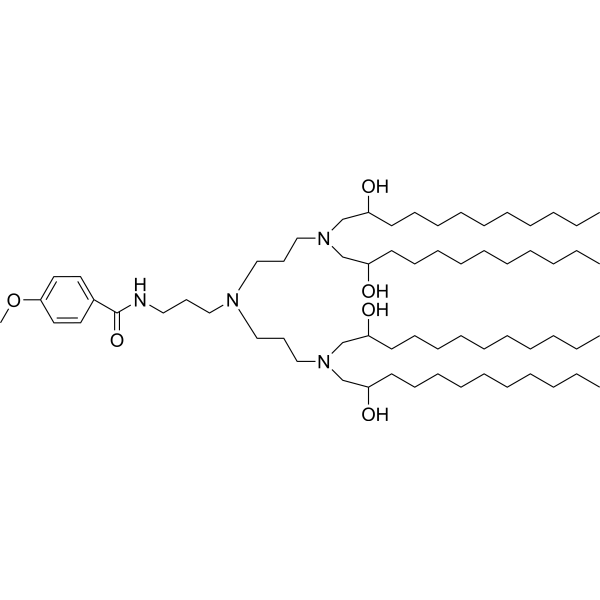
LNP Lipid-8 (11-A-M) is an ionizable single-tail multi-head lipid that can be used as a lipid nanoparticle (LNP) to deliver siRNA to T cells without targeting ligands. LNP Lipid-8 is more selective for T cells than other cell types such as hepatocytes. LNP Lipid-8 selectively delivers siRNA/sgRNA to T cells (especially CD8+ T cells) through endogenous lipid transport pathways, and can enter cells and release RNA through endocytosis to achieve gene silencing. LNP Lipid-8 loaded with GFP siRNA (siGFP) significantly led to GFP gene silencing in mouse models. LNP Lipid-8 showed good efficacy and safety in both cells and animals, without obvious liver targeting and toxicity. LNP Lipid-8 can be used for RNA delivery research in the fields of tumor immunotherapy and T cell-mediated autoimmune diseases .
|
-
- HY-164583
-
|
|
|
Phosphoramidites
Adenine
|
|
DMTr-2'-O-C22-rA-3'-CE-Phosphoramidite is an RNA phosphoramidite monomer. DMTr-2'-O-C22-rA-3'-CE-Phosphoramidite allows site-specific introduction of a 2'-O-C22 lipophilic modification at adenosine positions to construct double-stranded RNA (dsRNA) molecules with extrahepatic delivery capability. DMTr-2'-O-C22-rA-3'-CE-Phosphoramidite supports target gene silencing in skeletal muscle, cardiac muscle and adipose tissue by enhancing the lipophilicity and tissue uptake efficiency of dsRNA. DMTr-2'-O-C22-rA-3'-CE-Phosphoramidite can be used for the construction and mechanism research of nucleic acid silencing molecules .
|
-
- HY-153231A
-
|
|
|
Liposome
|
|
eGFP mRNA-LNP (500 ng/μL) is a lipid nanoparticle (LNP) containing eGFP mRNA. eGFP mRNA-LNP carries Enhanced Green Fluorescent Protein (eGFP), which will express green fluorescent protein after entering the cell. eGFP is commonly used as a reporter gene detectable by fluorescence microscopy or flow cytometry (excitation wavelength = 488 nm; emission wavelength = 535/40 bandpass). eGFP mRNA-LNP can be used for RNA delivery, translation efficiency and cell viability .
|
-
- HY-164582
-
|
|
|
Phosphoramidites
Cytosine
|
|
DMTr-2'-O-C22-rC (Ac)-3'-CE-Phosphoramidite is an RNA phosphoramidite monomer. DMTr-2'-O-C22-rC (Ac)-3'-CE-Phosphoramidite enables site-specific introduction of 2'-O-C22 lipophilic modification at cytidine positions during oligonucleotide synthesis, which is used to construct double-stranded RNA (dsRNA) molecules with extrahepatic delivery capability. DMTr-2'-O-C22-rC (Ac)-3'-CE-Phosphoramidite supports target gene silencing in skeletal muscle, cardiac muscle and adipose tissue by enhancing the lipophilicity and tissue uptake efficiency of dsRNA. Construction and mechanism study of DMTr-2'-O-C22-rC (Ac)-3'-CE-Phosphoramidite nucleic acid silencing molecules .
|
-
- HY-145799A
-
|
|
|
Cationic Lipids
|
|
5A2-SC8 TFA is an ionizable amino lipid in lipid nanoparticles (LNPs) that shows high delivery potential and low in vivo toxicity, enabling efficient delivery of small RNAs such as siRNA and miRNA into tumor cells. 5A2-SC8 TFA LNPs can confer a unique delivery fate of RNA within the liver, thereby changing the therapeutic outcomes in cancer models .
|
-
- HY-167015
-
|
|
|
Cationic Lipids
|
|
1O14 is an ionizable lipid. The ability of ionizable lipids to form unstable non-bilayer structures at acidic pH is key for endosomal escape and cytosolic delivery of RNA. 1O14 can be used in the preparation of liposomes .
|
-
- HY-144016
-
|
|
|
Cationic Lipids
|
|
16:0 EPC chloride, a P-O-ethyl derivative, is a saturated cationic lipid. 16:0 EPC chloride can serve as a DNA and RNA transfecting agent. 16:0 EPC chloride can be used as a co-adjuvant for preparing vaccines and promote drug delivery .
|
-
- HY-167012
-
|
|
|
Cationic Lipids
|
|
306Oi9-cis2 is an ionizable lipid. The ability of ionizable lipids to form unstable non-bilayer structures at acidic pH is key for endosomal escape and cytosolic delivery of RNA. 306Oi9-cis2 can be used in the preparation of liposomes .
|
-
- HY-159709
-
|
|
|
Cationic Lipids
|
|
VL-422 is an ionizable cationic lipid. VL-422 delivers CRISPR complementary single-guide RNA (sgRNA) and Cas9 mRNA to enable in vitro and in vivo gene editing. LNPs containing VL-422 loaded with Cas9 mRNA and sgRNA targeting the ANGPTL3 gene induce the deletion of premature stop codons within the ANGPTL3 gene in the liver of cynomolgus monkeys. Loss-of-function of ANGPTL3 leads to decreased levels of LDL, HDL and cholesterol in plasma. The VL-422 delivery system can be used for the research of gene editing strategies targeting lipid metabolism diseases .
|
-
- HY-164581
-
|
|
|
Phosphoramidites
Guanine
|
|
DMTr-2'-O-C22-rG (ibu)-3'-CE-Phosphoramidite is an RNA phosphoramidite monomer for oligonucleotide synthesis. DMTr-2'-O-C22-rG (ibu)-3'-CE-Phosphoramidite enables site-specific introduction of 2'-O-C22 lipophilic modification at guanosine positions to construct double-stranded RNA (dsRNA) molecules with extrahepatic delivery capability. DMTr-2'-O-C22-rG (ibu)-3'-CE-Phosphoramidite supports target gene silencing in skeletal muscle, cardiac muscle and adipose tissue by enhancing the lipid solubility and tissue uptake efficiency of dsRNA. DMTr-2'-O-C22-rG (ibu)-3'-CE-Phosphoramidite can be used for the construction and mechanism research of nucleic acid silencing molecules .
|
-
- HY-177531
-
|
|
|
Cationic Lipids
|
|
S-Ac7-DOG is a cationic lipid with biodegradability, low immunogenicity and high nucleic acid transfection capacity, which is commonly used to construct lipid nanoparticles for nucleic acid molecule delivery. S-Ac7-DOG can bind to mRNA, microRNA and self-amplifying RNA through electrostatic interaction. Lipid nanoparticles formed by S-Ac7-DOG enter cells via an energy-dependent endocytic pathway, release nucleic acid cargos, induce antigen-specific CD8 + T cell responses, promote the generation of precursor memory T cells, and regulate neuroinflammatory pathways. S-Ac7-DOG can be used in the research of retinal diseases, neuroinflammation and cancer .
|
-
- HY-151512
-
|
|
|
Cationic Lipids
|
|
A12-Iso5-4DC19 is an ionizable cationic lipid. A12-Iso5-4DC19 can facilitate mRNA delivery and be used for the research of RNA vaccines .
|
-
- HY-150117
-
|
|
|
Cationic Lipids
|
|
Lipid 6 is an ionizable amino lipid. Lipid 6 can be used to synthesize lipid nanoparticles. Lipid 6 can be used in RNA delivery research .
|
-
- HY-156985
-
|
|
|
Cationic Lipids
|
|
Lipid AX4 is an ionizable cationic lipid with the pKa of 6.89, and can be used the study for the formation of lipid nanoparticles (LNPs) for the delivery of mRNA in vivo .
|
-
- HY-172018
-
|
|
|
Cationic Lipids
|
|
CP-LC-0729 is an ionizable cationic amino lipid efficient delivery of different kinds of RNA (mRNA, cRNA and saRNA) .
|
-
- HY-176754
-
|
|
|
Cationic Lipids
|
|
TCL065 is an ionizable lipid with a pKa of 6.3. TCL065 can be used to generate lipid nanoparticles (LNPs) for the delivery of mRNA as well as single-guide RNA (sgRNA) both in vitro and in vivo. TCL065-containing LNPs can studied in research for Duchenne muscular dystrophy and gene-editing technologies .
|
-
- HY-171113
-
|
|
|
Cationic Lipids
|
|
CP-LC-1143 is an ionizable cationic amino lipid efficient delivery of different kinds of RNA (mRNA, cRNA and saRNA).
|
-
- HY-172014
-
|
|
|
Cationic Lipids
|
|
CP-LC-0743 is an ionizable cationic amino lipid efficient delivery of different kinds of RNA (mRNA, cRNA and saRNA) .
|
-
- HY-172016
-
|
|
|
Cationic Lipids
|
|
CP-LC-0867 is an ionizable cationic amino lipid efficient delivery of different kinds of RNA (mRNA, cRNA and saRNA) .
|
-
- HY-172015
-
|
|
|
Cationic Lipids
|
|
CP-LC-1143 is an ionizable cationic amino lipid efficient delivery of different kinds of RNA (mRNA, cRNA and saRNA) .
|
-
- HY-167004A
-
|
|
|
Cationic Lipids
|
|
IAJD249 is an ionizable lipid. The ability of ionizable lipids to form unstable non-bilayer structures at acidic pH is key for endosomal escape and cytosolic delivery of RNA. IAJD249 can be used in the preparation of liposomes .
|
-
- HY-167004
-
|
|
|
Cationic Lipids
|
|
IAJD93 is an ionizable lipid. The ability of ionizable lipids to form unstable non-bilayer structures at acidic pH is key for endosomal escape and cytosolic delivery of RNA. IAJD93 can be used in the preparation of liposomes .
|
-
- HY-167003
-
|
|
|
Cationic Lipids
|
|
L16 is an ionizable lipid. The ability of ionizable lipids to form unstable non-bilayer structures at acidic pH is key for endosomal escape and cytosolic delivery of RNA. L16 can be used in the preparation of liposomes .
|
-
- HY-167011
-
|
|
|
Cationic Lipids
|
|
Al-28 is an ionizable lipid. The ability of ionizable lipids to form unstable non-bilayer structures at acidic pH is key for endosomal escape and cytosolic delivery of RNA. Al-28 can be used in the preparation of liposomes .
|
-
- HY-153230
-
|
|
|
Liposome
|
|
Firefly luciferase circRNA-LNP is a lipid nanoparticle (LNP) containing Firefly luciferase circRNA, suitable for assays of RNA delivery, translation efficiency, cell viability, etc. Luciferase is commonly used as a bioluminescent reporter gene for gene regulation and function studies. Firefly Luciferase circRNA will express firefly luciferase protein after entering the cells, which is often used for promoter activity detection or dual fluorescent molecular complementation experiments. Common luciferase are firefly luciferase and sea kidney luciferase .
|
-
- HY-179829
-
|
|
|
Cationic Lipids
|
|
DSDMA is an ionizable ether lipid for RNA and vaccine delivery.
|
-
- HY-172017
-
|
|
|
Cationic Lipids
|
|
CP-LC-1254 is an ionizable cationic amino lipid efficient delivery of different kinds of RNA (mRNA, cRNA and saRNA) .
|
-
- HY-167002
-
|
|
|
Cationic Lipids
|
|
RM 137-15 is an ionizable lipid. The ability of ionizable lipids to form unstable non-bilayer structures at acidic pH is key for endosomal escape and cytosolic delivery of RNA. RM 137-15 can be used in the preparation of liposomes .
|
-
- HY-W1130407
-
|
|
|
Cationic Lipids
|
|
CP-LC-1073 is a specific ionizable cationic amino lipid derived from the amino acid homocysteine. CP-LC-1073 can used in lipid nanoparticle (LNP) formulations for efficient in vivo delivery and expression of RNA (mRNA, cRNA, saRNA).
|
-
- HY-176027
-
|
|
|
Cationic Lipids
|
|
CP-LC-1422 is a homocysteine-derived ionizable amino lipid with high RNA delivery capability and can mediate high-level protein expression in vivo. CP-LC-1422 exhibits significant spleen targeting via intravenous injection in a lipid nanoparticle (LNP) formulation with no significant toxicity observed .
|
Your information is safe with us. * Required Fields.
Inquiry Information
- Product Name:
- Cat. No.:
- Quantity:
- MCE Japan Authorized Agent:

