Search Result
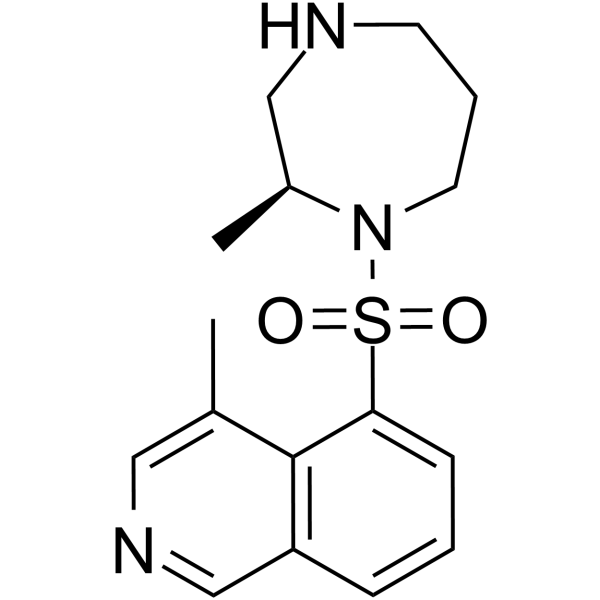
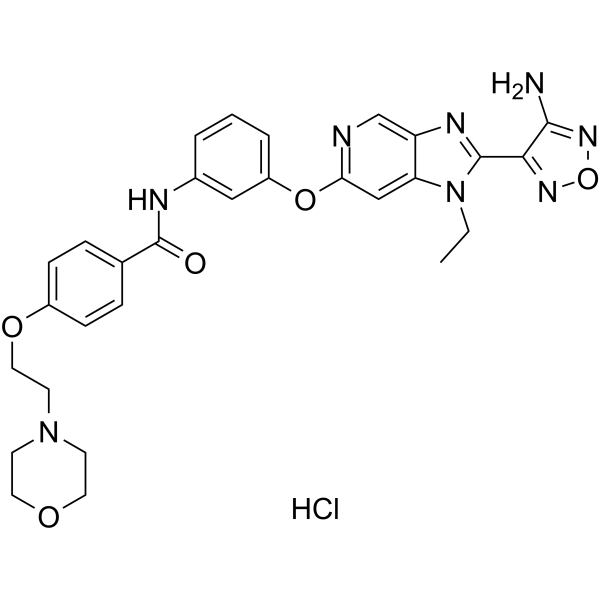
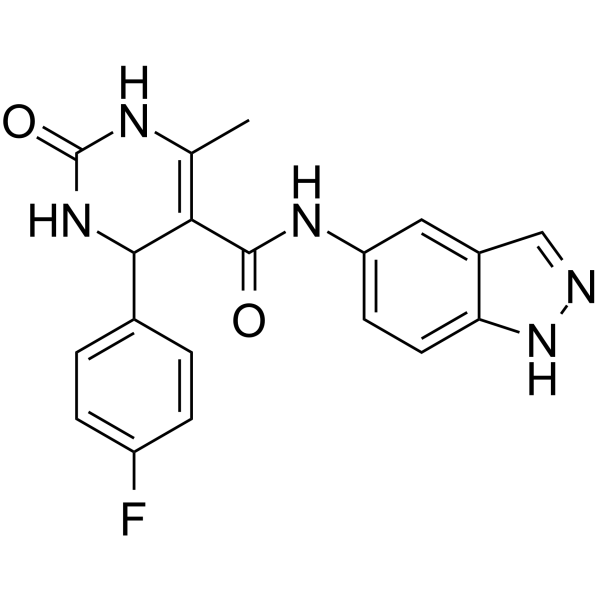
Results for "
ROCK Inhibitor
" in MedChemExpress (MCE) Product Catalog:
4
Biochemical Assay Reagents
2
Isotope-Labeled Compounds
| Cat. No. |
Product Name |
Target |
Research Areas |
Chemical Structure |
-
- HY-10583
-
|
|
Organoid
ROCK
|
Neurological Disease
Cancer
|
|
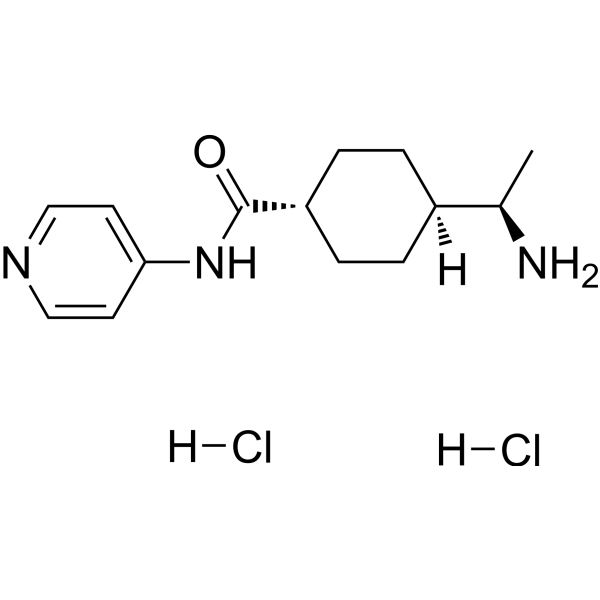
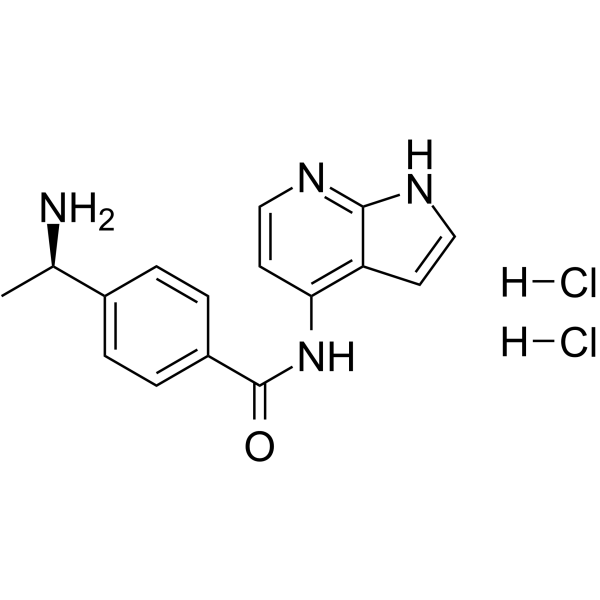
Y-27632 dihydrochloride is an orally active and ATP-competitive ROCK (Rho-kinase) inhibitor (ROCK-I Ki=220 nM; ROCK-II Ki=300 nM). Y-27632 dihydrochloride shows antiepileptic effects .
|
-
-
- HY-10071
-
Y-27632
Maximum Cited Publications
533 Publications Verification
|
mTOR
Ras
ROCK
NADPH Oxidase
NF-κB
Reactive Oxygen Species (ROS)
Akt
Apoptosis
Autophagy
PAK
|
Cancer
|
|
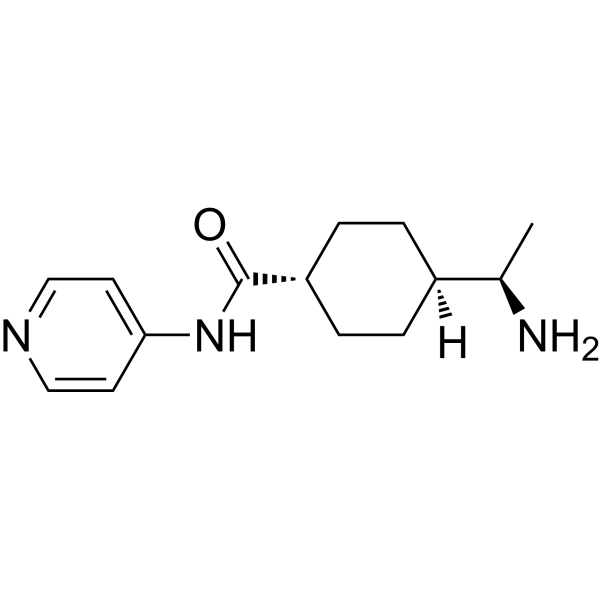
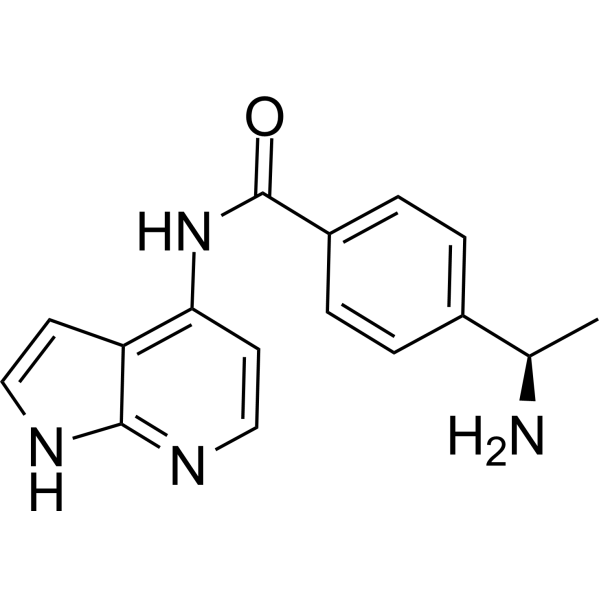
Y-27632 is a ROCK inhibitor with Ki values of 220 nM and 300 nM for ROCK1 and ROCK2, respectively. Y-27632 exerts anti-inflammatory and immunomodulatory effects in systemic lupus erythematosus models by inhibiting the ROCK/NF-κB pathway. Y-27632 enhances autophagy by inhibiting the AKT/mTOR pathway, thereby inducing apoptosis apoptosis in oral squamous cell carcinoma. Y-27632 induces the formation of tunneling nanotubes in ARPE-19 cells and significantly enhances mitochondrial transfer through these channels. Y-27632 promotes neurite outgrowth in PC12 cells by activating the Rac1/NOX1/ROS/AKT/PAK1 signaling cascade .
|
-
-
- HY-15307
-
|
KD025; SLx-2119
|
ROCK
|
Inflammation/Immunology
Cancer
|
|
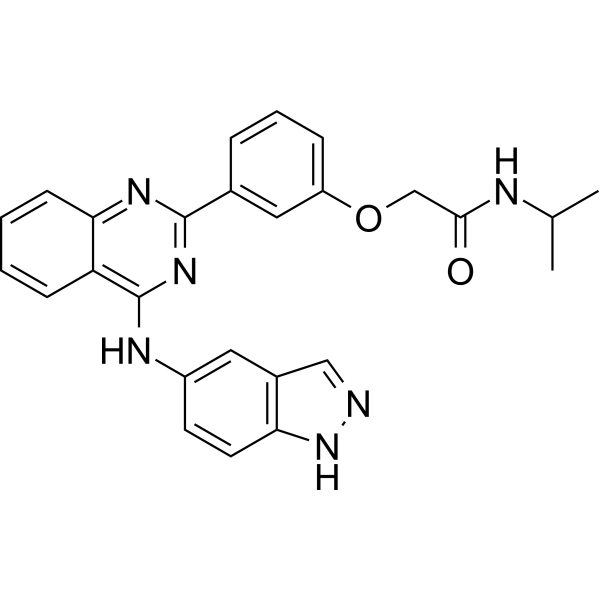
Belumosudil (KD025) is a selective inhibitor of ROCK2 with IC50s of 105 nM and 24 μM for ROCK2 and ROCK1, respectively. Anti-fibrotic properties .
|
-
-
- HY-15392
-
|
|
ROCK
|
Cardiovascular Disease
|
|
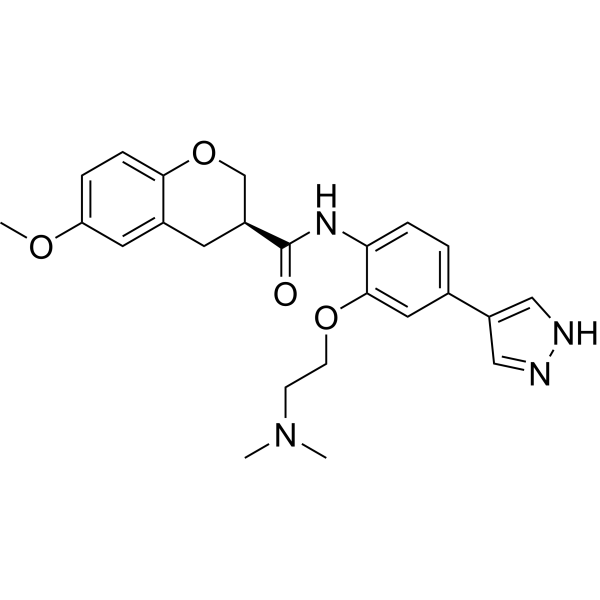
Chroman 1 is a highly potent and selective ROCK inhibitor. Chroman 1 is more potent against ROCK2 (IC50=1 pM) than ROCK1 (IC50=52 pM). Chroman 1 also has inhibitory activity against MRCK, with an IC50 of 150 nM .
|
-
-
- HY-10341
-
|
HA-1077 Hydrochloride; AT-877 Hydrochloride
|
ROCK
Calcium Channel
Autophagy
PKA
PKC
HIV
|
Cancer
|
|
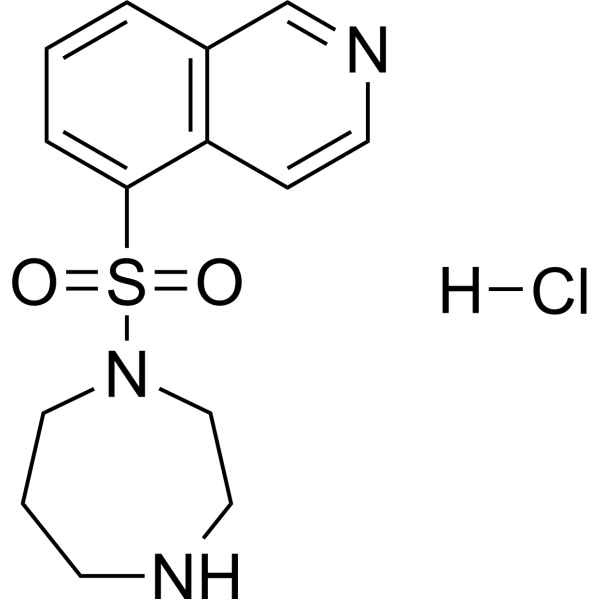
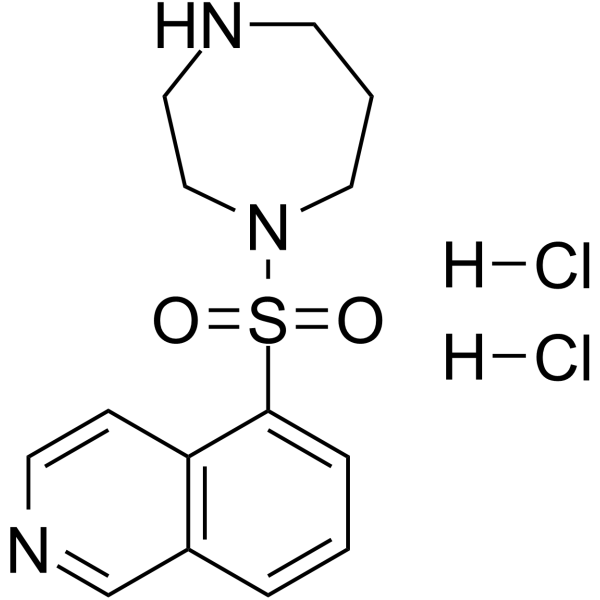
Fasudil (HA-1077; AT877) Hydrochloride is a nonspecific RhoA/ROCK inhibitor and also has inhibitory effect on protein kinases, with an Ki of 0.33 μM for ROCK1, IC50s of 0.158 μM and 4.58 μM, 12.30 μM, 1.650 μM for ROCK2 and PKA, PKC, PKG, respectively. Fasudil Hydrochloride is also a potent Ca 2+ channel antagonist and vasodilator .
|
-
-
- HY-15556
-
|
GSK 269962
|
ROCK
|
Cardiovascular Disease
Inflammation/Immunology
|
|
GSK269962A (GSK 269962) is a potent ROCK inhibitor with IC50s of 1.6 and 4 nM for recombinant human ROCK1 and ROCK2 respectively. GSK269962A has anti-inflammatory and vasodilatory activities .
|
-
-
- HY-10583R
-
|
|
ROCK
Organoid
Reference Standards
|
Cancer
|
|
Y-27632 dihydrochloride (Standard) is the analytical standard of Y-27632 dihydrochloride. Y-27632 dihydrochloride is an orally active and ATP-competitive ROCK (Rho-kinase) inhibitor (ROCK-I Ki=220 nM; ROCK-II Ki=300 nM). Y-27632 dihydrochloride shows antiepileptic effects .
|
-
-
- HY-11000
-
|
|
ROCK
|
Cancer
|
|
GSK429286A is a selective inhibitor of ROCK1 with an IC50 value of 14 nM.
|
-
-
- HY-10341A
-
|
HA-1077; AT877
|
ROCK
Calcium Channel
Autophagy
PKA
PKC
|
Cancer
|
|
Fasudil (HA-1077; AT877) is a nonspecific RhoA/ROCK inhibitor and also has inhibitory effect on protein kinases, with an Ki of 0.33 μM for ROCK1, IC50s of 0.158 μM and 4.58 μM, 12.30 μM, 1.650 μM for ROCK2 and PKA, PKC, PKG, respectively. Fasudil is also a potent Ca 2+ channel antagonist and vasodilator .
|
-
-
- HY-15307A
-
|
KD025 mesylate; SLx-2119 mesylate
|
ROCK
|
Inflammation/Immunology
|
|
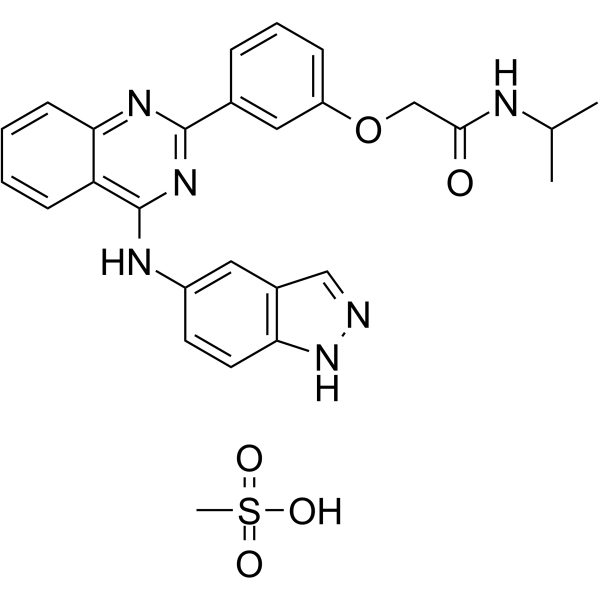
Belumosudil mesylate (KD025 mesylate) is a selective inhibitor of ROCK2 with IC50s of 105 nM and 24 µM for ROCK2 and ROCK1, respectively. Anti-fibrotic properties .
|
-
-
- HY-119937
-
|
|
ROCK
|
Cardiovascular Disease
Inflammation/Immunology
Cancer
|
|
ROCK inhibitor-2 (compound 6) is a selective dual inhibitor of ROCK1 and ROCK2, with IC50 values of 160 nM and 21 nM, respectively. ROCK inhibitor-2 inhibits pMYPT1 with IC50 of 75 nM. ROCK inhibitor-2 exhibits antitumor activity .
|
-
-
- HY-10319
-
BAY-549
4 Publications Verification
ROCK-IN-2; Azaindole 1; TC-S 7001
|
ROCK
|
Cardiovascular Disease
|
|
BAY-549 (Azaindole 1), a chemical probe, is an orally active and ATP-competitive ROCK inhibitor with IC50s of 0.6 and 1.1 nM for human ROCK-1 and ROCK-2, respectively .
|
-
-
- HY-15685
-
-
-
- HY-15720A
-
|
|
ROCK
|
Neurological Disease
|
|
H-1152 dihydrochloride is a membrane-permeable and selective ROCK inhibitor, with a Ki value of 1.6 nM, and an IC50 value of 12 nM for ROCK2.
|
-
-
- HY-15755
-
|
|
ROCK
|
Cancer
|
|
RKI-1447 is a potent small molecule inhibitor of ROCK1 and ROCK2 with IC50 values of 14.5 nM and 6.2 nM, respectively.
|
-
-
- HY-10069
-
|
|
ROCK
|
Cancer
|
|
Y-33075 dihydrochloride is a selective ROCK inhibitor with an IC50 of 3.6 nM.
|
-
-
- HY-12798
-
|
AR-13324
|
Monoamine Transporter
ROCK
|
Cardiovascular Disease
Neurological Disease
|
|
Netarsudil (AR-13324) is a competitive inhibitor of Rho-associated protein kinases (ROCK I and ROCK II) and a reversible inhibitor of the norepinephrine transporter (NET). Netarsudil reduces intraocular pressure by inhibiting ROCK, causing relaxation of trabecular meshwork cells and dilation of episcleral veins, thereby increasing the ease of aqueous humor outflow, while inhibiting NET to reduce aqueous humor production. Netarsudil is mainly used in the study of ocular hypertension and primary open-angle glaucoma .
|
-
-
- HY-15687A
-
|
|
ROCK
|
Metabolic Disease
|
|
SAR407899 is a selective, potent and ATP-competitive ROCK inhibitor, with an IC50 of 135 nM for ROCK-2, and Kis of 36 nM and 41 nM for human and rat ROCK-2, respectively. SAR407899 shows stable inhibition of migrasome formation.
|
-
-
- HY-162596
-
|
BA-1049 free base
|
ROCK
|
Neurological Disease
|
|
NRL-1049 (BA-1049 (free base)) is an orally available and selective ROCK2 inhibitor with IC50 values of 0.59 µM for ROCK2 and 26 µM for ROCK1, respectively. NRL-1049 modulates ROCK signaling, preserves blood-brain barrier integrity, reduces edema, seizures and hemorrhage, and alleviates cerebral cavernous malformation lesion burden. NRL-1049 can be used for the study of acute brain injury, ischemic stroke, and cerebral cavernous malformations .
|
-
-
- HY-12798B
-
|
AR-13324 hydrochloride
|
ROCK
|
Cardiovascular Disease
Neurological Disease
|
|
Netarsudil (AR-13324) hydrochloride is a competitive inhibitor of Rho-associated protein kinases (ROCK I and ROCK II) and a reversible inhibitor of the norepinephrine transporter (NET). Netarsudil hydrochloride reduces intraocular pressure by inhibiting ROCK, causing relaxation of trabecular meshwork cells and dilation of episcleral veins, thereby increasing the ease of aqueous humor outflow, while inhibiting NET to reduce aqueous humor production. Netarsudil hydrochloride is mainly used in the study of ocular hypertension and primary open-angle glaucoma .
|
-
-
- HY-108518
-
|
|
ROCK
|
Cardiovascular Disease
Inflammation/Immunology
|
|
SB-772077B dihydrochloride is an orally active aminofuran-based Rho kinase ((ROCK)) inhibitor with IC50 values of 5.6 nM and 6 nM for ROCK1 and ROCK2, respectively. SB-772077B dihydrochloride reduces inflammatory cytokines (TNF-α and IL-6). SB-772077B dihydrochloride relaxes aortic rings and lowers blood pressure. SB-772077B dihydrochloride can be used in the research of inflammatory diseases .
|
-
-
- HY-13911
-
-
-
- HY-15720
-
H-1152
4 Publications Verification
|
ROCK
|
Neurological Disease
|
|
H-1152 is a membrane-permeable and selective ROCK inhibitor, with a Ki value of 1.6 nM, and an IC50 value of 12 nM for ROCK2.
|
-
-
- HY-12798A
-
|
AR-13324 dimesylate
|
ROCK
|
Cardiovascular Disease
Neurological Disease
|
|
Netarsudil (AR-13324) dimesylate is a competitive inhibitor of Rho-associated protein kinases (ROCK I and ROCK II) and a reversible inhibitor of the norepinephrine transporter (NET). Netarsudil dimesylate reduces intraocular pressure by inhibiting ROCK, causing relaxation of trabecular meshwork cells and dilation of episcleral veins, thereby increasing the ease of aqueous humor outflow, while inhibiting NET to reduce aqueous humor production. Netarsudil dimesylate is mainly used in the study of ocular hypertension and primary open-angle glaucoma .
|
-
-
- HY-13911A
-
-
-
- HY-12437
-
|
|
ROCK
|
Cancer
|
|
BDP5290 is a potent inhibitor of both ROCK and MRCK with IC50s of 5 nM, 50 nM, 10 nM and 100 nM for ROCK1, ROCK2, MRCKα and MRCKβ, respectively.
|
-
-
- HY-103620
-
|
|
ROCK
|
Inflammation/Immunology
Cancer
|
|
ROCK2-IN-2 (Example 2) is a ROCK2 inhibitor that can be used for the study of multiple medical disorders, such as fibrosis, inflammatory disorders, autoimmune disorders, and cardiovascular disorders .
|
-
-
- HY-15556A
-
|
GSK 269962 hydrochloride
|
ROCK
|
Cardiovascular Disease
Inflammation/Immunology
|
|
GSK269962A hydrochloride (GSK 269962 hydrochloride) is a potent ROCK inhibitor with IC50s of 1.6 and 4 nM for recombinant human ROCK1 and ROCK2 respectively. GSK269962A hydrochloride has anti-inflammatory and vasodilatory activities .
|
-
-
- HY-100270
-
|
|
ROCK
|
Cancer
|
|
Rho-Kinase-IN-1 is a Rho kinase (ROCK) inhibitor (Ki values of 30.5 and 3.9 nM for ROCK1 and ROCK2, respectively) extracted from US20090325960A1, compound 1.008 .
|
-
-
- HY-139170
-
|
|
ROCK
|
Metabolic Disease
|
|
CAY10746 is a selective Rho kinase (ROCK) inhibitor. CAY10746 has inhibitory activity for ROCK I, ROCK II with IC50 values of 0.014 μM and 0.003 μM, respectively. CAY10746 can be used for the research of diabetic retinopathy (DR) .
|
-
-
- HY-109191
-
|
PHP-201; AMA0076
|
ROCK
|
Others
|
|
Sovesudil (PHP-201) is a potent, ATP-competitive, locally acting Rho kinase (ROCK) inhibitor with IC50s of 3.7 and 2.3 nM for ROCK-I and ROCK-II, respectively. Sovesudil lowers intraocular pressure (IOP) without inducing hyperemia .
|
-
-
- HY-16758
-
|
AR-12286
|
ROCK
|
Neurological Disease
|
|
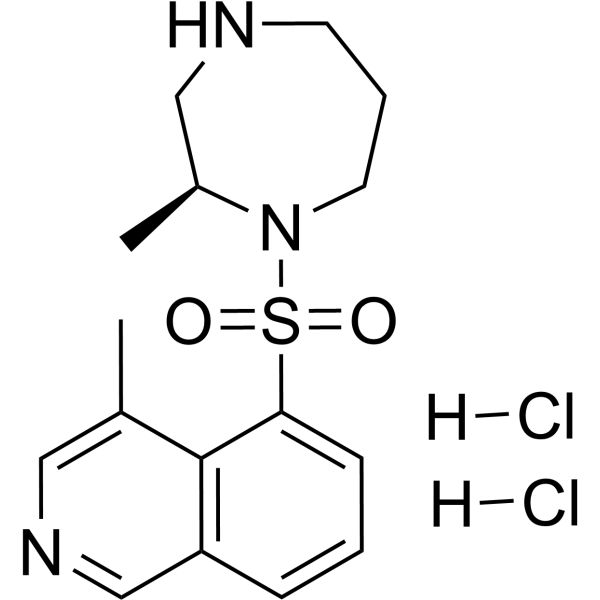
Verosudil (AR-12286) is a ROCK inhibitor. Verosudil has equal inhibitory activity against ROCK1 and ROCK2 (Ki: 2 nM). Verosudil is less selective for PKA, PKCT, MRCKA, and CAM2A (Ki: 69 nM, 9322 nM, 28 nM, 5855 nM, respectively). Verosudil increases trabecular outflow capacity to reduce intraocular pressure. Verosudil is useful in the study of glaucoma and ocular hypertension .
|
-
-
- HY-13300
-
SR-3677
1 Publications Verification
|
ROCK
Autophagy
|
Cancer
|
|
SR-3677 is a potent and selective ROCK-II inhibitor with an IC50 of ~3 nM.
|
-
-
- HY-10341C
-
|
HA-1077 dihydrochloride; AT-877 dihydrochloride
|
Calcium Channel
ROCK
PKA
PKC
Autophagy
HIV
|
Cancer
|
|
Fasudil (HA-1077; AT877) dihydrochloride is a nonspecific RhoA/ROCK inhibitor and also has inhibitory effect on protein kinases, with an Ki of 0.33 μM for ROCK1, IC50s of 0.158 μM and 4.58 μM, 12.30 μM, 1.650 μM for ROCK2 and PKA, PKC, PKG, respectively. Fasudil dihydrochloride is also a potent Ca 2+ channel antagonist and vasodilator .
|
-
-
- HY-15687
-
|
|
ROCK
|
Metabolic Disease
|
|
SAR407899 hydrochloride is a selective, potent and ATP-competitive ROCK inhibitor, with an IC50 of 135 nM for ROCK-2, and Kis of 36 nM and 41 nM for human and rat ROCK-2, respectively.
|
-
-
- HY-149266
-
THK01
1 Publications Verification
|
ROCK
|
Cancer
|
|
THK01 is a potent ROCK2 inhibitor with IC50 values of 5.7 and 923 nM for ROCK2 and ROCK1, respectively. THK01 inhibits breast cancer metastasis through the ROCK2-STAT3 signaling pathway. THK01 can be used in research of breast cancer .
|
-
-
- HY-153569
-
|
|
ROCK
|
Others
|
|
ROCK-IN-7 (compound 9) is a ROCK kinase inhibitor. ROCK-IN-7 can be used for research in ocular diseases (such as glaucoma and retinal diseases) .
|
-
-
- HY-15392A
-
|
|
ROCK
|
Cardiovascular Disease
|
|
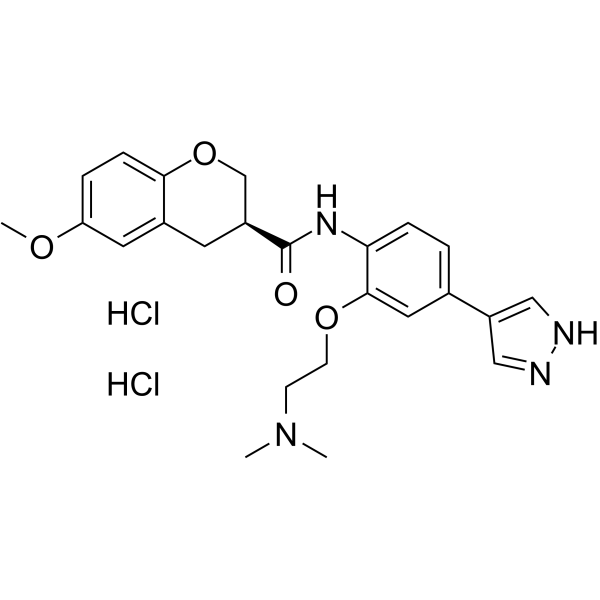
Chroman 1 dihydrochloride is a highly potent and selective ROCK inhibitor. Chroman 1 dihydrochloride is more potent against ROCK2 (IC50=1 pM) than ROCK1 (IC50=52 pM).
Chroman 1 dihydrochloride also has inhibitory activity against MRCK, with an IC50 of 150 nM .
|
-
-
- HY-150640
-
-
-
- HY-137436
-
|
|
ROCK
|
Endocrinology
|
|
Cotosudil is a ROCK kinase inhibitor, which can be used for glaucoma or ocular hypertension research .
|
-
-
- HY-Q22471
-
|
|
ROCK
|
Cardiovascular Disease
|
|
ROCK1-IN-1 is a potent selective ROCK1 inhibitor with a Ki of 540 nM. ROCK1-IN-1 can be used for the research of hypertension .
|
-
-
- HY-156592A
-
|
|
ROCK
|
Inflammation/Immunology
|
|
ROCK2-IN-6 hydrochloride (Comp A) is a selective ROCK2 inhibitor, can be used for ROCK mediated diseases, autoimmune diseases and inflammation research .
|
-
-
- HY-168596
-
|
|
ROCK
Apoptosis
|
Cancer
|
|
RhoA-ROCK-IN-1 (Compound b19) is an inhibitor of RhoA/ROCK. RhoA-ROCK-IN-1 can significantly inhibit cell proliferation, migration, and invasion, while promoting cell apoptosis. RhoA-ROCK-IN-1 demonstrates remarkable anticancer activity by inhibiting the RhoA/ROCK pathway .
|
-
-
- HY-178821
-
|
|
ROCK
TGF-beta/Smad
STAT
|
Inflammation/Immunology
|
|
ROCK2-IN-12 (Compound A25) is a selective ROCK2 inhibitor with an IC50 of 7.0 nM for ROCK2 over ROCK1. ROCK2-IN-12 has potent antifibrotic effects via the TGF-β/Smad and ROCK2/STAT3 signaling pathways. ROCK2-IN-12 significantly reduces collagen deposition and reverses fibrotic progression in Bleomycin (HY-108345)-induced pulmonary fibrosis (PF) mouse models. ROCK2-IN-12 can be used for lung diseases like pulmonary fibrosis research .
|
-
-
- HY-101244
-
-
-
- HY-126432
-
|
BA-1049
|
ROCK
|
Neurological Disease
|
|
NRL-1049 dihydrochloride (BA-1049) is a selective and orally active rho-associated protein kinase 2 (ROCK2) inhibitor with an IC50 of 0.59 μM. NRL-1049 dihydrochloride shows selectivity for ROCK2 is 44 times that of ROCK1 (IC50 = 26 μM). NRL-1049 dihydrochloride can preserve the blood-brain barrier after acute injury .
|
-
-
- HY-116420
-
|
|
ROCK
|
Neurological Disease
|
|
ROCK2-IN-8 (Compound 1) is an orally active ROCK2 inhibitor, with an IC50 of 7.2 nM. ROCK2-IN-8 can be used for the research of aqueous humor outflow in porcine eyes and myosin light chain phosphorylation .
|
-
-
- HY-110339
-
|
|
ROCK
Apoptosis
|
Cancer
|
|
RKI 1447 dihydrochloride is a potent and selective ROCK inhibitor with IC50s of 14.5 and 6.2 nM for ROCK1 and ROCK2, respectively . RKI 1447 dihydrochloride suppresses colorectal carcinoma cell growth and promotes apoptosis .
|
-
-
- HY-109191A
-
|
PHP-201 hydrochloride; AMA0076 hydrochloride
|
ROCK
|
Neurological Disease
|
|
Sovesudil (PHP-201) hydrochloride is a potent, ATP-competitive, locally acting Rho kinase (ROCK) inhibitor with IC50s of 3.7 and 2.3 nM for ROCK-I and ROCK-II, respectively. Sovesudil hydrochloride lowers intraocular pressure (IOP) without inducing hyperemia .
|
-
-
- HY-10071A
-
|
|
ROCK
NF-κB
Apoptosis
Autophagy
Akt
mTOR
NADPH Oxidase
Reactive Oxygen Species (ROS)
PAK
Ras
|
Neurological Disease
Inflammation/Immunology
Cancer
|
|
Y-27632 hydrochloride hydrate is a ROCK inhibitor with Ki values of 220 nM and 300 nM for ROCK1 and ROCK2, respectively. Y-27632 hydrochloride hydrate exerts anti-inflammatory and immunomodulatory effects in systemic lupus erythematosus models by inhibiting the ROCK/NF-κB pathway. Y-27632 hydrochloride hydrate enhances autophagy by inhibiting the AKT/mTOR pathway, thereby inducing apoptosis apoptosis in oral squamous cell carcinoma. Y-27632 hydrochloride hydrate induces the formation of tunneling nanotubes in ARPE-19 cells and significantly enhances mitochondrial transfer through these channels. Y-27632 hydrochloride hydrate promotes neurite outgrowth in PC12 cells by activating the Rac1/NOX1/ROS/AKT/PAK1 signaling cascade .
|
-
- HY-10068
-
|
Y-39983
|
ROCK
|
Neurological Disease
|
|
Y-33075 hydrochloride (Y-39983) is a selective ROCK inhibitor derived from Y-27632, and is more potent than Y-27632, with an IC50 of 3.6 nM.
|
-
- HY-178013
-
|
|
ROCK
|
Inflammation/Immunology
|
|
ROCK2-IN-11 (Compound A20) is a selective ROCK2 inhibitor with an IC50 of 0.18 μM for ROCK2 over ROCK1. ROCK2-IN-11 can be used for idiopathic pulmonary fibrosis and cGVHD research .
|
-
- HY-15685A
-
|
K-115 free base
|
ROCK
|
Neurological Disease
|
|
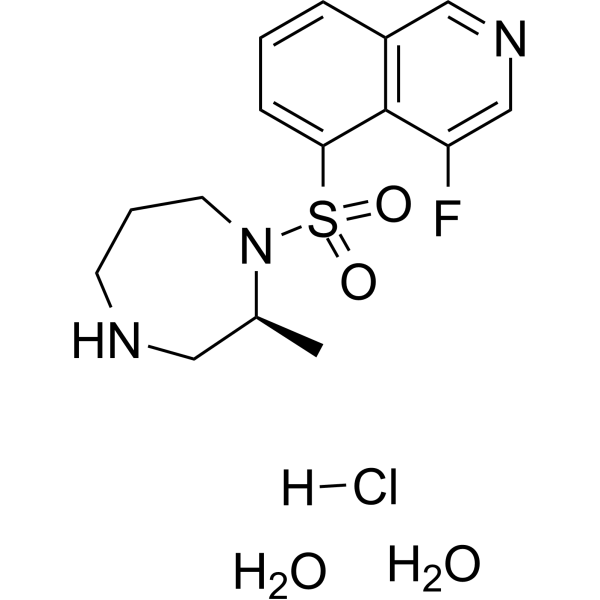
Ripasudil free base (K-115 free base) is a specific inhibitor of ROCK, with IC50s of 19 and 51 nM for ROCK2 and ROCK1, respectively.
|
-
- HY-107209
-
|
|
ROCK
|
Cancer
|
|
RKI-1313 is a ROCK inhibitor with IC50s of 34, 8 µM for ROCK 1 and ROCK 2, respectively. RKI-1313 shows little effect on the phosphorylation levels of ROCK substrates, migration, invasion or anchorage-independent growth .
|
-
- HY-126275
-
|
|
ROCK
|
Cancer
|
|
HSD1590 is potent ROCK inhibitor, with IC50s of 1.22 and 0.51 nM for ROCK1 and ROCK2, respectively. HSD1590 exhibits single digit nanomolar binding to ROCK (Kds<2 nM). HSD1590 displays low cytotoxicity .
|
-
- HY-U00351
-
-
- HY-175843
-
|
|
ROCK
STAT
|
Cancer
|
|
ROCK2-IN-10 is a potent and selective ROCK2 inhibitor (IC50 = 0.020 μM) with 41-fold selectivity over isoform ROCK1. ROCK2-IN-10 inhibits metastasis by disrupting the cytoskeleton, independent of proliferative suppression. ROCK2-IN-10 shows superior inhibitory potency against cancer cell metastasis, which closely related to the suppression of STAT3 phosphorylation. ROCK2-IN-10 can be used for breast cancer metastasis research .
|
-
- HY-10833
-
|
|
ROCK
|
Cardiovascular Disease
|
|
ROCK-IN-10 (compound 50) is a potent ROCK inhibitor with IC50 values of 6 nM and 4 nM for ROCK1 and ROCK2, respectively. ROCK-IN-10 shows >100-fold selectivity against other kinases .
|
-
- HY-153011
-
-
- HY-15685R
-
|
K-115 (Standard)
|
ROCK
Reference Standards
|
Cardiovascular Disease
Neurological Disease
|
|
Ripasudil (Standard) is the analytical standard of Ripasudil. This product is intended for research and analytical applications. Ripasudil (K-115) is a specific inhibitor of ROCK, with IC50s of 19 and 51 nM for ROCK2 and ROCK1, respectively.
|
-
- HY-15307AR
-
|
KD025 mesylate (Standard); SLx-2119 mesylate (Standard)
|
ROCK
Reference Standards
|
Inflammation/Immunology
Cancer
|
|
Belumosudil (mesylate) (Standard) is the analytical standard of Belumosudil (mesylate). This product is intended for research and analytical applications. Belumosudil mesylate (KD025 mesylate) is a selective inhibitor of ROCK2 with IC50s of 105 nM and 24 μM for ROCK2 and ROCK1, respectively. Anti-fibrotic properties .
|
-
- HY-15307R
-
|
KD025 (Standard); SLx-2119 (Standard)
|
ROCK
Reference Standards
|
Inflammation/Immunology
Cancer
|
|
Belumosudil (Standard) is the analytical standard of Belumosudil. This product is intended for research and analytical applications. Belumosudil (KD025) is a selective inhibitor of ROCK2 with IC50s of 105 nM and 24 μM for ROCK2 and ROCK1, respectively. Anti-fibrotic properties .
|
-
- HY-122011
-
|
|
ROCK
SGK
PKA
PKC
|
Inflammation/Immunology
|
|
PF-4950834 is a potent, selective, orally bioavailable, ATP-competitive rho kinase inhibitor with IC50 values of 8.35 nM and 33.12 nM against ROCK2 and ROCK1, respectively. PF-4950834 inhibits neutrophil migration .
|
-
- HY-103045A
-
-
- HY-116238
-
|
|
ROCK
|
Others
|
|
ROCK-IN-D2 is a potent and selective ROCK inhibitor .
|
-
- HY-156593
-
|
|
ROCK
|
Cancer
|
|
ROCK-IN-9 (Compound T345) is a ROCK inhibitor. ROCK-IN-9 shows cytotoxicity in HepG2 cell, with an IC50 of 40.8 μM. ROCK-IN-9 has good pharmacokinetic properties in mice, and shows high in vivo exposure and oral bioavailability at lower doses .
|
-
- HY-W047432
-
|
DL0805
|
ROCK
|
Cardiovascular Disease
|
|
5-Nitro-1H-indazole-3-carbonitrile (DL0805) is a Rho kinase(ROCK) inhibitor with an IC50 of 6.67 μM for ROCK-I. 5-Nitro-1H-indazole-3-carbonitrile reduces Norepinephrine (HY-13715)-induced transient contraction and inhibits contraction induced by increasing external calcium in the endothelium-denuded rings of rat models. 5-Nitro-1H-indazole-3-carbonitrile has a vasorelaxant activity but high toxicity. 5-Nitro-1H-indazole-3-carbonitrile can be used for cardiovascular diseases, especially hypertension research .
|
-
- HY-149700
-
|
|
ROCK
MMP
STAT
|
Others
|
|
ROCK2-IN-7 is a kinase inhibitor targeting to ROCK2. ROCK2-IN-7 inhibits ROCK2/pSTAT3 Signaling. ROCK2-IN-7 suppresses systemic immunity activation and attenuates inflammation in psoriasis model .
|
-
- HY-162798
-
|
|
ROCK
|
Cancer
|
|
ROCK2-IN-9 (compound 7u) is a selective ROCK2 inhibitor (IC50=36.8 nM) with anticancer activity. ROCK2-IN-9 inhibits cancer cell migration and invasion by regulating multiple cellular activities of the actin cytoskeleton. ROCK2-IN-9 can be used in breast cancer research .
|
-
- HY-156592
-
|
|
ROCK
|
Inflammation/Immunology
|
|
ROCK2-IN-6 (Comp A) is a selective ROCK2 inhibitor, can be used for ROCK mediated diseases, autoimmune diseases and inflammation research .
|
-
- HY-113641
-
-
- HY-W295201
-
|
|
ROCK
|
Cancer
|
|
ROCK-IN-11 (example 94) is a potent inhibitor of ROCK1 and ROCK2, with the IC50 of ≤ 5μM. ROCK-IN-11 plays an important role in cancer research .
|
-
- HY-176133
-
-
- HY-123484
-
|
|
ROCK
|
Others
|
|
ROCK-IN-D1 serves as a highly effective and selective inhibitor of ROCK.
|
-
- HY-156550
-
|
|
ROCK
|
Inflammation/Immunology
|
|
ROCK-IN-8 (Example 4) is a ROCK inhibitor, with an IC50 value less than 100 nM. ROCK-IN-8 has anti-inflammatory activity. ROCK-IN-8 can be used for research of respiratory and gastro-intestinal diseases .
|
-
- HY-145294
-
|
|
ROCK
|
Neurological Disease
|
|
ROCK2-IN-5 (compound 1d) is a hybrid compound containing structural fragments of the Rho kinase inhibitor fasudil and the NRF2 inducers caffeic and ferulic acids. ROCK2-IN-5 has good multitarget profile and good tolerability. ROCK2-IN-5 has the potential for thr research of Amyotrophic lateral sclerosis (ALS) with a SOD1 mutation .
|
-
- HY-151189
-
|
|
ROCK
|
Others
|
|
ROCK-IN-4 is a potent ROCK inhibitor maintaining NO releasing ability. ROCK-IN-4 reversibly depolymerizes F-actin, and suppresses mitochondrial respiration in human trabecular meshwork (HTM) cells. ROCK-IN-4 can be used for glaucoma or ocular hypertension research .
|
-
- HY-13911AR
-
|
HA-1100 hydrochloride (Standard); HA 1100 hydrochloride (Standard); HA1100 hydrochloride (Standard)
|
ROCK
Reference Standards
|
Cardiovascular Disease
Inflammation/Immunology
Cancer
|
|
Hydroxyfasudil (hydrochloride) (Standard) is the analytical standard of Hydroxyfasudil (hydrochloride). This product is intended for research and analytical applications. Hydroxyfasudil hydrochloride is a ROCK inhibitor, with IC50s of 0.73 and 0.72 μM for ROCK1 and ROCK2, respectively.
|
-
- HY-13911R
-
-
- HY-N15301
-
|
|
ROCK
Myosin
|
Others
|
|
Nocarnickelamide B (Compound 2) is a linear peptide and ROCK1/2 inhibitor. Nocarnickelamide B exhibits dual inhibitory activity against ROCK1 and ROCK2 with IC50s of 14.9 μM and 21.9 μM, respectively. Nocarnickelamide B binds to the ATP-binding site. Nocarnickelamide B inhibits the activation of ROCK-regulated cytoskeletal contraction markers such as the myosin light chain. Nocarnickelamide B is potential for glaucoma reasearch .
|
-
- HY-156796
-
|
|
ADC Payload
|
Neurological Disease
Cancer
|
|
Akt/ROCK-IN-1 (B12) is a dual inhibitor for Akt and ROCK, with the IC50s of 0.023 nM and 1.47 nM, respectively. Akt/ROCK-IN-1 has antitumor activity for neuroblastoma .
|
-
- HY-168650
-
|
|
ROCK
HDAC
|
Inflammation/Immunology
Cancer
|
|
ROCK/HDAC-IN-1 (Compound 10h) is an orally active ROCK/HDAC inhibitor. ROCK/HDAC-IN-1 inhibits ROCK1/2 (IC50: 254.9 nM, 58.18 nM) and HDAC1/2/3/6/8 (IC50: 9.09, 8.03, 6.26, 0.41, 7.69 nM). ROCK/HDAC-IN-1 stimulates the activation of DAMPs, specifically Calreticulin (CRT) exposure and HMGB1 release, indicating that it is a potential ICD inducer.. ROCK/HDAC-IN-1 has antiproliferative activity against breast cancer cells (IC50: 0.37 μM for MDA-MB-231 cell), and inhibits tumor growth and activates T cells without apparent toxicity .
|
-
- HY-172177
-
|
|
Apoptosis
HDAC
ROCK
|
Cancer
|
|
ROCK/HDAC-IN-2 (Compound C-9) is a ROCK/HDAC inhibitor, with IC50 values of 0.185 µM, 0.8 µM, and 0.7 µM for HDAC6, ROCK1, and ROCK2, respectively. ROCK/HDAC-IN-2 can induce apoptosis and changes in mitochondrial membrane potential in cancer cells, demonstrating significant antitumor activity. ROCK/HDAC-IN-2 can be used in the research of pancreatic ductal adenocarcinoma (PDAC) and triple-negative breast cancer (TNBC) .
|
-
- HY-13300A
-
|
|
ROCK
Autophagy
|
Cancer
|
|
SR-3677 dihydrochloride (compound 5) is a potent and selective ROCK-I and ROCK-II inhibitor with an IC50 values of 56 nM and 3 nM .
|
-
- HY-15307S
-
|
KD025-d7; SLx-2119-d7
|
Isotope-Labeled Compounds
ROCK
|
Inflammation/Immunology
Cancer
|
|
Belumosudil-d7 (KD025-d7) is deuterium labeled Belumosudil. Belumosudil (KD025) is a selective inhibitor of ROCK2 with IC50s of 105 nM and 24 μM for ROCK2 and ROCK1, respectively. Anti-fibrotic properties .
|
-
- HY-153564
-
|
|
ROCK
|
Inflammation/Immunology
|
|
ROCK-IN-6 is a potent and selectiveROCK2 inhibitor with an IC50 of 2.19 nM. ROCK-IN-6 is extracted from patent WO2021164351 A1, example 7, has the potential for glaucoma and retinal diseases research .
|
-
- HY-16758A
-
|
AR-12286 hydrochloride
|
ROCK
|
Neurological Disease
|
|
Verosudil (AR-12286) hydrochloride is the hydrochloride form of Verosudil (HY-16758). Verosudil hydrochloride is a ROCK inhibitor. Verosudil hydrochloride has equal inhibitory activity against ROCK1 and ROCK2 (Ki: 2 nM). Verosudil hydrochloride is less selective for PKA, PKCT, MRCKA, and CAM2A (Ki: 69 nM, 9322 nM, 28 nM, 5855 nM, respectively). Verosudil hydrochloride increases trabecular outflow capacity to reduce intraocular pressure. Verosudil hydrochloride is useful in the study of glaucoma and ocular hypertension .
|
-
- HY-126913
-
|
|
ROCK
|
Cancer
|
|
Rhodblock 6 is a Rho kinase (ROCK) inhibitor that inhibits phospho-MRLC (myosin regulatory light chain) localization .
|
-
- HY-10341B
-
|
HA-1077 hydrochloride semihydrate; AT877 hydrochloride semihydrate
|
ROCK
Calcium Channel
Autophagy
HIV
PKA
PKC
|
Cancer
|
|
Fasudil (HA-1077; AT877) hydrochloride semihydrate is a nonspecific RhoA/ROCK inhibitor and also has inhibitory effect on protein kinases, with an Ki of 0.33 μM for ROCK1, IC50s of 0.158 μM and 4.58 μM, 12.30 μM, 1.650 μM for ROCK2 and PKA, PKC, PKG, respectively. Fasudil hydrochloride semihydrate is also a potent Ca 2+ channel antagonist and vasodilator .
|
-
- HY-10341D
-
|
HA-1077 mesylate; AT-877 mesylate
|
ROCK
Calcium Channel
Autophagy
PKA
PKC
|
Cancer
|
|
Fasudil (HA-1077; AT877) mesylate is a nonspecific and orally active RhoA/ROCK inhibitor and also has inhibitory effect on protein kinases, with an Ki of 0.33 μM for ROCK1, IC50s of 0.158 μM and 4.58 μM, 12.30 μM, 1.650 μM for ROCK2 and PKA, PKC, PKG, respectively. Fasudil mesylate is also a potent Ca 2+ channel antagonist and vasodilator .
|
-
- HY-181576
-
|
|
ROCK
|
Inflammation/Immunology
|
|
ROCK2-IN-14 is an orally active, selective ROCK2 inhibitor (IC50=4.8 nM) with 212-fold selectivity over ROCK1 (IC50=1.01 μM). By inhibiting the ROCK2/S100A9 signaling pathway, ROCK2-IN-14 downregulates S100A9 expression, inhibits NM2 phosphorylation and restores cytoskeletal abnormalities. Furthermore, ROCK2-IN-14 reduces inflammatory cytokine levels, alleviates skin inflammation and exerts anti-inflammatory activity. ROCK2-IN-14 also significantly inhibits ear thickening in a mouse model of atopic dermatitis (AD), and decreases the levels of IgE, TNF-α, IL-6 and TSLP. ROCK2-IN-14 can be used for research on atopic dermatitis .
|
-
- HY-181582
-
|
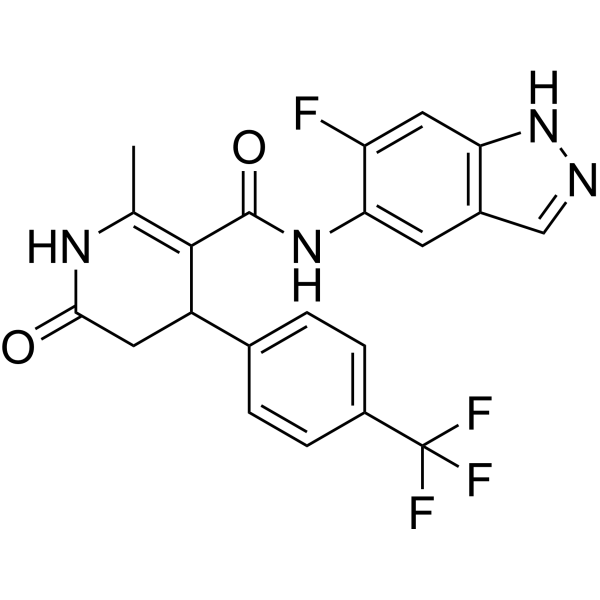
|
ROCK
|
Cancer
|
|
LASSBio-2382 is a dual ROCK1/ROCK2 inhibitor with ROCK1 IC50 of 0.005 μM and ROCK2 IC50 of 0.003 μM. LASSBio-2382 inhibits viability and migration of cancer cells. LASSBio-2382 can be used for the research of triple-negative breast cancer .
|
-
- HY-103620R
-
|
|
Reference Standards
ROCK
|
Inflammation/Immunology
|
|
ROCK2-IN-2 (Standard) is the analytical standard of ROCK2-IN-2 (HY-103620). This product is intended for research and analytical applications. ROCK2-IN-2 is a selective ROCK2 inhibitor extracted from patent US20180093978A1, Compound A-30, has an IC50 of <1 μM.
|
-
- HY-179498
-
|
|
FOXO
PTEN
ROCK
Epigenetic Reader Domain
PI3K
Akt
Apoptosis
|
Cancer
|
|
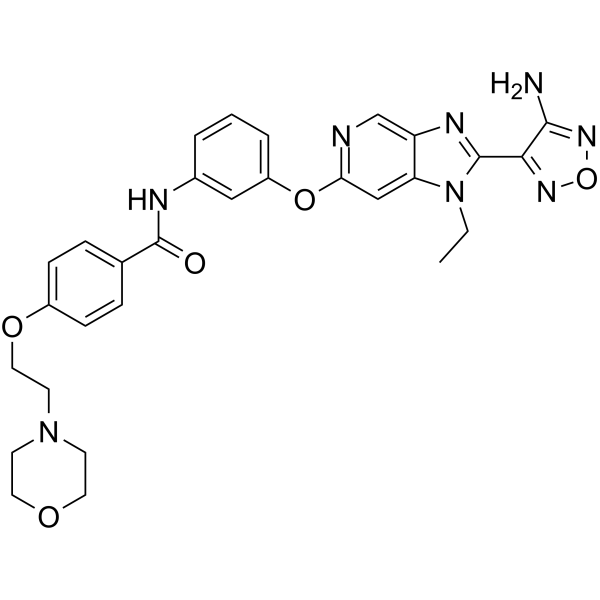
ROCK2-IN-13 is a selective ROCK2 inhibitor. ROCK2-IN-13 reduces nuclear expression by disrupting the interaction of ROCK2 with transcriptional co activators p300> and PGC 1α, repressing oncogenic transcription. ROCK2-IN-13 activates FOXO1 driven PTEN expression, leading to suppression of the PI3K/Akt pathway, induction of G2/M cell cycle arrest, and promotion of apoptosis. ROCK2-IN-13 ablates the nuclear transcriptional function of ROCK2 that sustains oncogenic signaling and restores the tumor suppressive PTEN/FOXO1 axis. ROCK2-IN-13 can be used for prostate cancer reseach .
|
-
- HY-10319R
-
|
ROCK-IN-2 (Standard); Azaindole 1 (Standard); TC-S 7001 (Standard)
|
Reference Standards
ROCK
|
Cardiovascular Disease
|
|
BAY-549 (Standard) is the analytical standard of BAY-549 (HY-10319). This product is intended for research and analytical applications. BAY-549 (Azaindole 1), a chemical probe, is an orally active and ATP-competitive ROCK inhibitor with IC50s of 0.6 and 1.1 nM for human ROCK-1 and ROCK-2, respectively .
|
-
- HY-113600
-
|
|
Endogenous Metabolite
|
Others
|
|
H-0106 dihydrochloride is a ROCK inhibitor with potent intraocular pressure (IOP)-lowering activity. H-0106 dihydrochloride can effectively inhibit ROCK enzyme. H-0106 dihydrochloride demonstrated significant IOP-lowering effects in monkey eyes. Studies with H-0106 dihydrochloride suggest that there may not be a direct relationship between ROCK inhibition and IOP reduction .
|
-
- HY-100270R
-
|
|
ROCK
Reference Standards
|
Cancer
|
|
Rho-Kinase-IN-1 (Standard) is the analytical standard of Rho-Kinase-IN-1 (HY-100270). This product is intended for research and analytical applications. Rho-Kinase-IN-1 is a Rho kinase (ROCK) inhibitor (Ki values of 30.5 and 3.9 nM for ROCK1 and ROCK2, respectively) extracted from US20090325960A1, compound 1.008 .
|
-
- HY-162596A
-
|
(Rac)-BA-1049
|
ROCK
|
Neurological Disease
|
|
(Rac)-NRL-1049 is the racemic mixture of NRL-1049 (BA-1049 (free base)) (HY-162596). NRL-1049 is an orally available and selective ROCK2 inhibitor with IC50 values of 0.59 µM for ROCK2 and 26 µM for ROCK1, respectively. NRL-1049 modulates ROCK signaling, preserves blood-brain barrier integrity, reduces edema, seizures and hemorrhage, and alleviates cerebral cavernous malformation lesion burden. NRL-1049 can be used for the study of acute brain injury, ischemic stroke, and cerebral cavernous malformations .
|
-
- HY-127012
-
|
|
Endogenous Metabolite
|
Others
|
|
H-0104 dihydrochloride is a ROCK inhibitor with significant intraocular pressure (IOP)-lowering activity. H-0104 dihydrochloride effectively reduces IOP when administered to monkey eyes. There may not be a direct relationship between the Iop-lowering effect of H-0104 dihydrochloride and ROCK inhibition .
|
-
- HY-181583
-
|
|
ROCK
|
Cancer
|
|
LASSBio-2389 is a selective ROCK2 inhibitor with an IC50 of 0.051 μM and an IC50 of 1.143 μM against ROCK1. LASSBio-2389 reduces the viability of MDA-MB-231 cells and inhibits cell migration. LASSBio-2389 is applicable to the research of triple-negative breast cancer .
|
-
- HY-10341R
-
|
HA-1077 Hydrochloride (Standard); AT-877 Hydrochloride (Standard)
|
Reference Standards
ROCK
Calcium Channel
Autophagy
PKA
PKC
HIV
|
Cancer
|
|
Fasudil (Hydrochloride) (Standard) is the analytical standard of Fasudil (Hydrochloride). This product is intended for research and analytical applications. Fasudil (HA-1077; AT877) Hydrochloride is a nonspecific RhoA/ROCK inhibitor and also has inhibitory effect on protein kinases, with an Ki of 0.33 μM for ROCK1, IC50s of 0.158 μM and 4.58 μM, 12.30 μM, 1.650 μM for ROCK2 and PKA, PKC, PKG, respectively. Fasudil Hydrochloride is also a potent Ca 2+ channel antagonist and vasodilator .
|
-
- HY-111239
-
-
- HY-13257
-
|
|
ROCK
|
Cancer
|
|
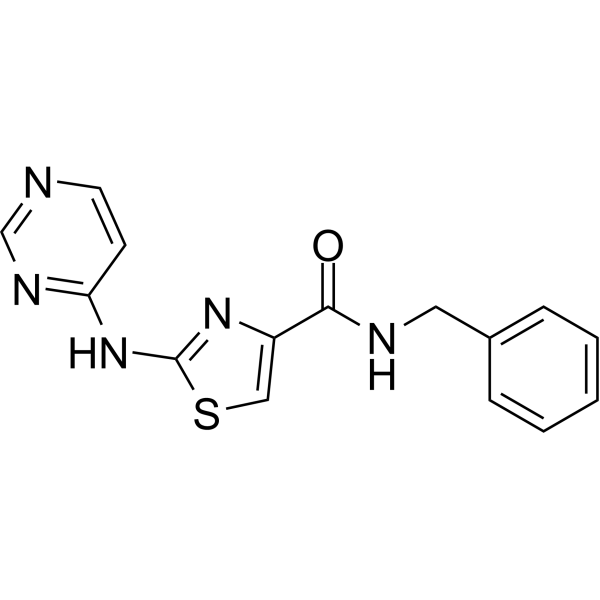
Thiazovivin is a potent ROCK inhibitor, which can protect human embryonic stem cells. Thiazovivin improves the efficiency of iPSC generation.
|
-
- HY-125221
-
|
|
ROCK
Cdc42-binding kinase
|
Cancer
|
|
DJ4 is a ATP-competitive inhibitor of ROCK1/2 (IC50 values:5 and 50 nM) and MRCKα/β (IC50 values:10 and 100 nM). DJ4 blocks stress fiber formation and inhibits migration and invasion of cancer cells. DJ4 can be used for study of lung cancer, breast cancer, and pancreatic (PANC-1) cancer .
|
-
- HY-14227
-
|
|
LIM Kinase (LIMK)
ROCK
|
Others
|
|
LIMK-IN-1 (Compound 14) is an inhibitor of LIM-Kinase (LIMK), with IC50s of 0.5 nM and 0.9 nM for LIMK1 and LIMK2, respectively. LIMK-IN-1 can be used for ocular hypertension and associated glaucoma research .
|
-
- HY-19346
-
|
|
ROCK
|
Others
|
|
AR-13324 analog mesylate is an analog of AR-13324. AR-13324 is an ROCK and norepinephrine transporter (NET) inhibitor .
|
-
- HY-10071R
-
|
|
Reference Standards
mTOR
Ras
ROCK
NADPH Oxidase
NF-κB
Reactive Oxygen Species (ROS)
Akt
Apoptosis
Autophagy
PAK
|
Cancer
|
|
Y-27632 (Standard) is the analytical standard of Y-27632 (HY-10071). This product is intended for research and analytical applications. Y-27632 is a ROCK inhibitor with Ki values of 220 nM and 300 nM for ROCK1 and ROCK2, respectively. Y-27632 exerts anti-inflammatory and immunomodulatory effects in systemic lupus erythematosus models by inhibiting the ROCK/NF-κB pathway. Y-27632 enhances autophagy by inhibiting the AKT/mTOR pathway, thereby inducing apoptosis apoptosis in oral squamous cell carcinoma. Y-27632 induces the formation of tunneling nanotubes in ARPE-19 cells and significantly enhances mitochondrial transfer through these channels. Y-27632 promotes neurite outgrowth in PC12 cells by activating the Rac1/NOX1/ROS/AKT/PAK1 signaling cascade .
|
-
- HY-110335A
-
|
|
ROCK
|
Cancer
|
|
OXA-06 is a pharmacologic inhibitor of ROCK, possessing antitumor activity by impairing cell migration and MYPT1 phosphorylation in PANC-1 cells.
|
-
- HY-10067
-
|
Y-39983 free base
|
ROCK
|
Cancer
|
|
Y-33075 is a selective ROCK inhibitor derived from Y-27632, and is more potent than Y-27632, with an IC50 of 3.6 nM.
|
-
- HY-173460
-
|
|
Ras
|
Cancer
|
|
RAS-IN-3 (compound 22) is a potent Ras inhibitor. ROCK-IN-12 can be used in the study of Non-small cell lung cancer and colorectal cancer .
|
-
- HY-108518R
-
|
|
Reference Standards
ROCK
|
Cardiovascular Disease
Inflammation/Immunology
|
|
SB-772077B dihydrochloride (Standard) is the analytical standard of SB-772077B (dihydrochloride) (HY-108518). This product is intended for research and analytical applications. SB-772077B dihydrochloride is an orally active aminofuran-based Rho Kinase ((ROCK)) inhibitor with IC50 values of 5.6 nM and 6 nM for ROCK1 and ROCK2, respectively. SB-772077B dihydrochloride reduces inflammatory cytoKines (TNF-α and IL-6). SB-772077B dihydrochloride relaxes aortic rings and lowers blood pressure. SB-772077B dihydrochloride can be used in the research of inflammatory diseases .
|
-
- HY-12659
-
LX7101
3 Publications Verification
|
LIM Kinase (LIMK)
ROCK
PKA
|
Endocrinology
|
|
LX7101 is a potent LIM-kinase, ROCK and PKA inhibitor with IC50s of 24 nM, 1.6 nM, 10 nM and <1 nM for LIMK1, LIMK2, ROCK2 and PKA, respectively. LX7101 proves significantly selective for LIMK2 with IC50 values of 4.3 nM and 32 nM for LIMK2 and LIMK1 at 2 μM ATP, respectively. LX7101 has the potential for ocular hypertension and associated glaucoma research .
|
-
- HY-100460
-
|
|
ROCK
|
Cancer
|
|
BIPM is a potent ROCK2 inhibitor. BIPM leads to significant changes in neurite length, cell migration and actin stress fibers. BIPM plays an important role in anti-cancer metastasis .
|
-
- HY-103045
-
CMPD101
4 Publications Verification
|
ROCK
PKC
G Protein-coupled Receptor Kinase (GRK)
|
Cardiovascular Disease
|
|
CMPD101 is a potent, highly selective and membrane-permeable small-molecule inhibitor of GRK2/3 with IC50 of 18 nM and 5.4 nM, respectively. CMPD101 exhibits less selectively against GRK1, GRK5, ROCK-2 and PKCα with IC50s of 3.1 μM , 2.3 μM, 1.4 μM and 8.1 μM, respectively. CMPD101 can be used for the study of heart failure .
|
-
- HY-12659B
-
|
|
LIM Kinase (LIMK)
ROCK
PKA
|
Endocrinology
|
|
LX7101 monohydrochloride is a potent LIM-kinase, ROCK and PKA inhibitor with IC50s of 24 nM, 1.6 nM, 10 nM and <1 nM for LIMK1, LIMK2, ROCK2 and PKA, respectively. LX7101 monohydrochloride proves significantly selective for LIMK2 with IC50 values of 4.3 nM and 32 nM for LIMK2 and LIMK1 at 2 μM ATP, respectively. LX7101 monohydrochloride has the potential for ocular hypertension and associated glaucoma research .
|
-
- HY-110335
-
|
|
ROCK
|
Cancer
|
|
OXA-06 hydrochloride is an ATP-competitive ROCK inhibitor that blocks anchorage-dependent growth and invasion of non-small cell lung cancer cell lines. OXA-06 hydrochloride inhibits cofilin phosphorylation but does not stimulate apoptosis .
|
-
- HY-13257G
-
|
|
ROCK
|
Cancer
|
|
Thiazovivin (GMP) is Thiazovivin (HY-13257) produced by using GMP guidelines. GMP small molecules work appropriately as an auxiliary reagent for cell therapy manufacture. Thiazovivin is a potent ROCK inhibitor .
|
-
- HY-10069R
-
|
|
ROCK
Reference Standards
|
Cancer
|
|
Y-33075 (dihydrochloride) (Standard) is the analytical standard of Y-33075 (dihydrochloride) (HY-10069). This product is intended for research and analytical applications. Y-33075 dihydrochloride is a selective ROCK inhibitor with an IC50 of 3.6 nM.
|
-
- HY-112362
-
|
ROCKout; 3-(4-Pyridinyl)-1H-indole; Rho Kinase Inhibitor III, ROCKout
|
ROCK
|
Inflammation/Immunology
|
|
3-(4-Pyridyl)indole (Rockout) is a Rho-kinase (ROCK) inhibitor, with an IC50 of 25 μM. 3-(4-Pyridyl)indole can inhibit blebbing and cause dissolution of actin stress fibers in a wound healing assay .
|
-
- HY-118151
-
-
- HY-32951
-
|
|
Drug Intermediate
|
Others
|
|
2-Fluoropyridine-4-boronic acid is a coupling reagent and chemical intermediate. 2-Fluoropyridine-4-boronic acid facilitates the synthesis of Rho kinase (ROCK) inhibitor Compound 37 .
|
-
- HY-18713A
-
|
|
PKC
ROCK
|
Neurological Disease
|
|
CRT0066854 hydrochloride is a potent and selective atypical PKCs inhibitor. CRT0066854 is against full-length (FL) PKCι, PKCζ, and ROCK-II kinases with IC50 values of 132 nM, 639 nM, and 620 nM, respectively .
|
-
- HY-18713
-
|
|
PKC
ROCK
|
Neurological Disease
Inflammation/Immunology
|
|
CRT0066854 is a potent and selective atypical PKC isoenzymes inhibitor. CRT0066854 is against full-length (FL) PKCι, PKCζ, and ROCK-II kinases with IC50 values of 132 nM, 639 nM, and 620 nM, respectively .
|
-
- HY-123958
-
|
|
ROCK
β-catenin
Collagen
|
Cardiovascular Disease
Neurological Disease
Inflammation/Immunology
|
|
SB772077B is a ROCK inhibitor. SB772077B has an anti-inflammatory activity and enhances aqueous outflow facility (OF) by inactivating RhoA/ROCK signal pathway. SB772077B significantly reduces the mRNA level of β-catenin and protein level of fibrotic markers, such as vinculin, fibronectin, collagen 1 A and vimentin. SB772077B also has vasodialatory activity and decreases pulmonary and systemic blood pressure. SB772077B can be used for glaucoma research and pulmonary hypertensive disorder research .
|
-
- HY-18990
-
-
- HY-118837
-
|
|
ROCK
|
Cancer
|
|
WF-536 is an orally active inhibitor of Rho-associated coiled-coil-containing protein kinase (ROCK). WF-536 has tumor anti-metastatic activity. WF-536 can be used for the research of cancer .
|
-
- HY-100521
-
GKI-1
3 Publications Verification
|
ROCK
|
Cancer
|
|
GKI-1 is a Greatwall (GWL) kinase inhibitor with IC50s of 4.9 and 2.5 μM against hGWL FL and hGWL-KinDom, respectively. GKI-1 robustly inhibits ROCK1 with an IC50 of 11 μM, but only weakly affected PKA .
|
-
- HY-19353
-
SR7826
1 Publications Verification
|
LIM Kinase (LIMK)
|
Neurological Disease
Cancer
|
|
SR7826 is a class of bis-aryl urea derived potent, selective and orally active LIM kinase (LIMK) inhibitor with an IC50 of 43 nM for LIMK1. SR7826 is >100-fold more selective for LIMK1 than ROCK and JNK kinases .
|
-
- HY-103045R
-
|
|
ROCK
PKC
G Protein-coupled Receptor Kinase (GRK)
Reference Standards
|
Cardiovascular Disease
|
|
CMPD101 (Standard) is the analytical standard of CMPD101 (HY-103045). This product is intended for research and analytical applications. CMPD101 is a potent, highly selective and membrane-permeable small-molecule inhibitor of GRK2/3 with IC50 of 18 nM and 5.4 nM, respectively. CMPD101 exhibits less selectively against GRK1, GRK5, ROCK-2 and PKCα with IC50s of 3.1 μM , 2.3 μM, 1.4 μM and 8.1 μM, respectively. CMPD101 can be used for the study of heart failure .
|
-
- HY-164809
-
|
|
ROCK
|
Metabolic Disease
|
|
KD025m1 is a novel selective ROCK2 inhibitor. KD025m1 has good anti obesity, improved insulin sensitivity, and blood glucose control effects. KD025m1 can be used to study metabolic diseases such as diabetes and obesity .
|
-
- HY-108519
-
|
|
ROCK
|
Neurological Disease
|
|
AS1892802 is a potent, orally active, and highly selective inhibitor of ROCK. The onset of antinociceptive effect of AS1892802 is as fast as those of Tramadol and Diclofenac. AS1892802 did not induce gastric irritation or abnormal behavior. AS1892802 is an attractive analgesic profile for the research of severe osteoarthritis pain .
|
-
- HY-12798C
-
|
AR-13324 M1 metabolite
|
PKC
ROCK
|
Cardiovascular Disease
Neurological Disease
|
|
AR-13503 (AR-13324 M1 metabolite) is the hydrolytic metabolite of AR-13324 mesylate. AR-13324 is a ROCK kinase and PKC inhibitor with anti-angiogenic and retinal health-improving effects, showing potential for use in retinal disease research .
|
-
- HY-114038
-
|
|
p38 MAPK
|
Inflammation/Immunology
|
|
SB-747651A is an ATP-competitive mitogen- and stress-activated kinase 1 (MSK1) inhibitor with an IC50 of 11 nM. SB-747651A also inhibits PRK2, RSK1, p70S6K and ROCK-II. SB-747651A can be used for inflammation research .
|
-
- HY-110313
-
|
|
p38 MAPK
|
Inflammation/Immunology
|
|
SB-747651A dihydrochloride is an ATP-competitive mitogen- and stress-activated kinase 1 (MSK1) inhibitor with an IC50 of 11 nM. SB-747651A dihydrochloride also inhibits PRK2, RSK1, p70S6K and ROCK-II. SB-747651A dihydrochloride can be used for inflammation research .
|
-
- HY-10067R
-
|
Y-39983 free base (Standard)
|
ROCK
Reference Standards
|
Cancer
|
|
Y-33075 (Standard) is the analytical standard of Y-33075 (HY-10067). This product is intended for research and analytical applications. Y-33075 is a selective ROCK inhibitor derived from Y-27632, and is more potent than Y-27632, with an IC50 of 3.6 nM.
|
-
- HY-W700452
-
|
|
Isotope-Labeled Compounds
Apoptosis
ROCK
|
Cancer
|
|
Y-27632-d4 hydrochloride hydrate is the deuterium labeled Y-27632 hydrochloride hydrate (HY-10071A). Y-27632 hydrochloride hydrate is an orally active, ATP-competitive inhibitor of ROCK-I and ROCK-II, with Kis of 220 and 300 nM, respectively. Y-27632 hydrochloride hydrate attenuates Doxorubicin-induced apoptosis of human cardiac stem cells. Y-27632 hydrochloride hydrate also suppresses dissociation-induced apoptosis of murine prostate stem/progenitor cells. Y-27632 hydrochloride hydrate primes human induced pluripotent stem cells (hIPSCs) to selectively differentiate towards mesendodermal lineage via epithelial-mesenchymal transition-like modulation .
|
-
- HY-123254
-
|
|
G Protein-coupled Receptor Kinase (GRK)
|
Cardiovascular Disease
|
|
CCG-224406 is a selective G protein-coupled receptor kinase 2 (GRK2) inhibitor with the IC50 values of 13 nM, greater than 700-fold selectivity over other GRK subfamilies, and no inhibition of ROCK1. CCG-224406 can be used for study of heart failure .
|
-
- HY-100984
-
HA-100
1 Publications Verification
|
PKA
PKC
Myosin
ROCK
|
Cancer
|
|
HA-100 is a potent protein kinase inhibitor, with IC50s of 4 μM, 8 μM, 12 μM and 240 μM for cGMP-dependent protein kinase (PKG), cAMP-dependent protein kinase (PKA), protein kinase C (PKC) and MLC-kinase, respectively. HA-100 also used as a ROCK inhibitor .
|
-
- HY-100984A
-
|
|
PKA
PKC
Myosin
ROCK
|
Cancer
|
|
HA-100 hydrochloride is a potent protein kinase inhibitor, with IC50s of 4 μM, 8 μM, 12 μM and 240 μM for cGMP-dependent protein kinase (PKG), cAMP-dependent protein kinase (PKA), protein kinase C (PKC) and MLC-kinase, respectively. HA-100 hydrochloride also used as a ROCK inhibitor .
|
-
- HY-12880
-
|
|
Myosin
PKA
PKC
ROCK
|
Cancer
|
|
HA-100 dihydrochloride is a potent protein kinase inhibitor, with IC50s of 4 μM, 8 μM, 12 μM and 240 μM for cGMP-dependent protein kinase (PKG), cAMP-dependent protein kinase (PKA), protein kinase C (PKC) and MLC-kinase, respectively. HA-100 dihydrochloride also used as a ROCK inhibitor .
|
-
- HY-121723
-
|
|
HSP
|
Cancer
|
|
PU-H39 (compound 9g) is a selective Grp94 inhibitor with an IC50 of 0.12 μM. PU-H39 exhibits 34% and 32% inhibition of MKNK2 and ROCK2 kinases respectively at 10 μM. PU-H39 can be used for the research of breast cancer .
|
-
- HY-125639
-
|
(rac)-AR-13324 M1 metabolite
|
PKC
ROCK
|
Cardiovascular Disease
|
|
(rac)-AR-13503 ((rac)-AR-13324 M1 metabolite) is the isoform of AR-13503 (HY-12798C). AR-13503 a ROCK/PKC inhibitor, inhibiting angiogenesis and enhancing retinal pigment epithelium (RPE) permeability. AR-13503 also inhibits the formation of aberrant neovascularization (NV) in oxygen-induced retinopathy (OIR) model in mice .
|
-
- HY-P990805
-
|
|
HSP
|
Metabolic Disease
Cancer
|
|
Anti-Human/Mouse GRP78 Antibody (C38) is a kind of mouse IgG2b antibody inhibitor, targeting to GRP78. Anti-Human/Mouse GRP78 Antibody (C38) inhibits RhoA, ROCK and AKT activation. Anti-Human/Mouse GRP78 Antibody (C38) can be used for the researches of cancer and metabolic disease, such as melanoma and diabetes .
|
-
- HY-119925
-
|
|
Drug Intermediate
|
Neurological Disease
|
|
Amaralin is a sesquiterpene lactone with analgesic activity, which exists in the leaves and stems of Helenium amarum (Raf.) H. Rock. When administered subcutaneously, Amaralin produces analgesic effects in the mouse tail-flick test. When administered subcutaneously, Amaralin inhibits acetic acid-induced writhing syndrome in mice. Amaralin can be used for pain-related research .
|
-
- HY-182613
-
|
|
|
Cardiovascular Disease
|
|
NSC-2888 is a Rho kinase II (ROCK-II) inhibitor with an IC50 of 8.4 nM against human targets. NSC-2888 inhibits enzymatic activity by binding to active site amino acids via hydrogen bonds and hydrophobic interactions. NSC-2888 induces relaxation of pre-contracted rat aortic strips. NSC-2888 can be used in research related to hypertension .
|
-
- HY-100521R
-
|
|
ROCK
Reference Standards
|
Cancer
|
|
GKI-1 (Standard) is the analytical standard of GKI-1 (HY-100521). This product is intended for research and analytical applications. GKI-1 is a Greatwall (GWL) kinase inhibitor with IC50s of 4.9 and 2.5 μM against hGWLFL and hGWL-KinDom, respectively. GKI-1 robustly inhibits ROCK1 with an IC50 of 11 μM, but only weakly affected PKA .
|
-
- HY-118046
-
|
|
ROCK
IGF-1R
G Protein-coupled Receptor Kinase (GRK)
|
Cardiovascular Disease
|
|
GSK2163632A is a selective G protein-coupled receptor kinase (GRK) inhibitor that can be used as a probe for studying heart failure and Parkinson's disease. GSK2163632A potently inhibits GRK1 and GRK5, and also inhibits Rho-associated coiled-coil kinase (ROCK) and insulin-like growth factor receptor IGF-1R. GSK2163632A binds to GRK2 in a manner similar to Paroxetine (HY-122272).
|
-
- HY-10583G
-
|
|
ROCK
|
Neurological Disease
Cancer
|
|
Y-27632 dihydrochloride (GMP) is the GMP level of Y-27632 dihydrochloride (HY-10583). GMP guidelines are used to produce Y-27632 dihydrochloride (GMP). GMP small molecules works appropriately as an auxiliary reagent for cell research manufacture. Y-27632 dihydrochloride is an orally active and ATP-competitive ROCK (Rho-kinase) inhibitor with antiepileptic effect .
|
-
- HY-100035
-
|
|
ROCK
ERK
CDK
Apoptosis
|
Cancer
|
|
PT-262 is a potent ROCK inhibitor with an IC50 value of around 5 μM. PT-262 induces the loss of mitochondrial membrane potential and elevates the caspase-3 activation and apoptosis. PT-262 inhibits the ERK and CDC2 phosphorylation via a p53-independent pathway. PT-262 blocks cytoskeleton function and cell migration. PT-262 has anti-cancer activity .
|
-
- HY-110313R
-
|
|
p38 MAPK
|
Inflammation/Immunology
|
|
SB-747651A (dihydrochloride) (Standard) is the analytical standard of SB-747651A (dihydrochloride). This product is intended for research and analytical applications. SB-747651A dihydrochloride is an ATP-competitive mitogen- and stress-activated kinase 1 (MSK1) inhibitor with an IC50 of 11 nM. SB-747651A dihydrochloride also inhibits PRK2, RSK1, p70S6K and ROCK-II. SB-747651A dihydrochloride can be used for inflammation research .
|
-
- HY-108519R
-
|
|
Reference Standards
ROCK
|
Neurological Disease
|
|
AS1892802 (Standard) is the analytical standard of AS1892802 (HY-108519). This product is intended for research and analytical applications. AS1892802 is a potent, orally active, and highly selective inhibitor of ROCK. The onset of antinociceptive effect of AS1892802 is as fast as those of Tramadol and Diclofenac. AS1892802 did not induce gastric irritation or abnormal behavior. AS1892802 is an attractive analgesic profile for the research of severe osteoarthritis pain .
|
-
- HY-12798E
-
|
(R)-AR-13324 M1 metabolite
|
PKC
ROCK
Drug Metabolite
|
Cardiovascular Disease
|
|
(R)-AR-13503 ((R)-AR-13324 M1 metabolite) is the the (R)-enantiomer of AR-13503 (HY-12798C). AR-13503 is the hydrolytic metabolite of AR-13324 mesylate. AR-13324 is a ROCK kinase and PKC inhibitor with anti-angiogenic and retinal health-improving effects, showing potential for use in retinal disease research .
|
-
- HY-100984R
-
|
|
PKA
Reference Standards
PKC
Myosin
ROCK
|
Cancer
|
|
HA-100 (Standard) is the analytical standard of HA-100 (HY-100984). This product is intended for research and analytical applications. HA-100 is a potent protein kinase inhibitor, with IC50s of 4 μM, 8 μM, 12 μM and 240 μM for cGMP-dependent protein kinase (PKG), cAMP-dependent protein kinase (PKA), protein kinase C (PKC) and MLC-kinase, respectively. HA-100 also used as a ROCK inhibitor .
|
-
- HY-N12378A
-
|
|
AMPK
FASTK
Sirtuin
ROCK
Keap1-Nrf2
Toll-like Receptor (TLR)
Apoptosis
PKA
ERK
NF-κB
Epigenetic Reader Domain
Caspase
|
Metabolic Disease
Inflammation/Immunology
Cancer
|
|
α-Patchoulene is an orally active anti-inflammatory, antioxidant, and anti-apoptotic agent. α-Patchoulene inhibits the NF-κB, TLR4, and cAMP/PKA/CREB signaling pathways; activates the Sirt1/Nrf2 and AMPK signaling pathways; and targets Fas/FasL, Caspase-3, ERK1/2, ROCK1/MLC2 for inhibition. α-Patchoulene regulates cytokine secretion, inflammatory cell infiltration, lipid peroxidation, cell polarization, gut microbiota, and lipid metabolism, restores barrier function, mitochondrial function, and cell viability, and exhibits repellent activity against Spodoptera exigua larvae. α-Patchoulene can be used in research related to various inflammatory, ischemic, fibrosis-associated diseases, as well as hepatocellular carcinoma .
|
-
- HY-N12378
-
|
|
NF-κB
Toll-like Receptor (TLR)
PKA
Epigenetic Reader Domain
Keap1-Nrf2
Sirtuin
AMPK
Caspase
FASTK
ERK
ROCK
Apoptosis
|
Metabolic Disease
Inflammation/Immunology
Cancer
|
|
β-Patchoulene is an orally active anti-inflammatory, antioxidant, and anti-apoptotic agent. β-Patchoulene inhibits the NF-κB, TLR4, and cAMP/PKA/CREB signaling pathways; activates the Sirt1/Nrf2 and AMPK signaling pathways; and targets Fas/FasL, Caspase-3, ERK1/2, ROCK1/MLC2 for inhibition. β-Patchoulene regulates cytokine secretion, inflammatory cell infiltration, lipid peroxidation, cell polarization, gut microbiota, and lipid metabolism, restores barrier function, mitochondrial function, and cell viability, and exhibits repellent activity against Spodoptera exigua larvae. β-Patchoulene can be used in research related to various inflammatory, ischemic, fibrosis-associated diseases, as well as hepatocellular carcinoma .
|
-
- HY-126257
-
|
|
Akt
Apoptosis
|
Cancer
|
|
AKT-IN-3 (compound E22) is a potent, orally active low hERG blocking Akt inhibitor, with 1.4 nM, 1.2 nM and 1.7 nM for Akt1, Akt2 and Akt3, respectively. AKT-IN-3 (compound E22) also exhibits good inhibitory activity against other AGC family kinases, such as PKA, PKC, ROCK1, RSK1, P70S6K, and SGK. AKT-IN-3 (compound E22) induces apoptosis and inhibits metastasis of cancer cells .
|
-
- HY-139690
-
-
- HY-109562A
-
|
GRK2-IN-1 hydrochloride
|
G Protein-coupled Receptor Kinase (GRK)
|
Cardiovascular Disease
|
|
CCG258208 (GRK2-IN-1) hydrochloride is a potent and selective GRK2 (G protein-coupled receptor kinase 2) inhibitor (IC50=30 nM) while maintaining 230-fold selectivity over GRK5 (IC50=7.09 μM) and more than 2500-fold selectivity over GRK1 (IC50=87.3 μM), PKA, and ROCK1. CCG258208 hydrochloride can be used in heart failure research .
|
-
- HY-148808
-
|
RXC007
|
ROCK
|
Cancer
|
|
Zelasudil (RXC007) is an orally active, highly selective small molecule Rho-associated coiled-coil containing protein kinase 2 (ROCK2) inhibitor with anti-fibrotic efficacy. Zelasudil elicits positive immunomodulatory effects in metastatic pancreatic tumors with increase of CD8+ and CD4+ T cell infiltrate into the tumor cortex and reduction in immunosuppressive FOXP3+ regulatory T cells at the tumor border. Zelasudil is promising for research of pancreatic ductal adenocarcinoma .
|
-
- HY-109562
-
|
GRKs-IN-1
|
G Protein-coupled Receptor Kinase (GRK)
|
Cardiovascular Disease
|
|
CCG258208 (GRK2-IN-1) is a potent and selective GRK2 (G protein-coupled receptor kinase 2) inhibitor (IC50=30 nM) while maintaining 230-fold selectivity over GRK5 (IC50=7.09 μM) and more than 2500-fold selectivity over GRK1 (IC50=87.3 μM), PKA, and ROCK1. CCG258208 can be used in heart failure research .
|
-
- HY-14362
-
|
|
ROCK
Ribosomal S6 Kinase (RSK)
|
Cardiovascular Disease
|
|
GSK-25 is a potent, selective and orally bioavailable ROCK1 inhibitor (IC50=7 nM). GSK-25 maintains good selectivity against a panel of 31 kinases (>100 fold), as well as RSK1 and p70S6K (RSK1: IC50=398 nM, p70S6K: IC50=1 μM). GSK-25 inhibits P450 profile (IC50s of 2.5, 5.2, 2.5 µM for CYP2C9, CYP2D6, CYP3A4, respectively) .
|
-
- HY-P10393
-
|
ERα (295-311)
|
Apoptosis
|
Cancer
|
|
ERα17p (ERα 295-311) is the epitope of the CaM binding site on the estrogen receptor α (ER), which interacts with calmodulin (CaM) in a calcium-dependent manner. ERα17p regulates the migration of cancer cells MCF-7, SK-BR-3, T47D, and MDA-MB-231 through Rho/ROCK and PI3K/Akt signaling pathways. ERα17p inhibits proliferations of breast cancer cells, induces apoptosis, and inhibits tumor growth in mouse models .
|
-
- HY-N12466
-
|
|
PKC
p38 MAPK
ROCK
|
Cancer
|
|
3′-O-Demethyl-4′-N-demethyl-4′-N-acetyl-4′-epi-staurosporine (Compound 7) is an inhibitor of protein kinases, with IC50s of 0.092, 0.26, 0.77 μM for PKC-α, ROCK, ASK1. 3′-O-Demethyl-4′-N-demethyl-4′-N-acetyl-4′-epi-staurosporine shows potent cytotoxicity against PC-3 cancer cells with an IC50 value of 0.16 μM .
|
-
- HY-N0430
-
|
Coptisin
|
Indoleamine 2,3-Dioxygenase (IDO)
NF-κB
p38 MAPK
PI3K
Akt
Apoptosis
Reactive Oxygen Species (ROS)
Mitochondrial Metabolism
DNA/RNA Synthesis
ROCK
LDLR
|
Cardiovascular Disease
Neurological Disease
Metabolic Disease
Inflammation/Immunology
Cancer
|
|
Coptisine is an orally active and brain-penetrant alkaloid found in Coptis chinensis. Coptisine is a reversible, uncompetitive IDO inhibitor with a Ki of 5.8 μM and an IC50 of 6.3 μM. Coptisine suppresses neuroinflammation, reduces Aβ plaque burden and shows neuroprotective activity. Coptisine shows anti-inflammation activity by blocking NF-κB, MAPK, and PI3K/Akt activation. Coptisine inhibits cancer cells proliferation, induces DNA damage, G2/M phase cell cycle arrest, apoptosis, ROS production and mitochondrial dysfunction. Coptisine inhibits Rho/ROCK pathway activation, reduces arrhythmia, limits cardiac injury marker release, reduces infarct size, and preserves cardiac function in rat myocardial ischemia/reperfusion models. Coptisine downregulates HMGCR and upregulates LDLR and CYP7A1 to modulate cholesterol metabolism, reduces abnormal serum lipid levels, and promotes fecal bile acid excretion. Coptisine can be used for the research of cancer, hypercholesterolemia, Alzheimer’s disease, inflammatory disorders and cardiovascular disease .
|
-
- HY-N0430A
-
|
|
Indoleamine 2,3-Dioxygenase (IDO)
NF-κB
p38 MAPK
PI3K
Akt
Apoptosis
Reactive Oxygen Species (ROS)
Mitochondrial Metabolism
DNA/RNA Synthesis
ROCK
LDLR
|
Cardiovascular Disease
Neurological Disease
Metabolic Disease
Inflammation/Immunology
Cancer
|
|
Coptisine Sulfate is an orally active and brain-penetrant alkaloid found in Coptis chinensis. Coptisine Sulfate is a reversible, uncompetitive IDO inhibitor with a Ki of 5.8 μM and an IC50 of 6.3 μM. Coptisine Sulfate suppresses neuroinflammation, reduces Aβ plaque burden and shows neuroprotective activity. Coptisine Sulfate shows anti-inflammation activity by blocking NF-κB, MAPK, and PI3K/Akt activation. Coptisine Sulfate inhibits cancer cells proliferation, induces DNA damage, G2/M phase cell cycle arrest, apoptosis, ROS production and mitochondrial dysfunction. Coptisine Sulfate inhibits Rho/ROCK pathway activation, reduces arrhythmia, limits cardiac injury marker release, reduces infarct size, and preserves cardiac function in rat myocardial ischemia/reperfusion models. Coptisine Sulfate downregulates HMGCR and upregulates LDLR and CYP7A1 to modulate cholesterol metabolism, reduces abnormal serum lipid levels, and promotes fecal bile acid excretion. Coptisine Sulfate be used for the research of cancer, hypercholesterolemia, Alzheimer’s disease, inflammatory disorders and cardiovascular disease .
|
-
- HY-107614G
-
|
1-Oleoyl-sn-glycero-3-phosphate sodium; 1-Oleoyl-LPA sodium
|
LPL Receptor
ROCK
TGF-beta/Smad
TGF-β Receptor
|
Neurological Disease
Cancer
|
|
1-Oleoyl lysophosphatidic acid sodium (GMP) is the GMP-grade form of 1-Oleoyl lysophosphatidic acid sodium (HY-107614). GMP-grade small molecules serve as auxiliary reagents in cell therapy. 1-Oleoyl lysophosphatidic acid sodium is a bioactive lipid signaling molecule. 1-Oleoyl lysophosphatidic acid sodium inhibits lysoPLD-catalyzed hydrolysis of lysophosphatidylcholine and FS-3. 1-Oleoyl lysophosphatidic acid sodium activates LPA1 and LPA2, thereby triggering calcium mobilization, NFATc1 translocation, Rho/ROCK activation, Smad2/3 phosphorylation and c-Fos expression. 1-Oleoyl lysophosphatidic acid sodium induces anxiety-like, depression-like and hypoactivity phenotypes, regulates osteoclast cytoskeleton and viability, reduces osteoclast bone resorptive activity, and drives mesenchymal stem cell differentiation into myofibroblast-like cells. 1-Oleoyl lysophosphatidic acid sodium stimulates the secretion of transforming growth factor-β1 and stromal cell-derived factor-1. 1-Oleoyl lysophosphatidic acid sodium is applicable to research related to anxiety, depression and ovarian cancer .
|
-
-
-
HY-L018
-
|
|
413 compounds
|
|
The transforming growth factor beta (TGF-β) signaling pathway is involved in many cellular processes in both the adult organism and the developing embryo including cell growth, cell differentiation, apoptosis, cellular homeostasis and other cellular functions. The TGF-β superfamily comprises TGF-βs, bone morphogenetic proteins (BMPs), activins and related proteins. Signaling begins with the binding of a TGF beta superfamily ligand to a TGF beta type II receptor. The type II receptor is a serine/threonine receptor kinase, which catalyzes the phosphorylation of the Type I receptor. The type I receptor then phosphorylates receptor-regulated SMADs (R-SMADs) which can now bind the coSMAD (e.g. SMAD4). R-SMAD/coSMAD complexes accumulate in the nucleus where they act as transcription factors and participate in the regulation of target gene expression. Deregulation of TGF-β signaling contributes to developmental defects and human diseases, including cancers, some bone diseases, chronic kidney disease, etc.
MCE designs a unique collection of 413 TGF-beta/Smad signaling pathway compounds. TGF-beta/Smad Compound Library acts as a useful tool for TGF-beta/Smad-related drug screening and disease research.
|
-
-
HY-L017
-
|
|
2,723 compounds
|
|
Adult stem cells are important for tissue homeostasis and regeneration due to their ability to self-renew and generate multiple types of differentiated daughters. Self-renewal is reflected by their capacity to undergo multiple/limitless divisions. Several signaling pathways are involved in self-renewal of stem cells, that is, Notch, Wnt, and Hedgehog pathways or Polycomb family proteins. Recent studies mainly focus on cancer stem cell (CSCs), induced pluripotent stem cell (iPSCs), neural stem cell and maintenance of embryonic stem cell pluripotency. Among them, CSCs have been believed to be responsible for tumor initiation, growth, and recurrence that have implications for cancer therapy.
MCE owns a unique collection of 2,723 compounds that can be used for stem cell regulatory and signaling pathway research.
|
| Cat. No. |
Product Name |
Type |
-
- HY-10583G
-
|
|
Fluorescent Dyes
|
|
Y-27632 dihydrochloride (GMP) is the GMP level of Y-27632 dihydrochloride (HY-10583). GMP guidelines are used to produce Y-27632 dihydrochloride (GMP). GMP small molecules works appropriately as an auxiliary reagent for cell research manufacture. Y-27632 dihydrochloride is an orally active and ATP-competitive ROCK (Rho-kinase) inhibitor with antiepileptic effect .
|
-
- HY-13257G
-
|
|
Fluorescent Dyes
|
|
Thiazovivin (GMP) is Thiazovivin (HY-13257) produced by using GMP guidelines. GMP small molecules work appropriately as an auxiliary reagent for cell therapy manufacture. Thiazovivin is a potent ROCK inhibitor .
|
-
- HY-107614G
-
|
1-Oleoyl-sn-glycero-3-phosphate sodium; 1-Oleoyl-LPA sodium
|
Fluorescent Dyes
|
|
1-Oleoyl lysophosphatidic acid sodium (GMP) is the GMP-grade form of 1-Oleoyl lysophosphatidic acid sodium (HY-107614). GMP-grade small molecules serve as auxiliary reagents in cell therapy. 1-Oleoyl lysophosphatidic acid sodium is a bioactive lipid signaling molecule. 1-Oleoyl lysophosphatidic acid sodium inhibits lysoPLD-catalyzed hydrolysis of lysophosphatidylcholine and FS-3. 1-Oleoyl lysophosphatidic acid sodium activates LPA1 and LPA2, thereby triggering calcium mobilization, NFATc1 translocation, Rho/ROCK activation, Smad2/3 phosphorylation and c-Fos expression. 1-Oleoyl lysophosphatidic acid sodium induces anxiety-like, depression-like and hypoactivity phenotypes, regulates osteoclast cytoskeleton and viability, reduces osteoclast bone resorptive activity, and drives mesenchymal stem cell differentiation into myofibroblast-like cells. 1-Oleoyl lysophosphatidic acid sodium stimulates the secretion of transforming growth factor-β1 and stromal cell-derived factor-1. 1-Oleoyl lysophosphatidic acid sodium is applicable to research related to anxiety, depression and ovarian cancer .
|
| Cat. No. |
Product Name |
Type |
-
- HY-10583G
-
|
|
Biochemical Assay Reagents
|
|
Y-27632 dihydrochloride (GMP) is the GMP level of Y-27632 dihydrochloride (HY-10583). GMP guidelines are used to produce Y-27632 dihydrochloride (GMP). GMP small molecules works appropriately as an auxiliary reagent for cell research manufacture. Y-27632 dihydrochloride is an orally active and ATP-competitive ROCK (Rho-kinase) inhibitor with antiepileptic effect .
|
-
- HY-13257G
-
|
|
Biochemical Assay Reagents
|
|
Thiazovivin (GMP) is Thiazovivin (HY-13257) produced by using GMP guidelines. GMP small molecules work appropriately as an auxiliary reagent for cell therapy manufacture. Thiazovivin is a potent ROCK inhibitor .
|
-
- HY-32951
-
|
|
Biochemical Assay Reagents
|
|
2-Fluoropyridine-4-boronic acid is a coupling reagent and chemical intermediate. 2-Fluoropyridine-4-boronic acid facilitates the synthesis of Rho kinase (ROCK) inhibitor Compound 37 .
|
-
- HY-107614G
-
|
1-Oleoyl-sn-glycero-3-phosphate sodium; 1-Oleoyl-LPA sodium
|
Biochemical Assay Reagents
|
|
1-Oleoyl lysophosphatidic acid sodium (GMP) is the GMP-grade form of 1-Oleoyl lysophosphatidic acid sodium (HY-107614). GMP-grade small molecules serve as auxiliary reagents in cell therapy. 1-Oleoyl lysophosphatidic acid sodium is a bioactive lipid signaling molecule. 1-Oleoyl lysophosphatidic acid sodium inhibits lysoPLD-catalyzed hydrolysis of lysophosphatidylcholine and FS-3. 1-Oleoyl lysophosphatidic acid sodium activates LPA1 and LPA2, thereby triggering calcium mobilization, NFATc1 translocation, Rho/ROCK activation, Smad2/3 phosphorylation and c-Fos expression. 1-Oleoyl lysophosphatidic acid sodium induces anxiety-like, depression-like and hypoactivity phenotypes, regulates osteoclast cytoskeleton and viability, reduces osteoclast bone resorptive activity, and drives mesenchymal stem cell differentiation into myofibroblast-like cells. 1-Oleoyl lysophosphatidic acid sodium stimulates the secretion of transforming growth factor-β1 and stromal cell-derived factor-1. 1-Oleoyl lysophosphatidic acid sodium is applicable to research related to anxiety, depression and ovarian cancer .
|
| Cat. No. |
Product Name |
Target |
Research Area |
-
- HY-P10393
-
|
ERα (295-311)
|
Apoptosis
|
Cancer
|
|
ERα17p (ERα 295-311) is the epitope of the CaM binding site on the estrogen receptor α (ER), which interacts with calmodulin (CaM) in a calcium-dependent manner. ERα17p regulates the migration of cancer cells MCF-7, SK-BR-3, T47D, and MDA-MB-231 through Rho/ROCK and PI3K/Akt signaling pathways. ERα17p inhibits proliferations of breast cancer cells, induces apoptosis, and inhibits tumor growth in mouse models .
|
| Cat. No. |
Product Name |
Target |
Research Area |
Image |
-
- HY-P990805
-
|
|
HSP
|
Metabolic Disease
Cancer
|
|
Anti-Human/Mouse GRP78 Antibody (C38) is a kind of mouse IgG2b antibody inhibitor, targeting to GRP78. Anti-Human/Mouse GRP78 Antibody (C38) inhibits RhoA, ROCK and AKT activation. Anti-Human/Mouse GRP78 Antibody (C38) can be used for the researches of cancer and metabolic disease, such as melanoma and diabetes .
|
-
(5)
| Cat. No. |
Product Name |
Category |
Target |
Chemical Structure |
-
- HY-N0430
-
|
Coptisin
|
Alkaloids
Structural Classification
Classification of Application Fields
Coptis chinensis Franch.
Ranunculaceae
Metabolic Disease
Quinoline Alkaloids
Plants
Disease Research Fields
Source Classification
|
Indoleamine 2,3-Dioxygenase (IDO)
NF-κB
p38 MAPK
PI3K
Akt
Apoptosis
Reactive Oxygen Species (ROS)
Mitochondrial Metabolism
DNA/RNA Synthesis
ROCK
LDLR
|
|
Coptisine is an orally active and brain-penetrant alkaloid found in Coptis chinensis. Coptisine is a reversible, uncompetitive IDO inhibitor with a Ki of 5.8 μM and an IC50 of 6.3 μM. Coptisine suppresses neuroinflammation, reduces Aβ plaque burden and shows neuroprotective activity. Coptisine shows anti-inflammation activity by blocking NF-κB, MAPK, and PI3K/Akt activation. Coptisine inhibits cancer cells proliferation, induces DNA damage, G2/M phase cell cycle arrest, apoptosis, ROS production and mitochondrial dysfunction. Coptisine inhibits Rho/ROCK pathway activation, reduces arrhythmia, limits cardiac injury marker release, reduces infarct size, and preserves cardiac function in rat myocardial ischemia/reperfusion models. Coptisine downregulates HMGCR and upregulates LDLR and CYP7A1 to modulate cholesterol metabolism, reduces abnormal serum lipid levels, and promotes fecal bile acid excretion. Coptisine can be used for the research of cancer, hypercholesterolemia, Alzheimer’s disease, inflammatory disorders and cardiovascular disease .
|
-
-
- HY-N0430A
-
|
|
Alkaloids
Structural Classification
Chelidonium majus
Classification of Application Fields
Metabolic Disease
Quinoline Alkaloids
Plants
Disease Research Fields
Papaveraceae
Source Classification
|
Indoleamine 2,3-Dioxygenase (IDO)
NF-κB
p38 MAPK
PI3K
Akt
Apoptosis
Reactive Oxygen Species (ROS)
Mitochondrial Metabolism
DNA/RNA Synthesis
ROCK
LDLR
|
|
Coptisine Sulfate is an orally active and brain-penetrant alkaloid found in Coptis chinensis. Coptisine Sulfate is a reversible, uncompetitive IDO inhibitor with a Ki of 5.8 μM and an IC50 of 6.3 μM. Coptisine Sulfate suppresses neuroinflammation, reduces Aβ plaque burden and shows neuroprotective activity. Coptisine Sulfate shows anti-inflammation activity by blocking NF-κB, MAPK, and PI3K/Akt activation. Coptisine Sulfate inhibits cancer cells proliferation, induces DNA damage, G2/M phase cell cycle arrest, apoptosis, ROS production and mitochondrial dysfunction. Coptisine Sulfate inhibits Rho/ROCK pathway activation, reduces arrhythmia, limits cardiac injury marker release, reduces infarct size, and preserves cardiac function in rat myocardial ischemia/reperfusion models. Coptisine Sulfate downregulates HMGCR and upregulates LDLR and CYP7A1 to modulate cholesterol metabolism, reduces abnormal serum lipid levels, and promotes fecal bile acid excretion. Coptisine Sulfate be used for the research of cancer, hypercholesterolemia, Alzheimer’s disease, inflammatory disorders and cardiovascular disease .
|
-
-
- HY-N12378
-
|
|
Other Terpenoids
Structural Classification
Entada phaseoloides (L.) Merr.
Terpenoids
Labiatae
Plants
Source Classification
|
NF-κB
Toll-like Receptor (TLR)
PKA
Epigenetic Reader Domain
Keap1-Nrf2
Sirtuin
AMPK
Caspase
FASTK
ERK
ROCK
Apoptosis
|
|
β-Patchoulene is an orally active anti-inflammatory, antioxidant, and anti-apoptotic agent. β-Patchoulene inhibits the NF-κB, TLR4, and cAMP/PKA/CREB signaling pathways; activates the Sirt1/Nrf2 and AMPK signaling pathways; and targets Fas/FasL, Caspase-3, ERK1/2, ROCK1/MLC2 for inhibition. β-Patchoulene regulates cytokine secretion, inflammatory cell infiltration, lipid peroxidation, cell polarization, gut microbiota, and lipid metabolism, restores barrier function, mitochondrial function, and cell viability, and exhibits repellent activity against Spodoptera exigua larvae. β-Patchoulene can be used in research related to various inflammatory, ischemic, fibrosis-associated diseases, as well as hepatocellular carcinoma .
|
-
-
- HY-N12466
-
|
|
Alkaloids
Microorganisms
Indole Alkaloids
Source Classification
|
PKC
p38 MAPK
ROCK
|
|
3′-O-Demethyl-4′-N-demethyl-4′-N-acetyl-4′-epi-staurosporine (Compound 7) is an inhibitor of protein kinases, with IC50s of 0.092, 0.26, 0.77 μM for PKC-α, ROCK, ASK1. 3′-O-Demethyl-4′-N-demethyl-4′-N-acetyl-4′-epi-staurosporine shows potent cytotoxicity against PC-3 cancer cells with an IC50 value of 0.16 μM .
|
-
-
- HY-N15301
-
|
|
Microorganisms
Ketones, Aldehydes, Acids
Source Classification
|
ROCK
Myosin
|
|
Nocarnickelamide B (Compound 2) is a linear peptide and ROCK1/2 inhibitor. Nocarnickelamide B exhibits dual inhibitory activity against ROCK1 and ROCK2 with IC50s of 14.9 μM and 21.9 μM, respectively. Nocarnickelamide B binds to the ATP-binding site. Nocarnickelamide B inhibits the activation of ROCK-regulated cytoskeletal contraction markers such as the myosin light chain. Nocarnickelamide B is potential for glaucoma reasearch .
|
-
-
- HY-119925
-
-
-
- HY-N12378A
-
|
|
Structural Classification
Entada phaseoloides (L.) Merr.
Terpenoids
Labiatae
Sesquiterpenes
Plants
Source Classification
|
AMPK
FASTK
Sirtuin
ROCK
Keap1-Nrf2
Toll-like Receptor (TLR)
Apoptosis
PKA
ERK
NF-κB
Epigenetic Reader Domain
Caspase
|
|
α-Patchoulene is an orally active anti-inflammatory, antioxidant, and anti-apoptotic agent. α-Patchoulene inhibits the NF-κB, TLR4, and cAMP/PKA/CREB signaling pathways; activates the Sirt1/Nrf2 and AMPK signaling pathways; and targets Fas/FasL, Caspase-3, ERK1/2, ROCK1/MLC2 for inhibition. α-Patchoulene regulates cytokine secretion, inflammatory cell infiltration, lipid peroxidation, cell polarization, gut microbiota, and lipid metabolism, restores barrier function, mitochondrial function, and cell viability, and exhibits repellent activity against Spodoptera exigua larvae. α-Patchoulene can be used in research related to various inflammatory, ischemic, fibrosis-associated diseases, as well as hepatocellular carcinoma .
|
-
| Cat. No. |
Product Name |
Chemical Structure |
-
- HY-W700452
-
|
|
|
Y-27632-d4 hydrochloride hydrate is the deuterium labeled Y-27632 hydrochloride hydrate (HY-10071A). Y-27632 hydrochloride hydrate is an orally active, ATP-competitive inhibitor of ROCK-I and ROCK-II, with Kis of 220 and 300 nM, respectively. Y-27632 hydrochloride hydrate attenuates Doxorubicin-induced apoptosis of human cardiac stem cells. Y-27632 hydrochloride hydrate also suppresses dissociation-induced apoptosis of murine prostate stem/progenitor cells. Y-27632 hydrochloride hydrate primes human induced pluripotent stem cells (hIPSCs) to selectively differentiate towards mesendodermal lineage via epithelial-mesenchymal transition-like modulation .
|
-
-
- HY-15307S
-
|
|
|
Belumosudil-d7 (KD025-d7) is deuterium labeled Belumosudil. Belumosudil (KD025) is a selective inhibitor of ROCK2 with IC50s of 105 nM and 24 μM for ROCK2 and ROCK1, respectively. Anti-fibrotic properties .
|
-
| Cat. No. |
Product Name |
|
Classification |
-
- HY-121723
-
|
|
|
Alkynes
|
|
PU-H39 (compound 9g) is a selective Grp94 inhibitor with an IC50 of 0.12 μM. PU-H39 exhibits 34% and 32% inhibition of MKNK2 and ROCK2 kinases respectively at 10 μM. PU-H39 can be used for the research of breast cancer .
|
| Cat. No. |
Product Name |
Target |
Research Areas |
Chemical Structure |
-
- HY-13257G
-
|
|
ROCK
|
Cancer
|
|
Thiazovivin (GMP) is Thiazovivin (HY-13257) produced by using GMP guidelines. GMP small molecules work appropriately as an auxiliary reagent for cell therapy manufacture. Thiazovivin is a potent ROCK inhibitor .
|
-
-
- HY-10583G
-
|
|
ROCK
|
Neurological Disease
Cancer
|
|
Y-27632 dihydrochloride (GMP) is the GMP level of Y-27632 dihydrochloride (HY-10583). GMP guidelines are used to produce Y-27632 dihydrochloride (GMP). GMP small molecules works appropriately as an auxiliary reagent for cell research manufacture. Y-27632 dihydrochloride is an orally active and ATP-competitive ROCK (Rho-kinase) inhibitor with antiepileptic effect .
|
-
-
- HY-107614G
-
|
1-Oleoyl-sn-glycero-3-phosphate sodium; 1-Oleoyl-LPA sodium
|
LPL Receptor
ROCK
TGF-beta/Smad
TGF-β Receptor
|
Neurological Disease
Cancer
|
|
1-Oleoyl lysophosphatidic acid sodium (GMP) is the GMP-grade form of 1-Oleoyl lysophosphatidic acid sodium (HY-107614). GMP-grade small molecules serve as auxiliary reagents in cell therapy. 1-Oleoyl lysophosphatidic acid sodium is a bioactive lipid signaling molecule. 1-Oleoyl lysophosphatidic acid sodium inhibits lysoPLD-catalyzed hydrolysis of lysophosphatidylcholine and FS-3. 1-Oleoyl lysophosphatidic acid sodium activates LPA1 and LPA2, thereby triggering calcium mobilization, NFATc1 translocation, Rho/ROCK activation, Smad2/3 phosphorylation and c-Fos expression. 1-Oleoyl lysophosphatidic acid sodium induces anxiety-like, depression-like and hypoactivity phenotypes, regulates osteoclast cytoskeleton and viability, reduces osteoclast bone resorptive activity, and drives mesenchymal stem cell differentiation into myofibroblast-like cells. 1-Oleoyl lysophosphatidic acid sodium stimulates the secretion of transforming growth factor-β1 and stromal cell-derived factor-1. 1-Oleoyl lysophosphatidic acid sodium is applicable to research related to anxiety, depression and ovarian cancer .
|
-
Your information is safe with us. * Required Fields.
Inquiry Information
- Product Name:
- Cat. No.:
- Quantity:
- MCE Japan Authorized Agent:

