

1. Search Result
Search Result
Results for "

ROR1

" in MedChemExpress (MCE) Product Catalog:

26

Inhibitors & Agonists

1

Peptides

6

Inhibitory Antibodies

1

Natural
Products

22

Recombinant Proteins

3

Antibodies

5

Oligonucleotides

Targets Recommended:
Cat. No. Product Name Target Research Areas Chemical Structure
  • HY-P99201
    Zilovertamab
    2 Publications Verification

    UC-961; Cirmtuzumab

    ROR Wnt Cancer
    Zilovertamab (UC-961) is a humanised monoclonal antibody against ROR1 that blocks Wnt5a-induced ROR1 signalling [1].
    Zilovertamab
  • HY-P99956

    VLS-101; MK-2140

    Antibody-Drug Conjugates (ADCs) Apoptosis Cancer
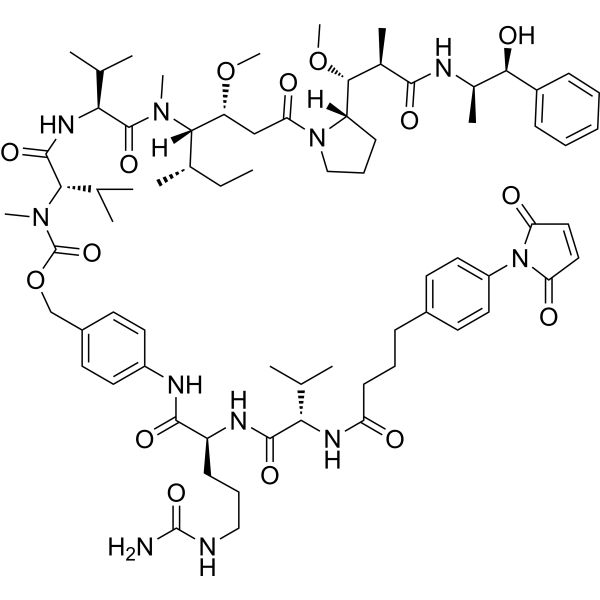
    Zilovertamab vedotin (VLS-101) is a novel antibody-drug conjugate comprising the humanized monoclonal antibody zilovertamab and and the anti-microtubule cytotoxin monomethyl vedotin. Zilovertamab vedotin binding to tumor cell ROR1 results in rapid internalization, trafficking to lysosomes, antibody–agent conjugate cleavage, and monomethyl vedotin release. Zilovertamab vedotin induces apoptosis. Zilovertamab vedotin can be used in research of cancer [1].
    Zilovertamab vedotin
  • HY-P99828

    PF-06523435; hu24

    ADC Antibody RET PERK ROR Cancer
    Cofetuzumab (PF-06523435) is a humanized IgG1-κ monoclonal antibody targeting PTK7. The expression system of Cofetuzumab is typically CHO (Chinese hamster ovary) cells. Cofetuzumab downregulates PTK7 expression, modulates its downstream signaling pathways, and inhibits tumor sphere formation of ovarian cancer cells. Cofetuzumab can be used to synthesize the ADC molecule Cofetuzumab pelidotin (HY-P99829). Cofetuzumab is applicable to the research of tumors such as ovarian cancer [1].
    Cofetuzumab
  • HY-139534
    ARI-1
    1 Publications Verification

    ROR Apoptosis Akt mTOR PARP Cancer
    ARI-1 is a receptor tyrosine kinase-like orphan receptor 1 (ROR1) inhibitor. ARI-1 blocks the PI3K/AKT/mTOR signaling pathway in a ROR1-dependent manner. ARI-1 upregulates cleaved-PARP and p-P38. ARI-1 induces Apoptosis. ARI-1 has anticancer activity against non-small cell lung cancer [1].
    ARI-1
  • HY-P991209

    GNC-035

    ROR CD3 PD-1/PD-L1 Inflammation/Immunology Cancer
    Nebratamig (GNC-035) is an anti-ROR1/anti-CD3/anti-PD-L1/anti-4-1BB tetra-specific antibody with potential immunostimulatory and antineoplastic activities [1].
    Nebratamig
  • HY-160806

    ADC Payload Topoisomerase Cancer
    (5-Cl)-Exatecan is a derivative of Exatecan (HY-13631) and a DNA topoisomerase inhibitor. (5-Cl)-Exatecan serves as the cytotoxic payload component in antibody-drug conjugates (ADC) targeting ROR1-positive cancers. (5-Cl)-Exatecan is applicable for the research of ROR1-positive cancers [1].
    (5-Cl)-Exatecan
  • HY-170995

    PROTACs ROR Apoptosis Cancer
    PROTAC ROR1 degrader-1 is a ROR1 PROTAC degrader with DC50 values of 40.88 nM (NCI-H23), 69.0 nM (NCI-H460), 83.35 nM (NCI-H1299) and 42.07 nM (NCI-H1975), respectively. PROTAC ROR1 degrader-1 inhibits the proliferation of lung cancer cells and induces apoptosis. PROTAC ROR1 degrader-1 can be used in research related to non-small cell lung cancer [1].
    PROTAC ROR1 degrader-1
  • HY-135319

    Bacterial Antibiotic ERK JNK NF-κB ROR Apoptosis Caspase GSK-3 Akt PI3K Infection Metabolic Disease Inflammation/Immunology Cancer
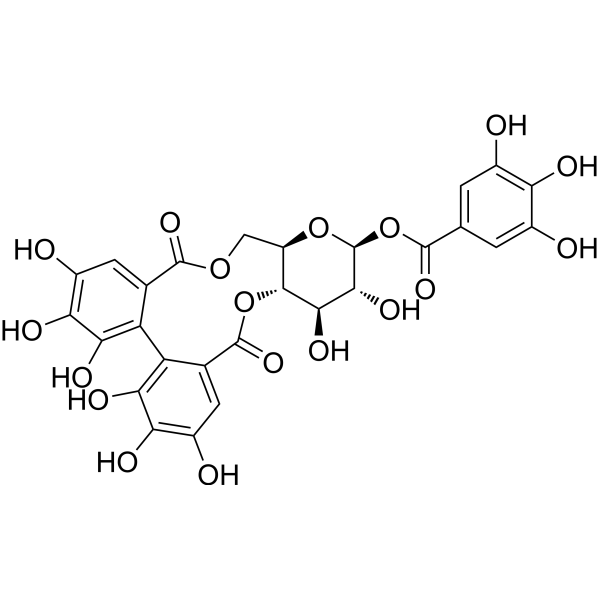
    Strictinin is an orally active phenolic compound. Strictinin reduces xanthine oxidase activity, uric acid production, and the activation of ERK1/2, JNK, NF-κB, and NLRP3 inflammasome components in hepatocytes treated with Xanthine (HY-W017389). Strictinin decreases elevated serum uric acid levels and enhanced xanthine oxidase activity in mice treated with potassium oxonate. Strictinin acts as a ROR1 inhibitor and exhibits anticancer activity against highly aggressive non-androgen-dependent prostate cancer. Strictinin induces cancer cell apoptosis (apoptosis), arrests cell cycle, and inhibits cancer cell migration, invasion, and epithelial-mesenchymal transition. Strictinin modulates gut microbiota, inhibits bacterial growth and biofilm formation, accelerates small intestinal transit, and blocks viral entry and replication. Strictinin can be used in research related to hyperuricemia, androgen receptor-negative non-androgen-dependent prostate cancer, triple-negative breast cancer, bacterial infections, constipation, coronavirus infections, dental caries, and infections caused by influenza A, influenza B, and human parainfluenza virus type 1 [1] .
    Strictinin
  • HY-170996

    Ligands for Target Protein for PROTAC ROR Cancer
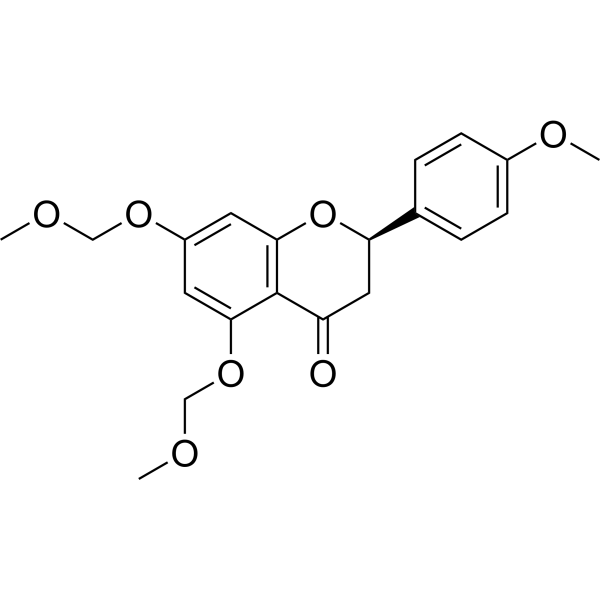
    ROR1 ligand-1 is a ROR1 ligand that can be used for synthesis of PROTACT ROR1 degrader-1 (HY-170995) [1].
    ROR1 ligand-1
  • HY-175497

    ROR Apoptosis Bcl-2 Family PARP Cancer
    ROR1-IN-4 is a selective ROR1 inhibitor with a Kd of 52 nM. ROR1-IN-4 shows potent anti-proliferative activity against TNBC cell line MDA-MB-231 (IC50 = 75 nM). ROR1-IN-4 reduces colony formation, induces apoptosis and inhibits the phosphorylation of ROR1 (Tyr786) in MDA-MB-231 cells. ROR1-IN-4 demonstrates superior anti-tumor efficacy in nude mice bearing MDA-MB-231 subcutaneous xenografts. ROR1-IN-4 can be used for the study of triple-negative breast cancer (TNBC) [1].
    ROR1-IN-4
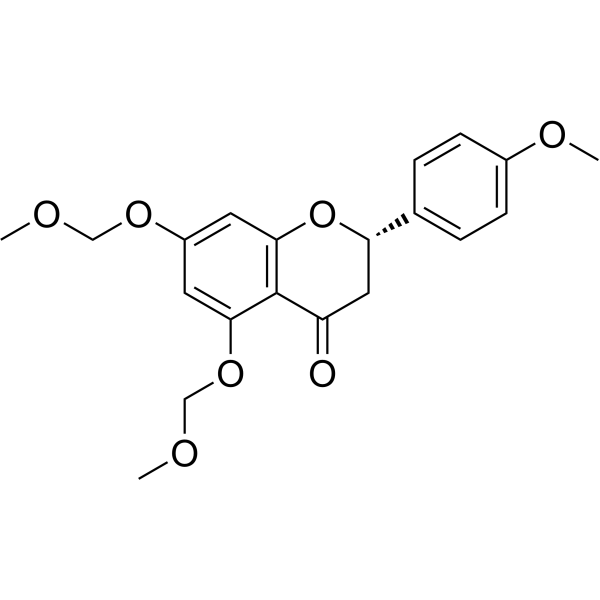
  • HY-174382

    Akt mTOR NF-κB ROR Apoptosis Cancer
    ROR1-IN-3 (Compound 24d) is a potent and highly selective ROR1 kinase inhibitor (IC50 = 17.6 nM). ROR1-IN-3 demonstrates robust antitumor activity and inhibitory effect against ROR1 both in vitro and in vivo. ROR1-IN-3 has robust antiproliferative efficacy in vitro and in vivo. ROR1-IN-3 induces apoptosis in cancer cell lines. ROR1-IN-3 inhibits ROR1 downstream AKT/mTOR and NF-κB signaling pathway. ROR1-IN-3 can be studied in antitumor research [1].
    ROR1-IN-3
  • HY-RS16801

    Small Interfering RNA (siRNA) Others

    Ror1 Mouse Pre-designed siRNA Set A contains three designed siRNAs for Ror1 gene (Mouse), as well as a negative control, a positive control, and a FAM-labeled negative control.

    Ror1 Mouse Pre-designed siRNA Set A
    Ror1 Mouse Pre-designed siRNA Set A
  • HY-RS12124

    Small Interfering RNA (siRNA) Others

    ROR1 Human Pre-designed siRNA Set A contains three designed siRNAs for ROR1 gene (Human), as well as a negative control, a positive control, and a FAM-labeled negative control.

    ROR1 Human Pre-designed siRNA Set A
    ROR1 Human Pre-designed siRNA Set A
  • HY-162640

    ROR Cancer
    LDR102 (Compound 19h) is an inhibitor for receptor tyrosine kinase-like orphan receptor 1 (ROR 1) with Ki of 0.10 μM. LDR102 inhibits proliferation of cancer cells H1975, A549 and MDA-MB-231, with IC50 of 0.36 μM, 1.37 μM and 0.47 μM. LDR102 exhibits antitumor efficacy in mice and good pharmacokinetic characteristics in rat models [1].
    LDR102
  • HY-176190

    ROR Cancer
    ROR1-IN-2 (compound 9I) is a potent and selective ROR1 inhibitor. ROR1-IN-2 exhibits antiproliferative activity in multiple cancer cells. ROR1-IN-2 significantly suppresses tumor growth in vivo [1].
    ROR1-IN-2
  • HY-RS23242

    Small Interfering RNA (siRNA) Others

    Ror1 Rat Pre-designed siRNA Set A contains three designed siRNAs for Ror1 gene (Rat), as well as a negative control, a positive control, and a FAM-labeled negative control.

    Ror1 Rat Pre-designed siRNA Set A
    Ror1 Rat Pre-designed siRNA Set A
  • HY-161096

    ROR Cancer
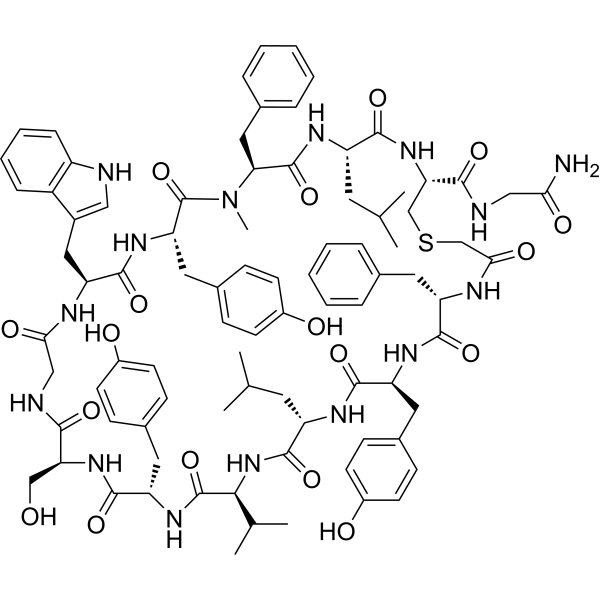
    Antitumor agent-127 (compound 1) is a parent macrocyclic peptide. Antitumor agent-127 displays nanomolar cell-based binding to ROR1 and relatively good internalization in 786-O and MDA-MB-231 tumor cell lines [1].
    Antitumor agent-127
  • HY-139534A

    Drug Isomer Others
    (S)-ARI-1 is an S-enantiomer of ARI-1. ARI-1 is a ROR1 inhibitor and apoptosis inducer, used in NSCLC research [1].
    (S)-ARI-1
  • HY-160790

    ADC Linker Cancer
    β-Glu-PNP is an ADC linker used in the synthesis of antibody-drug conjugates (ADCs) [1].
    β-Glu-PNP
  • HY-P992376

    NBE-002 Antibody

    ROR Cancer
    huXBR1-402 (NBE-002 Antibody) is a high-affinity (Kd=5.8 nM) humanized chimeric rabbit/human monoclonal antibody that targets ROR1. huXBR1-402 specifically binds to the Ig/Fz domain epitope of human ROR1, directly inhibits the proliferation of ROR1-positive tumor cells and induces apoptosis of leukemia cells (apoptosis) [1] .
    huXBR1-402
  • HY-177109

    ROR Drug-Linker Conjugates for ADC Cancer
    BL20-MMAE is an antibody-drug conjugate targeting ROR1, which is formed by conjugating an anti-ROR1 antibody with the Auristatin payload MMAE (HY-15162) via a BL20 linker [1].
    BL20-MMAE
  • HY-P992337

    ROR Cancer
    CS5001 Antibody is an IgG1 human monoclonal antibody targeting ROR1. CS5001 Antibody can be used for the synthesis of the ADC CS5001. It is applicable to research related to advanced solid tumors and lymphomas. The recommended isotype control is human IgG1 kappa (HY-P99001) [1].
    CS5001 Antibody
  • HY-183031

    Drug-Linker Conjugates for ADC Cancer
    BrAA-glycine-BG-PAB-Exatecan (Compound LD-11) is an Drug-Linker Conjugates for ADC, consisting of Exatecan (HY-13631) and a linker. BrAA-glycine-BG-PAB-Exatecan can be conjugated with anti-ROR1 antibodies to form an ADC [1].
    BrAA-glycine-BG-PAB-Exatecan
  • HY-RS12127

    Small Interfering RNA (siRNA) ROR Others

    Rora Mouse Pre-designed siRNA Set A contains three designed siRNAs for Rora gene (Mouse), as well as a negative control, a positive control, and a FAM-labeled negative control.

    Rora Mouse Pre-designed siRNA Set A
    Rora Mouse Pre-designed siRNA Set A
  • HY-RS12126

    Small Interfering RNA (siRNA) ROR Others

    RORA Human Pre-designed siRNA Set A contains three designed siRNAs for RORA gene (Human), as well as a negative control, a positive control, and a FAM-labeled negative control.

    RORA Human Pre-designed siRNA Set A
    RORA Human Pre-designed siRNA Set A
  • HY-117947

    Histone Methyltransferase Cancer
    (R)-OR-S1 is an isomer of OR-S1. The dual ZH1/2 inhibitors OR-S1 and OR-S2 exhibit strong inhibitory activity against both EZH1 and EZH2. OR-S1 and OR-S2 are highly selective methyltransferase inhibitors against EZH1 and EZH2, and they have very similar molecular features. Therefore, we investigated the effect of OR-S1 on acute myeloid leukemia (AML). We found that OR-S1 was able to induce cell differentiation and apoptosis in AML cells. These findings encouraged us to investigate whether functional LT-HSCs could survive PRC2-targeted therapy with OR-S1 or OR-S1 combined with cytarabine. The results showed that OR-S1 did not cause significant myelosuppression, and BM cells treated with the combination therapy were able to undergo normal hematopoiesis even 4 months after treatment. Therefore, temporary inhibition of EZH1 and EZH2 is clinically tolerable, making this combination therapy suitable for AML patients. AML is generally believed to originate from myeloid progenitor cells that inherit a large number of biological properties.
    (R)-OR-S1

Inquiry Online

Your information is safe with us. * Required Fields.

Salutation


Country or Region *

Applicant Name *


Organization Name *

Department *


Email Address *


Product Name *

Cat. No.


Requested quantity *

Phone Number *


Remarks

Inquiry Online

Inquiry Information

Product Name:
Cat. No.:
Quantity:
MCE Japan Authorized Agent:

