1. Search Result
Search Result
Results for "

Rapid synthesis

" in MedChemExpress (MCE) Product Catalog:

17

Inhibitors & Agonists

4

Screening Libraries

4

Biochemical Assay Reagents

1

MCE Kits

1

Inhibitory Antibodies

1

Click Chemistry

Targets Recommended:
Cat. No. Product Name Target Research Areas Chemical Structure
  • HY-W088065

    Environmental Pollutants DNA/RNA Synthesis Others
    Sodium formate acts as a key promoter for heterogeneous nucleation of ZIF crystals and thin film synthesis. It is also recognized as a GRAS substance by the FDA, and serves as a cosmetic preservative and food additive. Sodium formate has low acute oral toxicity (acute oral LD50=7410 mg/kg and acute intravenous LD50=807 mg/kg in mice), with no heritable or carcinogenic effects, but exhibits embryonic developmental toxicity and teratogenicity at high concentrations. Sodium formate may cause moderate irritation to rabbit eyes, is relatively safe to the skin, and does not induce tumor formation in rats in vivo. Sodium formate is rapidly absorbed and oxidized to carbon dioxide in vivo, and forms DNA adducts in specific metabolic deficiency models or upon high-dose exposure .
    Sodium formate
  • HY-W002879

    Reactive Oxygen Species (ROS) Inflammation/Immunology
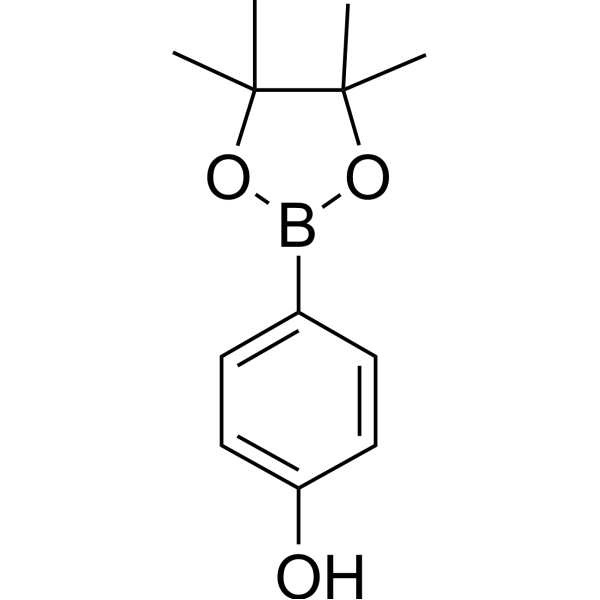
    4-Hydroxyphenylboronic acid pinacol ester is a ROS-responsive component. 4-Hydroxyphenylboronic acid pinacol ester can structurally modify hyaluronic acid to prepare ROS-responsive intelligent nanocarriers and compound delivery systems. 4-Hydroxyphenylboronic acid pinacol ester endows hyaluronic acid-based nanocarriers with ROS responsiveness, enabling them to rapidly release the encapsulated Curcumin (HY-N0005) in the presence of reactive oxygen species. 4-Hydroxyphenylboronic acid pinacol ester is applicable to research related to periodontitis. 4-Hydroxyphenylboronic acid pinacol ester can also be used for the synthesis of boronic acid-modified resins .
    4-Hydroxyphenylboronic acid pinacol ester
  • HY-75200

    Biochemical Assay Reagents Others
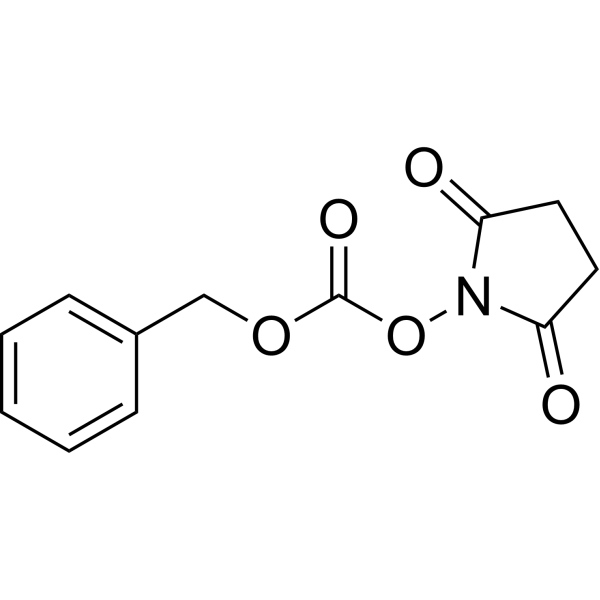
    N-(Benzyloxycarbonyloxy)succinimide is an efficient amino-protecting reagent in organic synthesis, playing an important role in the field of organic synthesis. N-(Benzyloxycarbonyloxy)succinimide is also a neutral ionophore, which significantly improves the performance of erbium ion (Er 3+) sensors and provides a practical tool for the rapid detection of erbium ions in the environment and water quality .
    N-(Benzyloxycarbonyloxy)succinimide
  • HY-A0155

    Antibiotic Bacterial Infection
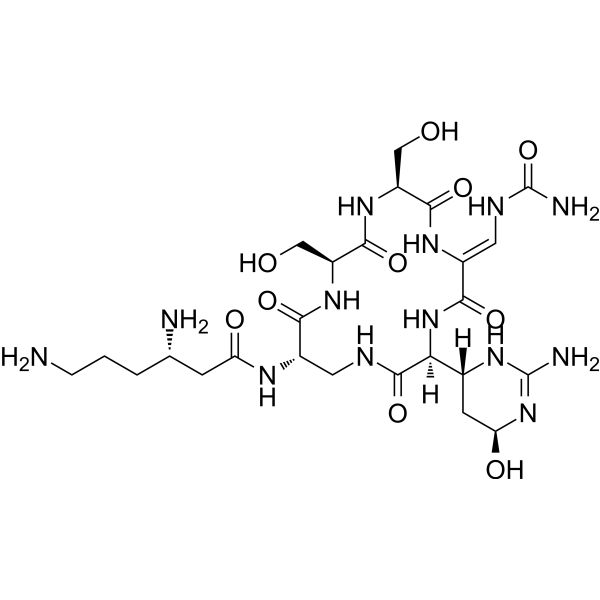
    Viomycin is a potent antibiotic against Mycobacteria. Viomycin rapidly inhibits polypeptide chain elongation when added to purified endogenous Escherichia coli polysomes actively engaged in polypeptide synthesis .
    Viomycin
  • HY-N7833

    Biochemical Assay Reagents Others
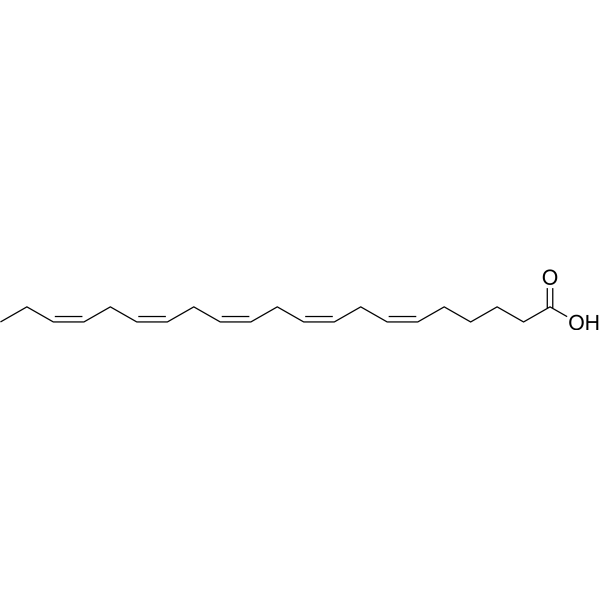
    Heneicosapentaenoic Acid (HPA) is a 21:5 omega-3 fatty acid found in trace amounts in the green alga B. pennata and in fish oils. Its chemical composition is similar to eicosapentaenoic acid (EPA), except that a carbon is extended at the carboxy terminus, placing the first double bond at the δ6 position. HPA can be used to study the importance of double bond position in omega-3 fatty acids. It incorporates phospholipids and triacylglycerols in vivo with the same efficiency as EPA and docosahexaenoic acid, and exhibits a strong inhibitory effect on the synthesis of arachidonic acid from linoleic acid. HPA is a poor substrate for prostaglandin H synthase (PGHS) (cyclooxygenase) and 5-lipoxygenase, but retains the ability to rapidly inactivate PGHS.
    Heneicosapentaenoic acid
  • HY-113586

    LB-80380

    HBV DNA/RNA Synthesis Drug Derivative Infection
    Besifovir Dipivoxil (LB-80380), an analog of guanosine monophosphate, is an acyclic nucleotide phosphonate with antiviral effect. Besifovir Dipivoxil is rapidly converted by the liver and intestine to the intermediate metabolite LB80331 via the esterification process, subsequently phosphorylated into the di- and triphosphate forms, which act as antiviral DNA synthesis inhibitors. Besifovir Dipivoxil is promising for research of chronic hepatitis B .
    Besifovir Dipivoxil
  • HY-164085

    Biochemical Assay Reagents Others
    Azide-C3-NHCO-C3-NHS ester is utilized as a linker in chemical synthesis, especially when rapid and specific ligation via click chemistry is required .
    Azide-C3-NHCO-C3-NHS ester
  • HY-A0155B

    Antibiotic Bacterial Infection
    Viomycin sulfate hydrate is a potent antibiotic against Mycobacteria. Viomycin sulfate hydrate rapidly inhibits polypeptide chain elongation when added to purified endogenous Escherichia coli polysomes actively engaged in polypeptide synthesis .
    Viomycin sulfate hydrate
  • HY-177761

    Molecular Glues Cancer
    GSPT1 degrader-15 (Compound Lib-B-15O) is a potent and highly selective GSPT1 molecular gel degrader, with a DC50 of 154 nM. GSPT1 degrader-15 has almost no effect on the expression of other proteins. GSPT1 degrader-15 exhibits significant anti-proliferative activity against leukemia cells and lymphoma cells. GSPT1 degrader-15 can be used in leukemia and lymphoma research .
    GSPT1 degrader-15
  • HY-171951

    Liposome Others
    31hP is an asymmetric A 3 lipid. 31hP can facilitate in vivo luciferase expression. 31hP can be rapidly degraded in the presence of esterase owing to two biocleavable ester bonds. 31hP can be used in the synthesis of lipid nanoparticles (LNPs) .
    31hP
  • HY-19428A

    RBx-7644

    Antibiotic Bacterial Infection Cardiovascular Disease
    Ranbezolid (RBx7644 free base) is an orally active, oxazolidinone antibiotic against Gram-positive and Gram-negative anaerobes including Staphylococcus aureus, Staphylococcus epidermidis and Bacteroides fragilis. Ranbezolid can inhibit the 50s ribosomal subunit with an IC50 of 17 μM for bacterial ribosomes. Ranbezolid interferes cell wall and lipid synthesis. Ranbezolid can rapidly kill bacteria, significantly reduce bacterial load, and has better cardiovascular safety. Ranbezolid can be used for the study of antibiotics for anaerobic bacteria .
    Ranbezolid hydrochloride
  • HY-19428

    RBx7644 free base

    Antibiotic Bacterial Infection Cardiovascular Disease
    Ranbezolid (RBx7644 free base) is an orally active, oxazolidinone antibiotic against Gram-positive and Gram-negative anaerobes including Staphylococcus aureus, Staphylococcus epidermidis and Bacteroides fragilis. Ranbezolid can inhibit the 50s ribosomal subunit with an IC50 of 17 μM for bacterial ribosomes. Ranbezolid interferes cell wall and lipid synthesis. Ranbezolid can rapidly kill bacteria, significantly reduce bacterial load, and has better cardiovascular safety. Ranbezolid can be used for the study of antibiotics for anaerobic bacteria .
    Ranbezolid
  • HY-148880

    Ligands for E3 Ligase Cancer
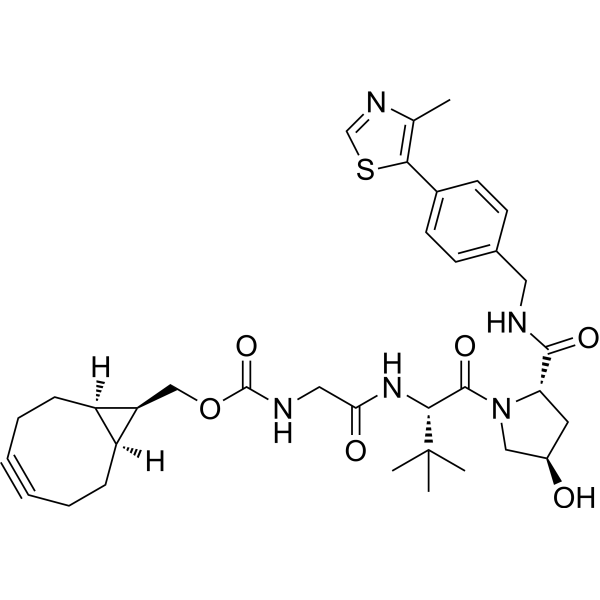
    VHLL-BCN is a ligand targeting the VHL E3 ligase, which can be used for the synthesis of PROTAC molecules. As a key component of the copper-free SPAAC-based rapid synthesis platform for transcription factor PROTACs, VHLL-BCN is applicable to cancer-related research .
    VHLL-BCN
  • HY-P991273

    Antibiotic Bacterial Infection
    MP196 is a cationic hexapeptide antibiotic targeting the bacterial cytoplasmic membrane, which exerts rapid bactericidal activity by disrupting membrane integrity, inhibiting cell respiration and cell wall synthesis. MP196 is promising for research of drug-resistant bacterial infections .
    MP196
  • HY-122532

    Histone Methyltransferase Cancer
    Fagaronine chloride is an alkaloid with inhibitory activity against reverse transcriptase and topoisomerase I. Fagaronine chloride can effectively inhibit the reverse transcriptase of RSii tumor virus at a concentration of 6-60 μg/mL. Fagaronine chloride rapidly blocks the synthesis of DNA polymerase by interacting with the template primer. Fagaronine chloride has shown anti-tumor potential, especially in the study of retroviral infection .
    Fagaronine chloride
  • HY-120750

    Endogenous Metabolite Cancer
    A 62176 hydrochloride is a compound that targets DNA topoisomerase II and has the activity of inhibiting purine synthesis in cancer cells. A 62176 hydrochloride interferes with c-MYC mRNA expression by interacting with G-quadruplex. The main mechanism of action of A 62176 hydrochloride is by displacing nucleosomes from the quadruplex of non-template strand rDNA, resulting in rapid redistribution of nucleosomes. The application potential of A 62176 hydrochloride is that it causes DNA damage and relies on BRCA1/2-mediated homologous recombination and DNA-PK-mediated non-homologous end-joining pathways to repair the damage .
    A 62176 hydrochloride
  • HY-105714

    Dihydrofolate reductase (DHFR) Endocrinology
    Etoprine is a potent orally active dihydrofolate reductase (DHFR) inhibitor. Etoprine competitively inhibits testicular DHFR to disrupt tetrahydrofolate and DNA synthesis in rapidly dividing cells. Etoprine acts as an antifertility agent in male mice and reduces fecundity in male rats .
    Etoprine

Inquiry Online

Your information is safe with us. * Required Fields.

Salutation


Country or Region *

Applicant Name *


Organization Name *

Department *


Email Address *


Product Name *

Cat. No.


Requested quantity *

Phone Number *


Remarks

Inquiry Online

Inquiry Information

Product Name:
Cat. No.:
Quantity:
MCE Japan Authorized Agent:

