1. Search Result
Search Result
Results for "

Volatile organic compound

" in MedChemExpress (MCE) Product Catalog:

27

Inhibitors & Agonists

3

Biochemical Assay Reagents

17

Natural
Products

1

Isotope-Labeled Compounds

Targets Recommended:
Cat. No. Product Name Target Research Areas Chemical Structure
  • HY-W004263

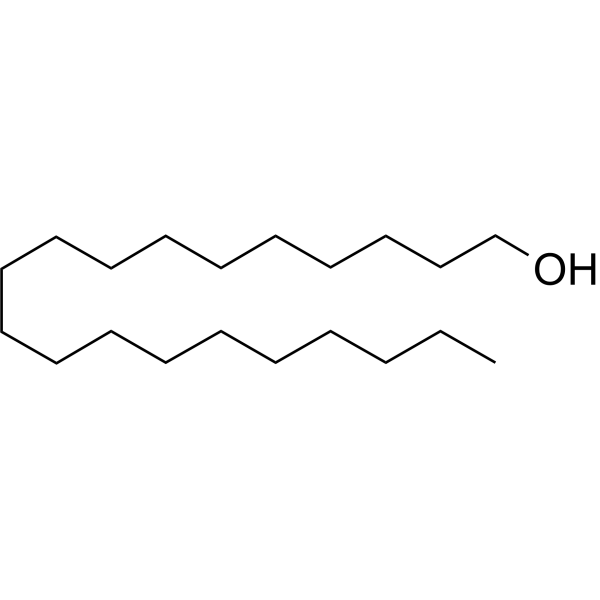
    Arachidyl alcohol

    Environmental Pollutants Fungal Infection
    1-Eicosanol (Arachidyl alcohol) is a long-chain fatty alcohol and volatile organic compound that can be isolated from the leaves of Leea indica and produced by Bacillus velezensis ZJ1. 1-Eicosanol inhibits mycelial growth of Alternaria solani and Botrytis cinerea. 1-Eicosanol is applicable to research related to tomato early blight and tomato gray mold .
    1-Eicosanol
  • HY-W004461

    MMTS

    Endogenous Metabolite Bacterial Infection
    S-Methyl thiomethanesulfonate (MMTS) is a sulfur-containing volatile organic compound produced by plants and bacteria and is an effective anti-oomycete agent .
    S-Methyl thiomethanesulfonate
  • HY-W041080

    Fungal Reactive Oxygen Species (ROS) Bacterial Infection
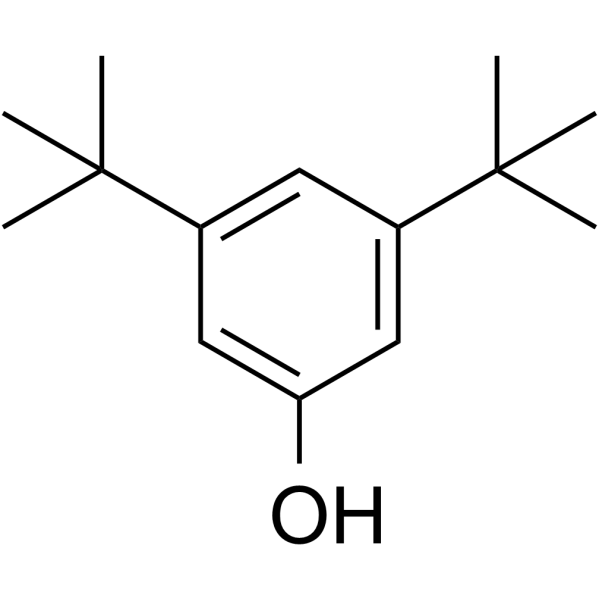
    3,5-Di-tert-butylphenol is an volatile organic compound with anti-biofilm and antifungal activities. 3,5-Di-tert-butylphenol induces accumulation of reactive oxygen species (ROS) in C. albicans cells. 3,5-Di-tert-butylphenol also has antibacterial activities .
    3,5-Di-tert-butylphenol
  • HY-W010435

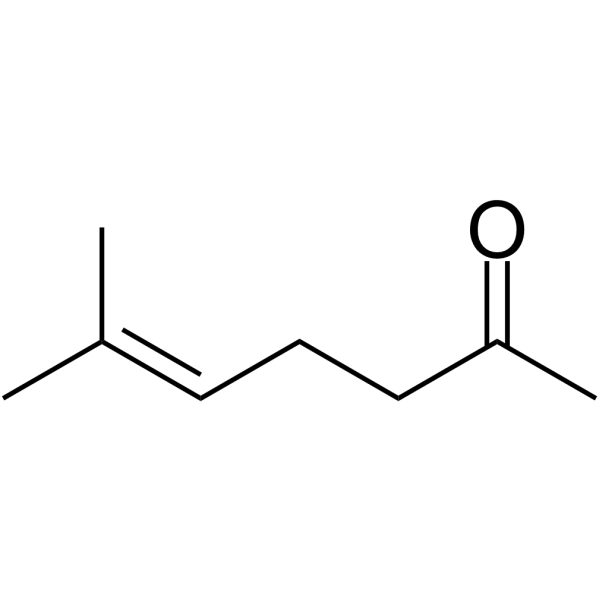
    6-Methyl-5-hepten-2-one

    Environmental Pollutants Parasite Endogenous Metabolite Adenosine Receptor Fungal Cytochrome P450 Infection Cardiovascular Disease Metabolic Disease Inflammation/Immunology
    Sulcatone (6-Methyl-5-hepten-2-one) is a plant-derived volatile organic compound with activities such as insecticidal, antifungal, and blood pressure-lowering effects. Sulcatone also serves as an insect pheromone and an endogenous metabolite, which can be found in feces. Changes in Sulcatone levels can be used for the auxiliary diagnosis of ulcerative colitis .
    Sulcatone
  • HY-134900

    Reactive Oxygen Species (ROS) Infection Metabolic Disease
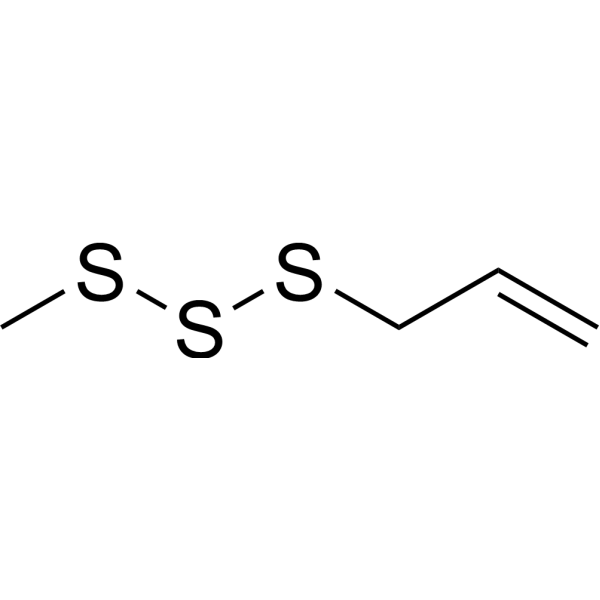
    Allyl methyl trisulfide is a volatile organic compound and a component of garlic (Allium sativum L.) essential oil, which has antibacterial, antioxidant and antitumor activities .
    Allyl methyl trisulfide
  • HY-W009811

    Environmental Pollutants Insecticide Others
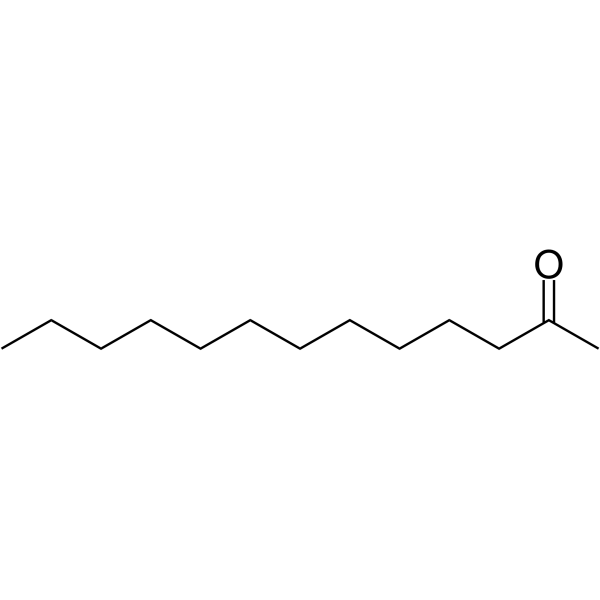
    2-Tridecanone, a nonalkaloid insecticide, is isolated from the wild tomato Lycopersicon hirsutum f. glabratum. 2-Tridecanone is a volatile organic compound .
    2-Tridecanone
  • HY-W039379

    trans-2-Octenoic acid methyl ester

    Biochemical Assay Reagents Others
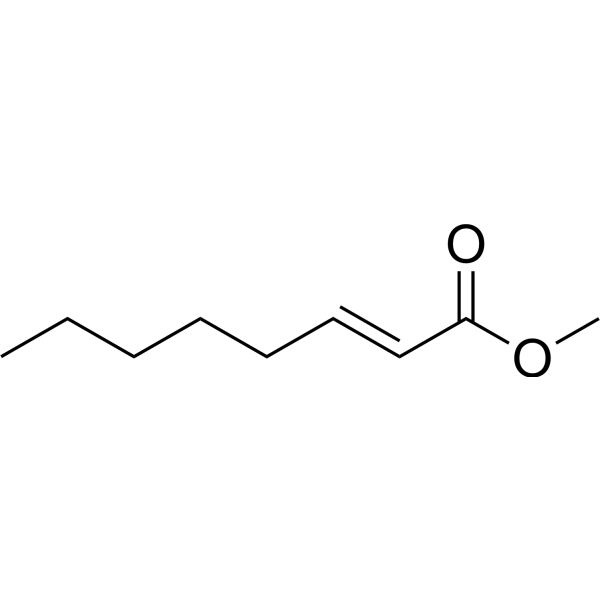
    Methyl (E)-oct-2-enoate is commonly used as an ingredient in perfume, cologne, and food flavor in the perfume and fragrance industry. Its pleasant fragrance and low volatility make it a good choice for adding fruit to various products. A popular choice for incense, in addition to its application in the fragrance and fragrance industry, Methyl (E)-oct-2-enoate is also used as a raw material for the synthesis of other organic compounds, it can be oxidized to form methyl 3-oxobutyrate, Used in the production of pharmaceuticals and agrochemicals. Overall, Methyl (E)-oct-2-enoate is a versatile compound that is used in various industries for its pleasant aroma and reactivity, its fruity and floral notes in fragrances and essences Industry is highly sought after, and its ability to serve as a starting material for other compounds makes it useful in organic synthesis.
    Methyl (E)-oct-2-enoate
  • HY-W041080R

    Reference Standards Fungal Reactive Oxygen Species (ROS) Bacterial Infection
    3,5-Di-tert-butylphenol (Standard) is the analytical standard of 3,5-Di-tert-butylphenol (HY-W041080). This product is intended for research and analytical applications. 3,5-Di-tert-butylphenol is an volatile organic compound with anti-biofilm and antifungal activities. 3,5-Di-tert-butylphenol induces accumulation of reactive oxygen species (ROS) in C. albicans cells. 3,5-Di-tert-butylphenol also has antibacterial activities.
    3,5-Di-tert-butylphenol (Standard)
  • HY-W016638

    1-Butyl-1-methylpyrrolidin-1-ium chloride

    Biochemical Assay Reagents Others
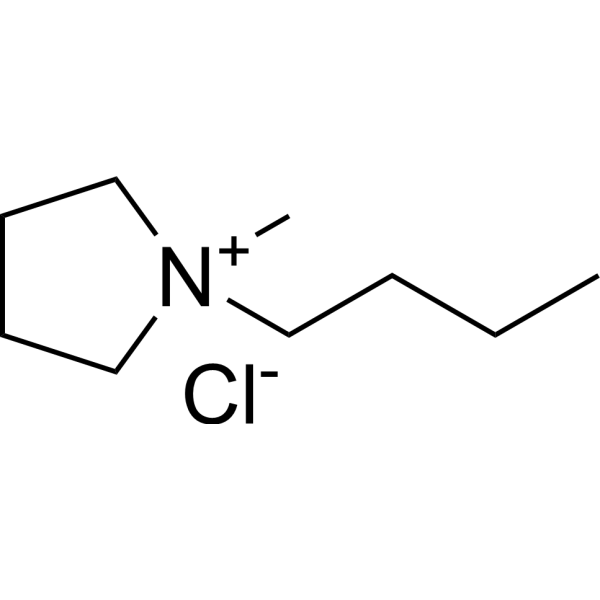
    1-Butyl-1-methylpyrrolidin-1-ium chloride, also known as BMIM chloride, belongs to the class of ionic liquids and consists of a positively charged pyrrolidine cation and a negatively charged chloride anion. This compound is commonly used as a solvent for various chemical reactions, especially those involving organic compounds and metals. Its unique physical and chemical properties, such as low volatility, high thermal stability, and tunable solubility, make it useful in a range of applications in catalysis, electrochemistry, and separation science. Furthermore, 1-butyl-1-methylpyrrolidin-1-ium chloride may have potential applications as a green solvent in energy storage devices and various industrial processes.
    1-Butyl-1-methylpyrrolidinium chloride
  • HY-W007894
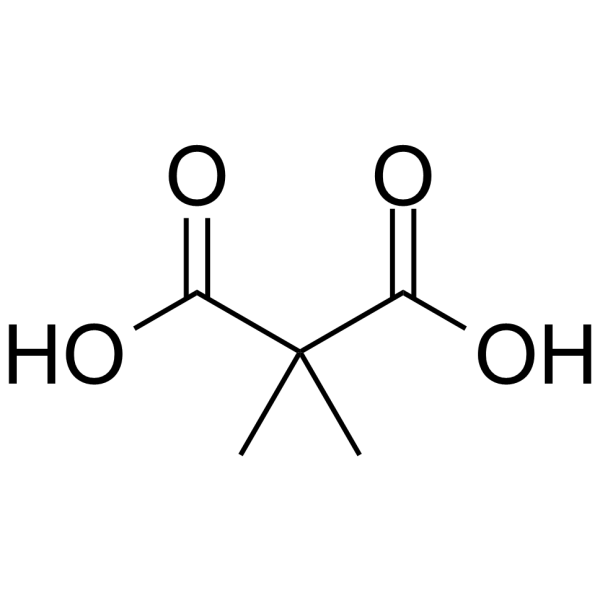
    Dimethylmalonic acid
    1 Publications Verification

    Endogenous Metabolite Others
    Dimethylmalonic acid is a short-chain dicarboxylic acid in human serum. Dimethylmalonic acid is also a volatile organic compound detected in alveolar breath .
    Dimethylmalonic acid
  • HY-W017611

    Environmental Pollutants Reactive Oxygen Species (ROS) Fungal DNA/RNA Synthesis Infection
    4-Propylphenol is a plant-derived phenolic compound. 4-Propylphenol causes an increase in ROS within the Fusarium graminearum cells, leading to damage to the DNA and cell membranes of the mycelia, effectively inhibiting the growth of the mycelia. 4-Propylphenol also has a growth inhibitory effect on walnut pathogenic fungi (C. gloeosporioides, C. siamense, A. alternata), with its EC50 ranging from 29.11 to 31.89 mg/L, and it also inhibits spore germination, with EC50 being 55.04-71.85 mg/L. 4-Propylphenol can be used in the research of fungal diseases in walnuts and wheat Fusarium head blight .
    4-Propylphenol
  • HY-W010435R

    6-Methyl-5-hepten-2-one (Standard)

    Reference Standards Endogenous Metabolite Fungal Parasite Adenosine Receptor Cytochrome P450 Infection Cardiovascular Disease Metabolic Disease Inflammation/Immunology
    Sulcatone (Standard) (6-Methyl-5-hepten-2-one (Standard)) is the analytical standard of Sulcatone (HY-W010435). This product is intended for research and analytical applications. Sulcatone (6-Methyl-5-hepten-2-one) is a plant-derived volatile organic compound with activities such as insecticidal, antifungal, and blood pressure-lowering effects. Sulcatone also serves as an insect pheromone and an endogenous metabolite, which can be found in feces. Changes in Sulcatone levels can be used for the auxiliary diagnosis of ulcerative colitis.
    Sulcatone (Standard)
  • HY-W588249

    Bacterial Endogenous Metabolite Infection
    Sabinene hydrate is a volatile organic compound of a bicyclic monoterpene alcohol. Sabinene hydrate, as a plant secondary metabolite, is naturally present in various plants and their essential oils. Sabinene hydrate exhibits broad-spectrum but varying-intensity antibacterial activity, with the greatest sensitivity to Gram-positive bacteria, especially Bacillus subtilis (MIC = 0.0312 mg/mL) and Staphylococcus aureus (MIC = 0.0625 mg/mL). Sabinene hydrate also shows certain sensitivity to Escherichia coli and Candida albicans, with MIC values of 0.125 mg/mL for both. Sabinene hydrate can be used in the research of the ecological functions of plant defense substances .
    Sabinene hydrate
  • HY-W102525

    Drug Derivative Others
    Rose oxide is a kind of monoterpenoid volatile organic compound with a distinctive rose fragrance. However, rose oxide does not have inhibitory activity against the formation of breast cancer stem cells .
    Rose oxide
  • HY-W010176

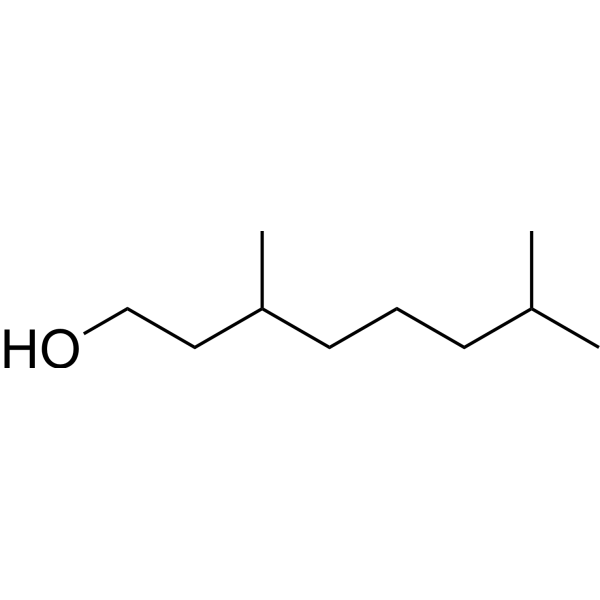
    3,7-Dimethyloctan-1-ol

    Environmental Pollutants Biochemical Assay Reagents Others
    3,7-Dimethyloctan-1-ol, 3,7-Dimethyloctan-1-ol is commonly used as a flavor and fragrance ingredient due to its pleasant aroma, it can also be used as a solvent, and in the synthesis of various organic compounds (including pharmaceuticals and agrochemicals), in addition, due to its high energy content and low volatility, 3,7-Dimethyloctan-1-ol has been investigated for its potential use as a biofuel, due to its toxicity to some pests, it has also been studied as a potential repellent and insecticide,
    3,7-Dimethyl-1-octanol
  • HY-W160358

    SARS-CoV Virus Protease Fungal Apoptosis Reactive Oxygen Species (ROS) ATP Synthase Glutathione Peroxidase SOD p38 MAPK Infection Cancer
    2,5-Dimethylcyclohexanol, a volatile organic compound, is a fatty acid that can be isolated from Amphora sp.. 2,5-Dimethylcyclohexanol has significant antineoplastic and antiviral activities with inhibition of SARS-CoV-2 Mpro. 2,5-Dimethylcyclohexanol also has potent antifungal activity against Pseudogymnoascus destructans. 2,5-Dimethylcyclohexanol compromises cell wall and membrane integrity while perturbing energy metabolism, increases the levels of ROS, ATP, Superoxide anion and GSH, and decreases CAT and SOD activities. And 2,5-Dimethylcyclohexanol alters virulence ribosomal genes expression, and disrupts the MAPK signaling pathways, inducing fungal cell apoptosis .
    2,5-Dimethylcyclohexanol
  • HY-W007894R

    Dimethylpropanedioic acid (Standard)

    Reference Standards Endogenous Metabolite Others
    Dimethylmalonic acid (Standard) is the analytical standard of Dimethylmalonic acid. This product is intended for research and analytical applications. Dimethylmalonic acid is a short-chain dicarboxylic acid in human serum. Dimethylmalonic acid is also a volatile organic compound detected in alveolar breath[1].
    Dimethylmalonic acid (Standard)
  • HY-W782193

    6-Methyl-5-hepten-2-one-d5

    Isotope-Labeled Compounds Fungal Adenosine Receptor Cytochrome P450 Parasite Endogenous Metabolite Infection Cardiovascular Disease Metabolic Disease Inflammation/Immunology
    Sulcatone-d5 (6-Methyl-5-hepten-2-one-d5) is the deuterium labeled Sulcatone (HY-W010435). Sulcatone (6-Methyl-5-hepten-2-one) is a plant-derived volatile organic compound with activities such as insecticidal, antifungal, and blood pressure-lowering effects. Sulcatone also serves as an insect pheromone and an endogenous metabolite, which can be found in feces. Changes in Sulcatone levels can be used for the auxiliary diagnosis of ulcerative colitis .
    Sulcatone-d5
  • HY-76217

    2,5-Diformylfuran

    Drug Derivative Others
    2,5-Furandicarboxaldehyde (2,5-Diformylfuran), a furan derivative, is a volatile organic compound. 2,5-Furandicarboxaldehyde the aerobic oxidation product of 5-Hydroxymethylfurfural (HY-Y0051), and can be used in organic synthesis and functional polymer manufacture, such as fluorescent material, surfactants, and vitrimer .
    2,5-Furandicarboxaldehyde
  • HY-W102349

    Parasite Infection
    S-Methyl thioacetate is a toxicant with fumigant activity, can be found in emissions from Bacillus oshimensis, Burkholderia gladioli, Burkholderia cepacia, and Pseudomonas oryzihabitans. S-Methyl thioacetate exerts fumigant toxicity against Caenorhabditis elegans and root-knot nematode Meloidogyne incognita. S-Methyl thioacetate functions as a bacterial volatile organic compound. S-Methyl thioacetate can be used for the research of plant-parasitic nematode infection .
    S-Methyl thioacetate
  • HY-W587485

    Drug Metabolite Others
    N-acetyl-S-(trichlorovinyl)-L-cysteine is a metabolite of the volatile organic compound (VOC) .
    N-acetyl-S-(trichlorovinyl)-L-cysteine
  • HY-W009811R

    Insecticide Reference Standards Others
    2-Tridecanone, a nonalkaloid insecticide, is isolated from the wild tomato Lycopersicon hirsutum f. glabratum. 2-Tridecanone is a volatile organic compound .
    2-Tridecanone (Standard)
  • HY-W720758

    Sex Pheromone Others
    3,7,11-Trimethyl-1-dodecanol is a volatile organic compound. 3,7,11-Trimethyl-1-dodecanol can be isolated from Spirulina platensis.
    3,7,11-Trimethyl-1-dodecanol
  • HY-W094881

    Fungal Infection
    1,5-Dimethylnaphthalene is a volatile organic compound. 1,5-Dimethylnaphthalene is a good marker for B. cinerea quantification. 1,5-dimethylnaphthalene is highly positively correlated to B. cinerea infection levels in Chardonnay berries .
    1,5-Dimethylnaphthalene
  • HY-W158616

    Fungal Infection
    3-Methyl-1-hexanol, a volatile organic compound, is a microbial antagonist that can be isolated from Aureobasidium pullulans. 3-Methyl-1-hexanol has antifungal activities against Alternaria alternate and Botrytis cinerea. 3-Methyl-1-hexanol can be used for microbial infections research .
    3-Methyl-1-hexanol
  • HY-W012475

    Fungal Infection
    cis-3-Hexenyl benzoate is a volatile organic compound with a grassy aroma, widely used in the fragrance and cosmetic industries. It exhibits weak antifungal activity. cis-3-Hexenyl benzoate shows no significant risks in genotoxicity, reproductive toxicity, or environmental toxicity, and its skin sensitization potential is controllable within defined concentration limits .
    cis-3-Hexenyl benzoate
  • HY-W707148

    Endogenous Metabolite Infection
    4-Methyltridecane is a volatile substance specifically released by cabbage root flies (Delia radicum) after feeding. 4-Methyltridecane might be a key signal for the parasitoid bee Trybliographa rapae (Delia radicum’s specific parasitic predator) to locate the host. 4-Methyltridecane can serve as a specific marker for root damage in turnips (Brassica rapa subsp. Rapa) .
    4-Methyltridecane

Inquiry Online

Your information is safe with us. * Required Fields.

Salutation


Country or Region *

Applicant Name *


Organization Name *

Department *


Email Address *


Product Name *

Cat. No.


Requested quantity *

Phone Number *


Remarks

Inquiry Online

Inquiry Information

Product Name:
Cat. No.:
Quantity:
MCE Japan Authorized Agent:

