Search Result
Results for "
acceptor substrate
" in MedChemExpress (MCE) Product Catalog:
5
Biochemical Assay Reagents
6
Isotope-Labeled Compounds
| Cat. No. |
Product Name |
Target |
Research Areas |
Chemical Structure |
-
- HY-145934
-
|
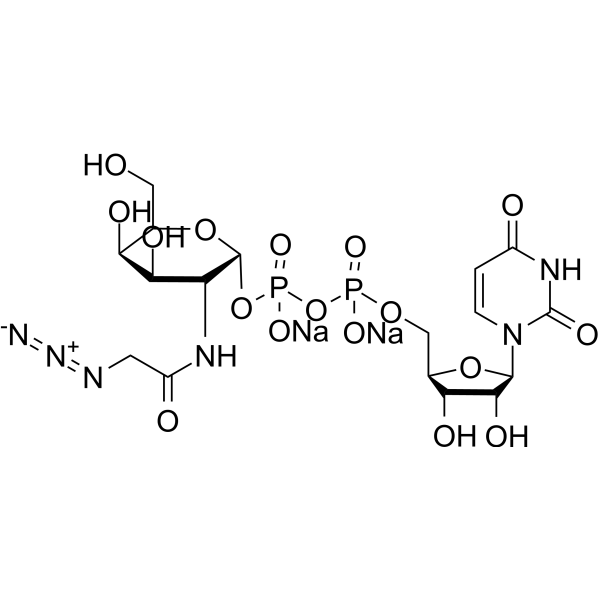
UDP-N-azidoacetylgalactosamine disodium
|
Biochemical Assay Reagents
OGT
Glycosidase
|
Metabolic Disease
|
|
UDP-GalNAz (UDP-N-azidoacetylgalactosamine) disodium is the analogue of UDP-GalNAc disodium (HY-114365). UDP-GalNAc disodium is the donor substrate of many N-acetylgalactosaminyltransferases, enzymes which transfer GalNAc from the nucleotide sugar to a saccharide or peptide acceptor. UDP-GalNAz disodium is a click chemistry reagent, it contains an Azide group and can undergo copper-catalyzed azide-alkyne cycloaddition reaction (CuAAc) with molecules containing Alkyne groups. It can also undergo strain-promoted alkyne-azide cycloaddition (SPAAC) reactions with molecules containing DBCO or BCN groups .
|
-
-
- HY-114365
-
|
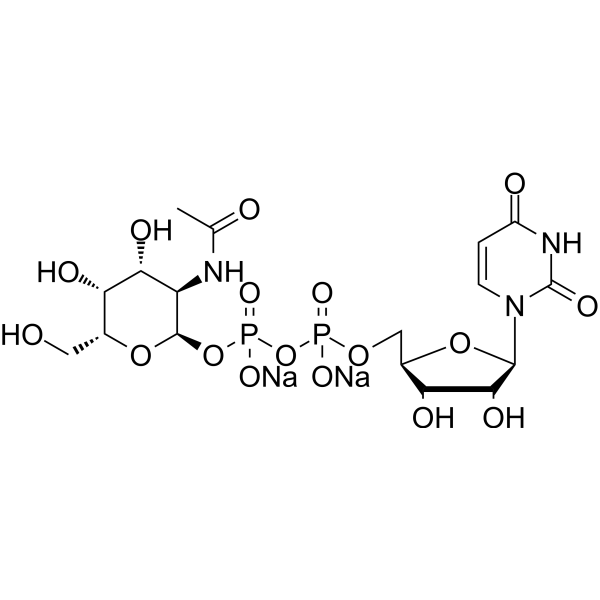
UDP-N-acetyl-D-galactosamine disodium
|
Endogenous Metabolite
|
Metabolic Disease
Cancer
|
|
UDP-GalNAc (UDP-N-acetyl-D-galactosamine) disodium is a sugar nucleotide and a substrate for EpsC115. EpsC115 is a mutant with N-terminal residues 1-115 deleted from the exopolymeric substance (EPS). UDP-GalNAc disodium is a donor substrate for many N-acetylgalactosaminyltransferases, which transfer GalNAc from nucleotide sugars to sugar or peptide acceptors. UDP-GalNAc disodium provides a sugar group donor for glycosylation reactions. UDP-GalNAc disodium can be used in cancer research, such as colorectal and breast cancer .
|
-
-
- HY-B1337S1
-
|
|
Cholinesterase (ChE)
|
Others
|
|
Choline-d9 (chloride) is the deuterium labeled Choline chloride. Choline chloride is an organic compound and a quaternary ammonium salt, an acyl group acceptor and choline acetyltransferase substrate, also is an important additive in feed especially for chickens where it accelerates growth.
|
-
-
- HY-W009749A
-
|
|
Drug Intermediate
|
Others
|
|
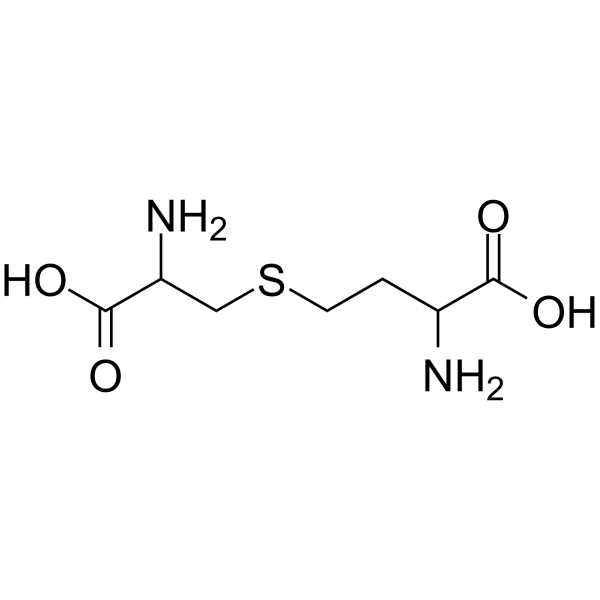
DL-Cystathionine is a mixture of 4 isomers of cystathionine and allocystathionine. DL-Cystathionine also is an intermediate in the biosynthesis of amino acid cysteine. DL-Cystathionine serves as a standard for quantifying tissue cystathionine .
|
-
-
- HY-145934A
-
|
|
OGT
Biochemical Assay Reagents
Glycosidase
|
Metabolic Disease
|
|
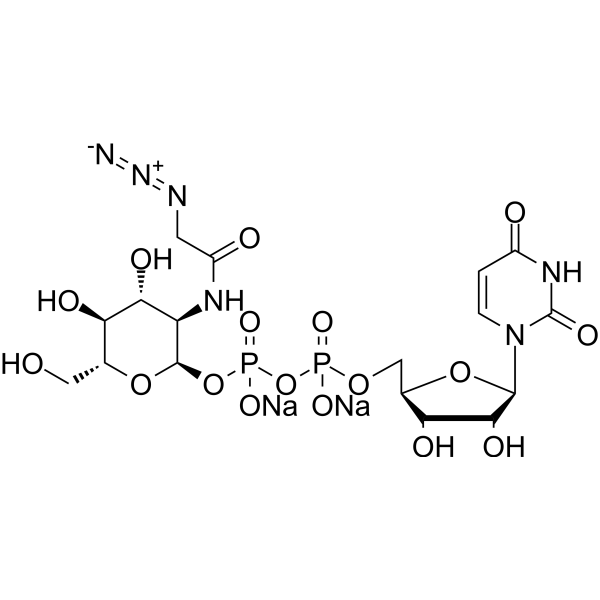
UDP-GlcNAz disodium is the analogue of UDP-GlcNAc disodium (HY-112174). UDP-GlcNAc disodium is the donor substrate of many N-acetylgalactosaminyltransferases, enzymes which transfer GlcNAc from the nucleotide sugar to a saccharide or peptide acceptor. UDP-GlcNAc disodium is a click chemistry reagent, it contains an Azide group and can undergo copper-catalyzed azide-alkyne cycloaddition reaction (CuAAc) with molecules containing Alkyne groups. It can also undergo strain-promoted alkyne-azide cycloaddition (SPAAC) reactions with molecules containing DBCO or BCN groups .
|
-
-
- HY-W039897
-
|
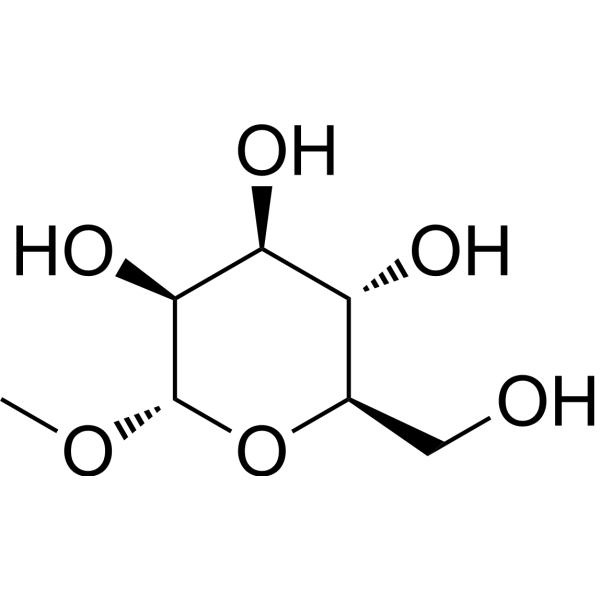
α-Methyl-D-mannoside
|
Environmental Pollutants
Bacterial
|
Infection
|
|
Methyl α-D-mannopyranoside (α-Methyl-D-mannoside) is a methyl glycoside derivative and conformational stabilizer of α-D-mannopyranose. The glycosidic bond conformation of Methyl α-D-mannopyranoside is significantly affected by the environment. In aqueous solution, Methyl α-D-mannopyranoside stabilizes into a trans conformation via intermolecular hydrogen bonds; in the gas phase, however, steric interactions drive Methyl α-D-mannopyranoside to prefer a clockwise gauche conformation. Methyl α-D-mannopyranoside also serves as a major component of secondary cell wall polymers in some bacteria and an active precursor site for virus-targeted glycoproteins. Methyl α-D-mannopyranoside acts as an acceptor substrate for alternansucrase, mediating the transfer of D-glucopyranosyl groups to generate a variety of glycosylated oligosaccharide products, with methyl α-D-glucopyranosyl-(1→6)-α-D-mannopyranoside as the main component. Methyl α-D-mannopyranoside is applicable to studies on bacterial pathogenic mechanisms associated with mannose-specific fimbrial lectins .
|
-
-
- HY-126213
-
|
18:1 Lyso-PS
|
NADPH Oxidase
Interleukin Related
Apoptosis
|
Inflammation/Immunology
|
|
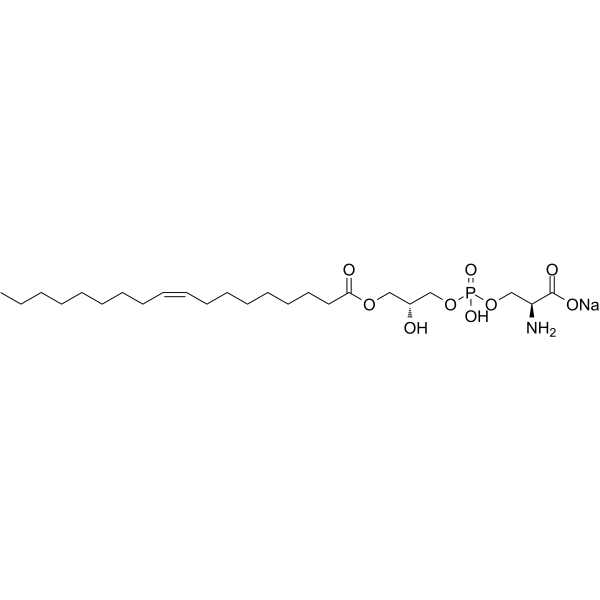
Oleoyl-2-hydroxy-sn-glycero-3-phospho-L-serine sodium (18:1 Lyso-PS) is a modified PS product generated following NADPH oxidase activation and Lyso-PS signal transduction. 1-Oleoyl-2-hydroxy-sn-glycero-3-phospho-L-serine sodium signals through macrophage G2A to enhance the phagocytic uptake of PS-dependent apoptotic (apoptosis) neutrophils and PS-exposed activated neutrophils. 1-Oleoyl-2-hydroxy-sn-glycero-3-phospho-L-serine sodium enhances macrophage phagocytic uptake of apoptotic cells, carboxylate-modified microspheres, and PS-exposed non-apoptotic activated neutrophils. 1-Oleoyl-2-hydroxy-sn-glycero-3-phospho-L-serine sodium serves as an acyl acceptor substrate for the lysophosphatidyltransferase At1g78690p to generate diacylphosphatidylserine. 1-Oleoyl-2-hydroxy-sn-glycero-3-phospho-L-serine sodium reduces the secretion of IL-8 and decreases the proportion of viable colon cancer cells. 1-Oleoyl-2-hydroxy-sn-glycero-3-phospho-L-serine sodium is applicable to studies on peritonitis and inflammatory bowel disease .
|
-
-
- HY-B1337S
-
|
|
Cholinesterase (ChE)
|
Others
|
|
Choline-d4 (chloride) is the deuterium labeled Choline chloride. Choline chloride is an organic compound and a quaternary ammonium salt, an acyl group acceptor and choline acetyltransferase substrate, also is an important additive in feed especially for chickens where it accelerates growth.
|
-
-
- HY-P6028A
-
|
|
N-myristoyltransferase
|
Others
|
|
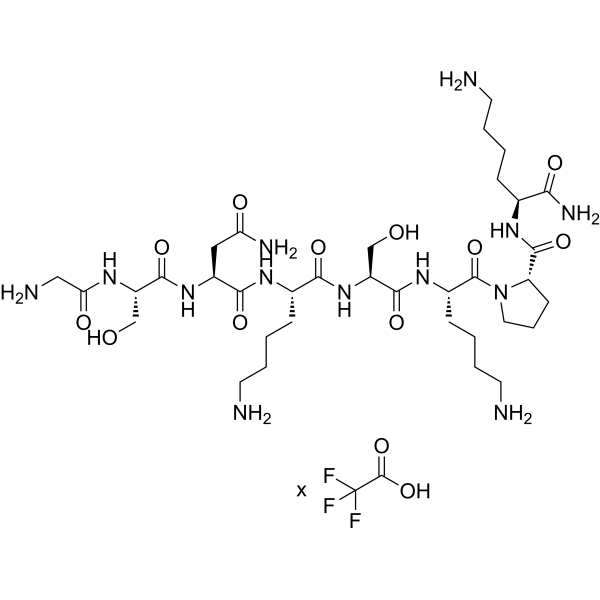
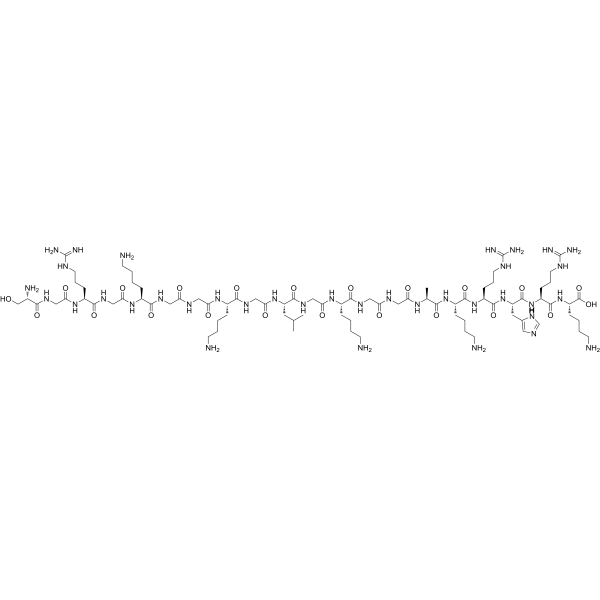
GSNKSKPK-NH2 TFA is a synthetic model peptide based on the c-Src N-terminal sequence and model peptide substrate for human NMT1 and NMT2.GSNKSKPK-NH2 TFA facilitates in vitro assays measuring transfer of myristate or X10 fatty acid moieties .
|
-
-
- HY-125954
-
|
UDP-α-D-glucuronic acid
|
Endogenous Metabolite
|
Metabolic Disease
|
|
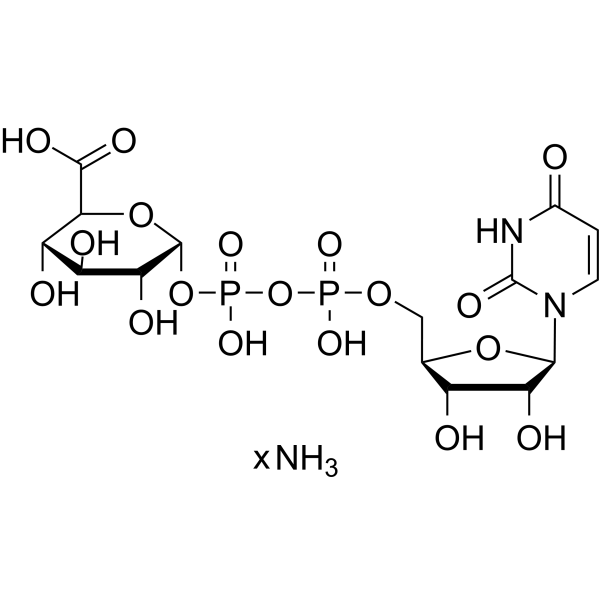
Uridine diphosphate glucuronic acid (UDP-α-D-glucuronic acid) is a glucuronic acid donor. Uridine diphosphate glucuronic acid transfers its glucuronic acid moiety to acceptor molecules, thereby forming "ether" glucuronides, while being converted into uridine 5'-pyrophosphate. Uridine diphosphate glucuronic acid serves as a substrate for Arabidopsis UDP-GlcA 4-epimerase 1, and undergoes reversible 4-epimerization to generate UDP-α-D-galacturonic acid .
|
-
-
- HY-B1337S3
-
|
|
Isotope-Labeled Compounds
Endogenous Metabolite
Cholinesterase (ChE)
|
Others
|
|
Choline-d13 (chloride) is the deuterium labeled Choline chloride. Choline chloride is an organic compound and a quaternary ammonium salt, an acyl group acceptor and choline acetyltransferase substrate, also is an important additive in feed especially for chickens where it accelerates growth.
|
-
-
- HY-B1337S4
-
|
|
Cholinesterase (ChE)
|
Others
|
|
Choline Chloride- 13C3 is the 13C-labeled Choline (chloride). Choline chloride is an organic compound and a quaternary ammonium salt, an acyl group acceptor and choline acetyltransferase substrate, also is an important additive in feed especially for chickens where it accelerates growth.
|
-
-
- HY-125954A
-
|
UDP-α-D-glucuronic acid ammonium
|
Endogenous Metabolite
|
Metabolic Disease
|
|
Uridine diphosphate glucuronic acid ammonium (UDP-α-D-glucuronic acid ammonium) is a glucuronic acid donor. Uridine diphosphate glucuronic acid ammonium transfers its glucuronic acid moiety to acceptor molecules, thereby forming "ether" glucuronides, while being converted into uridine 5'-pyrophosphate. Uridine diphosphate glucuronic acid ammonium serves as a substrate for Arabidopsis UDP-GlcA 4-epimerase 1, and undergoes reversible 4-epimerization to generate UDP-α-D-galacturonic acid .
|
-
-
- HY-120957
-
|
AMC-AA; 7-Amino-4-methyl coumarin-arachidonamide
|
Endogenous Metabolite
|
Metabolic Disease
|
|
AMC arachidonoyl amide (AMC-AA) is one of several fatty acid amides which can be used to measure fatty acid amide hydrolase (FAAH) activity.1 FAAH is a relatively unselective enzyme in that it accepts a variety of amide head groups other than the ethanolamine of its nominal endogenous substrate anandamide.2 Exposure of AMC-AA to FAAH activity results in the release of the fluorescent aminomethyl coumarin that absorbs at 360 nm and emits at 465 nm. This allows the fast and convenient measurement of FAAH activity using a simple cuvette or microplate fluorometer.
|
-
-
- HY-W039915
-
|
|
Glycosidase
|
Others
|
|
Allyl α-D-galactopyranoside is an α-galactoside and acceptor/donor substrate for transgalactosylation reactions. Allyl α-D-galactopyranoside acts as an acceptor substrate in α-galactosidase-catalyzed transgalactosylation, and serves as a donor substrate to form longer α-galactosyl-containing oligosaccharides. Allyl α-D-galactopyranoside serves as a model compound for investigating the catalytic mechanism and substrate specificity of glycoside hydrolases and glycosyltransferases .
|
-
-
- HY-W010554
-
|
|
Drug Intermediate
|
Others
|
|
1,4-Cyclohexanedione is a drug intermediate. 1,4-Cyclohexanedione is an accepted substrate of EryKR1 domain which takes on a certain biocatalyst activity and stereospecificity .
|
-
-
- HY-E70138
-
|
EC:2.4.1.133; B4GALT7
|
Glycosyltransferase
|
Others
|
|
β-1,4-Galactosyltransferase 7 has exclusive specificity for the donor substrate UDP-galactose and all transfer galactose in a β-1,4 linkage to similar acceptor sugars: GlcNAc, Glc, and Xyl. .
|
-
-
- HY-P5485
-
|
|
Bacterial
|
Others
|
|
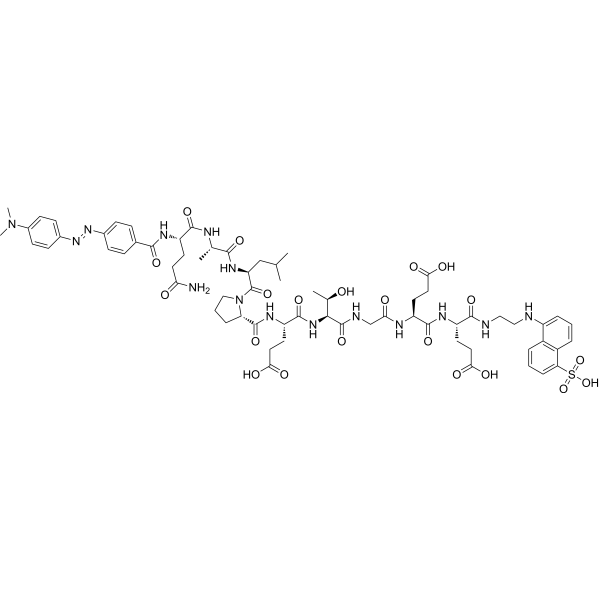
Dabcyl-QALPETGEE-Edans is a synthetic peptide substrate for fluorescence resonance energy transfer (FRET) detection of Sortase A (SrtA) enzymatic activity. Dabcyl-QALPETGEE-Edans is labeled at both ends with the fluorescent group Edans (donor) and the quencher Dabcyl (acceptor), respectively. Dabcyl-QALPETGEE-Edans's central sequence contains a conserved motif specifically recognized by SrtA. Dabcyl-QALPETGEE-Edans demonstrates high sensitivity in vitro assays, enabling precise determination of the half-maximal inhibitory concentration of SrtA .
|
-
-
- HY-P10172
-
-
-
- HY-P3770
-
|
|
PKC
|
Others
|
|
Phosphate acceptor peptide is a substrate for cAMP-dependent protein kinase (PKA). phosphate acceptor peptide is also a weak PKC inhibitor .
|
-
-
- HY-E70124A
-
-
-
- HY-D1577
-
|
|
Fluorescent Dye
|
Cancer
|
|
C6 NBD Lactosylceramide is a derivative of lactosylceramides, and can be used in lactosylceramide synthase assay as a fluorescent acceptor substrate. C6 NBD Lactosylceramide can also be used in cancer research .
|
-
-
- HY-145934B
-
|
|
OGT
Biochemical Assay Reagents
Glycosidase
|
Metabolic Disease
|
|
UDP-GlcNAz is the analogue of UDP-GlcNAc disodium (HY-112174). UDP-GlcNAc disodium is the donor substrate of many N-acetylgalactosaminyltransferases, enzymes which transfer GlcNAc from the nucleotide sugar to a saccharide or peptide acceptor. UDP-GlcNAc disodium is a click chemistry reagent, it contains an Azide group and can undergo copper-catalyzed azide-alkyne cycloaddition reaction (CuAAc) with molecules containing Alkyne groups. It can also undergo strain-promoted alkyne-azide cycloaddition (SPAAC) reactions with molecules containing DBCO or BCN groups .
|
-
-
- HY-125954S
-
|
UDP-α-D-glucuronic acid-13C,15N2
|
Isotope-Labeled Compounds
Endogenous Metabolite
|
Metabolic Disease
|
|
Uridine diphosphate glucuronic acid- 13C, 15N2 (UDP-α-D-glucuronic acid- 13C, 15N2) is the 13C- and 15N-labeled Uridine diphosphate glucuronic acid (HY-125954). Uridine diphosphate glucuronic acid ammonium (UDP-α-D-glucuronic acid ammonium) is a glucuronic acid donor. Uridine diphosphate glucuronic acid ammonium transfers its glucuronic acid moiety to acceptor molecules, thereby forming "ether" glucuronides, while being converted into uridine 5'-pyrophosphate. Uridine diphosphate glucuronic acid ammonium serves as a substrate for Arabidopsis UDP-GlcA 4-epimerase 1, and undergoes reversible 4-epimerization to generate UDP-α-D-galacturonic acid .
|
-
-
- HY-P0248F
-
|
|
PKA
Fluorescent Dye
|
Metabolic Disease
|
|
Kemptide, 5-FAM labeled is a 5-FAM labeled Kemptide (HY-P0248). Kemptide is a phosphate acceptor peptide that serves as a synthetic substrate for PKA (Km = 16 μM). The corresponding fluorescent and biotinylated peptides are also proven to be good substrates for PKA.
|
-
-
- HY-138263
-
|
|
Biochemical Assay Reagents
|
Others
|
|
Allyl 2-acetamido-2-deoxy-β-D-glucopyranoside is a NodC substrate and chitooligosaccharide chain initiator. Allyl 2-acetamido-2-deoxy-β-D-glucopyranoside acts as an initial acceptor to enable the extension of chitooligosaccharide chains and the synthesis of allyl penta-N-acetylchitopentaose .
|
-
-
- HY-E70124C
-
-
-
- HY-P10922
-
|
|
Cathepsin
|
Others
|
|
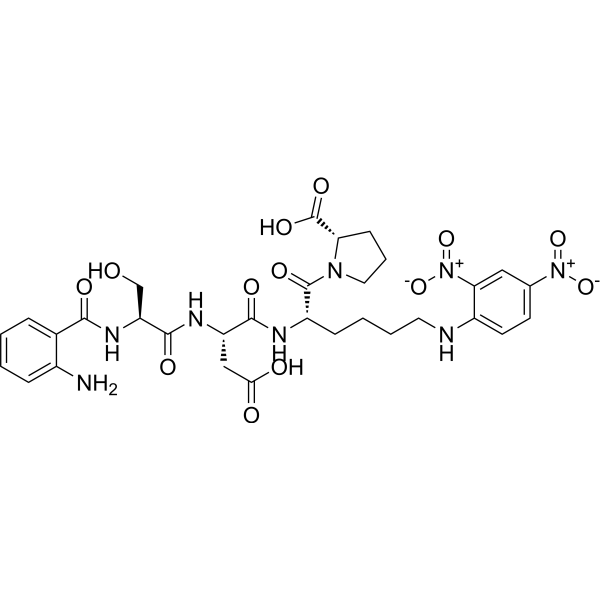
Cathepsin E substrate e is a substrate of Cathepsin E. Cathepsin E substrate e was designed in such a way that due to the close proximity of a Mca-donor and a Dnp-acceptor, a near complete intramolecular quenching effect was achieved in its intact state. After the proteolytic cleavage of the hydrophobic motif of the peptide substrate, both Mca and Dnp would be further apart, resulting in bright fluorescence .
|
-
-
- HY-B1337S2
-
|
|
Endogenous Metabolite
|
Others
|
|
Choline-d6 (chloride) is the deuterium labeled Choline chloride. Choline chloride is an organic compound and a quaternary ammonium salt, an acyl group acceptor and choline acetyltransferase substrate, also is an important additive in feed especially for chickens where it accelerates growth.
|
-
-
- HY-157116
-
|
|
ICMT
|
Cancer
|
|
ICMT-IN-48 (compound 1) is an ICMT inhibitor that is competitive (Km=13 μM) for the prenylated methyl acceptor, the first substrate of ICMT. ICMT-IN-48 inhibits ICMT activity with IC50s affected by the concentration of the second substrate S-adenosylmethinine (SAM), and the IC50s are 3.5 μM (1×Km SAM) and 2.3 μM (10×Km SAM), respectively .
|
-
-
- HY-120971
-
|
DepNA
|
Endogenous Metabolite
|
Metabolic Disease
|
|
N-Decanoyl p-nitroaniline (DepNA) is one of several nitroaniline fatty acid amides which can be used to measure fatty acid amide hydrolase (FAAH) activity.1 FAAH is a relatively unselective enzyme in that it accepts a variety of amide head groups other than the ethanolamine of its endogenous substrate anandamide (AEA). It also will hydrolyze fatty acid amides with fewer carbons and fewer double bonds than arachidonate. Exposure of DepNA to FAAH activity results in the release of the yellow colorimetric dye p-nitroaniline (ε=13,500 at 410 nm). This allows the fast and convenient measurement of FAAH activity using a 96 well plate spectrophotometer.
|
-
-
- HY-W142745
-
|
|
Aldehyde Oxidase (AO)
|
Metabolic Disease
|
|
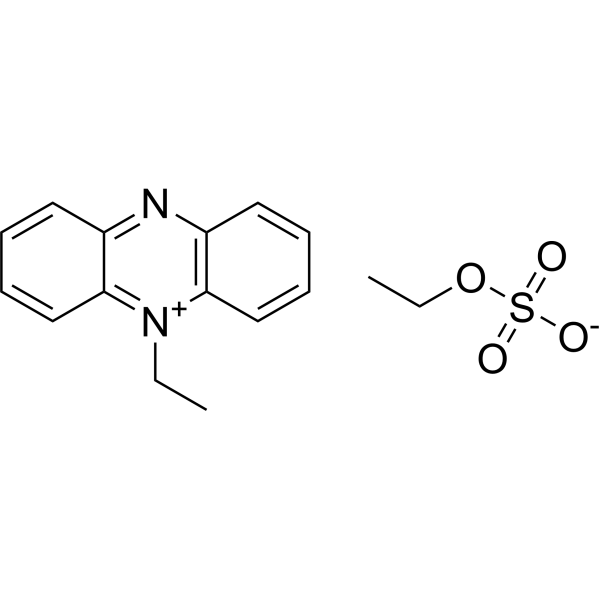
Phenanthridine is an aldehyde oxidase 1 (AOX1) substrate, with oxidation by hAOX1 yielding phenanthridone when molecular oxygen, ferricyanide, or dichlorophenolindophenol serves as electron acceptor .
|
-
-
- HY-P2865A
-
|
|
Guanylate Cyclase
|
Metabolic Disease
|
|
Guanylate Kinase, Porcine (EC 2.7.4.8), is an enzyme that transfers phosphorus-containing groups (phosphotransferases) using phosphate groups as acceptors. Guanylate Kinase is involved in purine metabolism. Its two substrates are ATP and GMP, and its two products are ADP and GDP.
|
-
-
- HY-E70912
-
|
|
Thymidylate Synthase
|
Metabolic Disease
|
|
Prokaryotic thymidylate kinase (EC 2.7.4.9) is an enzyme that transfers phosphorus-containing groups (phosphotransferases) using phosphate groups as acceptors. Prokaryotic thymidylate kinase participates in pyrimidine metabolism. Its two substrates are ATP and dTMP, and its two products are ADP and dTDP.
|
-
-
- HY-E71009
-
|
|
Biochemical Assay Reagents
|
Metabolic Disease
|
|
N-Acylmannosamine 1-Dehydrogenase, Pseudomonas sp. (EC 1.1.1.233) acts on the CH-OH group of donor with NAD+ or NADP+ as acceptor. The two substrates of this enzyme are N-acyl-D-mannosamine and NAD+, whereas its 3 products are N-acyl-D-mannosaminolactone, NADH, and H+.
|
-
-
- HY-P2743B
-
|
|
Biochemical Assay Reagents
|
Metabolic Disease
|
|
Choline oxidase, Arthrobacter globiformis (EC 1.1.3.17) is an oxidoreductase that acts on the CH-OH group in a donor molecule and uses oxygen as an acceptor. The two substrates of Choline oxidase, Arthrobacter globiformis (EC 1.1.3.17) are choline and O2, and the two products are betaine aldehyde and H2O2.
|
-
-
- HY-P2743A
-
|
|
Biochemical Assay Reagents
|
Metabolic Disease
|
|
Choline oxidase, Alcaligenes sp. (EC 1.1.3.17) is an oxidoreductase that acts on the CH-OH group in a donor molecule and uses oxygen as an acceptor. The two substrates of Choline oxidase, Alcaligenes sp. (EC 1.1.3.17) are choline and O2, and the two products are betaine aldehyde and H2O2.
|
-
-
- HY-P2756B
-
|
|
Biochemical Assay Reagents
|
Metabolic Disease
|
|
Alcohol Oxidase, Pichia pastoris (EC 1.1.3.13) is a redox enzyme that acts on the CH-OH group in donor molecules and uses oxygen as an acceptor. The two substrates of Alcohol Oxidase, Pichia pastoris (EC 1.1.3.13) are primary alcohols and O2, while its two products are aldehydes and H2O2.
|
-
-
- HY-E71179
-
|
|
Biochemical Assay Reagents
|
Others
|
|
11-cis-Retinol dehydrogenase (EC 1.1.1.315) catalyses the reduction of 11-cis-Retinol to 11-cis-retinal while the substrate is bound to the retinal-binding protein. This is a crucial step in the regeneration of 11-cis-retinal, the chromophore of rhodopsin. The enzyme can also accept other cis forms of retinol.
|
-
-
- HY-P2742C
-
|
|
Endogenous Metabolite
|
Metabolic Disease
|
|
Ascorbate Oxidase, Zucchini (EC 1.10.3.3), belongs to the oxidoreductase family, using diphenols and related substances as donors and oxygen as acceptors. Ascorbate Oxidase participates in ascorbic acid metabolism. Ascorbate Oxidase uses a cofactor-copper. Its two substrates are L-ascorbic acid and O2, while its two products are dehydroascorbic acid and H2O.
|
-
-
- HY-P2756A
-
|
|
Biochemical Assay Reagents
|
Metabolic Disease
|
|
Alcohol oxidase, Hansenula sp. (EC 1.1.3.13) is a redox enzyme that acts on the CH-OH group in donor molecules and uses oxygen as an acceptor. The two substrates of Alcohol Oxidase, Hansenula sp. (EC 1.1.3.13) are primary alcohols and O2, while its two products are aldehydes and H2O2.
|
-
-
- HY-E71157
-
|
|
Biochemical Assay Reagents
|
Others
|
|
1,4-Dihydroxy-2-naphthoyl-CoA hydrolase (EC 3.1.2.28) participates in the synthesis of menaquinones, phylloquinone, as well as several plant pigments. 1,4-Dihydroxy-2-naphthoyl-CoA hydrolase (EC 3.1.2.28) does not accept benzoyl-CoA or phenylacetyl-CoA as substrates.
|
-
-
- HY-P3186B
-
|
|
Endogenous Metabolite
|
Metabolic Disease
|
|
Glucose dehydrogenase, Pseudomonas sp. (EC 1.1.1.47) is an oxidoreductase that acts on the CH-OH group of a donor molecule and uses NAD + or NADP + as an acceptor. The three substrates of glucose dehydrogenase are β-D-glucose, NAD +, and NADP +, while its four products are D-gluconic acid-1,5-lactone, NADH, NADPH, and H +.
|
-
-
- HY-W006081
-
|
|
UGT
|
Others
|
|
3-Methyl-2-nitrophenol is a UDP-glucuronyltransferase (EC 2.4.1.17) acceptor substrate that can be confirmed to undergo glucuronidation catalyzed by the enzyme to form a glucuronide conjugate. 3-Methyl-2-nitrophenol functions as a substrate for conjugation, with glucuronidation forming a glucuronide conjugate that eliminates the parent compound’s characteristic yellow color. 3-Methyl-2-nitrophenol has higher lipid solubility that contributes to high glucuronidation conversion rate, and exhibits lower absorbance at 340 nm to act as a less interfering substrate for the NADH-NAD +-linked UDP-glucuronyltransferase assay .
|
-
-
- HY-E70922
-
|
|
Endogenous Metabolite
|
Metabolic Disease
|
|
Yeast 6-Phosphogluconic Dehydrogenase (EC 1.1.1.44) belongs to the oxidoreductase family. It is an oxidoreductase that acts on the CH-OH group of the donor molecule and uses NAD+ or NADP+ as the acceptor. Yeast 6-Phosphogluconic Dehydrogenase has two substrates: 6-phosphate-D-gluconic acid and NADP+, and three products: D-ribulose-5-phosphate, CO2, and NADPH.
|
-
-
- HY-P2888D
-
|
|
Biochemical Assay Reagents
|
Metabolic Disease
|
|
Bilirubin Oxidase, Myrothecium verrucaria (EC 1.3.3.5) is a family of oxidoreductases that act on the CH-CH group as a donor and use oxygen as an acceptor. Bilirubin Oxidase, Myrothecium verrucaria (EC 1.3.3.5) is involved in the metabolism of porphyrins and chlorophyll. The two substrates of Bilirubin Oxidase, Myrothecium verrucaria (EC 1.3.3.5) are bilirubin and O2, while its two products are biliverdin and H2O.
|
-
-
- HY-E70945
-
|
|
Endogenous Metabolite
|
Metabolic Disease
|
|
6-Phosphogluconic Dehydrogenase, Sheep (EC 1.1.1.44) belongs to the oxidoreductase family. Its two substrates are 6-phosphate-D-gluconic acid and NADP+, and its three products are D-ribulose-5-phosphate, CO2, and NADPH. 6-Phosphogluconic Dehydrogenase, Sheep (EC 1.1.1.44) refers to an oxidoreductase that acts on the CH-OH group of the donor molecule and uses NAD+ or NADP+ as the acceptor.
|
-
-
- HY-E70891
-
|
|
Endogenous Metabolite
|
Metabolic Disease
|
|
β-Galactose Dehydrogenase S, Pseudomonas fluorescens (EC 1.1.1.48) belongs to the oxidoreductase family and is an oxidoreductase that acts on the CH-OH group as a donor and uses NAD+ or NADP+ as an acceptor. β-Galactose Dehydrogenase S, Pseudomonas fluorescens, is involved in galactose metabolism. The enzyme's two substrates are D-galactose and NAD+, while its three products are D-galactonide-1,4-lactone, NADH, and H+.
|
-
-
- HY-E70385A
-
|
|
Endogenous Metabolite
|
Metabolic Disease
|
|
Oxalate oxidase, B. subtilis (EC 1.2.3.4) is a redox enzyme that acts on the donor aldehyde or carbonyl group, using oxygen as the acceptor. Oxalate oxidase, B is involved in the metabolism of glyoxylate and dicarboxylic acids. Oxalate oxidase, B has two cofactors: FAD and manganese. Oxalate oxidase, B has three substrates: oxalic acid, O2, and H +, and two products: CO2 and H2O2.
|
-
-
- HY-P2901A
-
|
|
Aldose Reductase
|
Metabolic Disease
|
|
3α-Hydroxysteroid Dehydrogenase, Pseudomonas testosteroni (EC 1.1.1.50) belongs to the oxidoreductase family. Its three substrates are androstenedione, NAD+, and NADP+, while its four products are 5α-androstane-3,17-dione, NADH, NADPH, and H+. 3α-Hydroxysteroid Dehydrogenase, Pseudomonas testosteroni, acts on the CH-OH group of the donor molecule, with NAD+ or NADP+ as the acceptor.
|
-
- HY-E70926
-
|
|
Endogenous Metabolite
|
Metabolic Disease
|
|
Lysine Oxidase, Trichoderma viride (EC 1.4.3.14), is an oxidoreductase that acts on the CH-NHsub>2 group in the donor molecule and uses oxygen as the acceptor. Lysine Oxidase participates in the degradation of lysine. The three substrates of lysine oxidase are L-lysine, O2, and H2O, while its three products are 6-amino-2-oxohexanoic acid, NH3, and H2O2.
|
-
- HY-P2733D
-
|
|
Endogenous Metabolite
|
Metabolic Disease
|
|
Glycerol 3-phosphate Oxidase, Streptococcus thermophilus (EC 1.1.3.21), is an oxidoreductase that acts on the CH-OH group in donor molecules and uses oxygen as an acceptor. Glycerol 3-phosphate Oxidase participates in glycerophospholipid metabolism and utilizes a cofactor, FAD. The two substrates of Glycerol 3-phosphate Oxidase are sn-glycerol-3-phosphate and O2, while its two products are glycerophosphate and H2O2.
|
-
- HY-E70977
-
|
|
Biochemical Assay Reagents
|
Metabolic Disease
|
|
6-phospho-D-gluconate dehydrogenase, E. coli (EC 1.1.1.44) is an oxidoreductase that acts on the CH-OH group of a donor molecule and uses NAD+ or NADP+ as an acceptor. The two substrates of 6-phospho-D-gluconate dehydrogenase, E. coli (EC 1.1.1.44) are 6-phospho-D-gluconate and NADP+, while its three products are D-ribulose-5-phosphate, CO2, and NADPH.
|
-
| Cat. No. |
Product Name |
Type |
-
- HY-D1577
-
|
|
Fluorescent Dye
|
|
C6 NBD Lactosylceramide is a derivative of lactosylceramides, and can be used in lactosylceramide synthase assay as a fluorescent acceptor substrate. C6 NBD Lactosylceramide can also be used in cancer research .
|
-
- HY-120971
-
|
DepNA
|
Fluorescent Dye
|
|
N-Decanoyl p-nitroaniline (DepNA) is one of several nitroaniline fatty acid amides which can be used to measure fatty acid amide hydrolase (FAAH) activity.1 FAAH is a relatively unselective enzyme in that it accepts a variety of amide head groups other than the ethanolamine of its endogenous substrate anandamide (AEA). It also will hydrolyze fatty acid amides with fewer carbons and fewer double bonds than arachidonate. Exposure of DepNA to FAAH activity results in the release of the yellow colorimetric dye p-nitroaniline (ε=13,500 at 410 nm). This allows the fast and convenient measurement of FAAH activity using a 96 well plate spectrophotometer.
|
| Cat. No. |
Product Name |
Type |
-
- HY-114365
-
|
UDP-N-acetyl-D-galactosamine disodium
|
Biochemical Assay Reagents
|
|
UDP-GalNAc (UDP-N-acetyl-D-galactosamine) disodium is a sugar nucleotide and a substrate for EpsC115. EpsC115 is a mutant with N-terminal residues 1-115 deleted from the exopolymeric substance (EPS). UDP-GalNAc disodium is a donor substrate for many N-acetylgalactosaminyltransferases, which transfer GalNAc from nucleotide sugars to sugar or peptide acceptors. UDP-GalNAc disodium provides a sugar group donor for glycosylation reactions. UDP-GalNAc disodium can be used in cancer research, such as colorectal and breast cancer .
|
-
- HY-145934A
-
|
|
Biochemical Assay Reagents
|
|
UDP-GlcNAz disodium is the analogue of UDP-GlcNAc disodium (HY-112174). UDP-GlcNAc disodium is the donor substrate of many N-acetylgalactosaminyltransferases, enzymes which transfer GlcNAc from the nucleotide sugar to a saccharide or peptide acceptor. UDP-GlcNAc disodium is a click chemistry reagent, it contains an Azide group and can undergo copper-catalyzed azide-alkyne cycloaddition reaction (CuAAc) with molecules containing Alkyne groups. It can also undergo strain-promoted alkyne-azide cycloaddition (SPAAC) reactions with molecules containing DBCO or BCN groups .
|
-
- HY-125954A
-
|
UDP-α-D-glucuronic acid ammonium
|
Biochemical Assay Reagents
|
|
Uridine diphosphate glucuronic acid ammonium (UDP-α-D-glucuronic acid ammonium) is a glucuronic acid donor. Uridine diphosphate glucuronic acid ammonium transfers its glucuronic acid moiety to acceptor molecules, thereby forming "ether" glucuronides, while being converted into uridine 5'-pyrophosphate. Uridine diphosphate glucuronic acid ammonium serves as a substrate for Arabidopsis UDP-GlcA 4-epimerase 1, and undergoes reversible 4-epimerization to generate UDP-α-D-galacturonic acid .
|
-
- HY-W039915
-
|
|
Biochemical Assay Reagents
|
|
Allyl α-D-galactopyranoside is an α-galactoside and acceptor/donor substrate for transgalactosylation reactions. Allyl α-D-galactopyranoside acts as an acceptor substrate in α-galactosidase-catalyzed transgalactosylation, and serves as a donor substrate to form longer α-galactosyl-containing oligosaccharides. Allyl α-D-galactopyranoside serves as a model compound for investigating the catalytic mechanism and substrate specificity of glycoside hydrolases and glycosyltransferases .
|
-
- HY-E70138
-
|
EC:2.4.1.133; B4GALT7
|
Biochemical Assay Reagents
|
|
β-1,4-Galactosyltransferase 7 has exclusive specificity for the donor substrate UDP-galactose and all transfer galactose in a β-1,4 linkage to similar acceptor sugars: GlcNAc, Glc, and Xyl. .
|
| Cat. No. |
Product Name |
Target |
Research Area |
-
- HY-P6028A
-
|
|
N-myristoyltransferase
|
Others
|
|
GSNKSKPK-NH2 TFA is a synthetic model peptide based on the c-Src N-terminal sequence and model peptide substrate for human NMT1 and NMT2.GSNKSKPK-NH2 TFA facilitates in vitro assays measuring transfer of myristate or X10 fatty acid moieties .
|
-
- HY-P5485
-
|
|
Bacterial
|
Others
|
|
Dabcyl-QALPETGEE-Edans is a synthetic peptide substrate for fluorescence resonance energy transfer (FRET) detection of Sortase A (SrtA) enzymatic activity. Dabcyl-QALPETGEE-Edans is labeled at both ends with the fluorescent group Edans (donor) and the quencher Dabcyl (acceptor), respectively. Dabcyl-QALPETGEE-Edans's central sequence contains a conserved motif specifically recognized by SrtA. Dabcyl-QALPETGEE-Edans demonstrates high sensitivity in vitro assays, enabling precise determination of the half-maximal inhibitory concentration of SrtA .
|
-
- HY-P10172
-
-
- HY-P3770
-
|
|
PKC
|
Others
|
|
Phosphate acceptor peptide is a substrate for cAMP-dependent protein kinase (PKA). phosphate acceptor peptide is also a weak PKC inhibitor .
|
-
- HY-P2554
-
|
|
Peptides
|
Others
|
|
Histone H3 (1-25), amide is an N-terminal peptide fragment of histone H3. Histone H3 (1-25), amide can be used to identify the substrate for histone methyltransferases (HMTs). Histone H3 (1-25), amide, as a substrate for HMT G9a, shows more efficient than histone H3 (15-39) and full-length histone H3 .
|
-
- HY-P0248F
-
|
|
PKA
Fluorescent Dye
|
Metabolic Disease
|
|
Kemptide, 5-FAM labeled is a 5-FAM labeled Kemptide (HY-P0248). Kemptide is a phosphate acceptor peptide that serves as a synthetic substrate for PKA (Km = 16 μM). The corresponding fluorescent and biotinylated peptides are also proven to be good substrates for PKA.
|
-
- HY-P10922
-
|
|
Cathepsin
|
Others
|
|
Cathepsin E substrate e is a substrate of Cathepsin E. Cathepsin E substrate e was designed in such a way that due to the close proximity of a Mca-donor and a Dnp-acceptor, a near complete intramolecular quenching effect was achieved in its intact state. After the proteolytic cleavage of the hydrophobic motif of the peptide substrate, both Mca and Dnp would be further apart, resulting in bright fluorescence .
|
| Cat. No. |
Product Name |
Category |
Target |
Chemical Structure |
| Cat. No. |
Product Name |
Chemical Structure |
-
- HY-B1337S1
-
3 Publications Verification
|
|
Choline-d9 (chloride) is the deuterium labeled Choline chloride. Choline chloride is an organic compound and a quaternary ammonium salt, an acyl group acceptor and choline acetyltransferase substrate, also is an important additive in feed especially for chickens where it accelerates growth.
|
-
-
- HY-B1337S
-
1 Publications Verification
|
|
Choline-d4 (chloride) is the deuterium labeled Choline chloride. Choline chloride is an organic compound and a quaternary ammonium salt, an acyl group acceptor and choline acetyltransferase substrate, also is an important additive in feed especially for chickens where it accelerates growth.
|
-
-
- HY-B1337S3
-
|
|
|
Choline-d13 (chloride) is the deuterium labeled Choline chloride. Choline chloride is an organic compound and a quaternary ammonium salt, an acyl group acceptor and choline acetyltransferase substrate, also is an important additive in feed especially for chickens where it accelerates growth.
|
-
-
- HY-B1337S4
-
1 Publications Verification
|
|
Choline Chloride- 13C3 is the 13C-labeled Choline (chloride). Choline chloride is an organic compound and a quaternary ammonium salt, an acyl group acceptor and choline acetyltransferase substrate, also is an important additive in feed especially for chickens where it accelerates growth.
|
-
-
- HY-125954S
-
|
|
|
Uridine diphosphate glucuronic acid- 13C, 15N2 (UDP-α-D-glucuronic acid- 13C, 15N2) is the 13C- and 15N-labeled Uridine diphosphate glucuronic acid (HY-125954). Uridine diphosphate glucuronic acid ammonium (UDP-α-D-glucuronic acid ammonium) is a glucuronic acid donor. Uridine diphosphate glucuronic acid ammonium transfers its glucuronic acid moiety to acceptor molecules, thereby forming "ether" glucuronides, while being converted into uridine 5'-pyrophosphate. Uridine diphosphate glucuronic acid ammonium serves as a substrate for Arabidopsis UDP-GlcA 4-epimerase 1, and undergoes reversible 4-epimerization to generate UDP-α-D-galacturonic acid .
|
-
-
- HY-B1337S2
-
|
|
|
Choline-d6 (chloride) is the deuterium labeled Choline chloride. Choline chloride is an organic compound and a quaternary ammonium salt, an acyl group acceptor and choline acetyltransferase substrate, also is an important additive in feed especially for chickens where it accelerates growth.
|
-
| Cat. No. |
Product Name |
|
Classification |
-
- HY-145934
-
|
UDP-N-azidoacetylgalactosamine disodium
|
|
Azide
|
|
UDP-GalNAz (UDP-N-azidoacetylgalactosamine) disodium is the analogue of UDP-GalNAc disodium (HY-114365). UDP-GalNAc disodium is the donor substrate of many N-acetylgalactosaminyltransferases, enzymes which transfer GalNAc from the nucleotide sugar to a saccharide or peptide acceptor. UDP-GalNAz disodium is a click chemistry reagent, it contains an Azide group and can undergo copper-catalyzed azide-alkyne cycloaddition reaction (CuAAc) with molecules containing Alkyne groups. It can also undergo strain-promoted alkyne-azide cycloaddition (SPAAC) reactions with molecules containing DBCO or BCN groups .
|
-
- HY-145934A
-
|
|
|
Azide
|
|
UDP-GlcNAz disodium is the analogue of UDP-GlcNAc disodium (HY-112174). UDP-GlcNAc disodium is the donor substrate of many N-acetylgalactosaminyltransferases, enzymes which transfer GlcNAc from the nucleotide sugar to a saccharide or peptide acceptor. UDP-GlcNAc disodium is a click chemistry reagent, it contains an Azide group and can undergo copper-catalyzed azide-alkyne cycloaddition reaction (CuAAc) with molecules containing Alkyne groups. It can also undergo strain-promoted alkyne-azide cycloaddition (SPAAC) reactions with molecules containing DBCO or BCN groups .
|
| Cat. No. |
Product Name |
|
Classification |
-
- HY-145934
-
|
UDP-N-azidoacetylgalactosamine disodium
|
|
Nucleotide Analogs
|
|
UDP-GalNAz (UDP-N-azidoacetylgalactosamine) disodium is the analogue of UDP-GalNAc disodium (HY-114365). UDP-GalNAc disodium is the donor substrate of many N-acetylgalactosaminyltransferases, enzymes which transfer GalNAc from the nucleotide sugar to a saccharide or peptide acceptor. UDP-GalNAz disodium is a click chemistry reagent, it contains an Azide group and can undergo copper-catalyzed azide-alkyne cycloaddition reaction (CuAAc) with molecules containing Alkyne groups. It can also undergo strain-promoted alkyne-azide cycloaddition (SPAAC) reactions with molecules containing DBCO or BCN groups .
|
Your information is safe with us. * Required Fields.
Inquiry Information
- Product Name:
- Cat. No.:
- Quantity:
- MCE Japan Authorized Agent:

