1. Search Result
Search Result
Results for "

aggression

" in MedChemExpress (MCE) Product Catalog:

15

Inhibitors & Agonists

1

Screening Libraries

7

Natural
Products

1

Isotope-Labeled Compounds

Cat. No. Product Name Target Research Areas Chemical Structure
  • HY-108677
    L-368,899 hydrochloride
    Maximum Cited Publications
    7 Publications Verification

    Oxytocin Receptor Endocrinology
    L-368,899 hydrochloride is a potent, selective, orally bioavailable, non-peptide oxytocin receptor antagonist, with IC50s of 8.9 nM and 26 nM for rat uterus and human uterus oxytocin receptor, respectively. L-368,899 hydrochloride used as a tocolytic agent .
    L-368,899 hydrochloride
  • HY-113413
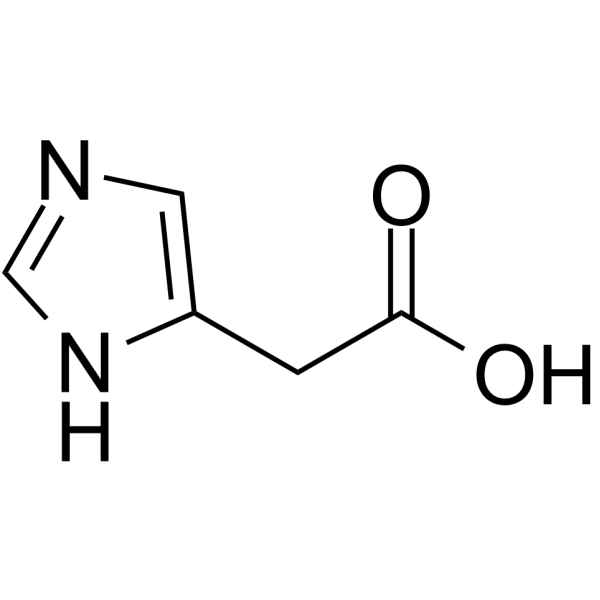
    Imidazoleacetic acid
    2 Publications Verification

    Imidazolyl-4-acetic acid

    Endogenous Metabolite GABA Receptor Cardiovascular Disease Neurological Disease Metabolic Disease
    Imidazoleacetic acid (Imidazolyl-4-acetic acid) is a blood-brain barrier-permeable full agonist of the GABAA receptor. Imidazoleacetic acid forms via histamine oxidation in the mouse brain. Imidazoleacetic acid exerts multiple neurochemical and behavioral effects. Imidazoleacetic acid induces a range of centrally mediated effects, including analgesia, sedation, hypnosis, as well as reductions in blood pressure, body temperature, isolation-induced aggression and motor activity .
    Imidazoleacetic acid
  • HY-W004305

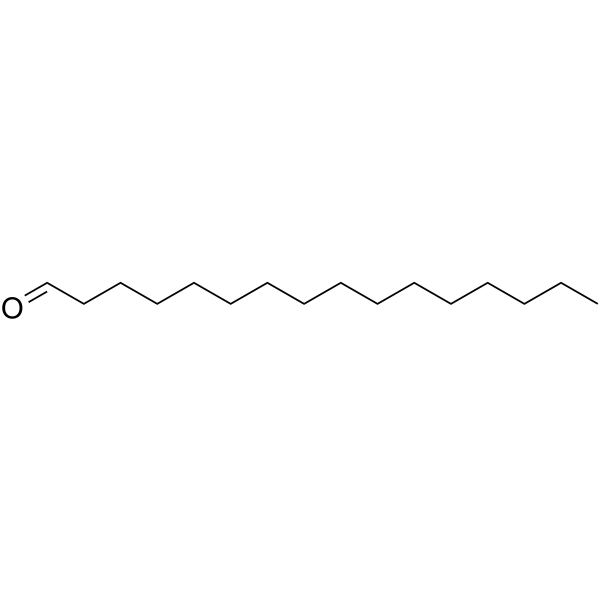
    Palmitaldehyde

    Environmental Pollutants Endogenous Metabolite Metabolic Disease
    Hexadecanal (Palmitaldehyde) , a volatile long-chain aliphatic aldehyde, is emitted from human feces, skin, and breath. The receptor for hexadecanal(OR37B) is highly conserved across mammals. Hexadecanal may exert its effects by modulating functional connectivity between the brain substrates of social appraisal and the brain substrates of aggressive execution. Also, Hexadecanal is confirmed to be highly deterrent to the ant Lasius niger. Hexadecanal is promising for the research of startle responses and aggression
    Hexadecanal
  • HY-B1405
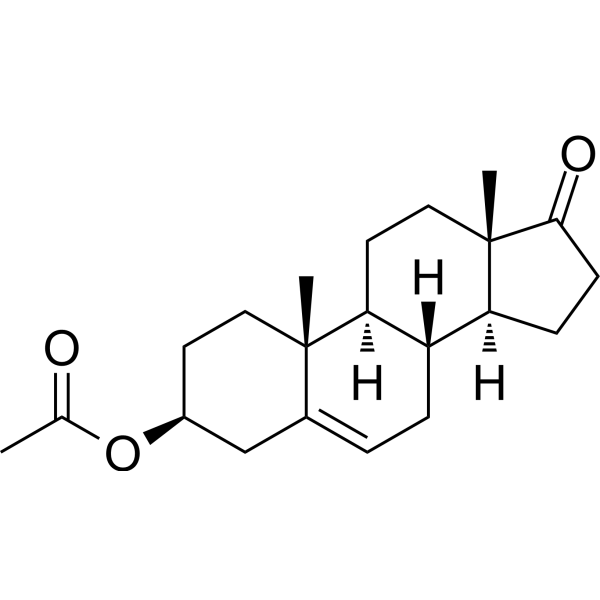
    Dehydroisoandrosterone 3-acetate
    1 Publications Verification

    Dehydroepiandrosterone 3-acetate; DHEA acetate

    Androgen Receptor Endocrinology Cancer
    Dehydroepiandrosterone 3-acetate is a testosterone/estrogen precursor and known modulator of vertebrate aggression.
    Dehydroisoandrosterone 3-acetate
  • HY-N2411
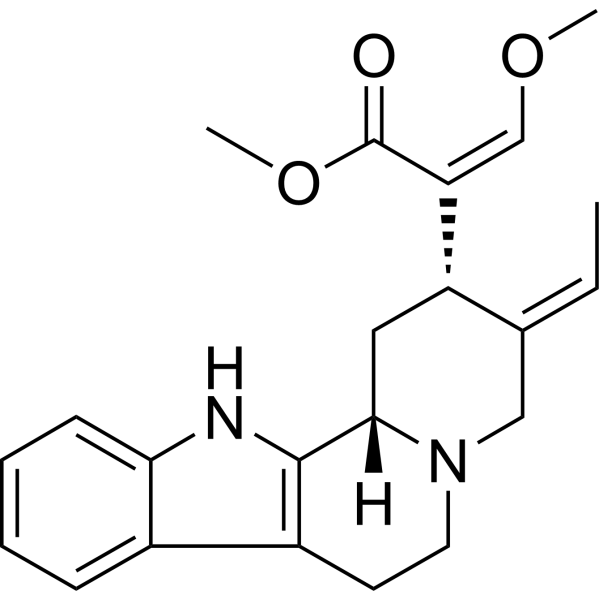
    Geissoschizine methyl ether
    1 Publications Verification

    5-HT Receptor Neurological Disease
    Geissoschizine methyl ether is an orally active, blood-brain barrier permeable alkaloid, and a partial agonist of the 5-HT1A receptor. It can be isolated from Uncaria hook. Geissoschizine methyl ether potently inhibits the binding of [ 3H]8-OH-DPAT to the 5-HT1A receptor in a concentration-dependent manner, with an IC50 of 0.904 μM. It ameliorates isolation-induced increased aggression and reduced sociability in mice. Geissoschizine methyl ether promotes oligodendrocyte differentiation and remyelination in the medial prefrontal cortex of adult mice .
    Geissoschizine methyl ether
  • HY-178323

    5-HT Receptor Arrestin Neurological Disease
    MW073 is a highly selective and orally active 5-HT2BR antagonist (IC50 =70 nM). MW073 exerts its effects by concentration-dependently inhibiting receptor activity and β-arrestin-1 recruitment. MW073 ameliorates synaptic plasticity and behavioral deficits, including aggression, in Alzheimer’s disease (AD) mouse models. MW073 can be used for Alzheimer’s disease (AD) research [1][2].
    MW073
  • HY-133171A

    Serotonin Transporter Neurological Disease
    (S)-Norfluoxetine, a S enantiomer of Norfluoxetine (HY-135556), is a selective serotonin reuptake inhibitor. (S)-Norfluoxetine can increase allopregnanolone levels and reduce aggression in socially isolated mice .
    (S)-Norfluoxetine
  • HY-W004305R

    Palmitaldehyde (Standard)

    Reference Standards Endogenous Metabolite Metabolic Disease
    Hexadecanal (Standard) is an analytical standard for Hexadecanal. This product is intended for research and analytical applications. Hexadecanal (Palmitaldehyde), a volatile, long-chain fatty aldehyde, is released from human feces, skin, and breath. The hexadecanal receptor (OR37B) is highly conserved in mammals. Hexadecanal may exert its effects by modulating functional connectivity between social evaluation brain substrates and aggression execution brain substrates. Hexadecanal has also been shown to have a strong deterrent effect on black ants. Hexadecanal has potential for use in startle response and aggression behavior
    Hexadecanal (Standard)
  • HY-N2318R

    Reference Standards TRP Channel Neurological Disease
    Dehydroisoandrosterone 3-acetate (Standard) is the analytical standard of Dehydroisoandrosterone 3-acetate. This product is intended for research and analytical applications. Dehydroepiandrosterone 3-acetate is a testosterone/estrogen precursor and known modulator of vertebrate aggression.
    Podocarpic acid (Standard)
  • HY-B1405R

    Dehydroepiandrosterone 3-acetate (Standard); DHEA acetate (Standard)

    Reference Standards Androgen Receptor Endocrinology Cancer
    Dehydroisoandrosterone 3-acetate (Standard) is the analytical standard of Dehydroisoandrosterone 3-acetate. This product is intended for research and analytical applications. Dehydroepiandrosterone 3-acetate is a testosterone/estrogen precursor and known modulator of vertebrate aggression.
    Dehydroisoandrosterone 3-acetate (Standard)
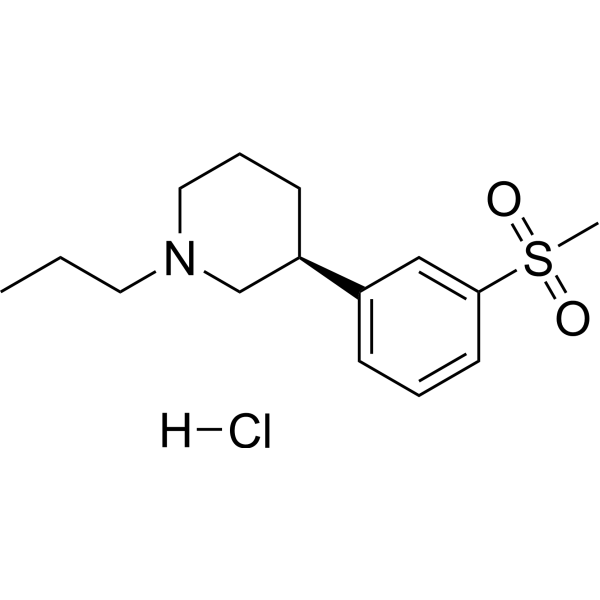
  • HY-103403

    PNU96391 hydrochloride

    5-HT Receptor Dopamine Receptor Neurological Disease
    (-)-OSU6162 (PNU96391) hydrochloride is a dopamine stabilizer. (-)-OSU6162 hydrochloride acts as partial agonist at 5-HT2A and is a dopamine D2 antagonist. (-)-OSU6162 hydrochloride can be used for the research of aggression and irritability .
    (-)-OSU6162 hydrochloride
  • HY-W673589

    2-Me-C26

    Insecticide Infection
    2-Methylhexacosane is a saturated hydrocarbon and an insect pheromone. It has been found in the cuticle of M. dasystomus females, but not males, where it contributes to the mating behavior of males, as well as in D. melanogaster females where it modulates aggression of males towards females. 2-methylhexacosane has also been found in yellow jacket (V. vulgaris) trail extracts.
    Hexacosane, 2-Methyl-
  • HY-113413R

    Imidazolyl-4-acetic acid (Standard)

    Reference Standards Endogenous Metabolite GABA Receptor Cardiovascular Disease Neurological Disease Metabolic Disease
    Imidazoleacetic acid (Standard) is the analytical standard of Imidazoleacetic acid (HY-113413). This product is intended for research and analytical applications. Imidazoleacetic acid (Imidazolyl-4-acetic acid) is a blood-brain barrier-permeable full agonist of the GABAA receptor. Imidazoleacetic acid forms via histamine oxidation in the mouse brain. Imidazoleacetic acid exerts multiple neurochemical and behavioral effects. Imidazoleacetic acid induces a range of centrally mediated effects, including analgesia, sedation, hypnosis, as well as reductions in blood pressure, body temperature, isolation-induced aggression and motor activity .
    Imidazoleacetic acid (Standard)
  • HY-W004305S

    Palmitaldehyde-d5

    Isotope-Labeled Compounds Endogenous Metabolite Metabolic Disease
    Hexadecanal-d5 (Palmitaldehyde-d5) is deuterium labeled Hexadecanal. Hexadecanal (Palmitaldehyde) , a volatile long-chain aliphatic aldehyde, is emitted from human feces, skin, and breath. The receptor for hexadecanal(OR37B) is highly conserved across mammals. Hexadecanal may exert its effects by modulating functional connectivity between the brain substrates of social appraisal and the brain substrates of aggressive execution. Also, Hexadecanal is confirmed to be highly deterrent to the ant Lasius niger. Hexadecanal is promising for the research of startle responses and aggression
    Hexadecanal-d5
  • HY-108677R

    Reference Standards Oxytocin Receptor Endocrinology
    L-368,899 hydrochloride (Standard) is the analytical standard of L-368,899 hydrochloride (HY-108677). This product is intended for research and analytical applications. L-368,899 hydrochloride is a potent, selective, orally bioavailable, non-peptide oxytocin receptor antagonist, with IC50s of 8.9 nM and 26 nM for rat uterus and human uterus oxytocin receptor, respectively. L-368,899 hydrochloride used as a tocolytic agent .
    L-368,899 hydrochloride (Standard)

Inquiry Online

Your information is safe with us. * Required Fields.

Salutation


Country or Region *

Applicant Name *


Organization Name *

Department *


Email Address *


Product Name *

Cat. No.


Requested quantity *

Phone Number *


Remarks

Inquiry Online

Inquiry Information

Product Name:
Cat. No.:
Quantity:
MCE Japan Authorized Agent:

