
1. Search Result
Search Result
Results for "

alkaline solutions

" in MedChemExpress (MCE) Product Catalog:

31

Inhibitors & Agonists

19

Fluorescent Dye

6

Biochemical Assay Reagents

1

Natural
Products

1

Oligonucleotides

Cat. No. Nombre del producto Target Áreas de investigación Chemical Structure
  • HY-Y0319B
    Acetic acid (potassium 99%)
    1 Publications Verification

    Potassium acetate

    Environmental Pollutants Biochemical Assay Reagents Infection Cancer
    Acetic acid potassium 99% (Potassium acetate) is a potassium salt employed to replenish electrolytes, for restoration of water-electrolyte balance. Acetic acid potassium 99% can employ in DNA and protein purification. Acetic acid potassium 99% has been used to prepare neutralizing solution for alkaline lysis of bacteria and activated carbon .
    Acetic acid (potassium 99%)
  • HY-Y0286

    Hartshorn salt, 99%

    Environmental Pollutants Biochemical Assay Reagents Others
    Ammonium carbonate (Ammonium carbonate), 99% is a solid amino compound that functions as a buffer, pH regulator, pore-forming agent, and electrocatalytic oxidation substrate. Ammonium carbonate, 99% is a GRAS-grade direct food additive with no restricted daily intake specified by FAO/WHO, and it shows no acute skin toxicity, clinical signs of toxicity, or effects on body weight in rats. Ammonium carbonate, 99% undergoes electrocatalytic oxidation in alkaline solutions with a Pt/C catalyst (carbonate adsorption interferes with activity). Ammonium carbonate, 99% can serve as a fuel for low-temperature polymer fuel cells and anion exchange membrane fuel cells (with performance superior to pure ammonia), and can also form pores in the carrier-free Pt cathode catalyst layer after low-temperature decomposition, thereby enhancing catalyst activity under low-humidity conditions and the performance of proton exchange membrane fuel cells .
    Ammonium carbonate, 99%
  • HY-DY2001

    Fluorescent Dye Influenza Virus Bacterial Infection
    Crystal Violet (solution) , also known as Gentian violet, methyl violet 10B, is a triphenyl-methane, an alkaline dye that binds to DNA in the nucleus of a cell, staining it a deep purple. It is often used for Gram staining to classify bacteria, or for cell or histological staining .
    Solvent and Concentration: Sterile water: 5 mg/mL (0.5%)
    Crystal Violet (solution)
  • HY-W923198

    Methacryloyloxy fluorescein

    Fluorescent Dye Others
    Fluorescein O-methacrylate (Methacryloyloxy fluorescein) is a pH-responsive fluorescent monomeric dye. Fluorescein O-methacrylate exhibits pH-responsive fluorescence properties: its fluorescence is activated under alkaline conditions and quenched under neutral or acidic conditions; reversible switching of fluorescence is achievable by adjusting the pH of the solution. Fluorescein O-methacrylate can be used as a monomer for the synthesis of amphiphilic fluorescein polymers. These polymers can self-assemble into stable polymer nanoparticles with enhanced aqueous-phase fluorescence, and also enable the conjugation of nanoparticles with amine-containing biomolecules to support sensitive optical detection of biomarkers (Ex/Em = 490/520 nm) .
    Fluorescein O-methacrylate
  • HY-D0219

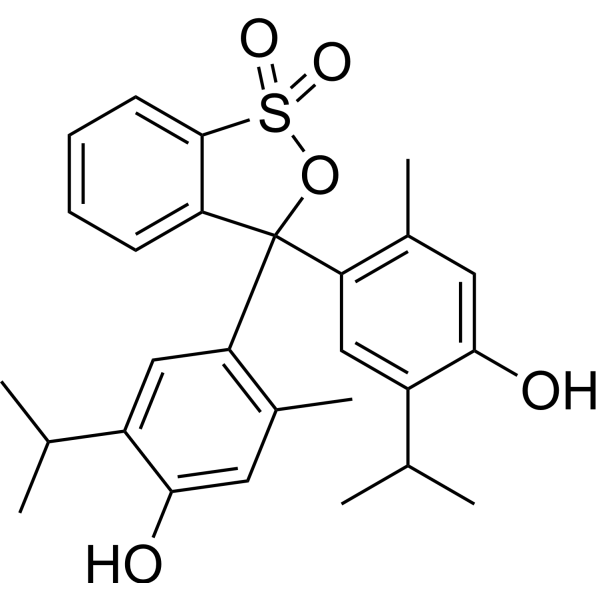
    Thymolsulphonephthalein

    Fluorescent Dye Others
    Thymol blue is a reversible pH indicator that responds to the pH of the solution through structural changes of protonation and deprotonation. Thymol blue is red (HI - form) under acidic conditions and blue (I 2- form) under alkaline conditions. Quantitative detection is achieved through the absorption peak shift (435 nm/596 nm) of the UV-visible spectrum. Thymol blue selectively responds to pH changes, changing from red to yellow at pH 1.2-2.8 and from yellow to blue at pH 8.0-9.6. Thymol blue can be fixed in a silica gel matrix through sol-gel technology to form a solid-state sensor for in-situ pH measurement in the marine environment and acid-base monitoring in the biomedical field[1][2].
    Thymol blue
  • HY-W111692

    Biochemical Assay Reagents Others
    Sodium polyphosphate, crystal,+200 mesh, 96% is an inorganic polyphosphate that also serves as a stabilizer, dispersant, chelating agent, and coacervate-forming agent. Sodium polyphosphate provides electrostatic stabilization for mineral and material suspensions, but its dispersing efficacy decreases under acidic pH, high temperature, high calcium concentration, or a combination of these conditions. Sodium polyphosphate can chelate alkaline earth metals, reduce solution pH, and alter the rate of pH decline at a divalent cation/phosphorus molar ratio of 0.18. Sodium polyphosphate forms coacervates with smaller divalent cations and precipitates with larger divalent cations, where the functional requirements of cations depend on polyphosphate concentration, average degree of polymerization, and cation type .
    Sodium polyphosphate, crystal,+200 mesh, 96%
  • HY-D0812

    Fluorescent Dye Biochemical Assay Reagents Others
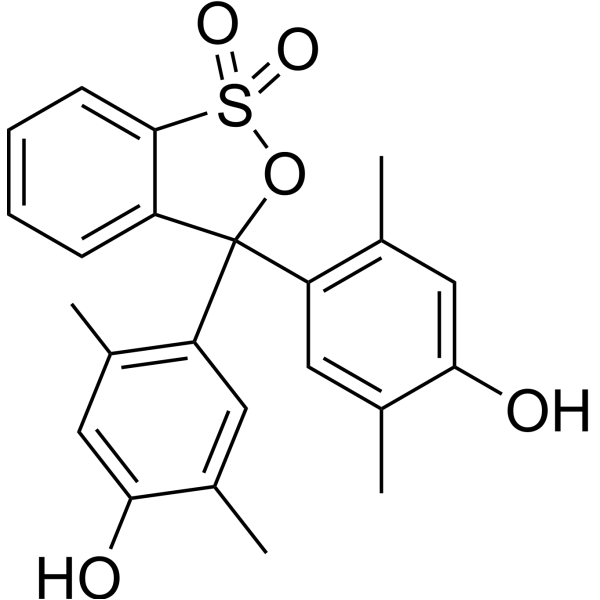
    Xylenol Blue is a sulfonephthalein dye. It exhibits observable color changes in response to variations in pH. Xylenol Blue undergoes two distinct color transitions across two specific pH ranges: an acidic range and an alkaline range. In a neutral solution, Xylenol Blue appears yellow (at pH 8); in a strongly acidic medium, its color shifts to red (at pH 2.8); and in an alkaline medium, the yellow hue transitions to blue (at pH 9.6) .
    Xylenol blue
  • HY-B2203

    Phosphatase Metabolic Disease
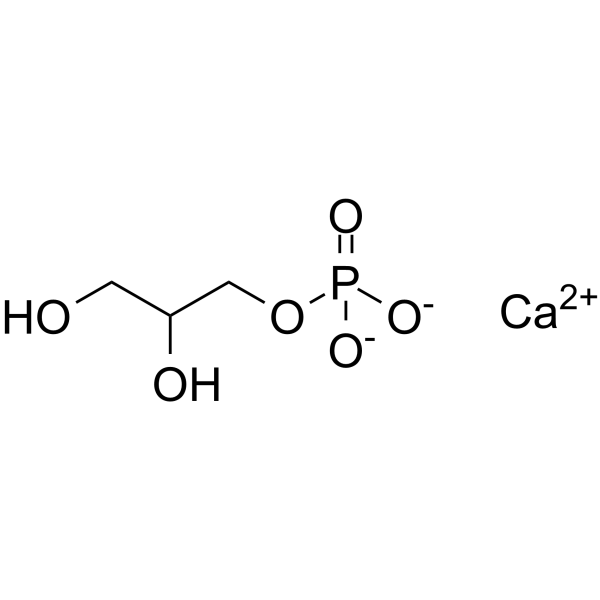
    Monocalcium glycerophosphate is an inhibitor of intestinal alkaline phosphatase F3, and it has anti-cavity properties. Monocalcium glycerophosphate is a source of calcium and phosphorus in total parenteral nutrition solutions, helps prevent the mineralization and development of bones from intravenous nutrition, and maintains the integrity of the intestinal epithelium .
    Monocalcium glycerophosphate
  • HY-D0228

    Azo Violet; Magneson I

    Fluorescent Dye Others
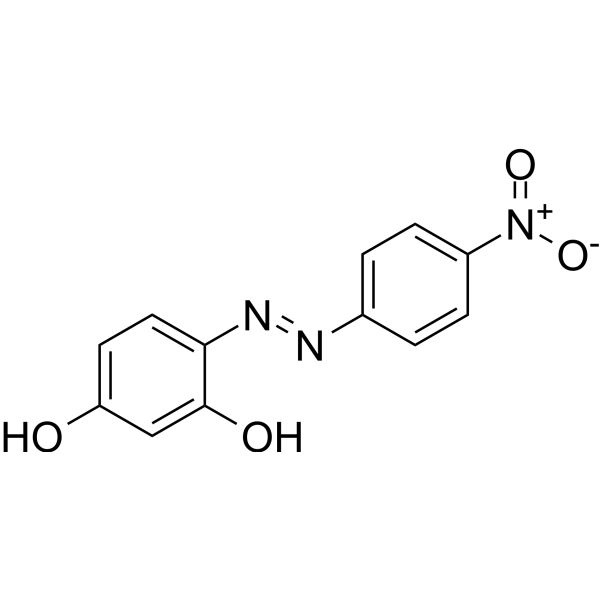
    4-(4-Nitrophenylazo)resorcinol (Azo Violet) is an azo purple dye used experimentally as a pH indicator, showing yellow when the pH value is lower than 11 and purple when the pH value is higher than 13. In slightly alkaline or alkaline environments, it also turns dark blue in the presence of magnesium salts. Azo Violet can also be used to test for the presence of ammonium ions. The color of the ammonium chloride or ammonium hydroxide solution will change depending on the concentration of azo violet used .
    4-(4-Nitrophenylazo)resorcinol
  • HY-W243460

    Biochemical Assay Reagents Others
    EDTA copper (II) disodium salt, 97% is a negatively charged copper (II)-ethylenediaminetetraacetic acid chelate and also an adsorption substrate. EDTA copper (II) disodium salt, 97% forms amide bonds with chitosan amino groups in weakly acidic (pH 3-5) solutions, while it forms the CuEDTA (OH) 3− hydroxyl complex in strongly alkaline (pH > 12) solutions. EDTA copper (II) disodium salt, 97% can be adsorbed onto granular activated carbon, with electrostatic interactions dominating its pH-dependent adsorption behavior. EDTA copper (II) disodium salt, 97% can be used to eliminate the inhibition of enzyme-catalyzed reactions caused by trace heavy metals .
    EDTA copper(II) disodium salt, 97%
  • HY-D1129

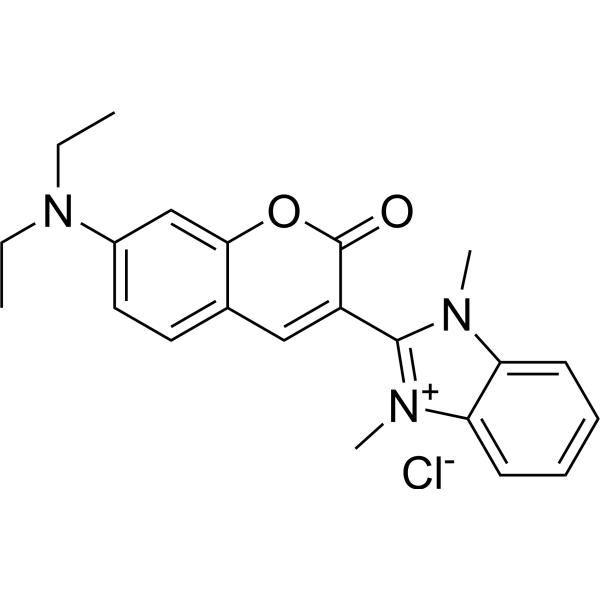
    Coumarin 40

    Fluorescent Dye
    Basic yellow 40 is an alkaline dye that can be removed from aqueous solutions in intermittent adsorption systems using tree ferns as biosorbents.
    Basic yellow 40
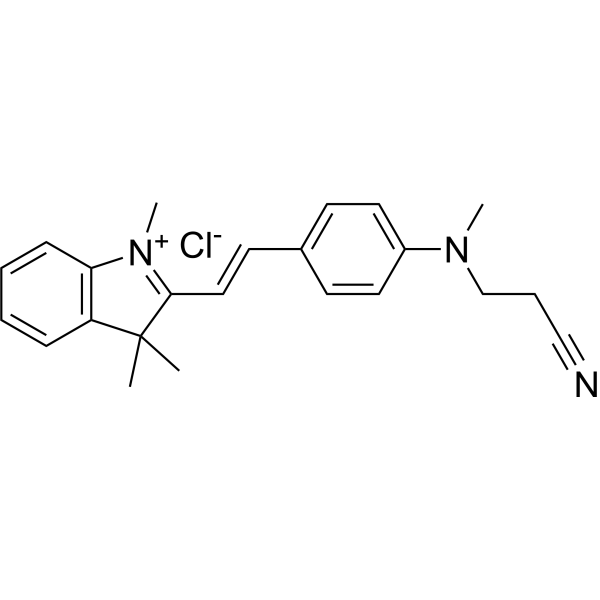
  • HY-D0492

    Fluorescent Dye
    C.I. Basic blue 41 is an alkaline dye that can be removed from aqueous solutions in intermittent adsorption systems using tree ferns as biosorbents.
    C.I. Basic blue 41
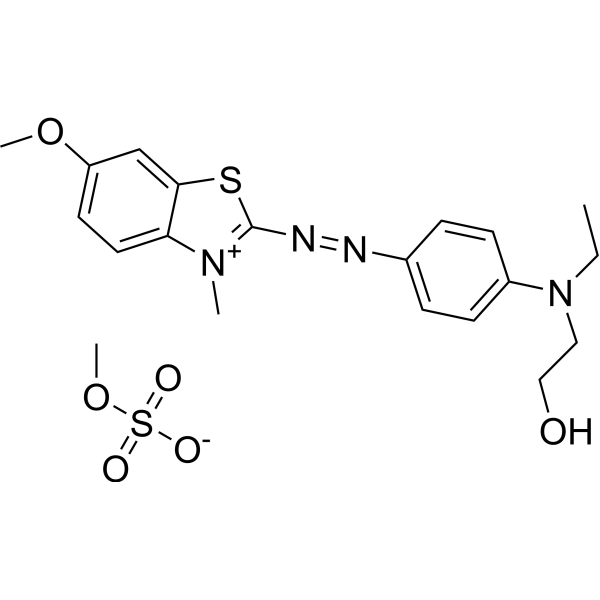
  • HY-D0478

    Fluorescent Dye
    C.I. Basic red 14 is an alkaline dye that can be removed from aqueous solutions in intermittent adsorption systems using tree ferns as biosorbents.
    C.I. Basic red 14
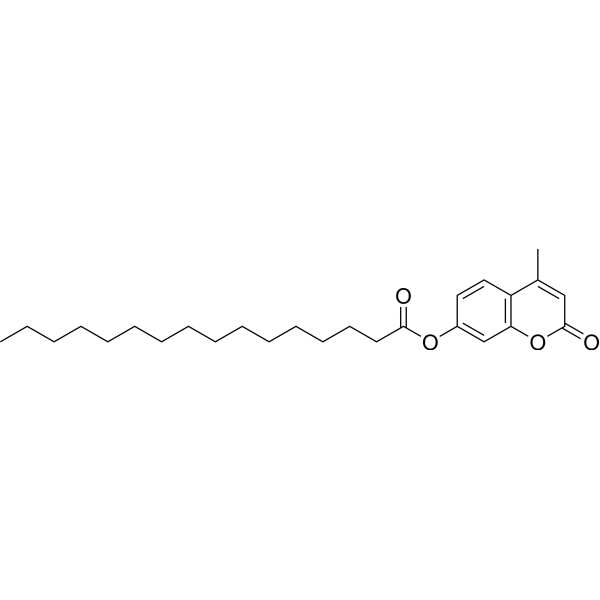
  • HY-W010947

    Fluorescent Dye Inflammation/Immunology
    4-Methylumbelliferyl palmitate is an excellent fluorophore for measuring acid lipase in human leukocytes. Acidity and solvent have important influence on its fluorescence. 4-Methylumbelliferyl palmitate exists mainly as neutral molecular form which can be produced strong fluorescence at 445 nm in near neutral aqueous solutions, and exist mainly as anion form which can be produced stronger fluorescence at 445 nm in weak alkaline solutions .
    4-Methylumbelliferyl palmitate
  • HY-D1214

    Cationic Red X-GRL

    Fluorescent Dye
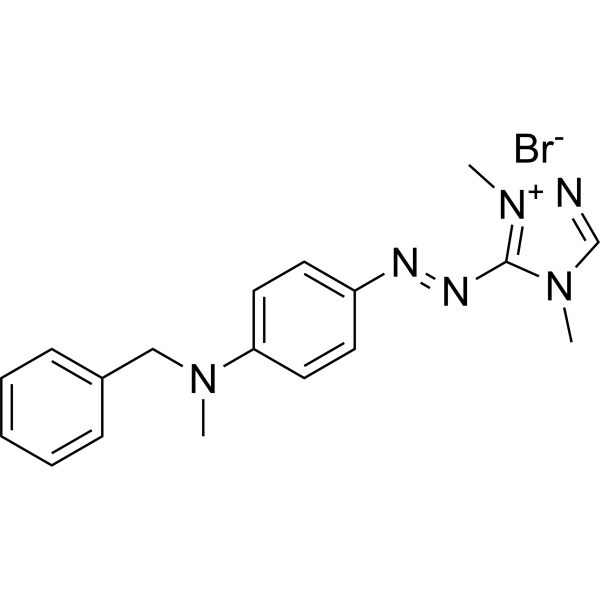
    Basic Red 46 is an alkaline dye that can be removed from aqueous solutions in intermittent adsorption systems using tree ferns as biosorbents.
    Basic Red 46
  • HY-D1036

    Fluorescent Dye
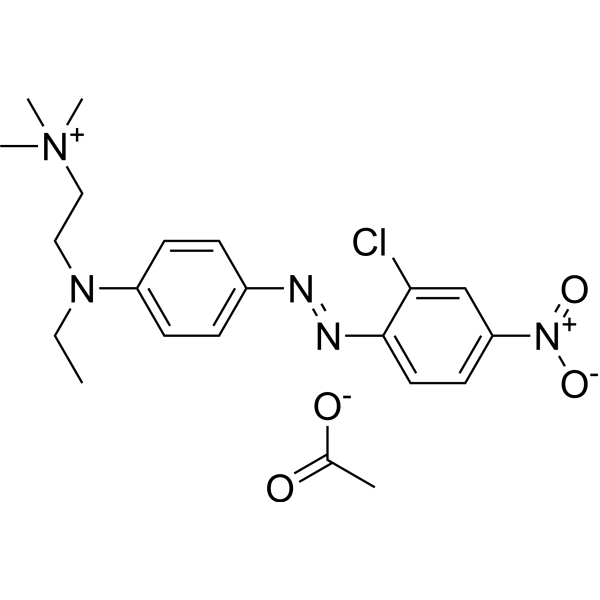
    Basic red 18 (acetate) is an alkaline dye that can be removed from aqueous solutions in intermittent adsorption systems using tree ferns as biosorbents.
    Basic red 18 acetate
  • HY-D0724

    Fluorescent Dye
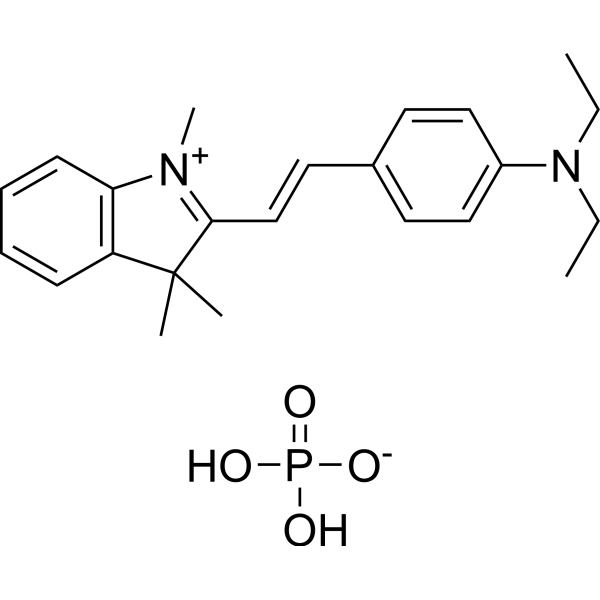
    Basic violet 16 (phosphate) is an alkaline dye that can be removed from aqueous solutions in intermittent adsorption systems using tree ferns as biosorbents.
    Basic violet 16 phosphate
  • HY-121657

    Ro 11-2616

    Parasite Bacterial Others
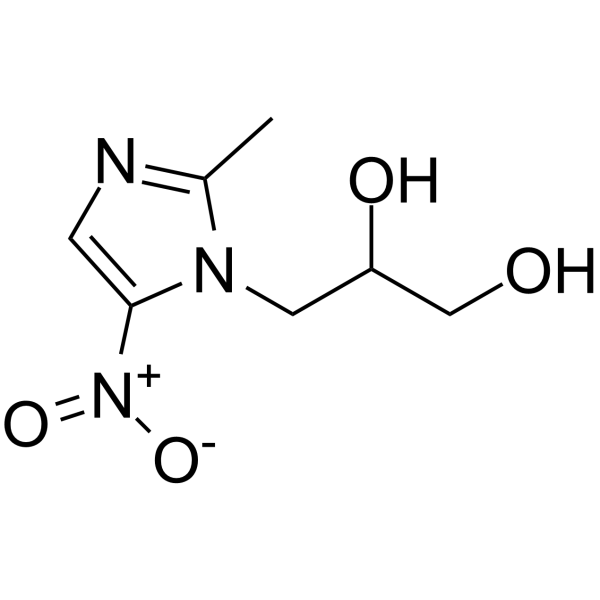
    Ornidazole diol (Ro 11-2616) is the diol of Ornidazole (HY-B0508) which is rapidly hydrolyzed in alkaline solution. Ornidazole (Ro 7-0207) is a 5-nitroimidazole derivative that is antiprotozoan and anaerobic.
    Ornidazole diol
  • HY-121066

    Others Others
    Dehydrorotenone is a rotenone analog that is resistant to alkali decomposition. When treated with alkaline solution or alkaline solution containing zinc, dehydrorotenone can absorb 2 molecules of water and convert into acid solution.
    Dehydrorotenone
  • HY-W342700

    Biochemical Assay Reagents Others
    PIPPS is a kind of buffer commonly used in biological and biochemical research to maintain the acidity and alkalinity (pH value) of solutions .
    PIPPS
  • HY-D1132

    Fluorescent Dye
    Basic red 12 is an alkaline dye that can be removed from aqueous solutions in intermittent adsorption systems using tree ferns as biosorbents.
    Basic red 12
  • HY-D0579

    Fluorescent Dye
    Basic red 18:1 is an alkaline dye that can be removed from aqueous solutions in intermittent adsorption systems using tree ferns as biosorbents.
    Basic red 18:1
  • HY-D0551

    Fluorescent Dye Others
    C.I. Basic red 24 is an alkaline dye that can be removed from aqueous solutions in intermittent adsorption systems using tree ferns as biosorbents.
    C.I. Basic red 24
  • HY-D0406

    Fluorescent Dye
    C.I. Basic yellow 37 is an alkaline dye that can be removed from aqueous solutions in intermittent adsorption systems using tree ferns as biosorbents.
    C.I. Basic yellow 37
  • HY-W009458

    3-IP sodium

    Phosphatase Metabolic Disease
    3-Indoxyl phosphate (3-IP) is a chromogenic and electrochemical substrate for alkaline phosphatase. Upon enzymatic cleavage by alkaline phosphatase, 3-indoxyl is released and subsequently oxidized to produce water-insoluble indigo, which can be quantified by colorimetric detection at 660 nm as a measure of alkaline phosphatase activity. 3-Indoxyl phosphate can also be converted to water-soluble leucoindigo by reduction of indigo in alkaline solution by sodium dithionite, which can be quantified by colorimetric detection at 415 nm or voltametric detection as a measure of alkaline phosphatase activity.2 3-Indoxyl phosphate has been used in ELISAs.
    3-Indoxyl phosphate sodium
  • HY-W579346

    Biochemical Assay Reagents Others
    POPSO sesquisodium is a water-soluble zwitterionic buffer. POPSO sesquisodium is commonly used in biological and biochemical studies to maintain the acidity or alkalinity (pH value) of solutions, especially within the physiological pH range of 7.0 to 8.5 .
    POPSO sesquisodium
  • HY-121657R

    Ro 11-2616 (Standard)

    Parasite Bacterial Reference Standards Others
    Ornidazole diol (Standard) is an analytical standard for Ornidazole diol. This product is used for research and analytical applications. Ornidazole diol (Ro 11-2616) is the diol of Ornidazole (HY-B0508) which is rapidly hydrolyzed in alkaline solution. Ornidazole (Ro 7-0207) is a 5-nitroimidazole derivative that is antiprotozoan and anaerobic.
    Ornidazole diol (Standard)
  • HY-149865

    Phosphatase Fluorescent Dye Cancer
    TPE-1p is a cascade-activated AIEgen-peptide probe. TPE-1p self-assembles in aqueous solution to exhibit bright fluorescence in response to alkaline phosphatase (ALP) and ChT-L. TPE-1p can be utilized to noninvasively assess the inhibition efficiency of a ChT-L inhibitor in cells .
    TPE-1p
  • HY-138111

    p-Nitopheyl β-D-cellotetaoside

    Fluorescent Dye Others
    4-Nitrophenyl β-D-cellotetraoside (p-Nitopheyl β-D-cellotetaoside) is a small molecule cellulose mimetic consisting of a tetramer of D-glucose units linked by β-1-4 glycosidic bonds. The fragmentation pattern of 4-Nitrophenyl β-D-cellotetraoside after enzymatic hydrolysis can be analyzed by TLC or by the release of 4-nitrophenol, which has a strong absorbance at 395 nm in alkaline solutions. 4-Nitrophenyl β-D-cellotetraoside can be used in cellulose degradation studies to determine the specificity of cellulases .
    4-Nitrophenyl β-D-cellotetraoside
  • HY-182733L

    Biochemical Assay Reagents Others
    Plant Alkaline Salt Solution is an alkaline salt solution for plants, which can be used to study the selective absorption of ions by plant roots.
    Plant Alkaline Salt Solution
  • HY-DY1104

    CF4 (solution)

    Fluorescent Dye Others
    Copper Fluor-4 (solution) (CF4 (solution)) is a Cu +-specific fluorescent probe based on a rhodol dye scaffold. Copper Fluor-4 solution has high copper selectivity with a Kd value of 2.9×10 ?13 M, particularly over zinc and iron, as well as abundant cellular alkali and alkaline earth metals. Copper Fluor-4 solution is stable in a physiologically relevant pH regime between 6 and 8 (wavelengths of 415 nm for excitation and 660 nm for emission) .
    Solvent and concentration: DMSO: 5 mM
    Copper Fluor-4 (solution)

Consulta en línea

Your information is safe with us. * Required Fields.

Saludo


Country or Region *

Nombre del solicitante *


Nombre de la Organizaciòn *

Department *


Direcciòn del E-mail *


Nombre del producto *

Cat. No.


Requested quantity *

Número de teléfono *


Observaciones

Consulta en línea

Inquiry Information

Nombre del producto:
Cat. No.:
Cantidad:
MCE Japan Authorized Agent:

