1. Search Result
Search Result
Results for "

amnesia

" in MedChemExpress (MCE) Product Catalog:

43

Inhibitors & Agonists

1

Peptides

3

Natural
Products

1

Isotope-Labeled Compounds

Cat. No. Product Name Target Research Areas Chemical Structure
  • HY-B1180
    Vinburnine
    3 Publications Verification

    (-)-Eburnamonine; (-)-Vincamone

    Drug Metabolite mAChR Cardiovascular Disease Neurological Disease
    Vincamone is a vinca alkaloid and a metabolite of vincamine, is a vasodilator.
    Vinburnine
  • HY-W027553

    NIK-247 free base; Amiridine free base

    Cholinesterase (ChE) Potassium Channel Sodium Channel Neurological Disease Metabolic Disease
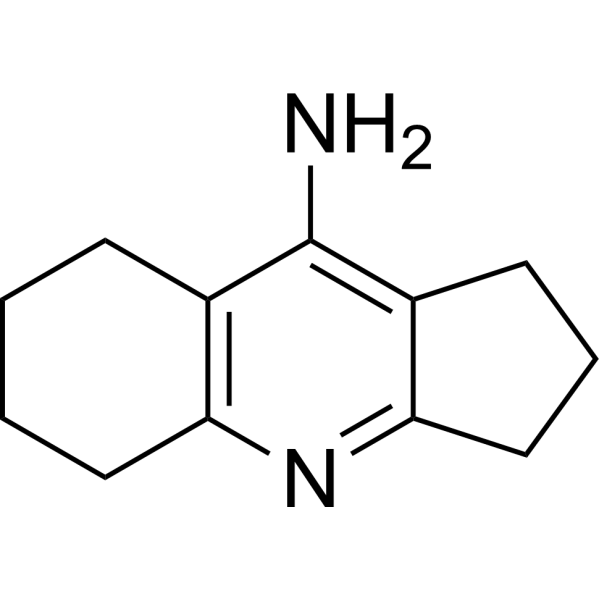
    Ipidacrine is orally active and brain-penetrant AChE and BuChE inhibitors with IC50 values of 1 μM and 1.9 μM, respectively, which is also a partial agonist of M2-cholinergic receptors and a reversible cholinesterase inhibitor. Ipidacrine has a stimulating effect on neuromuscular transmission and excitation along the nerve fibres with a moderately anti-pain effect. Ipidacrine is an aminopyridines and is structurally similar to Tacrine (HY-111338). Ipidacrine is effective in various amnesia models, improves erectile function and inhibits K + and Na +-channels in the neuronal membrane in diabetic rats. Ipidacrine is promising for research of Alzheimer’s disease, ischaemic stroke, idiopathic neuropathy of the facial nerve, diabetes mellitus-induced erectile dysfunction and other deficits in central or peripheral cholinergic deseases .
    Ipidacrine
  • HY-125931

    DM232

    iGluR Neurological Disease Inflammation/Immunology
    Unifiram (DM232) is a AMPA receptor activator and cognitive enhancer. Unifiram activates the AMPA-mediated neurotransmission system. Unifiram reverses NBQX-induced amnesia in the passive avoidance test in mice. Unifiram reverses the antagonistic effect of kynurenic acid on NMDA-mediated [ 3H]NA release in rat hippocampal slices. Unifiram enhances excitatory synaptic transmission in the rat hippocampus in vitro. Unifiram can be used in studies related to amnesia and cognitive dysfunction, including age-related memory decline, neurodegenerative diseases such as Alzheimer's disease or Parkinson's disease, multiple sclerosis, schizophrenia, and attention deficit hyperactivity disorder .
    Unifiram
  • HY-14840

    Carphedon

    nAChR Dopamine Transporter GABA Receptor iGluR Neurological Disease
    Phenylpiracetam (Carphedon) is a positive allosteric modulator of nicotinic acetylcholine receptors (nAChR) with an IC50 of 5.86 μM. Phenylpiracetam is applicable to studies on scopolamine (Scopolamine) (HY-N0296)-induced amnesia, depression and immune stress .
    Phenylpiracetam
  • HY-13918

    Ethimizole; Ethymisol; Ethymisole

    Potassium Channel Neurological Disease
    Etimizol(Ethymisole; Antiffine; Ethylnorantifein) was shown to relieve amnesia effectively in the origin of which there is the hypoxic component (hypobaric hypoxia, actinomycin D, mechanical injury of the brain). Etimizol can decrease the K- + permeability of neurons' membrane during action potential.
    Etimizol
  • HY-103142
    AS19
    1 Publications Verification

    5-HT Receptor Neurological Disease
    AS19 is a potent, selective 5-HT7 receptor agonist with an IC50 value of 0.83 nM and a Ki of 0.6 nM. AS19 is selective for 5-HT7 over 5-HT1A, 5-HT1B, 5-HT1D, and 5-HT5A receptors (Kis = 89.7 nM, 490 nM, 6.6 nM and 98.5 nM, respectively). AS19 enhances memory consolidation and reverses Scopolamine- or Dizocilpine-induced amnesia .
    AS19
  • HY-106608

    Litoralon

    Thyroid Hormone Receptor Neurological Disease
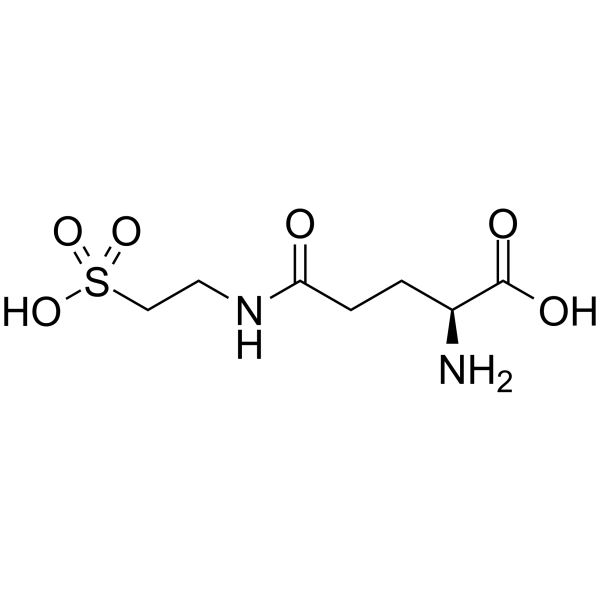
    Glutaurine containing glutamine and taurine residues is an orally active hormone of the parathyroid. Glutaurine, as a hormone, is isolated from parathyroid gland oxyphil cells. Glutaurine can be used for the research of antiepileptic and anti-amnesia .
    Glutaurine
  • HY-169116

    Dopamine Receptor Neurological Disease
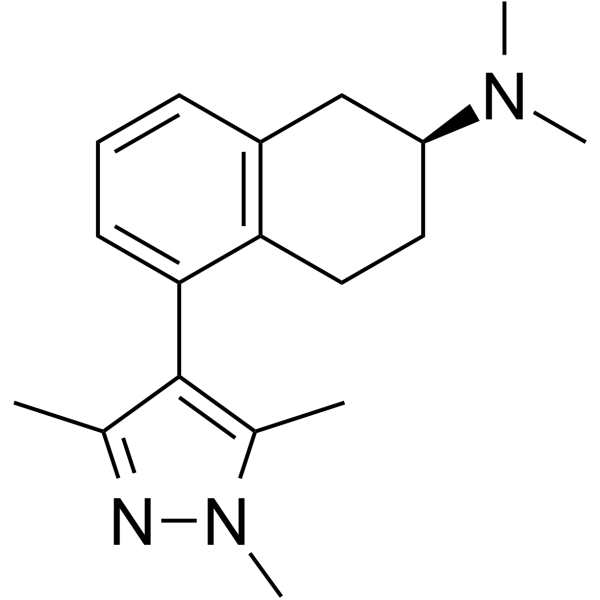
    D5R agonist 1 (Compound 5j) is a selective, orally active and BBB penetrable D5R partial agonist (EC50: 269.7 nM). D5R agonist 1 enhances the cognition in the Scopolamine (HY-N0296)-induced amnesia model .
    D5R agonist 1
  • HY-127165

    HP 029 free base; Hydroxytacrine

    Cholinesterase (ChE) Neurological Disease
    Velnacrine (HP 029 free base) is an inhibitor for acetylcholinesterase (AChE), with an IC50 of 3.27 μM. Velnacrine reverses the Scopolamine (HY-N0296)-induced amnesia in rat models, and exhibits acute toxicity with LD50 of 65 mg/kg .
    Velnacrine
  • HY-19668

    5-HT Receptor Neurological Disease
    SGS-518 is a selective 5-HT6R antagonist. SGS518 can be used for the research of cognitive impairments such as amnesia, anxiety and depression, and it is effective in protecting mouse retina at high doses .
    SGS-518
  • HY-15112

    Prolyl Endopeptidase (PREP) Infection
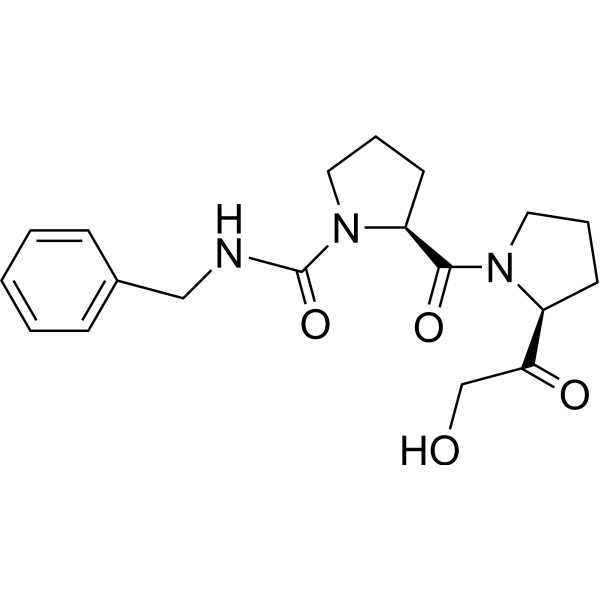
    JTP-4819 is a potent and specific inhibitor of prolyl endopeptidase (PREP) with IC50s of 0.83 nM (in rat brain supernatant) and 5.43 nM (in Flavobacterium meningosepticum). JTP-4819 has blood-brain penetration, also improves the retention time of amnesia rats induced by Scopolamine (HY-N2096) .
    JTP-4819
  • HY-149340

    Cholinesterase (ChE) Neurological Disease
    PD07 is an orally active AChE inhibitor (IC50: 0.29 μM for hAChE). PD07 also inhibits ChEs, BACE1 (IC50: 13.42 μM), and Aβ1–42 aggregation in in vitro. PD07 is an antioxidant, and shows DPPH inhibitory activity (IC50: 26.46 μM). PD07 improves memory and cognition in Scopolamine (HY-N0296)-induced amnesia rats. PD07 can be used for research of Alzheimer’s disease .
    PD07
  • HY-W027553R

    NIK-247 free base (Standard); Amiridine free base (Standard)

    Reference Standards Cholinesterase (ChE) Potassium Channel Sodium Channel Neurological Disease Metabolic Disease
    Ipidacrine (Standard) is the analytical reference standard of Ipidacrine. This product is used for research and analytical applications. Ipidacrine is orally active and blood-brain-barrier-penetrant AChE and BuChE inhibitors with IC50 values of 1 μM and 1.9 μM, respectively, which is also a partial agonist of M2-cholinergic receptors and a reversible cholinesterase inhibitor. Ipidacrine has a stimulating effect on neuromuscular transmission and excitation along the nerve fibres with a moderately anti-pain effect. Ipidacrine is an aminopyridines and is structurally similar to Tacrine (HY-111338). Ipidacrine is effective in various amnesia models, improves erectile function and inhibits K + and Na +-channels in the neuronal membrane in diabetic rats. Ipidacrine is promising for research of Alzheimer’s disease, ischaemic stroke, idiopathic neuropathy of the facial nerve, diabetes mellitus-induced erectile dysfunction and other deficits in central or peripheral cholinergic deseases .
    Ipidacrine (Standard)
  • HY-N14226

    Prolyl Endopeptidase (PREP) Neurological Disease
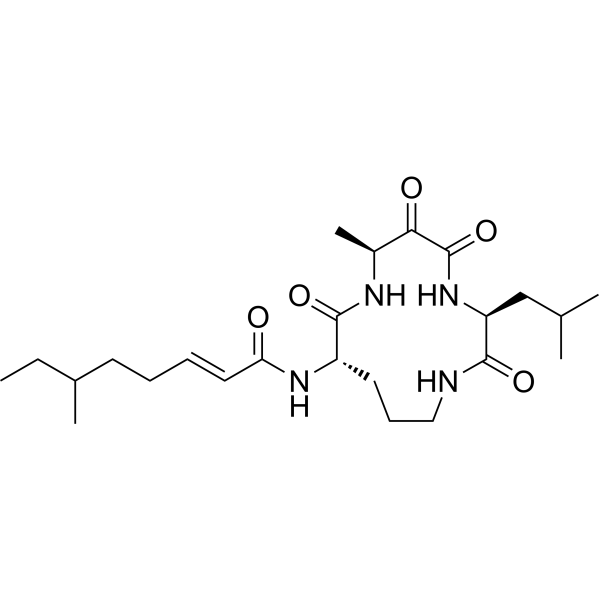
    Eurystatin B is a prolyl endopeptidase (PED) inhibitor. Eurystatin B has a protective effect during Scopolamine (HY-N0296)-induced amnesia in rats .
    Eurystatin B
  • HY-149776

    nAChR Neurological Disease
    RGH-560 (compound 53) shows highly advanced α7 nAChR positive modulator properties and favorable physicochemical features. RGH-560 has robust procognitive in vivo potential. RGH-560 can be used to study Scopolamine (HY-N0296) -induced amnesia in mice .
    RGH-560
  • HY-W714110

    5-HT Receptor Neurological Disease
    UH 301 hydrochloride is a 5-HT1A receptor antagonist. UH 301 hydrochloride modulates consolidation of learning in normal and cognitively impaired rats. UH 301 hydrochloride can be used for Alzheimer’s disease and amnesia research .
    UH 301 hydrochloride
  • HY-105294

    Dopamine Receptor Others
    FR 64822 is a dopamine D2 receptor agonist that can induce antinociceptive activity in rats and mice by indirectly stimulating dopamine D2 receptors. FR 64822 can promote penile erection in juvenile rats and improve amnesia in rats induced by scopolamine during passive avoidance tasks .
    FR 64822
  • HY-19668A

    5-HT Receptor Neurological Disease
    SGS518 oxalate is a selective 5-HT6R antagonist. SGS518 oxalate can be used for the research of cognitive impairments such as amnesia, anxiety and depression, and it is effective in protecting mouse retina at high doses [1]
    SGS518 oxalate
  • HY-149473

    Cholinesterase (ChE) Neurological Disease
    AChE-IN-39 (Compound 7c) is an AChE inhibitor (IC50: 0.058 μM). AChE-IN-39 has DPPH scavenging activity. AChE-IN-39 improves the cognitive impairment in AlCl3-induced amnesia animal model. AChE-IN-39 can be used for research of Alzheimer's disease .
    AChE-IN-39
  • HY-P10435

    Dopamine Receptor Neurological Disease
    KEMPFPKYPVEP is a 12-amino acids neuropeptide, which upregulates levels of dopamine (DA) and norepinephrine (NE) in the prefrontal cortex, exhibits spatial and object recognition memory promoting ability in Scopolamine (HY-N0296)-induced amnesia mouse model .
    KEMPFPKYPVEP
  • HY-118575

    5-HT Receptor Neurological Disease
    DR-4004 is a 5-HT7 receptor antagonist that attenuates the decreased level of performance produced by mCPP and the performance levels after p-chloroamphetamine (PCA) lesion of the 5-HT system. DR-4004 also reverses amnesia induced by Scopolamine (HY-N0296) and Dizocilpine (HY-15084B). DR-4004 is promising for research of schizophrenia, cognitive deficits and atypical antipsychotic agents .
    DR-4004
  • HY-126812

    KS-505a

    Phosphodiesterase (PDE) Parasite Infection Neurological Disease
    Longestin (KS-505a) is a specific inhibitor of phosphodiesterase with antitrypanosomal activity, which is derived from Streptomyces argenteolus. Longestin is promising for research of anti-amnesia agent .
    Longestin
  • HY-106608A

    Litoralon TFA

    Thyroid Hormone Receptor Neurological Disease
    Glutaurine (Litoralon) TFA containing glutamine and taurine residues is an orally active hormone of the parathyroid. Glutaurine (Litoralon) TFA, as a hormone, is isolated from parathyroid gland oxyphil cells. Glutaurine (Litoralon) TFA can be used for the research of antiepileptic and anti-amnesia .
    Glutaurine TFA
  • HY-111081

    Sigma Receptor Neurological Disease
    (±)-PPCC is a sigma-1 agonist that mainly interacts with sigma-1 receptors with Ki of 1.5 nM. (±)-PPCC has effective anti-amnesia effects in rats with mild or severe cognitive impairment, and can improve the cognitive abilities of rats .
    (±)-PPCC
  • HY-111081C

    Sigma Receptor Neurological Disease
    (±)-PPCC oxalate is a sigma-1 agonist that mainly interacts with sigma-1 receptors with Ki of 1.5 nM. (±)-PPCC oxalate has effective anti-amnesia effects in rats with mild or severe cognitive impairment, and can improve the cognitive abilities of rats .
    (±)-PPCC oxalate
  • HY-123015

    Calcium Channel Neurological Disease
    Tamolarizine is a calcium channel blocker. Tamolarizine crosses the blood-brain barrier and antagonizes the effects of calcium on neurons. Tamolarizine can be used in nervous system research .
    Tamolarizine
  • HY-152632

    Cholinesterase (ChE) Neurological Disease
    BuChE-IN-7 is a highly selective inhibitor of hBuChe and eqBuChE with IC50 values of 40 nM, 80 nM respectively. BuChE-IN-7 can promote cognitive with blood-brain penetration and improves situational and phobic memory, showing preference for new things .
    BuChE-IN-7
  • HY-108041

    BCI 838

    mGluR Neurological Disease
    MGS 0210 (BCI 838) is an orally active metabolite of glutamate receptor 2/3 (mGluR2/3) agonists. MGS 0210 improves amnesia and reduces anxiety in APP mice. MGS 0210 improves PTSD-related behaviors in a mouse model of post-traumatic stress disorder (PTSD). MGS 0210 can be used in research on neurological disorders such as Alzheimer's disease and major depressive disorder .
    MGS 0210
  • HY-149287

    Cholinesterase (ChE) Neurological Disease
    hAChE/hBACE-1-IN-1 (compounds 5d) is an orally active inhibitor of hAChE with blood-brain permeability. hAChE/hBACE-1-IN-1 inhibits hAChE and hBACE-1 with IC50 values of 0.076 and 0.23 μM, respectively. hAChE/hBACE-1-IN-1 inhibits Aβ1-42 aggregation and improves mouse learning and memory ability. hAChE/hBACE-1-IN-1 can be used to research in Alzheimer's disease .
    hAChE/hBACE-1-IN-1
  • HY-149288

    Cholinesterase (ChE) Beta-secretase Amyloid-β Cardiovascular Disease
    hAChE/hBACE-1-IN-2 is a potent, orally active, blood-brain barrier transboundary triple inhibitor of hAChE, hBChE, and HACE-1 with IC50s of 0.113 μM, 1.48 μM and 0.38 μM, respectively. hAChE/hBACE-1-IN-2 has antioxidant activity. hAChE/hBACE-1-IN-2 also inhibits Aβ11-42 aggregation. hAChE/hBACE-1-IN-2 can be used to study Alzheimer's disease .
    hAChE/hBACE-1-IN-2
  • HY-163394

    Cannabinoid Receptor Neurological Disease Inflammation/Immunology
    CB2 receptor agonist 6 (compound 70) is an agonist of CB2R, with EC50 of 162 nM. The IC50 values of CB2 receptor agonist 6 are 4.83 μM for CB1R and 0.88 μM for CB2R. CB2 receptor agonist 6 is a neuroprotective agent that can be used for the reseach of neurological disease .
    CB2 receptor agonist 6
  • HY-W027553S1

    NIK-247-d9 free base

    Isotope-Labeled Compounds Cholinesterase (ChE) Potassium Channel Sodium Channel Metabolic Disease
    Ipidacrine-d9 (NIK-247-d9 (free base)) is the deuterium labeled Ipidacrine (HY-W027553). Ipidacrine is orally active and brain-penetrant AChE and BuChE inhibitors with IC50 values of 1 μM and 1.9 μM, respectively, which is also a partial agonist of M2-cholinergic receptors and a reversible cholinesterase inhibitor. Ipidacrine has a stimulating effect on neuromuscular transmission and excitation along the nerve fibres with a moderately anti-pain effect. Ipidacrine is an aminopyridines and is structurally similar to Tacrine (HY-111338). Ipidacrine is effective in various amnesia models, improves erectile function and inhibits K+ and Na+-channels in the neuronal membrane in diabetic rats. Ipidacrine is promising for research of Alzheimer’s disease, ischaemic stroke, idiopathic neuropathy of the facial nerve, diabetes mellitus-induced erectile dysfunction and other deficits in central or peripheral cholinergic deseases .
    Ipidacrine-d9
  • HY-182686

    MN19

    iGluR Neurological Disease
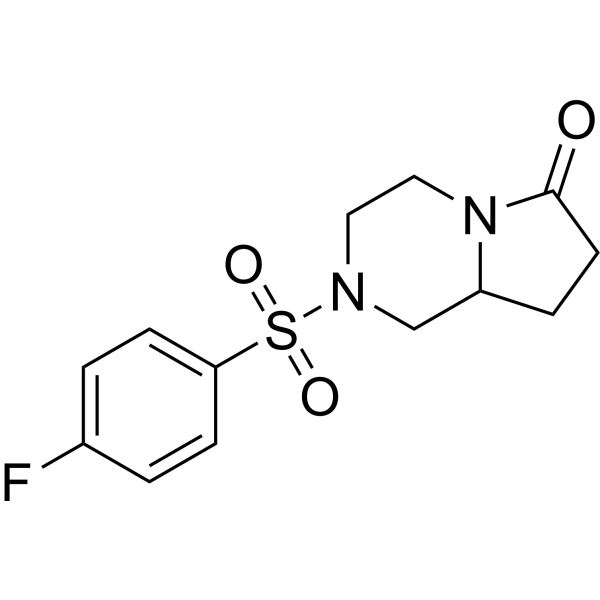
    Sapunifiram is a cognitive enhancer. Sapunifiram can be used in studies related to amnesia .
    Sapunifiram
  • HY-180891

    Cholinesterase (ChE) Calcium Channel Neurological Disease
    Multitarget AD-IN-4 (compound IIIj) is a multitarget-directed ligand (MTDL), with the ability to simultaneously inhibit ChE enzymes (EeAChE IC50 = 0.157 μM, eqBuChE IC50 = 0.147 μM, hAChE IC50 = 1.551 μM, hBuChE IC50 = 2.152 μM), exhibit antioxidant activity, provide neuroprotection, and inhibit calcium channels (Ca 2+ channel blockade: IC50 = 30.59 μM). Multitarget AD-IN-4 reverses Scopolamine (HY-N0296)-induced amnesia in a mouse model. Multitarget AD-IN-4 can be used for Alzheimer’s disease (AD) research .
    Multitarget AD-IN-4
  • HY-103142R

    Reference Standards 5-HT Receptor Neurological Disease
    AS19 (Standard) is the analytical standard of AS19 (HY-103142). This product is intended for research and analytical applications. AS19 is a potent, selective 5-HT7 receptor agonist with an IC50 value of 0.83 nM and a Ki of 0.6 nM. AS19 is selective for 5-HT7 over 5-HT1A, 5-HT1B, 5-HT1D, and 5-HT5A receptors (Kis = 89.7 nM, 490 nM, 6.6 nM and 98.5 nM, respectively). AS19 enhances memory consolidation and reverses Scopolamine- or Dizocilpine-induced amnesia .
    AS19 (Standard)
  • HY-126723

    Others Others
    Proline cetyl ester is an amnesic-inducing compound that can induce profound amnesia in rats, and its amnesic effect can be abolished by piracetam.
    Proline cetyl ester
  • HY-180929

    nAChR Neurological Disease
    RGH-857 is an orally active, selective, potent nicotinic α7 positive allosteric modulator. RGH-857 is effective against amnesia. RGH-857 can be used in the research of Alzheimer's disease .
    RGH-857
  • HY-106115

    RGH 2981; RT-3003

    Others Cardiovascular Disease
    Vintoperol (RGH 2981; RT-3003) is a potent and orally active antithrombotic agent. Vintoperol interferes with platelet aggregation and has antithrombotic effects, protecting mice from retrograde and anterograde amnesia induced by traumatic brain injury .
    Vintoperol
  • HY-13918R

    Ethimizole (Standard); Ethymisol (Standard); Ethymisole (Standard)

    Potassium Channel Reference Standards Neurological Disease
    Etimizol (Standard) is the analytical standard of Etimizol. This product is intended for research and analytical applications. Etimizol(Ethymisole; Antiffine; Ethylnorantifein) was shown to relieve amnesia effectively in the origin of which there is the hypoxic component (hypobaric hypoxia, actinomycin D, mechanical injury of the brain). Etimizol can decrease the K-+ permeability of neurons' membrane during action potential.
    Etimizol (Standard)
  • HY-130235

    Drug Derivative Neurological Disease
    Naprodoxime hydrochloride is a derivative of Piracetam (HY-B0585). Naprodoxime hydrochloride acts as a potent antidepressant and anti-aggressive agent .
    Naprodoxime hydrochloride
  • HY-180892

    Calcium Channel Cholinesterase (ChE) Neurological Disease
    Multi-kinase-IN-10 (Compound IIIk) is a multi-kinase inhibitor. Multi-kinase-IN-10 exhibits significant calcium channel blocking activity, with its IC50 being 26.67 μM. Multi-kinase-IN-10 is a potent dual cholinesterase inhibitor, with its IC50 values for hAChE and hBuChE being 0.304 μM and 1.033 μM respectively. Multi-kinase-IN-10 has antioxidant and neuroprotective activities, and shows significant anti-amnesia activity. Multi-kinase-IN-10 can be used for research on Alzheimer's disease .
    Multi-kinase-IN-10
  • HY-19689

    NIK-247; Amiridine

    Cholinesterase (ChE) Potassium Channel Sodium Channel Cardiovascular Disease Neurological Disease Endocrinology
    Ipidacrine (NIK-247; Amiridine) hydrochloride is orally active and blood-brain-barrier-penetrant AChE and BuChE inhibitors with IC50 values of 1 μM and 1.9 μM, respectively, which is also a partial agonist of M2-cholinergic receptors and a reversible cholinesterase inhibitor. Ipidacrine hydrochloride has a stimulating effect on neuromuscular transmission and excitation along the nerve fibres with a moderately anti-pain effect. Ipidacrine hydrochloride is an aminopyridines and is structurally similar to Tacrine (HY-111338). Ipidacrine hydrochloride is effective in various amnesia models, improves erectile function and inhibits K + and Na +-channels in the neuronal membrane in diabetic rats. Ipidacrine hydrochloride is promising for research of Alzheimer’s disease, ischaemic stroke, idiopathic neuropathy of the facial nerve, diabetes mellitus-induced erectile dysfunction and other deficits in central or peripheral cholinergic deseases .
    Ipidacrine hydrochloride
  • HY-107317

    7-Keto-DHEA acetate; NSC 134911; 7-Oxodehydroepiandrosterone 3-acetate

    Drug Derivative Neurological Disease Metabolic Disease Inflammation/Immunology
    7-Keto Naturalean (7-Keto-DHEA acetate) is a DHEA (HY-14650) analog and weight-loss agent. 7-Keto Naturalean not only exerts anti-aging effects, enhances immunity, improves brain function, boosts memory, prevents Alzheimer's disease, and stimulates the metabolism of hepatic active enzymes, especially thermogenic enzymes, but also functions to reduce fat mass and increase the density and vitality of bones and muscles .
    7-Keto-Naturalean

Inquiry Online

Your information is safe with us. * Required Fields.

Salutation


Country or Region *

Applicant Name *


Organization Name *

Department *


Email Address *


Product Name *

Cat. No.


Requested quantity *

Phone Number *


Remarks

Inquiry Online

Inquiry Information

Product Name:
Cat. No.:
Quantity:
MCE Japan Authorized Agent:

