Search Result
Results for "
biomaterials
" in MedChemExpress (MCE) Product Catalog:
175
Biochemical Assay Reagents
1
Isotope-Labeled Compounds
| Cat. No. |
Product Name |
Target |
Research Areas |
Chemical Structure |
-
- HY-Y1878C
-
|
Cupric sulfate anhydrous, 99%
|
Environmental Pollutants
Bacterial
|
Infection
Metabolic Disease
|
|
Anhydrous copper sulfate, 99% (Cupric sulfate anhydrous, 99%) is an orally administerable disinfectant. Anhydrous copper sulfate, 99% can be used as a biomaterial or organic compound related to life sciences research, and it can increase the Cu content in rat organs .
|
-
-
- HY-B2144A
-
|
Deacetylated chitin (MW 150000); Poly(D-glucosamine) (MW 150000)
|
Environmental Pollutants
Fungal
Bacterial
|
Infection
Cancer
|
|
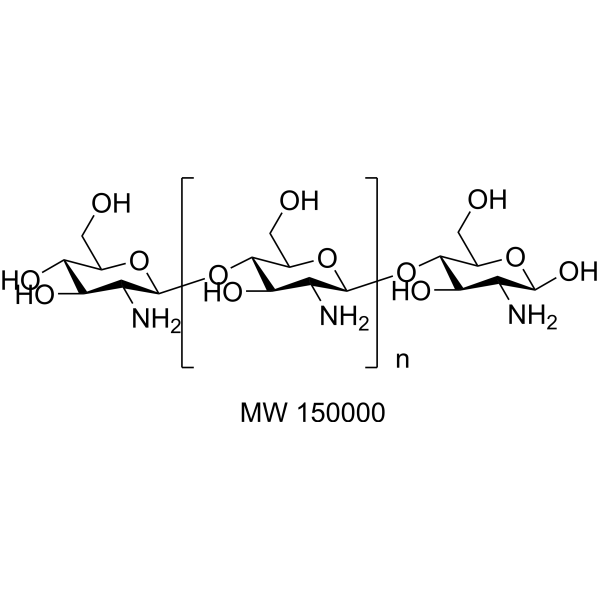
Chitosan (MW 150000) (Deacetylated chitin (MW 150000)) is a polycationic linear polysaccharide derived from chitin with the molecular weight of 150000. Chitosan is an versatile biomaterial because of its non-toxicity, low allergenicity, biocompatibility and biodegradability. Chitosan also has antitumor, antibacterial, antifungal, and antioxidant activities .
|
-
-
- HY-B2144B
-
|
Deacetylated chitin (MW 30000); Poly(D-glucosamine) (MW 30000)
|
Environmental Pollutants
Bacterial
Fungal
|
Infection
Cancer
|
|
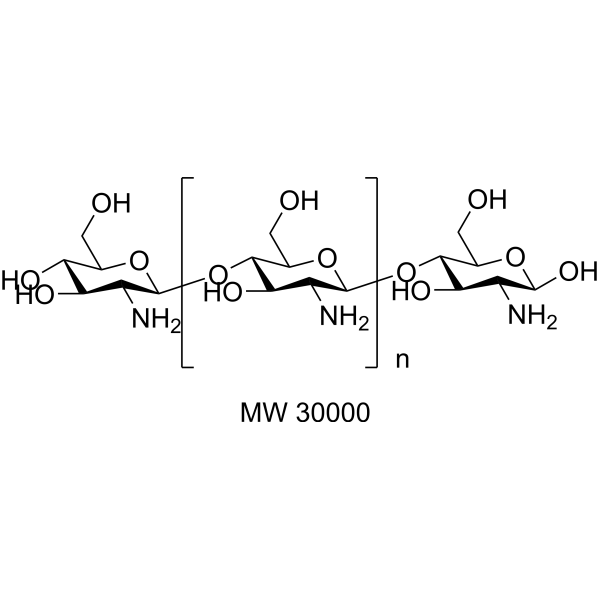
Chitosan (MW 30000) (Deacetylated chitin (MW 30000)) is a polycationic linear polysaccharide derived from chitin with the molecular weight of 30000. Chitosan is an versatile biomaterial because of its non-toxicity, low allergenicity, biocompatibility and biodegradability. Chitosan also has antitumor, antibacterial, antifungal, and antioxidant activities .
|
-
-
- HY-B2144J
-
|
Deacetylated chitin (≥90% deacetylated,viscosity 650-700 mPa.s); Poly(D-glucosamine) (≥90% deacetylated,viscosity 650-700 mPa.s)
|
Environmental Pollutants
Biochemical Assay Reagents
Bacterial
Fungal
|
Infection
Cancer
|
|
Chitosan (Deacetylated chitin) (≥90% deacetylated, viscosity 650-700 mPa.s) is a polysaccharide obtained by deacetylating chitin, and exhibits antimicrobial activity against various bacteria and fungi. Chitosan (≥90% deacetylated, viscosity 650-700 mPa.s) can be used as a versatile biomaterial in drug delivery, tissue engineering, and wound healing .
|
-
-
- HY-B2205
-
|
Activated magnesium silicate
|
Environmental Pollutants
Fungal
|
Infection
Inflammation/Immunology
|
|
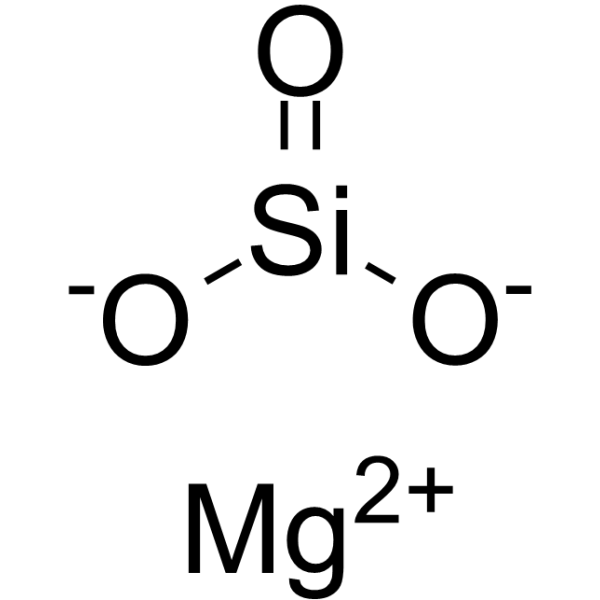
Magnesium silicate (Activated magnesium silicate) is an orally active compound composed of magnesium oxide (MgO) and silicon dioxide (SiO2). Magnesium silicate can be used in the preparation of food additives, antacids and anti-ulcer agents. Magnesium silicate is also a piezoelectric biomaterial, deodorant, decolorizing agent and antifungal agent .
|
-
-
- HY-W008525
-
|
|
Biochemical Assay Reagents
|
Others
|
|
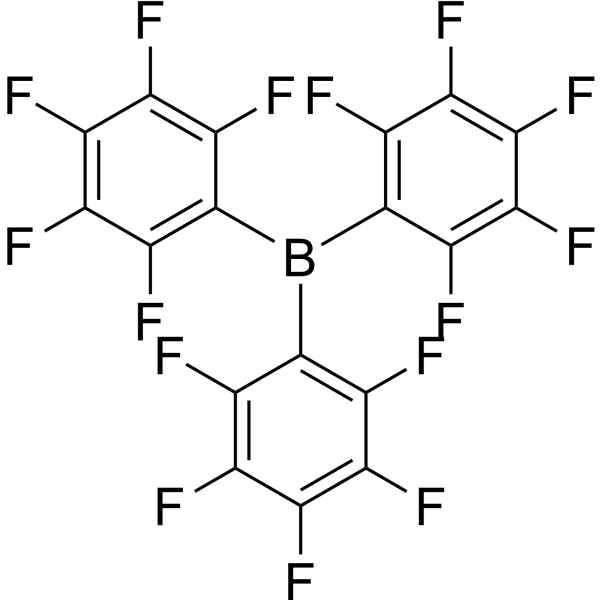
Tris (perfluorophenyl) borane is a biochemical reagent that can be used as a biomaterial or organic compound for life science-related research .
|
-
-
- HY-D0176
-
|
(3-Chloro-2-hydroxypropyl)trimethylammonium chloride
|
Biochemical Assay Reagents
|
Others
|
|
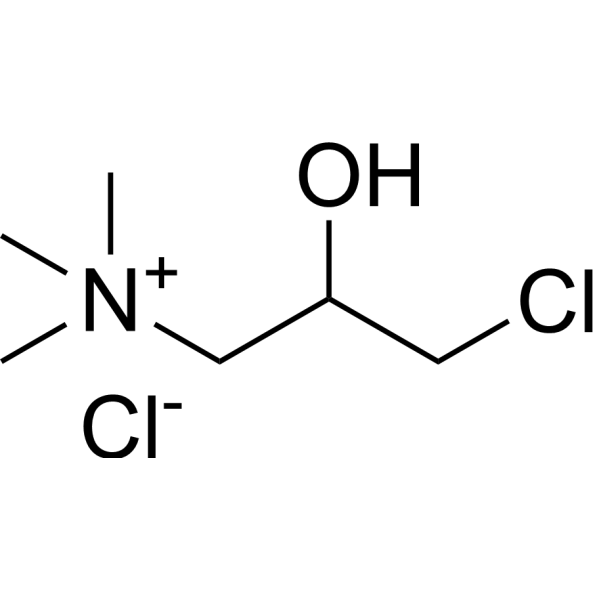
Dextrosil KA ((3-Chloro-2-hydroxypropyl) trimethylammonium (chloride)) is a biological dye and indicator that can be used as a biomaterial or organic compound in life science-related research .
|
-
-
- HY-76194A
-
|
3,4-Dihydro-1(2H)-naphthalenone
|
Biochemical Assay Reagents
|
Others
|
|
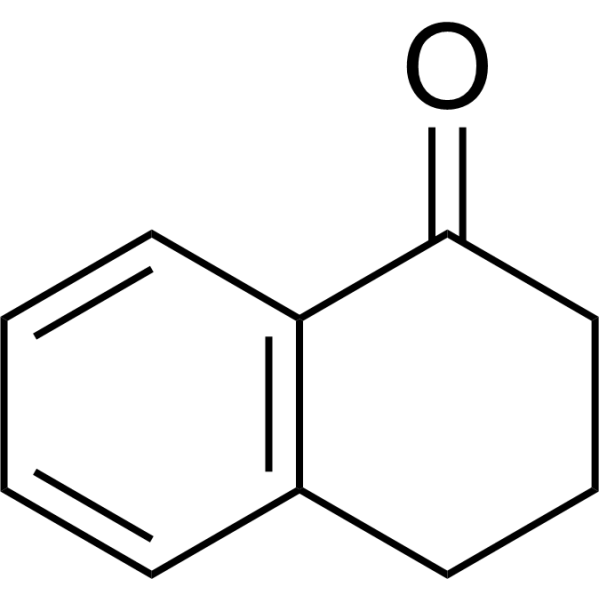
3,4-Dihydronaphthalen-1-one (3,4-Dihydro-1 (2H)-naphthalenone) is a biochemical reagent that can serve as a biomaterial or organic compound for life science-related research .
|
-
-
- HY-139480
-
-
-
- HY-Y1369C
-
|
Manganous sulfate monohydrate, for cell culture
|
Biochemical Assay Reagents
|
Others
|
|
Manganese sulfate monohydrate, for cell culture (Manganous sulfate monohydrate, for cell culture) can be used to prepare micronutrients. Manganese sulfate monohydrate, for cell culture is a biomaterial or organic compound that can be used as a life science research-related material .
|
-
-
- HY-P11087
-
|
|
Collagen
|
Others
|
|
P15 is a collagen mimetic peptide with the sequence of GTPGPQGIAGQRGVV. P15 can mimic the cell-binding domain of human type I collagen. P15 is capable of promoting the adhesion, proliferation, and differentiation of osteoblasts. Biomaterials modified with P15 can be used in research related to bone regeneration .
|
-
-
- HY-B2144I
-
|
Deacetylated chitin (≥90% deacetylated,viscosity 10 mPa.s); Poly(D-glucosamine) (≥90% deacetylated,viscosity 10 mPa.s)
|
Environmental Pollutants
Biochemical Assay Reagents
Bacterial
Fungal
|
Infection
Cancer
|
|
Chitosan (Deacetylated chitin) (≥90% deacetylated,viscosity 10 mPa.s) is a polysaccharide obtained by deacetylating chitin, and exhibits antimicrobial activity against various bacteria and fungi. Chitosan (≥90% deacetylated,viscosity 10 mPa.s) can be used as a versatile biomaterial in drug delivery, tissue engineering, and wound healing .
|
-
-
- HY-W105775
-
|
Ammonium succinate
|
Environmental Pollutants
Biochemical Assay Reagents
|
Others
|
|
Diammonium succinate (Ammonium succinate) is a hydrophobic hydrocarbon compound that can be used to study its interaction with microbial cells, especially the mechanisms of degradation and bioavailability. Diammonium succinate is a biomaterial or organic compound that can be used as a biomaterial or organic compound related to life science research.
|
-
-
- HY-173592
-
-
-
- HY-W011579
-
|
|
Biochemical Assay Reagents
|
Others
|
|
4-Benzoyl-3-methyl-1-phenyl-5-pyrazolone, is a heterocyclic compound with a five-membered ring structure, which can be used as a starting material for organic synthesis, a reagent for organic transformation, and a biological probe for studying biological processes. 4-Benzoyl-3-methyl-1-phenyl-5-pyrazolone is a biomaterial or organic compound that can be used as a research-related biomaterial or organic compound in life sciences .
|
-
-
- HY-W105411
-
|
|
Biochemical Assay Reagents
|
Others
|
|
N,N'-Diacryloylpiperazine can be used to synthesize bioconjugates and other compounds, and can also be used in the fields of medicine and biotechnology. N,N'-Diacryloylpiperazine is a biomaterial or organic compound that can be used for life science research .
|
-
-
- HY-Y1184C
-
|
Potassium hydrogen carbonate, meets analytical specification of Ph. Eur., BP, USP, E501, 99.5%(T)
|
Biochemical Assay Reagents
|
Others
|
|
Potassium bicarbonate (Potassium hydrogen carbonate) is a commonly used biochemical reagent. Potassium bicarbonate, meets analytical specification of Ph. Eur., BP, USP, E501, 99.5%(T) can be used as a biomaterial related to life science research .
|
-
-
- HY-W1048851B
-
|
4-Arm-PEG10000-Mal
|
Biochemical Assay Reagents
|
Others
|
|
4-Arm-PEG10000-Maleimide (4-Arm-PEG10000-Mal) is a four-arm star-shaped multifunctional PEG crosslinker with an average molecular weight of 10 kDa and maleimide terminal groups. 4-Arm-PEG10000-Maleimide efficiently conjugates biomolecules via thiol-Michael reaction, and is widely used in protein modification, antibody-drug conjugation and biomaterial preparation .
|
-
-
- HY-W243303B
-
|
|
Environmental Pollutants
Biochemical Assay Reagents
|
Others
|
|
Poly(acrylic acid) (Mv 3000000) is a polyacrylic acid (an anionic polymer) with a molecular weight of 3000000. Poly(acrylic acid) (Mv 3000000) can be used as a corrosion inhibitor and surface stabilizer. Poly(acrylic acid) (Mv 3000000) is a biomaterial or organic compound that can be used as a life science research related biomaterial or organic compound .
|
-
-
- HY-164068
-
|
|
Biochemical Assay Reagents
|
Others
Inflammation/Immunology
|
|
Cross-linked sodium hyaluronate gel is a biomaterial formed by cross-linking sodium hyaluronate. Cross-linked sodium hyaluronate gel has good moisturizing properties, viscoelasticity and biocompatibility. Cross-linked sodium hyaluronate gel can be used for the treatment of arthritis and the development of auxiliary materials in ophthalmic surgery .
|
-
-
- HY-W243303C
-
|
|
Environmental Pollutants
Biochemical Assay Reagents
|
Others
|
|
Poly(acrylic acid) (Mv 4000000) is a polyacrylic acid (and an anionic polymer) with a molecular weight of 4000000. Poly(acrylic acid) (Mv 4000000) can be used as a corrosion inhibitor and surface stabilizer. Poly(acrylic acid) (Mv 4000000) is a biomaterial or organic compound that can be used in life science research .
|
-
-
- HY-P10462
-
|
Synthetic anti-inflammatory peptide 15
|
HDAC
NF-κB
|
Inflammation/Immunology
|
|
SAP15 (Synthetic anti-inflammatory peptide 15) is a synthetic anti-inflammatory peptide consisting of 15 amino acids designed from human beta-defensin 3. SAP15 has the ability to penetrate cells and is able to induce downregulation of intracellular inflammation. SAP15 inhibits inflammation by inhibiting the phosphorylation of HDAC5 and thereby reducing the phosphorylation of NF-κB p65. SAP15 inhibits HDAC5 and NF-κB p65 phosphorylation in LPS (HY-D1056)-induced macrophages. SAP15 increases the expression of aggrecan and type II collagen and decreases the expression of osteocalcin in LPS-induced chondrocytes. SAP15 can be used in the study of inflammation regulation and anti-inflammatory therapy of biomaterials .
|
-
-
- HY-W115757
-
-
-
- HY-W002967
-
|
|
Biochemical Assay Reagents
|
Others
|
|
3-Bromopyridine-2-carbonitrile is a pyridine derivative that serves as a biomaterial or organic compound for life science-related research .
|
-
-
- HY-W415909
-
|
4-O-α-D-Glucopyranosyl-D-fructose monohydrate
|
Biochemical Assay Reagents
|
Others
|
|
Maltulose monohydrate (4-O-α-D-Glucopyranosyl-D-fructose monohydrate) can be used as an energy source for bacteria. Maltulose monohydrate is a biomaterial or organic compound that can be used in life science research .
|
-
-
- HY-124279
-
|
|
Biochemical Assay Reagents
|
Others
|
|
14-Pentadecenoic acid is a 15-carbon long-chain fatty acid that contains an olefin functional group on the terminal carbon of its fatty tail. 14-Pentadecenoic acid can be used as a fibrous scaffold biomaterial for tissue engineering applications, as well as a metal-forming side-chain polymer for constructing capillary columns in gas chromatography .
|
-
-
- HY-173171
-
-
-
- HY-P2841
-
|
|
Biochemical Assay Reagents
|
Others
|
|
Elastin from pig (Elastin) is a key matrix protein that imparts elasticity to organs and tissues. Elastin from pig is a stable, insoluble protein, and utilized in biomaterial for human tissue repairment .
|
-
-
- HY-P10678
-
|
|
Biochemical Assay Reagents
|
Others
|
|
d-KYFIL is a peptide-based biomaterial that can be used for stereocomplexation and can be used to study the regulation of supramolecular assembly of hydrogel biomaterials .
|
-
-
- HY-P10306
-
|
|
Bacterial
|
Infection
|
|
Cys-LL37 is a biomaterial with antimicrobial properties developed by covalently fixing to the surface of titanium. Cys-LL37 uses a flexible hydrophilic polyethylene glycol spacer and selective n-terminal coupling LL37, a surface peptide layer that kills bacteria on contact is formed. Cys-LL37 can be used in research to develop new antimicrobial biomaterials .
|
-
-
- HY-W102585
-
|
|
Biochemical Assay Reagents
|
Others
|
|
HEPPSO (sodium) is a biological buffer. HEPPSO (sodium) is a biomaterial or organic compound that can be used in life science research .
|
-
-
- HY-W177335
-
|
|
Biochemical Assay Reagents
|
Others
|
|
D-Mannopyranose (compound 19) is a biochemical reagent that can be used as a biomaterial or organic compound related to life science research .
|
-
-
- HY-P10335
-
|
|
Biochemical Assay Reagents
|
Metabolic Disease
|
|
SPARC (119-122) (mouse) stimulates endothelial cell proliferation and angiogenesis. SPARC (119-122) (mouse) can be used to enhance neovascularization in modified polypropropylene biomaterials .
|
-
-
- HY-P11550
-
|
|
Biochemical Assay Reagents
|
Others
|
|
VPGVG is a repeating sequence that constitutes elastin-like peptides. VPGVG is derived from sequences found in the hydrophobic regions of vertebrate elastin. Elastin-like peptides are temperature-responsive biomaterials .
|
-
-
- HY-D0910
-
|
|
Biochemical Assay Reagents
|
Others
|
|
5-Bromo-6-chloro-1H-indol-3-yl acetate, a member of the indole family, is a derivative of the aromatic heterocyclic compound indole. It has been used in a variety of research settings, including studies of enzyme kinetics and protein-ligand interactions. 5-Bromo-6-chloro-1H-indol-3-yl acetate is a biomaterial or organic compound that can be used as a biomaterial or organic compound related to life science research .
|
-
-
- HY-60351S
-
|
|
Isotope-Labeled Compounds
Biochemical Assay Reagents
|
Others
|
|
5-Aminopyrimidine-d3 is the deuterated form of 5-Aminopyrimidine. 5-Aminopyrimidine is a biochemical reagent that can serve as a biomaterial or an organic compound for research related to life sciences. Its derivatives exhibit antioxidant activity .
|
-
-
- HY-W1123942C
-
-
-
- HY-W1123942A
-
-
-
- HY-W1123942B
-
-
-
- HY-W123053
-
|
Acrylated epoxidized soybean oil
|
Others
|
Others
|
|
Soybean oil, epoxidized acrylate (acrylated epoxidized soybean oil) can be used as plasticizers and food packaging materials. Soybean oil, epoxidized acrylate can also be used to prepare novel nanocomposite biomaterials for bone tissue repair.
|
-
-
- HY-W674017
-
|
|
Lipase
|
Others
|
|
Choline acetate is a choline-based ionic liquid. Choline acetate can promote lipase activity. Choline acetate can also be used as a plasticizer or ionic liquid component to improve carrier structure and release properties, thereby enhancing the performance of biomaterials .
|
-
-
- HY-183174B
-
|
|
Biochemical Assay Reagents
|
Others
|
|
DSG-PEG3400-Galactose is a conjugate composed of DSG, a PEG chain, and terminal galactose. DSG-PEG3400-Galactose combines the membrane compatibility of phospholipids with the targeted recognition capabilities of galactose, making it suitable for research in biomaterial construction and drug delivery.
|
-
-
- HY-183127
-
|
|
Biochemical Assay Reagents
|
Others
|
|
BOC-NH-PEG1000-DMG is a conjugate composed of a Boc-protected primary amine (-NH2), a PEG chain, and terminal dimyristoylglycerol (DMG). BOC-NH-PEG1000-DMG can be used for research in biomaterial construction and drug delivery.
|
-
-
- HY-183127A
-
|
|
Biochemical Assay Reagents
|
Others
|
|
BOC-NH-PEG2000-DMG is a conjugate composed of a Boc-protected primary amine (-NH2), a PEG chain, and terminal dimyristoylglycerol (DMG). BOC-NH-PEG2000-DMG can be used for research in biomaterial construction and drug delivery.
|
-
-
- HY-168374B
-
|
|
Biochemical Assay Reagents
|
Others
|
|
DSPE-PEG5000-Mannose is a conjugate composed of DSPE, a PEG chain, and terminal mannose. DSPE-PEG5000-Mannose combines the membrane compatibility of phospholipids with the targeted recognition capabilities of mannose, making it suitable for research in biomaterial construction and drug delivery.
|
-
-
- HY-183127D
-
|
|
Biochemical Assay Reagents
|
Others
|
|
BOC-NH-PEG10000-DMG is a conjugate composed of a Boc-protected primary amine (-NH2), a PEG chain, and terminal dimyristoylglycerol (DMG). BOC-NH-PEG10000-DMG can be used for research in biomaterial construction and drug delivery.
|
-
-
- HY-183174A
-
|
|
Biochemical Assay Reagents
|
Others
|
|
DSG-PEG1000-Galactose is a conjugate composed of DSG, a PEG chain, and terminal galactose. DSG-PEG1000-Galactose combines the membrane compatibility of phospholipids with the targeted recognition capabilities of galactose, making it suitable for research in biomaterial construction and drug delivery.
|
-
-
- HY-182947C
-
|
|
Biochemical Assay Reagents
|
Others
|
|
DSG-PEG5000-Mannose is a conjugate composed of DSG, a PEG chain, and terminal mannose. DSG-PEG5000-Mannose combines the membrane compatibility of phospholipids with the targeted recognition capabilities of mannose, making it suitable for research in biomaterial construction and drug delivery.
|
-
-
- HY-182947A
-
|
|
Biochemical Assay Reagents
|
Others
|
|
DSG-PEG2000-Mannose is a conjugate composed of DSG, a PEG chain, and terminal mannose. DSG-PEG2000-Mannose combines the membrane compatibility of phospholipids with the targeted recognition capabilities of mannose, making it suitable for research in biomaterial construction and drug delivery.
|
-
-
- HY-183174C
-
|
|
Biochemical Assay Reagents
|
Others
|
|
DSG-PEG5000-Galactose is a conjugate composed of DSG, a PEG chain, and terminal galactose. DSG-PEG5000-Galactose combines the membrane compatibility of phospholipids with the targeted recognition capabilities of galactose, making it suitable for research in biomaterial construction and drug delivery.
|
-
- HY-168374D
-
|
|
Biochemical Assay Reagents
|
Others
|
|
DSPE-PEG10000-Mannose is a conjugate composed of DSPE, a PEG chain, and terminal mannose. DSPE-PEG10000-Mannose combines the membrane compatibility of phospholipids with the targeted recognition capabilities of mannose, making it suitable for research in biomaterial construction and drug delivery.
|
-
- HY-183174D
-
|
|
Biochemical Assay Reagents
|
Others
|
|
DSG-PEG10000-Galactose is a conjugate composed of DSG, a PEG chain, and terminal galactose. DSG-PEG10000-Galactose combines the membrane compatibility of phospholipids with the targeted recognition capabilities of galactose, making it suitable for research in biomaterial construction and drug delivery.
|
-
- HY-182947D
-
|
|
Biochemical Assay Reagents
|
Others
|
|
DSG-PEG10000-Mannose is a conjugate composed of DSG, a PEG chain, and terminal mannose. DSG-PEG10000-Mannose combines the membrane compatibility of phospholipids with the targeted recognition capabilities of mannose, making it suitable for research in biomaterial construction and drug delivery.
|
-
- HY-182947B
-
|
|
Biochemical Assay Reagents
|
Others
|
|
DSG-PEG3400-Mannose is a conjugate composed of DSG, a PEG chain, and terminal mannose. DSG-PEG3400-Mannose combines the membrane compatibility of phospholipids with the targeted recognition capabilities of mannose, making it suitable for research in biomaterial construction and drug delivery.
|
-
- HY-183127C
-
|
|
Biochemical Assay Reagents
|
Others
|
|
BOC-NH-PEG5000-DMG is a conjugate composed of a Boc-protected primary amine (-NH2), a PEG chain, and terminal dimyristoylglycerol (DMG). BOC-NH-PEG5000-DMG can be used for research in biomaterial construction and drug delivery.
|
-
- HY-183127B
-
|
|
Biochemical Assay Reagents
|
Others
|
|
BOC-NH-PEG3400-DMG is a conjugate composed of a Boc-protected primary amine (-NH2), a PEG chain, and terminal dimyristoylglycerol (DMG). BOC-NH-PEG3400-DMG can be used for research in biomaterial construction and drug delivery.
|
-
- HY-182947
-
|
|
Biochemical Assay Reagents
|
Others
|
|
DSG-PEG1000-Mannose is a conjugate composed of DSG, a PEG chain, and terminal mannose. DSG-PEG1000-Mannose combines the membrane compatibility of phospholipids with the targeted recognition capabilities of mannose, making it suitable for research in biomaterial construction and drug delivery.
|
-
- HY-168374C
-
|
|
Biochemical Assay Reagents
|
Others
|
|
DSPE-PEG3400-Mannose is a conjugate composed of DSPE, a PEG chain, and terminal mannose. DSPE-PEG3400-Mannose combines the membrane compatibility of phospholipids with the targeted recognition capabilities of mannose, making it suitable for research in biomaterial construction and drug delivery.
|
-
- HY-183174
-
|
|
Biochemical Assay Reagents
|
Others
|
|
DSG-PEG1000-Galactose is a conjugate composed of DSG, a PEG chain, and terminal galactose. DSG-PEG1000-Galactose combines the membrane compatibility of phospholipids with the targeted recognition capabilities of galactose, making it suitable for research in biomaterial construction and drug delivery.
|
-
- HY-182903D
-
|
|
Biochemical Assay Reagents
|
Others
|
|
DMG-PEG10000-Mannose is a conjugate composed of dimyristoylglycerol (DMG), a PEG chain, and terminal mannose. DMG-PEG10000-Mannose combines the membrane compatibility of phospholipids with the targeted recognition capabilities of mannose, making it suitable for research in biomaterial construction and drug delivery.
|
-
- HY-183019J
-
|
|
Biochemical Assay Reagents
|
Others
|
|
mPEG20000-Mannose is a polymeric derivative formed by the chemical coupling of methoxy polyethylene glycol (mPEG) and mannose. mPEG20000-Mannose combines the biocompatibility of polyethylene glycol with the specificity of mannose in biorecognition, and is widely used in fields such as biomaterial modification and targeted delivery systems.
|
-
- HY-183019K
-
|
|
Biochemical Assay Reagents
|
Others
|
|
mPEG30000-Mannose is a polymeric derivative formed by the chemical coupling of methoxy polyethylene glycol (mPEG) and mannose. mPEG30000-Mannose combines the biocompatibility of polyethylene glycol with the specificity of mannose in biorecognition, and is widely used in fields such as biomaterial modification and targeted delivery systems.
|
-
- HY-183171
-
|
|
Biochemical Assay Reagents
|
Others
|
|
DSG-PEG1000-CHO is a conjugate composed of DSG, a PEG chain, and a terminal aldehyde group (-CHO). DSG-PEG1000-CHO combines the membrane compatibility of phospholipids with the flexibility of hydroxyl modification, making it suitable for research in biomaterial construction and drug delivery.
|
-
- HY-182903C
-
|
|
Biochemical Assay Reagents
|
Others
|
|
DMG-PEG5000-Mannose is a conjugate composed of dimyristoylglycerol (DMG), a PEG chain, and terminal mannose. DMG-PEG5000-Mannose combines the membrane compatibility of phospholipids with the targeted recognition capabilities of mannose, making it suitable for research in biomaterial construction and drug delivery.
|
-
- HY-183171D
-
|
|
Biochemical Assay Reagents
|
Others
|
|
DSG-PEG10000-CHO is a conjugate composed of DSG, a PEG chain, and a terminal aldehyde group (-CHO). DSG-PEG10000-CHO combines the membrane compatibility of phospholipids with the flexibility of hydroxyl modification, making it suitable for research in biomaterial construction and drug delivery.
|
-
- HY-182903B
-
|
|
Biochemical Assay Reagents
|
Others
|
|
DMG-PEG3400-Mannose is a conjugate composed of dimyristoylglycerol (DMG), a PEG chain, and terminal mannose. DMG-PEG3400-Mannose combines the membrane compatibility of phospholipids with the targeted recognition capabilities of mannose, making it suitable for research in biomaterial construction and drug delivery.
|
-
- HY-183171B
-
|
|
Biochemical Assay Reagents
|
Others
|
|
DSG-PEG5000-CHO is a conjugate composed of DSG, a PEG chain, and a terminal aldehyde group (-CHO). DSG-PEG5000-CHO combines the membrane compatibility of phospholipids with the flexibility of hydroxyl modification, making it suitable for research in biomaterial construction and drug delivery.
|
-
- HY-183019
-
|
|
Biochemical Assay Reagents
|
Others
|
|
mPEG300-Mannose is a polymeric derivative formed by the chemical coupling of methoxy polyethylene glycol (mPEG) and mannose. mPEG300-Mannose combines the biocompatibility of polyethylene glycol with the specificity of mannose in biorecognition, and is widely used in fields such as biomaterial modification and targeted delivery systems.
|
-
- HY-183019E
-
|
|
Biochemical Assay Reagents
|
Others
|
|
mPEG2000-Mannose is a polymeric derivative formed by the chemical coupling of methoxy polyethylene glycol (mPEG) and mannose. mPEG2000-Mannose combines the biocompatibility of polyethylene glycol with the specificity of mannose in biorecognition, and is widely used in fields such as biomaterial modification and targeted delivery systems.
|
-
- HY-183019C
-
|
|
Biochemical Assay Reagents
|
Others
|
|
mPEG750-Mannose is a polymeric derivative formed by the chemical coupling of methoxy polyethylene glycol (mPEG) and mannose. mPEG750-Mannose combines the biocompatibility of polyethylene glycol with the specificity of mannose in biorecognition, and is widely used in fields such as biomaterial modification and targeted delivery systems.
|
-
- HY-183019B
-
|
|
Biochemical Assay Reagents
|
Others
|
|
mPEG550-Mannose is a polymeric derivative formed by the chemical coupling of methoxy polyethylene glycol (mPEG) and mannose. mPEG550-Mannose combines the biocompatibility of polyethylene glycol with the specificity of mannose in biorecognition, and is widely used in fields such as biomaterial modification and targeted delivery systems.
|
-
- HY-183171C
-
|
|
Biochemical Assay Reagents
|
Others
|
|
DSG-PEG3400-CHO is a conjugate composed of DSG, a PEG chain, and a terminal aldehyde group (-CHO). DSG-PEG3400-CHO combines the membrane compatibility of phospholipids with the flexibility of hydroxyl modification, making it suitable for research in biomaterial construction and drug delivery.
|
-
- HY-182903A
-
|
|
Biochemical Assay Reagents
|
Others
|
|
DMG-PEG2000-Mannose is a conjugate composed of dimyristoylglycerol (DMG), a PEG chain, and terminal mannose. DMG-PEG2000-Mannose combines the membrane compatibility of phospholipids with the targeted recognition capabilities of mannose, making it suitable for research in biomaterial construction and drug delivery.
|
-
- HY-183171A
-
|
|
Biochemical Assay Reagents
|
Others
|
|
DSG-PEG2000-CHO is a conjugate composed of DSG, a PEG chain, and a terminal aldehyde group (-CHO). DSG-PEG2000-CHO combines the membrane compatibility of phospholipids with the flexibility of hydroxyl modification, making it suitable for research in biomaterial construction and drug delivery.
|
-
- HY-182903
-
|
|
Biochemical Assay Reagents
|
Others
|
|
DMG-PEG1000-Mannose is a conjugate composed of dimyristoylglycerol (DMG), a PEG chain, and terminal mannose. DMG-PEG1000-Mannose combines the membrane compatibility of phospholipids with the targeted recognition capabilities of mannose, making it suitable for research in biomaterial construction and drug delivery.
|
-
- HY-183019H
-
|
|
Biochemical Assay Reagents
|
Others
|
|
mPEG5000-Mannose is a polymeric derivative formed by the chemical coupling of methoxy polyethylene glycol (mPEG) and mannose. mPEG5000-Mannose combines the biocompatibility of polyethylene glycol with the specificity of mannose in biorecognition, and is widely used in fields such as biomaterial modification and targeted delivery systems.
|
-
- HY-183019D
-
|
|
Biochemical Assay Reagents
|
Others
|
|
mPEG1000-Mannose is a polymeric derivative formed by the chemical coupling of methoxy polyethylene glycol (mPEG) and mannose. mPEG1000-Mannose combines the biocompatibility of polyethylene glycol with the specificity of mannose in biorecognition, and is widely used in fields such as biomaterial modification and targeted delivery systems.
|
-
- HY-183019A
-
|
|
Biochemical Assay Reagents
|
Others
|
|
mPEG500-Mannose is a polymeric derivative formed by the chemical coupling of methoxy polyethylene glycol (mPEG) and mannose. mPEG500-Mannose combines the biocompatibility of polyethylene glycol with the specificity of mannose in biorecognition, and is widely used in fields such as biomaterial modification and targeted delivery systems.
|
-
- HY-183019I
-
|
|
Biochemical Assay Reagents
|
Others
|
|
mPEG10000-Mannose is a polymeric derivative formed by the chemical coupling of methoxy polyethylene glycol (mPEG) and mannose. mPEG10000-Mannose combines the biocompatibility of polyethylene glycol with the specificity of mannose in biorecognition, and is widely used in fields such as biomaterial modification and targeted delivery systems.
|
-
- HY-183196
-
|
|
Biochemical Assay Reagents
|
Others
|
|
DMG-PEG1000-Galactose is a conjugate composed of dimyristic glycerol (DMG), a PEG chain, and terminal galactose. DMG-PEG1000-Galactose combines the membrane compatibility of phospholipids with the targeted recognition capabilities of galactose, making it suitable for research in biomaterial construction and drug delivery.
|
-
- HY-183196D
-
|
|
Biochemical Assay Reagents
|
Others
|
|
DMG-PEG10000-Galactose is a conjugate composed of dimyristic glycerol (DMG), a PEG chain, and terminal galactose. DMG-PEG10000-Galactose combines the membrane compatibility of phospholipids with the targeted recognition capabilities of galactose, making it suitable for research in biomaterial construction and drug delivery.
|
-
- HY-183196C
-
|
|
Biochemical Assay Reagents
|
Others
|
|
DMG-PEG5000-Galactose is a conjugate composed of dimyristic glycerol (DMG), a PEG chain, and terminal galactose. DMG-PEG5000-Galactose combines the membrane compatibility of phospholipids with the targeted recognition capabilities of galactose, making it suitable for research in biomaterial construction and drug delivery.
|
-
- HY-183196A
-
|
|
Biochemical Assay Reagents
|
Others
|
|
DMG-PEG2000-Galactose is a conjugate composed of dimyristic glycerol (DMG), a PEG chain, and terminal galactose. DMG-PEG2000-Galactose combines the membrane compatibility of phospholipids with the targeted recognition capabilities of galactose, making it suitable for research in biomaterial construction and drug delivery.
|
-
- HY-183172A
-
|
|
Biochemical Assay Reagents
|
Others
|
|
DSG-PEG2000-Alkyne is a conjugate composed of DSG, a PEG chain, and a terminal alkyne group. DSG-PEG2000-Alkyne combines the membrane compatibility of phospholipids with the high reactivity of the alkyne group in click chemistry, making it suitable for research in biomaterial construction and drug delivery.
|
-
- HY-183172B
-
|
|
Biochemical Assay Reagents
|
Others
|
|
DSG-PEG3400-Alkyne is a conjugate composed of DSG, a PEG chain, and a terminal alkyne group. DSG-PEG3400-Alkyne combines the membrane compatibility of phospholipids with the high reactivity of the alkyne group in click chemistry, making it suitable for research in biomaterial construction and drug delivery.
|
-
- HY-183398B
-
|
|
Biochemical Assay Reagents
|
Others
|
|
DMG-PEG3400-CHO is a conjugate composed of dimyristic glycerol (DMG), a PEG chain, and a terminal aldehyde group (-CHO). DMG-PEG3400-CHO combines the membrane compatibility of phospholipids with the flexibility of hydroxyl modification, making it suitable for research in biomaterial construction and drug delivery.
|
-
- HY-183172
-
|
|
Biochemical Assay Reagents
|
Others
|
|
DSG-PEG1000-Alkyne is a conjugate composed of DSG, a PEG chain, and a terminal alkyne group. DSG-PEG1000-Alkyne combines the membrane compatibility of phospholipids with the high reactivity of the alkyne group in click chemistry, making it suitable for research in biomaterial construction and drug delivery.
|
-
- HY-183132A
-
|
|
Biochemical Assay Reagents
|
Others
|
|
DSG-PEG2000-OH is a conjugate composed of dimyristic glycerol (DMG), a PEG chain, and terminal hydroxyl groups (-OH). DSG-PEG2000-OH combines the membrane compatibility of phospholipids with the flexibility of hydroxyl modification, making it suitable for research in biomaterial construction and drug delivery.
|
-
- HY-183398A
-
|
|
Biochemical Assay Reagents
|
Others
|
|
DMG-PEG2000-CHO is a conjugate composed of dimyristic glycerol (DMG), a PEG chain, and a terminal aldehyde group (-CHO). DMG-PEG2000-CHO combines the membrane compatibility of phospholipids with the flexibility of hydroxyl modification, making it suitable for research in biomaterial construction and drug delivery.
|
-
- HY-183132B
-
|
|
Biochemical Assay Reagents
|
Others
|
|
DSG-PEG3400-OH is a conjugate composed of dimyristic glycerol (DMG), a PEG chain, and terminal hydroxyl groups (-OH). DSG-PEG3400-OH combines the membrane compatibility of phospholipids with the flexibility of hydroxyl modification, making it suitable for research in biomaterial construction and drug delivery.
|
-
- HY-183132D
-
|
|
Biochemical Assay Reagents
|
Others
|
|
DSG-PEG10000-OH is a conjugate composed of dimyristic glycerol (DMG), a PEG chain, and terminal hydroxyl groups (-OH). DSG-PEG10000-OH combines the membrane compatibility of phospholipids with the flexibility of hydroxyl modification, making it suitable for research in biomaterial construction and drug delivery.
|
-
- HY-183172D
-
|
|
Biochemical Assay Reagents
|
Others
|
|
DSG-PEG10000-Alkyne is a conjugate composed of DSG, a PEG chain, and a terminal alkyne group. DSG-PEG10000-Alkyne combines the membrane compatibility of phospholipids with the high reactivity of the alkyne group in click chemistry, making it suitable for research in biomaterial construction and drug delivery.
|
-
- HY-183398D
-
|
|
Biochemical Assay Reagents
|
Others
|
|
DMG-PEG10000-CHO is a conjugate composed of dimyristic glycerol (DMG), a PEG chain, and a terminal aldehyde group (-CHO). DMG-PEG10000-CHO combines the membrane compatibility of phospholipids with the flexibility of hydroxyl modification, making it suitable for research in biomaterial construction and drug delivery.
|
-
- HY-183398C
-
|
|
Biochemical Assay Reagents
|
Others
|
|
DMG-PEG5000-CHO is a conjugate composed of dimyristic glycerol (DMG), a PEG chain, and a terminal aldehyde group (-CHO). DMG-PEG5000-CHO combines the membrane compatibility of phospholipids with the flexibility of hydroxyl modification, making it suitable for research in biomaterial construction and drug delivery.
|
-
- HY-183172C
-
|
|
Biochemical Assay Reagents
|
Others
|
|
DSG-PEG5000-Alkyne is a conjugate composed of DSG, a PEG chain, and a terminal alkyne group. DSG-PEG5000-Alkyne combines the membrane compatibility of phospholipids with the high reactivity of the alkyne group in click chemistry, making it suitable for research in biomaterial construction and drug delivery.
|
-
- HY-183398
-
|
|
Biochemical Assay Reagents
|
Others
|
|
DMG-PEG1000-CHO is a conjugate composed of dimyristic glycerol (DMG), a PEG chain, and a terminal aldehyde group (-CHO). DMG-PEG1000-CHO combines the membrane compatibility of phospholipids with the flexibility of hydroxyl modification, making it suitable for research in biomaterial construction and drug delivery.
|
-
- HY-183132
-
|
|
Biochemical Assay Reagents
|
Others
|
|
DSG-PEG1000-OH is a conjugate composed of dimyristic glycerol (DMG), a PEG chain, and terminal hydroxyl groups (-OH). DSG-PEG1000-OH combines the membrane compatibility of phospholipids with the flexibility of hydroxyl modification, making it suitable for research in biomaterial construction and drug delivery.
|
-
- HY-183132C
-
|
|
Biochemical Assay Reagents
|
Others
|
|
DSG-PEG1000-OH is a conjugate composed of dimyristic glycerol (DMG), a PEG chain, and terminal hydroxyl groups (-OH). DMG-PEG1000-Glucose combines the membrane compatibility of phospholipids with the flexibility of hydroxyl modification, making it suitable for research in biomaterial construction and drug delivery.
|
-
- HY-183159B
-
|
|
Biochemical Assay Reagents
|
Others
|
|
DSG-PEG3400-Glucose is a conjugate composed of DSG, a PEG chain, and terminal glucose. DSG-PEG3400-Glucose combines the membrane compatibility of phospholipids with glucose as an active site for sugar recognition or subsequent coupling reactions, making it suitable for research in biomaterial construction and drug delivery.
|
-
- HY-W1052981
-
|
|
Biochemical Assay Reagents
|
Others
|
|
DSPE-PEG2000-Glucose is a conjugate composed of DSPE, a PEG chain, and terminal glucose. DSPE-PEG2000-Glucose combines the membrane compatibility of phospholipids with glucose as an active site for sugar recognition or subsequent coupling reactions, making it suitable for research in biomaterial construction and drug delivery.
|
-
- HY-183159C
-
|
|
Biochemical Assay Reagents
|
Others
|
|
DSG-PEG5000-Glucose is a conjugate composed of DSG, a PEG chain, and terminal glucose. DSG-PEG5000-Glucose combines the membrane compatibility of phospholipids with glucose as an active site for sugar recognition or subsequent coupling reactions, making it suitable for research in biomaterial construction and drug delivery.
|
-
- HY-183159
-
|
|
Biochemical Assay Reagents
|
Others
|
|
DSG-PEG1000-Glucose is a conjugate composed of DSG, a PEG chain, and terminal glucose. DSG-PEG1000-Glucose combines the membrane compatibility of phospholipids with glucose as an active site for sugar recognition or subsequent coupling reactions, making it suitable for research in biomaterial construction and drug delivery.
|
-
- HY-D2848C
-
|
|
Fluorescent Dye
|
Others
|
|
Chitosan-Cy5.5 (MW 100000) is a fluorescent dye composed of CY5.5 (HY-D0924) and chitosan. Chitosan-Cy5.5 (MW 100000) can be used for bioimaging, drug delivery and biomaterial research (Ex/Em = 680/710 nm) .
|
-
- HY-D2848B
-
|
|
Fluorescent Dye
|
Others
|
|
Chitosan-Cy5.5 (MW 1000) is a fluorescent dye composed of CY5.5 (HY-D0924) and chitosan. Chitosan-Cy5.5 (MW 1000) can be used for bioimaging, drug delivery and biomaterial research (Ex/Em = 680/710 nm) .
|
-
- HY-W1052981A
-
|
|
Biochemical Assay Reagents
|
Others
|
|
DSPE-PEG5000-Glucose is a conjugate composed of DSPE, a PEG chain, and terminal glucose. DSPE-PEG5000-Glucose combines the membrane compatibility of phospholipids with glucose as an active site for sugar recognition or subsequent coupling reactions, making it suitable for research in biomaterial construction and drug delivery.
|
-
- HY-W1052981D
-
|
|
Biochemical Assay Reagents
|
Others
|
|
DSPE-PEG3400-Glucose is a conjugate composed of DSPE, a PEG chain, and terminal glucose. DSPE-PEG3400-Glucose combines the membrane compatibility of phospholipids with glucose as an active site for sugar recognition or subsequent coupling reactions, making it suitable for research in biomaterial construction and drug delivery.
|
-
- HY-W1052981B
-
|
|
Biochemical Assay Reagents
|
Others
|
|
DSPE-PEG10000-Glucose is a conjugate composed of DSPE, a PEG chain, and terminal glucose. DSPE-PEG10000-Glucose combines the membrane compatibility of phospholipids with glucose as an active site for sugar recognition or subsequent coupling reactions, making it suitable for research in biomaterial construction and drug delivery.
|
-
- HY-183159D
-
|
|
Biochemical Assay Reagents
|
Others
|
|
DSG-PEG10000-Glucose is a conjugate composed of DSG, a PEG chain, and terminal glucose. DSG-PEG10000-Glucose combines the membrane compatibility of phospholipids with glucose as an active site for sugar recognition or subsequent coupling reactions, making it suitable for research in biomaterial construction and drug delivery.
|
-
- HY-D2848
-
|
|
Fluorescent Dye
|
Others
|
|
Chitosan-Cy5.5 (MW 2000) is a fluorescent dye composed of CY5.5 (HY-D0924) and chitosan. Chitosan-Cy5.5 (MW 2000) can be used for bioimaging, drug delivery and biomaterial research (Ex/Em = 680/710 nm) .
|
-
- HY-D2848A
-
|
|
Fluorescent Dye
|
Others
|
|
Chitosan-Cy5.5 (MW 55000) is a fluorescent dye composed of CY5.5 (HY-D0924) and chitosan. Chitosan-Cy5.5 (MW 55000) can be used for bioimaging, drug delivery and biomaterial research (Ex/Em = 680/710 nm) .
|
-
- HY-W1052981E
-
|
|
Biochemical Assay Reagents
|
Others
|
|
DSPE-PEG1000-Glucose is a conjugate composed of DSPE, a PEG chain, and terminal glucose. DSPE-PEG1000-Glucose combines the membrane compatibility of phospholipids with glucose as an active site for sugar recognition or subsequent coupling reactions, making it suitable for research in biomaterial construction and drug delivery.
|
-
- HY-183159A
-
|
|
Biochemical Assay Reagents
|
Others
|
|
DSG-PEG2000-Glucose is a conjugate composed of DSG, a PEG chain, and terminal glucose. DSG-PEG2000-Glucose combines the membrane compatibility of phospholipids with glucose as an active site for sugar recognition or subsequent coupling reactions, making it suitable for research in biomaterial construction and drug delivery.
|
-
- HY-183191
-
|
|
Biochemical Assay Reagents
|
Others
|
|
DMG-PEG1000-Alkyne is a conjugate composed of dimyristic glycerol (DMG), a PEG chain, and a terminal alkyne group. DMG-PEG1000-Alkyne combines the membrane compatibility of phospholipids with the high reactivity of the alkyne group in click chemistry, making it suitable for research in biomaterial construction and drug delivery.
|
-
- HY-W674036
-
|
|
Biochemical Assay Reagents
Endogenous Metabolite
|
|
|
11-Mercaptoundecylphosphoric acid is a phosphate compound with good biocompatibility and anti-cell adhesion activity. 11-Mercaptoundecylphosphoric acid can be used to construct surface modification of biomaterials and improve its application potential in the biomedical field. By adjusting its concentration and application method, 11-Mercaptoundecylphosphoric acid can effectively control the behavior and function of cells.
|
-
- HY-183191D
-
|
|
Biochemical Assay Reagents
|
Others
|
|
DMG-PEG10000-Alkyne is a conjugate composed of dimyristic glycerol (DMG), a PEG chain, and a terminal alkyne group. DMG-PEG10000-Alkyne combines the membrane compatibility of phospholipids with the high reactivity of the alkyne group in click chemistry, making it suitable for research in biomaterial construction and drug delivery.
|
-
- HY-183191B
-
|
|
Biochemical Assay Reagents
|
Others
|
|
DMG-PEG3400-Alkyne is a conjugate composed of dimyristic glycerol (DMG), a PEG chain, and a terminal alkyne group. DMG-PEG3400-Alkyne combines the membrane compatibility of phospholipids with the high reactivity of the alkyne group in click chemistry, making it suitable for research in biomaterial construction and drug delivery.
|
-
- HY-183191C
-
|
|
Biochemical Assay Reagents
|
Others
|
|
DMG-PEG5000-Alkyne is a conjugate composed of dimyristic glycerol (DMG), a PEG chain, and a terminal alkyne group. DMG-PEG5000-Alkyne combines the membrane compatibility of phospholipids with the high reactivity of the alkyne group in click chemistry, making it suitable for research in biomaterial construction and drug delivery.
|
-
- HY-183191A
-
|
|
Biochemical Assay Reagents
|
Others
|
|
DMG-PEG2000-Alkyne is a conjugate composed of dimyristic glycerol (DMG), a PEG chain, and a terminal alkyne group. DMG-PEG2000-Alkyne combines the membrane compatibility of phospholipids with the high reactivity of the alkyne group in click chemistry, making it suitable for research in biomaterial construction and drug delivery.
|
-
- HY-167357
-
|
|
Biochemical Assay Reagents
|
Others
|
|
PLLA3000-PEG1000-PLLA3000 is an amphiphilic triblock polymer based on polylactic acid derivatives that improves the specificity and cell affinity of PLA-based biomaterials. PLLA3000-PEG1000-PLLA3000 can be used in drug delivery research .
|
-
- HY-167118
-
|
|
Biochemical Assay Reagents
|
Others
|
|
PLLA5000-PEG6000-PLLA5000 is an amphiphilic triblock polymer based on polylactic acid derivatives that improves the specificity and cell affinity of PLA-based biomaterials. PLLA5000-PEG6000-PLLA5000 can be used in drug delivery research .
|
-
- HY-167343
-
|
|
Biochemical Assay Reagents
|
Others
|
|
PLLA5000-PEG3000-PLLA5000 is an amphiphilic triblock polymer based on polylactic acid derivatives that improves the specificity and cell affinity of PLA-based biomaterials. PLLA5000-PEG3000-PLLA5000 can be used in drug delivery research .
|
-
- HY-167363
-
|
|
Biochemical Assay Reagents
|
Others
|
|
PLLA2000-PEG1000-PLLA2000 is an amphiphilic triblock polymer based on polylactic acid derivatives that improves the specificity and cell affinity of PLA-based biomaterials. PLLA2000-PEG1000-PLLA2000 can be used in drug delivery research .
|
-
- HY-112531
-
|
|
Biochemical Assay Reagents
|
Others
|
|
Poly(2-hydroxyethyl methacrylate) (MW 20000) is one of the most important hydrogels in the biomaterials world. Poly(2-hydroxyethyl methacrylate) is the basic component of contact lenses, and is also used in implantation of soft tissues, synthetic transplant for gristle and bone, regeneration of neurotic tissue, transmission of agent and etc .
|
-
- HY-164076
-
|
|
Biochemical Assay Reagents
|
Others
|
|
mPEG-Epoxide is an activated polyethylene glycol (mPEG) derivative, which is achieved by converting the hydroxyl groups of mPEG into reactive epoxy groups. mPEG-Epoxide is a mild PEGylation reagent that reacts with amino groups in peptides and proteins to form stable secondary amine bonds. mPEG-Epoxide can be used in protein engineering and biomaterials research .
|
-
- HY-167137
-
|
|
Biochemical Assay Reagents
|
Others
|
|
PLLA6000-PEG6000-PLLA6000 is an amphiphilic triblock polymer based on polylactic acid derivatives that improves the specificity and cell affinity of PLA-based biomaterials. PLLA6000-PEG6000-PLLA6000 can be used in drug delivery research .
|
-
- HY-183156B
-
|
|
Biochemical Assay Reagents
|
Others
|
|
DMG-PEG3400-Glucose is a conjugate composed of dimyristic glycerol (DMG), a PEG chain, and terminal glucose. DMG-PEG3400-Glucose combines the membrane compatibility of phospholipids with glucose as an active site for sugar recognition or subsequent coupling reactions, making it suitable for research in biomaterial construction and drug delivery.
|
-
- HY-167352
-
|
|
Biochemical Assay Reagents
|
Others
|
|
PLLA3000-PEG8000-PLLA3000 is an amphiphilic triblock polymer based on polylactic acid derivatives that improves the specificity and cell affinity of PLA-based biomaterials. PLLA3000-PEG8000-PLLA3000 can be used in drug delivery research .
|
-
- HY-167128
-
|
|
Biochemical Assay Reagents
|
Others
|
|
PLLA8000-PEG8000-PLLA8000 is an amphiphilic triblock polymer based on polylactic acid derivatives that improves the specificity and cell affinity of PLA-based biomaterials. PLLA8000-PEG8000-PLLA8000 can be used in drug delivery research .
|
-
- HY-167132
-
|
|
Biochemical Assay Reagents
|
Others
|
|
PLLA6000-PEG4000-PLLA6000 is an amphiphilic triblock polymer based on polylactic acid derivatives that improves the specificity and cell affinity of PLA-based biomaterials. PLLA6000-PEG4000-PLLA6000 can be used in drug delivery research .
|
-
- HY-167356
-
|
|
Biochemical Assay Reagents
|
Others
|
|
PLLA3000-PEG2000-PLLA3000 is an amphiphilic triblock polymer based on polylactic acid derivatives that improves the specificity and cell affinity of PLA-based biomaterials. PLLA3000-PEG2000-PLLA3000 can be used in drug delivery research .
|
-
- HY-167139
-
|
|
Biochemical Assay Reagents
|
Others
|
|
PLLA8000-PEG1000-PLLA8000 is an amphiphilic triblock polymer based on polylactic acid derivatives that improves the specificity and cell affinity of PLA-based biomaterials. PLLA8000-PEG1000-PLLA8000 can be used in drug delivery research .
|
-
- HY-167360
-
|
|
Biochemical Assay Reagents
|
Others
|
|
PLLA2000-PEG4000-PLLA2000 is an amphiphilic triblock polymer based on polylactic acid derivatives that improves the specificity and cell affinity of PLA-based biomaterials. PLLA2000-PEG4000-PLLA2000 can be used in drug delivery research .
|
-
- HY-167126
-
|
|
Biochemical Assay Reagents
|
Others
|
|
PLLA6000-PEG3000-PLLA6000 is an amphiphilic triblock polymer based on polylactic acid derivatives that improves the specificity and cell affinity of PLA-based biomaterials. PLLA6000-PEG3000-PLLA6000 can be used in drug delivery research .
|
-
- HY-167365
-
|
|
Biochemical Assay Reagents
|
Others
|
|
PLLA1000-PEG6000-PLLA1000 is an amphiphilic triblock polymer based on polylactic acid derivatives that improves the specificity and cell affinity of PLA-based biomaterials. PLLA1000-PEG6000-PLLA1000 can be used in drug delivery research .
|
-
- HY-167345
-
|
|
Biochemical Assay Reagents
|
Others
|
|
PLLA5000-PEG1000-PLLA5000 is an amphiphilic triblock polymer based on polylactic acid derivatives that improves the specificity and cell affinity of PLA-based biomaterials. PLLA5000-PEG1000-PLLA5000 can be used in drug delivery research .
|
-
- HY-167353
-
|
|
Biochemical Assay Reagents
|
Others
|
|
PLLA3000-PEG6000-PLLA3000 is an amphiphilic triblock polymer based on polylactic acid derivatives that improves the specificity and cell affinity of PLA-based biomaterials. PLLA3000-PEG6000-PLLA3000 can be used in drug delivery research .
|
-
- HY-167350
-
|
|
Biochemical Assay Reagents
|
Others
|
|
PLLA4000-PEG2000-PLLA4000 is an amphiphilic triblock polymer based on polylactic acid derivatives that improves the specificity and cell affinity of PLA-based biomaterials. PLLA4000-PEG2000-PLLA4000 can be used in drug delivery research .
|
-
- HY-167134
-
|
|
Biochemical Assay Reagents
|
Others
|
|
PLLA8000-PEG4000-PLLA8000 is an amphiphilic triblock polymer based on polylactic acid derivatives that improves the specificity and cell affinity of PLA-based biomaterials. PLLA8000-PEG4000-PLLA8000 can be used in drug delivery research .
|
-
- HY-167120
-
|
|
Biochemical Assay Reagents
|
Others
|
|
PLLA6000-PEG1000-PLLA6000 is an amphiphilic triblock polymer based on polylactic acid derivatives that improves the specificity and cell affinity of PLA-based biomaterials. PLLA6000-PEG1000-PLLA6000 can be used in drug delivery research .
|
-
- HY-167358
-
|
|
Biochemical Assay Reagents
|
Others
|
|
PLLA2000-PEG8000-PLLA2000 is an amphiphilic triblock polymer based on polylactic acid derivatives that improves the specificity and cell affinity of PLA-based biomaterials. PLLA2000-PEG8000-PLLA2000 can be used in drug delivery research .
|
-
- HY-183195C
-
|
|
Biochemical Assay Reagents
|
Others
|
|
DMG-PEG5000-DBCO is a conjugate composed of dimyristic glycerol (DMG), a PEG chain, and a terminal dibenzocyclooctylene (DBCO). DMG-PEG5000-DBCO combines the membrane compatibility of phospholipids with the high reactivity of the DBCO group in copper-free click chemistry, making it suitable for research in biomaterial construction and drug delivery.
|
-
- HY-167367
-
|
|
Biochemical Assay Reagents
|
Others
|
|
PLLA1000-PEG3000-PLLA1000 is an amphiphilic triblock polymer based on polylactic acid derivatives that improves the specificity and cell affinity of PLA-based biomaterials. PLLA1000-PEG3000-PLLA1000 can be used in drug delivery research .
|
-
- HY-167344
-
|
|
Biochemical Assay Reagents
|
Others
|
|
PLLA5000-PEG2000-PLLA5000 is an amphiphilic triblock polymer based on polylactic acid derivatives that improves the specificity and cell affinity of PLA-based biomaterials. PLLA5000-PEG2000-PLLA5000 can be used in drug delivery research .
|
-
- HY-167349
-
|
|
Biochemical Assay Reagents
|
Others
|
|
PLLA4000-PEG3000-PLLA4000 is an amphiphilic triblock polymer based on polylactic acid derivatives that improves the specificity and cell affinity of PLA-based biomaterials. PLLA4000-PEG3000-PLLA4000 can be used in drug delivery research .
|
-
- HY-D2619
-
|
|
Fluorescent Dye
|
Others
|
|
ICG PEG5000 FA is a fluorescently labeled biomolecule containing Indocyanine green (ICG) (HY-D0711) fluorescent dye, polyethylene glycol (PEG) and Folic acid (FA) (HY-16637). ICG PEG5000 FA is widely used in drug delivery and biomaterial labeling (Ex/Em=785/813 nm).
|
-
- HY-D2618
-
|
|
Fluorescent Dye
|
Others
|
|
ICG PEG2000 FA is a fluorescently labeled biomolecule containing Indocyanine green (ICG) (HY-D0711) fluorescent dye, polyethylene glycol (PEG) and Folic acid (FA) (HY-16637). ICG PEG2000 FA is widely used in drug delivery and biomaterial labeling (Ex/Em=785/813 nm).
|
-
- HY-167364
-
|
|
Biochemical Assay Reagents
|
Others
|
|
PLLA1000-PEG8000-PLLA1000 is an amphiphilic triblock polymer based on polylactic acid derivatives that improves the specificity and cell affinity of PLA-based biomaterials. PLLA1000-PEG8000-PLLA1000 can be used in drug delivery research .
|
-
- HY-183195B
-
|
|
Biochemical Assay Reagents
|
Others
|
|
DMG-PEG2000-DBCO is a conjugate composed of dimyristic glycerol (DMG), a PEG chain, and a terminal dibenzocyclooctylene (DBCO). DMG-PEG2000-DBCO combines the membrane compatibility of phospholipids with the high reactivity of the DBCO group in copper-free click chemistry, making it suitable for research in biomaterial construction and drug delivery.
|
-
- HY-167124
-
|
|
Biochemical Assay Reagents
|
Others
|
|
PLLA6000-PEG2000-PLLA6000 is an amphiphilic triblock polymer based on polylactic acid derivatives that improves the specificity and cell affinity of PLA-based biomaterials. PLLA6000-PEG2000-PLLA6000 can be used in drug delivery research .
|
-
- HY-167369
-
|
|
Biochemical Assay Reagents
|
Others
|
|
PLLA1000-PEG1000-PLLA1000 is an amphiphilic triblock polymer based on polylactic acid derivatives that improves the specificity and cell affinity of PLA-based biomaterials. PLLA1000-PEG1000-PLLA1000 can be used in drug delivery research .
|
-
- HY-167366
-
|
|
Biochemical Assay Reagents
|
Others
|
|
PLLA1000-PEG4000-PLLA1000 is an amphiphilic triblock polymer based on polylactic acid derivatives that improves the specificity and cell affinity of PLA-based biomaterials. PLLA1000-PEG4000-PLLA1000 can be used in drug delivery research .
|
-
- HY-183156D
-
|
|
Biochemical Assay Reagents
|
Others
|
|
DMG-PEG10000-Glucose is a conjugate composed of dimyristic glycerol (DMG), a PEG chain, and terminal glucose. DMG-PEG10000-Glucose combines the membrane compatibility of phospholipids with glucose as an active site for sugar recognition or subsequent coupling reactions, making it suitable for research in biomaterial construction and drug delivery.
|
-
- HY-167361
-
|
|
Biochemical Assay Reagents
|
Others
|
|
PLLA2000-PEG3000-PLLA2000 is an amphiphilic triblock polymer based on polylactic acid derivatives that improves the specificity and cell affinity of PLA-based biomaterials. PLLA2000-PEG3000-PLLA2000 can be used in drug delivery research .
|
-
- HY-167346
-
|
|
Biochemical Assay Reagents
|
Others
|
|
PLLA4000-PEG8000-PLLA4000 is an amphiphilic triblock polymer based on polylactic acid derivatives that improves the specificity and cell affinity of PLA-based biomaterials. PLLA4000-PEG8000-PLLA4000 can be used in drug delivery research .
|
-
- HY-167359
-
|
|
Biochemical Assay Reagents
|
Others
|
|
PLLA2000-PEG6000-PLLA2000 is an amphiphilic triblock polymer based on polylactic acid derivatives that improves the specificity and cell affinity of PLA-based biomaterials. PLLA2000-PEG6000-PLLA2000 can be used in drug delivery research .
|
-
- HY-167351
-
|
|
Biochemical Assay Reagents
|
Others
|
|
PLLA4000-PEG1000-PLLA4000 is an amphiphilic triblock polymer based on polylactic acid derivatives that improves the specificity and cell affinity of PLA-based biomaterials. PLLA4000-PEG1000-PLLA4000 can be used in drug delivery research .
|
-
- HY-167130
-
|
|
Biochemical Assay Reagents
|
Others
|
|
PLLA8000-PEG6000-PLLA8000 is an amphiphilic triblock polymer based on polylactic acid derivatives that improves the specificity and cell affinity of PLA-based biomaterials. PLLA8000-PEG6000-PLLA8000 can be used in drug delivery research .
|
-
- HY-112531A
-
|
|
Biochemical Assay Reagents
|
Others
|
|
Poly(2-hydroxyethyl methacrylate) (MW 1000000) is one of the most important hydrogels in the biomaterials world. Poly(2-hydroxyethyl methacrylate) is the basic component of contact lenses, and is also used in implantation of soft tissues, synthetic transplant for gristle and bone, regeneration of neurotic tissue, transmission of agent and etc .
|
-
- HY-NP131
-
|
|
Discoidin Domain Receptor
Apoptosis
Autophagy
|
Cancer
|
|
Recombinant Humanized Type III Collagen 10.4kDa is a novel biomaterial that have anticancer effects. Recombinant Humanized Type III Collagen 10.4kDa activates discoidin domain receptor 1 (DDR1), and thus inhibits autophagy, proliferation, and migration of cancer cells, and induces apoptosis .
|
-
- HY-183195D
-
|
|
Biochemical Assay Reagents
|
Others
|
|
DMG-PEG10000-DBCO is a conjugate composed of dimyristic glycerol (DMG), a PEG chain, and a terminal dibenzocyclooctylene (DBCO). DMG-PEG10000-DBCO combines the membrane compatibility of phospholipids with the high reactivity of the DBCO group in copper-free click chemistry, making it suitable for research in biomaterial construction and drug delivery.
|
-
- HY-167354
-
|
|
Biochemical Assay Reagents
|
Others
|
|
PLLA3000-PEG4000-PLLA3000 is an amphiphilic triblock polymer based on polylactic acid derivatives that improves the specificity and cell affinity of PLA-based biomaterials. PLLA3000-PEG4000-PLLA3000 can be used in drug delivery research .
|
-
- HY-167342
-
|
|
Biochemical Assay Reagents
|
Others
|
|
PLLA5000-PEG4000-PLLA5000 is an amphiphilic triblock polymer based on polylactic acid derivatives that improves the specificity and cell affinity of PLA-based biomaterials. PLLA5000-PEG4000-PLLA5000 can be used in drug delivery research .
|
-
- HY-167140
-
|
|
Biochemical Assay Reagents
|
Others
|
|
PLLA6000-PEG8000-PLLA6000 is an amphiphilic triblock polymer based on polylactic acid derivatives that improves the specificity and cell affinity of PLA-based biomaterials. PLLA6000-PEG8000-PLLA6000 can be used in drug delivery research .
|
-
- HY-167355
-
|
|
Biochemical Assay Reagents
|
Others
|
|
PLLA3000-PEG3000-PLLA3000 is an amphiphilic triblock polymer based on polylactic acid derivatives that improves the specificity and cell affinity of PLA-based biomaterials. PLLA3000-PEG3000-PLLA3000 can be used in drug delivery research .
|
-
- HY-167362
-
|
|
Biochemical Assay Reagents
|
Others
|
|
PLLA2000-PEG2000-PLLA2000 is an amphiphilic triblock polymer based on polylactic acid derivatives that improves the specificity and cell affinity of PLA-based biomaterials. PLLA2000-PEG2000-PLLA2000 can be used in drug delivery research .
|
-
- HY-183195A
-
|
|
Biochemical Assay Reagents
|
Others
|
|
DMG-PEG2000-DBCO is a conjugate composed of dimyristic glycerol (DMG), a PEG chain, and a terminal dibenzocyclooctylene (DBCO). DMG-PEG2000-DBCO combines the membrane compatibility of phospholipids with the high reactivity of the DBCO group in copper-free click chemistry, making it suitable for research in biomaterial construction and drug delivery.
|
-
- HY-167119
-
|
|
Biochemical Assay Reagents
|
Others
|
|
PLLA5000-PEG8000-PLLA5000 is an amphiphilic triblock polymer based on polylactic acid derivatives that improves the specificity and cell affinity of PLA-based biomaterials. PLLA5000-PEG8000-PLLA5000 can be used in drug delivery research .
|
-
- HY-167347
-
|
|
Biochemical Assay Reagents
|
Others
|
|
PLLA4000-PEG6000-PLLA4000 is an amphiphilic triblock polymer based on polylactic acid derivatives that improves the specificity and cell affinity of PLA-based biomaterials. PLLA4000-PEG6000-PLLA4000 can be used in drug delivery research .
|
-
- HY-183156A
-
|
|
Biochemical Assay Reagents
|
Others
|
|
DMG-PEG2000-Glucose is a conjugate composed of dimyristic glycerol (DMG), a PEG chain, and terminal glucose. DMG-PEG2000-Glucose combines the membrane compatibility of phospholipids with glucose as an active site for sugar recognition or subsequent coupling reactions, making it suitable for research in biomaterial construction and drug delivery.
|
-
- HY-183156
-
|
|
Biochemical Assay Reagents
|
Others
|
|
DMG-PEG1000-Glucose is a conjugate composed of dimyristic glycerol (DMG), a PEG chain, and terminal glucose. DMG-PEG1000-Glucose combines the membrane compatibility of phospholipids with glucose as an active site for sugar recognition or subsequent coupling reactions, making it suitable for research in biomaterial construction and drug delivery.
|
-
- HY-167368
-
|
|
Biochemical Assay Reagents
|
Others
|
|
PLLA1000-PEG2000-PLLA1000 is an amphiphilic triblock polymer based on polylactic acid derivatives that improves the specificity and cell affinity of PLA-based biomaterials. PLLA1000-PEG2000-PLLA1000 can be used in drug delivery research .
|
-
- HY-167138
-
|
|
Biochemical Assay Reagents
|
Others
|
|
PLLA8000-PEG2000-PLLA8000 is an amphiphilic triblock polymer based on polylactic acid derivatives that improves the specificity and cell affinity of PLA-based biomaterials. PLLA8000-PEG2000-PLLA8000 can be used in drug delivery research .
|
-
- HY-183156C
-
|
|
Biochemical Assay Reagents
|
Others
|
|
DMG-PEG5000-Glucose is a conjugate composed of dimyristic glycerol (DMG), a PEG chain, and terminal glucose. DMG-PEG5000-Glucose combines the membrane compatibility of phospholipids with glucose as an active site for sugar recognition or subsequent coupling reactions, making it suitable for research in biomaterial construction and drug delivery.
|
-
- HY-167348
-
|
|
Biochemical Assay Reagents
|
Others
|
|
PLLA4000-PEG4000-PLLA4000 is an amphiphilic triblock polymer based on polylactic acid derivatives that improves the specificity and cell affinity of PLA-based biomaterials. PLLA4000-PEG4000-PLLA4000 can be used in drug delivery research .
|
-
- HY-167136
-
|
|
Biochemical Assay Reagents
|
Others
|
|
PLLA8000-PEG3000-PLLA8000 is an amphiphilic triblock polymer based on polylactic acid derivatives that improves the specificity and cell affinity of PLA-based biomaterials. PLLA8000-PEG3000-PLLA8000 can be used in drug delivery research .
|
-
- HY-NP187
-
|
PWM
|
Biochemical Assay Reagents
Mitosis
|
|
|
Phytolacca americana Lectin (PWM) is a lectin that specific for N-acetylglucosamine-containing saccharides. Phytolacca americana Lectin stimulates peripheral lymphocytes to undergo mitosis by binding to their cell surfaces. Phytolacca americana Lectin can be used as a probe to specifically bind to biological molecules. Phytolacca americana Lectin is a biomaterial or organic compound that can be used in life science research .
|
-
- HY-P10661
-
|
|
Biochemical Assay Reagents
|
Others
|
|
L-KYFIL is a pentapeptide that is amorphous on its own. When mixed with D-KYFIL, it transforms from fibrous hydrogels into plate-like networks, resulting in changes in mechanical properties and forming a crystalline state. The mixture can protect L-KYFIL from proteolytic degradation. L-KYFIL can be used to study stereocomplexation behavior of peptide sequences and in the development of biomaterials .
|
-
- HY-W013726
-
|
|
Biochemical Assay Reagents
Amino Acid Derivatives
|
Others
|
|
Fmoc-Phe(4-Br)-OH is a widely used amino acid derivative. Fmoc-Phe(4-Br)-OH can be used in the synthesis of compounds and for the study of protein-protein interactions and the development of biomaterials. Fmoc-Phe(4-Br)-OH can be used in peptide synthesis to incorporate phenylalanine bromide into the peptide chain .
|
-
- HY-183134A
-
|
|
Biochemical Assay Reagents
|
Others
|
|
C16-PEG3400-NHS is a conjugate composed of hexadecyl (C16, i.e., palmitoyl), a PEG chain, and an active ester (NHS). C16-PEG3400-NHS combines the membrane compatibility of lipids with glucose as an active site for sugar recognition or subsequent conjugation reactions, making it suitable for research in biomaterial construction and drug delivery.
|
-
- HY-183169B
-
|
|
Biochemical Assay Reagents
|
Others
|
|
C18-PEG5000-NHS is a conjugate composed of octadecyl (C18 aliphatic chain), PEG chains, and an active ester (NHS). C18-PEG5000-NHS combines the membrane compatibility of lipids with glucose as an active site for sugar recognition or subsequent coupling reactions, making it suitable for research in biomaterial construction and drug delivery.
|
-
- HY-183134B
-
|
|
Biochemical Assay Reagents
|
Others
|
|
C16-PEG5000-NHS is a conjugate composed of hexadecyl (C16, i.e., palmitoyl), a PEG chain, and an active ester (NHS). C16-PEG5000-NHS combines the membrane compatibility of lipids with glucose as an active site for sugar recognition or subsequent conjugation reactions, making it suitable for research in biomaterial construction and drug delivery.
|
-
- HY-183169
-
|
|
Biochemical Assay Reagents
|
Others
|
|
C18-PEG2000-NHS is a conjugate composed of octadecyl (C18 aliphatic chain), PEG chains, and an active ester (NHS). C18-PEG2000-NHS combines the membrane compatibility of lipids with glucose as an active site for sugar recognition or subsequent coupling reactions, making it suitable for research in biomaterial construction and drug delivery.
|
-
- HY-183169A
-
|
|
Biochemical Assay Reagents
|
Others
|
|
C18-PEG3400-NHS is a conjugate composed of octadecyl (C18 aliphatic chain), PEG chains, and an active ester (NHS). C18-PEG3400-NHS combines the membrane compatibility of lipids with glucose as an active site for sugar recognition or subsequent coupling reactions, making it suitable for research in biomaterial construction and drug delivery.
|
-
- HY-183134
-
|
|
Biochemical Assay Reagents
|
Others
|
|
C16-PEG2000-NHS is a conjugate composed of hexadecyl (C16, i.e., palmitoyl), a PEG chain, and an active ester (NHS). C16-PEG2000-NHS combines the membrane compatibility of lipids with glucose as an active site for sugar recognition or subsequent conjugation reactions, making it suitable for research in biomaterial construction and drug delivery.
|
-
- HY-171337B
-
|
|
Biochemical Assay Reagents
|
Others
|
|
C18-PEG5000-Mal is a conjugate composed of a octadecyl (C18 aliphatic chain), a PEG chain, and maleimide (Mal). C18-PEG5000-Mal combines the membrane compatibility of lipids with the specific Michael addition reaction with thiol-containing (-SH) biomolecules (such as peptides, antibodies, and aptamers), making it suitable for research in biomaterial construction and drug delivery.
|
-
- HY-183135
-
|
|
Biochemical Assay Reagents
|
Others
|
|
C16-PEG2000-Mal is a conjugate composed of a hexadecyl (C16 aliphatic chain), a PEG chain, and maleimide (Mal). C16-PEG2000-Mal combines the membrane compatibility of lipids with the specific Michael addition reaction with thiol-containing (-SH) biomolecules (such as peptides, antibodies, and aptamers), making it suitable for research in biomaterial construction and drug delivery.
|
-
- HY-171337
-
|
|
Biochemical Assay Reagents
|
Others
|
|
C18-PEG2000-Mal is a conjugate composed of a octadecyl (C18 aliphatic chain), a PEG chain, and maleimide (Mal). C18-PEG2000-Mal combines the membrane compatibility of lipids with the specific Michael addition reaction with thiol-containing (-SH) biomolecules (such as peptides, antibodies, and aptamers), making it suitable for research in biomaterial construction and drug delivery.
|
-
- HY-183135A
-
|
|
Biochemical Assay Reagents
|
Others
|
|
C16-PEG3400-Mal is a conjugate composed of a hexadecyl (C16 aliphatic chain), a PEG chain, and maleimide (Mal). C16-PEG3400-Mal combines the membrane compatibility of lipids with the specific Michael addition reaction with thiol-containing (-SH) biomolecules (such as peptides, antibodies, and aptamers), making it suitable for research in biomaterial construction and drug delivery.
|
-
- HY-183135B
-
|
|
Biochemical Assay Reagents
|
Others
|
|
C16-PEG5000-Mal is a conjugate composed of a hexadecyl (C16 aliphatic chain), a PEG chain, and maleimide (Mal). C16-PEG5000-Mal combines the membrane compatibility of lipids with the specific Michael addition reaction with thiol-containing (-SH) biomolecules (such as peptides, antibodies, and aptamers), making it suitable for research in biomaterial construction and drug delivery.
|
-
- HY-183133B
-
|
|
Biochemical Assay Reagents
|
Others
|
|
C16-PEG5000-COOH is a conjugate composed of a hexadecyl (C16 aliphatic chain), a PEG chain, and a carboxyl group (-COOH). C16-PEG5000-COOH combines the membrane compatibility of lipids with the carboxyl group, which can form amide bonds with primary amines via EDC/NHS activation, making it suitable for research in biomaterial construction and drug delivery.
|
-
- HY-183168B
-
|
|
Biochemical Assay Reagents
|
Others
|
|
C18-PEG5000-COOH is a conjugate composed of an octadecyl group (C18 aliphatic chain), a PEG chain, and a carboxyl group (-COOH). C18-PEG5000-COOH combines the membrane compatibility of lipids with the carboxyl group, which can form amide bonds with primary amines via EDC/NHS activation, making it suitable for research in biomaterial construction and drug delivery.
|
-
- HY-183133A
-
|
|
Biochemical Assay Reagents
|
Others
|
|
C16-PEG3400-COOH is a conjugate composed of a hexadecyl (C16 aliphatic chain), a PEG chain, and a carboxyl group (-COOH). C16-PEG3400-COOH combines the membrane compatibility of lipids with the carboxyl group, which can form amide bonds with primary amines via EDC/NHS activation, making it suitable for research in biomaterial construction and drug delivery.
|
-
- HY-183168A
-
|
|
Biochemical Assay Reagents
|
Others
|
|
C18-PEG3400-COOH is a conjugate composed of an octadecyl group (C18 aliphatic chain), a PEG chain, and a carboxyl group (-COOH). C18-PEG3400-COOH combines the membrane compatibility of lipids with the carboxyl group, which can form amide bonds with primary amines via EDC/NHS activation, making it suitable for research in biomaterial construction and drug delivery.
|
-
- HY-Y1310A
-
|
|
Environmental Pollutants
Biochemical Assay Reagents
|
Others
|
|
Sodium alginate is an anionic straight chain polysaccharide. Sodium alginate can be obtained from different species of algae. Sodium alginate has different properties, such as pH-sensitivity, nontoxicity, nonimmunogenicity. Sodium alginate has weak gelation, viscosity, and film-forming properties. Sodium alginate can be utilized to prepare gels and film materials for food preservation. Sodium alginate is a versatile functional biomaterial for viscosity enhancement, stabilizer, matrixing agent, encapsulation polymer, bioadhesive and film former .
|
-
- HY-183168
-
|
|
Biochemical Assay Reagents
|
Others
|
|
C18-PEG2000-COOH is a conjugate composed of an octadecyl group (C18 aliphatic chain), a PEG chain, and a carboxyl group (-COOH). C18-PEG2000-COOH combines the membrane compatibility of lipids with the carboxyl group, which can form amide bonds with primary amines via EDC/NHS activation, making it suitable for research in biomaterial construction and drug delivery.
|
-
- HY-183133
-
|
|
Biochemical Assay Reagents
|
Others
|
|
C16-PEG2000-COOH is a conjugate composed of a hexadecyl (C16 aliphatic chain), a PEG chain, and a carboxyl group (-COOH). C16-PEG2000-COOH combines the membrane compatibility of lipids with the carboxyl group, which can form amide bonds with primary amines via EDC/NHS activation, making it suitable for research in biomaterial construction and drug delivery.
|
-
- HY-Y1168
-
DMTMM
2 Publications Verification
4-(4,6-Dimethoxy-1,3,5-triazin-2-yl)-4-methylmorpholinium chloride
|
Biochemical Assay Reagents
|
Neurological Disease
Cancer
|
|
DMTMM (4-(4,6-dimethoxy-1,3,5-triazine-2-yl)-4-methylmorpholinium chloride) is a coupling agent. DMTMM can activate carboxyl groups and promote the formation of amide bonds. DMTMM plays an important role in promoting the chemical modification of biomacromolecules such as polysaccharides and proteins. DMTMM can be used for research of tissue engineering, breast cancer, corneal regeneration, and biomaterials .
|
-
- HY-P5558
-
|
|
VEGFR
|
Neurological Disease
|
|
KLTWQELYQLKYKGI is a VEGF mimetic peptide designed based on the VEGF helix sequence 17-25, with the ability to activate VEGF receptors and exert pro-angiogenic biological activity. KLTWQELYQLKYKGI effectively promotes the attachment, spreading and proliferation of human umbilical vein endothelial cells. KLTWQELYQLKYKGI enhances the proliferation, migration and osteogenic differentiation of bone marrow stromal cells (BMSCs). KLTWQELYQLKYKGI synergistically accelerates angiogenesis and bone regeneration in rat cranial defect models. KLTWQELYQLKYKGI can be used for the research of brain tissue engineering and traumatic brain injury repair and biomaterials for bone tissue engineering and bone repair .
|
-
- HY-Y0623
-
|
HOSu; 1-Hydroxy-2,5-pyrrolidinedione
|
Biochemical Assay Reagents
|
Others
|
|
N-Hydroxysuccinimide (HOSu; 1-Hydroxy-2,5-pyrrolidinedione) is a covalent crosslinker commonly used in bioconjugation technology with a primary amine group. N-Hydroxysuccinimide reacts with amino groups (-NH2) to form a stable amide bond, which can modify amino-containing biomolecules. N-Hydroxysuccinimide can be used, for example, for protein labeling with fluorescent dyes and enzymes, surface activation of chromatography supports, microbeads, nanoparticles and microarray slides, and chemical synthesis of peptides. N-Hydroxysuccinimide has a wide range of applications in biomaterial synthesis (such as collagen, chitosan crosslinking), drug delivery systems (such as hydrogel preparation) and tissue engineering .
|
-
- HY-W250721A
-
|
CBM 940
|
Biochemical Assay Reagents
|
Others
|
|
Carbomer 940 (CBM 940) is an acrylic polymer with high viscosity, good thermal stability and histocompatibility. Carbomer 940 serves as a transdermal drug delivery carrier and an external gel matrix. Carbomer 940 has no cytotoxicity, and it can also improve blood supply in the stasis zone of burns and promote wound repair. Carbomer 940 is applicable to pharmaceutical research .
|
-
- HY-W250121
-
|
|
Environmental Pollutants
Biochemical Assay Reagents
|
Infection
Inflammation/Immunology
Cancer
|
|
Tragacanth gum is an orally active anionic composite polysaccharide and multifunctional biomaterial. Tragacanth gum exhibits biocompatibility, mucoadhesion and renoprotective effects, and effectively promotes wound closure and tissue healing. Tragacanth gum can be isolated from Astragalus gummifer. Tragacanth gum acts as an emulsifier and drug delivery carrier, and is also widely used in fields such as 3D scaffolds, tissue engineering and green nanoparticle preparation. High doses of Tragacanth gum may induce reversible forestomach squamous epithelial hyperplasia in mice, but show no mutagenic or carcinogenic activity. Tragacanth gum is commonly used in studies related to diseases including systemic candidiasis, rheumatoid arthritis and osteosarcoma .
|
-
- HY-P11457
-
|
|
Bacterial
|
Infection
|
|
cCBD-LL37 is a chimeric antimicrobial peptide modified with a collagen-binding domain (cCBD) (TKKTLRT). cCBD-LL37 has improved retention on collagen after PBS washing and varying electrostatic conditions. cCBD-LL37 binds to collagen involves both specific and non-specific interactions, initiated by long-range electrostatic forces that transitions to close range or hydrophobic interactions. cCBD-LL37 has potent antimicrobial activity with improved structural stability under different ionic strengths and pH conditions (pH 5.5-8). cCBD-LL37 can be used for biomaterials like collagen-based wound dressings research .
|
-
- HY-B2235B
-
|
L-α-Phosphatidylcholine (egg yolk, Type XVI-E), 99%, lyophilized powder; 1,2-Diacyl-sn-glycero-3-phosphocholine (egg yolk, Type XVI-E), 99%; egg yolk Lecithins, Type XVI-E, 99%
|
Environmental Pollutants
Biochemical Assay Reagents
Liposome
|
Others
|
|
L-α-Lecithin (egg yolk, Type XVI-E), 99% (L-α-Phosphatidylcholine (egg yolk, Type XVI-E), 99%) is an active biomaterial. L-α-Lecithin (egg yolk, Type XVI-E), 99% forms liposomes with compounds (PF or BA). L-α-Lecithin (egg yolk, Type XVI-E), 99% increases membrane fluidity and affects microemulsion stability and fluorescence intensity stained with Nile red (HY-D0718). L-α-Lecithin (egg yolk, Type XVI-E), 99% It can be used for cell membrane structure research, biological membrane potential research, and liposome research .
|
-
- HY-158221
-
|
CSMA
|
Biochemical Assay Reagents
|
Others
|
Chondroitin Sulfate Methacryloyl (CSMA) is methacrylated chondroitin sulfate and is biocompatible. Chondroitin Sulfate Methacryloyl has a higher degree of methacrylation than HAMA (HY-158220), and the degree of methacrylation is closely related to customizable mechanical properties, swelling properties and enzymatic degradability. Chondroitin Sulfate Methacryloyl is a versatile biomaterial suitable for biomimetic hydrogel scaffolds and an ideal 3D printing hydrogel ink . Chondroitin Sulfate Methacryloyl needs to self-assemble into fibrous hydrogel under the action of photoinitiator LAP (HY-44076), and target bioactive adhesion sites, play an inherent supporting role for tissue cells and biodegradable activity. Application: cell culture, biological 3D printing, tissue engineering, etc.
|
-
- HY-P10462A
-
|
Synthetic anti-inflammatory peptide 15 acetate
|
HDAC
NF-κB
|
Inflammation/Immunology
|
|
SAP15 (Synthetic anti-inflammatory peptide 15) acetate is a synthetic anti-inflammatory peptide consisting of 15 amino acids designed from human beta-defensin 3. SAP15 acetate has the ability to penetrate cells and is able to induce downregulation of intracellular inflammation. SAP15 acetate inhibits inflammation by inhibiting the phosphorylation of HDAC5 and thereby reducing the phosphorylation of NF-κB p65. SAP15 acetate inhibits HDAC5 and NF-κB p65 phosphorylation in LPS (HY-D1056)-induced macrophages. SAP15 acetate increases the expression of aggrecan and type II collagen and decreases the expression of osteocalcin in LPS-induced chondrocytes. SAP15 acetate can be used in the study of inflammation regulation and anti-inflammatory therapy of biomaterials .
|
-
- HY-P11328
-
|
|
Integrin
|
Others
|
|
GFOGER peptide is an artificially synthesized collagen-mimetic sequence. GFOGER peptide acts as a ligand for α2β1, α11β1 and α1β1 integrins, thereby supporting integrin-mediated cell adhesion to collagen. GFOGER peptide triggers signaling pathways mediated by the α2β1 integrin receptor and upregulates osteoblast differentiation. GFOGER peptide accelerates and enhances bone formation at sites of refractory femoral defects. GFOGER peptide can be passively adsorbed onto polymer scaffolds for cell-free/growth factor-free bone formation. GFOGER peptide is used in biomaterials such as hydrogels and 3D bioinks for tissue engineering research including bone formation .
|
-
- HY-W111692
-
|
|
Biochemical Assay Reagents
|
Others
|
|
Sodium polyphosphate, crystal,+200 mesh, 96% is an inorganic polyphosphate that also serves as a stabilizer, dispersant, chelating agent, and coacervate-forming agent. Sodium polyphosphate provides electrostatic stabilization for mineral and material suspensions, but its dispersing efficacy decreases under acidic pH, high temperature, high calcium concentration, or a combination of these conditions. Sodium polyphosphate can chelate alkaline earth metals, reduce solution pH, and alter the rate of pH decline at a divalent cation/phosphorus molar ratio of 0.18. Sodium polyphosphate forms coacervates with smaller divalent cations and precipitates with larger divalent cations, where the functional requirements of cations depend on polyphosphate concentration, average degree of polymerization, and cation type .
|
-
- HY-W068119A
-
|
2-Maleimidoethylamine hydrochloride
|
Biochemical Assay Reagents
|
Cancer
|
|
N-(2-Aminoethyl)maleimide (2-Maleimidoethylamine) hydrochloride is a selective covalent binding agent for thiol groups (RSGs), covalently binding to thiols via an irreversible thioether bond to prepare MMP-2-sensitive nanosystems. Under near-neutral conditions, the maleimide group in N-(2-Aminoethyl)maleimide hydrochloride binds to thiol groups via a nucleophilic addition reaction, and can be used to modify polymers or biological interfaces, enhancing mucosal adhesion and regulating the surface charge of biological interfaces. N-(2-Aminoethyl)maleimide hydrochloride can optimize the adhesion performance of drug delivery carriers and cell interactions with biological interfaces, and is applied in transmucosal drug delivery systems (such as drug carriers for oral and bladder sites) and biomaterial surface engineering research, providing support for tissue implantation, regeneration, and related drug delivery .
|
-
| Cat. No. |
Product Name |
Type |
-
- HY-D2848C
-
|
|
Fluorescent Dye
|
|
Chitosan-Cy5.5 (MW 100000) is a fluorescent dye composed of CY5.5 (HY-D0924) and chitosan. Chitosan-Cy5.5 (MW 100000) can be used for bioimaging, drug delivery and biomaterial research (Ex/Em = 680/710 nm) .
|
-
- HY-D2848B
-
|
|
Fluorescent Dye
|
|
Chitosan-Cy5.5 (MW 1000) is a fluorescent dye composed of CY5.5 (HY-D0924) and chitosan. Chitosan-Cy5.5 (MW 1000) can be used for bioimaging, drug delivery and biomaterial research (Ex/Em = 680/710 nm) .
|
-
- HY-D2848
-
|
|
Fluorescent Dye
|
|
Chitosan-Cy5.5 (MW 2000) is a fluorescent dye composed of CY5.5 (HY-D0924) and chitosan. Chitosan-Cy5.5 (MW 2000) can be used for bioimaging, drug delivery and biomaterial research (Ex/Em = 680/710 nm) .
|
-
- HY-D2848A
-
|
|
Fluorescent Dye
|
|
Chitosan-Cy5.5 (MW 55000) is a fluorescent dye composed of CY5.5 (HY-D0924) and chitosan. Chitosan-Cy5.5 (MW 55000) can be used for bioimaging, drug delivery and biomaterial research (Ex/Em = 680/710 nm) .
|
-
- HY-D2619
-
|
|
Fluorescent Dye
|
|
ICG PEG5000 FA is a fluorescently labeled biomolecule containing Indocyanine green (ICG) (HY-D0711) fluorescent dye, polyethylene glycol (PEG) and Folic acid (FA) (HY-16637). ICG PEG5000 FA is widely used in drug delivery and biomaterial labeling (Ex/Em=785/813 nm).
|
-
- HY-D2618
-
|
|
Fluorescent Dye
|
|
ICG PEG2000 FA is a fluorescently labeled biomolecule containing Indocyanine green (ICG) (HY-D0711) fluorescent dye, polyethylene glycol (PEG) and Folic acid (FA) (HY-16637). ICG PEG2000 FA is widely used in drug delivery and biomaterial labeling (Ex/Em=785/813 nm).
|
| Cat. No. |
Product Name |
Type |
-
- HY-Y1878C
-
|
Cupric sulfate anhydrous, 99%
|
Biochemical Assay Reagents
|
|
Anhydrous copper sulfate, 99% (Cupric sulfate anhydrous, 99%) is an orally administerable disinfectant. Anhydrous copper sulfate, 99% can be used as a biomaterial or organic compound related to life sciences research, and it can increase the Cu content in rat organs .
|
-
- HY-B2144J
-
|
Deacetylated chitin (≥90% deacetylated,viscosity 650-700 mPa.s); Poly(D-glucosamine) (≥90% deacetylated,viscosity 650-700 mPa.s)
|
Biochemical Assay Reagents
|
|
Chitosan (Deacetylated chitin) (≥90% deacetylated, viscosity 650-700 mPa.s) is a polysaccharide obtained by deacetylating chitin, and exhibits antimicrobial activity against various bacteria and fungi. Chitosan (≥90% deacetylated, viscosity 650-700 mPa.s) can be used as a versatile biomaterial in drug delivery, tissue engineering, and wound healing .
|
-
- HY-W008525
-
|
|
Biochemical Assay Reagents
|
|
Tris (perfluorophenyl) borane is a biochemical reagent that can be used as a biomaterial or organic compound for life science-related research .
|
-
- HY-D0176
-
|
(3-Chloro-2-hydroxypropyl)trimethylammonium chloride
|
Biochemical Assay Reagents
|
|
Dextrosil KA ((3-Chloro-2-hydroxypropyl) trimethylammonium (chloride)) is a biological dye and indicator that can be used as a biomaterial or organic compound in life science-related research .
|
-
- HY-76194A
-
|
3,4-Dihydro-1(2H)-naphthalenone
|
Biochemical Assay Reagents
|
|
3,4-Dihydronaphthalen-1-one (3,4-Dihydro-1 (2H)-naphthalenone) is a biochemical reagent that can serve as a biomaterial or organic compound for life science-related research .
|
-
- HY-Y1369C
-
|
Manganous sulfate monohydrate, for cell culture
|
Biochemical Assay Reagents
|
|
Manganese sulfate monohydrate, for cell culture (Manganous sulfate monohydrate, for cell culture) can be used to prepare micronutrients. Manganese sulfate monohydrate, for cell culture is a biomaterial or organic compound that can be used as a life science research-related material .
|
-
- HY-B2144I
-
|
Deacetylated chitin (≥90% deacetylated,viscosity 10 mPa.s); Poly(D-glucosamine) (≥90% deacetylated,viscosity 10 mPa.s)
|
Biochemical Assay Reagents
|
|
Chitosan (Deacetylated chitin) (≥90% deacetylated,viscosity 10 mPa.s) is a polysaccharide obtained by deacetylating chitin, and exhibits antimicrobial activity against various bacteria and fungi. Chitosan (≥90% deacetylated,viscosity 10 mPa.s) can be used as a versatile biomaterial in drug delivery, tissue engineering, and wound healing .
|
-
- HY-W105775
-
|
Ammonium succinate
|
Biochemical Assay Reagents
|
|
Diammonium succinate (Ammonium succinate) is a hydrophobic hydrocarbon compound that can be used to study its interaction with microbial cells, especially the mechanisms of degradation and bioavailability. Diammonium succinate is a biomaterial or organic compound that can be used as a biomaterial or organic compound related to life science research.
|
-
- HY-173592
-
|
KerMA
|
Biochemical Assay Reagents
|
|
Keratin methacryloyl (KerMA) is a photosensitive biomaterial that can be used to synthesize hydrogels .
|
-
- HY-W011579
-
|
|
Biochemical Assay Reagents
|
|
4-Benzoyl-3-methyl-1-phenyl-5-pyrazolone, is a heterocyclic compound with a five-membered ring structure, which can be used as a starting material for organic synthesis, a reagent for organic transformation, and a biological probe for studying biological processes. 4-Benzoyl-3-methyl-1-phenyl-5-pyrazolone is a biomaterial or organic compound that can be used as a research-related biomaterial or organic compound in life sciences .
|
-
- HY-W105411
-
|
|
Biochemical Assay Reagents
|
|
N,N'-Diacryloylpiperazine can be used to synthesize bioconjugates and other compounds, and can also be used in the fields of medicine and biotechnology. N,N'-Diacryloylpiperazine is a biomaterial or organic compound that can be used for life science research .
|
-
- HY-Y1184C
-
|
Potassium hydrogen carbonate, meets analytical specification of Ph. Eur., BP, USP, E501, 99.5%(T)
|
Biochemical Assay Reagents
|
|
Potassium bicarbonate (Potassium hydrogen carbonate) is a commonly used biochemical reagent. Potassium bicarbonate, meets analytical specification of Ph. Eur., BP, USP, E501, 99.5%(T) can be used as a biomaterial related to life science research .
|
-
- HY-W1048851B
-
|
4-Arm-PEG10000-Mal
|
Biochemical Assay Reagents
|
|
4-Arm-PEG10000-Maleimide (4-Arm-PEG10000-Mal) is a four-arm star-shaped multifunctional PEG crosslinker with an average molecular weight of 10 kDa and maleimide terminal groups. 4-Arm-PEG10000-Maleimide efficiently conjugates biomolecules via thiol-Michael reaction, and is widely used in protein modification, antibody-drug conjugation and biomaterial preparation .
|
-
- HY-W243303B
-
|
|
Biochemical Assay Reagents
|
|
Poly(acrylic acid) (Mv 3000000) is a polyacrylic acid (an anionic polymer) with a molecular weight of 3000000. Poly(acrylic acid) (Mv 3000000) can be used as a corrosion inhibitor and surface stabilizer. Poly(acrylic acid) (Mv 3000000) is a biomaterial or organic compound that can be used as a life science research related biomaterial or organic compound .
|
-
- HY-W243303C
-
|
|
Biochemical Assay Reagents
|
|
Poly(acrylic acid) (Mv 4000000) is a polyacrylic acid (and an anionic polymer) with a molecular weight of 4000000. Poly(acrylic acid) (Mv 4000000) can be used as a corrosion inhibitor and surface stabilizer. Poly(acrylic acid) (Mv 4000000) is a biomaterial or organic compound that can be used in life science research .
|
-
- HY-W115757
-
|
|
Biochemical Assay Reagents
|
|
Magnesium trisilicate, is an antacid and filter aid. Magnesium trisilicate is a biomaterial or organic compound that can be used in life science research .
|
-
- HY-W002967
-
|
|
Biochemical Assay Reagents
|
|
3-Bromopyridine-2-carbonitrile is a pyridine derivative that serves as a biomaterial or organic compound for life science-related research .
|
-
- HY-W415909
-
|
4-O-α-D-Glucopyranosyl-D-fructose monohydrate
|
Biochemical Assay Reagents
|
|
Maltulose monohydrate (4-O-α-D-Glucopyranosyl-D-fructose monohydrate) can be used as an energy source for bacteria. Maltulose monohydrate is a biomaterial or organic compound that can be used in life science research .
|
-
- HY-173171
-
|
|
Biochemical Assay Reagents
|
|
Lyso-PE-PEG5000 sodium is a biomaterial coupled with Lyso-PE and PEG5000, which can be used for drug delivery.
|
-
- HY-P2841
-
|
|
Biochemical Assay Reagents
|
|
Elastin from pig (Elastin) is a key matrix protein that imparts elasticity to organs and tissues. Elastin from pig is a stable, insoluble protein, and utilized in biomaterial for human tissue repairment .
|
-
- HY-W102585
-
|
|
Biochemical Assay Reagents
|
|
HEPPSO (sodium) is a biological buffer. HEPPSO (sodium) is a biomaterial or organic compound that can be used in life science research .
|
-
- HY-D0910
-
|
|
Biochemical Assay Reagents
|
|
5-Bromo-6-chloro-1H-indol-3-yl acetate, a member of the indole family, is a derivative of the aromatic heterocyclic compound indole. It has been used in a variety of research settings, including studies of enzyme kinetics and protein-ligand interactions. 5-Bromo-6-chloro-1H-indol-3-yl acetate is a biomaterial or organic compound that can be used as a biomaterial or organic compound related to life science research .
|
-
- HY-167357
-
|
|
Biochemical Assay Reagents
|
|
PLLA3000-PEG1000-PLLA3000 is an amphiphilic triblock polymer based on polylactic acid derivatives that improves the specificity and cell affinity of PLA-based biomaterials. PLLA3000-PEG1000-PLLA3000 can be used in drug delivery research .
|
-
- HY-167118
-
|
|
Biochemical Assay Reagents
|
|
PLLA5000-PEG6000-PLLA5000 is an amphiphilic triblock polymer based on polylactic acid derivatives that improves the specificity and cell affinity of PLA-based biomaterials. PLLA5000-PEG6000-PLLA5000 can be used in drug delivery research .
|
-
- HY-W1123942C
-
|
|
Biochemical Assay Reagents
|
|
DSPE-PEG5000-Silane is a multifunctional biomaterial that combines phospholipid DSPE, PEG and silane for drug delivery .
|
-
- HY-W1123942B
-
|
|
Biochemical Assay Reagents
|
|
DSPE-PEG3400-Silane is a multifunctional biomaterial that combines phospholipid DSPE, PEG and silane for drug delivery .
|
-
- HY-183174B
-
|
|
Biochemical Assay Reagents
|
|
DSG-PEG3400-Galactose is a conjugate composed of DSG, a PEG chain, and terminal galactose. DSG-PEG3400-Galactose combines the membrane compatibility of phospholipids with the targeted recognition capabilities of galactose, making it suitable for research in biomaterial construction and drug delivery.
|
-
- HY-183127
-
|
|
Biochemical Assay Reagents
|
|
BOC-NH-PEG1000-DMG is a conjugate composed of a Boc-protected primary amine (-NH2), a PEG chain, and terminal dimyristoylglycerol (DMG). BOC-NH-PEG1000-DMG can be used for research in biomaterial construction and drug delivery.
|
-
- HY-183127A
-
|
|
Biochemical Assay Reagents
|
|
BOC-NH-PEG2000-DMG is a conjugate composed of a Boc-protected primary amine (-NH2), a PEG chain, and terminal dimyristoylglycerol (DMG). BOC-NH-PEG2000-DMG can be used for research in biomaterial construction and drug delivery.
|
-
- HY-168374B
-
|
|
Biochemical Assay Reagents
|
|
DSPE-PEG5000-Mannose is a conjugate composed of DSPE, a PEG chain, and terminal mannose. DSPE-PEG5000-Mannose combines the membrane compatibility of phospholipids with the targeted recognition capabilities of mannose, making it suitable for research in biomaterial construction and drug delivery.
|
-
- HY-183127D
-
|
|
Biochemical Assay Reagents
|
|
BOC-NH-PEG10000-DMG is a conjugate composed of a Boc-protected primary amine (-NH2), a PEG chain, and terminal dimyristoylglycerol (DMG). BOC-NH-PEG10000-DMG can be used for research in biomaterial construction and drug delivery.
|
-
- HY-183174A
-
|
|
Biochemical Assay Reagents
|
|
DSG-PEG1000-Galactose is a conjugate composed of DSG, a PEG chain, and terminal galactose. DSG-PEG1000-Galactose combines the membrane compatibility of phospholipids with the targeted recognition capabilities of galactose, making it suitable for research in biomaterial construction and drug delivery.
|
-
- HY-182947C
-
|
|
Biochemical Assay Reagents
|
|
DSG-PEG5000-Mannose is a conjugate composed of DSG, a PEG chain, and terminal mannose. DSG-PEG5000-Mannose combines the membrane compatibility of phospholipids with the targeted recognition capabilities of mannose, making it suitable for research in biomaterial construction and drug delivery.
|
-
- HY-182947A
-
|
|
Biochemical Assay Reagents
|
|
DSG-PEG2000-Mannose is a conjugate composed of DSG, a PEG chain, and terminal mannose. DSG-PEG2000-Mannose combines the membrane compatibility of phospholipids with the targeted recognition capabilities of mannose, making it suitable for research in biomaterial construction and drug delivery.
|
-
- HY-183174C
-
|
|
Biochemical Assay Reagents
|
|
DSG-PEG5000-Galactose is a conjugate composed of DSG, a PEG chain, and terminal galactose. DSG-PEG5000-Galactose combines the membrane compatibility of phospholipids with the targeted recognition capabilities of galactose, making it suitable for research in biomaterial construction and drug delivery.
|
-
- HY-168374D
-
|
|
Biochemical Assay Reagents
|
|
DSPE-PEG10000-Mannose is a conjugate composed of DSPE, a PEG chain, and terminal mannose. DSPE-PEG10000-Mannose combines the membrane compatibility of phospholipids with the targeted recognition capabilities of mannose, making it suitable for research in biomaterial construction and drug delivery.
|
-
- HY-183174D
-
|
|
Biochemical Assay Reagents
|
|
DSG-PEG10000-Galactose is a conjugate composed of DSG, a PEG chain, and terminal galactose. DSG-PEG10000-Galactose combines the membrane compatibility of phospholipids with the targeted recognition capabilities of galactose, making it suitable for research in biomaterial construction and drug delivery.
|
-
- HY-182947D
-
|
|
Biochemical Assay Reagents
|
|
DSG-PEG10000-Mannose is a conjugate composed of DSG, a PEG chain, and terminal mannose. DSG-PEG10000-Mannose combines the membrane compatibility of phospholipids with the targeted recognition capabilities of mannose, making it suitable for research in biomaterial construction and drug delivery.
|
-
- HY-182947B
-
|
|
Biochemical Assay Reagents
|
|
DSG-PEG3400-Mannose is a conjugate composed of DSG, a PEG chain, and terminal mannose. DSG-PEG3400-Mannose combines the membrane compatibility of phospholipids with the targeted recognition capabilities of mannose, making it suitable for research in biomaterial construction and drug delivery.
|
-
- HY-183127C
-
|
|
Biochemical Assay Reagents
|
|
BOC-NH-PEG5000-DMG is a conjugate composed of a Boc-protected primary amine (-NH2), a PEG chain, and terminal dimyristoylglycerol (DMG). BOC-NH-PEG5000-DMG can be used for research in biomaterial construction and drug delivery.
|
-
- HY-183127B
-
|
|
Biochemical Assay Reagents
|
|
BOC-NH-PEG3400-DMG is a conjugate composed of a Boc-protected primary amine (-NH2), a PEG chain, and terminal dimyristoylglycerol (DMG). BOC-NH-PEG3400-DMG can be used for research in biomaterial construction and drug delivery.
|
-
- HY-182947
-
|
|
Biochemical Assay Reagents
|
|
DSG-PEG1000-Mannose is a conjugate composed of DSG, a PEG chain, and terminal mannose. DSG-PEG1000-Mannose combines the membrane compatibility of phospholipids with the targeted recognition capabilities of mannose, making it suitable for research in biomaterial construction and drug delivery.
|
-
- HY-168374C
-
|
|
Biochemical Assay Reagents
|
|
DSPE-PEG3400-Mannose is a conjugate composed of DSPE, a PEG chain, and terminal mannose. DSPE-PEG3400-Mannose combines the membrane compatibility of phospholipids with the targeted recognition capabilities of mannose, making it suitable for research in biomaterial construction and drug delivery.
|
-
- HY-183174
-
|
|
Biochemical Assay Reagents
|
|
DSG-PEG1000-Galactose is a conjugate composed of DSG, a PEG chain, and terminal galactose. DSG-PEG1000-Galactose combines the membrane compatibility of phospholipids with the targeted recognition capabilities of galactose, making it suitable for research in biomaterial construction and drug delivery.
|
-
- HY-182903D
-
|
|
Biochemical Assay Reagents
|
|
DMG-PEG10000-Mannose is a conjugate composed of dimyristoylglycerol (DMG), a PEG chain, and terminal mannose. DMG-PEG10000-Mannose combines the membrane compatibility of phospholipids with the targeted recognition capabilities of mannose, making it suitable for research in biomaterial construction and drug delivery.
|
-
- HY-183019J
-
|
|
Biochemical Assay Reagents
|
|
mPEG20000-Mannose is a polymeric derivative formed by the chemical coupling of methoxy polyethylene glycol (mPEG) and mannose. mPEG20000-Mannose combines the biocompatibility of polyethylene glycol with the specificity of mannose in biorecognition, and is widely used in fields such as biomaterial modification and targeted delivery systems.
|
-
- HY-183019K
-
|
|
Biochemical Assay Reagents
|
|
mPEG30000-Mannose is a polymeric derivative formed by the chemical coupling of methoxy polyethylene glycol (mPEG) and mannose. mPEG30000-Mannose combines the biocompatibility of polyethylene glycol with the specificity of mannose in biorecognition, and is widely used in fields such as biomaterial modification and targeted delivery systems.
|
-
- HY-183171
-
|
|
Biochemical Assay Reagents
|
|
DSG-PEG1000-CHO is a conjugate composed of DSG, a PEG chain, and a terminal aldehyde group (-CHO). DSG-PEG1000-CHO combines the membrane compatibility of phospholipids with the flexibility of hydroxyl modification, making it suitable for research in biomaterial construction and drug delivery.
|
-
- HY-182903C
-
|
|
Biochemical Assay Reagents
|
|
DMG-PEG5000-Mannose is a conjugate composed of dimyristoylglycerol (DMG), a PEG chain, and terminal mannose. DMG-PEG5000-Mannose combines the membrane compatibility of phospholipids with the targeted recognition capabilities of mannose, making it suitable for research in biomaterial construction and drug delivery.
|
-
- HY-183171D
-
|
|
Biochemical Assay Reagents
|
|
DSG-PEG10000-CHO is a conjugate composed of DSG, a PEG chain, and a terminal aldehyde group (-CHO). DSG-PEG10000-CHO combines the membrane compatibility of phospholipids with the flexibility of hydroxyl modification, making it suitable for research in biomaterial construction and drug delivery.
|
- HY-182903B
-
|
|
Biochemical Assay Reagents
|
|
DMG-PEG3400-Mannose is a conjugate composed of dimyristoylglycerol (DMG), a PEG chain, and terminal mannose. DMG-PEG3400-Mannose combines the membrane compatibility of phospholipids with the targeted recognition capabilities of mannose, making it suitable for research in biomaterial construction and drug delivery.
|
- HY-183171B
-
|
|
Biochemical Assay Reagents
|
|
DSG-PEG5000-CHO is a conjugate composed of DSG, a PEG chain, and a terminal aldehyde group (-CHO). DSG-PEG5000-CHO combines the membrane compatibility of phospholipids with the flexibility of hydroxyl modification, making it suitable for research in biomaterial construction and drug delivery.
|
- HY-183019
-
|
|
Biochemical Assay Reagents
|
|
mPEG300-Mannose is a polymeric derivative formed by the chemical coupling of methoxy polyethylene glycol (mPEG) and mannose. mPEG300-Mannose combines the biocompatibility of polyethylene glycol with the specificity of mannose in biorecognition, and is widely used in fields such as biomaterial modification and targeted delivery systems.
|
- HY-183019E
-
|
|
Biochemical Assay Reagents
|
|
mPEG2000-Mannose is a polymeric derivative formed by the chemical coupling of methoxy polyethylene glycol (mPEG) and mannose. mPEG2000-Mannose combines the biocompatibility of polyethylene glycol with the specificity of mannose in biorecognition, and is widely used in fields such as biomaterial modification and targeted delivery systems.
|
- HY-183019C
-
|
|
Biochemical Assay Reagents
|
|
mPEG750-Mannose is a polymeric derivative formed by the chemical coupling of methoxy polyethylene glycol (mPEG) and mannose. mPEG750-Mannose combines the biocompatibility of polyethylene glycol with the specificity of mannose in biorecognition, and is widely used in fields such as biomaterial modification and targeted delivery systems.
|
- HY-183019B
-
|
|
Biochemical Assay Reagents
|
|
mPEG550-Mannose is a polymeric derivative formed by the chemical coupling of methoxy polyethylene glycol (mPEG) and mannose. mPEG550-Mannose combines the biocompatibility of polyethylene glycol with the specificity of mannose in biorecognition, and is widely used in fields such as biomaterial modification and targeted delivery systems.
|
- HY-183171C
-
|
|
Biochemical Assay Reagents
|
|
DSG-PEG3400-CHO is a conjugate composed of DSG, a PEG chain, and a terminal aldehyde group (-CHO). DSG-PEG3400-CHO combines the membrane compatibility of phospholipids with the flexibility of hydroxyl modification, making it suitable for research in biomaterial construction and drug delivery.
|
- HY-182903A
-
|
|
Biochemical Assay Reagents
|
|
DMG-PEG2000-Mannose is a conjugate composed of dimyristoylglycerol (DMG), a PEG chain, and terminal mannose. DMG-PEG2000-Mannose combines the membrane compatibility of phospholipids with the targeted recognition capabilities of mannose, making it suitable for research in biomaterial construction and drug delivery.
|
- HY-183171A
-
|
|
Biochemical Assay Reagents
|
|
DSG-PEG2000-CHO is a conjugate composed of DSG, a PEG chain, and a terminal aldehyde group (-CHO). DSG-PEG2000-CHO combines the membrane compatibility of phospholipids with the flexibility of hydroxyl modification, making it suitable for research in biomaterial construction and drug delivery.
|
- HY-182903
-
|
|
Biochemical Assay Reagents
|
|
DMG-PEG1000-Mannose is a conjugate composed of dimyristoylglycerol (DMG), a PEG chain, and terminal mannose. DMG-PEG1000-Mannose combines the membrane compatibility of phospholipids with the targeted recognition capabilities of mannose, making it suitable for research in biomaterial construction and drug delivery.
|
- HY-183019H
-
|
|
Biochemical Assay Reagents
|
|
mPEG5000-Mannose is a polymeric derivative formed by the chemical coupling of methoxy polyethylene glycol (mPEG) and mannose. mPEG5000-Mannose combines the biocompatibility of polyethylene glycol with the specificity of mannose in biorecognition, and is widely used in fields such as biomaterial modification and targeted delivery systems.
|
- HY-183019D
-
|
|
Biochemical Assay Reagents
|
|
mPEG1000-Mannose is a polymeric derivative formed by the chemical coupling of methoxy polyethylene glycol (mPEG) and mannose. mPEG1000-Mannose combines the biocompatibility of polyethylene glycol with the specificity of mannose in biorecognition, and is widely used in fields such as biomaterial modification and targeted delivery systems.
|
- HY-183019A
-
|
|
Biochemical Assay Reagents
|
|
mPEG500-Mannose is a polymeric derivative formed by the chemical coupling of methoxy polyethylene glycol (mPEG) and mannose. mPEG500-Mannose combines the biocompatibility of polyethylene glycol with the specificity of mannose in biorecognition, and is widely used in fields such as biomaterial modification and targeted delivery systems.
|
- HY-183019I
-
|
|
Biochemical Assay Reagents
|
|
mPEG10000-Mannose is a polymeric derivative formed by the chemical coupling of methoxy polyethylene glycol (mPEG) and mannose. mPEG10000-Mannose combines the biocompatibility of polyethylene glycol with the specificity of mannose in biorecognition, and is widely used in fields such as biomaterial modification and targeted delivery systems.
|
- HY-183196
-
|
|
Biochemical Assay Reagents
|
|
DMG-PEG1000-Galactose is a conjugate composed of dimyristic glycerol (DMG), a PEG chain, and terminal galactose. DMG-PEG1000-Galactose combines the membrane compatibility of phospholipids with the targeted recognition capabilities of galactose, making it suitable for research in biomaterial construction and drug delivery.
|
- HY-183196D
-
|
|
Biochemical Assay Reagents
|
|
DMG-PEG10000-Galactose is a conjugate composed of dimyristic glycerol (DMG), a PEG chain, and terminal galactose. DMG-PEG10000-Galactose combines the membrane compatibility of phospholipids with the targeted recognition capabilities of galactose, making it suitable for research in biomaterial construction and drug delivery.
|
- HY-183196C
-
|
|
Biochemical Assay Reagents
|
|
DMG-PEG5000-Galactose is a conjugate composed of dimyristic glycerol (DMG), a PEG chain, and terminal galactose. DMG-PEG5000-Galactose combines the membrane compatibility of phospholipids with the targeted recognition capabilities of galactose, making it suitable for research in biomaterial construction and drug delivery.
|
- HY-183196A
-
|
|
Biochemical Assay Reagents
|
|
DMG-PEG2000-Galactose is a conjugate composed of dimyristic glycerol (DMG), a PEG chain, and terminal galactose. DMG-PEG2000-Galactose combines the membrane compatibility of phospholipids with the targeted recognition capabilities of galactose, making it suitable for research in biomaterial construction and drug delivery.
|
- HY-183172A
-
|
|
Biochemical Assay Reagents
|
|
DSG-PEG2000-Alkyne is a conjugate composed of DSG, a PEG chain, and a terminal alkyne group. DSG-PEG2000-Alkyne combines the membrane compatibility of phospholipids with the high reactivity of the alkyne group in click chemistry, making it suitable for research in biomaterial construction and drug delivery.
|
- HY-183172B
-
|
|
Biochemical Assay Reagents
|
|
DSG-PEG3400-Alkyne is a conjugate composed of DSG, a PEG chain, and a terminal alkyne group. DSG-PEG3400-Alkyne combines the membrane compatibility of phospholipids with the high reactivity of the alkyne group in click chemistry, making it suitable for research in biomaterial construction and drug delivery.
|
- HY-183398B
-
|
|
Biochemical Assay Reagents
|
|
DMG-PEG3400-CHO is a conjugate composed of dimyristic glycerol (DMG), a PEG chain, and a terminal aldehyde group (-CHO). DMG-PEG3400-CHO combines the membrane compatibility of phospholipids with the flexibility of hydroxyl modification, making it suitable for research in biomaterial construction and drug delivery.
|
- HY-183172
-
|
|
Biochemical Assay Reagents
|
|
DSG-PEG1000-Alkyne is a conjugate composed of DSG, a PEG chain, and a terminal alkyne group. DSG-PEG1000-Alkyne combines the membrane compatibility of phospholipids with the high reactivity of the alkyne group in click chemistry, making it suitable for research in biomaterial construction and drug delivery.
|
- HY-183132A
-
|
|
Biochemical Assay Reagents
|
|
DSG-PEG2000-OH is a conjugate composed of dimyristic glycerol (DMG), a PEG chain, and terminal hydroxyl groups (-OH). DSG-PEG2000-OH combines the membrane compatibility of phospholipids with the flexibility of hydroxyl modification, making it suitable for research in biomaterial construction and drug delivery.
|
- HY-183398A
-
|
|
Biochemical Assay Reagents
|
|
DMG-PEG2000-CHO is a conjugate composed of dimyristic glycerol (DMG), a PEG chain, and a terminal aldehyde group (-CHO). DMG-PEG2000-CHO combines the membrane compatibility of phospholipids with the flexibility of hydroxyl modification, making it suitable for research in biomaterial construction and drug delivery.
|
- HY-183132B
-
|
|
Biochemical Assay Reagents
|
|
DSG-PEG3400-OH is a conjugate composed of dimyristic glycerol (DMG), a PEG chain, and terminal hydroxyl groups (-OH). DSG-PEG3400-OH combines the membrane compatibility of phospholipids with the flexibility of hydroxyl modification, making it suitable for research in biomaterial construction and drug delivery.
|
- HY-183132D
-
|
|
Biochemical Assay Reagents
|
|
DSG-PEG10000-OH is a conjugate composed of dimyristic glycerol (DMG), a PEG chain, and terminal hydroxyl groups (-OH). DSG-PEG10000-OH combines the membrane compatibility of phospholipids with the flexibility of hydroxyl modification, making it suitable for research in biomaterial construction and drug delivery.
|
- HY-183172D
-
|
|
Biochemical Assay Reagents
|
|
DSG-PEG10000-Alkyne is a conjugate composed of DSG, a PEG chain, and a terminal alkyne group. DSG-PEG10000-Alkyne combines the membrane compatibility of phospholipids with the high reactivity of the alkyne group in click chemistry, making it suitable for research in biomaterial construction and drug delivery.
|
- HY-183398D
-
|
|
Biochemical Assay Reagents
|
|
DMG-PEG10000-CHO is a conjugate composed of dimyristic glycerol (DMG), a PEG chain, and a terminal aldehyde group (-CHO). DMG-PEG10000-CHO combines the membrane compatibility of phospholipids with the flexibility of hydroxyl modification, making it suitable for research in biomaterial construction and drug delivery.
|
- HY-183398C
-
|
|
Biochemical Assay Reagents
|
|
DMG-PEG5000-CHO is a conjugate composed of dimyristic glycerol (DMG), a PEG chain, and a terminal aldehyde group (-CHO). DMG-PEG5000-CHO combines the membrane compatibility of phospholipids with the flexibility of hydroxyl modification, making it suitable for research in biomaterial construction and drug delivery.
|
- HY-183172C
-
|
|
Biochemical Assay Reagents
|
|
DSG-PEG5000-Alkyne is a conjugate composed of DSG, a PEG chain, and a terminal alkyne group. DSG-PEG5000-Alkyne combines the membrane compatibility of phospholipids with the high reactivity of the alkyne group in click chemistry, making it suitable for research in biomaterial construction and drug delivery.
|
- HY-183398
-
|
|
Biochemical Assay Reagents
|
|
DMG-PEG1000-CHO is a conjugate composed of dimyristic glycerol (DMG), a PEG chain, and a terminal aldehyde group (-CHO). DMG-PEG1000-CHO combines the membrane compatibility of phospholipids with the flexibility of hydroxyl modification, making it suitable for research in biomaterial construction and drug delivery.
|
- HY-183132
-
|
|
Biochemical Assay Reagents
|
|
DSG-PEG1000-OH is a conjugate composed of dimyristic glycerol (DMG), a PEG chain, and terminal hydroxyl groups (-OH). DSG-PEG1000-OH combines the membrane compatibility of phospholipids with the flexibility of hydroxyl modification, making it suitable for research in biomaterial construction and drug delivery.
|
- HY-183132C
-
|
|
Biochemical Assay Reagents
|
|
DSG-PEG1000-OH is a conjugate composed of dimyristic glycerol (DMG), a PEG chain, and terminal hydroxyl groups (-OH). DMG-PEG1000-Glucose combines the membrane compatibility of phospholipids with the flexibility of hydroxyl modification, making it suitable for research in biomaterial construction and drug delivery.
|
- HY-183159B
-
|
|
Biochemical Assay Reagents
|
|
DSG-PEG3400-Glucose is a conjugate composed of DSG, a PEG chain, and terminal glucose. DSG-PEG3400-Glucose combines the membrane compatibility of phospholipids with glucose as an active site for sugar recognition or subsequent coupling reactions, making it suitable for research in biomaterial construction and drug delivery.
|
- HY-W1052981
-
|
|
Biochemical Assay Reagents
|
|
DSPE-PEG2000-Glucose is a conjugate composed of DSPE, a PEG chain, and terminal glucose. DSPE-PEG2000-Glucose combines the membrane compatibility of phospholipids with glucose as an active site for sugar recognition or subsequent coupling reactions, making it suitable for research in biomaterial construction and drug delivery.
|
- HY-183159C
-
|
|
Biochemical Assay Reagents
|
|
DSG-PEG5000-Glucose is a conjugate composed of DSG, a PEG chain, and terminal glucose. DSG-PEG5000-Glucose combines the membrane compatibility of phospholipids with glucose as an active site for sugar recognition or subsequent coupling reactions, making it suitable for research in biomaterial construction and drug delivery.
|
- HY-183159
-
|
|
Biochemical Assay Reagents
|
|
DSG-PEG1000-Glucose is a conjugate composed of DSG, a PEG chain, and terminal glucose. DSG-PEG1000-Glucose combines the membrane compatibility of phospholipids with glucose as an active site for sugar recognition or subsequent coupling reactions, making it suitable for research in biomaterial construction and drug delivery.
|
- HY-W1052981A
-
|
|
Biochemical Assay Reagents
|
|
DSPE-PEG5000-Glucose is a conjugate composed of DSPE, a PEG chain, and terminal glucose. DSPE-PEG5000-Glucose combines the membrane compatibility of phospholipids with glucose as an active site for sugar recognition or subsequent coupling reactions, making it suitable for research in biomaterial construction and drug delivery.
|
- HY-W1052981D
-
|
|
Biochemical Assay Reagents
|
|
DSPE-PEG3400-Glucose is a conjugate composed of DSPE, a PEG chain, and terminal glucose. DSPE-PEG3400-Glucose combines the membrane compatibility of phospholipids with glucose as an active site for sugar recognition or subsequent coupling reactions, making it suitable for research in biomaterial construction and drug delivery.
|
- HY-W1052981B
-
|
|
Biochemical Assay Reagents
|
|
DSPE-PEG10000-Glucose is a conjugate composed of DSPE, a PEG chain, and terminal glucose. DSPE-PEG10000-Glucose combines the membrane compatibility of phospholipids with glucose as an active site for sugar recognition or subsequent coupling reactions, making it suitable for research in biomaterial construction and drug delivery.
|
- HY-183159D
-
|
|
Biochemical Assay Reagents
|
|
DSG-PEG10000-Glucose is a conjugate composed of DSG, a PEG chain, and terminal glucose. DSG-PEG10000-Glucose combines the membrane compatibility of phospholipids with glucose as an active site for sugar recognition or subsequent coupling reactions, making it suitable for research in biomaterial construction and drug delivery.
|
- HY-W1052981E
-
|
|
Biochemical Assay Reagents
|
|
DSPE-PEG1000-Glucose is a conjugate composed of DSPE, a PEG chain, and terminal glucose. DSPE-PEG1000-Glucose combines the membrane compatibility of phospholipids with glucose as an active site for sugar recognition or subsequent coupling reactions, making it suitable for research in biomaterial construction and drug delivery.
|
- HY-183159A
-
|
|
Biochemical Assay Reagents
|
|
DSG-PEG2000-Glucose is a conjugate composed of DSG, a PEG chain, and terminal glucose. DSG-PEG2000-Glucose combines the membrane compatibility of phospholipids with glucose as an active site for sugar recognition or subsequent coupling reactions, making it suitable for research in biomaterial construction and drug delivery.
|
- HY-183191
-
|
|
Biochemical Assay Reagents
|
|
DMG-PEG1000-Alkyne is a conjugate composed of dimyristic glycerol (DMG), a PEG chain, and a terminal alkyne group. DMG-PEG1000-Alkyne combines the membrane compatibility of phospholipids with the high reactivity of the alkyne group in click chemistry, making it suitable for research in biomaterial construction and drug delivery.
|
- HY-183191D
-
|
|
Biochemical Assay Reagents
|
|
DMG-PEG10000-Alkyne is a conjugate composed of dimyristic glycerol (DMG), a PEG chain, and a terminal alkyne group. DMG-PEG10000-Alkyne combines the membrane compatibility of phospholipids with the high reactivity of the alkyne group in click chemistry, making it suitable for research in biomaterial construction and drug delivery.
|
- HY-183191B
-
|
|
Biochemical Assay Reagents
|
|
DMG-PEG3400-Alkyne is a conjugate composed of dimyristic glycerol (DMG), a PEG chain, and a terminal alkyne group. DMG-PEG3400-Alkyne combines the membrane compatibility of phospholipids with the high reactivity of the alkyne group in click chemistry, making it suitable for research in biomaterial construction and drug delivery.
|
- HY-183191C
-
|
|
Biochemical Assay Reagents
|
|
DMG-PEG5000-Alkyne is a conjugate composed of dimyristic glycerol (DMG), a PEG chain, and a terminal alkyne group. DMG-PEG5000-Alkyne combines the membrane compatibility of phospholipids with the high reactivity of the alkyne group in click chemistry, making it suitable for research in biomaterial construction and drug delivery.
|
- HY-183191A
-
|
|
Biochemical Assay Reagents
|
|
DMG-PEG2000-Alkyne is a conjugate composed of dimyristic glycerol (DMG), a PEG chain, and a terminal alkyne group. DMG-PEG2000-Alkyne combines the membrane compatibility of phospholipids with the high reactivity of the alkyne group in click chemistry, making it suitable for research in biomaterial construction and drug delivery.
|
- HY-167343
-
|
|
Biochemical Assay Reagents
|
|
PLLA5000-PEG3000-PLLA5000 is an amphiphilic triblock polymer based on polylactic acid derivatives that improves the specificity and cell affinity of PLA-based biomaterials. PLLA5000-PEG3000-PLLA5000 can be used in drug delivery research .
|
- HY-167363
-
|
|
Biochemical Assay Reagents
|
|
PLLA2000-PEG1000-PLLA2000 is an amphiphilic triblock polymer based on polylactic acid derivatives that improves the specificity and cell affinity of PLA-based biomaterials. PLLA2000-PEG1000-PLLA2000 can be used in drug delivery research .
|
- HY-167137
-
|
|
Biochemical Assay Reagents
|
|
PLLA6000-PEG6000-PLLA6000 is an amphiphilic triblock polymer based on polylactic acid derivatives that improves the specificity and cell affinity of PLA-based biomaterials. PLLA6000-PEG6000-PLLA6000 can be used in drug delivery research .
|
- HY-183156B
-
|
|
Biochemical Assay Reagents
|
|
DMG-PEG3400-Glucose is a conjugate composed of dimyristic glycerol (DMG), a PEG chain, and terminal glucose. DMG-PEG3400-Glucose combines the membrane compatibility of phospholipids with glucose as an active site for sugar recognition or subsequent coupling reactions, making it suitable for research in biomaterial construction and drug delivery.
|
- HY-167352
-
|
|
Biochemical Assay Reagents
|
|
PLLA3000-PEG8000-PLLA3000 is an amphiphilic triblock polymer based on polylactic acid derivatives that improves the specificity and cell affinity of PLA-based biomaterials. PLLA3000-PEG8000-PLLA3000 can be used in drug delivery research .
|
- HY-167128
-
|
|
Biochemical Assay Reagents
|
|
PLLA8000-PEG8000-PLLA8000 is an amphiphilic triblock polymer based on polylactic acid derivatives that improves the specificity and cell affinity of PLA-based biomaterials. PLLA8000-PEG8000-PLLA8000 can be used in drug delivery research .
|
- HY-167132
-
|
|
Biochemical Assay Reagents
|
|
PLLA6000-PEG4000-PLLA6000 is an amphiphilic triblock polymer based on polylactic acid derivatives that improves the specificity and cell affinity of PLA-based biomaterials. PLLA6000-PEG4000-PLLA6000 can be used in drug delivery research .
|
- HY-167356
-
|
|
Biochemical Assay Reagents
|
|
PLLA3000-PEG2000-PLLA3000 is an amphiphilic triblock polymer based on polylactic acid derivatives that improves the specificity and cell affinity of PLA-based biomaterials. PLLA3000-PEG2000-PLLA3000 can be used in drug delivery research .
|
- HY-167139
-
|
|
Biochemical Assay Reagents
|
|
PLLA8000-PEG1000-PLLA8000 is an amphiphilic triblock polymer based on polylactic acid derivatives that improves the specificity and cell affinity of PLA-based biomaterials. PLLA8000-PEG1000-PLLA8000 can be used in drug delivery research .
|
- HY-167360
-
|
|
Biochemical Assay Reagents
|
|
PLLA2000-PEG4000-PLLA2000 is an amphiphilic triblock polymer based on polylactic acid derivatives that improves the specificity and cell affinity of PLA-based biomaterials. PLLA2000-PEG4000-PLLA2000 can be used in drug delivery research .
|
- HY-167126
-
|
|
Biochemical Assay Reagents
|
|
PLLA6000-PEG3000-PLLA6000 is an amphiphilic triblock polymer based on polylactic acid derivatives that improves the specificity and cell affinity of PLA-based biomaterials. PLLA6000-PEG3000-PLLA6000 can be used in drug delivery research .
|
- HY-167365
-
|
|
Biochemical Assay Reagents
|
|
PLLA1000-PEG6000-PLLA1000 is an amphiphilic triblock polymer based on polylactic acid derivatives that improves the specificity and cell affinity of PLA-based biomaterials. PLLA1000-PEG6000-PLLA1000 can be used in drug delivery research .
|
- HY-167345
-
|
|
Biochemical Assay Reagents
|
|
PLLA5000-PEG1000-PLLA5000 is an amphiphilic triblock polymer based on polylactic acid derivatives that improves the specificity and cell affinity of PLA-based biomaterials. PLLA5000-PEG1000-PLLA5000 can be used in drug delivery research .
|
- HY-167353
-
|
|
Biochemical Assay Reagents
|
|
PLLA3000-PEG6000-PLLA3000 is an amphiphilic triblock polymer based on polylactic acid derivatives that improves the specificity and cell affinity of PLA-based biomaterials. PLLA3000-PEG6000-PLLA3000 can be used in drug delivery research .
|
- HY-167350
-
|
|
Biochemical Assay Reagents
|
|
PLLA4000-PEG2000-PLLA4000 is an amphiphilic triblock polymer based on polylactic acid derivatives that improves the specificity and cell affinity of PLA-based biomaterials. PLLA4000-PEG2000-PLLA4000 can be used in drug delivery research .
|
- HY-167134
-
|
|
Biochemical Assay Reagents
|
|
PLLA8000-PEG4000-PLLA8000 is an amphiphilic triblock polymer based on polylactic acid derivatives that improves the specificity and cell affinity of PLA-based biomaterials. PLLA8000-PEG4000-PLLA8000 can be used in drug delivery research .
|
- HY-167120
-
|
|
Biochemical Assay Reagents
|
|
PLLA6000-PEG1000-PLLA6000 is an amphiphilic triblock polymer based on polylactic acid derivatives that improves the specificity and cell affinity of PLA-based biomaterials. PLLA6000-PEG1000-PLLA6000 can be used in drug delivery research .
|
- HY-167358
-
|
|
Biochemical Assay Reagents
|
|
PLLA2000-PEG8000-PLLA2000 is an amphiphilic triblock polymer based on polylactic acid derivatives that improves the specificity and cell affinity of PLA-based biomaterials. PLLA2000-PEG8000-PLLA2000 can be used in drug delivery research .
|
- HY-183195C
-
|
|
Biochemical Assay Reagents
|
|
DMG-PEG5000-DBCO is a conjugate composed of dimyristic glycerol (DMG), a PEG chain, and a terminal dibenzocyclooctylene (DBCO). DMG-PEG5000-DBCO combines the membrane compatibility of phospholipids with the high reactivity of the DBCO group in copper-free click chemistry, making it suitable for research in biomaterial construction and drug delivery.
|
- HY-167367
-
|
|
Biochemical Assay Reagents
|
|
PLLA1000-PEG3000-PLLA1000 is an amphiphilic triblock polymer based on polylactic acid derivatives that improves the specificity and cell affinity of PLA-based biomaterials. PLLA1000-PEG3000-PLLA1000 can be used in drug delivery research .
|
- HY-167344
-
|
|
Biochemical Assay Reagents
|
|
PLLA5000-PEG2000-PLLA5000 is an amphiphilic triblock polymer based on polylactic acid derivatives that improves the specificity and cell affinity of PLA-based biomaterials. PLLA5000-PEG2000-PLLA5000 can be used in drug delivery research .
|
- HY-167349
-
|
|
Biochemical Assay Reagents
|
|
PLLA4000-PEG3000-PLLA4000 is an amphiphilic triblock polymer based on polylactic acid derivatives that improves the specificity and cell affinity of PLA-based biomaterials. PLLA4000-PEG3000-PLLA4000 can be used in drug delivery research .
|
- HY-167364
-
|
|
Biochemical Assay Reagents
|
|
PLLA1000-PEG8000-PLLA1000 is an amphiphilic triblock polymer based on polylactic acid derivatives that improves the specificity and cell affinity of PLA-based biomaterials. PLLA1000-PEG8000-PLLA1000 can be used in drug delivery research .
|
- HY-183195B
-
|
|
Biochemical Assay Reagents
|
|
DMG-PEG2000-DBCO is a conjugate composed of dimyristic glycerol (DMG), a PEG chain, and a terminal dibenzocyclooctylene (DBCO). DMG-PEG2000-DBCO combines the membrane compatibility of phospholipids with the high reactivity of the DBCO group in copper-free click chemistry, making it suitable for research in biomaterial construction and drug delivery.
|
- HY-167124
-
|
|
Biochemical Assay Reagents
|
|
PLLA6000-PEG2000-PLLA6000 is an amphiphilic triblock polymer based on polylactic acid derivatives that improves the specificity and cell affinity of PLA-based biomaterials. PLLA6000-PEG2000-PLLA6000 can be used in drug delivery research .
|
- HY-167369
-
|
|
Biochemical Assay Reagents
|
|
PLLA1000-PEG1000-PLLA1000 is an amphiphilic triblock polymer based on polylactic acid derivatives that improves the specificity and cell affinity of PLA-based biomaterials. PLLA1000-PEG1000-PLLA1000 can be used in drug delivery research .
|
- HY-167366
-
|
|
Biochemical Assay Reagents
|
|
PLLA1000-PEG4000-PLLA1000 is an amphiphilic triblock polymer based on polylactic acid derivatives that improves the specificity and cell affinity of PLA-based biomaterials. PLLA1000-PEG4000-PLLA1000 can be used in drug delivery research .
|
- HY-183156D
-
|
|
Biochemical Assay Reagents
|
|
DMG-PEG10000-Glucose is a conjugate composed of dimyristic glycerol (DMG), a PEG chain, and terminal glucose. DMG-PEG10000-Glucose combines the membrane compatibility of phospholipids with glucose as an active site for sugar recognition or subsequent coupling reactions, making it suitable for research in biomaterial construction and drug delivery.
|
- HY-167361
-
|
|
Biochemical Assay Reagents
|
|
PLLA2000-PEG3000-PLLA2000 is an amphiphilic triblock polymer based on polylactic acid derivatives that improves the specificity and cell affinity of PLA-based biomaterials. PLLA2000-PEG3000-PLLA2000 can be used in drug delivery research .
|
- HY-167346
-
|
|
Biochemical Assay Reagents
|
|
PLLA4000-PEG8000-PLLA4000 is an amphiphilic triblock polymer based on polylactic acid derivatives that improves the specificity and cell affinity of PLA-based biomaterials. PLLA4000-PEG8000-PLLA4000 can be used in drug delivery research .
|
- HY-167359
-
|
|
Biochemical Assay Reagents
|
|
PLLA2000-PEG6000-PLLA2000 is an amphiphilic triblock polymer based on polylactic acid derivatives that improves the specificity and cell affinity of PLA-based biomaterials. PLLA2000-PEG6000-PLLA2000 can be used in drug delivery research .
|
- HY-167351
-
|
|
Biochemical Assay Reagents
|
|
PLLA4000-PEG1000-PLLA4000 is an amphiphilic triblock polymer based on polylactic acid derivatives that improves the specificity and cell affinity of PLA-based biomaterials. PLLA4000-PEG1000-PLLA4000 can be used in drug delivery research .
|
- HY-167130
-
|
|
Biochemical Assay Reagents
|
|
PLLA8000-PEG6000-PLLA8000 is an amphiphilic triblock polymer based on polylactic acid derivatives that improves the specificity and cell affinity of PLA-based biomaterials. PLLA8000-PEG6000-PLLA8000 can be used in drug delivery research .
|
- HY-NP131
-
|
|
Biochemical Assay Reagents
|
|
Recombinant Humanized Type III Collagen 10.4kDa is a novel biomaterial that have anticancer effects. Recombinant Humanized Type III Collagen 10.4kDa activates discoidin domain receptor 1 (DDR1), and thus inhibits autophagy, proliferation, and migration of cancer cells, and induces apoptosis .
|
- HY-183195D
-
|
|
Biochemical Assay Reagents
|
|
DMG-PEG10000-DBCO is a conjugate composed of dimyristic glycerol (DMG), a PEG chain, and a terminal dibenzocyclooctylene (DBCO). DMG-PEG10000-DBCO combines the membrane compatibility of phospholipids with the high reactivity of the DBCO group in copper-free click chemistry, making it suitable for research in biomaterial construction and drug delivery.
|
- HY-167354
-
|
|
Biochemical Assay Reagents
|
|
PLLA3000-PEG4000-PLLA3000 is an amphiphilic triblock polymer based on polylactic acid derivatives that improves the specificity and cell affinity of PLA-based biomaterials. PLLA3000-PEG4000-PLLA3000 can be used in drug delivery research .
|
- HY-167342
-
|
|
Biochemical Assay Reagents
|
|
PLLA5000-PEG4000-PLLA5000 is an amphiphilic triblock polymer based on polylactic acid derivatives that improves the specificity and cell affinity of PLA-based biomaterials. PLLA5000-PEG4000-PLLA5000 can be used in drug delivery research .
|
- HY-167140
-
|
|
Biochemical Assay Reagents
|
|
PLLA6000-PEG8000-PLLA6000 is an amphiphilic triblock polymer based on polylactic acid derivatives that improves the specificity and cell affinity of PLA-based biomaterials. PLLA6000-PEG8000-PLLA6000 can be used in drug delivery research .
|
- HY-167355
-
|
|
Biochemical Assay Reagents
|
|
PLLA3000-PEG3000-PLLA3000 is an amphiphilic triblock polymer based on polylactic acid derivatives that improves the specificity and cell affinity of PLA-based biomaterials. PLLA3000-PEG3000-PLLA3000 can be used in drug delivery research .
|
- HY-167362
-
|
|
Biochemical Assay Reagents
|
|
PLLA2000-PEG2000-PLLA2000 is an amphiphilic triblock polymer based on polylactic acid derivatives that improves the specificity and cell affinity of PLA-based biomaterials. PLLA2000-PEG2000-PLLA2000 can be used in drug delivery research .
|
- HY-183195A
-
|
|
Biochemical Assay Reagents
|
|
DMG-PEG2000-DBCO is a conjugate composed of dimyristic glycerol (DMG), a PEG chain, and a terminal dibenzocyclooctylene (DBCO). DMG-PEG2000-DBCO combines the membrane compatibility of phospholipids with the high reactivity of the DBCO group in copper-free click chemistry, making it suitable for research in biomaterial construction and drug delivery.
|
- HY-167119
-
|
|
Biochemical Assay Reagents
|
|
PLLA5000-PEG8000-PLLA5000 is an amphiphilic triblock polymer based on polylactic acid derivatives that improves the specificity and cell affinity of PLA-based biomaterials. PLLA5000-PEG8000-PLLA5000 can be used in drug delivery research .
|
- HY-167347
-
|
|
Biochemical Assay Reagents
|
|
PLLA4000-PEG6000-PLLA4000 is an amphiphilic triblock polymer based on polylactic acid derivatives that improves the specificity and cell affinity of PLA-based biomaterials. PLLA4000-PEG6000-PLLA4000 can be used in drug delivery research .
|
- HY-183156A
-
|
|
Biochemical Assay Reagents
|
|
DMG-PEG2000-Glucose is a conjugate composed of dimyristic glycerol (DMG), a PEG chain, and terminal glucose. DMG-PEG2000-Glucose combines the membrane compatibility of phospholipids with glucose as an active site for sugar recognition or subsequent coupling reactions, making it suitable for research in biomaterial construction and drug delivery.
|
- HY-183156
-
|
|
Biochemical Assay Reagents
|
|
DMG-PEG1000-Glucose is a conjugate composed of dimyristic glycerol (DMG), a PEG chain, and terminal glucose. DMG-PEG1000-Glucose combines the membrane compatibility of phospholipids with glucose as an active site for sugar recognition or subsequent coupling reactions, making it suitable for research in biomaterial construction and drug delivery.
|
- HY-167368
-
|
|
Biochemical Assay Reagents
|
|
PLLA1000-PEG2000-PLLA1000 is an amphiphilic triblock polymer based on polylactic acid derivatives that improves the specificity and cell affinity of PLA-based biomaterials. PLLA1000-PEG2000-PLLA1000 can be used in drug delivery research .
|
- HY-167138
-
|
|
Biochemical Assay Reagents
|
|
PLLA8000-PEG2000-PLLA8000 is an amphiphilic triblock polymer based on polylactic acid derivatives that improves the specificity and cell affinity of PLA-based biomaterials. PLLA8000-PEG2000-PLLA8000 can be used in drug delivery research .
|
- HY-183156C
-
|
|
Biochemical Assay Reagents
|
|
DMG-PEG5000-Glucose is a conjugate composed of dimyristic glycerol (DMG), a PEG chain, and terminal glucose. DMG-PEG5000-Glucose combines the membrane compatibility of phospholipids with glucose as an active site for sugar recognition or subsequent coupling reactions, making it suitable for research in biomaterial construction and drug delivery.
|
- HY-167348
-
|
|
Biochemical Assay Reagents
|
|
PLLA4000-PEG4000-PLLA4000 is an amphiphilic triblock polymer based on polylactic acid derivatives that improves the specificity and cell affinity of PLA-based biomaterials. PLLA4000-PEG4000-PLLA4000 can be used in drug delivery research .
|
- HY-167136
-
|
|
Biochemical Assay Reagents
|
|
PLLA8000-PEG3000-PLLA8000 is an amphiphilic triblock polymer based on polylactic acid derivatives that improves the specificity and cell affinity of PLA-based biomaterials. PLLA8000-PEG3000-PLLA8000 can be used in drug delivery research .
|
- HY-NP187
-
|
PWM
|
Biochemical Assay Reagents
|
|
Phytolacca americana Lectin (PWM) is a lectin that specific for N-acetylglucosamine-containing saccharides. Phytolacca americana Lectin stimulates peripheral lymphocytes to undergo mitosis by binding to their cell surfaces. Phytolacca americana Lectin can be used as a probe to specifically bind to biological molecules. Phytolacca americana Lectin is a biomaterial or organic compound that can be used in life science research .
|
- HY-183134A
-
|
|
Biochemical Assay Reagents
|
|
C16-PEG3400-NHS is a conjugate composed of hexadecyl (C16, i.e., palmitoyl), a PEG chain, and an active ester (NHS). C16-PEG3400-NHS combines the membrane compatibility of lipids with glucose as an active site for sugar recognition or subsequent conjugation reactions, making it suitable for research in biomaterial construction and drug delivery.
|
- HY-183169B
-
|
|
Biochemical Assay Reagents
|
|
C18-PEG5000-NHS is a conjugate composed of octadecyl (C18 aliphatic chain), PEG chains, and an active ester (NHS). C18-PEG5000-NHS combines the membrane compatibility of lipids with glucose as an active site for sugar recognition or subsequent coupling reactions, making it suitable for research in biomaterial construction and drug delivery.
|
- HY-183134B
-
|
|
Biochemical Assay Reagents
|
|
C16-PEG5000-NHS is a conjugate composed of hexadecyl (C16, i.e., palmitoyl), a PEG chain, and an active ester (NHS). C16-PEG5000-NHS combines the membrane compatibility of lipids with glucose as an active site for sugar recognition or subsequent conjugation reactions, making it suitable for research in biomaterial construction and drug delivery.
|
- HY-183169
-
|
|
Biochemical Assay Reagents
|
|
C18-PEG2000-NHS is a conjugate composed of octadecyl (C18 aliphatic chain), PEG chains, and an active ester (NHS). C18-PEG2000-NHS combines the membrane compatibility of lipids with glucose as an active site for sugar recognition or subsequent coupling reactions, making it suitable for research in biomaterial construction and drug delivery.
|
- HY-183169A
-
|
|
Biochemical Assay Reagents
|
|
C18-PEG3400-NHS is a conjugate composed of octadecyl (C18 aliphatic chain), PEG chains, and an active ester (NHS). C18-PEG3400-NHS combines the membrane compatibility of lipids with glucose as an active site for sugar recognition or subsequent coupling reactions, making it suitable for research in biomaterial construction and drug delivery.
|
- HY-183134
-
|
|
Biochemical Assay Reagents
|
|
C16-PEG2000-NHS is a conjugate composed of hexadecyl (C16, i.e., palmitoyl), a PEG chain, and an active ester (NHS). C16-PEG2000-NHS combines the membrane compatibility of lipids with glucose as an active site for sugar recognition or subsequent conjugation reactions, making it suitable for research in biomaterial construction and drug delivery.
|
- HY-171337B
-
|
|
Biochemical Assay Reagents
|
|
C18-PEG5000-Mal is a conjugate composed of a octadecyl (C18 aliphatic chain), a PEG chain, and maleimide (Mal). C18-PEG5000-Mal combines the membrane compatibility of lipids with the specific Michael addition reaction with thiol-containing (-SH) biomolecules (such as peptides, antibodies, and aptamers), making it suitable for research in biomaterial construction and drug delivery.
|
- HY-183135
-
|
|
Biochemical Assay Reagents
|
|
C16-PEG2000-Mal is a conjugate composed of a hexadecyl (C16 aliphatic chain), a PEG chain, and maleimide (Mal). C16-PEG2000-Mal combines the membrane compatibility of lipids with the specific Michael addition reaction with thiol-containing (-SH) biomolecules (such as peptides, antibodies, and aptamers), making it suitable for research in biomaterial construction and drug delivery.
|
- HY-171337
-
|
|
Biochemical Assay Reagents
|
|
C18-PEG2000-Mal is a conjugate composed of a octadecyl (C18 aliphatic chain), a PEG chain, and maleimide (Mal). C18-PEG2000-Mal combines the membrane compatibility of lipids with the specific Michael addition reaction with thiol-containing (-SH) biomolecules (such as peptides, antibodies, and aptamers), making it suitable for research in biomaterial construction and drug delivery.
|
- HY-183135A
-
|
|
Biochemical Assay Reagents
|
|
C16-PEG3400-Mal is a conjugate composed of a hexadecyl (C16 aliphatic chain), a PEG chain, and maleimide (Mal). C16-PEG3400-Mal combines the membrane compatibility of lipids with the specific Michael addition reaction with thiol-containing (-SH) biomolecules (such as peptides, antibodies, and aptamers), making it suitable for research in biomaterial construction and drug delivery.
|
- HY-183135B
-
|
|
Biochemical Assay Reagents
|
|
C16-PEG5000-Mal is a conjugate composed of a hexadecyl (C16 aliphatic chain), a PEG chain, and maleimide (Mal). C16-PEG5000-Mal combines the membrane compatibility of lipids with the specific Michael addition reaction with thiol-containing (-SH) biomolecules (such as peptides, antibodies, and aptamers), making it suitable for research in biomaterial construction and drug delivery.
|
- HY-183133B
-
|
|
Biochemical Assay Reagents
|
|
C16-PEG5000-COOH is a conjugate composed of a hexadecyl (C16 aliphatic chain), a PEG chain, and a carboxyl group (-COOH). C16-PEG5000-COOH combines the membrane compatibility of lipids with the carboxyl group, which can form amide bonds with primary amines via EDC/NHS activation, making it suitable for research in biomaterial construction and drug delivery.
|
- HY-183168B
-
|
|
Biochemical Assay Reagents
|
|
C18-PEG5000-COOH is a conjugate composed of an octadecyl group (C18 aliphatic chain), a PEG chain, and a carboxyl group (-COOH). C18-PEG5000-COOH combines the membrane compatibility of lipids with the carboxyl group, which can form amide bonds with primary amines via EDC/NHS activation, making it suitable for research in biomaterial construction and drug delivery.
|
- HY-183133A
-
|
|
Biochemical Assay Reagents
|
|
C16-PEG3400-COOH is a conjugate composed of a hexadecyl (C16 aliphatic chain), a PEG chain, and a carboxyl group (-COOH). C16-PEG3400-COOH combines the membrane compatibility of lipids with the carboxyl group, which can form amide bonds with primary amines via EDC/NHS activation, making it suitable for research in biomaterial construction and drug delivery.
|
- HY-183168A
-
|
|
Biochemical Assay Reagents
|
|
C18-PEG3400-COOH is a conjugate composed of an octadecyl group (C18 aliphatic chain), a PEG chain, and a carboxyl group (-COOH). C18-PEG3400-COOH combines the membrane compatibility of lipids with the carboxyl group, which can form amide bonds with primary amines via EDC/NHS activation, making it suitable for research in biomaterial construction and drug delivery.
|
- HY-Y1310A
-
|
|
Biochemical Assay Reagents
|
|
Sodium alginate is an anionic straight chain polysaccharide. Sodium alginate can be obtained from different species of algae. Sodium alginate has different properties, such as pH-sensitivity, nontoxicity, nonimmunogenicity. Sodium alginate has weak gelation, viscosity, and film-forming properties. Sodium alginate can be utilized to prepare gels and film materials for food preservation. Sodium alginate is a versatile functional biomaterial for viscosity enhancement, stabilizer, matrixing agent, encapsulation polymer, bioadhesive and film former .
|
- HY-183168
-
|
|
Biochemical Assay Reagents
|
|
C18-PEG2000-COOH is a conjugate composed of an octadecyl group (C18 aliphatic chain), a PEG chain, and a carboxyl group (-COOH). C18-PEG2000-COOH combines the membrane compatibility of lipids with the carboxyl group, which can form amide bonds with primary amines via EDC/NHS activation, making it suitable for research in biomaterial construction and drug delivery.
|
- HY-183133
-
|
|
Biochemical Assay Reagents
|
|
C16-PEG2000-COOH is a conjugate composed of a hexadecyl (C16 aliphatic chain), a PEG chain, and a carboxyl group (-COOH). C16-PEG2000-COOH combines the membrane compatibility of lipids with the carboxyl group, which can form amide bonds with primary amines via EDC/NHS activation, making it suitable for research in biomaterial construction and drug delivery.
|
- HY-Y1168
-
DMTMM
2 Publications Verification
4-(4,6-Dimethoxy-1,3,5-triazin-2-yl)-4-methylmorpholinium chloride
|
Biochemical Assay Reagents
|
|
DMTMM (4-(4,6-dimethoxy-1,3,5-triazine-2-yl)-4-methylmorpholinium chloride) is a coupling agent. DMTMM can activate carboxyl groups and promote the formation of amide bonds. DMTMM plays an important role in promoting the chemical modification of biomacromolecules such as polysaccharides and proteins. DMTMM can be used for research of tissue engineering, breast cancer, corneal regeneration, and biomaterials .
|
- HY-Y0623
-
|
HOSu; 1-Hydroxy-2,5-pyrrolidinedione
|
Biochemical Assay Reagents
|
|
N-Hydroxysuccinimide (HOSu; 1-Hydroxy-2,5-pyrrolidinedione) is a covalent crosslinker commonly used in bioconjugation technology with a primary amine group. N-Hydroxysuccinimide reacts with amino groups (-NH2) to form a stable amide bond, which can modify amino-containing biomolecules. N-Hydroxysuccinimide can be used, for example, for protein labeling with fluorescent dyes and enzymes, surface activation of chromatography supports, microbeads, nanoparticles and microarray slides, and chemical synthesis of peptides. N-Hydroxysuccinimide has a wide range of applications in biomaterial synthesis (such as collagen, chitosan crosslinking), drug delivery systems (such as hydrogel preparation) and tissue engineering .
|
- HY-W250721A
-
|
CBM 940
|
Biochemical Assay Reagents
|
|
Carbomer 940 (CBM 940) is an acrylic polymer with high viscosity, good thermal stability and histocompatibility. Carbomer 940 serves as a transdermal drug delivery carrier and an external gel matrix. Carbomer 940 has no cytotoxicity, and it can also improve blood supply in the stasis zone of burns and promote wound repair. Carbomer 940 is applicable to pharmaceutical research .
|
- HY-W250121
-
|
|
Biochemical Assay Reagents
|
|
Tragacanth gum is an orally active anionic composite polysaccharide and multifunctional biomaterial. Tragacanth gum exhibits biocompatibility, mucoadhesion and renoprotective effects, and effectively promotes wound closure and tissue healing. Tragacanth gum can be isolated from Astragalus gummifer. Tragacanth gum acts as an emulsifier and drug delivery carrier, and is also widely used in fields such as 3D scaffolds, tissue engineering and green nanoparticle preparation. High doses of Tragacanth gum may induce reversible forestomach squamous epithelial hyperplasia in mice, but show no mutagenic or carcinogenic activity. Tragacanth gum is commonly used in studies related to diseases including systemic candidiasis, rheumatoid arthritis and osteosarcoma .
|
- HY-B2235B
-
|
L-α-Phosphatidylcholine (egg yolk, Type XVI-E), 99%, lyophilized powder; 1,2-Diacyl-sn-glycero-3-phosphocholine (egg yolk, Type XVI-E), 99%; egg yolk Lecithins, Type XVI-E, 99%
|
Biochemical Assay Reagents
|
|
L-α-Lecithin (egg yolk, Type XVI-E), 99% (L-α-Phosphatidylcholine (egg yolk, Type XVI-E), 99%) is an active biomaterial. L-α-Lecithin (egg yolk, Type XVI-E), 99% forms liposomes with compounds (PF or BA). L-α-Lecithin (egg yolk, Type XVI-E), 99% increases membrane fluidity and affects microemulsion stability and fluorescence intensity stained with Nile red (HY-D0718). L-α-Lecithin (egg yolk, Type XVI-E), 99% It can be used for cell membrane structure research, biological membrane potential research, and liposome research .
|
- HY-158221
-
|
CSMA
|
Biochemical Assay Reagents
|
Chondroitin Sulfate Methacryloyl (CSMA) is methacrylated chondroitin sulfate and is biocompatible. Chondroitin Sulfate Methacryloyl has a higher degree of methacrylation than HAMA (HY-158220), and the degree of methacrylation is closely related to customizable mechanical properties, swelling properties and enzymatic degradability. Chondroitin Sulfate Methacryloyl is a versatile biomaterial suitable for biomimetic hydrogel scaffolds and an ideal 3D printing hydrogel ink . Chondroitin Sulfate Methacryloyl needs to self-assemble into fibrous hydrogel under the action of photoinitiator LAP (HY-44076), and target bioactive adhesion sites, play an inherent supporting role for tissue cells and biodegradable activity. Application: cell culture, biological 3D printing, tissue engineering, etc.
|
- HY-W111692
-
|
|
Biochemical Assay Reagents
|
|
Sodium polyphosphate, crystal,+200 mesh, 96% is an inorganic polyphosphate that also serves as a stabilizer, dispersant, chelating agent, and coacervate-forming agent. Sodium polyphosphate provides electrostatic stabilization for mineral and material suspensions, but its dispersing efficacy decreases under acidic pH, high temperature, high calcium concentration, or a combination of these conditions. Sodium polyphosphate can chelate alkaline earth metals, reduce solution pH, and alter the rate of pH decline at a divalent cation/phosphorus molar ratio of 0.18. Sodium polyphosphate forms coacervates with smaller divalent cations and precipitates with larger divalent cations, where the functional requirements of cations depend on polyphosphate concentration, average degree of polymerization, and cation type .
|
- HY-W068119A
-
|
2-Maleimidoethylamine hydrochloride
|
Biochemical Assay Reagents
|
|
N-(2-Aminoethyl)maleimide (2-Maleimidoethylamine) hydrochloride is a selective covalent binding agent for thiol groups (RSGs), covalently binding to thiols via an irreversible thioether bond to prepare MMP-2-sensitive nanosystems. Under near-neutral conditions, the maleimide group in N-(2-Aminoethyl)maleimide hydrochloride binds to thiol groups via a nucleophilic addition reaction, and can be used to modify polymers or biological interfaces, enhancing mucosal adhesion and regulating the surface charge of biological interfaces. N-(2-Aminoethyl)maleimide hydrochloride can optimize the adhesion performance of drug delivery carriers and cell interactions with biological interfaces, and is applied in transmucosal drug delivery systems (such as drug carriers for oral and bladder sites) and biomaterial surface engineering research, providing support for tissue implantation, regeneration, and related drug delivery .
|
| Cat. No. |
Product Name |
Target |
Research Area |
-
- HY-P5558
-
|
|
VEGFR
|
Neurological Disease
|
|
KLTWQELYQLKYKGI is a VEGF mimetic peptide designed based on the VEGF helix sequence 17-25, with the ability to activate VEGF receptors and exert pro-angiogenic biological activity. KLTWQELYQLKYKGI effectively promotes the attachment, spreading and proliferation of human umbilical vein endothelial cells. KLTWQELYQLKYKGI enhances the proliferation, migration and osteogenic differentiation of bone marrow stromal cells (BMSCs). KLTWQELYQLKYKGI synergistically accelerates angiogenesis and bone regeneration in rat cranial defect models. KLTWQELYQLKYKGI can be used for the research of brain tissue engineering and traumatic brain injury repair and biomaterials for bone tissue engineering and bone repair .
|
-
- HY-P11328
-
|
|
Integrin
|
Others
|
|
GFOGER peptide is an artificially synthesized collagen-mimetic sequence. GFOGER peptide acts as a ligand for α2β1, α11β1 and α1β1 integrins, thereby supporting integrin-mediated cell adhesion to collagen. GFOGER peptide triggers signaling pathways mediated by the α2β1 integrin receptor and upregulates osteoblast differentiation. GFOGER peptide accelerates and enhances bone formation at sites of refractory femoral defects. GFOGER peptide can be passively adsorbed onto polymer scaffolds for cell-free/growth factor-free bone formation. GFOGER peptide is used in biomaterials such as hydrogels and 3D bioinks for tissue engineering research including bone formation .
|
-
- HY-P11087
-
|
|
Collagen
|
Others
|
|
P15 is a collagen mimetic peptide with the sequence of GTPGPQGIAGQRGVV. P15 can mimic the cell-binding domain of human type I collagen. P15 is capable of promoting the adhesion, proliferation, and differentiation of osteoblasts. Biomaterials modified with P15 can be used in research related to bone regeneration .
|
-
- HY-W013726
-
|
|
Biochemical Assay Reagents
Amino Acid Derivatives
|
Others
|
|
Fmoc-Phe(4-Br)-OH is a widely used amino acid derivative. Fmoc-Phe(4-Br)-OH can be used in the synthesis of compounds and for the study of protein-protein interactions and the development of biomaterials. Fmoc-Phe(4-Br)-OH can be used in peptide synthesis to incorporate phenylalanine bromide into the peptide chain .
|
-
- HY-P10462
-
|
Synthetic anti-inflammatory peptide 15
|
HDAC
NF-κB
|
Inflammation/Immunology
|
|
SAP15 (Synthetic anti-inflammatory peptide 15) is a synthetic anti-inflammatory peptide consisting of 15 amino acids designed from human beta-defensin 3. SAP15 has the ability to penetrate cells and is able to induce downregulation of intracellular inflammation. SAP15 inhibits inflammation by inhibiting the phosphorylation of HDAC5 and thereby reducing the phosphorylation of NF-κB p65. SAP15 inhibits HDAC5 and NF-κB p65 phosphorylation in LPS (HY-D1056)-induced macrophages. SAP15 increases the expression of aggrecan and type II collagen and decreases the expression of osteocalcin in LPS-induced chondrocytes. SAP15 can be used in the study of inflammation regulation and anti-inflammatory therapy of biomaterials .
|
-
- HY-P4794A
-
|
|
Peptides
|
Metabolic Disease
|
|
Osteoblast-Adhesive Peptide (Lys-Arg-Ser-Arg) acetate is an adhesion peptide that can be used as a dental/orthopedic biomaterial to support and enhance osteoblast (anchorage-dependent cell) adhesion. Osteoblasts adhere via both integrin-mediated and proteoglycan-mediated mechanisms. Osteoblast-Adhesive Peptide acetate may be osteoblast- or osteocyte-specific and participate in proteoglycan-mediated osteoblast adhesion .
|
-
- HY-P10462A
-
|
Synthetic anti-inflammatory peptide 15 acetate
|
HDAC
NF-κB
|
Inflammation/Immunology
|
|
SAP15 (Synthetic anti-inflammatory peptide 15) acetate is a synthetic anti-inflammatory peptide consisting of 15 amino acids designed from human beta-defensin 3. SAP15 acetate has the ability to penetrate cells and is able to induce downregulation of intracellular inflammation. SAP15 acetate inhibits inflammation by inhibiting the phosphorylation of HDAC5 and thereby reducing the phosphorylation of NF-κB p65. SAP15 acetate inhibits HDAC5 and NF-κB p65 phosphorylation in LPS (HY-D1056)-induced macrophages. SAP15 acetate increases the expression of aggrecan and type II collagen and decreases the expression of osteocalcin in LPS-induced chondrocytes. SAP15 acetate can be used in the study of inflammation regulation and anti-inflammatory therapy of biomaterials .
|
-
- HY-P10678
-
|
|
Biochemical Assay Reagents
|
Others
|
|
d-KYFIL is a peptide-based biomaterial that can be used for stereocomplexation and can be used to study the regulation of supramolecular assembly of hydrogel biomaterials .
|
-
- HY-P10306
-
|
|
Bacterial
|
Infection
|
|
Cys-LL37 is a biomaterial with antimicrobial properties developed by covalently fixing to the surface of titanium. Cys-LL37 uses a flexible hydrophilic polyethylene glycol spacer and selective n-terminal coupling LL37, a surface peptide layer that kills bacteria on contact is formed. Cys-LL37 can be used in research to develop new antimicrobial biomaterials .
|
-
- HY-P10335
-
|
|
Biochemical Assay Reagents
|
Metabolic Disease
|
|
SPARC (119-122) (mouse) stimulates endothelial cell proliferation and angiogenesis. SPARC (119-122) (mouse) can be used to enhance neovascularization in modified polypropropylene biomaterials .
|
-
- HY-P11550
-
|
|
Biochemical Assay Reagents
|
Others
|
|
VPGVG is a repeating sequence that constitutes elastin-like peptides. VPGVG is derived from sequences found in the hydrophobic regions of vertebrate elastin. Elastin-like peptides are temperature-responsive biomaterials .
|
-
- HY-P4794
-
|
|
Peptides
|
Others
|
|
Osteoblast-Adhesive Peptide (Lys-Arg-Ser-Arg) is an adhesion peptide that can be used as a dental/orthopedic biomaterial to support and enhance osteoblast (anchorage-dependent cell) adhesion. Osteoblasts adhere via both integrin-mediated and proteoglycan-mediated mechanisms. Osteoblast-Adhesive Peptide may be osteoblast- or osteocyte-specific and participate in proteoglycan-mediated osteoblast adhesion .
|
-
- HY-P10661
-
|
|
Biochemical Assay Reagents
|
Others
|
|
L-KYFIL is a pentapeptide that is amorphous on its own. When mixed with D-KYFIL, it transforms from fibrous hydrogels into plate-like networks, resulting in changes in mechanical properties and forming a crystalline state. The mixture can protect L-KYFIL from proteolytic degradation. L-KYFIL can be used to study stereocomplexation behavior of peptide sequences and in the development of biomaterials .
|
-
- HY-P11457
-
|
|
Bacterial
|
Infection
|
|
cCBD-LL37 is a chimeric antimicrobial peptide modified with a collagen-binding domain (cCBD) (TKKTLRT). cCBD-LL37 has improved retention on collagen after PBS washing and varying electrostatic conditions. cCBD-LL37 binds to collagen involves both specific and non-specific interactions, initiated by long-range electrostatic forces that transitions to close range or hydrophobic interactions. cCBD-LL37 has potent antimicrobial activity with improved structural stability under different ionic strengths and pH conditions (pH 5.5-8). cCBD-LL37 can be used for biomaterials like collagen-based wound dressings research .
|
| Cat. No. |
Product Name |
Category |
Target |
Chemical Structure |
| Cat. No. |
Product Name |
Chemical Structure |
-
- HY-60351S
-
|
|
|
5-Aminopyrimidine-d3 is the deuterated form of 5-Aminopyrimidine. 5-Aminopyrimidine is a biochemical reagent that can serve as a biomaterial or an organic compound for research related to life sciences. Its derivatives exhibit antioxidant activity .
|
-
| Cat. No. |
Product Name |
|
Classification |
-
- HY-183172A
-
|
|
|
Alkynes
|
|
DSG-PEG2000-Alkyne is a conjugate composed of DSG, a PEG chain, and a terminal alkyne group. DSG-PEG2000-Alkyne combines the membrane compatibility of phospholipids with the high reactivity of the alkyne group in click chemistry, making it suitable for research in biomaterial construction and drug delivery.
|
-
- HY-183172B
-
|
|
|
Alkynes
|
|
DSG-PEG3400-Alkyne is a conjugate composed of DSG, a PEG chain, and a terminal alkyne group. DSG-PEG3400-Alkyne combines the membrane compatibility of phospholipids with the high reactivity of the alkyne group in click chemistry, making it suitable for research in biomaterial construction and drug delivery.
|
-
- HY-183172
-
|
|
|
Alkynes
|
|
DSG-PEG1000-Alkyne is a conjugate composed of DSG, a PEG chain, and a terminal alkyne group. DSG-PEG1000-Alkyne combines the membrane compatibility of phospholipids with the high reactivity of the alkyne group in click chemistry, making it suitable for research in biomaterial construction and drug delivery.
|
-
- HY-183172D
-
|
|
|
Alkynes
|
|
DSG-PEG10000-Alkyne is a conjugate composed of DSG, a PEG chain, and a terminal alkyne group. DSG-PEG10000-Alkyne combines the membrane compatibility of phospholipids with the high reactivity of the alkyne group in click chemistry, making it suitable for research in biomaterial construction and drug delivery.
|
-
- HY-183172C
-
|
|
|
Alkynes
|
|
DSG-PEG5000-Alkyne is a conjugate composed of DSG, a PEG chain, and a terminal alkyne group. DSG-PEG5000-Alkyne combines the membrane compatibility of phospholipids with the high reactivity of the alkyne group in click chemistry, making it suitable for research in biomaterial construction and drug delivery.
|
-
- HY-183191
-
|
|
|
Alkynes
|
|
DMG-PEG1000-Alkyne is a conjugate composed of dimyristic glycerol (DMG), a PEG chain, and a terminal alkyne group. DMG-PEG1000-Alkyne combines the membrane compatibility of phospholipids with the high reactivity of the alkyne group in click chemistry, making it suitable for research in biomaterial construction and drug delivery.
|
-
- HY-183191D
-
|
|
|
Alkynes
|
|
DMG-PEG10000-Alkyne is a conjugate composed of dimyristic glycerol (DMG), a PEG chain, and a terminal alkyne group. DMG-PEG10000-Alkyne combines the membrane compatibility of phospholipids with the high reactivity of the alkyne group in click chemistry, making it suitable for research in biomaterial construction and drug delivery.
|
-
- HY-183191B
-
|
|
|
Alkynes
|
|
DMG-PEG3400-Alkyne is a conjugate composed of dimyristic glycerol (DMG), a PEG chain, and a terminal alkyne group. DMG-PEG3400-Alkyne combines the membrane compatibility of phospholipids with the high reactivity of the alkyne group in click chemistry, making it suitable for research in biomaterial construction and drug delivery.
|
-
- HY-183191C
-
|
|
|
Alkynes
|
|
DMG-PEG5000-Alkyne is a conjugate composed of dimyristic glycerol (DMG), a PEG chain, and a terminal alkyne group. DMG-PEG5000-Alkyne combines the membrane compatibility of phospholipids with the high reactivity of the alkyne group in click chemistry, making it suitable for research in biomaterial construction and drug delivery.
|
-
- HY-183191A
-
|
|
|
Alkynes
|
|
DMG-PEG2000-Alkyne is a conjugate composed of dimyristic glycerol (DMG), a PEG chain, and a terminal alkyne group. DMG-PEG2000-Alkyne combines the membrane compatibility of phospholipids with the high reactivity of the alkyne group in click chemistry, making it suitable for research in biomaterial construction and drug delivery.
|
-
- HY-183195C
-
|
|
|
DBCO
|
|
DMG-PEG5000-DBCO is a conjugate composed of dimyristic glycerol (DMG), a PEG chain, and a terminal dibenzocyclooctylene (DBCO). DMG-PEG5000-DBCO combines the membrane compatibility of phospholipids with the high reactivity of the DBCO group in copper-free click chemistry, making it suitable for research in biomaterial construction and drug delivery.
|
-
- HY-183195B
-
|
|
|
DBCO
|
|
DMG-PEG2000-DBCO is a conjugate composed of dimyristic glycerol (DMG), a PEG chain, and a terminal dibenzocyclooctylene (DBCO). DMG-PEG2000-DBCO combines the membrane compatibility of phospholipids with the high reactivity of the DBCO group in copper-free click chemistry, making it suitable for research in biomaterial construction and drug delivery.
|
-
- HY-183195D
-
|
|
|
DBCO
|
|
DMG-PEG10000-DBCO is a conjugate composed of dimyristic glycerol (DMG), a PEG chain, and a terminal dibenzocyclooctylene (DBCO). DMG-PEG10000-DBCO combines the membrane compatibility of phospholipids with the high reactivity of the DBCO group in copper-free click chemistry, making it suitable for research in biomaterial construction and drug delivery.
|
-
- HY-183195A
-
|
|
|
DBCO
|
|
DMG-PEG2000-DBCO is a conjugate composed of dimyristic glycerol (DMG), a PEG chain, and a terminal dibenzocyclooctylene (DBCO). DMG-PEG2000-DBCO combines the membrane compatibility of phospholipids with the high reactivity of the DBCO group in copper-free click chemistry, making it suitable for research in biomaterial construction and drug delivery.
|
| Cat. No. |
Product Name |
|
Classification |
-
- HY-W250121
-
|
|
|
Suspending Agents
|
|
Tragacanth gum is an orally active anionic composite polysaccharide and multifunctional biomaterial. Tragacanth gum exhibits biocompatibility, mucoadhesion and renoprotective effects, and effectively promotes wound closure and tissue healing. Tragacanth gum can be isolated from Astragalus gummifer. Tragacanth gum acts as an emulsifier and drug delivery carrier, and is also widely used in fields such as 3D scaffolds, tissue engineering and green nanoparticle preparation. High doses of Tragacanth gum may induce reversible forestomach squamous epithelial hyperplasia in mice, but show no mutagenic or carcinogenic activity. Tragacanth gum is commonly used in studies related to diseases including systemic candidiasis, rheumatoid arthritis and osteosarcoma .
|
-
- HY-173171
-
|
|
|
Pegylated Lipids
|
|
Lyso-PE-PEG5000 sodium is a biomaterial coupled with Lyso-PE and PEG5000, which can be used for drug delivery.
|
Your information is safe with us. * Required Fields.
Inquiry Information
- Product Name:
- Cat. No.:
- Quantity:
- MCE Japan Authorized Agent:

