



Chitosan (≥90% deacetylated,viscosity 650-700 mPa.s)

Based on 1 Customer Validation
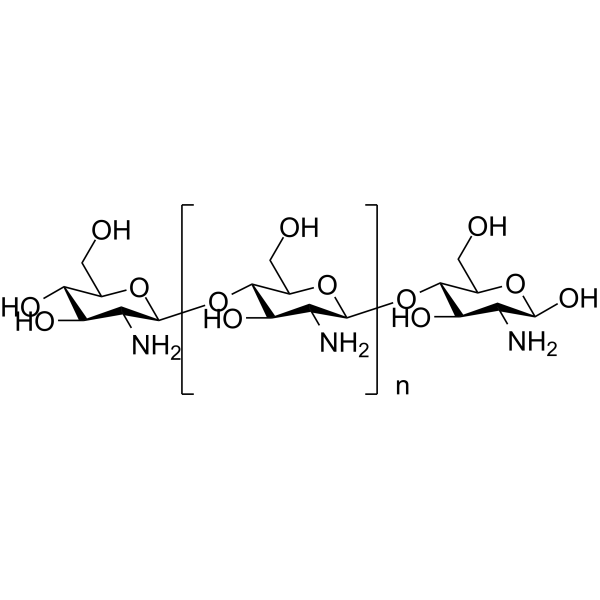
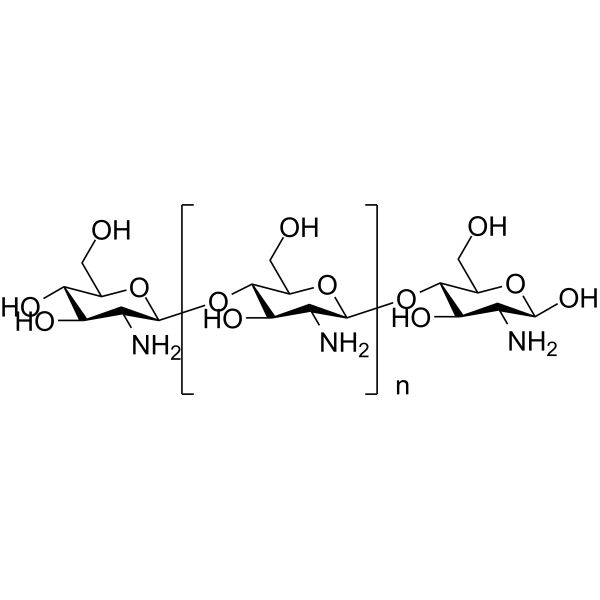
Chitosan (Deacetylated chitin) (≥90% deacetylated, viscosity 650-700 mPa.s) is a polysaccharide obtained by deacetylating chitin, and exhibits antimicrobial activity against various bacteria and fungi. Chitosan (≥90% deacetylated, viscosity 650-700 mPa.s) can be used as a versatile biomaterial in drug delivery, tissue engineering, and wound healing.
For research use only. We do not sell to patients.
- CAS No.: 9012-76-4
- Molecular Weight:1000000 (Average)
-
Storage:Powder -20°C, 3 years , 4°C, 2 years ; In solvent -80°C, 6 months , -20°C, 1 month


To place orders, for customer services and technical support, please contact: MedChemExpress USA
Tel: 609-228-6898 E-mail: [email protected] [email protected]


-
 Biological Activity
-
Chemical Information
-
Solvent & Solubility
- Protocols
- Purity & Documentation
- References
-
 Help & FAQs


-
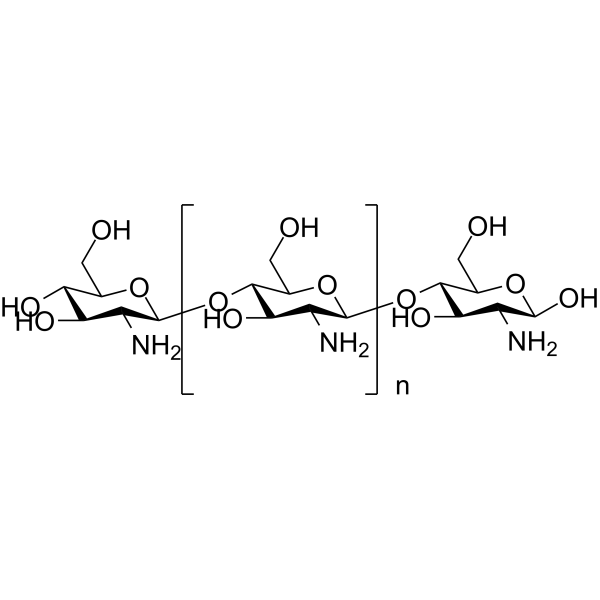
HY-B2144E
Chitosan (≥90% deacetylated, Low viscosity,<200mPa.s)Biochemical Assay Reagent -
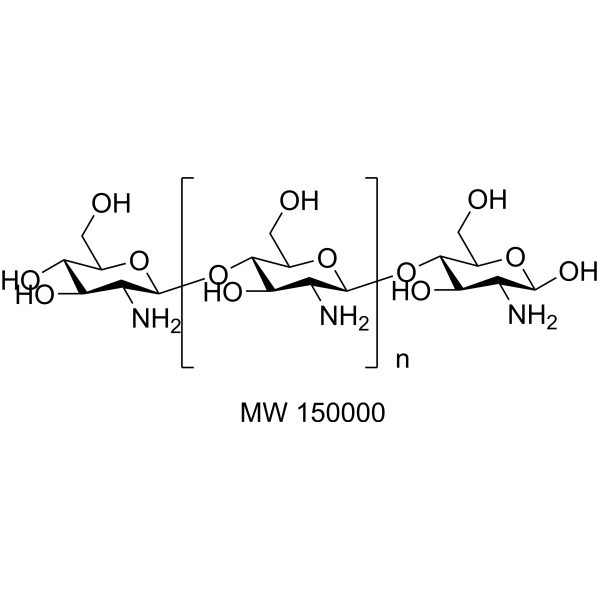
HY-B2144A
Chitosan (MW 150000) (≥85% deacetylated)Bacterial Inhibitor -
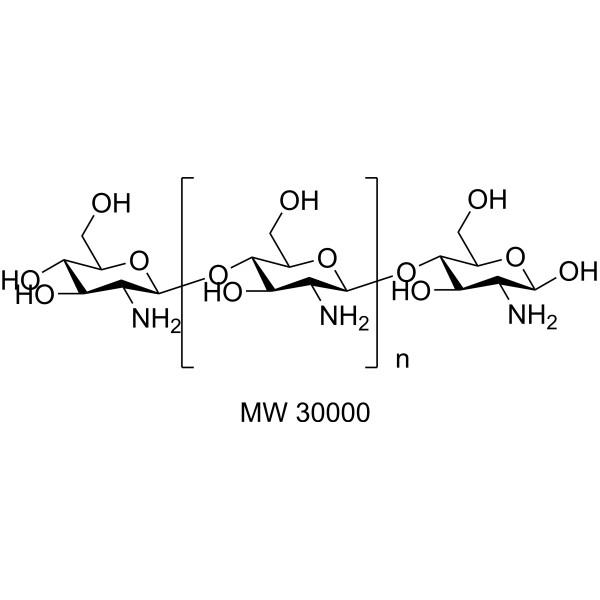
HY-B2144B
Chitosan (MW 30000) (≥85% deacetylated)Bacterial Inhibitor -

HY-B2144K
Chitosan (≥85% deacetylated, viscosity>90 mPa.s, MW 15000)Polysaccharid -
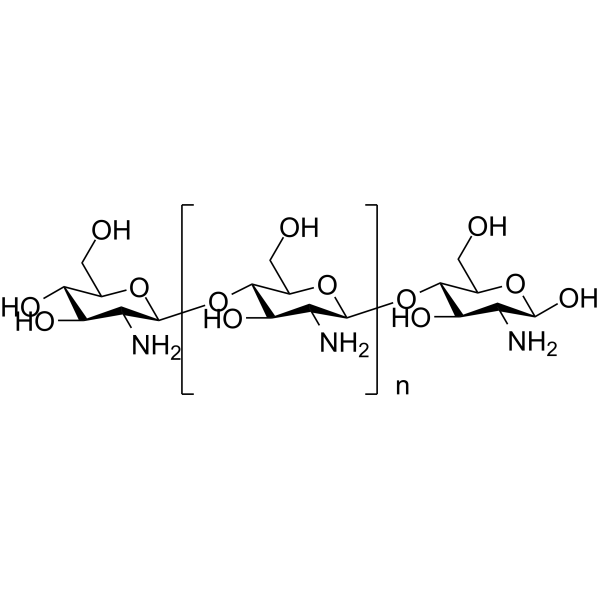
HY-B2144F
Chitosan (≥80% deacetylated, Medium viscosity,200-400mPa.s)Biochemical Assay Reagent -
HY-B2144C
Chitosan (≥95% deacetylated,viscosity 100-200 mPa.s)Biochemical Assay Reagent -

HY-B2144I
Chitosan (≥90% deacetylated,viscosity 10 mPa.s)Biochemical Assay Reagent -

HY-B2144N
Chitosan (≥98% deacetylated,mushroom)PEG Derivative -
HY-B2144G
Chitosan (≥80% deacetylated, High viscosity,>400mPa.s)Biochemical Assay Reagent -

HY-B2144L
Chitosan (≥95% deacetylated,mushroom)PEG Derivative -

HY-B2144M
Chitosan (85%~90% deacetylated,mushroom)PEG Derivative -

HY-Y0703
Sodium carboxymethyl cellulose (Viscosity:800-1200 mPa.s)Biochemical Assay Reagent


Biological Activity
Description
In Vitro
Low-molecular-weight chitosan can penetrate bacterial cell walls, bind with DNA and inhibit DNA transcription and mRNA synthesis, while high-molecular-weight Chitosan can bind to the negatively charged components on the bacterial cell wall. It forms an impermeable layer around the cell, changes cell permeability and blocks transport into the cell. Chitosan also can be used in water treatment, wound-healing materials, pharmaceutical excipient or drug carrier, obesity research and as a scaffold for tissue engineering[2].
MedChemExpress (MCE) has not independently confirmed the accuracy of these methods. They are for reference only. Further protocols information, click here.
In Vivo
MedChemExpress (MCE) has not independently confirmed the accuracy of these methods. They are for reference only.


Chemical Information
-
CAS No. 9012-76-4
-
Appearance Solid
-
Molecular Weight 1000000 (Average)
-
Color Off-white to light yellow
-
SMILES
OC[C@H]1O[C@@H](O[C@H]2[C@H](O)[C@@H](N)[C@H](O[C@H]3[C@H](O)[C@@H](N)[C@H](O)O[C@@H]3CO)O[C@@H]2CO)[C@H](N)[C@@H](O)[C@@H]1O.[n]
-
Synonyms
Deacetylated chitin (≥90% deacetylated,viscosity 650-700 mPa.s); Poly(D-glucosamine) (≥90% deacetylated,viscosity 650-700 mPa.s)
-
Shipping
Room temperature in continental US; may vary elsewhere.
-
Storage
Powder -20°C 3 years 4°C 2 years In solvent -80°C 6 months -20°C 1 month


Solvent & Solubility
In Vitro:
H2O : 6.67 mg/mL (ultrasonic and warming and heat to 60°C)

Protocols
-
3D Hydrogel Synthetic Scaffold Culture
3D hydrogel synthetic scaffold culture embeds cells, spheroids, organoids, or tissue fragments inside a hydrated crosslinked polymer network so that cells receive matrix and cell-cell cues in three dimensions rather than from a flat plastic surface. A literature-supported model protocol is PEG-4MAL hydrogel culture, in which four-arm maleimide-terminated PEG is functionalized with cysteine-containing adhesive peptides such as RGD and crosslinked with protease-degradable peptides such as GPQ-W; this creates a defined, modular scaffold that supports human organoid generation and culture. The readouts are scaffold-supported growth, morphology, lumen formation, budding, viability, proliferation, lineage-marker expression, and matrix-dependent expansion or differentiation; reported assays include transmitted-light imaging, immunofluorescence, in situ hybridization, qRT-PCR, and rheological characterization.
-
Research Protocol for Infectious Diseases
Infectious-disease experiments test how pathogens interact with host barriers, innate immune receptors, inflammatory signaling, pathogen replication, and tissue injury; pattern-recognition receptors such as TLRs, RIG-I-like receptors, NOD-like receptors, and inflammasomes detect microbial molecules and activate NF-κB, interferon, and cytokine responses. The central hypothesis is that infection severity reflects the balance between pathogen burden and host response: protective inflammation restricts pathogen growth, whereas excessive or mislocalized inflammation contributes to tissue damage and disease phenotype. Unresolved questions include which host pathways are protective versus pathogenic, why some infection models fail to translate to human disease, and which combined readouts best predict clinically relevant infection outcomes.
-
Cell migration
Cell migration is a method that plays an important role in wound healing, cell differentiation, embryonic development, etc.
-
Cell-Exclusion Zone Migration Assay
The Cell-Exclusion Zone (CEZ) migration assay is an in vitro 2D cell migration method in which a defined cell-free area is created using removable physical barriers such as silicone stoppers, allowing cells to be seeded around the barrier and subsequently migrate into the cleared zone after barrier removal. This approach enables quantification of collective cell migration by monitoring repopulation of the initially cell-free region over time using microscopy-based imaging. Compared with scratch-based wound healing assays, barrier-based exclusion methods are designed to avoid mechanical damage to the extracellular matrix and reduce injury-induced effects on boundary cells, thereby improving interpretability of migration behavior in vitro. The assay readout is typically the progressive reduction in the cell-free area or the number of cells invading the exclusion zone, reflecting coordinated cell motility relevant to physiological processes such as wound healing, epithelial repair, and ca


Purity & Documentation
-
Data Sheet (274 KB)
-
SDS (392 KB)
- English - EN (392 KB)
- Français - FR (392 KB)
- Deutsch - DE (392 KB)
- Norwegian - NO (392 KB)
- Español - ES (392 KB)
- Swedish - SV (392 KB)
- Italian - IT (392 KB)
- Korean - KR (392 KB)
- Portuguese - PT (392 KB)
-
Handling Instructions (2659 KB)
References
[2]. Randy Chi Fai Cheung, et al. Chitosan: An Update on Potential Biomedical and Pharmaceutical Applications. Mar Drugs. 2015 Aug 14;13(8):5156-86. [Content Brief]
[3]. Shyr-Yi Lin, et al. Chitosan prevents the development of AOM-induced aberrant crypt foci in mice and suppressed the proliferation of AGS cells by inhibiting DNA synthesis. J Cell Biochem. 2007 Apr 15;100(6):1573-80. [Content Brief]

Calculators
Concentration (start) × Volume (start) = Concentration (final) × Volume (final)


Chitosan (≥90% deacetylated,viscosity 650-700 mPa.s) Related Classifications
HY-B2144J Related Classifications
 Powered by Bioz
Keywords
- Chitosan (≥90% deacetylated,viscosity 650-700 mPa.s)
- 9012-76-4
- Deacetylated chitin (≥90% deacetylated,viscosity 650-700 mPa.s)
- Poly(D-glucosamine) (≥90% deacetylated,viscosity 650-700 mPa.s)
- Environmental Pollutants
- Fungal
- Bacterial
- Biochemical Assay Reagents
- biocompatibility
- biodegradability
- biomaterial
- Inhibitor
- inhibitor
- inhibit