
Search Result
Results for "
biotin reagent
" in MedChemExpress (MCE) Product Catalog:
23
Biochemical Assay Reagents
1
Isotope-Labeled Compounds
| Cat. No. |
Product Name |
Target |
Research Areas |
Chemical Structure |
-
- HY-129832
-
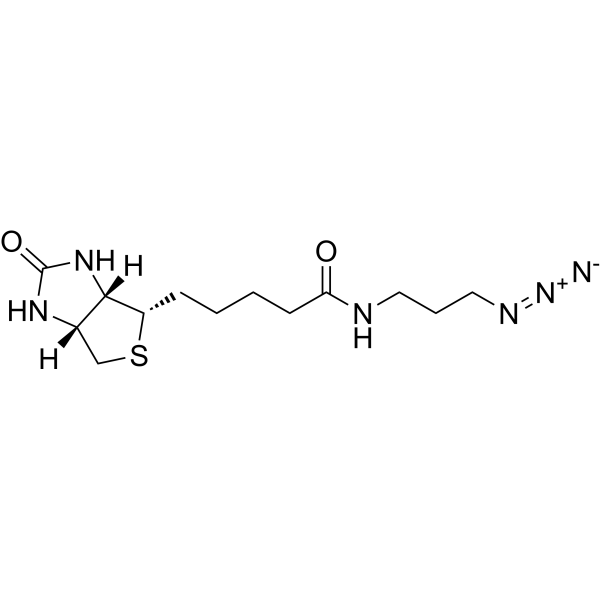
Biotin-azide
Maximum Cited Publications
8 Publications Verification
N-(3-Azidopropyl)biotinamide
|
Biochemical Assay Reagents
|
Others
|
|
Biotin-azide (N-(3-Azidopropyl)biotinamide) is a form of biotin with a terminal azide group. Biotin-azide can be used to prepare various biotinylated conjugates via Click Chemistry . Biotin-azide is a click chemistry reagent, it contains an Azide group and can undergo copper-catalyzed azide-alkyne cycloaddition reaction (CuAAc) with molecules containing Alkyne groups. It can also undergo strain-promoted alkyne-azide cycloaddition (SPAAC) reactions with molecules containing DBCO or BCN groups.
|
-
-
- HY-125658
-
|
|
Fluorescent Dye
|
Others
|
|
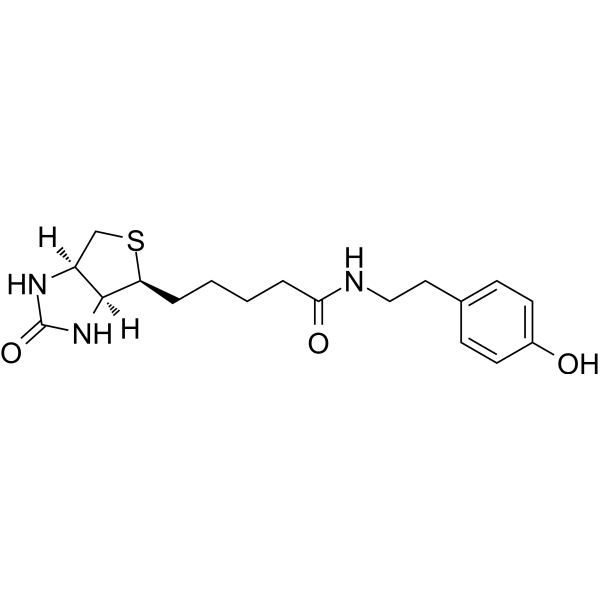
Biotinyl tyramide is a biotin derivative used for tyramide signal amplification (TSA), as a reagent to amplify both immunohistochemical signals and in situ hybridization protocols. Biotinyl tyramide can be used for the research of tyramide signal amplification .
|
-
-
- HY-D0802
-
|
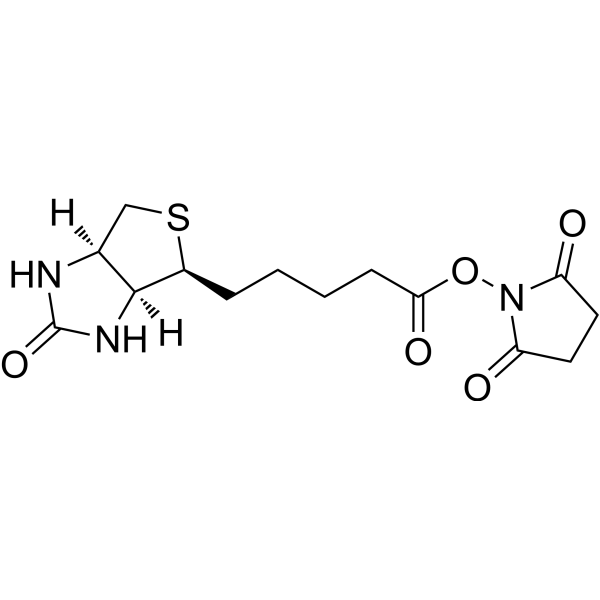
biotin N-hydroxysuccinimide ester; NHS-biotin
|
Fluorescent Dye
|
Others
|
|
Biotin NHS is an amino reactive biotin reagent used in the preparation of biotinylated surfaces or polypeptides.
|
-
-
- HY-111496
-
|
|
Biochemical Assay Reagents
|
Others
|
|
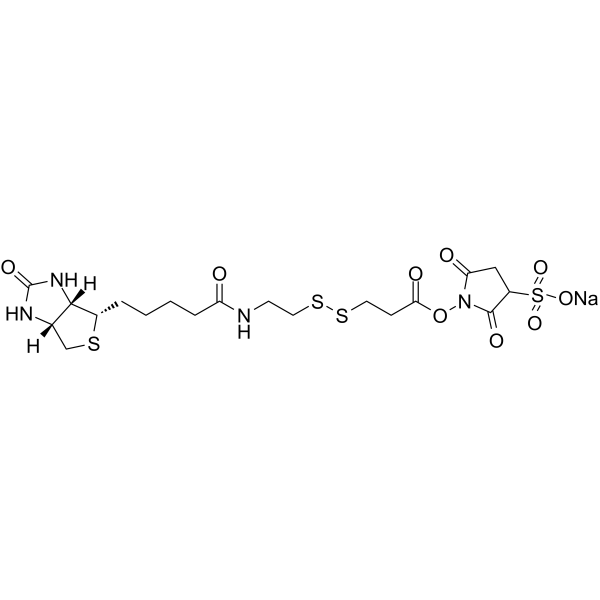
Sulfo-NHS-SS-biotin sodium is a long-chain cleavable and cell-impermeant amine-reactive biotinylation reagent. Sulfo-NHS-SS-biotin sodium can be used for the labeling and purifying of cell-surface protein .
|
-
-
- HY-130809
-
|
|
Biochemical Assay Reagents
|
Cancer
|
|
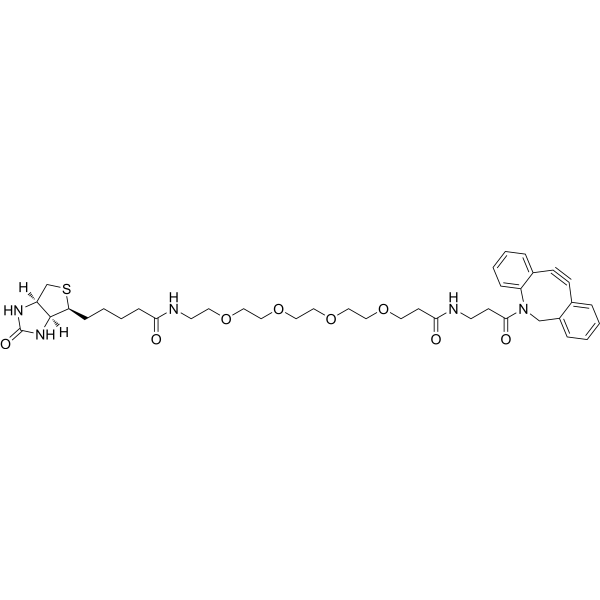
DBCO-PEG4-Biotin is an azadibenzocyclooctyne-biotin derivative containing a biotin group and 4 PEGs. DBCO-PEG4-Biotin is a versatile biotinylation reagent used for the introduction of a biotin moiety to azide-labeled biomolecules via copper-free strain-promoted alkyne-azide click chemistry (SPAAC) reaction . DBCO-PEG4-Biotin is a click chemistry reagent, it contains a DBCO group that can undergo strain-promoted alkyne-azide cycloaddition (SPAAC) with molecules containing Azide groups.
|
-
-
- HY-136769
-
|
|
Biochemical Assay Reagents
|
Others
|
|
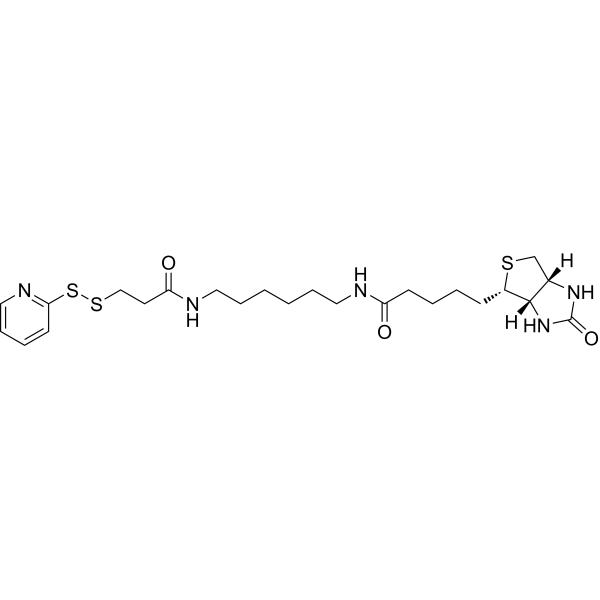
Biotin-HPDP is a biochemical reagent. Biotin-HPDP can couple with GMPS and label free protein thiols. Biotin-HPDP can be used as a biological material or organic compound for life science related research .
|
-
-
- HY-140910
-
|
|
PROTAC Linkers
|
Cancer
|
|
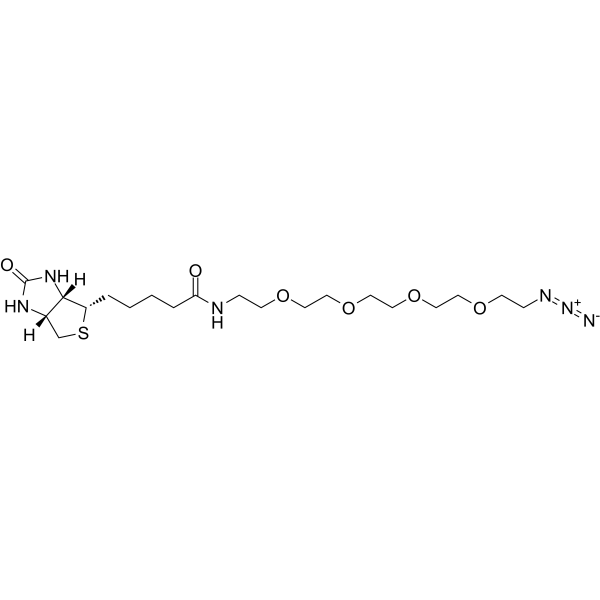
Biotin-PEG4-azide is a biotin-labeled, PEG-based PROTAC linker that can be used in the synthesis of PROTACs . Biotin-PEG4-azide is a click chemistry reagent, it contains an Azide group and can undergo copper-catalyzed azide-alkyne cycloaddition reaction (CuAAc) with molecules containing Alkyne groups. It can also undergo strain-promoted alkyne-azide cycloaddition (SPAAC) reactions with molecules containing DBCO or BCN groups.
|
-
-
- HY-W808757
-
|
|
Biochemical Assay Reagents
|
Others
|
|
Biotin-maleimide is a biotinylated biochemical detection reagent that acts as a thiol-specific probe. Biotin-maleimide can also be used to prepare biotin-conjugated polychelators .
|
-
-
- HY-140922
-
|
|
PROTAC Linkers
|
Cancer
|
|
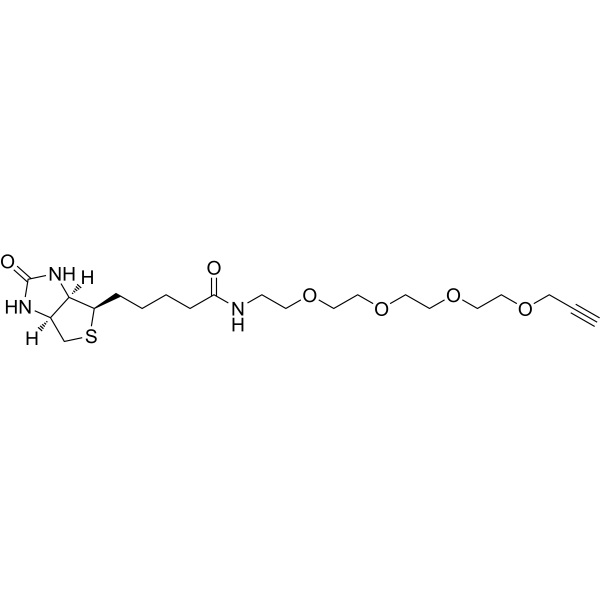
Biotin-PEG4-alkyne is a biotin-labeled, PEG-based PROTAC linker that can be used in the synthesis of PROTACs . Biotin-PEG4-alkyne is a click chemistry reagent, it contains an Alkyne group and can undergo copper-catalyzed azide-alkyne cycloaddition (CuAAc) with molecules containing Azide groups.
|
-
-
- HY-138749
-
|
|
PROTAC Linkers
|
Cancer
|
|
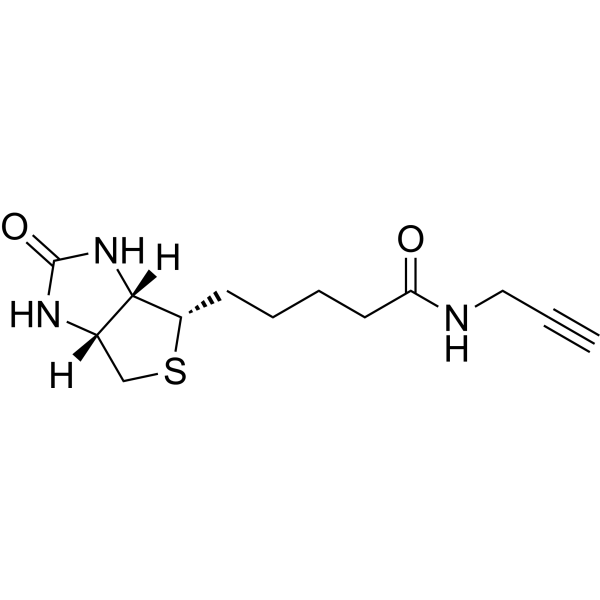
Biotin alkyne is a PEG-based PROTAC linker that can be used in the synthesis of PROTACs . Biotin alkyne is a click chemistry reagent, it contains an Alkyne group and can undergo copper-catalyzed azide-alkyne cycloaddition (CuAAc) with molecules containing Azide groups.
|
-
-
- HY-NP052
-
|
OVA-biotin
|
Biochemical Assay Reagents
|
Others
|
|
Ovalbumin-Biotin is a biotinylated biochemical reagent. Ovalbumin-Biotin is used to label or detect specific antigens, molecules or cellular structures .
|
-
-
- HY-100215
-
-
-
- HY-P11307
-
|
|
Proteasome
|
Cancer
|
|
Biotin-epoxomicin is a Proteasome subunit binder. Biotin-epoxomicin serves as an affinity reagent for identifying proteasomal catalytic subunits, and facilitates affinity purification of active proteasomal subunits for LC-MS identification. Biotin-epoxomicin can be used to study solid tumors derived from B16 melanoma .
|
-
-
- HY-123916
-
|
|
PROTAC Linkers
|
Cancer
|
|
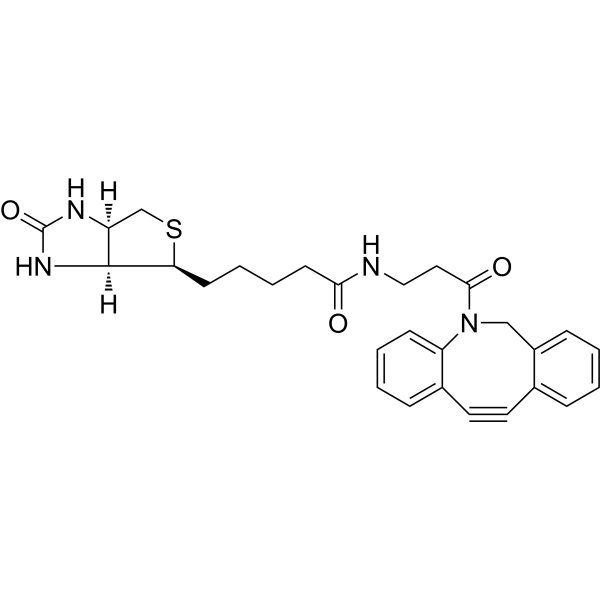
DBCO-Biotin is an alkyl chain-based PROTAC linker that can be used in the synthesis of PROTACs . DBCO-Biotin is a click chemistry reagent, it contains a DBCO group that can undergo strain-promoted alkyne-azide cycloaddition (SPAAC) with molecules containing Azide groups.
|
-
-
- HY-130924
-
|
|
ADC Linker
|
Cancer
|
|
BCN-PEG3-Biotin is a non-cleavable 3 unit PEG ADC linker used in the synthesis of antibody-drug conjugates (ADCs) . BCN-PEG3-Biotin is a click chemistry reagent, it contains a BCN group that can undergo strain-promoted alkyne-azide cycloaddition (SPAAC) with molecules containing Azide groups.
|
-
-
- HY-101885
-
|
biotinamidocaproyl hydrazide; BACH; (+)-biotinamidohexanoic Acid hydrazide; biotin Aminocaproyl Hydrazide
|
Biochemical Assay Reagents
|
Others
|
|
Biotin LC hydrazide is a long chain protein modification reagent, which can transform periodate-oxidized glycoproteins.
|
-
-
- HY-130810
-
|
|
ADC Linker
|
Cancer
|
|
DBCO-Sulfo-Link-biotin is a cleavable ADC linker used in the synthesis of antibody-drug conjugates (ADCs) . DBCO-Sulfo-Link-biotin is a click chemistry reagent, it contains a DBCO group that can undergo strain-promoted alkyne-azide cycloaddition (SPAAC) with molecules containing Azide groups.
|
-
-
- HY-D1635
-
|
biotin-XX-SSE
|
Fluorescent Dye
Exosomes
|
Infection
|
|
Sulfo-NHS-LC-LC-Biotin (Biotin-XX-SSE), a biotin reagent, is used to label the proteins exposed to the external leaflet of intact exosomes and contains a larger spacer arm between the biotin and amine reactive linker. The size of this linker helps to overcome steric hindrance and increases labeling efficiency at the crowded exosome surface .
|
-
-
- HY-D0980
-
|
biotinyl-3,6-dioxaoctanediamine; EZ-Link Amine-PEO2-biotin
|
Biochemical Assay Reagents
|
Infection
|
|
Biotin-DADOO (Biotinyl-3,6-dioxaoctanediamine; EZ-Link Amine-PEO2-Biotin) is a biotin-containing amine compound and a biotinylation reagent. As an amino component, Biotin-DADOO participates in the nucleophilic ring-opening reaction of epoxidized ω-double bonds during the synthesis of biotinylated inhibitor derivatives. Biotin-DADOO can be conjugated with carboxymethyl cellulose derivatives. Biotin-DADOO is involved in the synthesis of biotin-estradiol conjugates for enzyme immunoassays. Biotin-DADOO can be used in the research of influenza A .
|
-
-
- HY-147168
-
|
|
Biochemical Assay Reagents
|
Others
|
|
Biocytin hydrazide is a long-chain biotin-containing hydrazide, serving as a biotin-derived active coupling reagent, selective labeling agent and biotinylating reagent. Biocytin hydrazide targets aldehyde, carboxyl, amino and guanidino groups to biotinylate glycoconjugates, K99 lectin, peptides and proteins through its hydrazide moiety, and achieves nonradioactive detection of sialic acid- and galactose-containing glycoconjugates via the avidin–biotin system .
|
-
-
- HY-140128
-
|
|
PROTAC Linkers
|
Cancer
|
|
DBCO-S-S-PEG3-biotin is a PEG-based PROTAC linker that can be used in the synthesis of PROTACs . DBCO-S-S-PEG3-biotin is a click chemistry reagent, it contains a DBCO group that can undergo strain-promoted alkyne-azide cycloaddition (SPAAC) with molecules containing Azide groups.
|
-
-
- HY-151667
-
|
Decarboxybiotin-N3
|
Fluorescent Dye
|
Others
|
|
Biotin-C5-Azide (DecarboxyBiotin-N3) is a biotin reagent and can be used to prepare biotinylated conjugates . Biotin-C5-Azide is a click chemistry reagent, it contains an Azide group and can undergo copper-catalyzed azide-alkyne cycloaddition reaction (CuAAc) with molecules containing Alkyne groups. It can also undergo strain-promoted alkyne-azide cycloaddition (SPAAC) reactions with molecules containing DBCO or BCN groups.
|
-
-
- HY-D1668
-
|
|
DNA Stain
Reverse Transcriptase
|
Infection
Neurological Disease
Cancer
|
|
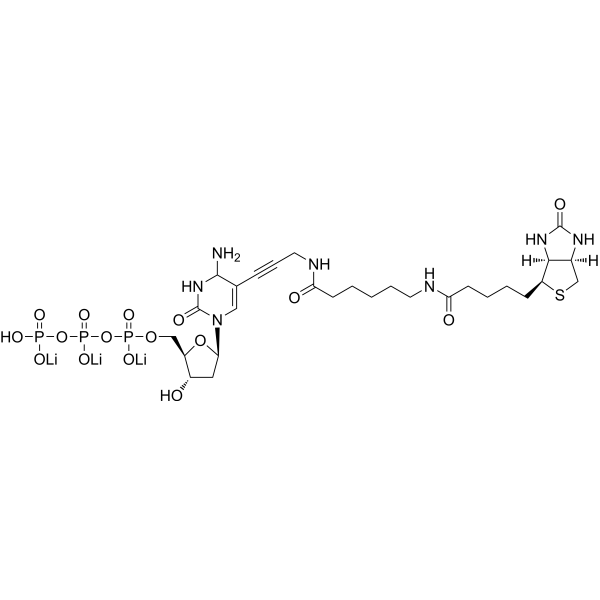
Biotin-11-dCTP is a biotinylated deoxynucleoside triphosphate and an important DNA labeling reagent. In random primer DNA labeling reactions, Biotin-11-dCTP incorporates into newly synthesized DNA strands to generate labeled DNA probes suitable for hybridization applications. In addition, Biotin-11-dCTP can serve as a substrate for terminal deoxynucleotidyl transferase to end-label oligonucleotides for telomere sequence detection, or to label the cut ends of linearized DNA molecules, thereby supporting streptavidin-based electron microscopy analysis. For example, Biotin-11-dCTP can label the cut ends of linearized DNA molecules under the action of dGTP and avian myeloblastosis virus reverse transcriptase .
|
-
-
- HY-136095
-
|
|
ADC Linker
|
Cancer
|
|
Tetrazine-biotin is a cleavable ADC linker used in the synthesis of antibody-drug conjugates (ADCs) . Tetrazine-biotin is a click chemistry reagent, it contains a Tetrazine group that can undergo an inverse electron demand Diels-Alder reaction (iEDDA) with molecules containing TCO groups.
|
-
-
- HY-W040254
-
|
|
Fluorescent Dye
|
Others
|
|
Biotin-LC-LC-NHS is a biotinylation reagent that contains an NHS moiety, which can react efficiently with primary amino (-NH2). Biotin-LC-LC-NHS enables simple and efficient biotinylation of antibodies, proteins, and any other primary amine-containing biomolecules in solution. Biotin-LC-LC-NHS can be used to biotinylate small molecules such as Paclitaxel (HY-B0015) for use in binding site characterization.
|
-
-
- HY-174892
-
|
|
Biochemical Assay Reagents
|
Others
|
|
Biotin-PEG5-NHS ester is a heterobifunctional crosslinker as well as a polyethylene glycol-containing bioconjugation reagent. Biotin-PEG5-NHS ester is widely used in scientific research fields such as the construction of highly sensitive biosensors, the development of targeted drug delivery systems (e.g., liposome modification), immunofluorescence imaging, and protein affinity purification, and serves as an important tool for achieving precise labeling and functionalization of biomolecules .
|
-
-
- HY-D1669
-
|
|
Fluorescent Dye
|
Others
|
|
Biotin-11-UTP is a Biotin-labeled uridine triphosphate (UTP), containing 11 atoms in the linker between biotin and UTP. Biotin-11-UTP can biotinylate transcribed RNA in vitro and has been widely used as labeling RNA probe . Biotin-11-UTP is a click chemistry reagent, it contains an Alkyne group and can undergo copper-catalyzed azide-alkyne cycloaddition (CuAAc) with molecules containing Azide groups.
|
-
-
- HY-136053
-
|
|
ADC Linker
|
Cancer
|
|
Tetrazine-PEG4-biotin is a cleavable 4 unit PEG ADC linker used in the synthesis of antibody-drug conjugates (ADCs) . Tetrazine-PEG4-biotin is a click chemistry reagent, it contains a Tetrazine group that can undergo an inverse electron demand Diels-Alder reaction (iEDDA) with molecules containing TCO groups.
|
-
-
- HY-140127
-
|
|
ADC Linker
|
Cancer
|
|
Azide-C2-SS-C2-biotin is a cleavable ADC linker used in the synthesis of antibody-drug conjugates (ADCs) . Azide-C2-SS-C2-biotin is a click chemistry reagent, it contains an Azide group and can undergo copper-catalyzed azide-alkyne cycloaddition reaction (CuAAc) with molecules containing Alkyne groups. It can also undergo strain-promoted alkyne-azide cycloaddition (SPAAC) reactions with molecules containing DBCO or BCN groups.
|
-
-
- HY-136050
-
|
|
ADC Linker
|
Cancer
|
|
TCO-PEG3-Biotin is a cleavable 3 unit PEG ADC linker used in the synthesis of antibody-drug conjugates (ADCs) . TCO-PEG3-Biotin is a click chemistry reagent, it contains a TCO group that can undergo an inverse electron demand Diels-Alder reaction (iEDDA) with molecules containing Tetrazine groups.
|
-
-
- HY-W107202
-
|
|
Biochemical Assay Reagents
|
Others
|
|
Biotin methyl ester is a biochemical reagent that can be used as a biological material or organic compound for life science related research.
|
-
-
- HY-136031
-
|
|
ADC Linker
|
Cancer
|
|
Tetrazine-SS-Biotin is a cleavable ADC linker used in the synthesis of antibody-drug conjugates (ADCs) . Tetrazine-SS-Biotin is a click chemistry reagent, it contains a Tetrazine group that can undergo an inverse electron demand Diels-Alder reaction (iEDDA) with molecules containing TCO groups.
|
-
-
- HY-140924
-
|
|
PROTAC Linkers
|
Cancer
|
|
Dde Biotin-PEG4-alkyne is a PEG-based PROTAC linker that can be used in the synthesis of PROTACs . Dde Biotin-PEG4-alkyne is a click chemistry reagent, it contains an Alkyne group and can undergo copper-catalyzed azide-alkyne cycloaddition (CuAAc) with molecules containing Azide groups.
|
-
-
- HY-140940
-
|
|
PROTAC Linkers
|
Cancer
|
|
Biotin-PEG4-methyltetrazine is a PEG-based PROTAC linker that can be used in the synthesis of PROTACs . Biotin-PEG4-methyltetrazine is a click chemistry reagent, it contains a Tetrazine group that can undergo an inverse electron demand Diels-Alder reaction (iEDDA) with molecules containing TCO groups.
|
-
-
- HY-140911
-
|
|
PROTAC Linkers
|
Cancer
|
|
Biotin-PEG6-azide is a biotin-labeled, PEG-based PROTAC linker that can be used in the synthesis of PROTACs . Biotin-PEG6-azide is a click chemistry reagent, it contains an Azide group and can undergo copper-catalyzed azide-alkyne cycloaddition reaction (CuAAc) with molecules containing Alkyne groups. It can also undergo strain-promoted alkyne-azide cycloaddition (SPAAC) reactions with molecules containing DBCO or BCN groups.
|
-
-
- HY-W614753
-
|
|
Biochemical Assay Reagents
|
Others
|
|
Biotin-naphthylamine is a biotinylated biochemical assay reagent, which is a substrate for ascorbate peroxidase 2 (APEX2). Biotin-naphthylamine is utilized as a novel probe for labeling DNA and RNA .
|
-
-
- HY-W190824
-
|
|
Biochemical Assay Reagents
|
Others
|
|
Biotin-PEG8-azide is a bioconjugation reagent. Biotin-PEG8-azide consists of biotin, PEG8 linker and azide group and serves as a modifying linker in click reactions. Biotin-PEG8-azide can be used for research related to click chemistry .
|
-
-
- HY-156377
-
|
|
Drug-Linker Conjugates for ADC
|
Cancer
|
|
Biotin-PEG7-Maleimide is a biotinylation reagent that reacts with thiol groups (SH). Biotin-PEG7-Maleimide can be used as Drug-Linker Conjugates for ADCs .
|
-
-
- HY-135979
-
|
|
ADC Linker
|
Cancer
|
|
DBCO-SS-PEG4-Biotin is a cleavable 4 unit PEG ADC linker used in the synthesis of antibody-drug conjugates (ADCs) . DBCO-SS-PEG4-Biotin is a click chemistry reagent, it contains a DBCO group that can undergo strain-promoted alkyne-azide cycloaddition (SPAAC) with molecules containing Azide groups.
|
-
-
- HY-136036
-
|
|
ADC Linker
|
Cancer
|
|
Tetrazine-SS-PEG4-Biotin is a cleavable 4 unit PEG ADC linker used in the synthesis of antibody-drug conjugates (ADCs) . Tetrazine-SS-PEG4-Biotin is a click chemistry reagent, it contains a Tetrazine group that can undergo an inverse electron demand Diels-Alder reaction (iEDDA) with molecules containing TCO groups.
|
-
-
- HY-140923
-
|
|
PROTAC Linkers
|
Cancer
|
|
Biotin-PEG4-amide-Alkyne is a PEG-based PROTAC linker that can be used in the synthesis of PROTACs . Biotin-PEG4-amide-Alkyne is a click chemistry reagent, it contains an Alkyne group and can undergo copper-catalyzed azide-alkyne cycloaddition (CuAAc) with molecules containing Azide groups.
|
-
-
- HY-W591393
-
|
|
Biochemical Assay Reagents
|
Cancer
|
|
Biotin Azide Plus is an oxazolidine reagent that integrates azide-biotin click chemistry and a photocleavable linker arm. Biotin Azide Plus not only reacts with biotin thioether to form stable sulfinimide products, but also enables bioconjugation of proteins and DNA through biotin redox-activated chemical labeling technology. Taking advantage of the streptavidin capture and photo-release properties, Biotin Azide Plus effectively facilitates the isolation of lipid-derived electrophile-protein adducts, thus finding wide application in scientific research related to fields such as SKBR3 cancer .
|
-
-
- HY-151714
-
|
|
ADC Linker
|
Others
|
|
Biotin-MeTz shiyi is a click chemistry reagent with a terminal methyltetrazine group. Biotin-MeTz shiyi, as a biotin derivative, can be used for the preparation of biotinylated conjugates .
|
-
-
- HY-113899
-
-
-
- HY-D2361
-
|
|
Nucleoside Antimetabolite/Analog
|
Others
|
|
Adenosine 2'-PEG-Biotin is a biochemical reagent derived from adenosine. Adenosine 2'-PEG-Biotin regulates cell signaling pathways by mimicking the effects of endogenous adenosine and binding to its receptors. Adenosine 2'-PEG-Biotin can be used in the research of bioprobes, biosensors and diagnostic reagents .
|
-
-
- HY-151741
-
|
|
ADC Linker
|
Others
|
|
Biotin-PEG4-MeTz is a click chemistry reagent containing a terminal methyltetrazine group that reacts with trans-cyclooctene. Biotin-PEG4-MeTz can be used for the preparation of biotinylated conjugates .
|
-
-
- HY-W110146
-
|
|
Biochemical Assay Reagents
|
Others
|
|
(3aS,4S,6aR)-Biotin-PEG4-Alkyne is an alkyne-activated biotinylation reagent. (3aS,4S,6aR)-Biotin-PEG4-Alkyne can be reacted with azides via a copper-catalyzed click reaction. Biotin-labeled biomolecules can be bound to avidin or streptavidin for further purification and detection .
|
-
-
- HY-138503
-
|
|
PROTAC Linkers
|
Cancer
|
|
Biotin-PEG3-propargyl is a PEG-based PROTAC linker that can be used in the synthesis of PROTACs . Biotin-PEG3-propargyl is a click chemistry reagent, it contains an Alkyne group and can undergo copper-catalyzed azide-alkyne cycloaddition (CuAAc) with molecules containing Azide groups.
|
-
-
- HY-140925
-
|
|
PROTAC Linkers
|
Cancer
|
|
Diazo Biotin-PEG3-alkyne is a PEG-based PROTAC linker that can be used in the synthesis of PROTACs . Diazo Biotin-PEG3-alkyne is a click chemistry reagent, it contains an Alkyne group and can undergo copper-catalyzed azide-alkyne cycloaddition (CuAAc) with molecules containing Azide groups.
|
-
-
- HY-140931
-
|
|
PROTAC Linkers
|
Cancer
|
|
Dde Biotin-PEG4-DBCO is a PEG-based PROTAC linker that can be used in the synthesis of PROTACs . Dde Biotin-PEG4-DBCO is a click chemistry reagent, it contains a DBCO group that can undergo strain-promoted alkyne-azide cycloaddition (SPAAC) with molecules containing Azide groups.
|
-
- HY-125501
-
|
biotin-(AC5)2-hydrazide
|
Biochemical Assay Reagents
|
Others
|
|
Biotin-XX hydrazide (Biotin-(AC5)2-hydrazide) is a carbonyl-reactive biotinylation reagent which contains two aminohexanoic acid spacers. Biotin-XX hydrazide has higher efficiency of avidin-binding .
|
-
- HY-135939
-
|
|
PROTAC Linkers
|
Cancer
|
|
DBCO-NHCO-PEG2-Biotin is a PEG-based PROTAC linker that can be used in the synthesis of PROTACs . DBCO-NHCO-PEG2-Biotin is a click chemistry reagent, it contains a DBCO group that can undergo strain-promoted alkyne-azide cycloaddition (SPAAC) with molecules containing Azide groups.
|
-
- HY-135958
-
|
|
PROTAC Linkers
|
Cancer
|
|
DBCO-NHCO-PEG6-Biotin is a PEG-based PROTAC linker that can be used in the synthesis of PROTACs . DBCO-NHCO-PEG6-Biotin is a click chemistry reagent, it contains a DBCO group that can undergo strain-promoted alkyne-azide cycloaddition (SPAAC) with molecules containing Azide groups.
|
-
- HY-128466
-
|
|
Biochemical Assay Reagents
|
Others
|
|
N-Biotinyl-L-cysteine is a biotinylated biochemical assay reagent, which is used to detect avidin and biotin through a competitive binding reaction .
|
-
- HY-D1406
-
|
|
Fluorescent Dye
|
Others
|
|
L-Biotin-NH-5MP-Br is a biotin-conjugated 5-Methylene pyrrolone (5MP). 5-Methylene pyrrolones (5MPs) are thiol-specific, reversible bioconjugation reagents for cysteine-specific protein modification, that are commonly used for protein bioconjugation .
|
-
- HY-D1546
-
|
|
Fluorescent Dye
|
Cancer
|
|
Biotin-C2-maleimide is an antibody conjugate reagent, can bind to many biomolecules without significantly changing the biological activity of the target molecule .
|
-
- HY-181228
-
|
|
Biochemical Assay Reagents
|
Others
|
|
DBCO-PEG10-Biotin is an azadibenzocyclooctyne-biotin derivative containing a biotin group and 10 PEGs. DBCO-PEG10-Biotin is a versatile biotinylation reagent used for the introduction of a biotin moiety to azide-labeled biomolecules via copper-free strain-promoted alkyne-azide click chemistry (SPAAC) reaction. DBCO-PEG10-Biotin is a click chemistry reagent, it contains a DBCO group that can undergo strain-promoted alkyne-azide cycloaddition (SPAAC) with molecules containing Azide groups .
|
-
- HY-133376
-
|
|
PROTAC Linkers
|
Cancer
|
|
DBCO-NHCO-PEG12-biotin is a PEG-based PROTAC linker that can be used in the synthesis of PROTACs . DBCO-NHCO-PEG12-biotin is a click chemistry reagent, it contains a DBCO group that can undergo strain-promoted alkyne-azide cycloaddition (SPAAC) with molecules containing Azide groups.
|
-
- HY-140136
-
|
|
ADC Linker
|
Cancer
|
|
PC DBCO-PEG3-biotin is a cleavable 3 unit PEG ADC linker used in the synthesis of antibody-drug conjugates (ADCs) . PC DBCO-PEG3-biotin is a click chemistry reagent, it contains a DBCO group that can undergo strain-promoted alkyne-azide cycloaddition (SPAAC) with molecules containing Azide groups.
|
-
- HY-151649
-
|
|
ADC Linker
|
Others
|
|
Biotin-PEG(4)-SS-Alkyne is a click chemistry reagent containing an alkyne group. Biotin-PEG(4)-SS-Alkyne can be used for the research of various biochemical .
|
-
- HY-157920
-
|
N-biotinyl-N'-[2-(N-maleimido)ethyl]piperazine
|
Biochemical Assay Reagents
|
Others
|
|
Biotin-PE-maleimide (N-Biotinyl-N'-[2-(N-maleimido)ethyl]piperazine) is a bulky, membrane-impermeable, sulfhydryl-containing reagent with a relatively large molecular size. Biotin-PE-maleimide can be used for biotin labeling (such as thiol groups) and detection of proteins or other biomolecules .
|
-
- HY-W351294
-
|
|
Biochemical Assay Reagents
|
Others
|
|
N-GlcNAc-Biotin is a biotinylated biochemical assay reagent, that can be used as a biological material or organic compound for life science related research .
|
-
- HY-140533
-
|
|
Biochemical Assay Reagents
|
Others
|
|
N-(Azido-PEG2)-N-biotin-PEG3-acid is a PEG derivative which contains biotin and carboxylic acid moieties. N-(Azido-PEG2)-N-biotin-PEG3-acid is a click chemistry reagent, it contains an Azide group and can undergo copper-catalyzed azide-alkyne cycloaddition reaction (CuAAc) with molecules containing Alkyne groups .
|
-
- HY-140927
-
|
UV Cleavable biotin-PEG2-alkyne
|
PROTAC Linkers
|
Cancer
|
|
Azido-C3-UV-biotin is a PEG-based PROTAC linker that can be used in the synthesis of PROTACs . Azido-C3-UV-biotin is a click chemistry reagent, it contains an Alkyne group and can undergo copper-catalyzed azide-alkyne cycloaddition (CuAAc) with molecules containing Azide groups.
|
-
- HY-139107
-
|
|
ADC Linker
|
Cancer
|
|
Biotin-PEG4-SS-azide is a cleavable, biotin-labeled, ADC linker used in the synthesis of antibody-drug conjugates (ADCs). Biotin-PEG4-SS-azide is a click chemistry reagent, it contains an Azide group and can undergo copper-catalyzed azide-alkyne cycloaddition reaction (CuAAc) with molecules containing Alkyne groups. It can also undergo strain-promoted alkyne-azide cycloaddition (SPAAC) reactions with molecules containing DBCO or BCN groups.
|
-
- HY-140130
-
|
|
ADC Linker
|
Cancer
|
|
PC Biotin-PEG3-alkyne is a cleavable 3 unit PEG ADC linker used in the synthesis of antibody-drug conjugates (ADCs) . PC Biotin-PEG3-alkyne is a click chemistry reagent, it contains an Alkyne group and can undergo copper-catalyzed azide-alkyne cycloaddition (CuAAc) with molecules containing Azide groups.
|
-
- HY-140131
-
|
|
PROTAC Linkers
|
Cancer
|
|
Biotin-PEG4-PC-PEG4-alkyne is a PEG-based PROTAC linker that can be used in the synthesis of PROTACs . Biotin-PEG4-PC-PEG4-alkyne is a click chemistry reagent, it contains an Alkyne group and can undergo copper-catalyzed azide-alkyne cycloaddition (CuAAc) with molecules containing Azide groups.
|
-
- HY-140582
-
|
|
PROTAC Linkers
|
Cancer
|
|
N-(DBCO-PEG4)-N-Biotin-PEG4-NHS is a PEG-based PROTAC linker that can be used in the synthesis of PROTACs . N-(DBCO-PEG4)-N-Biotin-PEG4-NHS is a click chemistry reagent, it contains a DBCO group that can undergo strain-promoted alkyne-azide cycloaddition (SPAAC) with molecules containing Azide groups.
|
-
- HY-155817
-
|
|
Histone Methyltransferase
|
Others
|
|
UNC7096 (compound 53) is a biotinylated affinity reagent. The phenyl ring of UNC7096 replaces the pyrimidine ring in UNC6934 (HY-145103) and introduces biotin at the para position of the phenyl ring, which has a high binding affinity to the NSD2-PWWP1 domain (Kd=46 nM). UNC7096 blocks the interaction between NSD2-PWWP1 and nucleosomal H3K36me2 by occupying the methyl-lysine binding pocket of NSD2-PWWP1. This binding is achieved by covalent binding through the formation of hydrogen bonds and a specific aromatic cage structure. UNC7096 can be used to capture proteins that interact with the NSD2-PWWP1 domain to further analyze the biological significance of these interactions .
|
-
- HY-D0980A
-
|
|
Biochemical Assay Reagents
|
Metabolic Disease
|
|
Biotin-DADOO TFA is a biotinylating reagent. Biotin-DADOO TFA is conjugated to CMC thiosulfate. Biotin-DADOO TFA can be used to synthesize biotin-estradiol conjugates for the determination of plasma estradiol concentrations by enzyme immunoassay .
|
-
- HY-130893A
-
|
|
Biochemical Assay Reagents
|
Others
|
|
Biotin-EDA TFA is a nucleophilic biotinylation reagent used for the conjugation of various substrates and identification and quantification using biotin-conjugated fluorescent labels .
|
-
- HY-D1839
-
|
biotin Tyramide
|
Fluorescent Dye
|
Others
|
|
Biotin TSA (200×) (Biotin Tyramide) is a biotin derivative used for tyramide signal amplification (TSA), as a reagent to amplify both immunohistochemical signals and in situ hybridization protocols. Biotinyl tyramide can be used for the research of tyramide signal amplification .
|
-
- HY-157919
-
|
N-6-(biotinylamino)hexanoyl-N'-[2-(N-maleimido)ethyl]piperazine, hydrochloride
|
Biochemical Assay Reagents
|
Others
|
|
Biotin-PEAC5-maleimide hydrochloride is a biochemical assay reagent, and can be used in biotin-PEAC5-maleimide (BPM)-labeling assay to assess modification of protein thiols by electrophiles .
|
-
- HY-136035
-
|
|
ADC Linker
|
Cancer
|
|
Methyltetrazine-SS-PEG4-Biotin is a cleavable 4 unit PEG ADC linker used in the synthesis of antibody-drug conjugates (ADCs) . Methyltetrazine-SS-PEG4-Biotin is a click chemistry reagent, it contains a Tetrazine group that can undergo an inverse electron demand Diels-Alder reaction (iEDDA) with molecules containing TCO groups.
|
-
- HY-136078
-
|
|
ADC Linker
|
Cancer
|
|
Tetrazine-diazo-PEG4-biotin is a cleavable 4 unit PEG ADC linker used in the synthesis of antibody-drug conjugates (ADCs) . Tetrazine-diazo-PEG4-biotin is a click chemistry reagent, it contains a Tetrazine group that can undergo an inverse electron demand Diels-Alder reaction (iEDDA) with molecules containing TCO groups.
|
-
- HY-147206
-
|
|
Fluorescent Dye
|
Others
|
|
Biotin-PEG600-Alk is a Biotin-labeled Alkyne functionalized polyethylene glycol. Biotin-PEG600-Alk can be used to modify proteins, peptides, and oligonucleotides . Biotin-PEG600-Alk is a click chemistry reagent, it contains an Alkyne group and can undergo copper-catalyzed azide-alkyne cycloaddition (CuAAc) with molecules containing Azide groups.
|
-
- HY-W343009
-
|
|
Biochemical Assay Reagents
|
Others
|
|
rel-Biotin methyl ester is a biochemical reagent that can be used as a biological material or organic compound for life science related research.
|
-
- HY-137360
-
|
|
Biochemical Assay Reagents
|
Others
|
|
Phosphine-biotin is a labeling reagent that selectively reacts with azido groups on modified proteins through the Staudinger ligation reaction .
|
-
- HY-W129869
-
|
|
Biochemical Assay Reagents
|
Others
|
|
Biotin sulfoxide is a biochemical reagent that can be used as a biological material or organic compound for life science related research .
|
-
- HY-W127773
-
|
|
Biochemical Assay Reagents
|
Others
|
|
KNI-1293 Biotin is a biochemical reagent that can be used as a biological material or organic compound for life science related research.
|
-
- HY-147206C
-
|
|
Fluorescent Dye
|
Others
|
|
Biotin-PEG3400-Alk is a biotin labeled PEG derivative. Biotin is an enzyme co-factor, can be used for labeling protein; PEG is a hydrophilic and water-soluble polymer with low toxicity; Alk (Alkyne), acyclic (branched or unbranched) aliphatic hydrocarbon, can react with azido, which improve the efficiency of biotin binding targets. Biotin-PEG3400-Alk is a click chemistry reagent, it contains an Alkyne group and can undergo copper-catalyzed azide-alkyne cycloaddition (CuAAc) with molecules containing Azide groups.
|
-
- HY-147206A
-
|
|
Fluorescent Dye
|
Others
|
|
Biotin-PEG1000-Alk is a biotin labeled PEG derivative. Biotin is an enzyme co-factor, can be used for labeling protein; PEG is a hydrophilic and water-soluble polymer with low toxicity; Alk (Alkyne), acyclic (branched or unbranched) aliphatic hydrocarbon, can react with azido, which improve the efficiency of biotin binding targets. Biotin-PEG1000-Alk is a click chemistry reagent, it contains an Alkyne group and can undergo copper-catalyzed azide-alkyne cycloaddition (CuAAc) with molecules containing Azide groups.
|
-
- HY-147206E
-
|
|
Fluorescent Dye
|
Others
|
|
Biotin-PEG10000-Alk is a biotin labeled PEG derivative. Biotin is an enzyme co-factor, can be used for labeling protein; PEG is a hydrophilic and water-soluble polymer with low toxicity; Alk (Alkyne), acyclic (branched or unbranched) aliphatic hydrocarbon, can react with azido, which improve the efficiency of biotin binding targets. Biotin-PEG10000-Alk is a click chemistry reagent, it contains an Alkyne group and can undergo copper-catalyzed azide-alkyne cycloaddition (CuAAc) with molecules containing Azide groups.
|
-
- HY-147206B
-
|
|
Fluorescent Dye
|
Others
|
|
Biotin-PEG2000-Alk is a biotin labeled PEG derivative. Biotin is an enzyme co-factor, can be used for labeling protein; PEG is a hydrophilic and water-soluble polymer with low toxicity; Alk (Alkyne), acyclic (branched or unbranched) aliphatic hydrocarbon, can react with azido, which improve the efficiency of biotin binding targets. Biotin-PEG2000-Alk is a click chemistry reagent, it contains an Alkyne group and can undergo copper-catalyzed azide-alkyne cycloaddition (CuAAc) with molecules containing Azide groups.
|
-
- HY-147206F
-
|
|
Fluorescent Dye
|
Others
|
|
Biotin-PEG20000-Alk is a biotin labeled PEG derivative. Biotin is an enzyme co-factor, can be used for labeling protein; PEG is a hydrophilic and water-soluble polymer with low toxicity; Alk (Alkyne), acyclic (branched or unbranched) aliphatic hydrocarbon, can react with azido, which improve the efficiency of biotin binding targets. Biotin-PEG20000-Alk is a click chemistry reagent, it contains an Alkyne group and can undergo copper-catalyzed azide-alkyne cycloaddition (CuAAc) with molecules containing Azide groups.
|
-
- HY-D1403
-
|
|
Fluorescent Dye
|
Cancer
|
|
L-Biotin-NH-5MP is a biotin-conjugated 5-Methylene pyrrolone (5MP). 5-Methylene pyrrolones (5MPs) are thiol-specific, reversible bioconjugation reagents for cysteine-specific protein modification, that are commonly used for protein bioconjugation .
|
-
- HY-147206D
-
|
|
PROTAC Linkers
|
Cancer
|
|
Biotin-PEG5000-Alk is a PEG-based PROTAC linker that can be used in the synthesis of PROTACs . Biotin-PEG5000-Alk is a click chemistry reagent, it contains an Alkyne group and can undergo copper-catalyzed azide-alkyne cycloaddition (CuAAc) with molecules containing Azide groups.
|
-
- HY-140137
-
|
|
PROTAC Linkers
|
Cancer
|
|
WSPC Biotin-PEG3-DBCO is a PEG-based PROTAC linker that can be used in the synthesis of PROTACs . WSPC Biotin-PEG3-DBCO is a click chemistry reagent, it contains a DBCO group that can undergo strain-promoted alkyne-azide cycloaddition (SPAAC) with molecules containing Azide groups.
|
-
- HY-140930
-
|
|
ADC Linker
|
Cancer
|
|
Diazo Biotin-PEG3-DBCO is a cleavable 3 unit PEG ADC linker used in the synthesis of antibody-drug conjugates (ADCs) . Diazo Biotin-PEG3-DBCO is a click chemistry reagent, it contains a DBCO group that can undergo strain-promoted alkyne-azide cycloaddition (SPAAC) with molecules containing Azide groups.
|
-
- HY-113828
-
|
|
PROTAC Linkers
|
Cancer
|
|
Biotin-PEG2-C4-alkyne is a PEG-based PROTAC linker can be used in the synthesis of PROTACs. Biotin-PEG2-C4-alkyne is a click chemistry reagent, it contains an Alkyne group and can undergo copper-catalyzed azide-alkyne cycloaddition (CuAAc) with molecules containing Azide groups.
|
-
- HY-W800651
-
|
|
Biochemical Assay Reagents
|
Others
|
|
Biotin-SS-Amine hydrochloride is a cleavable biotinylation reagent. The amine group can react with carboxylic acids, activated NHS esters and other carbonyl groups. The disulfide bond in this linker can be cleaved using reducing agents such as DTT, BME and TCEP.
|
-
- HY-137425
-
|
|
Biochemical Assay Reagents
|
Others
|
|
N-Biotinyl-12-aminododecanoic acid is a compound formed by linking biotin and 12-aminododecanoic acid through an amide bond. N-Biotinyl-12-aminododecanoic acid is used as a biotinylation reagent to test the ligation activity of SimL .
|
-
- HY-163793
-
-
- HY-W590564
-
|
|
Biochemical Assay Reagents
|
Others
|
|
Bis-PEG3-biotin is a biotinylation reagent with two terminal biotin groups. PEG attached to the biotin gives an extended spacer arm that permits the biotin to reach into the binding pocket of the protein or macromolecule.
|
-
- HY-100215R
-
|
|
Biochemical Assay Reagents
Reference Standards
|
Others
|
|
Biotin Hydrazide (Standard) is the analytical standard of Biotin Hydrazide (HY-100215). This product is intended for research and analytical applications. Biotin Hydrazide is a carbonyl-reactive biotinylation reagent, which is a carbonyl probe.
|
-
- HY-W591335
-
|
biotin-PEG5-alcohol
|
Biochemical Assay Reagents
|
Others
|
|
Biotin-PEG5-OH (Biotin-PEG5-alcohol) is a biotinylation reagent containing a primary hydroxyl that can be derivatized. The PEG spacer provides greater solubility to labeled molecules compared to reagents having only hydrocarbon spacers.
|
-
- HY-W190940
-
|
|
Biochemical Assay Reagents
|
Others
|
|
Biotin-PEG4-S-S-acid is a cleavable reagent which can efficiently introduce a biotin moiety to amine-containing biomolecules. The disulfide bond in this linker can be cleaved using reducing agents such as DTT, BME and TCEP to remove the biotin label.
|
-
- HY-D3321
-
|
|
Fluorescent Dye
|
Others
|
|
Streptavidin, R-Phycoerythrin conjugate (SAPE) is a streptavidin-labeled phycoerythrin. Streptavidin, R-Phycoerythrin conjugate (SAPE) can be used in conjunction with biotinylated reagents in anti-Biotin/biotin-labeled systems, suitable for flow cytometry detection, microarray analysis, and microplate detection (Ex/Em = 450-500 nm/575 nm).
|
-
- HY-D3321A
-
|
|
Fluorescent Dye
|
Others
|
|
High concentration Streptavidin, R-Phycoerythrin conjugate (SAPE) is a streptavidin-labeled phycoerythrin. High concentration Streptavidin, R-Phycoerythrin conjugate (SAPE) can be used in conjunction with biotinylated reagents in anti-Biotin/biotin-labeled systems, suitable for flow cytometry detection, microarray analysis, and microplate detection (Ex/Em = 450-500 nm/575 nm).
|
-
- HY-140531A
-
|
|
Biochemical Assay Reagents
|
Others
|
|
N-(Biotin-PEG4)-N-bis(PEG4-acid) hydrochloride is a branched biotinylation reagent for labeling. The carboxylic acid groups can react with primary amines in the presence of EDC and HATU to form stable amide bonds.
|
-
- HY-172296
-
|
|
Biochemical Assay Reagents
|
Others
|
|
Biotinamide-C3-PEG3-C-alkyne is a biotin PEG reagent containing a PEG3 chain linked to a terminal azide which can react with alkyne, BCN, DBCO via Click Chemistry.
|
-
- HY-140913
-
|
|
PROTAC Linkers
|
Cancer
|
|
Biotin-PEG23-azide is a PEG-based PROTAC linker that can be used in the synthesis of PROTACs . Biotin-PEG23-azide is a click chemistry reagent, it contains an Azide group and can undergo copper-catalyzed azide-alkyne cycloaddition reaction (CuAAc) with molecules containing Alkyne groups. It can also undergo strain-promoted alkyne-azide cycloaddition (SPAAC) reactions with molecules containing DBCO or BCN groups.
|
-
- HY-130143
-
|
|
PROTAC Linkers
|
Cancer
|
|
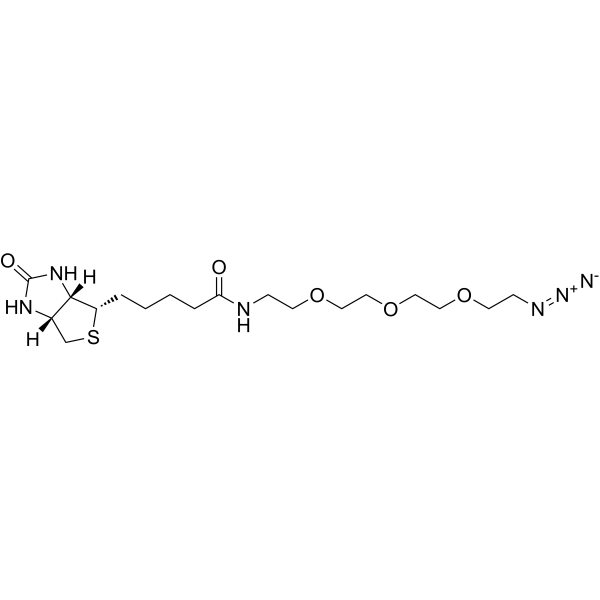
Biotin-PEG3-azide is a PEG-based PROTAC linker can be used in the synthesis of PROTACs. Biotin-PEG3-azide is a click chemistry reagent, it contains an Azide group and can undergo copper-catalyzed azide-alkyne cycloaddition reaction (CuAAc) with molecules containing Alkyne groups. It can also undergo strain-promoted alkyne-azide cycloaddition (SPAAC) reactions with molecules containing DBCO or BCN groups.
|
-
- HY-133175
-
|
|
PROTAC Linkers
|
Cancer
|
|
Biotin-PEG7-azide is a PEG-based PROTAC linker can be used in the synthesis of PROTAC. Biotin-PEG7-azide is a click chemistry reagent, it contains an Azide group and can undergo copper-catalyzed azide-alkyne cycloaddition reaction (CuAAc) with molecules containing Alkyne groups. It can also undergo strain-promoted alkyne-azide cycloaddition (SPAAC) reactions with molecules containing DBCO or BCN groups.
|
-
- HY-140928
-
|
|
PROTAC Linkers
|
Cancer
|
|
Biotin-PEG4-amino-t-Bu-DADPS-C3-alykne is a PEG-based PROTAC linker that can be used in the synthesis of PROTACs . Biotin-PEG4-amino-t-Bu-DADPS-C3-alykne is a click chemistry reagent, it contains an Alkyne group and can undergo copper-catalyzed azide-alkyne cycloaddition (CuAAc) with molecules containing Azide groups.
|
-
- HY-126957
-
|
|
PROTAC Linkers
|
Cancer
|
|
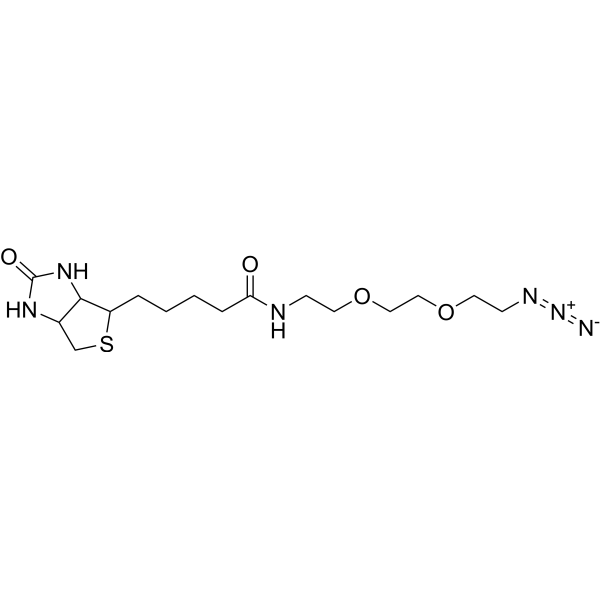
Biotin-PEG2-azide is a PEG-based PROTAC linker can be used in the synthesis of PROTACs. Biotin-PEG2-azide is a click chemistry reagent, it contains an Azide group and can undergo copper-catalyzed azide-alkyne cycloaddition reaction (CuAAc) with molecules containing Alkyne groups. It can also undergo strain-promoted alkyne-azide cycloaddition (SPAAC) reactions with molecules containing DBCO or BCN groups.
|
-
- HY-133174
-
|
|
PROTAC Linkers
|
Cancer
|
|
Biotin-PEG5-azide is a PEG-based PROTAC linker can be used in the synthesis of PROTAC. Biotin-PEG5-azide is a click chemistry reagent, it contains an Azide group and can undergo copper-catalyzed azide-alkyne cycloaddition reaction (CuAAc) with molecules containing Alkyne groups. It can also undergo strain-promoted alkyne-azide cycloaddition (SPAAC) reactions with molecules containing DBCO or BCN groups.
|
-
- HY-140912
-
|
|
PROTAC Linkers
|
Cancer
|
|
Biotin-PEG11-azide is a PEG-based PROTAC linker that can be used in the synthesis of PROTACs . Biotin-PEG11-azide is a click chemistry reagent, it contains an Azide group and can undergo copper-catalyzed azide-alkyne cycloaddition reaction (CuAAc) with molecules containing Alkyne groups. It can also undergo strain-promoted alkyne-azide cycloaddition (SPAAC) reactions with molecules containing DBCO or BCN groups.
|
-
- HY-140916
-
|
|
PROTAC Linkers
|
Cancer
|
|
Dde Biotin-PEG4-azide is a PEG-based PROTAC linker that can be used in the synthesis of PROTACs . Dde Biotin-PEG4-azide is a click chemistry reagent, it contains an Azide group and can undergo copper-catalyzed azide-alkyne cycloaddition reaction (CuAAc) with molecules containing Alkyne groups. It can also undergo strain-promoted alkyne-azide cycloaddition (SPAAC) reactions with molecules containing DBCO or BCN groups.
|
-
- HY-140917
-
|
|
PROTAC Linkers
|
Cancer
|
|
Dde Biotin-PEG4-Picolyl azide is a PEG-based PROTAC linker that can be used in the synthesis of PROTACs . Dde Biotin-PEG4-Picolyl azide is a click chemistry reagent, it contains an Azide group and can undergo copper-catalyzed azide-alkyne cycloaddition reaction (CuAAc) with molecules containing Alkyne groups. It can also undergo strain-promoted alkyne-azide cycloaddition (SPAAC) reactions with molecules containing DBCO or BCN groups.
|
-
- HY-151670
-
|
|
ADC Linker
|
Others
|
|
Biotin-PEG(4)-SS-Azide is a click chemistry reagent containing an azide group. Biotin-PEG(4)-SS-Azide can be used for the research of various biochemical . It contains an azide group and can undergo copper-catalyzed azide-alkyne cycloaddition (CuAAc) with molecules containing alkyne groups. It can also undergo ring strain-promoted alkyne-azide cycloaddition (SPAAC) with molecules containing DBCO or BCN groups.
|
-
- HY-151672
-
|
|
ADC Linker
|
Others
|
|
Biotin-TEG-ATFBA is a click chemistry reagent containing a perfluorophenylazide group. Biotin-TEG-ATFBA forms a highly stable azene intermediate that undergoes insertion and addition reactions (non-intermolecular rearrangement) in moderate to good yields after photolysis. It contains an azide group and can undergo copper-catalyzed azide-alkyne cycloaddition (CuAAc) with molecules containing alkyne groups. It can also undergo ring strain-promoted alkyne-azide cycloaddition (SPAAC) with molecules containing DBCO or BCN groups.
|
-
- HY-140920
-
|
|
PROTAC Linkers
|
Cancer
|
|
UV Cleavable Biotin-PEG2-Azide is a PEG-based PROTAC linker that can be used in the synthesis of PROTACs . UV Cleavable Biotin-PEG2-Azide is a click chemistry reagent, it contains an Azide group and can undergo copper-catalyzed azide-alkyne cycloaddition reaction (CuAAc) with molecules containing Alkyne groups. It can also undergo strain-promoted alkyne-azide cycloaddition (SPAAC) reactions with molecules containing DBCO or BCN groups.
|
-
- HY-W096133
-
|
|
ADC Linker
|
Cancer
|
|
Biotin-PEG1-azide is a cleavable 1 unit PEG ADC linker used in the synthesis of antibody-drug conjugates (ADCs) . Biotin-PEG1-azide is a click chemistry reagent, it contains an Azide group and can undergo copper-catalyzed azide-alkyne cycloaddition reaction (CuAAc) with molecules containing Alkyne groups. It can also undergo strain-promoted alkyne-azide cycloaddition (SPAAC) reactions with molecules containing DBCO or BCN groups.
|
-
- HY-140915
-
|
|
PROTAC Linkers
|
Cancer
|
|
Biotin-PEG4-Picolyl azide is a PEG-based PROTAC linker that can be used in the synthesis of PROTACs . Biotin-PEG4-Picolyl azide is a click chemistry reagent, it contains an Azide group and can undergo copper-catalyzed azide-alkyne cycloaddition reaction (CuAAc) with molecules containing Alkyne groups. It can also undergo strain-promoted alkyne-azide cycloaddition (SPAAC) reactions with molecules containing DBCO or BCN groups.
|
-
- HY-140918
-
|
|
PROTAC Linkers
|
Cancer
|
|
Diazo Biotin-PEG3-azide is a PEG-based PROTAC linker that can be used in the synthesis of PROTACs . Diazo Biotin-PEG3-azide is a click chemistry reagent, it contains an Azide group and can undergo copper-catalyzed azide-alkyne cycloaddition reaction (CuAAc) with molecules containing Alkyne groups. It can also undergo strain-promoted alkyne-azide cycloaddition (SPAAC) reactions with molecules containing DBCO or BCN groups.
|
-
- HY-140944
-
|
|
ADC Linker
|
Cancer
|
|
Biotin-PEG3-SS-azide is a cleavable 3 unit PEG ADC linker used in the synthesis of antibody-drug conjugates (ADCs) . Biotin-PEG3-SS-azide is a click chemistry reagent, it contains an Azide group and can undergo copper-catalyzed azide-alkyne cycloaddition reaction (CuAAc) with molecules containing Alkyne groups. It can also undergo strain-promoted alkyne-azide cycloaddition (SPAAC) reactions with molecules containing DBCO or BCN groups.
|
-
- HY-140132
-
|
|
ADC Linker
|
Cancer
|
|
PC Biotin-PEG3-azide is a cleavable 3 unit PEG ADC linker used in the synthesis of antibody-drug conjugates (ADCs) . PC Biotin-PEG3-azide is a click chemistry reagent, it contains an Azide group and can undergo copper-catalyzed azide-alkyne cycloaddition reaction (CuAAc) with molecules containing Alkyne groups. It can also undergo strain-promoted alkyne-azide cycloaddition (SPAAC) reactions with molecules containing DBCO or BCN groups.
|
-
- HY-117042
-
|
|
PROTAC Linkers
|
Cancer
|
|
Biotin-PEG2-C6-azide is a PEG-based PROTAC linker can be used in the synthesis of PROTAC. Biotin-PEG2-C6-azide is a click chemistry reagent, it contains an Azide group and can undergo copper-catalyzed azide-alkyne cycloaddition reaction (CuAAc) with molecules containing Alkyne groups. It can also undergo strain-promoted alkyne-azide cycloaddition (SPAAC) reactions with molecules containing DBCO or BCN groups.
|
-
- HY-W250735
-
|
|
Biochemical Assay Reagents
|
Others
|
|
NHS-PEG4-biotinidase resistant biotin is a biotinylation reagent with a terminal NHS ester. The hydrophilic PEG spacer increases solubility in aqueous media. The NHS ester can be used to label the primary amines (-NH2) of proteins, amine-modified oligonucleotides, and other amine-containing molecules.
|
-
- HY-112295
-
|
|
Biochemical Assay Reagents
|
Infection
|
|
AzKTB is a capture reagent which bears a short trypsin-cleavable peptide sequence between the azide module and the TAMRA/PEG-biotin labels. AzKTB is a click chemistry reagent, it contains an Azide group and can undergo copper-catalyzed azide-alkyne cycloaddition reaction (CuAAc) with molecules containing Alkyne groups. It can also undergo strain-promoted alkyne-azide cycloaddition (SPAAC) reactions with molecules containing DBCO or BCN groups.
|
-
- HY-140914
-
|
|
PROTAC Linkers
|
Cancer
|
|
Biotin-PEG4-Amide-C6-Azide is a PEG-based PROTAC linker that can be used in the synthesis of PROTACs . Biotin-PEG4-Amide-C6-Azide is a click chemistry reagent, it contains an Azide group and can undergo copper-catalyzed azide-alkyne cycloaddition reaction (CuAAc) with molecules containing Alkyne groups. It can also undergo strain-promoted alkyne-azide cycloaddition (SPAAC) reactions with molecules containing DBCO or BCN groups.
|
-
- HY-W835525
-
|
|
Biochemical Assay Reagents
|
Others
|
|
N-(Biotinoyl)-N''-(iodoacetyl)ethylenediamine is a biotinylated biochemical assay reagent that forms a layer of biotin derivative on the surface of ORMOCER, and triggers the assembly of peptide nanostructured fibers. N-(Biotinoyl)-N''-(iodoacetyl)ethylenediamine can be used for 3D assembly of peptides in molecular electronics, biosensors, and tissue engineering .
|
-
- HY-125658S
-
|
|
Isotope-Labeled Compounds
|
Others
|
|
Biotinyl tyramide-d4 is a deuterated labeled Biotinyl tyramide (HY-125658). Biotinyl tyramide is a biotin derivative used for tyramide signal amplification (TSA), as a reagent to amplify both immunohistochemical signals and in situ hybridization protocols. Biotinyl tyramide can be used for the research of tyramide signal amplification .
|
-
- HY-140921
-
|
|
PROTAC Linkers
|
Cancer
|
|
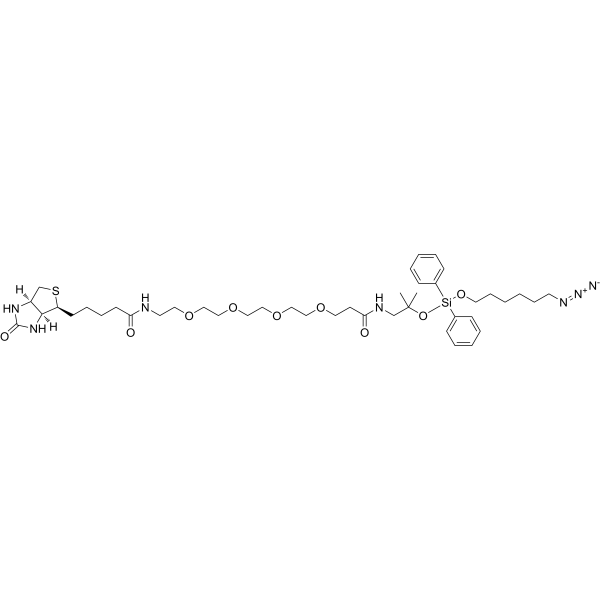
Biotin-PEG4-amino-t-Bu-DADPS-C6-azide is a PEG-based PROTAC linker that can be used in the synthesis of PROTACs . Biotin-PEG4-amino-t-Bu-DADPS-C6-azide is a click chemistry reagent, it contains an Azide group and can undergo copper-catalyzed azide-alkyne cycloaddition reaction (CuAAc) with molecules containing Alkyne groups. It can also undergo strain-promoted alkyne-azide cycloaddition (SPAAC) reactions with molecules containing DBCO or BCN groups.
|
-
- HY-140133
-
|
|
ADC Linker
|
Cancer
|
|
PC-Biotin-PEG4-PEG3-azide is a cleavable 7 unit PEG ADC linker used in the synthesis of antibody-drug conjugates (ADCs) . PC-Biotin-PEG4-PEG3-azide is a click chemistry reagent, it contains an Azide group and can undergo copper-catalyzed azide-alkyne cycloaddition reaction (CuAAc) with molecules containing Alkyne groups. It can also undergo strain-promoted alkyne-azide cycloaddition (SPAAC) reactions with molecules containing DBCO or BCN groups.
|
-
- HY-140581
-
|
|
PROTAC Linkers
|
Cancer
|
|
N-(Azido-PEG3)-N-Biotin-PEG4-methyl ester is a PEG-based PROTAC linker that can be used in the synthesis of PROTACs . N-(Azido-PEG3)-N-Biotin-PEG4-methyl ester is a click chemistry reagent, it contains an Azide group and can undergo copper-catalyzed azide-alkyne cycloaddition reaction (CuAAc) with molecules containing Alkyne groups. It can also undergo strain-promoted alkyne-azide cycloaddition (SPAAC) reactions with molecules containing DBCO or BCN groups.
|
-
- HY-D2004
-
|
|
Fluorescent Dye
|
Inflammation/Immunology
|
|
ATTO 488 streptavidin is a fluorescent reagent that specifically targets and binds to biotin (biotin), formed by the conjugation of ATTO 488 with streptavidin (HY-P3152). ATTO 488 streptavidin enables visualization of the activity of streptavidin immobilized on the surface of polymeric nanoparticles, or acts as a fluorescent probe to detect the selective binding and internalization process of anti-HB-EGF/NA with cells expressing HB-EGF (with no such effect on cells that do not express this receptor). ATTO 488 streptavidin effectively verifies the function of streptavidin conjugated to the surface of nanoparticles and is suitable for research related to atherosclerotic cardiovascular diseases .
|
-
- HY-W130607
-
|
|
Biochemical Assay Reagents
|
Others
|
|
Biotinyl-8-amino-3,6-dioxaoctanoic acid is a biotinylating reagent linked with a PEG chain for improved water solubility. Biotin is an affinity ligand and it is used in biochemical applications such as pull-down assays or for ligating with streptavidin proteins. The carboxylic group can react with amine-containing molecules in the presence of activators such as HATU.
|
-
- HY-135912
-
|
|
PROTAC Linkers
|
Cancer
|
|
Biotin-PEG2-CH2CH2N3 is a PEG-based PROTAC linker that can be used in the synthesis of PROTACs . Biotin-PEG2-CH2CH2N3 is a click chemistry reagent, it contains an Azide group and can undergo copper-catalyzed azide-alkyne cycloaddition reaction (CuAAc) with molecules containing Alkyne groups. It can also undergo strain-promoted alkyne-azide cycloaddition (SPAAC) reactions with molecules containing DBCO or BCN groups.
|
-
- HY-W020784
-
|
|
Biochemical Assay Reagents
|
Others
|
|
3-(N-Maleimidopropionyl)biocytin is a cysteine-specific labeling reagent and non-membrane-permeable probe. 3-(N-Maleimidopropionyl)biocytin covalently modifies the exposed cysteine residues of yeast Tim44, conjugating the biotin moiety to the polypeptide chain. 3-(N-Maleimidopropionyl)biocytin determines the topology of membrane proteins by modifying the exposed cysteine residues on the outer side of the inner mitochondrial membrane .
|
-
- HY-131455A
-
|
|
Biochemical Assay Reagents
|
Others
|
|
Biotin-C1-PEG3-C3-amido-C5-Gly-Arg-Gly-N3 TFA is used for detection of modification site for N-myristoylated and GPI-anchored proteins in blood-stage P. falciparum . Biotin-C1-PEG3-C3-amido-C5-Gly-Arg-Gly-N3 (TFA) is a click chemistry reagent, it contains an Azide group and can undergo copper-catalyzed azide-alkyne cycloaddition reaction (CuAAc) with molecules containing Alkyne groups. It can also undergo strain-promoted alkyne-azide cycloaddition (SPAAC) reactions with molecules containing DBCO or BCN groups.
|
-
- HY-125616
-
|
biotinyl-GHK; Bio-GHK
|
Amyloid-β
Reactive Oxygen Species (ROS)
|
Neurological Disease
|
|
Biotinoyl tripeptide-1 (Biotinyl-GHK) is a biotinylating reagent linked to a GHK (glycyl-L-histidyl-L-lysine) tripeptide. Biotin tripeptide-1 is a bioactive peptide with hair care (improves the appearance and feel of hair) and hair growth effects. Biotinoyl tripeptide-1 has a certain affinity for streptavidin. Biotinoyl tripeptide-1 inhibits the production of ROS and has antioxidant effects. Biotinoyl tripeptide-1 reduces the production of carbonylated amyloid-β (Aβ) and inhibits Aβ aggregation. Biotinoyl tripeptide-1 can be used in the study of neurodegenerative diseases .
|
-
- HY-131442
-
|
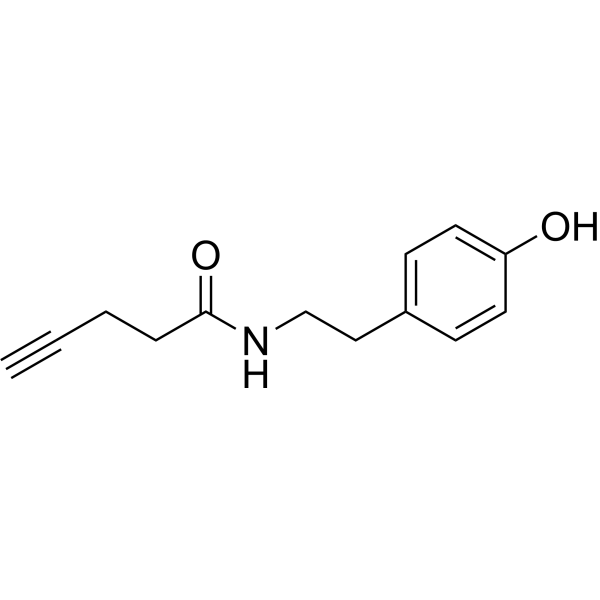
Alkyne tyramide; Alk-Ph
|
Biochemical Assay Reagents
|
Others
|
|
Alkyne-phenol (Alk-Ph) is a clickable ascorbate peroxidase 2 (APEX2) probe. Alkyne-phenol substantially improves APEX-labeling efficiency in intact yeast cells, as it is more cell wall-permeant than APEX2 substrate biotin-phenol (BP). Alkyne-phenol also facilitates the identification of APEX-labeling sites, allowing the unambiguous assignment of membrane topology of mitochondrial proteins . Alkyne-phenol is a click chemistry reagent, it contains an Alkyne group and can undergo copper-catalyzed azide-alkyne cycloaddition (CuAAc) with molecules containing Azide groups.
|
-
- HY-175424
-
|
|
Others
|
Others
|
|
N3-CMC is a click chemistry reagent. N3-CMC containing an azide group can undergo ring strain-promoted alkyne-azide cycloaddition (SPAAC) with molecules containing DBCO or BCN groups. N3-CMC can also undergo copper-catalyzed azide-alkyne cycloaddition (CuAAc) with molecules containing alkyne groups. N3-CMC reacts specifically with the pseudouridine (Ψ)-containing RNA, and biotin is subsequently conjugated to the N3-CMC-Ψ RNA via click chemistry, quantitatively analyzing the dynamic changes of Ψ .
|
-
| Cat. No. |
Product Name |
Type |
-
- HY-D0802
-
|
biotin N-hydroxysuccinimide ester; NHS-biotin
|
Fluorescent Dyes
|
|
Biotin NHS is an amino reactive biotin reagent used in the preparation of biotinylated surfaces or polypeptides.
|
-
- HY-111496
-
|
|
Fluorescent Dyes
|
|
Sulfo-NHS-SS-biotin sodium is a long-chain cleavable and cell-impermeant amine-reactive biotinylation reagent. Sulfo-NHS-SS-biotin sodium can be used for the labeling and purifying of cell-surface protein .
|
-
- HY-D1668
-
|
|
Fluorescent Dyes
|
|
Biotin-11-dCTP is a biotinylated deoxynucleoside triphosphate and an important DNA labeling reagent. In random primer DNA labeling reactions, Biotin-11-dCTP incorporates into newly synthesized DNA strands to generate labeled DNA probes suitable for hybridization applications. In addition, Biotin-11-dCTP can serve as a substrate for terminal deoxynucleotidyl transferase to end-label oligonucleotides for telomere sequence detection, or to label the cut ends of linearized DNA molecules, thereby supporting streptavidin-based electron microscopy analysis. For example, Biotin-11-dCTP can label the cut ends of linearized DNA molecules under the action of dGTP and avian myeloblastosis virus reverse transcriptase .
|
-
- HY-D1669
-
|
|
Fluorescent Dyes
|
|
Biotin-11-UTP is a Biotin-labeled uridine triphosphate (UTP), containing 11 atoms in the linker between biotin and UTP. Biotin-11-UTP can biotinylate transcribed RNA in vitro and has been widely used as labeling RNA probe . Biotin-11-UTP is a click chemistry reagent, it contains an Alkyne group and can undergo copper-catalyzed azide-alkyne cycloaddition (CuAAc) with molecules containing Azide groups.
|
-
- HY-D2004
-
|
|
Fluorescent Dyes
|
|
ATTO 488 streptavidin is a fluorescent reagent that specifically targets and binds to biotin (biotin), formed by the conjugation of ATTO 488 with streptavidin (HY-P3152). ATTO 488 streptavidin enables visualization of the activity of streptavidin immobilized on the surface of polymeric nanoparticles, or acts as a fluorescent probe to detect the selective binding and internalization process of anti-HB-EGF/NA with cells expressing HB-EGF (with no such effect on cells that do not express this receptor). ATTO 488 streptavidin effectively verifies the function of streptavidin conjugated to the surface of nanoparticles and is suitable for research related to atherosclerotic cardiovascular diseases .
|
-
- HY-W591393
-
|
|
Fluorescent Dyes
|
|
Biotin Azide Plus is an oxazolidine reagent that integrates azide-biotin click chemistry and a photocleavable linker arm. Biotin Azide Plus not only reacts with biotin thioether to form stable sulfinimide products, but also enables bioconjugation of proteins and DNA through biotin redox-activated chemical labeling technology. Taking advantage of the streptavidin capture and photo-release properties, Biotin Azide Plus effectively facilitates the isolation of lipid-derived electrophile-protein adducts, thus finding wide application in scientific research related to fields such as SKBR3 cancer .
|
-
- HY-D2361
-
|
|
Fluorescent Dyes
|
|
Adenosine 2'-PEG-Biotin is a biochemical reagent derived from adenosine. Adenosine 2'-PEG-Biotin regulates cell signaling pathways by mimicking the effects of endogenous adenosine and binding to its receptors. Adenosine 2'-PEG-Biotin can be used in the research of bioprobes, biosensors and diagnostic reagents .
|
-
- HY-D1406
-
|
|
Fluorescent Dyes
|
|
L-Biotin-NH-5MP-Br is a biotin-conjugated 5-Methylene pyrrolone (5MP). 5-Methylene pyrrolones (5MPs) are thiol-specific, reversible bioconjugation reagents for cysteine-specific protein modification, that are commonly used for protein bioconjugation .
|
-
- HY-D1546
-
|
|
Fluorescent Dyes
|
|
Biotin-C2-maleimide is an antibody conjugate reagent, can bind to many biomolecules without significantly changing the biological activity of the target molecule .
|
-
- HY-133376
-
|
|
Fluorescent Dyes
|
|
DBCO-NHCO-PEG12-biotin is a PEG-based PROTAC linker that can be used in the synthesis of PROTACs . DBCO-NHCO-PEG12-biotin is a click chemistry reagent, it contains a DBCO group that can undergo strain-promoted alkyne-azide cycloaddition (SPAAC) with molecules containing Azide groups.
|
-
- HY-D0980A
-
|
|
Fluorescent Dyes
|
|
Biotin-DADOO TFA is a biotinylating reagent. Biotin-DADOO TFA is conjugated to CMC thiosulfate. Biotin-DADOO TFA can be used to synthesize biotin-estradiol conjugates for the determination of plasma estradiol concentrations by enzyme immunoassay .
|
-
- HY-D1839
-
|
biotin Tyramide
|
Fluorescent Dyes
|
|
Biotin TSA (200×) (Biotin Tyramide) is a biotin derivative used for tyramide signal amplification (TSA), as a reagent to amplify both immunohistochemical signals and in situ hybridization protocols. Biotinyl tyramide can be used for the research of tyramide signal amplification .
|
-
- HY-D1403
-
|
|
Fluorescent Dyes
|
|
L-Biotin-NH-5MP is a biotin-conjugated 5-Methylene pyrrolone (5MP). 5-Methylene pyrrolones (5MPs) are thiol-specific, reversible bioconjugation reagents for cysteine-specific protein modification, that are commonly used for protein bioconjugation .
|
-
- HY-W591335
-
|
biotin-PEG5-alcohol
|
Fluorescent Dyes
|
|
Biotin-PEG5-OH (Biotin-PEG5-alcohol) is a biotinylation reagent containing a primary hydroxyl that can be derivatized. The PEG spacer provides greater solubility to labeled molecules compared to reagents having only hydrocarbon spacers.
|
-
- HY-W190940
-
|
|
Fluorescent Dyes
|
|
Biotin-PEG4-S-S-acid is a cleavable reagent which can efficiently introduce a biotin moiety to amine-containing biomolecules. The disulfide bond in this linker can be cleaved using reducing agents such as DTT, BME and TCEP to remove the biotin label.
|
-
- HY-D3321
-
|
|
Fluorescent Dyes
|
|
Streptavidin, R-Phycoerythrin conjugate (SAPE) is a streptavidin-labeled phycoerythrin. Streptavidin, R-Phycoerythrin conjugate (SAPE) can be used in conjunction with biotinylated reagents in anti-Biotin/biotin-labeled systems, suitable for flow cytometry detection, microarray analysis, and microplate detection (Ex/Em = 450-500 nm/575 nm).
|
| Cat. No. |
Product Name |
Type |
-
- HY-129832
-
Biotin-azide
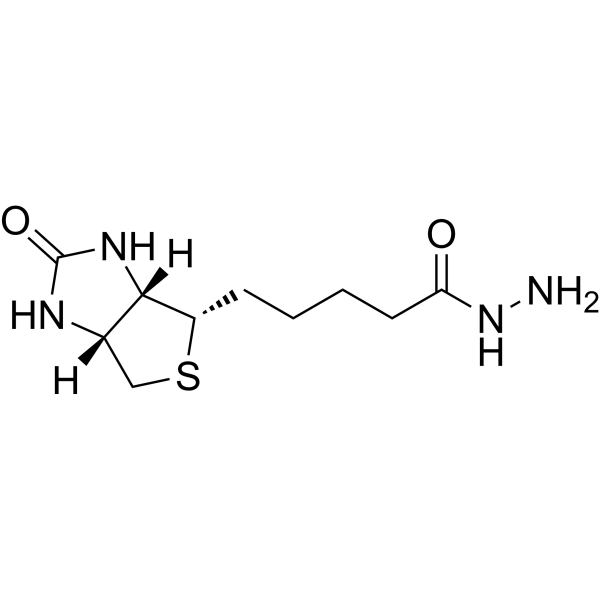
Maximum Cited Publications
8 Publications Verification
N-(3-Azidopropyl)biotinamide
|
Biochemical Assay Reagents
|
|
Biotin-azide (N-(3-Azidopropyl)biotinamide) is a form of biotin with a terminal azide group. Biotin-azide can be used to prepare various biotinylated conjugates via Click Chemistry . Biotin-azide is a click chemistry reagent, it contains an Azide group and can undergo copper-catalyzed azide-alkyne cycloaddition reaction (CuAAc) with molecules containing Alkyne groups. It can also undergo strain-promoted alkyne-azide cycloaddition (SPAAC) reactions with molecules containing DBCO or BCN groups.
|
-
- HY-136769
-
|
|
Biochemical Assay Reagents
|
|
Biotin-HPDP is a biochemical reagent. Biotin-HPDP can couple with GMPS and label free protein thiols. Biotin-HPDP can be used as a biological material or organic compound for life science related research .
|
-
- HY-W808757
-
|
|
Biochemical Assay Reagents
|
|
Biotin-maleimide is a biotinylated biochemical detection reagent that acts as a thiol-specific probe. Biotin-maleimide can also be used to prepare biotin-conjugated polychelators .
|
-
- HY-NP052
-
|
OVA-biotin
|
Biochemical Assay Reagents
|
|
Ovalbumin-Biotin is a biotinylated biochemical reagent. Ovalbumin-Biotin is used to label or detect specific antigens, molecules or cellular structures .
|
-
- HY-100215
-
-
- HY-101885
-
|
biotinamidocaproyl hydrazide; BACH; (+)-biotinamidohexanoic Acid hydrazide; biotin Aminocaproyl Hydrazide
|
Biochemical Assay Reagents
|
|
Biotin LC hydrazide is a long chain protein modification reagent, which can transform periodate-oxidized glycoproteins.
|
-
- HY-D0980
-
|
biotinyl-3,6-dioxaoctanediamine; EZ-Link Amine-PEO2-biotin
|
Biochemical Assay Reagents
|
|
Biotin-DADOO (Biotinyl-3,6-dioxaoctanediamine; EZ-Link Amine-PEO2-Biotin) is a biotin-containing amine compound and a biotinylation reagent. As an amino component, Biotin-DADOO participates in the nucleophilic ring-opening reaction of epoxidized ω-double bonds during the synthesis of biotinylated inhibitor derivatives. Biotin-DADOO can be conjugated with carboxymethyl cellulose derivatives. Biotin-DADOO is involved in the synthesis of biotin-estradiol conjugates for enzyme immunoassays. Biotin-DADOO can be used in the research of influenza A .
|
-
- HY-174892
-
|
|
Biochemical Assay Reagents
|
|
Biotin-PEG5-NHS ester is a heterobifunctional crosslinker as well as a polyethylene glycol-containing bioconjugation reagent. Biotin-PEG5-NHS ester is widely used in scientific research fields such as the construction of highly sensitive biosensors, the development of targeted drug delivery systems (e.g., liposome modification), immunofluorescence imaging, and protein affinity purification, and serves as an important tool for achieving precise labeling and functionalization of biomolecules .
|
-
- HY-W614753
-
|
|
Biochemical Assay Reagents
|
|
Biotin-naphthylamine is a biotinylated biochemical assay reagent, which is a substrate for ascorbate peroxidase 2 (APEX2). Biotin-naphthylamine is utilized as a novel probe for labeling DNA and RNA .
|
-
- HY-113899
-
-
- HY-W835525
-
|
|
Biochemical Assay Reagents
|
|
N-(Biotinoyl)-N''-(iodoacetyl)ethylenediamine is a biotinylated biochemical assay reagent that forms a layer of biotin derivative on the surface of ORMOCER, and triggers the assembly of peptide nanostructured fibers. N-(Biotinoyl)-N''-(iodoacetyl)ethylenediamine can be used for 3D assembly of peptides in molecular electronics, biosensors, and tissue engineering .
|
-
- HY-125501
-
|
biotin-(AC5)2-hydrazide
|
Biochemical Assay Reagents
|
|
Biotin-XX hydrazide (Biotin-(AC5)2-hydrazide) is a carbonyl-reactive biotinylation reagent which contains two aminohexanoic acid spacers. Biotin-XX hydrazide has higher efficiency of avidin-binding .
|
-
- HY-128466
-
|
|
Biochemical Assay Reagents
|
|
N-Biotinyl-L-cysteine is a biotinylated biochemical assay reagent, which is used to detect avidin and biotin through a competitive binding reaction .
|
-
- HY-157920
-
|
N-biotinyl-N'-[2-(N-maleimido)ethyl]piperazine
|
Biochemical Assay Reagents
|
|
Biotin-PE-maleimide (N-Biotinyl-N'-[2-(N-maleimido)ethyl]piperazine) is a bulky, membrane-impermeable, sulfhydryl-containing reagent with a relatively large molecular size. Biotin-PE-maleimide can be used for biotin labeling (such as thiol groups) and detection of proteins or other biomolecules .
|
-
- HY-W351294
-
|
|
Biochemical Assay Reagents
|
|
N-GlcNAc-Biotin is a biotinylated biochemical assay reagent, that can be used as a biological material or organic compound for life science related research .
|
-
- HY-130893A
-
|
|
Biochemical Assay Reagents
|
|
Biotin-EDA TFA is a nucleophilic biotinylation reagent used for the conjugation of various substrates and identification and quantification using biotin-conjugated fluorescent labels .
|
-
- HY-157919
-
|
N-6-(biotinylamino)hexanoyl-N'-[2-(N-maleimido)ethyl]piperazine, hydrochloride
|
Biochemical Assay Reagents
|
|
Biotin-PEAC5-maleimide hydrochloride is a biochemical assay reagent, and can be used in biotin-PEAC5-maleimide (BPM)-labeling assay to assess modification of protein thiols by electrophiles .
|
-
- HY-W129869
-
|
|
Biochemical Assay Reagents
|
|
Biotin sulfoxide is a biochemical reagent that can be used as a biological material or organic compound for life science related research .
|
-
- HY-W127773
-
|
|
Biochemical Assay Reagents
|
|
KNI-1293 Biotin is a biochemical reagent that can be used as a biological material or organic compound for life science related research.
|
-
- HY-137425
-
|
|
Biochemical Assay Reagents
|
|
N-Biotinyl-12-aminododecanoic acid is a compound formed by linking biotin and 12-aminododecanoic acid through an amide bond. N-Biotinyl-12-aminododecanoic acid is used as a biotinylation reagent to test the ligation activity of SimL .
|
-
- HY-131455A
-
|
|
Biochemical Assay Reagents
|
|
Biotin-C1-PEG3-C3-amido-C5-Gly-Arg-Gly-N3 TFA is used for detection of modification site for N-myristoylated and GPI-anchored proteins in blood-stage P. falciparum . Biotin-C1-PEG3-C3-amido-C5-Gly-Arg-Gly-N3 (TFA) is a click chemistry reagent, it contains an Azide group and can undergo copper-catalyzed azide-alkyne cycloaddition reaction (CuAAc) with molecules containing Alkyne groups. It can also undergo strain-promoted alkyne-azide cycloaddition (SPAAC) reactions with molecules containing DBCO or BCN groups.
|
-
- HY-163793
-
-
- HY-100215R
-
|
|
Biochemical Assay Reagents
|
|
Biotin Hydrazide (Standard) is the analytical standard of Biotin Hydrazide (HY-100215). This product is intended for research and analytical applications. Biotin Hydrazide is a carbonyl-reactive biotinylation reagent, which is a carbonyl probe.
|
| Cat. No. |
Product Name |
Target |
Research Area |
-
- HY-P11307
-
|
|
Proteasome
|
Cancer
|
|
Biotin-epoxomicin is a Proteasome subunit binder. Biotin-epoxomicin serves as an affinity reagent for identifying proteasomal catalytic subunits, and facilitates affinity purification of active proteasomal subunits for LC-MS identification. Biotin-epoxomicin can be used to study solid tumors derived from B16 melanoma .
|
-
- HY-125616
-
|
biotinyl-GHK; Bio-GHK
|
Amyloid-β
Reactive Oxygen Species (ROS)
|
Neurological Disease
|
|
Biotinoyl tripeptide-1 (Biotinyl-GHK) is a biotinylating reagent linked to a GHK (glycyl-L-histidyl-L-lysine) tripeptide. Biotin tripeptide-1 is a bioactive peptide with hair care (improves the appearance and feel of hair) and hair growth effects. Biotinoyl tripeptide-1 has a certain affinity for streptavidin. Biotinoyl tripeptide-1 inhibits the production of ROS and has antioxidant effects. Biotinoyl tripeptide-1 reduces the production of carbonylated amyloid-β (Aβ) and inhibits Aβ aggregation. Biotinoyl tripeptide-1 can be used in the study of neurodegenerative diseases .
|
-
- HY-K0218A
-
|
|
|
MCE Streptavidin Agarose 6FF, a 6% highly cross-linked agarose reagent coupled with recombinant streptavidin, is an affinity chromatography medium for separation and purification of biotinylated peptides, antibodies, lectins, etc. The total binding capacity of Streptavidin Agarose 6FF is more than 200 nmol of D-Biotin/mL settled resin.
|
| Cat. No. |
Product Name |
Chemical Structure |
-
- HY-125658S
-
|
|
|
Biotinyl tyramide-d4 is a deuterated labeled Biotinyl tyramide (HY-125658). Biotinyl tyramide is a biotin derivative used for tyramide signal amplification (TSA), as a reagent to amplify both immunohistochemical signals and in situ hybridization protocols. Biotinyl tyramide can be used for the research of tyramide signal amplification .
|
-
| Cat. No. |
Product Name |
|
Classification |
-
- HY-129832
-
Biotin-azide
Maximum Cited Publications
8 Publications Verification
N-(3-Azidopropyl)biotinamide
|
|
Azide
Labeling and Fluorescence Imaging
|
|
Biotin-azide (N-(3-Azidopropyl)biotinamide) is a form of biotin with a terminal azide group. Biotin-azide can be used to prepare various biotinylated conjugates via Click Chemistry . Biotin-azide is a click chemistry reagent, it contains an Azide group and can undergo copper-catalyzed azide-alkyne cycloaddition reaction (CuAAc) with molecules containing Alkyne groups. It can also undergo strain-promoted alkyne-azide cycloaddition (SPAAC) reactions with molecules containing DBCO or BCN groups.
|
-
- HY-130809
-
|
|
|
DBCO
|
|
DBCO-PEG4-Biotin is an azadibenzocyclooctyne-biotin derivative containing a biotin group and 4 PEGs. DBCO-PEG4-Biotin is a versatile biotinylation reagent used for the introduction of a biotin moiety to azide-labeled biomolecules via copper-free strain-promoted alkyne-azide click chemistry (SPAAC) reaction . DBCO-PEG4-Biotin is a click chemistry reagent, it contains a DBCO group that can undergo strain-promoted alkyne-azide cycloaddition (SPAAC) with molecules containing Azide groups.
|
-
- HY-130143
-
|
|
|
Azide
PROTAC Synthesis
|
|
Biotin-PEG3-azide is a PEG-based PROTAC linker can be used in the synthesis of PROTACs. Biotin-PEG3-azide is a click chemistry reagent, it contains an Azide group and can undergo copper-catalyzed azide-alkyne cycloaddition reaction (CuAAc) with molecules containing Alkyne groups. It can also undergo strain-promoted alkyne-azide cycloaddition (SPAAC) reactions with molecules containing DBCO or BCN groups.
|
-
- HY-140921
-
|
|
|
Azide
PROTAC Synthesis
|
|
Biotin-PEG4-amino-t-Bu-DADPS-C6-azide is a PEG-based PROTAC linker that can be used in the synthesis of PROTACs . Biotin-PEG4-amino-t-Bu-DADPS-C6-azide is a click chemistry reagent, it contains an Azide group and can undergo copper-catalyzed azide-alkyne cycloaddition reaction (CuAAc) with molecules containing Alkyne groups. It can also undergo strain-promoted alkyne-azide cycloaddition (SPAAC) reactions with molecules containing DBCO or BCN groups.
|
-
- HY-140910
-
|
|
|
PROTAC Synthesis
Azide
|
|
Biotin-PEG4-azide is a biotin-labeled, PEG-based PROTAC linker that can be used in the synthesis of PROTACs . Biotin-PEG4-azide is a click chemistry reagent, it contains an Azide group and can undergo copper-catalyzed azide-alkyne cycloaddition reaction (CuAAc) with molecules containing Alkyne groups. It can also undergo strain-promoted alkyne-azide cycloaddition (SPAAC) reactions with molecules containing DBCO or BCN groups.
|
-
- HY-131442
-
|
Alkyne tyramide; Alk-Ph
|
|
Labeling and Fluorescence Imaging
Alkynes
|
|
Alkyne-phenol (Alk-Ph) is a clickable ascorbate peroxidase 2 (APEX2) probe. Alkyne-phenol substantially improves APEX-labeling efficiency in intact yeast cells, as it is more cell wall-permeant than APEX2 substrate biotin-phenol (BP). Alkyne-phenol also facilitates the identification of APEX-labeling sites, allowing the unambiguous assignment of membrane topology of mitochondrial proteins . Alkyne-phenol is a click chemistry reagent, it contains an Alkyne group and can undergo copper-catalyzed azide-alkyne cycloaddition (CuAAc) with molecules containing Azide groups.
|
-
- HY-138749
-
|
|
|
Alkynes
PROTAC Synthesis
|
|
Biotin alkyne is a PEG-based PROTAC linker that can be used in the synthesis of PROTACs . Biotin alkyne is a click chemistry reagent, it contains an Alkyne group and can undergo copper-catalyzed azide-alkyne cycloaddition (CuAAc) with molecules containing Azide groups.
|
-
- HY-123916
-
|
|
|
PROTAC Synthesis
DBCO
|
|
DBCO-Biotin is an alkyl chain-based PROTAC linker that can be used in the synthesis of PROTACs . DBCO-Biotin is a click chemistry reagent, it contains a DBCO group that can undergo strain-promoted alkyne-azide cycloaddition (SPAAC) with molecules containing Azide groups.
|
-
- HY-130924
-
|
|
|
BCN
ADC Synthesis
|
|
BCN-PEG3-Biotin is a non-cleavable 3 unit PEG ADC linker used in the synthesis of antibody-drug conjugates (ADCs) . BCN-PEG3-Biotin is a click chemistry reagent, it contains a BCN group that can undergo strain-promoted alkyne-azide cycloaddition (SPAAC) with molecules containing Azide groups.
|
-
- HY-130810
-
|
|
|
DBCO
ADC Synthesis
|
|
DBCO-Sulfo-Link-biotin is a cleavable ADC linker used in the synthesis of antibody-drug conjugates (ADCs) . DBCO-Sulfo-Link-biotin is a click chemistry reagent, it contains a DBCO group that can undergo strain-promoted alkyne-azide cycloaddition (SPAAC) with molecules containing Azide groups.
|
-
- HY-140128
-
|
|
|
PROTAC Synthesis
DBCO
|
|
DBCO-S-S-PEG3-biotin is a PEG-based PROTAC linker that can be used in the synthesis of PROTACs . DBCO-S-S-PEG3-biotin is a click chemistry reagent, it contains a DBCO group that can undergo strain-promoted alkyne-azide cycloaddition (SPAAC) with molecules containing Azide groups.
|
-
- HY-151667
-
|
Decarboxybiotin-N3
|
|
Azide
|
|
Biotin-C5-Azide (DecarboxyBiotin-N3) is a biotin reagent and can be used to prepare biotinylated conjugates . Biotin-C5-Azide is a click chemistry reagent, it contains an Azide group and can undergo copper-catalyzed azide-alkyne cycloaddition reaction (CuAAc) with molecules containing Alkyne groups. It can also undergo strain-promoted alkyne-azide cycloaddition (SPAAC) reactions with molecules containing DBCO or BCN groups.
|
-
- HY-D1668
-
|
|
|
Labeling and Fluorescence Imaging
|
|
Biotin-11-dCTP is a biotinylated deoxynucleoside triphosphate and an important DNA labeling reagent. In random primer DNA labeling reactions, Biotin-11-dCTP incorporates into newly synthesized DNA strands to generate labeled DNA probes suitable for hybridization applications. In addition, Biotin-11-dCTP can serve as a substrate for terminal deoxynucleotidyl transferase to end-label oligonucleotides for telomere sequence detection, or to label the cut ends of linearized DNA molecules, thereby supporting streptavidin-based electron microscopy analysis. For example, Biotin-11-dCTP can label the cut ends of linearized DNA molecules under the action of dGTP and avian myeloblastosis virus reverse transcriptase .
|
-
- HY-136095
-
|
|
|
ADC Synthesis
Tetrazine
|
|
Tetrazine-biotin is a cleavable ADC linker used in the synthesis of antibody-drug conjugates (ADCs) . Tetrazine-biotin is a click chemistry reagent, it contains a Tetrazine group that can undergo an inverse electron demand Diels-Alder reaction (iEDDA) with molecules containing TCO groups.
|
-
- HY-140944
-
|
|
|
ADC Synthesis
Azide
|
|
Biotin-PEG3-SS-azide is a cleavable 3 unit PEG ADC linker used in the synthesis of antibody-drug conjugates (ADCs) . Biotin-PEG3-SS-azide is a click chemistry reagent, it contains an Azide group and can undergo copper-catalyzed azide-alkyne cycloaddition reaction (CuAAc) with molecules containing Alkyne groups. It can also undergo strain-promoted alkyne-azide cycloaddition (SPAAC) reactions with molecules containing DBCO or BCN groups.
|
-
- HY-140132
-
|
|
|
Azide
ADC Synthesis
|
|
PC Biotin-PEG3-azide is a cleavable 3 unit PEG ADC linker used in the synthesis of antibody-drug conjugates (ADCs) . PC Biotin-PEG3-azide is a click chemistry reagent, it contains an Azide group and can undergo copper-catalyzed azide-alkyne cycloaddition reaction (CuAAc) with molecules containing Alkyne groups. It can also undergo strain-promoted alkyne-azide cycloaddition (SPAAC) reactions with molecules containing DBCO or BCN groups.
|
-
- HY-136053
-
|
|
|
ADC Synthesis
Tetrazine
|
|
Tetrazine-PEG4-biotin is a cleavable 4 unit PEG ADC linker used in the synthesis of antibody-drug conjugates (ADCs) . Tetrazine-PEG4-biotin is a click chemistry reagent, it contains a Tetrazine group that can undergo an inverse electron demand Diels-Alder reaction (iEDDA) with molecules containing TCO groups.
|
-
- HY-140127
-
|
|
|
Azide
ADC Synthesis
|
|
Azide-C2-SS-C2-biotin is a cleavable ADC linker used in the synthesis of antibody-drug conjugates (ADCs) . Azide-C2-SS-C2-biotin is a click chemistry reagent, it contains an Azide group and can undergo copper-catalyzed azide-alkyne cycloaddition reaction (CuAAc) with molecules containing Alkyne groups. It can also undergo strain-promoted alkyne-azide cycloaddition (SPAAC) reactions with molecules containing DBCO or BCN groups.
|
-
- HY-140912
-
|
|
|
PROTAC Synthesis
Azide
|
|
Biotin-PEG11-azide is a PEG-based PROTAC linker that can be used in the synthesis of PROTACs . Biotin-PEG11-azide is a click chemistry reagent, it contains an Azide group and can undergo copper-catalyzed azide-alkyne cycloaddition reaction (CuAAc) with molecules containing Alkyne groups. It can also undergo strain-promoted alkyne-azide cycloaddition (SPAAC) reactions with molecules containing DBCO or BCN groups.
|
-
- HY-140915
-
|
|
|
PROTAC Synthesis
Azide
|
|
Biotin-PEG4-Picolyl azide is a PEG-based PROTAC linker that can be used in the synthesis of PROTACs . Biotin-PEG4-Picolyl azide is a click chemistry reagent, it contains an Azide group and can undergo copper-catalyzed azide-alkyne cycloaddition reaction (CuAAc) with molecules containing Alkyne groups. It can also undergo strain-promoted alkyne-azide cycloaddition (SPAAC) reactions with molecules containing DBCO or BCN groups.
|
-
- HY-136050
-
|
|
|
ADC Synthesis
TCO
|
|
TCO-PEG3-Biotin is a cleavable 3 unit PEG ADC linker used in the synthesis of antibody-drug conjugates (ADCs) . TCO-PEG3-Biotin is a click chemistry reagent, it contains a TCO group that can undergo an inverse electron demand Diels-Alder reaction (iEDDA) with molecules containing Tetrazine groups.
|
-
- HY-136031
-
|
|
|
ADC Synthesis
Tetrazine
|
|
Tetrazine-SS-Biotin is a cleavable ADC linker used in the synthesis of antibody-drug conjugates (ADCs) . Tetrazine-SS-Biotin is a click chemistry reagent, it contains a Tetrazine group that can undergo an inverse electron demand Diels-Alder reaction (iEDDA) with molecules containing TCO groups.
|
-
- HY-140924
-
|
|
|
Alkynes
PROTAC Synthesis
|
|
Dde Biotin-PEG4-alkyne is a PEG-based PROTAC linker that can be used in the synthesis of PROTACs . Dde Biotin-PEG4-alkyne is a click chemistry reagent, it contains an Alkyne group and can undergo copper-catalyzed azide-alkyne cycloaddition (CuAAc) with molecules containing Azide groups.
|
-
- HY-140940
-
|
|
|
PROTAC Synthesis
Tetrazine
|
|
Biotin-PEG4-methyltetrazine is a PEG-based PROTAC linker that can be used in the synthesis of PROTACs . Biotin-PEG4-methyltetrazine is a click chemistry reagent, it contains a Tetrazine group that can undergo an inverse electron demand Diels-Alder reaction (iEDDA) with molecules containing TCO groups.
|
-
- HY-140911
-
|
|
|
PROTAC Synthesis
Azide
|
|
Biotin-PEG6-azide is a biotin-labeled, PEG-based PROTAC linker that can be used in the synthesis of PROTACs . Biotin-PEG6-azide is a click chemistry reagent, it contains an Azide group and can undergo copper-catalyzed azide-alkyne cycloaddition reaction (CuAAc) with molecules containing Alkyne groups. It can also undergo strain-promoted alkyne-azide cycloaddition (SPAAC) reactions with molecules containing DBCO or BCN groups.
|
-
- HY-151672
-
|
|
|
Azide
|
|
Biotin-TEG-ATFBA is a click chemistry reagent containing a perfluorophenylazide group. Biotin-TEG-ATFBA forms a highly stable azene intermediate that undergoes insertion and addition reactions (non-intermolecular rearrangement) in moderate to good yields after photolysis. It contains an azide group and can undergo copper-catalyzed azide-alkyne cycloaddition (CuAAc) with molecules containing alkyne groups. It can also undergo ring strain-promoted alkyne-azide cycloaddition (SPAAC) with molecules containing DBCO or BCN groups.
|
-
- HY-140920
-
|
|
|
PROTAC Synthesis
Azide
|
|
UV Cleavable Biotin-PEG2-Azide is a PEG-based PROTAC linker that can be used in the synthesis of PROTACs . UV Cleavable Biotin-PEG2-Azide is a click chemistry reagent, it contains an Azide group and can undergo copper-catalyzed azide-alkyne cycloaddition reaction (CuAAc) with molecules containing Alkyne groups. It can also undergo strain-promoted alkyne-azide cycloaddition (SPAAC) reactions with molecules containing DBCO or BCN groups.
|
-
- HY-135912
-
|
|
|
Azide
PROTAC Synthesis
|
|
Biotin-PEG2-CH2CH2N3 is a PEG-based PROTAC linker that can be used in the synthesis of PROTACs . Biotin-PEG2-CH2CH2N3 is a click chemistry reagent, it contains an Azide group and can undergo copper-catalyzed azide-alkyne cycloaddition reaction (CuAAc) with molecules containing Alkyne groups. It can also undergo strain-promoted alkyne-azide cycloaddition (SPAAC) reactions with molecules containing DBCO or BCN groups.
|
-
- HY-135979
-
|
|
|
DBCO
ADC Synthesis
|
|
DBCO-SS-PEG4-Biotin is a cleavable 4 unit PEG ADC linker used in the synthesis of antibody-drug conjugates (ADCs) . DBCO-SS-PEG4-Biotin is a click chemistry reagent, it contains a DBCO group that can undergo strain-promoted alkyne-azide cycloaddition (SPAAC) with molecules containing Azide groups.
|
-
- HY-136036
-
|
|
|
Tetrazine
ADC Synthesis
|
|
Tetrazine-SS-PEG4-Biotin is a cleavable 4 unit PEG ADC linker used in the synthesis of antibody-drug conjugates (ADCs) . Tetrazine-SS-PEG4-Biotin is a click chemistry reagent, it contains a Tetrazine group that can undergo an inverse electron demand Diels-Alder reaction (iEDDA) with molecules containing TCO groups.
|
-
- HY-140923
-
|
|
|
Alkynes
PROTAC Synthesis
|
|
Biotin-PEG4-amide-Alkyne is a PEG-based PROTAC linker that can be used in the synthesis of PROTACs . Biotin-PEG4-amide-Alkyne is a click chemistry reagent, it contains an Alkyne group and can undergo copper-catalyzed azide-alkyne cycloaddition (CuAAc) with molecules containing Azide groups.
|
-
- HY-126957
-
|
|
|
Azide
PROTAC Synthesis
|
|
Biotin-PEG2-azide is a PEG-based PROTAC linker can be used in the synthesis of PROTACs. Biotin-PEG2-azide is a click chemistry reagent, it contains an Azide group and can undergo copper-catalyzed azide-alkyne cycloaddition reaction (CuAAc) with molecules containing Alkyne groups. It can also undergo strain-promoted alkyne-azide cycloaddition (SPAAC) reactions with molecules containing DBCO or BCN groups.
|
-
- HY-133175
-
|
|
|
PROTAC Synthesis
Azide
|
|
Biotin-PEG7-azide is a PEG-based PROTAC linker can be used in the synthesis of PROTAC. Biotin-PEG7-azide is a click chemistry reagent, it contains an Azide group and can undergo copper-catalyzed azide-alkyne cycloaddition reaction (CuAAc) with molecules containing Alkyne groups. It can also undergo strain-promoted alkyne-azide cycloaddition (SPAAC) reactions with molecules containing DBCO or BCN groups.
|
-
- HY-140928
-
|
|
|
Alkynes
PROTAC Synthesis
|
|
Biotin-PEG4-amino-t-Bu-DADPS-C3-alykne is a PEG-based PROTAC linker that can be used in the synthesis of PROTACs . Biotin-PEG4-amino-t-Bu-DADPS-C3-alykne is a click chemistry reagent, it contains an Alkyne group and can undergo copper-catalyzed azide-alkyne cycloaddition (CuAAc) with molecules containing Azide groups.
|
-
- HY-133174
-
|
|
|
PROTAC Synthesis
Azide
|
|
Biotin-PEG5-azide is a PEG-based PROTAC linker can be used in the synthesis of PROTAC. Biotin-PEG5-azide is a click chemistry reagent, it contains an Azide group and can undergo copper-catalyzed azide-alkyne cycloaddition reaction (CuAAc) with molecules containing Alkyne groups. It can also undergo strain-promoted alkyne-azide cycloaddition (SPAAC) reactions with molecules containing DBCO or BCN groups.
|
-
- HY-140916
-
|
|
|
PROTAC Synthesis
Azide
|
|
Dde Biotin-PEG4-azide is a PEG-based PROTAC linker that can be used in the synthesis of PROTACs . Dde Biotin-PEG4-azide is a click chemistry reagent, it contains an Azide group and can undergo copper-catalyzed azide-alkyne cycloaddition reaction (CuAAc) with molecules containing Alkyne groups. It can also undergo strain-promoted alkyne-azide cycloaddition (SPAAC) reactions with molecules containing DBCO or BCN groups.
|
-
- HY-140918
-
|
|
|
PROTAC Synthesis
Azide
|
|
Diazo Biotin-PEG3-azide is a PEG-based PROTAC linker that can be used in the synthesis of PROTACs . Diazo Biotin-PEG3-azide is a click chemistry reagent, it contains an Azide group and can undergo copper-catalyzed azide-alkyne cycloaddition reaction (CuAAc) with molecules containing Alkyne groups. It can also undergo strain-promoted alkyne-azide cycloaddition (SPAAC) reactions with molecules containing DBCO or BCN groups.
|
-
- HY-140914
-
|
|
|
Azide
PROTAC Synthesis
|
|
Biotin-PEG4-Amide-C6-Azide is a PEG-based PROTAC linker that can be used in the synthesis of PROTACs . Biotin-PEG4-Amide-C6-Azide is a click chemistry reagent, it contains an Azide group and can undergo copper-catalyzed azide-alkyne cycloaddition reaction (CuAAc) with molecules containing Alkyne groups. It can also undergo strain-promoted alkyne-azide cycloaddition (SPAAC) reactions with molecules containing DBCO or BCN groups.
|
-
- HY-151714
-
|
|
|
Tetrazine
|
|
Biotin-MeTz shiyi is a click chemistry reagent with a terminal methyltetrazine group. Biotin-MeTz shiyi, as a biotin derivative, can be used for the preparation of biotinylated conjugates .
|
-
- HY-151741
-
|
|
|
Labeling and Fluorescence Imaging
Tetrazine
|
|
Biotin-PEG4-MeTz is a click chemistry reagent containing a terminal methyltetrazine group that reacts with trans-cyclooctene. Biotin-PEG4-MeTz can be used for the preparation of biotinylated conjugates .
|
-
- HY-W110146
-
|
|
|
Labeling and Fluorescence Imaging
|
|
(3aS,4S,6aR)-Biotin-PEG4-Alkyne is an alkyne-activated biotinylation reagent. (3aS,4S,6aR)-Biotin-PEG4-Alkyne can be reacted with azides via a copper-catalyzed click reaction. Biotin-labeled biomolecules can be bound to avidin or streptavidin for further purification and detection .
|
-
- HY-138503
-
|
|
|
Alkynes
PROTAC Synthesis
|
|
Biotin-PEG3-propargyl is a PEG-based PROTAC linker that can be used in the synthesis of PROTACs . Biotin-PEG3-propargyl is a click chemistry reagent, it contains an Alkyne group and can undergo copper-catalyzed azide-alkyne cycloaddition (CuAAc) with molecules containing Azide groups.
|
-
- HY-140925
-
|
|
|
PROTAC Synthesis
Alkynes
|
|
Diazo Biotin-PEG3-alkyne is a PEG-based PROTAC linker that can be used in the synthesis of PROTACs . Diazo Biotin-PEG3-alkyne is a click chemistry reagent, it contains an Alkyne group and can undergo copper-catalyzed azide-alkyne cycloaddition (CuAAc) with molecules containing Azide groups.
|
-
- HY-140931
-
|
|
|
DBCO
PROTAC Synthesis
|
|
Dde Biotin-PEG4-DBCO is a PEG-based PROTAC linker that can be used in the synthesis of PROTACs . Dde Biotin-PEG4-DBCO is a click chemistry reagent, it contains a DBCO group that can undergo strain-promoted alkyne-azide cycloaddition (SPAAC) with molecules containing Azide groups.
|
-
- HY-140581
-
|
|
|
PROTAC Synthesis
Azide
|
|
N-(Azido-PEG3)-N-Biotin-PEG4-methyl ester is a PEG-based PROTAC linker that can be used in the synthesis of PROTACs . N-(Azido-PEG3)-N-Biotin-PEG4-methyl ester is a click chemistry reagent, it contains an Azide group and can undergo copper-catalyzed azide-alkyne cycloaddition reaction (CuAAc) with molecules containing Alkyne groups. It can also undergo strain-promoted alkyne-azide cycloaddition (SPAAC) reactions with molecules containing DBCO or BCN groups.
|
-
- HY-135939
-
|
|
|
PROTAC Synthesis
DBCO
|
|
DBCO-NHCO-PEG2-Biotin is a PEG-based PROTAC linker that can be used in the synthesis of PROTACs . DBCO-NHCO-PEG2-Biotin is a click chemistry reagent, it contains a DBCO group that can undergo strain-promoted alkyne-azide cycloaddition (SPAAC) with molecules containing Azide groups.
|
-
- HY-135958
-
|
|
|
PROTAC Synthesis
DBCO
|
|
DBCO-NHCO-PEG6-Biotin is a PEG-based PROTAC linker that can be used in the synthesis of PROTACs . DBCO-NHCO-PEG6-Biotin is a click chemistry reagent, it contains a DBCO group that can undergo strain-promoted alkyne-azide cycloaddition (SPAAC) with molecules containing Azide groups.
|
-
- HY-151670
-
|
|
|
Azide
|
|
Biotin-PEG(4)-SS-Azide is a click chemistry reagent containing an azide group. Biotin-PEG(4)-SS-Azide can be used for the research of various biochemical . It contains an azide group and can undergo copper-catalyzed azide-alkyne cycloaddition (CuAAc) with molecules containing alkyne groups. It can also undergo ring strain-promoted alkyne-azide cycloaddition (SPAAC) with molecules containing DBCO or BCN groups.
|
-
- HY-133376
-
|
|
|
DBCO
PROTAC Synthesis
|
|
DBCO-NHCO-PEG12-biotin is a PEG-based PROTAC linker that can be used in the synthesis of PROTACs . DBCO-NHCO-PEG12-biotin is a click chemistry reagent, it contains a DBCO group that can undergo strain-promoted alkyne-azide cycloaddition (SPAAC) with molecules containing Azide groups.
|
-
- HY-140136
-
|
|
|
ADC Synthesis
DBCO
|
|
PC DBCO-PEG3-biotin is a cleavable 3 unit PEG ADC linker used in the synthesis of antibody-drug conjugates (ADCs) . PC DBCO-PEG3-biotin is a click chemistry reagent, it contains a DBCO group that can undergo strain-promoted alkyne-azide cycloaddition (SPAAC) with molecules containing Azide groups.
|
- HY-151649
-
|
|
|
Alkynes
|
|
Biotin-PEG(4)-SS-Alkyne is a click chemistry reagent containing an alkyne group. Biotin-PEG(4)-SS-Alkyne can be used for the research of various biochemical .
|
- HY-140533
-
|
|
|
Azide
|
|
N-(Azido-PEG2)-N-biotin-PEG3-acid is a PEG derivative which contains biotin and carboxylic acid moieties. N-(Azido-PEG2)-N-biotin-PEG3-acid is a click chemistry reagent, it contains an Azide group and can undergo copper-catalyzed azide-alkyne cycloaddition reaction (CuAAc) with molecules containing Alkyne groups .
|
- HY-140927
-
|
UV Cleavable biotin-PEG2-alkyne
|
|
Alkynes
PROTAC Synthesis
|
|
Azido-C3-UV-biotin is a PEG-based PROTAC linker that can be used in the synthesis of PROTACs . Azido-C3-UV-biotin is a click chemistry reagent, it contains an Alkyne group and can undergo copper-catalyzed azide-alkyne cycloaddition (CuAAc) with molecules containing Azide groups.
|
- HY-139107
-
|
|
|
ADC Synthesis
Azide
|
|
Biotin-PEG4-SS-azide is a cleavable, biotin-labeled, ADC linker used in the synthesis of antibody-drug conjugates (ADCs). Biotin-PEG4-SS-azide is a click chemistry reagent, it contains an Azide group and can undergo copper-catalyzed azide-alkyne cycloaddition reaction (CuAAc) with molecules containing Alkyne groups. It can also undergo strain-promoted alkyne-azide cycloaddition (SPAAC) reactions with molecules containing DBCO or BCN groups.
|
- HY-140130
-
|
|
|
ADC Synthesis
Alkynes
|
|
PC Biotin-PEG3-alkyne is a cleavable 3 unit PEG ADC linker used in the synthesis of antibody-drug conjugates (ADCs) . PC Biotin-PEG3-alkyne is a click chemistry reagent, it contains an Alkyne group and can undergo copper-catalyzed azide-alkyne cycloaddition (CuAAc) with molecules containing Azide groups.
|
- HY-140131
-
|
|
|
PROTAC Synthesis
Alkynes
|
|
Biotin-PEG4-PC-PEG4-alkyne is a PEG-based PROTAC linker that can be used in the synthesis of PROTACs . Biotin-PEG4-PC-PEG4-alkyne is a click chemistry reagent, it contains an Alkyne group and can undergo copper-catalyzed azide-alkyne cycloaddition (CuAAc) with molecules containing Azide groups.
|
- HY-140582
-
|
|
|
DBCO
PROTAC Synthesis
|
|
N-(DBCO-PEG4)-N-Biotin-PEG4-NHS is a PEG-based PROTAC linker that can be used in the synthesis of PROTACs . N-(DBCO-PEG4)-N-Biotin-PEG4-NHS is a click chemistry reagent, it contains a DBCO group that can undergo strain-promoted alkyne-azide cycloaddition (SPAAC) with molecules containing Azide groups.
|
- HY-140913
-
|
|
|
PROTAC Synthesis
Azide
|
|
Biotin-PEG23-azide is a PEG-based PROTAC linker that can be used in the synthesis of PROTACs . Biotin-PEG23-azide is a click chemistry reagent, it contains an Azide group and can undergo copper-catalyzed azide-alkyne cycloaddition reaction (CuAAc) with molecules containing Alkyne groups. It can also undergo strain-promoted alkyne-azide cycloaddition (SPAAC) reactions with molecules containing DBCO or BCN groups.
|
- HY-W096133
-
|
|
|
ADC Synthesis
Azide
|
|
Biotin-PEG1-azide is a cleavable 1 unit PEG ADC linker used in the synthesis of antibody-drug conjugates (ADCs) . Biotin-PEG1-azide is a click chemistry reagent, it contains an Azide group and can undergo copper-catalyzed azide-alkyne cycloaddition reaction (CuAAc) with molecules containing Alkyne groups. It can also undergo strain-promoted alkyne-azide cycloaddition (SPAAC) reactions with molecules containing DBCO or BCN groups.
|
- HY-136035
-
|
|
|
ADC Synthesis
Tetrazine
|
|
Methyltetrazine-SS-PEG4-Biotin is a cleavable 4 unit PEG ADC linker used in the synthesis of antibody-drug conjugates (ADCs) . Methyltetrazine-SS-PEG4-Biotin is a click chemistry reagent, it contains a Tetrazine group that can undergo an inverse electron demand Diels-Alder reaction (iEDDA) with molecules containing TCO groups.
|
- HY-136078
-
|
|
|
ADC Synthesis
Tetrazine
|
|
Tetrazine-diazo-PEG4-biotin is a cleavable 4 unit PEG ADC linker used in the synthesis of antibody-drug conjugates (ADCs) . Tetrazine-diazo-PEG4-biotin is a click chemistry reagent, it contains a Tetrazine group that can undergo an inverse electron demand Diels-Alder reaction (iEDDA) with molecules containing TCO groups.
|
- HY-147206
-
|
|
|
Alkynes
|
|
Biotin-PEG600-Alk is a Biotin-labeled Alkyne functionalized polyethylene glycol. Biotin-PEG600-Alk can be used to modify proteins, peptides, and oligonucleotides . Biotin-PEG600-Alk is a click chemistry reagent, it contains an Alkyne group and can undergo copper-catalyzed azide-alkyne cycloaddition (CuAAc) with molecules containing Azide groups.
|
- HY-147206C
-
|
|
|
Alkynes
|
|
Biotin-PEG3400-Alk is a biotin labeled PEG derivative. Biotin is an enzyme co-factor, can be used for labeling protein; PEG is a hydrophilic and water-soluble polymer with low toxicity; Alk (Alkyne), acyclic (branched or unbranched) aliphatic hydrocarbon, can react with azido, which improve the efficiency of biotin binding targets. Biotin-PEG3400-Alk is a click chemistry reagent, it contains an Alkyne group and can undergo copper-catalyzed azide-alkyne cycloaddition (CuAAc) with molecules containing Azide groups.
|
- HY-147206A
-
|
|
|
Alkynes
|
|
Biotin-PEG1000-Alk is a biotin labeled PEG derivative. Biotin is an enzyme co-factor, can be used for labeling protein; PEG is a hydrophilic and water-soluble polymer with low toxicity; Alk (Alkyne), acyclic (branched or unbranched) aliphatic hydrocarbon, can react with azido, which improve the efficiency of biotin binding targets. Biotin-PEG1000-Alk is a click chemistry reagent, it contains an Alkyne group and can undergo copper-catalyzed azide-alkyne cycloaddition (CuAAc) with molecules containing Azide groups.
|
- HY-147206E
-
|
|
|
Alkynes
|
|
Biotin-PEG10000-Alk is a biotin labeled PEG derivative. Biotin is an enzyme co-factor, can be used for labeling protein; PEG is a hydrophilic and water-soluble polymer with low toxicity; Alk (Alkyne), acyclic (branched or unbranched) aliphatic hydrocarbon, can react with azido, which improve the efficiency of biotin binding targets. Biotin-PEG10000-Alk is a click chemistry reagent, it contains an Alkyne group and can undergo copper-catalyzed azide-alkyne cycloaddition (CuAAc) with molecules containing Azide groups.
|
- HY-147206B
-
|
|
|
Alkynes
|
|
Biotin-PEG2000-Alk is a biotin labeled PEG derivative. Biotin is an enzyme co-factor, can be used for labeling protein; PEG is a hydrophilic and water-soluble polymer with low toxicity; Alk (Alkyne), acyclic (branched or unbranched) aliphatic hydrocarbon, can react with azido, which improve the efficiency of biotin binding targets. Biotin-PEG2000-Alk is a click chemistry reagent, it contains an Alkyne group and can undergo copper-catalyzed azide-alkyne cycloaddition (CuAAc) with molecules containing Azide groups.
|
- HY-147206F
-
|
|
|
Alkynes
|
|
Biotin-PEG20000-Alk is a biotin labeled PEG derivative. Biotin is an enzyme co-factor, can be used for labeling protein; PEG is a hydrophilic and water-soluble polymer with low toxicity; Alk (Alkyne), acyclic (branched or unbranched) aliphatic hydrocarbon, can react with azido, which improve the efficiency of biotin binding targets. Biotin-PEG20000-Alk is a click chemistry reagent, it contains an Alkyne group and can undergo copper-catalyzed azide-alkyne cycloaddition (CuAAc) with molecules containing Azide groups.
|
- HY-147206D
-
|
|
|
Alkynes
PROTAC Synthesis
|
|
Biotin-PEG5000-Alk is a PEG-based PROTAC linker that can be used in the synthesis of PROTACs . Biotin-PEG5000-Alk is a click chemistry reagent, it contains an Alkyne group and can undergo copper-catalyzed azide-alkyne cycloaddition (CuAAc) with molecules containing Azide groups.
|
- HY-140137
-
|
|
|
PROTAC Synthesis
DBCO
|
|
WSPC Biotin-PEG3-DBCO is a PEG-based PROTAC linker that can be used in the synthesis of PROTACs . WSPC Biotin-PEG3-DBCO is a click chemistry reagent, it contains a DBCO group that can undergo strain-promoted alkyne-azide cycloaddition (SPAAC) with molecules containing Azide groups.
|
- HY-140930
-
|
|
|
ADC Synthesis
DBCO
|
|
Diazo Biotin-PEG3-DBCO is a cleavable 3 unit PEG ADC linker used in the synthesis of antibody-drug conjugates (ADCs) . Diazo Biotin-PEG3-DBCO is a click chemistry reagent, it contains a DBCO group that can undergo strain-promoted alkyne-azide cycloaddition (SPAAC) with molecules containing Azide groups.
|
- HY-113828
-
|
|
|
PROTAC Synthesis
Alkynes
|
|
Biotin-PEG2-C4-alkyne is a PEG-based PROTAC linker can be used in the synthesis of PROTACs. Biotin-PEG2-C4-alkyne is a click chemistry reagent, it contains an Alkyne group and can undergo copper-catalyzed azide-alkyne cycloaddition (CuAAc) with molecules containing Azide groups.
|
- HY-140917
-
|
|
|
PROTAC Synthesis
Azide
|
|
Dde Biotin-PEG4-Picolyl azide is a PEG-based PROTAC linker that can be used in the synthesis of PROTACs . Dde Biotin-PEG4-Picolyl azide is a click chemistry reagent, it contains an Azide group and can undergo copper-catalyzed azide-alkyne cycloaddition reaction (CuAAc) with molecules containing Alkyne groups. It can also undergo strain-promoted alkyne-azide cycloaddition (SPAAC) reactions with molecules containing DBCO or BCN groups.
|
- HY-117042
-
|
|
|
Azide
PROTAC Synthesis
|
|
Biotin-PEG2-C6-azide is a PEG-based PROTAC linker can be used in the synthesis of PROTAC. Biotin-PEG2-C6-azide is a click chemistry reagent, it contains an Azide group and can undergo copper-catalyzed azide-alkyne cycloaddition reaction (CuAAc) with molecules containing Alkyne groups. It can also undergo strain-promoted alkyne-azide cycloaddition (SPAAC) reactions with molecules containing DBCO or BCN groups.
|
- HY-112295
-
|
|
|
Azide
|
|
AzKTB is a capture reagent which bears a short trypsin-cleavable peptide sequence between the azide module and the TAMRA/PEG-biotin labels. AzKTB is a click chemistry reagent, it contains an Azide group and can undergo copper-catalyzed azide-alkyne cycloaddition reaction (CuAAc) with molecules containing Alkyne groups. It can also undergo strain-promoted alkyne-azide cycloaddition (SPAAC) reactions with molecules containing DBCO or BCN groups.
|
- HY-140133
-
|
|
|
Azide
ADC Synthesis
|
|
PC-Biotin-PEG4-PEG3-azide is a cleavable 7 unit PEG ADC linker used in the synthesis of antibody-drug conjugates (ADCs) . PC-Biotin-PEG4-PEG3-azide is a click chemistry reagent, it contains an Azide group and can undergo copper-catalyzed azide-alkyne cycloaddition reaction (CuAAc) with molecules containing Alkyne groups. It can also undergo strain-promoted alkyne-azide cycloaddition (SPAAC) reactions with molecules containing DBCO or BCN groups.
|
- HY-131455A
-
|
|
|
Azide
|
|
Biotin-C1-PEG3-C3-amido-C5-Gly-Arg-Gly-N3 TFA is used for detection of modification site for N-myristoylated and GPI-anchored proteins in blood-stage P. falciparum . Biotin-C1-PEG3-C3-amido-C5-Gly-Arg-Gly-N3 (TFA) is a click chemistry reagent, it contains an Azide group and can undergo copper-catalyzed azide-alkyne cycloaddition reaction (CuAAc) with molecules containing Alkyne groups. It can also undergo strain-promoted alkyne-azide cycloaddition (SPAAC) reactions with molecules containing DBCO or BCN groups.
|
- HY-172296
-
|
|
|
Alkynes
|
|
Biotinamide-C3-PEG3-C-alkyne is a biotin PEG reagent containing a PEG3 chain linked to a terminal azide which can react with alkyne, BCN, DBCO via Click Chemistry.
|
| Cat. No. |
Product Name |
|
Classification |
-
- HY-D2361
-
|
|
|
Nucleoside Analogs
Adenosine
|
|
Adenosine 2'-PEG-Biotin is a biochemical reagent derived from adenosine. Adenosine 2'-PEG-Biotin regulates cell signaling pathways by mimicking the effects of endogenous adenosine and binding to its receptors. Adenosine 2'-PEG-Biotin can be used in the research of bioprobes, biosensors and diagnostic reagents .
|
Your information is safe with us. * Required Fields.
Inquiry Information
- Product Name:
- Cat. No.:
- Quantity:
- MCE Japan Authorized Agent:

