



1. Search Result
Search Result
Results for "

cell-wall polysaccharides

" in MedChemExpress (MCE) Product Catalog:

21

Inhibitors & Agonists

1

Fluorescent Dyes

4

Biochemical Assay Reagents

4

Natural
Products

Cat. No. Product Name Target Research Areas Chemical Structure
  • HY-N7033

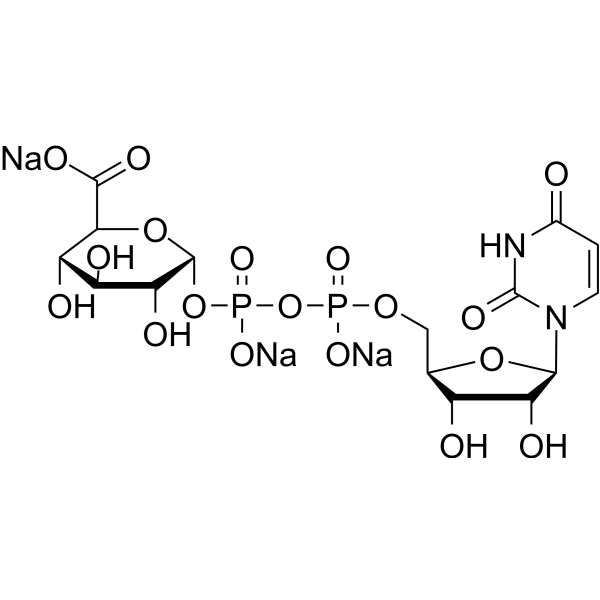
    Uridine 5'-diphosphoglucuronic acid trisodium salt

    Drug Intermediate Metabolic Disease
    UDP-​glucuronic acid trisodium (Uridine-5'-diphosphoglucuronic acid trisodium salt) is a critical precursor for essential glycoconjugates across biological kingdoms, ranging from mammalian glycosaminoglycans and plant cell wall polysaccharides to bacterial capsule glycoglycerolipids.
    UDP-glucuronic acid trisodium
  • HY-107846
    Xylan
    2 Publications Verification

    Endogenous Metabolite Others
    Xylan represents the main hemicellulose component in the secondary plant cell walls of flowering plants. Xylan is a polysaccharide made from units of xylose and contains predominantly β-D-xylose units linked as in cellulose .
    Xylan
  • HY-E70013

    endo-1,3:1,4-β-D-Glucanase

    Endogenous Metabolite Metabolic Disease
    Lichenase, Microorganism (endo-1,3:1,4-β-D-Glucanase) is a specific, endo-(1-3),(1-4)-β-D-glucan 4-glucanohydrolase. Lichenase, Microorganism solubilizes β-glucans from cereal grains and gives gluco-oligosaccharides (GOS). Lichenase, Microorganism can be used in the degradation of polysaccharides in the cell walls .
    Lichenase, Microorganism
  • HY-W145496

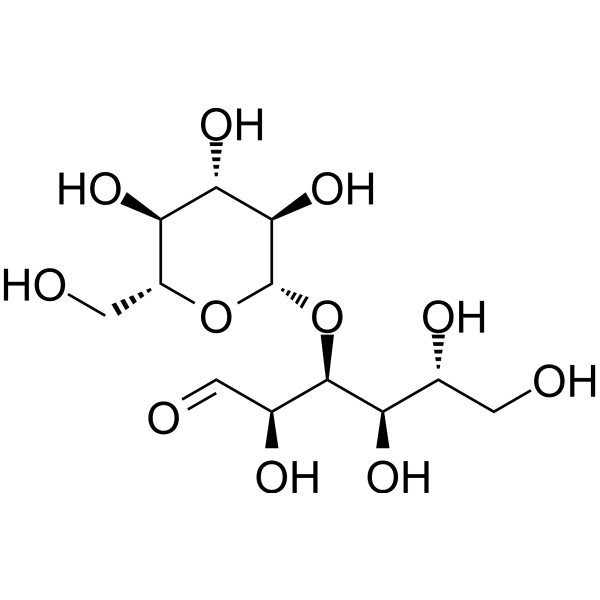
    β-D-Glc-(1-3)-D-Glc

    Biochemical Assay Reagents Others
    Laminaribiose is a disaccharide consisting of two glucose molecules linked by a β-1,3-glycosidic bond. It is ubiquitous in the cell walls of various plants and is a hydrolyzate of the polysaccharide laminarin. Laminaribiose has various applications in biochemical research, especially as a substrate for enzymes involved in carbohydrate metabolism. In addition, it can be used as a carbon source and dietary supplement for certain microorganisms.
    Laminaribiose
  • HY-CE02017

    trans-Feruloyl-coenzyme A

    Biochemical Assay Reagents Metabolic Disease
    trans-Feruloyl-CoA (trans-Feruloyl-coenzyme A) is a derivative of coenzyme A. trans-Feruloyl-CoA also acts as an activated acyl donor involved in the synthesis of cell wall components such as lignin and feruloylated polysaccharides .
    trans-Feruloyl-CoA
  • HY-P2816

    Biochemical Assay Reagents Others
    Xylanase is an enzyme targeting 1,4-β-D-xylan that randomly cleaves the β-1,4 backbone of xylan, a complex polysaccharide in plant cell walls. Xylanase finds applications in the food, feed and industrial sectors, including pulp and paper processing, baking, animal feed improvement, and biotransformation of waste .
    Xylanase
  • HY-P3023

    Bacterial TNF Receptor Infection Metabolic Disease Inflammation/Immunology
    Mutanolysin is a bacteriolytic agent. Mutanolysin is a muralytic enzyme that can prevent hepatic injury. Mutanolysin can digest the cell wall of S. mutans BHT and shows antibacterial activity. Mutanolysin reduces TNF-α production in isolated Kupffer cells stimulated with peptidoglycan-polysaccharide (PG-APS). Mutanolysin can be used for the researches of infection, inflammation and hepatic injury .
    Mutanolysin
  • HY-E70020

    Others Others
    UDP-Glc dehydrogenase (UGDH) catalyzes is a NAD+-dependent enzyme that catalyzes the two-fold oxidation of UDP-glucose (UDP-Glc) to produce UDP-glucuronic acid. UDP-Glc dehydrogenase (UGDH) is a key enzyme in the nucleotide-sugar interconversion pathway necessary for biosynthesis of many cell-wall polysaccharides .
    UDP-Glc dehydrogenase (UGDH)
  • HY-E70115

    Others Others
    Feruloyl esterase plays a major role in the degradation of plant biomass. Feruloyl esterase catalyzes the cleavage and formation of ester bonds between plant cell wall polysaccharide and phenolic acid .
    Feruloyl esterase
  • HY-W145481

    Carob galactomannan, 95%

    Biochemical Assay Reagents Others
    D-Galacto-D-mannan from Ceratonia siliqua is a plant cell wall polysaccharide.
    D-Galacto-D-mannan, 95%
  • HY-125715

    Endogenous Metabolite
    Trigalacturonic acid is an important plant polysaccharide that has the activity of promoting plant cell growth and enhancing cell wall stability. Trigalacturonic acid can improve the ability of plants to adapt to adversity and is widely used as a nutrient in cell culture. Trigalacturonic acid is also used as a food additive with thickening and gelling functions, playing an important role in the food industry.
    Trigalacturonic acid
  • HY-N7033R

    Uridine 5'-diphosphoglucuronic acid trisodium salt (Standard)

    Reference Standards Drug Intermediate Metabolic Disease
    UDP-glucuronic acid (trisodium) (Standard) is the analytical standard of UDP-glucuronic acid (trisodium). This product is intended for research and analytical applications. UDP-?glucuronic acid trisodium (Uridine-5'-diphosphoglucuronic acid trisodium salt) is a critical precursor for essential glycoconjugates across biological kingdoms, ranging from mammalian glycosaminoglycans and plant cell wall polysaccharides to bacterial capsule glycoglycerolipids.
    UDP-glucuronic acid trisodium (Standard)
  • HY-N11102

    dTDP-L-Rhamnose

    Endogenous Metabolite Bacterial Infection
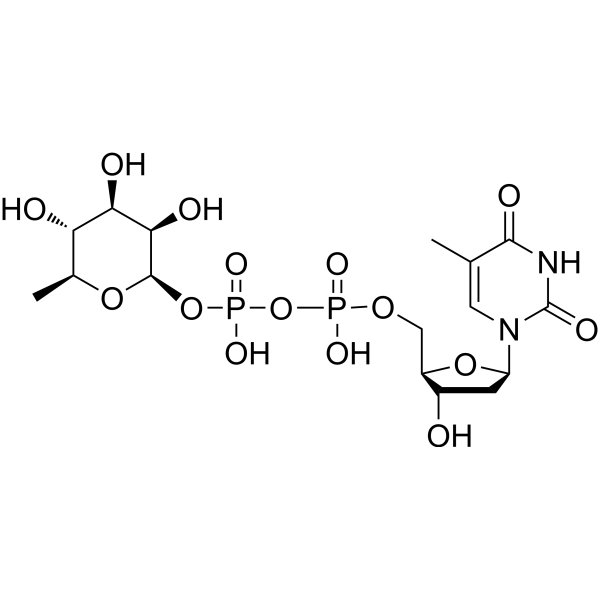
    Thymidine-5'-diphosphate-L-rhamnose (dTDP-L-Rhamnose) is a key activated nucleotide sugar in bacteria, with a KD value of 13 μM for Listeria monocytogenes RmlT. Thymidine-5'-diphosphate-L-rhamnose acts as a high-energy donor for L-Rhamnose (HY-N1420), and is specifically used for the synthesis of bacterial cell wall polysaccharides, capsules and virulence factors .
    Thymidine-5'-diphosphate-L-rhamnose
  • HY-W250315

    pectate sodium

    Glycosidase Bacterial Endogenous Metabolite Others
    Polypectate sodium is a major component of cell wall polysaccharides (pectins) and is used as a carbon source and inducer of polygalacturonase. Polypectate sodium can also be used to evaluate alkaline active and alkaline stable pectate lyases from Streptomyces spp. and to study the optimization of polygalacturonase production from Xanthophyllum spp. and reaction conditions .
    Polypectate sodium
  • HY-N11102A

    dTDP-L-Rhamnose disodium

    Endogenous Metabolite Bacterial Infection
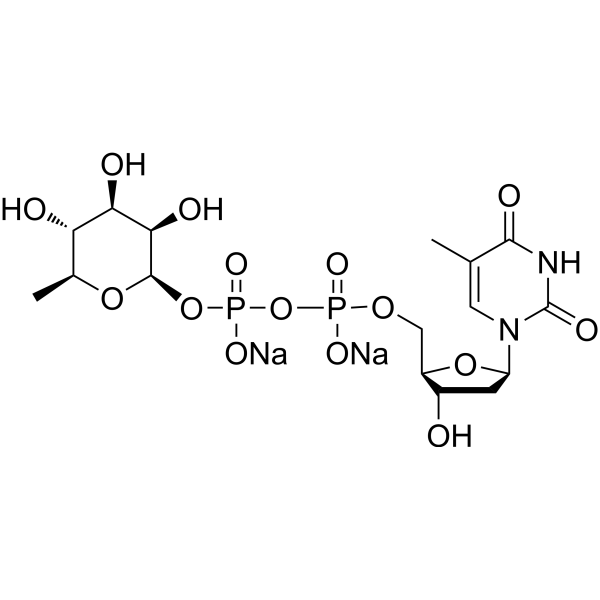
    Thymidine-5'-diphosphate-L-rhamnose (dTDP-L-Rhamnose) disodium is a key activated nucleotide sugar in bacteria, with a KD value of 13 μM for Listeria monocytogenes RmlT. Thymidine-5'-diphosphate-L-rhamnose disodium acts as a high-energy donor for L-Rhamnose (HY-N1420), and is specifically used for the synthesis of bacterial cell wall polysaccharides, capsules and virulence factors .
    Thymidine-5'-diphosphate-L-rhamnose disodium
  • HY-W926978

    Fluorescent Dye Others
    Bromophenol red sodium is a chemical indicator. Bromophenol red sodium binds to lysozyme and inhibits its activity against the bacterial cell wall, but not the polysaccharide component of peptidoglycan .
    Bromophenol red sodium
  • HY-D0011A

    Fluorescent Dye Others
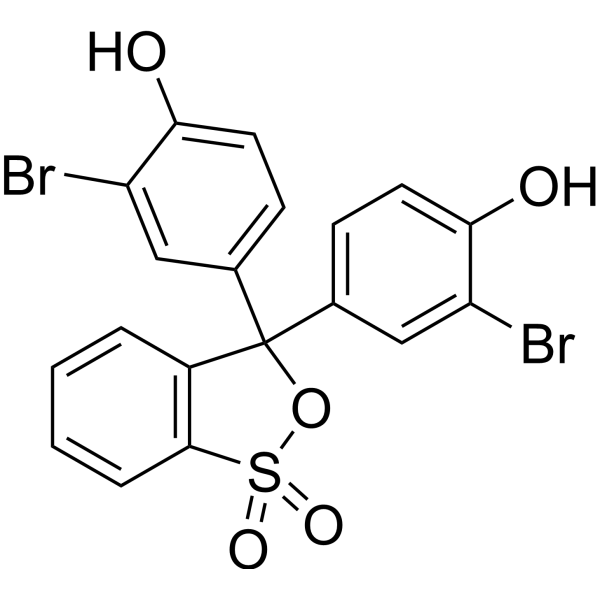
    Bromophenol red (sultone form) is a chemical indicator. Bromophenol red (sultone form) binds to lysozyme and inhibits its activity against the bacterial cell wall, but not the polysaccharide component of peptidoglycan .
    Bromophenol red (sultone form)
  • HY-N17786

    Drug Derivative Others
    2-O-Methyl-D-xylose is a derivative of Xylose (HY-N0537). 2-O-Methyl-D-xylose can be used as a biomarker for the cell wall polysaccharide RG-II, and changes in its content reveal the destructive effect of gene silencing on the cell wall structure .
    2-O-Methyl-D-xylose
  • HY-P2816A

    Biochemical Assay Reagents Metabolic Disease
    Xylanase, Trichoderma viride (EC 3.2.1.8) is the name given to a class of enzymes which degrade the linear polysaccharide beta-1,4-xylan into xylose, thus breaking down hemicellulose, one of the major components of plant cell walls.
    Xylanase, Trichoderma viride
  • HY-E70897

    Biochemical Assay Reagents Metabolic Disease
    Xylanase 10A, Cellvibrio japonicus (EC 3.2.1.8) is the name given to a class of enzymes which degrade the linear polysaccharide beta-1,4-xylan into xylose, thus breaking down hemicellulose, one of the major components of plant cell walls.
    Xylanase 10A, Cellvibrio japonicus
  • HY-P3017A

    Biochemical Assay Reagents Others
    Endo-1,4-β-Xylanase, Trichoderma longibrachiatum (EC 3.2.1.8) is the name given to a class of enzymes which degrade the linear polysaccharide beta-1,4-xylan into xylose, thus breaking down hemicellulose, one of the major components of plant cell walls.
    Endo-1,4-β-Xylanase, Trichoderma longibrachiatum

Inquiry Online

Your information is safe with us. * Required Fields.

Salutation


Country or Region *

Applicant Name *


Organization Name *

Department *


Email Address *


Product Name *

Cat. No.


Requested quantity *

Phone Number *


Remarks

Inquiry Online

Inquiry Information

Product Name:
Cat. No.:
Quantity:
MCE Japan Authorized Agent:

