



1. Search Result
Search Result
Pathways Recommended: MAPK/ERK Pathway
Results for "

classical complement pathway

" in MedChemExpress (MCE) Product Catalog:

22

Inhibitors & Agonists

3

Biochemical Assay Reagents

3

Peptides

10

Inhibitory Antibodies

4

Natural
Products

1

Oligonucleotides

Cat. No. Product Name Target Research Areas Chemical Structure
  • HY-P99965

    SKY59; RO7112689; RG-6107

    Complement System Cardiovascular Disease Metabolic Disease
    Crovalimab (SKY59; RO7112689) is a novel humanized antibody against C5 in a pH-dependent manner with KDs of 15.2 nM and 16.8 μM at pH 7.4 and 5.8, respectively. Crovalimab binds human FcRn with great affinity (KD: 17 μM at pH 6.0). Crovalimab can block cleavage of C5 by the C5 convertase and inhibite the activity of a C5 variant (p.Arg885His). Crovalimab inhibits C5b-9 formation significantly in all three complement pathways, the classical pathway (CP), lectin pathway (LP), and alternative pathway (AP). Crovalimab has the potential for paroxysmal nocturnal hemoglobinuria (PNH) and complement-mediated diseases research .
    Crovalimab
  • HY-P1036
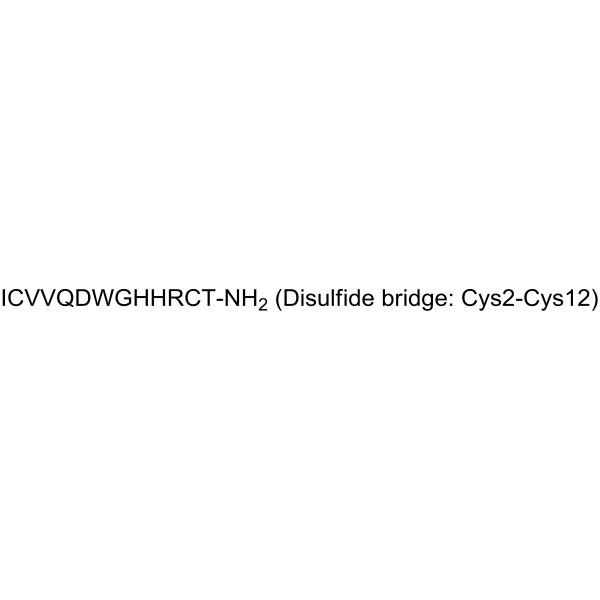
    Compstatin
    4 Publications Verification

    Complement System Others
    Compstatin, a 13-residue cyclic peptide, is a potent inhibitor of the complement system C3 with species specificity. Compstatin binds to baboon C3 and is resistant to proteolytic cleavage in baboon blood (similar to humans). Compstatin inhibits only the activation of primates’ complement system. Compstatin exhibits IC50 values of 63 μM and 12 μM for classical and alterative complement pathway, respectively .
    Compstatin
  • HY-P990545
    Tanruprubart
    5 Publications Verification

    ANX005

    Complement System Neurological Disease
    Tanruprubart (ANX005) is a C1q inhibitor and C1q depleter. Tanruprubart is a human antibody expressed in CHO cells, with huIgG1 heavy chains and huκ light chains, and its predicted molecular weight (MW) is 145 kDa. For the isotype control of Tanruprubart, refer to Human IgG1 kappa, Isotype Control (HY-P99001). The IC50 of Tanruprubart is 346 ng/mL for humans and 259 ng/mL for rats; its EC50 is 3.8 ng/mL for humans, 5.2 ng/mL for rats, and 9.9 ng/mL for mice. Tanruprubart is applicable to the research of Guillain-Barré syndrome and Alzheimer's disease .
    Tanruprubart
  • HY-NP0194A

    Complement System Cardiovascular Disease Infection Neurological Disease Metabolic Disease Inflammation/Immunology
    C1q Protein (mouse) is a complement protein and is a recognition molecule of the classical pathway, performs a diverse range of complement and non-complement functions. C1q Protein (mouse) binds various ligands derived from self, non-self, and altered self and modulate the functions of immune
    and non-immune cells. C1q Protein (mouse) can be used for the research of mutiple disease .
    C1q Protein (mouse)
  • HY-P99358

    GSK 2398852; Anti-Serum Amyloid P/SAP Reference Antibody (dezamizumab)

    Complement System Inflammation/Immunology
    Dezamizumab is a fully humanized clonal IgG1 antibody against serum amyloid P component (SAP) with complement activation and amyloid clearance-inducing activities. Dezamizumab binds to SAP associated with amyloid deposits to form complexes that activate complement and mediate phagocytic clearance, triggering activation of the classical complement pathway. Dezamizumab can be used for the research of systemic amyloidosis .
    Dezamizumab
  • HY-P990091

    SAR 445088

    Complement System Inflammation/Immunology
    Riliprubart (SAR 445088) is an anti-C1s humanized IgG4 monoclonal antibody that inhibits activated C1s in the proximal portion of the classical complement system. Riliprubart selectively inhibits activated C1s and prevents the enzymatic action of C1 on its substrates C4 and C2, thus inhibiting the formation of the classical pathway C3 convertase, C4b2a. Riliprubart can be used to study complement-mediated diseases such as systemic lupus erythematosus. Recommend Isotype Controls: Human IgG4 (S228P) kappa, Isotype Control (HY-P99003) .
    Riliprubart
  • HY-145720

    ALN-CC5

    Complement System Small Interfering RNA (siRNA) Metabolic Disease
    Cemdisiran (ALN-CC5) is an N-acetylgalactosamine-conjugated RNAi agent and also a complement component C5 inhibitor. Cemdisiran targets C5 mRNA, cleaves C5 mRNA via the endogenous RNA interference pathway, and inhibits the production of C5 protein in the liver. Cemdisiran exerts a dose-dependent inhibitory effect on total C5 concentrations in cynomolgus monkeys. When used in combination with Pozelimab (HY-P99786) in cynomolgus monkeys, Cemdisiran achieves a more sustained and complete inhibitory effect on complement activity. Cemdisiran can be used in the research of paroxysmal nocturnal hemoglobinuria and other complement-mediated diseases .
    Cemdisiran
  • HY-P990025

    ARGX-117

    Complement System Inflammation/Immunology
    Empasiprubar (ARGX-117) is a humanized inhibitory monoclonal antibody targeting complement C2. Empasiprubar binds to the Sushi-2 domain of C2, preventing the formation of C3 pre convertase and inhibiting the activation of classical and lectin pathways upstream of C3 activation. Empasiprubar can prevent complement mediated autoimmune hemolytic anemia and antibody mediated organ transplant rejection. Empasiprubar can prevent neuroglial lymphoconjunctival injury in GM1 antibody mediated mouse models .
    Empasiprubart
  • HY-N2996

    HIV Protease Infection
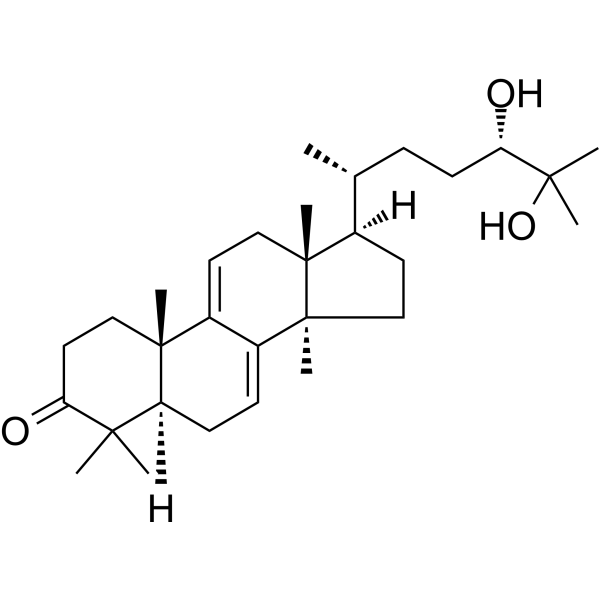
    Ganodermanondiol is a melanogenesis inhibitor isolated from the Ganoderma lucidum .Ganodermanondiol exhibits potent cytoprotective effects on tert-butyl hydroperoxide-induced hepatotoxicity . Ganodermanondiol shows significant anti-HIV-1 protease activity with an IC50 of 90 μM . Ganodermanondiol exhibits a strong anticomplement activity against the classical pathway of the complement system with an IC50 of 41.7μM .
    Ganodermanondiol
  • HY-NP0194C

    Complement System Inflammation/Immunology
    C1q Protein (rat) is a complement protein and is a recognition molecule of the classical pathway, performs a diverse range of complement and non-complement functions. C1q Protein (rat) binds various ligands derived from self, non-self, and altered self and modulate the functions of immune
    and non-immune cells. C1q Protein (rat) can be used for the research of mutiple disease .
    C1q Protein (rat)
  • HY-P1036A
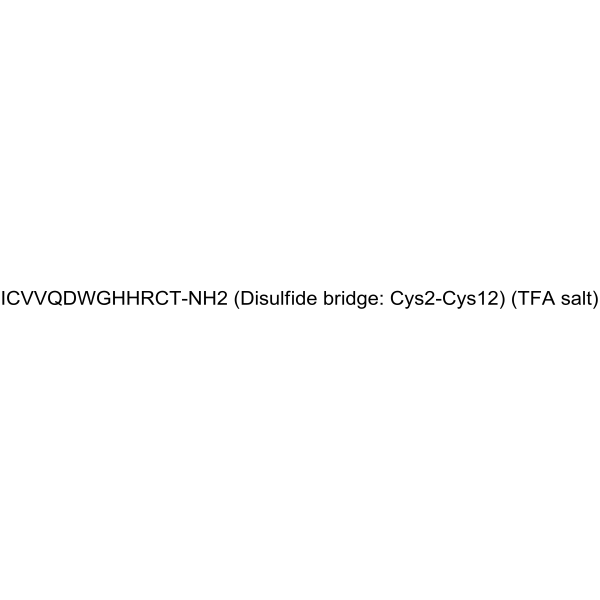
    Compstatin TFA
    4 Publications Verification

    Complement System Others
    Compstatin TFA, a 13-residue cyclic peptide, is a potent inhibitor of the complement system C3 with species specificity. Compstatin TFA binds to baboon C3 and is resistant to proteolytic cleavage in baboon blood (similar to humans). Compstatin TFA inhibits only the activation of primates’ complement system. Compstatin TFA exhibits IC50 values of 63 μM and 12 μM for classical and alterative complement pathway, respectively .
    Compstatin TFA
  • HY-Y0641
    3-Phenoxybenzaldehyde
    1 Publications Verification

    m-Phenoxybenzaldehyde

    Complement System Inflammation/Immunology
    3-Phenoxybenzaldehyde has weak complement classical pathway inhibition and hemolytic activity .
    3-Phenoxybenzaldehyde
  • HY-P10827

    Complement System Inflammation/Immunology
    PIC1 PA, a 15 amino-acid peptide, is a potent PIC1 analog that inhibits classical pathway mediated complement activation. PIC1 PA functionally disrupts the C1s-C1r-C1r-C1s/MASPs interaction with collagen-like region (CLR) of C1q/MBL, respectively. PIC1 PA specifically binds to the CLR of C1q and bounds to purified C1q with a mean equilibrium dissociation constant (KD) of 33.3 nM .
    PIC1 PA
  • HY-P991886

    Complement System Neurological Disease
    ANX-M1 is a blood-brain barrier-permeable anti-C1q antibody. ANX-M1 can slow down the progression of retinal degeneration following photo-oxidative damage. ANX-M1 has been incorporated into nanocarriers to evaluate its brain delivery efficacy in a mouse model of Alzheimer's disease. ANX-M1 is applicable for research on age-related macular degeneration and Alzheimer's disease [1] .
    ANX-M1 (Human IgG1)
  • HY-N12265

    Others Inflammation/Immunology
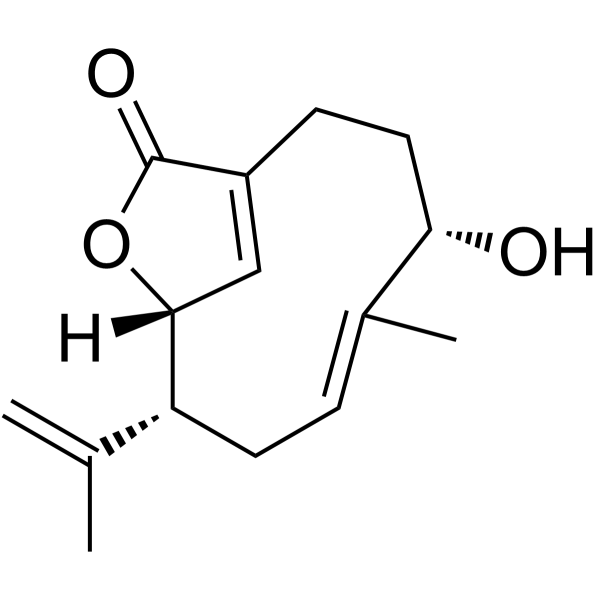
    Versicolactone B is a sesquiterpene that can be isolated from Viola yedoensis. Versicolactone B exhibits anti-complement activity against the classical pathway and the alternative pathway .
    Versicolactone B
  • HY-NP0194B

    Complement System Inflammation/Immunology
    C1q Protein (rabbit) is a complement protein and is a recognition molecule of the classical pathway, performs a diverse range of complement and non-complement functions. C1q Protein (rabbit) binds various ligands derived from self, non-self, and altered self and modulate the functions of immune
    and non-immune cells. C1q Protein (rabbit) can be used for the research of mutiple disease .
    C1q Protein (rabbit)
  • HY-P992463

    Ser/Thr Protease Endocrinology
    SHR-2010 is a fully humanized monoclonal antibody targeting MASP-2. SHR-2010 selectively inhibits lectin pathway activation without affecting classical or alternative complement pathways. SHR-2010 can be used for the research of IgA nephropathy .
    SHR-2010
  • HY-P991022

    NM8074

    Complement System Endocrinology
    Ruxoprubart (NM8074) is an inhibitor of complement factor B (Bb subunit). Ruxoprubart selectively binds to active Bb to inhibit the alternative complement pathway without affecting the classical complement pathway. By blocking the activities of AP C3 and C5 convertases, Ruxoprubart effectively inhibits red blood cell hemolysis and reduces C3b deposition, thereby preventing intravascular and extravascular hemolysis. Ruxoprubart can be used in research related to paroxysmal nocturnal hemoglobinuria, atypical hemolytic uremic syndrome, C3 glomerulopathy, and IgA nephropathy .
    Ruxoprubart
  • HY-P991954

    Complement System Syk Inflammation/Immunology Cancer
    GT103 is a human-derived monoclonal antibody targeting complement factor H (CFH). GT103 binds to a conformationally distinct epitope of CFH on tumor cells. GT103 activates the classical complement pathway, induces complement-dependent cytotoxicity, and triggers antibody-dependent cellular phagocytosis (ADCP) of tumor cells. GT103 increases calreticulin translocation to tumor cell plasma membranes. GT103 mediates B-cell activation via Syk kinase phosphorylation. GT103 inhibits tumor growth and metastasis in animal models. GT103 can be used for the research of non-small cell lung cancer .
    GT103
  • HY-N7955

    Others Others
    23-O-Acetylcimigenol-3-O-α-L-arabinopyranside (Compound 1) is a triterpene glycoside found in the rhizomes of Cimicifuga heracleifolia.23-O-Acetylcimigenol-3-O-α-L-arabinopyranside does not inhibit the classical pathway of the complement system .
    23-O-Acetylcimigenol-3-O-α-L-arabinopyranside
  • HY-N17326

    Acyltransferase Phosphatase Interleukin Related Metabolic Disease Inflammation/Immunology
    Ilekudinol B is an inhibitor of ACAT and PTP1B, with an IC50 of 5.3 μM and a Ki of 11.6 μM against human PTP1B. Ilekudinol B inhibits the classical pathway of the complement system, with an IC50 of 51 μM. Ilekudinol B inhibits TNF-α-induced cellular IL-8 secretion, promotes glucose uptake in skeletal muscle myotubes, and acts as an insulin mimetic and insulin sensitizer. Ilekudinol B can be used in research related to type 2 diabetes, obesity, and inflammatory diseases .
    Ilekudinol B
  • HY-P992456

    Complement System Cardiovascular Disease Endocrinology
    SAR-443809 is a selective alternative complement system inhibitor and monoclonal antibody targeting complement factor Bb. SAR-443809 blocks the cleavage of C3 and factor B by selectively binding to the activated form of factor Bb, with a KD of 7.3 nM for human factor Bb. SAR-443809 inhibits the amplification loop of the alternative complement pathway and C3 activation, reduces C3b deposition, and blocks the activation of pathways associated with intravascular and extravascular hemolysis. SAR-443809 can be used for the research of hematological and renal disorders mediated by abnormal alternative complement pathway .
    SAR-443809

Inquiry Online

Your information is safe with us. * Required Fields.

Salutation


Country or Region *

Applicant Name *


Organization Name *

Department *


Email Address *


Product Name *

Cat. No.


Requested quantity *

Phone Number *


Remarks

Inquiry Online

Inquiry Information

Product Name:
Cat. No.:
Quantity:
MCE Japan Authorized Agent:

