1. Search Result
Search Result
Results for "

cognition-enhancing

" in MedChemExpress (MCE) Product Catalog:

29

Inhibitors & Agonists

4

Natural
Products

Cat. No. Product Name Target Research Areas Chemical Structure
  • HY-14564A
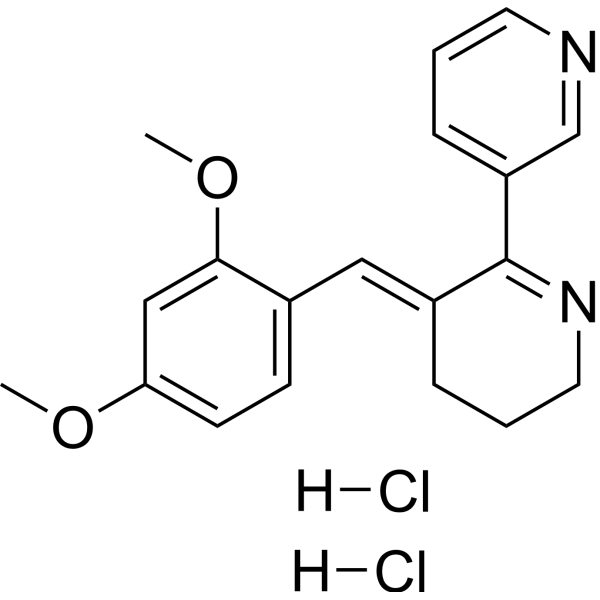
    GTS-21 dihydrochloride
    Maximum Cited Publications
    14 Publications Verification

    DMXB-A; DMBX-anabaseine

    nAChR 5-HT Receptor Inflammation/Immunology
    GTS-21 dihydrochloride is a selective alpha7 nicotinic acetylcholine receptor (α7-nAChR) agonist with anti inflammatory and cognition enhancing activities. GTS-21 dihydrochloride is also a α4β2 (Ki=20 nM for humanα4β2) and 5-HT3A receptor (IC50=3.1 μM) antagonist .
    GTS-21 dihydrochloride
  • HY-B0340

    DM9384; DZL-221

    nAChR iGluR mGluR PKC GABA Receptor Calcium Channel Neurological Disease
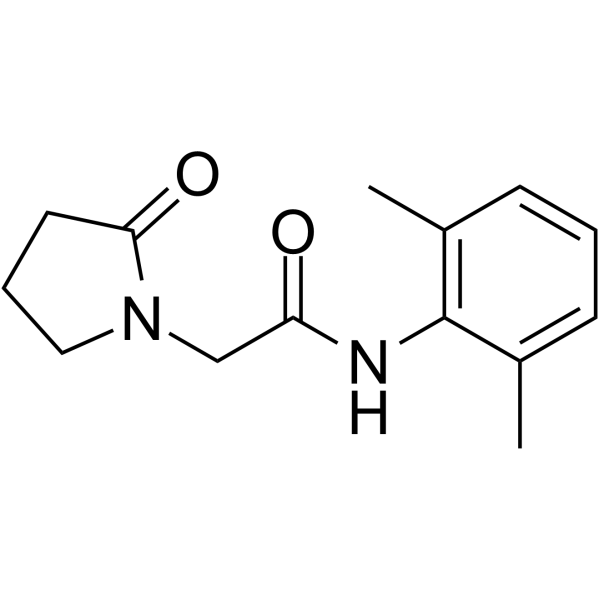
    Nefiracetam is a cognition-enhancing agent. Nefiracetam is an activator of nAChR, N-methyl-D-aspartate receptor (NMDAR), mGluR5, PKC, gamma-aminobutyric acid (GABA), and N/L-type Ca 2+ channels. Nefiracetam promotes neuroplasticity and enhances neuroprotection. Nefiracetam can be used in Alzheimer's disease, epilepsy, and cerebral ischemia research .
    Nefiracetam
  • HY-122924

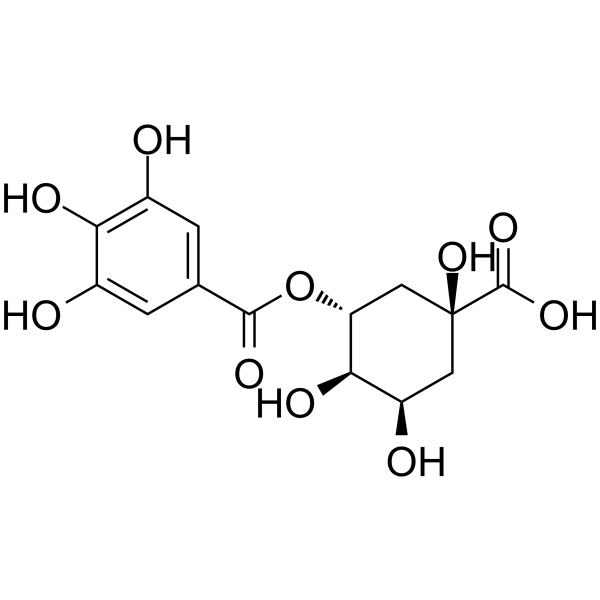
    3-Galloylquinic acid

    Others Neurological Disease
    Theogallin (3-Galloylquinic acid) is an active ingredient in decaffeinated green tea extract. Theogallin has antidepressive and cognition enhancing effect .
    Theogallin
  • HY-109968

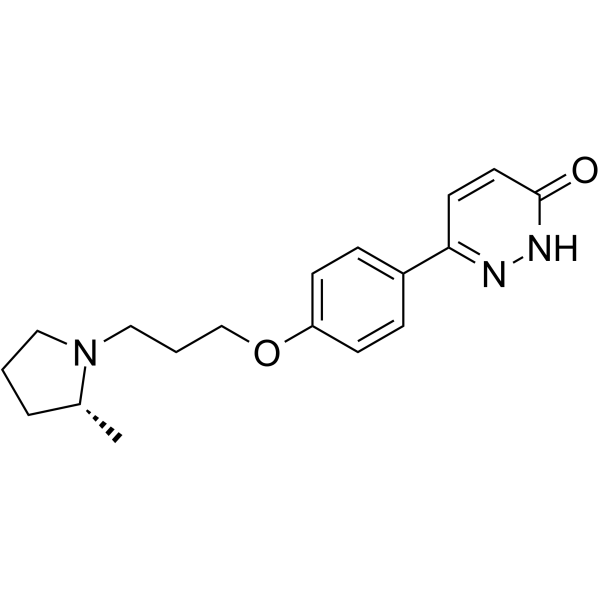
    CEP-26401

    Histamine Receptor Neurological Disease Metabolic Disease
    Irdabisant (CEP-26401) is a selective, orally active and blood-brain barrier (BBB) penetrant histamine H3 receptor (H3R) inverse agonist/inverse agonist with Ki values of 7.2 nM and 2.0 nM for rat H3R and human H3R, respectively. Irdabisant has relatively low inhibitory activity against hERG current with an IC50 of 13.8 μM. Irdabisant has cognition-enhancing and wake-promoting activities in the rat social recognition model. Irdabisant can be used to research schizophrenia or cognitive impairment .
    Irdabisant
  • HY-108403

    β-Phenyl-GABA; 4-Amino-3-phenylbutanoic acid

    GABA Receptor Neurological Disease
    Phenibut (β-Phenyl-GABA) is a GABA-B agonist . Phenibut acts as a GABA-mimetic, primarily at GABAB receptors. Phenibut has anxiolytic and nootropic (cognition enhancing) effects .
    Phenibut
  • HY-W041333

    β-Phenyl-GABA hydrochloride; 4-Amino-3-phenylbutanoic acid hydrochloride; 4-Amino-3-phenylbutyric acid hydrochloride

    GABA Receptor Neurological Disease
    Phenibut (β-Phenyl-GABA) hydrochloride is an orally active GABA-B agonist . Phenibut hydrochloride acts as a GABA-mimetic, primarily at GABAB?receptors. Phenibut hydrochloride has anxiolytic and nootropic (cognition enhancing) effects .
    Phenibut hydrochloride
  • HY-W020468
    Linopirdine
    2 Publications Verification

    DuP 996

    Potassium Channel TRP Channel Neurological Disease
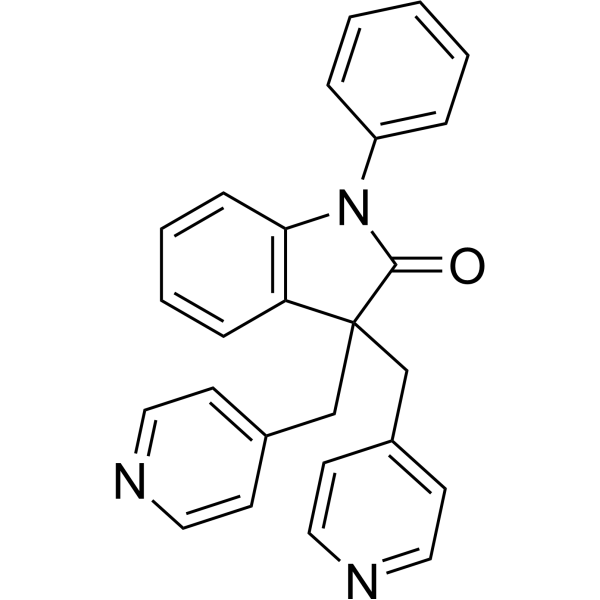
    Linopirdine (DuP 996) is an orally active, selective M-type K + current (IM; Kv7; KCNQ Channels) inhibitor with an IC50 of 2.4 μM. Linopirdine is a TRPV1 agonist. Linopirdine, a putative cognition enhancing agent, increases acetylcholine release in rat brain tissue .
    Linopirdine
  • HY-103506

    NO-711 hydrochloride

    GABA Receptor Neurological Disease
    NNC-711 (NO-711 hydrochloride) is a potent and selective inhibitor of GAT-1 (GABA transporter 1) with IC50 values of 0.04, 0.38, 171, 1700, 349, 622 μM for human GAT-1, rat GAT-1, rGAT-2, hGAT-3, rGAT-3, hBGT-3, respectively. NNC-711 has anticonvulsant and analgesic effect in vivo and exhibits cognition-enhancing activity .
    NNC-711
  • HY-106003

    Phosphodiesterase (PDE) Neurological Disease Inflammation/Immunology
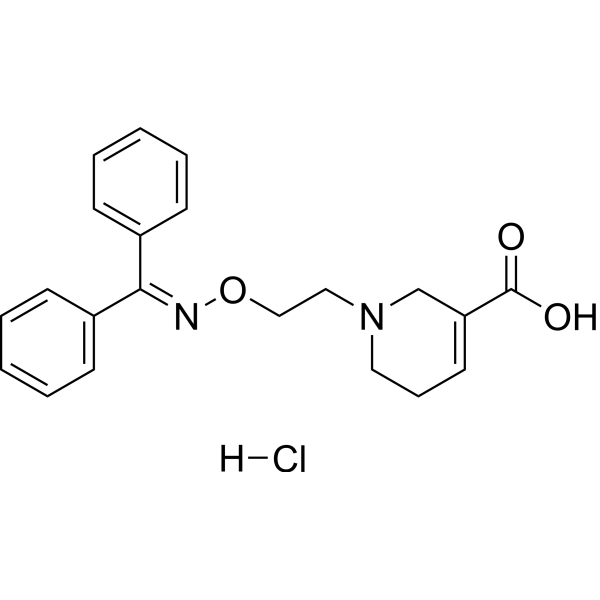
    GSK356278 is a potent, selective, orally bioavailable and brain-penetrant inhibitor of phosphodiesterase 4 (PDE4), with pIC50s of 8.6, 8.8, and 8.7 for human PDE4A, PDE4B, and PDE4D, respectively. GSK356278 has anti-inflammatory activity, and exhibits anxiolytic and cognition-enhancing effects .
    GSK356278
  • HY-W068771

    Endogenous Metabolite Neurological Disease Metabolic Disease
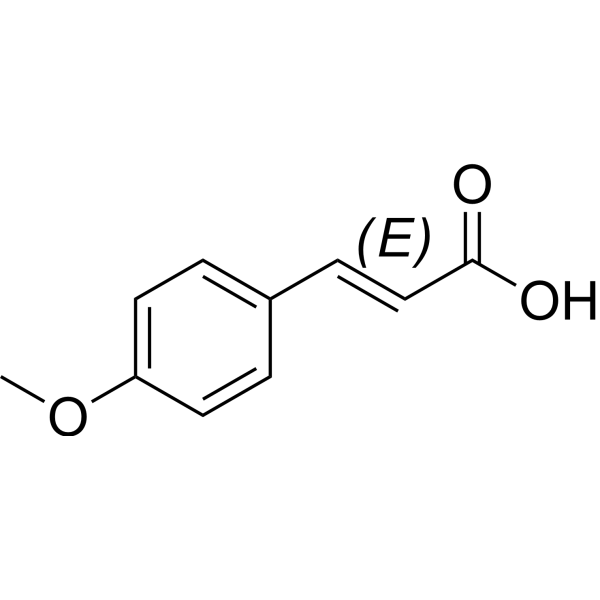
    (E)-3-(4-Methoxyphenyl)acrylic acid (compound 3) is isolated from Arachis hypogaea, Scrophularia buergeriana Miquel, Aquilegia vulgaris, Anigozanthos preissii and so on. (E)-3-(4-Methoxyphenyl)acrylic acid shows significant hepatoprotective activity, anti-amnesic, cognition-enhancing activity, antihyperglycemic, and neuroprotective activities .
    (E)-3-(4-Methoxyphenyl)acrylic acid
  • HY-116463

    Sigma Receptor Neurological Disease
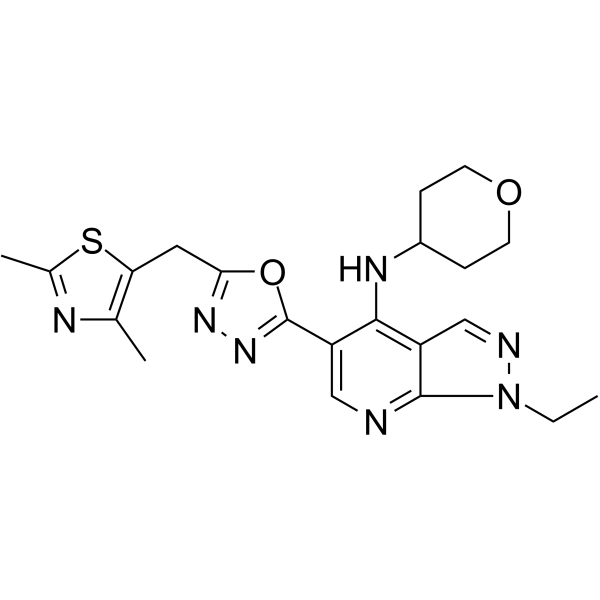
    E1R is a positive allosteric modulator of sigma-1 receptors (Sig1R PAM) with cognition-enhancing activity .
    E1R
  • HY-108621

    Phosphodiesterase (PDE) Neurological Disease Metabolic Disease Inflammation/Immunology Cancer
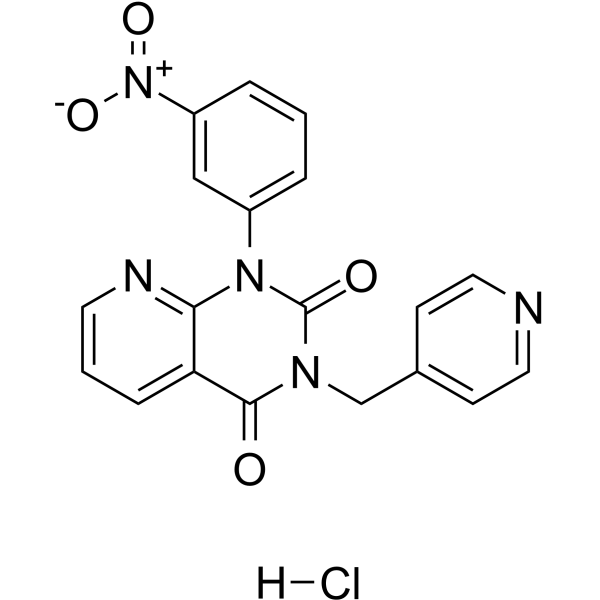
    RS-25344 hydrochloride is a selective cAMP-phosphodiesterase 4 (PDE 4; PDE IV) inhibitor with an IC50 of 0.28 nM in human lymphocytes. RS-25344 hydrochloride has only weak inhibitory effects on PDE I, II, III (IC50 of >100 μM, 160 μM, 330 μM, respectively). RS-25344 hydrochloride has anti-inflammatory, memory- and cognition enhancing, and antineoplastic effects .
    RS-25344 hydrochloride
  • HY-106809

    BMS-181168

    Drug Derivative Neurological Disease
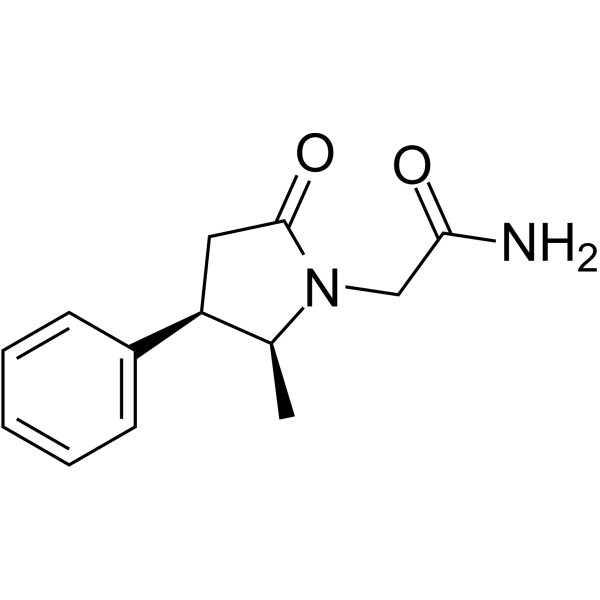
    BMY-21502 (BMS-181168) is a pyrrolidinone derivative with memory- and cognition-enhancing activities. BMS-181168 attenuates hypoxia-induced deterioration in brain function, as delta/theta decreases, alpha activity increases and the centroid of the combined delta/theta waves is accelerated .
    BMY-21502
  • HY-103146

    5-HT Receptor Neurological Disease
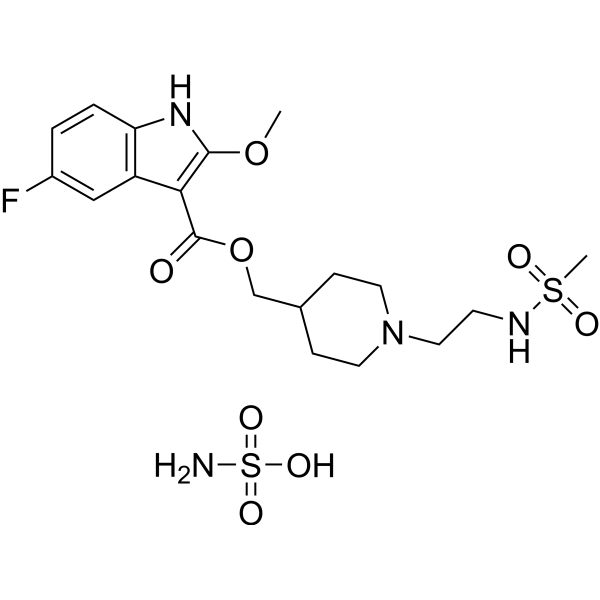
    GR125487 sulfamate is an orally active and selective antagonist of 5-HT4R. GR125487 sulfamate effectively blocks the cognition enhancing effect. GR125487 sulfamate can be used to study memory disorders, gastrointestinal disorders, mood disorders and urinary tract dysfunction .
    GR125487 sulfamate
  • HY-14564

    nAChR 5-HT Receptor Inflammation/Immunology
    GTS-21 dihydrochloride is a selective alpha7 nicotinic acetylcholine receptor (α7-nAChR) agonist with anti inflammatory and cognition enhancing activities. GTS-21 dihydrochloride is also a α4β2 (Ki=20 nM for humanα4β2) and 5-HT3A receptor (IC50=3.1 μM) antagonist. GTS-21 can be used in age-associated memory impairment (AAMI) and Alzheimer's disease research .
    GTS-21
  • HY-125087

    Histamine Receptor Neurological Disease
    A-304121 is a selective and brain penetrating H3 receptor antagonist. A-304121 is a cognition-enhancing agent .
    A-304121
  • HY-105412A

    Adrenergic Receptor Neurological Disease
    RU 52583 is an oral bioactive antagonist of alpha 2-adrenergic receptor. RU 52583 possesses cognition-enhancing properties in rats with damage to the septohippocampal system .
    RU 52583
  • HY-107671

    nAChR Neurological Disease
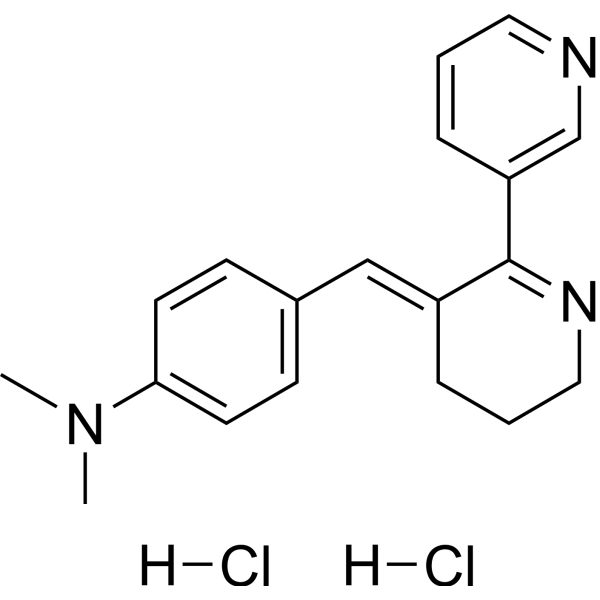
    DMAB-anabaseine dihydrochloride is a selective nicotinic α7 receptor partial agonist and an α4β2 nAChR antagonist. DMAB-anabaseine dihydrochloride shows cognition-enhancing effects .
    DMAB-anabaseine dihydrochloride
  • HY-W068771R

    Reference Standards Endogenous Metabolite Neurological Disease Metabolic Disease
    (E)-3-(4-Methoxyphenyl)acrylic acid (compound 3) is isolated from Arachis hypogaea, Scrophularia buergeriana Miquel, Aquilegia vulgaris, Anigozanthos preissii and so on. (E)-3-(4-Methoxyphenyl)acrylic acid shows significant hepatoprotective activity, anti-amnesic, cognition-enhancing activity, antihyperglycemic, and neuroprotective activities .
    (E)-3-(4-Methoxyphenyl)acrylic acid (Standard)
  • HY-B0340R

    DM9384 (Standard); DZL-221 (Standard)

    Reference Standards nAChR iGluR mGluR PKC GABA Receptor Calcium Channel Neurological Disease
    Nefiracetam (Standard) is a cognition-enhancing agent. Nefiracetam is an activator of nAChR, N-methyl-D-aspartate receptor (NMDAR), mGluR5, PKC, gamma-aminobutyric acid (GABA), and N/L-type Ca 2+ channels. Nefiracetam promotes neuroplasticity and enhances neuroprotection. Nefiracetam can be used in Alzheimer's disease, epilepsy, and cerebral ischemia research .
    Nefiracetam (Standard)
  • HY-109968A

    CEP-26401 hydrochloride

    Histamine Receptor Neurological Disease
    Irdabisant (CEP-26401) hydrochloride is a selective, orally active and blood-brain barrier (BBB) penetrant histamine H3 receptor (H3R) inverse agonist/inverse agonist with Ki values of 7.2 nM and 2.0 nM for rat H3R and human H3R, respectively. Irdabisant hydrochloride has relatively low inhibitory activity against hERG current with an IC50 of 13.8 μM. Irdabisant hydrochloride has cognition-enhancing and wake-promoting activities in the rat social recognition model. Irdabisant hydrochloride can be used to research schizophrenia or cognitive impairment .
    Irdabisant hydrochloride
  • HY-122924R

    3-Galloylquinic acid (Standard)

    Reference Standards Others Neurological Disease
    Theogallin (Standard) is the analytical standard of Theogallin. This product is intended for research and analytical applications. Theogallin (3-Galloylquinic acid) is an active ingredient in decaffeinated green tea extract. Theogallin has antidepressive and cognition enhancing effect .
    Theogallin (Standard)
  • HY-W020468R

    DuP 996 (Standard)

    Reference Standards Potassium Channel TRP Channel Neurological Disease
    Linopirdine (DuP 996) is an orally active, selective M-type K+ current (IM; Kv7; KCNQ Channels) inhibitor with an IC50 of 2.4 μM. Linopirdine is a TRPV1 agonist. Linopirdine, a putative cognition enhancing agent, increases acetylcholine release in rat brain tissue .
    Linopirdine (Standard)
  • HY-106808

    IOS-1.1212

    Calcium Channel Chloride Channel Neurological Disease
    Cerebrocrast (IOS-1.1212) is a 1,4-dihydropyridine (DHP) derivative. Cerebrocrast has a high affinity for the membrane lipid bilayer and it can easily penetrate the blood-brain barrier and incorporate into the plasma and organelle membranes, including those of mitochondria. Cerebrocrast promotes the cotransport of H+ and Cl- in rat liver mitochondria. Cerebrocrast also exhibits neuroprotective and cognition enhancer properties .
    Cerebrocrast
  • HY-103506R

    NO-711 hydrochloride (Standard)

    Reference Standards GABA Receptor Neurological Disease
    NNC-711 (Standard) is the analytical standard of NNC-711 (HY-103506). This product is intended for research and analytical applications. NNC-711 (NO-711 hydrochloride) is a potent and selective inhibitor of GAT-1 (GABA transporter 1) with IC50 values of 0.04, 0.38, 171, 1700, 349, 622 μM for human GAT-1, rat GAT-1, rGAT-2, hGAT-3, rGAT-3, hBGT-3, respectively. NNC-711 has anticonvulsant and analgesic effect in vivo and exhibits cognition-enhancing activity .
    NNC-711 (Standard)
  • HY-106003R

    Reference Standards Phosphodiesterase (PDE) Neurological Disease Inflammation/Immunology
    GSK356278 (Standard) is the analytical standard of GSK356278 (HY-106003). This product is intended for research and analytical applications. GSK356278 is a potent, selective, orally bioavailable and brain-penetrant inhibitor of phosphodiesterase 4 (PDE4), with pIC50s of 8.6, 8.8, and 8.7 for human PDE4A, PDE4B, and PDE4D, respectively. GSK356278 has anti-inflammatory activity, and exhibits anxiolytic and cognition-enhancing effects .
    GSK356278 (Standard)
  • HY-182518

    Adenosine Receptor Neurological Disease
    MDL-102234 is a potent and selective adenosine A1 receptor antagonist with a Ki value of 23.2 nM at the adenosine A1 receptor. MDL-102234 can be used for the study of cognition enhancement-related neural functions .
    MDL-102234
  • HY-108403R

    β-Phenyl-GABA (Standard); 4-Amino-3-phenylbutanoic acid (Standard)

    Reference Standards GABA Receptor Neurological Disease
    Phenibut (Standard) is the analytical standard of Phenibut (HY-108403). This product is intended for research and analytical applications. Phenibut (β-Phenyl-GABA) is a GABA-B agonist . Phenibut acts as a GABA-mimetic, primarily at GABAB receptors. Phenibut has anxiolytic and nootropic (cognition enhancing) effects .
    Phenibut (Standard)
  • HY-108621R

    Reference Standards Phosphodiesterase (PDE) Neurological Disease Metabolic Disease Inflammation/Immunology Cancer
    RS-25344 hydrochloride (Standard) is the analytical standard of RS-25344 (hydrochloride) (HY-108621). This product is intended for research and analytical applications. RS-25344 hydrochloride is a selective cAMP-phosphodiesterase 4 (PDE 4; PDE IV) inhibitor with an IC50 of 0.28 nM in human lymphocytes. RS-25344 hydrochloride has only weak inhibitory effects on PDE I, II, III (IC50 of >100 μM, 160 μM, 330 μM, respectively). RS-25344 hydrochloride has anti-inflammatory, memory- and cognition enhancing, and antineoplastic effects .
    RS-25344 hydrochloride (Standard)

Inquiry Online

Your information is safe with us. * Required Fields.

Salutation


Country or Region *

Applicant Name *


Organization Name *

Department *


Email Address *


Product Name *

Cat. No.


Requested quantity *

Phone Number *


Remarks

Inquiry Online

Inquiry Information

Product Name:
Cat. No.:
Quantity:
MCE Japan Authorized Agent:

