1. Search Result
Search Result
Results for "

cross coupling

" in MedChemExpress (MCE) Product Catalog:

57

Inhibitors & Agonists

1

Fluorescent Dyes

37

Biochemical Assay Reagents

1

Natural
Products

1

Isotope-Labeled Compounds

Cat. No. Product Name Target Research Areas Chemical Structure
  • HY-P2890

    Denilite IIS

    Endogenous Metabolite Others
    Laccase, Microorganisms (Denilite IIS) is a multi-copper oxidase (MCOs), which widely exists in microorganisms, plants and fungi, and can catalyze the oxidation of one electron of various phenolic compounds. Laccase can promote the oxidative coupling of single lignin, which plays an important role in the formation and biodegradation of lignin, and also has the potential to cross-link food polymers .
    Laccase, Microorganisms
  • HY-21623

    Biochemical Assay Reagents Others
    Dichloro[1,1'-bis(diphenylphosphino)ferrocene]palladium(II) dichloromethane adduct is a common dichloromethane solvate of the palladium catalyst Pd(dppf)Cl2, a phosphine ligand palladium(II) complex, which can be used as a versatile precatalyst for various cross-coupling reactions. Dichloro[1,1'-bis(diphenylphosphino)ferrocene]palladium(II) dichloromethane adduct can stabilize reaction intermediates and lower the reaction activation energy in coupling reactions, and can be used in Suzuki-Miyaura coupling reaction studies .
    Dichloro[1,1'-bis(diphenylphosphino)ferrocene]palladium(II) dichloromethane adduct
  • HY-114362

    TPGS-750-M

    Biochemical Assay Reagents Others
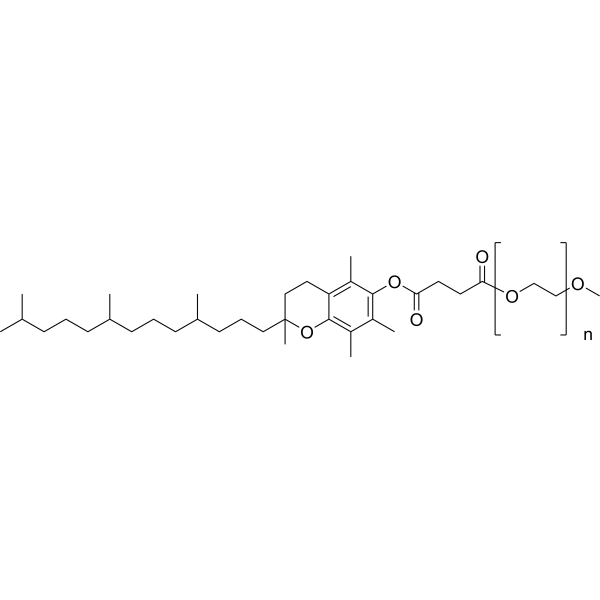
    DL-alpha-Tocopherol methoxypolyethylene glycol succinate (TPGS-750-M) is an amphiphile, acts as a surfactant. DL-alpha-Tocopherol methoxypolyethylene glycol succinate has a positive effect on Suzuki-Miyaura cross coupling. DL-alpha-Tocopherol methoxypolyethylene glycol succinate increases the styrene titer. DL-alpha-Tocopherol methoxypolyethylene glycol succinate is used in the stability test of NPYM-modified drugs in biological fluids .
    DL-alpha-Tocopherol methoxypolyethylene glycol succinate
  • HY-W016618

    Ethyl benzoylformate; Phenylglyoxylic acid ethyl ester

    Drug Intermediate Biochemical Assay Reagents Carboxylesterase (CES) Others
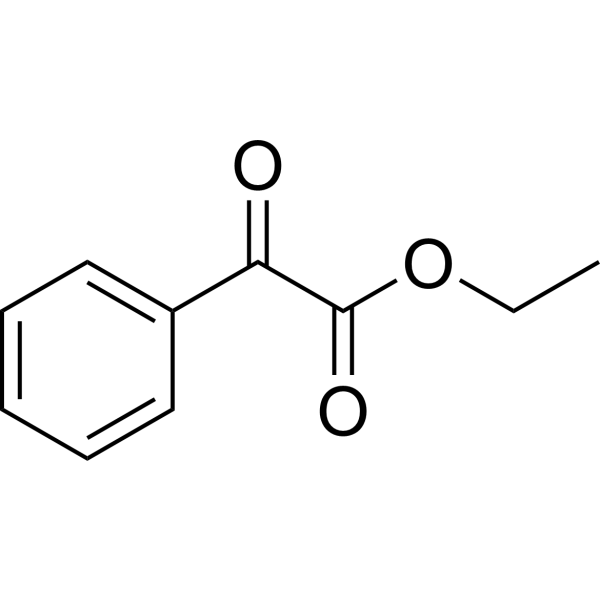
    Ethyl phenylglyoxylate (Ethyl benzoylformate), the ethyl ester of phenylglyoxylic acid, is used as a synthetic reagent. Ethyl phenylglyoxylate is also a poor substrate but a potent inhibitor of chicken liver carboxylesterase. Additionally, Ethyl phenylglyoxylate exhibits photoreactivity, where its excited triplet carbonyl can initiate intermolecular hydrogen abstraction, radical coupling and cross-linking reactions .
    Ethyl phenylglyoxylate
  • HY-W003165

    Biochemical Assay Reagents Others
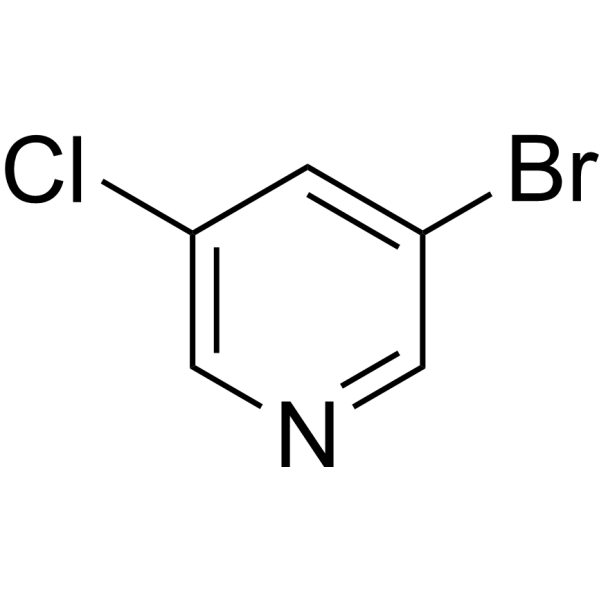
    3-Bromo-5-chloropyridine is a widely used heterocyclic compound that can be used to synthesize compounds. 3-Bromo-5-chloropyridine can be used as an intermediate in the production of crop protectants in the agricultural chemicals industry. 3-Bromo-5-chloropyridine can participate in cross-coupling reactions .
    3-Bromo-5-chloropyridine
  • HY-W002570

    Biochemical Assay Reagents Others
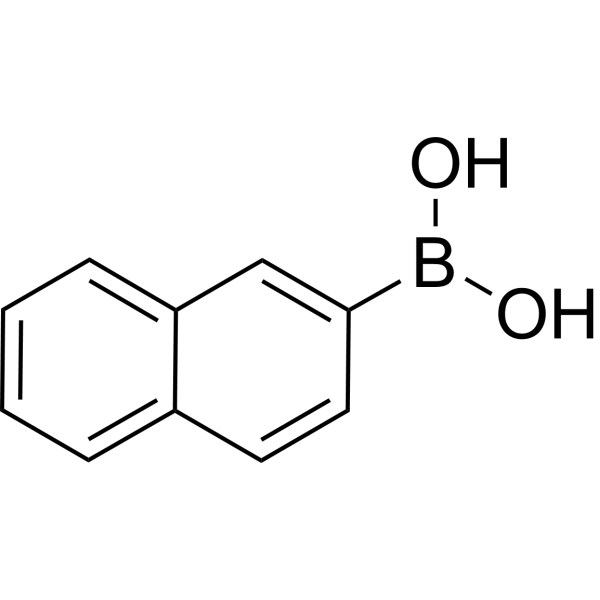
    2-Naphthylboronic acid is a biochemical reagent that can be used as a biological material or organic compound for life science related research. 2-Naphthylboronic acid can undergo silylation reaction. 2-Naphthylboronic acid also readily undergo Suzuki-Miyaura cross-coupling .
    2-Naphthylboronic acid
  • HY-W087905

    Biochemical Assay Reagents Others
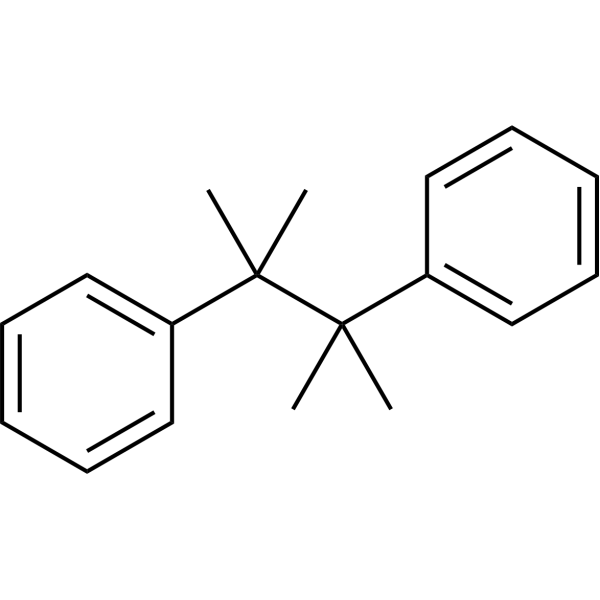
    2,3-Dimethyl-2,3-diphenylbutane is a minor product formed during the thermal decomposition of dicumyl peroxide (DCP) in cumene, generated through radical coupling reactions. As an initiator capable of producing free radicals, 2,3-dimethyl-2,3-diphenylbutane promotes cross-linking or decomposition processes via initiating free radical reactions in fields such as polymer polymerization (e.g., modification of polyphenylene oxide processing), organic synthesis (e.g., DCP decomposition reactions), and coal processing (e.g., oxidation stabilization of coal tar pitch), thereby enhancing material properties or reaction efficiency .
    2,3-Dimethyl-2,3-diphenylbutane
  • HY-W003601

    Biochemical Assay Reagents Others
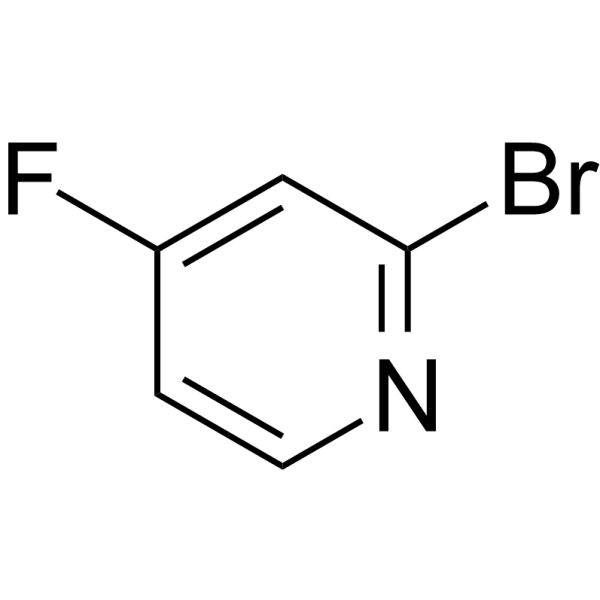
    2-Bromo-4-fluoropyridine is a synthetic halogenated heterocyclic organic compound and a key intermediate in the pharmaceutical and agrochemical industries. 2-Bromo-4-fluoropyridine can be used to synthesize bioactive molecules through cross-coupling reactions, such as Suzuki coupling or Buchwald-Hartwig amination.
    2-Bromo-4-fluoropyridine
  • HY-30014
    4-Bromo-7-azaindole
    1 Publications Verification

    Drug Intermediate Others
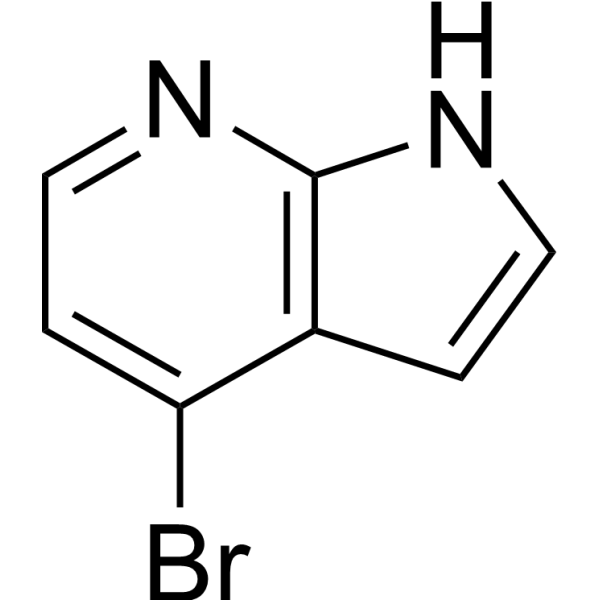
    4-Bromo-7-azaindole is a brominated derivative of 7-azaindole. 4-Bromo-7-azaindole serves as a substrate for palladium-catalyzed C-N and C-O cross-coupling reactions, reacting with amides, amines, amino acid esters and phenols .
    4-Bromo-7-azaindole
  • HY-W033277

    NSC 307191; Palladium(II) tetrafluoroborate tetraacetonitrile complex

    Drug Intermediate Endogenous Metabolite Others
    Tetrakis(acetonitrile)palladium(II) tetrafluoroborate (NSC 307191) acts as a potent Lewis acid and facilitates the formation of the 2:1 complex [Pd(1,2-bis(2′-pyridylethynyl)benzene)2](BF4)2 through the Sonogashira cross-coupling reaction.
    Tetrakis(acetonitrile)palladium(II) tetrafluoroborate
  • HY-75129

    Biochemical Assay Reagents Others
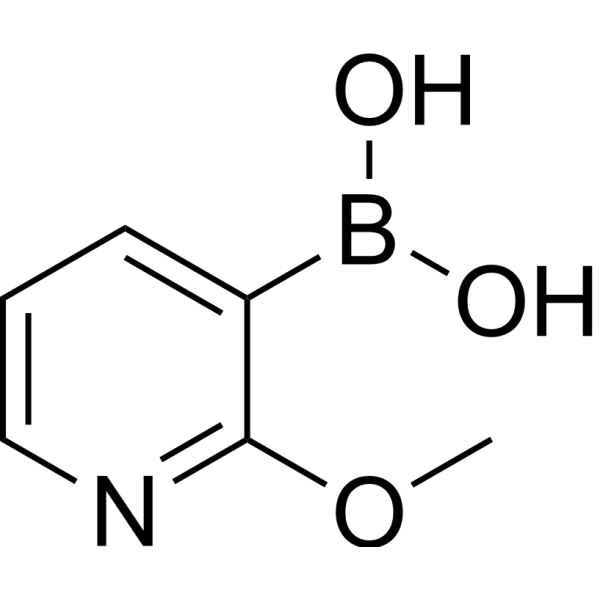
    Pyridin-3-ylboronic acid is an organic compound. Pyridin-3-ylboronic acid is a key reagent in the Suzuki-Miyaura cross-coupling reaction. Pyridin-3-ylboronic acid is used in organic synthesis to construct oligopyridine compounds, and then as an α-helix mimetic to study protein-protein interactions .
    Pyridin-3-ylboronic acid
  • HY-101974

    Biochemical Assay Reagents Others
    Biotin-PEG3-Bromide is a short PEG linker featuring a biotin group and a bromide. The bromide is a halogen which is easily displaced by nucleophiles such as alcohols or amines. Alternatively, bromide can be applied in a number of cross-coupling reactions such as in a Suzuki reaction. Biotin is useful for affinity-based applications such as pull-down assays or for ligating with streptavidin proteins.
    Biotin-PEG3-Bromide
  • HY-32746

    Biochemical Assay Reagents Others
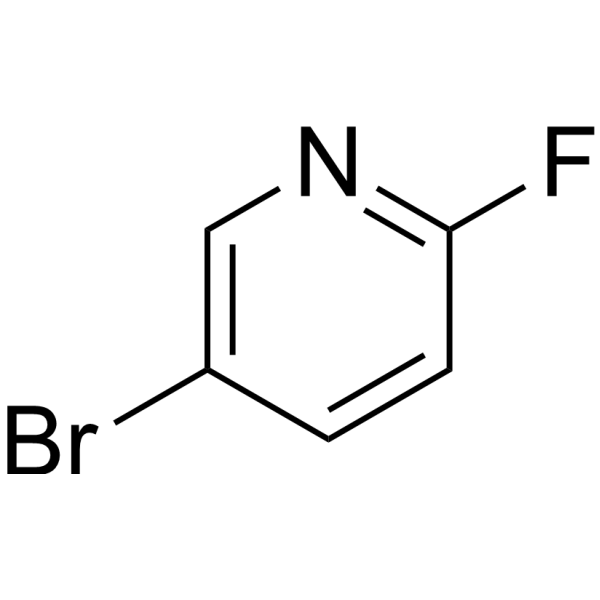
    5-Bromo-2-fluoropyridine is a biochemical reagent that can be used as a biological material or organic compound for life science related research. 5-Bromo-2-fluoropyridine easily reacts with amines to synthesize halogenated pyridine and pyrimidine. 5-Bromo-2-fluoropyridine can be used as a model substrate to explore their efficiency and selectivity through successive SNAr substitution reactions and transition-metal-catalyzed cross-coupling reaction without an intervening purification step .
    5-Bromo-2-fluoropyridine
  • HY-161541
    Estradiol/BSA
    1 Publications Verification

    Biochemical Assay Reagents Inflammation/Immunology
    Estradiol/BSA is the antigen-adjuvant conjugate formed by the coupling of Estradiol (HY-B0141) with Bovine Serum Albumin (BSA). By coupling the antigen with a protein adjuvant, the production of antigen-specific antibodies in vaccine models can be enhanced. The conjugate does not affect protein folding or disrupt major epitopes, and it can enhance cross-presentation and the generation of antigen-specific T cells.
    Estradiol/BSA
  • HY-161526

    Biochemical Assay Reagents Inflammation/Immunology
    T3/KLH is an antigen-adjuvant conjugate formed by the coupling of T3 (thyroid hormone) with keyhole limpet hemocyanin (KLH). By coupling the antigen with the protein adjuvant, the production of antigen-specific antibodies in vaccine models can be enhanced. The conjugate does not affect protein folding or disrupt major epitopes, and it can enhance cross-presentation and the generation of antigen-specific T cells.
    T3/KLH
  • HY-W034801

    Cupric Acetylacetonate

    Biochemical Assay Reagents Others
    Copper(II) acetylacetonate (Cupric Acetylacetonate) is the homoleptic acetylacetonate complex of copper(II). Copper(II) acetylacetonate is used as a catalyst in various organic reactions, including oxidation, cross-coupling, and polymerization reactions. Copper(II) acetylacetonate is also a precursor for making metal-organic frameworks (MOF) and nanomaterials .
    Copper(II) acetylacetonate
  • HY-W583317

    Biochemical Assay Reagents Endogenous Metabolite
    sSPhos Pd G2 is a palladium catalyst with excellent cross-coupling reaction activity. sSPhos Pd G2 exhibits efficient catalytic ability in the synthesis of organic molecules and compounds. sSPhos Pd G2 can effectively promote the formation of CC bonds, optimize reaction conditions and increase yields. sSPhos Pd G2 is also used in a variety of transformation reactions, helping researchers develop new materials and compounds.
    sSPhos Pd G2
  • HY-32928

    Biochemical Assay Reagents Others
    4-Cyanobenzeneboronic acid is a Boronic acid derivative. 4-Cyanobenzeneboronic acid can be used in Suzuki-Miyaura cross-coupling reactions .
    4-Cyanobenzeneboronic acid
  • HY-W001987

    Biochemical Assay Reagents Others
    Organic ligands can be prepared through Suzuki cross-coupling reaction between 4,6-Dichloropyrimidin-5-amine and dimethyl(5-pinyl)isophthalate .
    4,6-Dichloropyrimidin-5-amine
  • HY-174358D

    Biochemical Assay Reagents Others
    HOOC-PEG10000-COOH has two active carboxyl groups at both ends, which can selectively react with the amino groups in peptide coupling agents. HOOC-PEG10000-COOH is a good cross-linking agent for PEGylation of proteins and peptides, nanoparticles and surface modification .
    HOOC-PEG10000-COOH
  • HY-161566

    Biochemical Assay Reagents Inflammation/Immunology
    DHT/BSA is an antigen-adjuvant conjugate formed by the coupling of DHT (dihydrotestosterone) and bovine serum albumin (BSA). By conjugating the antigen with the protein adjuvant, the production of antigen-specific antibodies in vaccine models can be enhanced. The conjugate does not affect protein folding or disrupt major epitopes, and it can enhance cross-presentation and the generation of antigen-specific T cells.
    DHT/BSA
  • HY-W002463

    Biochemical Assay Reagents Others
    3-Chlorophenylboronic acid is employed as a reactant involved in 1,4-conjugate addition reactions with ethenesulfonamides to form arylethanesulfonamides, Suzuki-Miyaura reactions with dibromotrifluoromethylbenzene, cross-coupling reactions with diazoesters3 or potassium cyanate. 3-Chlorophenylboronic acid is involved in the synthesis of biarylketones and phthalides and synthesis of inhibitors including PDE4 inhibitors among others. 3-Chlorophenyl boronic acid can affect cell migration. 3-Chlorophenyl boronic acid can be used to study wound healing .
    3-Chlorophenyl boronic acid
  • HY-W034606

    CM-Phos

    Endogenous Metabolite Biochemical Assay Reagents
    2-[2-(Dicyclohexylphosphino)phenyl]-1-methyl-1H-indole (CM-Phos) is an organic compound with catalytic activity. 2-[2-(Dicyclohexylphosphino)phenyl]-1-methyl-1H-indole can be used as an efficient catalyst for cross-coupling reactions of various alcohols and olefins. 2-[2-(Dicyclohexylphosphino)phenyl]-1-methyl-1H-indole shows important application potential in pharmaceutical and material science.
    2-[2-(Dicyclohexylphosphino)phenyl]-1-methyl-1H-indole
  • HY-W020985

    Pd(DIPHOS)2

    Biochemical Assay Reagents Others
    Bis[1,2-bis(diphenylphosphino)ethane]palladium(0), often abbreviated as Pd(PPh3)2 or Pd(dppf), is an organometallic compound. This compound is widely used as a catalyst for organic chemical reactions, especially cross-coupling reactions such as Suzuki-Miyaura reaction and Heck reaction, and its high catalytic activity, selectivity and stability make it a versatile tool for the synthesis of complex organic compounds , in addition, the potential application of Pd(PPh3)2 in the production of electronic materials and in medical and biochemical research has also been investigated.
    Bis[1,2-bis(diphenylphosphino)ethane]palladium(0)
  • HY-161562

    Biochemical Assay Reagents Inflammation/Immunology
    PROMETON/BSA is an antigen-adjuvant conjugate formed by the coupling of PROMETON with bovine serum albumin (BSA). By coupling the antigen to the protein adjuvant, the production of antigen-specific antibodies in vaccine models can be enhanced. The conjugate does not affect protein folding or disrupt major epitopes, and it can enhance cross-presentation and the production of antigen-specific T cells.
    PROMETON/BSA
  • HY-161530

    Angiotensin Receptor Inflammation/Immunology
    Angiotensin II/BSA is an antigen-adjuvant conjugate formed by the coupling of Angiotensin II with bovine serum albumin (BSA). By coupling the antigen with a protein adjuvant, the production of antigen-specific antibodies in vaccine models can be enhanced. The conjugate does not affect protein folding or disrupt major epitopes, and it can enhance cross-presentation and the generation of antigen-specific T cells.
    Angiotensin II/BSA
  • HY-161589

    Biochemical Assay Reagents Inflammation/Immunology
    GABA/KLH is an antigen-adjuvant conjugate formed by the coupling of GABA (γ-aminobutyric acid) with keyhole limpet hemocyanin (KLH). By coupling the antigen with a protein adjuvant, it can enhance the production of antigen-specific antibodies in vaccine models. The conjugate does not affect protein folding or disrupt major epitopes, and it can enhance cross-presentation and the generation of antigen-specific T cells.
    GABA/KLH
  • HY-161588

    Biochemical Assay Reagents Inflammation/Immunology
    GABA/BSA is an antigen-adjuvant conjugate formed by the coupling of GABA (γ-aminobutyric acid) with Bovine Serum Albumin (BSA). By coupling the antigen with a protein adjuvant, the production of antigen-specific antibodies in vaccine models can be enhanced. The conjugate does not affect protein folding or disrupt major epitopes, and it can enhance cross-presentation and the generation of antigen-specific T cells.
    GABA/BSA
  • HY-120286

    Drug Intermediate Others
    K-13 is a cyclic peptide compound synthesized by a specific organozinc reagent. Its synthesis process involves intermolecular and intramolecular Negishi cross-coupling reactions and is one of the shortest routes reported for the synthesis of such cyclic peptides.
    K-13
  • HY-119928

    Biochemical Assay Reagents Cancer
    Broparestrol is a biologically active tetrasubstituted olefin can be achieved via palladium-catalyzed cross-coupling to form a C-C bond followed by bromination. Broparestrol inhibits mammary carcinogenesis in mouse model. Broparestrol can be used in dermatology and cancer research .
    Broparestrol
  • HY-174358A

    Biochemical Assay Reagents Others
    HOOC-PEG2000-COOH has two active carboxyl groups at both ends, which can selectively react with the amino groups in peptide coupling agents. HOOC-PEG2000-COOH is a good cross-linking agent for PEGylation of proteins and peptides, nanoparticles and surface modification .
    HOOC-PEG2000-COOH
  • HY-174358E

    Biochemical Assay Reagents Others
    HOOC-PEG20000-COOH has two active carboxyl groups at both ends, which can selectively react with the amino groups in peptide coupling agents. HOOC-PEG20000-COOH is a good cross-linking agent for PEGylation of proteins and peptides, nanoparticles and surface modification .
    HOOC-PEG20000-COOH
  • HY-161549

    Biochemical Assay Reagents Inflammation/Immunology
    Phosphotyrosine/BSA is an antigen-adjuvant conjugate formed by coupling Phosphotyrosine with Bovine Serum Albumin (BSA). By conjugating the antigen with protein adjuvants, the production of antigen-specific antibodies in vaccine models can be enhanced. The conjugate does not affect protein folding or disrupt major epitopes, and it can enhance cross-presentation and the generation of antigen-specific T cells.
    Phosphotyrosine/BSA
  • HY-161540

    Biochemical Assay Reagents Inflammation/Immunology
    Oxytetracycline/OVA is an antigen-adjuvant conjugate formed by the coupling of Oxytetracycline (HY-B0275) with ovalbumin (OVA). By conjugating the antigen with a protein adjuvant, it enhances the production of antigen-specific antibodies in vaccine models. The conjugate does not affect protein folding or destroy the major epitopes, and it can enhance cross-presentation and the generation of antigen-specific T cells.
    Oxytetracycline/OVA
  • HY-163555

    Biochemical Assay Reagents Inflammation/Immunology
    BZO/BSA is an antigen-adjuvant conjugate formed by the coupling of BZO (benzodiazepine) with bovine serum albumin (BSA). By conjugating the antigen with a protein adjuvant, the production of antigen-specific antibodies in vaccine models can be enhanced. The conjugate does not affect protein folding or disrupt major epitopes, and it can enhance cross-presentation and the production of antigen-specific T cells.
    BZO/BSA
  • HY-161586

    Antibiotic Bacterial HIF/HIF Prolyl-Hydroxylase VEGFR Autophagy Apoptosis Beclin1 JNK Akt MMP Biochemical Assay Reagents Inflammation/Immunology
    Chloramphenicol/BSA is the antigen-adjuvant conjugate formed by the coupling of Chloramphenicol (HY-B0239) with Bovine Serum Albumin (BSA). By conjugating the antigen with a protein adjuvant, the production of antigen-specific antibodies in vaccine models can be enhanced. The conjugate does not affect protein folding or disrupt major epitopes, and it can enhance cross-presentation and the generation of antigen-specific T cells.
    Chloramphenicol/BSA
  • HY-161546

    Biochemical Assay Reagents Inflammation/Immunology
    Melamine/KLH is an antigen-adjuvant conjugate formed by coupling Melamine (HY-Y1117) with Keyhole Limpet Hemocyanin (KLH). By conjugating the antigen with a protein adjuvant, the production of antigen-specific antibodies in vaccine models can be enhanced. The conjugate does not affect protein folding or disrupt the primary epitopes, and can enhance cross-presentation and the generation of antigen-specific T cells.
    Melamine/KLH
  • HY-161535

    Biochemical Assay Reagents Inflammation/Immunology
    Oxytetracycline/BSA is an antigen-adjuvant conjugate formed by the coupling of Oxytetracycline (HY-B0275) with Bovine Serum Albumin (BSA). By conjugating the antigen with the protein adjuvant, the production of antigen-specific antibodies in vaccine models can be enhanced. The conjugate does not affect protein folding or disrupt major epitopes, and it can enhance cross-presentation and the production of antigen-specific T cells.
    Oxytetracycline/BSA
  • HY-161559

    Biochemical Assay Reagents Inflammation/Immunology
    Sudan I/OVA is an antigen-adjuvant conjugate formed by coupling Sudan I (HY-D0024) with Ovalbumin (OVA). By conjugating the antigen with a protein adjuvant, the production of antigen-specific antibodies in vaccine models can be enhanced. The conjugate does not affect protein folding or disrupt the main epitopes, and it can enhance cross-presentation and the generation of antigen-specific T cells.
    Sudan I/OVA
  • HY-161585

    Biochemical Assay Reagents Inflammation/Immunology
    Diethylstilbestrol/KLH is an antigen-adjuvant conjugate formed by the coupling of Diethylstilbestrol (HY-14598) with Keyhole Limpet Hemocyanin (KLH). By conjugating the antigen with a protein adjuvant, the production of antigen-specific antibodies in vaccine models can be enhanced. The conjugate does not affect protein folding or disrupt major epitopes, and it can enhance cross-presentation and the generation of antigen-specific T cells.
    Diethylstilbestrol/KLH
  • HY-161556

    Biochemical Assay Reagents Inflammation/Immunology
    Alginic acid/KLH is an antigen-adjuvant conjugate formed by the coupling of Alginic acid (HY-W127758) with Keyhole Limpet Hemocyanin (KLH). By conjugating the antigen with the protein adjuvant, the production of antigen-specific antibodies in vaccine models can be enhanced. The conjugate does not affect protein folding or disrupt major epitopes, and it can enhance cross-presentation and the generation of antigen-specific T cells.
    Alginic acid/KLH
  • HY-161584

    Biochemical Assay Reagents Inflammation/Immunology
    Sudan I/KLH is an antigen-adjuvant conjugate formed by the coupling of Sudan I (HY-D0024) with Keyhole Limpet Hemocyanin (KLH). By conjugating the antigen with a protein adjuvant, the production of antigen-specific antibodies in vaccine models can be enhanced. The conjugate does not affect protein folding or disrupt major epitopes, and it can enhance cross-presentation and the generation of antigen-specific T cells.
    Sudan I/KLH
  • HY-161565

    Biochemical Assay Reagents Inflammation/Immunology
    Gastrin(1-17)/BSA is an antigen-adjuvant conjugate formed by the coupling of Gastrin(1-17) and Bovine Serum Albumin (BSA). By conjugating the antigen with a protein adjuvant, the production of antigen-specific antibodies in vaccine models can be enhanced. The conjugate does not affect protein folding or destroy major epitopes, and it can enhance cross-presentation and the production of antigen-specific T cells.
    Gastrin(1-17)/BSA
  • HY-W008658

    Biochemical Assay Reagents Endogenous Metabolite
    [1,4-Bis(diphenylphosphino)butane](norbornadiene)rhodium tetrafluoroborate is a highly efficient and selective transition metal catalyst that can catalyze a variety of reactions, including cross-coupling reactions and hydrogenation reactions. This compound is widely used in organic synthesis and helps to promote the development of new compounds and materials. Through its catalytic activity, [1,4-Bis(diphenylphosphino)butane](norbornadiene)rhodium tetrafluoroborate offers the potential to optimize reaction conditions and improve yields.
    [1,4-Bis(diphenylphosphino)butane](norbornadiene)rhodium tetrafluoroborate
  • HY-W016618R

    Ethyl benzoylformate (Standard); Phenylglyoxylic acid ethyl ester (Standard)

    Drug Intermediate Reference Standards Biochemical Assay Reagents Carboxylesterase (CES) Others
    Ethyl phenylglyoxylate (Ethyl benzoylformate) (Standard) is the analytical standard of Ethyl phenylglyoxylate (HY-W016618). This product is intended for research and analytical applications. Ethyl phenylglyoxylate (Ethyl benzoylformate), the ethyl ester of phenylglyoxylic acid, is used as a synthetic reagent. Ethyl phenylglyoxylate is also a poor substrate but a potent inhibitor of chicken liver carboxylesterase. Additionally, Ethyl phenylglyoxylate exhibits photoreactivity, where its excited triplet carbonyl can initiate intermolecular hydrogen abstraction, radical coupling and cross-linking reactions .
    Ethyl phenylglyoxylate (Standard)
  • HY-W582827

    Biochemical Assay Reagents Endogenous Metabolite
    RuPhos Pd G1 methyl t-butyl ether adduct (MTBE) is a highly efficient catalyst with excellent cross-coupling activity. RuPhos Pd G1 methyl t-butyl ether adduct (MTBE) is widely used in organic synthesis and can be used to promote various reactions to build complex molecular structures. RuPhos Pd G1 methyl t-butyl ether adduct (MTBE) has good adaptability to temperature and reaction conditions, which enables it to exhibit excellent catalytic performance in different reaction systems.
    RuPhos Pd G1 methyl t-butyl ether adduct (MTBE)
  • HY-W701476

    Ethyl benzoylformate-d5; Phenylglyoxylic acid ethyl ester-d5

    Isotope-Labeled Compounds Biochemical Assay Reagents Drug Intermediate Carboxylesterase (CES) Others
    Ethyl phenylglyoxylate-d5 (Ethyl benzoylformate-d5; Phenylglyoxylic acid ethyl ester-d5) is the deuterium labeled Ethyl phenylglyoxylate (HY-W016618). Ethyl phenylglyoxylate (Ethyl benzoylformate), the ethyl ester of phenylglyoxylic acid, is used as a synthetic reagent. Ethyl phenylglyoxylate is also a poor substrate but a potent inhibitor of chicken liver carboxylesterase. Additionally, Ethyl phenylglyoxylate exhibits photoreactivity, where its excited triplet carbonyl can initiate intermolecular hydrogen abstraction, radical coupling and cross-linking reactions .
    Ethyl phenylglyoxylate-d5
  • HY-W075744

    Biochemical Assay Reagents Endogenous Metabolite
    SK-J002-1n is a highly efficient catalyst with excellent cross-coupling reaction activity. SK-J002-1n is widely used in organic synthesis to construct complex molecular structures. The chiral properties of SK-J002-1n make it play an important role in the pharmaceutical industry and provide support for the synthesis of chiral compounds. SK-J002-1n can significantly improve the conversion efficiency and is an important component of transition metal catalysts.
    SK-J002-1n
  • HY-W543082

    Biochemical Assay Reagents Endogenous Metabolite Others
    P(o-tol)3 Pd G2 ChemBeads is a robust and air-stable catalyst featuring a bulky, electron-rich dialkylbiaryl phosphine, specifically designed for Pd-catalyzed cross-coupling reactions.
    P(o-tol)3 Pd G2 ChemBeads
  • HY-W075745

    Others
    SK-J003-1n is a nickel catalyst with excellent cross-coupling reaction activity. SK-J003-1n can be used as a ligand in organic synthesis to improve the selectivity and efficiency of the reaction. SK-J003-1n can effectively catalyze the coupling reaction between different substrates, highlighting its important role in compound development and material science.
    SK-J003-1n

Inquiry Online

Your information is safe with us. * Required Fields.

Salutation


Country or Region *

Applicant Name *


Organization Name *

Department *


Email Address *


Product Name *

Cat. No.


Requested quantity *

Phone Number *


Remarks

Inquiry Online

Inquiry Information

Product Name:
Cat. No.:
Quantity:
MCE Japan Authorized Agent: