



Search Result
Results for "
cynomolgus monkey models
" in MedChemExpress (MCE) Product Catalog:
| Cat. No. |
Product Name |
Target |
Research Areas |
Chemical Structure |
-
- HY-P3371
-
|
DS-7300a; MABX-9001a; I-DXd
|
Antibody-Drug Conjugates (ADCs)
Topoisomerase
Apoptosis
|
Cancer
|
|
Ifinatamab deruxtecan (DS-7300a) is a B7-H3-targeting Antibody-drug conjugate (ADC), which is composed of a humanized anti-B7-H3 monoclonal antibody, an enzymatically cleavable peptide-based linker, and Exatecan derivative (DXd) (HY-13631D). Ifinatamab deruxtecan is a DNA Topoisomerase I inhibitor. Ifinatamab deruxtecan induces Apoptosis. DS-7300a exerts potent antitumor activities against B7-H3-expressing tumors. against rhabdomyosarcoma, endometrial adenocarcinoma and lung adenocarcinoma. Ifinatamab deruxtecan does not exert direct immunomodulatory effects
|
-
-
- HY-153220
-
|
NX-2127
|
PROTACs
Btk
|
Inflammation/Immunology
Cancer
|
|
Zelebrudomide (NX-2127) (Compound 28) is an orally active PROTAC deggrader, targeting to Bruton’s Tyrosine Kinase (Btk). Zelebrudomide inhibits proliferation of BTK C481S mutant TMD8 cells, more effectively than Ibrutinib (HY-10997). Zelebrudomide catalyzes the degradation of Ikaros (IKZF1) and Aiolos (IKZF3) with of 25 nM and 54 nM, respectively. Zelebrudomide stimulates T cell activation and increases IL-2 production in primary human T Cells . (Pink: BTK ligand 10 (HY-168302); Black: (R)-4-(1-(Pyrrolidin-3-ylmethyl)piperidin-4-yl)aniline (HY-168348); Blue: Thalidomide 5-fluoride (HY-W087383)
|
-
-
- HY-164734
-
|
R-DXd; DS-6000
|
Antibody-Drug Conjugates (ADCs)
|
Cancer
|
|
Raludotatug Deruxtecan is an antibody-drug conjugate targeting CDH6, with an EC50 of 64.7 ng/mL in humans, 70.4 ng/mL in cynomolgus monkeys, and 228 ng/mL in mice. Raludotatug Deruxtecan specifically binds to CDH6 on the surface of cancer cells, triggers lysosomal internalization, and releases the DXd payload that inhibits TOP1. Raludotatug Deruxtecan induces DNA damage, Chk1 phosphorylation, caspase-3 cleavage, apoptosis, and bystander cell death. Raludotatug Deruxtecan is applicable to research related to serous ovarian cancer and renal cell carcinoma .
|
-
-
- HY-132610A
-
|
ALN-AS1 sodium
|
Small Interfering RNA (siRNA)
|
Metabolic Disease
|
|
Givosiran (ALN-AS1) sodium is a small interfering RNA that targets hepatic aminolevulinate synthase 1 (ALAS1) messenger RNA. Givosiran sodium downregulates ALAS1 mRNA and prevents accumulation of neurotoxic δ-aminolevulinic acid (ALA) and porphobilinogen (PBG) levels. Givosiran sodium demonstrates potent inhibitory activity against ALAS1 in mouse, rat, and cynomolgus monkey models. Givosiran sodium can be used for the research of acute hepatic porphyria (AHP) .
|
-
-
- HY-132610
-
|
ALN-AS1
|
Small Interfering RNA (siRNA)
|
Metabolic Disease
|
|
Givosiran (ALN-AS1) is a small interfering RNA that targets hepatic aminolevulinate synthase 1 (ALAS1) messenger RNA. Givosiran downregulates ALAS1 mRNA and prevents accumulation of neurotoxic δ-aminolevulinic acid (ALA) and porphobilinogen (PBG) levels. Givosiran demonstrates potent inhibitory activity against ALAS1 in mouse, rat, and cynomolgus monkey models. Givosiran can be used for the research of acute hepatic porphyria (AHP) .
|
-
-
- HY-149136
-
|
|
Integrin
TGF-beta/Smad
|
Inflammation/Immunology
|
|
MORF-627 is a highly selective, orally active integrin αvβ6 inhibitor. By blocking TGF-β1 activation and pSMAD2 signaling, MORF-627 significantly reduces collagen deposition, epithelial-mesenchymal transition markers, and structural changes in fibrotic cells. MORF-627 exhibits significant antifibrotic efficacy without genotoxicity in idiopathic pulmonary fibrosis models. However, MORF-627 induces bladder epithelial proliferation and early invasive urothelial carcinoma in cynomolgus monkeys and human cells, and this toxic effect can be reversed by exogenous TGF-β. MORF-627 can be used for studying the pathological mechanisms of pulmonary fibrosis and evaluating drug safety .
|
-
-
- HY-P99728
-
|
RG7835; RO7049665
|
Interleukin Related
|
Metabolic Disease
Inflammation/Immunology
|
|
Melredableukin alfa (RG7835) is a bivalent conjugate composed of a human IL-2 mutant (T3A, N88D, C125A) and human IgG1. Melredableukin alfa exhibits enhanced Treg cell selectivity in cynomolgus monkey and humanized mouse models. Melredableukin alfa can be used in research related to ulcerative colitis and autoimmune hepatitis .
|
-
-
- HY-P990993
-
|
GYM-329, RG6237, RG-70240
|
TGF-beta/Smad
|
Inflammation/Immunology
|
|
Emugrobart (GYM-329, RG6237, RG-70240) is a humanized IgG1κ antibody targeting myostatin (Myostatin; GDF8). Emugrobart binds to pro-myostatin and latent myostatin, blocking their cleavage into mature myostatin; it also has a clearance function, which transports bound myostatin for degradation and allows for cyclic reuse. Emugrobart enhances muscle strength in mouse models of muscle atrophy and increases muscle mass in cynomolgus monkeys. Emugrobart can be used in research on spinal muscular atrophy and facioscapulohumeral muscular dystrophy .
|
-
-
- HY-159098
-
|
|
Molecular Glues
PROTACs
Histone Acetyltransferase
|
Cardiovascular Disease
|
|
dWIZ-1 is an orally active molecular glue and chemical probe targeting the WIZ transcription factor, which based on an IMiD backbone, binding to human WIZ with an affinity of 3.5 μM. dWIZ-1 recruits WIZ to the cereblon-DDB1 complex via its ZF7 domain, thereby triggering proteasome-dependent degradation of WIZ. dWIZ-1 significantly induces fetal hemoglobin expression in erythroblasts while reducing the level of inhibitory H3K9 dimethylation at WIZ binding sites such as the β-globin locus. Meanwhile, dWIZ-1 does not affect the proliferation and differentiation of erythroblasts, and no cytotoxicity is observed in in vitro cells or cynomolgus monkey models. dWIZ-1 serves as a critical tool molecule for investigating the mechanism and underlying pathways of sickle cell disease .
|
-
-
- HY-109968
-
|
CEP-26401
|
Histamine Receptor
|
Neurological Disease
Metabolic Disease
|
|
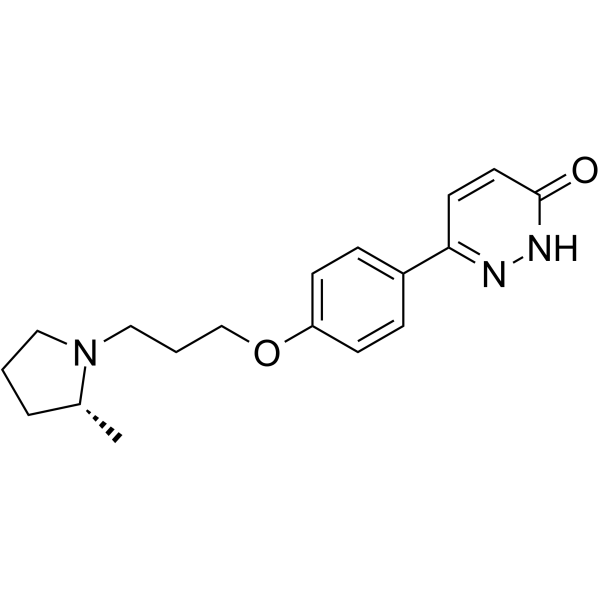
Irdabisant (CEP-26401) is a selective, orally active and blood-brain barrier (BBB) penetrant histamine H3 receptor (H3R) inverse agonist/inverse agonist with Ki values of 7.2 nM and 2.0 nM for rat H3R and human H3R, respectively. Irdabisant has relatively low inhibitory activity against hERG current with an IC50 of 13.8 μM. Irdabisant has cognition-enhancing and wake-promoting activities in the rat social recognition model. Irdabisant can be used to research schizophrenia or cognitive impairment .
|
-
-
- HY-P99439
-
|
IMA-638
|
Interleukin Related
|
Inflammation/Immunology
|
|
Anrukinzumab (IMA-638) is a humanized anti-IL-13 monoclonal antibody. Anrukinzumab effectively reduces lung inflammation in a cynomolgus monkey model. Anrukinzumab can be used in studies of ulcerative colitis (UC) as well as asthma .
|
-
-
- HY-P991550
-
|
|
CD22
|
Cancer
|
|
RFB4 is an anti-CD22 monoclonal antibody. RFB4 can be fused with Pseudomonas aeruginosa exotoxin (PE38) via disulfide bonds to construct recombinant immunotoxins, such as RFB4 (dsFv)-PE38. RFB4 is applicable to the research of cancers including lymphoma .
|
-
-
- HY-P99916
-
|
AMG-427
|
FLT3
CD3
TNF Receptor
|
Inflammation/Immunology
Cancer
|
Emirodatamab (AMG-427) is a bispecific T-cell engager (BiTE). Emirodatamab simultaneously binds FLT3 on the surface of acute myeloid leukemia (AML) cells and CD3 on the surface of T cells, thereby precisely recruiting immune effector cells to tumor sites. Emirodatamab potently induces T cell activation, secretion of proinflammatory cytokines (such as IFNγ, TNFα), and specific cytotoxicity, effectively lysing FLT3-positive tumor cells and inhibiting their growth. Emirodatamab not only significantly prolongs survival in mouse xenograft models and eliminates diseased cells in primates, but also exhibits a synergistic enhancement effect when combined with PD-1 blockade therapy. Emirodatamab is used in studies of acute myeloid leukemia, especially relapsed or refractory cases .
|
-
-
- HY-P990953
-
|
Gen1047
|
CD3
|
Cancer
|
|
Zubotamig (Gen1047) is an CD3E/VTCN1-targeting Ig(G1 -κ_G1 -λ2) type chimeric human antibody. The recommed isotype control is Human IgG1 kappa, Isotype Control (HY-P99001). Zubotamig induces T-cell mediated cytotoxicity of B7H4-positive tumor cells, triggers T-cell activation, and induces cytokine release from T cells in the presence of B7H4-expressing tumor cells. Zubotamig demonstrates antitumor activity in mouse patient-derived xenograft (PDX) models. Zubotamig can be used for the research of solid cancers (including breast, ovarian and lung cancer) .
|
-
-
- HY-P991461
-
|
XmAb968
|
CD38
|
Cancer
|
|
AMG-424 (XmAb968) is a human bispecific antibody (bsAb) targeting CD38 & CD3E. AMG-424 kills CD38-expressing cancer cells, triggers T-cell proliferation and attenuates cytokine release. AMG 424 has antitumor activity in a bone marrow-invasive mouse cancer model and induces peripheral B-cell depletion in cynomolgus monkeys. AMG-424 can be used in multiple myeloma research. Recommended isotype control: half-IG G1-kappa/(scFv-heavy-lambda)-h-CH2-CH3 .
|
-
-
- HY-16622A
-
|
|
LPL Receptor
|
Others
|
|
GSK1842799, an alkyl-substituted biaryl amino alcohol, is a selective S1P1 modulator developed for multiple sclerosis (MS). Upon phosphorylation, GSK1842799-P exhibited subnanomolar S1P1 agonist activity with over 1000-fold selectivity over S1P3. The compound showed good oral bioavailability, rapid in vivo conversion to GSK1842799-P, and significant lymphocyte count reduction at 0.1 mg/kg. It matched FTY720 efficacy at 3 mg/kg in the mouse EAE model and achieved comparable plasma levels to FTY-720 phosphate in cynomolgus monkeys. With favorable ADME, PK/PD properties, and toxicology, GSK1842799 advanced to further clinical development .
|
-
-
- HY-177300
-
|
|
Toll-like Receptor (TLR)
HBV
IFNAR
Interleukin Related
|
Infection
Inflammation/Immunology
|
|
TLR7/8 agonist 13 is an orally active dual agonist of TLR7 (lowest effective concentrations (LEC) [hTLR7] = 1.6 μM) and TLR8 (LEC [hTLR8] = 1.6 μM). TLR7/8 agonist 13 exhibits agonistic activity against human peripheral blood mononuclear cells (hPBMCs) (LEC [hPBMC] = 0.5 μM). TLR7/8 agonist 13 induces endogenous IFNα, activating myeloid dendritic cells and monocytes toward a TH1 phenotype in mice and cynomolgus monkeys. TLR7/8 agonist 13 reduces viral load and HBV surface antigen expression in a mouse model of chronic AAV-HBV infection. TLR7/8 agonist 13 has the potential to indirectly induce IFNγ, which may promote HBV antigen-specific CD8 T cell-mediated responses. TLR7/8 agonist 13 can be used to study hepatitis B virus .
|
-
-
- HY-P991479
-
|
GS-8588
|
HIV
CD3
|
Infection
|
|
Amtabafusp alfa (GS-8588) is an envelope-targeting bispecific T-cell engager for HIV treatment. Amtabafusp alfa redirects effector T cells by binding to CD3 via a humanized anti-CD3 Fab domain and to HIV envelope proteins via an engineered CD4 domain 1 variant. Amtabafusp alfa exhibits potent, broad-spectrum activity against a variety of HIV isolates and specifically kills HIV-infected cells. Amtabafusp alfa can be used for research on HIV infection .
|
-
-
- HY-170831
-
|
|
Histone Methyltransferase
GLP Receptor
|
Others
|
|
DS79932728 is an orally active inhibitor for G9a and GLP with IC50 of 12.6 nM and 75.7 nM. DS79932728 induces the production of γ-globin, thereby increasing the level of fetal hemoglobin (HbF). DS79932728 increases F-reticulocytes (F-rets) proportion and exhibits good oral absorption characteristics in cynomolgus monkey models .
|
-
-
- HY-109968A
-
|
CEP-26401 hydrochloride
|
Histamine Receptor
|
Neurological Disease
|
|
Irdabisant (CEP-26401) hydrochloride is a selective, orally active and blood-brain barrier (BBB) penetrant histamine H3 receptor (H3R) inverse agonist/inverse agonist with Ki values of 7.2 nM and 2.0 nM for rat H3R and human H3R, respectively. Irdabisant hydrochloride has relatively low inhibitory activity against hERG current with an IC50 of 13.8 μM. Irdabisant hydrochloride has cognition-enhancing and wake-promoting activities in the rat social recognition model. Irdabisant hydrochloride can be used to research schizophrenia or cognitive impairment .
|
-
-
- HY-115987
-
|
|
Monoamine Oxidase
|
Neurological Disease
|
|
MAO-B-IN-6 is a potent, selective and orally active MAO-B inhibitor with an IC50 of 0.019 µM. MAO-B-IN-6 shows more efficacious than Safinamide in vitro and in vivo. MAO-B-IN-6 has the potential for the research of parkinson's disease (PD) .
|
-
-
- HY-P992032
-
|
BAY-943 antibody
|
Interleukin Related
|
Cancer
|
|
TPP-9476 is an anti-human IL3RA (CD123) monoclonal antibody with human IL3RA Kd of 11 nM and cynomolgus monkey IL3RA Kd of 16 nM. TPP-9476 binds specifically to human and cynomolgus monkey IL3RA, undergoes target-dependent internalization into lysosomes of IL3RA-positive cells.TPP-9476 exerts antiproliferative effects in IL3RA-expressing acute myeloid leukemia and classical Hodgkin lymphoma cells, reduces tumor burden, improves survival, and induces complete tumor remission in relevant xenograft mouse models .
|
-
-
- HY-185427
-
|
IMGN-151
|
Antibody-Drug Conjugates (ADCs)
Folate Receptor (FR)
|
Cancer
|
|
Opugotamig olatansine (IMGN151) is a folate receptor alpha (FRα)-targeting antibody-drug conjugate (ADC). Opugotamig olatansine comprises antibody Opugotamig (HY-P990935) and linker-payload NMS-P945 (HY-185569). Opugotamig olatansine binds to two independent epitopes of FRα and promotes antibody binding, internalization, and processing. Opugotamig olatansine can be used for the research of FRα-positive ovarian cancer .
|
-
-
- HY-122557
-
|
|
|
Neurological Disease
|
|
AZD3676 is an orally active and blood-brain barrier-permeable ligand for 5-HT1A and 5-HT1B receptors, with nanomolar binding affinity for human and monkey receptors (human 5-HT1A: 0.16 nM, monkey 5-HT1A: 0.13 nM, human 5-HT1B: 2.3 nM, monkey 5-HT1B: 2.4 nM). AZD3676 is applicable to research related to cognitive impairment in Alzheimer's disease .
|
-
-
- HY-P992467
-
|
|
ADC Antibody
|
Cancer
|
|
SOT102 Antibody is an IgG1 monoclonal antibody targeting CLDN18.2. SOT102 Antibody binds selectively to CLDN18.2, and promotes internalization. SOT102 Antibody can be used for the research of cancer [2].
|
-
-
- HY-P991967
-
|
MAB100 Antibody
|
EGFR
|
Cancer
|
|
AVID100 Antibody (MAB100) is a monoclonal antibody inhibitor targeting EGFR, which can be used to synthesize a novel antibody-drug conjugate (ADC) molecule AVID100. AVID100 Antibody is applicable to relevant research on breast cancer, head and neck cancer, and lung cancer .
|
-
-
- HY-185561
-
|
RC88
|
Mesothelin
|
Cancer
|
|
Misitatug blivedotin (RC88) is an antibody-drug conjugate (ADC) targeting mesothelin (MSLN). Misitatug blivedotin binds to mesothelin and exhibits dose‐dependent antitumor activity. Misitatug blivedotin can be used for the research of ovarian cancer, non-squamous non-small-cell lung carcinoma, cervical cancer .
|
-
-
- HY-185488
-
|
|
DNA Alkylator/Crosslinker
ADC Payload
|
Cancer
|
|
seco-CBI dimer is a DNA alkylating agent and a prodrug of Duocarmycin, which can serve as a payload for synthesizing antibody-drug conjugates (ADCs). seco-CBI dimer binds to the minor groove of A-T-rich regions in DNA, alkylates the N3 position of adenine residues, and induces DNA strand breaks. seco-CBI dimer can be used in the research of non-Hodgkin's lymphoma .
|
-
-
- HY-182456
-
|
|
KMO
|
Neurological Disease
|
|
CHDI-340246 is an orally active kynurenine monooxygenase (KMO) inhibitor. CHDI-340246 blocks KMO activity, alters the metabolic flux of the kynurenine pathway, inhibits the production of 3-hydroxykynurenine and quinolinic acid, elevates the levels of kynurenine and kynurenic acid, and restores electrophysiological abnormalities in transgenic mouse models of Huntington's disease. CHDI-340246 can be used in studies related to Huntington's disease .
|
-
-
- HY-185484
-
|
BMS-936561
|
Antibody-Drug Conjugates (ADCs)
Transmembrane Glycoprotein
|
Cancer
|
|
MDX-1203 (BMS-936561) is an antibody-drug conjugate targeting CD70. MDX-1203 binds to CD70 and mediates the specific delivery of its conjugated cytotoxic payload to tumors. MDX-1203 delivers a DNA alkylating payload into cells. MDX-1203 can be used in research related to advanced clear cell renal cell carcinoma and relapsed/refractory B-cell non-Hodgkin lymphoma .
|
-
-
- HY-186072
-
|
|
NOD-like Receptor (NLR)
Interleukin Related
Cytochrome P450
|
Neurological Disease
Metabolic Disease
Inflammation/Immunology
|
|
NT-0527 is a selective, orally active, and brain-permeable NLRP3 inflammasome inhibitor. NT-0527 can specifically block the formation of the NLRP3 inflammasome, resulting in the reduction in the maturation and release of IL-1β, exhibit inhibition on CYP2C19. NT-0527 displays anti-inflammatory activity in the mouse LPS (HY-D1056) /ATP (HY-B2176)-induced peritonitis model. NT-0527 can be used for the research of neuroinflammatory disorders (Parkinson's disease, Alzheimer's disease, amyotrophic lateral sclerosis) and peripheral inflammatory disorders (type II diabetes, atherosclerosis, gout, etc.) associated with NLRP3 inflammasome .
|
-
-
- HY-P992056
-
|
|
Autophagy
|
Cancer
|
|
Anti-Human/Mouse LY6E Antibody (9B12) is a high-affinity, multi-target antibody that binds specifically to LY6E. Anti-Human/Mouse LY6E Antibody (9B12) binds specifically to cell-surface LY6E and enters lysosomes via lipid raft-dependent endocytosis, thereby effectively inhibiting the growth of various LY6E-expressing solid tumors (such as breast cancer and lung cancer) in both in vitro and in vivo models. Anti-Human/Mouse LY6E Antibody (9B12) exerts a dual mechanism of action: on one hand, it blocks the interaction between PILRα and CD8α, specifically reduces the survival rate of peripheral CD8 + T cells and induces their activation, breaking the state of cellular quiescence; on the other hand, it recognizes and immunoprecipitates IDE under both non-denaturing and denaturing conditions, which is applicable to studies on the subcellular localization and protein interactions of IDE. The regulatory effect of Anti-Human/Mouse LY6E Antibody (9B12) on CD8 + T cells strictly depends on the presence of PILRα, and it does not affect CD4 + T cells or T cell development in the thymus, exhibiting high specificity .
|
-
-
- HY-P991921
-
|
|
TNF Receptor
Fc Receptor (FcR)
|
Cardiovascular Disease
Endocrinology
|
|
TNX-1500 is a crystallizable fragment-modified anti-CD154 antibody. TNX-1500 contains the hu5c8 fragment antigen-binding (Fab) domain from Ruplizumab (HY-P99315) and an IgG4 Fc region engineered to reduce FcγRIIa binding. TNX-1500 has significantly weaker binding affinity to FcγRI, FcγRIIaH, FcγRIIbF, FcγRIIIaF, and FcγRIIIaV compared to hu5c8 (Kd values: 8.7 nM, 7100 nM, 4900 nM, 8000 nM, 6000 nM respectively). TNX-1500 prolongs nonhuman primate renal allograft survival, prolongs nonhuman primate cardiac allograft survival. TNX-1500 can be used for the research of allograft rejection [1] [2].
|
-
| Cat. No. |
Product Name |
Type |
-
- HY-P3371
-
|
DS-7300a; MABX-9001a; I-DXd
|
Fluorescent Dye
|
|
Ifinatamab deruxtecan (DS-7300a) is a B7-H3-targeting Antibody-drug conjugate (ADC), which is composed of a humanized anti-B7-H3 monoclonal antibody, an enzymatically cleavable peptide-based linker, and Exatecan derivative (DXd) (HY-13631D). Ifinatamab deruxtecan is a DNA Topoisomerase I inhibitor. Ifinatamab deruxtecan induces Apoptosis. DS-7300a exerts potent antitumor activities against B7-H3-expressing tumors. against rhabdomyosarcoma, endometrial adenocarcinoma and lung adenocarcinoma. Ifinatamab deruxtecan does not exert direct immunomodulatory effects
|
| Cat. No. |
Product Name |
Target |
Research Area |
Image |
-
- HY-P3371
-
|
DS-7300a; MABX-9001a; I-DXd
|
Antibody-Drug Conjugates (ADCs)
Topoisomerase
Apoptosis
|
Cancer
|
|
Ifinatamab deruxtecan (DS-7300a) is a B7-H3-targeting Antibody-drug conjugate (ADC), which is composed of a humanized anti-B7-H3 monoclonal antibody, an enzymatically cleavable peptide-based linker, and Exatecan derivative (DXd) (HY-13631D). Ifinatamab deruxtecan is a DNA Topoisomerase I inhibitor. Ifinatamab deruxtecan induces Apoptosis. DS-7300a exerts potent antitumor activities against B7-H3-expressing tumors. against rhabdomyosarcoma, endometrial adenocarcinoma and lung adenocarcinoma. Ifinatamab deruxtecan does not exert direct immunomodulatory effects
|
-
(5)
-
- HY-P99728
-
|
RG7835; RO7049665
|
Interleukin Related
|
Metabolic Disease
Inflammation/Immunology
|
|
Melredableukin alfa (RG7835) is a bivalent conjugate composed of a human IL-2 mutant (T3A, N88D, C125A) and human IgG1. Melredableukin alfa exhibits enhanced Treg cell selectivity in cynomolgus monkey and humanized mouse models. Melredableukin alfa can be used in research related to ulcerative colitis and autoimmune hepatitis .
|
-
(5)
-
- HY-P990993
-
|
GYM-329, RG6237, RG-70240
|
TGF-beta/Smad
|
Inflammation/Immunology
|
|
Emugrobart (GYM-329, RG6237, RG-70240) is a humanized IgG1κ antibody targeting myostatin (Myostatin; GDF8). Emugrobart binds to pro-myostatin and latent myostatin, blocking their cleavage into mature myostatin; it also has a clearance function, which transports bound myostatin for degradation and allows for cyclic reuse. Emugrobart enhances muscle strength in mouse models of muscle atrophy and increases muscle mass in cynomolgus monkeys. Emugrobart can be used in research on spinal muscular atrophy and facioscapulohumeral muscular dystrophy .
|
-
(5)
-
- HY-P99439
-
|
IMA-638
|
Interleukin Related
|
Inflammation/Immunology
|
|
Anrukinzumab (IMA-638) is a humanized anti-IL-13 monoclonal antibody. Anrukinzumab effectively reduces lung inflammation in a cynomolgus monkey model. Anrukinzumab can be used in studies of ulcerative colitis (UC) as well as asthma .
|
-
(5)
-
- HY-P991550
-
|
|
CD22
|
Cancer
|
|
RFB4 is an anti-CD22 monoclonal antibody. RFB4 can be fused with Pseudomonas aeruginosa exotoxin (PE38) via disulfide bonds to construct recombinant immunotoxins, such as RFB4 (dsFv)-PE38. RFB4 is applicable to the research of cancers including lymphoma .
|
-
(5)
-
- HY-P99916
-
|
AMG-427
|
FLT3
CD3
TNF Receptor
|
Inflammation/Immunology
Cancer
|
Emirodatamab (AMG-427) is a bispecific T-cell engager (BiTE). Emirodatamab simultaneously binds FLT3 on the surface of acute myeloid leukemia (AML) cells and CD3 on the surface of T cells, thereby precisely recruiting immune effector cells to tumor sites. Emirodatamab potently induces T cell activation, secretion of proinflammatory cytokines (such as IFNγ, TNFα), and specific cytotoxicity, effectively lysing FLT3-positive tumor cells and inhibiting their growth. Emirodatamab not only significantly prolongs survival in mouse xenograft models and eliminates diseased cells in primates, but also exhibits a synergistic enhancement effect when combined with PD-1 blockade therapy. Emirodatamab is used in studies of acute myeloid leukemia, especially relapsed or refractory cases .
|
-
(5)
-
- HY-P990953
-
|
Gen1047
|
CD3
|
Cancer
|
|
Zubotamig (Gen1047) is an CD3E/VTCN1-targeting Ig(G1 -κ_G1 -λ2) type chimeric human antibody. The recommed isotype control is Human IgG1 kappa, Isotype Control (HY-P99001). Zubotamig induces T-cell mediated cytotoxicity of B7H4-positive tumor cells, triggers T-cell activation, and induces cytokine release from T cells in the presence of B7H4-expressing tumor cells. Zubotamig demonstrates antitumor activity in mouse patient-derived xenograft (PDX) models. Zubotamig can be used for the research of solid cancers (including breast, ovarian and lung cancer) .
|
-
(5)
-
- HY-P991461
-
|
XmAb968
|
CD38
|
Cancer
|
|
AMG-424 (XmAb968) is a human bispecific antibody (bsAb) targeting CD38 & CD3E. AMG-424 kills CD38-expressing cancer cells, triggers T-cell proliferation and attenuates cytokine release. AMG 424 has antitumor activity in a bone marrow-invasive mouse cancer model and induces peripheral B-cell depletion in cynomolgus monkeys. AMG-424 can be used in multiple myeloma research. Recommended isotype control: half-IG G1-kappa/(scFv-heavy-lambda)-h-CH2-CH3 .
|
-
(5)
-
- HY-P991479
-
|
GS-8588
|
HIV
CD3
|
Infection
|
|
Amtabafusp alfa (GS-8588) is an envelope-targeting bispecific T-cell engager for HIV treatment. Amtabafusp alfa redirects effector T cells by binding to CD3 via a humanized anti-CD3 Fab domain and to HIV envelope proteins via an engineered CD4 domain 1 variant. Amtabafusp alfa exhibits potent, broad-spectrum activity against a variety of HIV isolates and specifically kills HIV-infected cells. Amtabafusp alfa can be used for research on HIV infection .
|
-
(5)
-
- HY-P992032
-
|
BAY-943 antibody
|
Interleukin Related
|
Cancer
|
|
TPP-9476 is an anti-human IL3RA (CD123) monoclonal antibody with human IL3RA Kd of 11 nM and cynomolgus monkey IL3RA Kd of 16 nM. TPP-9476 binds specifically to human and cynomolgus monkey IL3RA, undergoes target-dependent internalization into lysosomes of IL3RA-positive cells.TPP-9476 exerts antiproliferative effects in IL3RA-expressing acute myeloid leukemia and classical Hodgkin lymphoma cells, reduces tumor burden, improves survival, and induces complete tumor remission in relevant xenograft mouse models .
|
-
(5)
-
- HY-P992467
-
|
|
ADC Antibody
|
Cancer
|
|
SOT102 Antibody is an IgG1 monoclonal antibody targeting CLDN18.2. SOT102 Antibody binds selectively to CLDN18.2, and promotes internalization. SOT102 Antibody can be used for the research of cancer [2].
|
-
(5)
-
- HY-P991967
-
|
MAB100 Antibody
|
EGFR
|
Cancer
|
|
AVID100 Antibody (MAB100) is a monoclonal antibody inhibitor targeting EGFR, which can be used to synthesize a novel antibody-drug conjugate (ADC) molecule AVID100. AVID100 Antibody is applicable to relevant research on breast cancer, head and neck cancer, and lung cancer .
|
-
(5)
-
- HY-P992056
-
|
|
Autophagy
|
Cancer
|
|
Anti-Human/Mouse LY6E Antibody (9B12) is a high-affinity, multi-target antibody that binds specifically to LY6E. Anti-Human/Mouse LY6E Antibody (9B12) binds specifically to cell-surface LY6E and enters lysosomes via lipid raft-dependent endocytosis, thereby effectively inhibiting the growth of various LY6E-expressing solid tumors (such as breast cancer and lung cancer) in both in vitro and in vivo models. Anti-Human/Mouse LY6E Antibody (9B12) exerts a dual mechanism of action: on one hand, it blocks the interaction between PILRα and CD8α, specifically reduces the survival rate of peripheral CD8 + T cells and induces their activation, breaking the state of cellular quiescence; on the other hand, it recognizes and immunoprecipitates IDE under both non-denaturing and denaturing conditions, which is applicable to studies on the subcellular localization and protein interactions of IDE. The regulatory effect of Anti-Human/Mouse LY6E Antibody (9B12) on CD8 + T cells strictly depends on the presence of PILRα, and it does not affect CD4 + T cells or T cell development in the thymus, exhibiting high specificity .
|
-
(5)
-
- HY-P991921
-
|
|
TNF Receptor
Fc Receptor (FcR)
|
Cardiovascular Disease
Endocrinology
|
|
TNX-1500 is a crystallizable fragment-modified anti-CD154 antibody. TNX-1500 contains the hu5c8 fragment antigen-binding (Fab) domain from Ruplizumab (HY-P99315) and an IgG4 Fc region engineered to reduce FcγRIIa binding. TNX-1500 has significantly weaker binding affinity to FcγRI, FcγRIIaH, FcγRIIbF, FcγRIIIaF, and FcγRIIIaV compared to hu5c8 (Kd values: 8.7 nM, 7100 nM, 4900 nM, 8000 nM, 6000 nM respectively). TNX-1500 prolongs nonhuman primate renal allograft survival, prolongs nonhuman primate cardiac allograft survival. TNX-1500 can be used for the research of allograft rejection [1] [2].
|
-
(5)
| Cat. No. |
Product Name |
|
Classification |
-
- HY-132610A
-
|
ALN-AS1 sodium
|
|
siRNAs
siRNA drugs
|
|
Givosiran (ALN-AS1) sodium is a small interfering RNA that targets hepatic aminolevulinate synthase 1 (ALAS1) messenger RNA. Givosiran sodium downregulates ALAS1 mRNA and prevents accumulation of neurotoxic δ-aminolevulinic acid (ALA) and porphobilinogen (PBG) levels. Givosiran sodium demonstrates potent inhibitory activity against ALAS1 in mouse, rat, and cynomolgus monkey models. Givosiran sodium can be used for the research of acute hepatic porphyria (AHP) .
|
-
- HY-132610
-
|
ALN-AS1
|
|
siRNAs
siRNA drugs
|
|
Givosiran (ALN-AS1) is a small interfering RNA that targets hepatic aminolevulinate synthase 1 (ALAS1) messenger RNA. Givosiran downregulates ALAS1 mRNA and prevents accumulation of neurotoxic δ-aminolevulinic acid (ALA) and porphobilinogen (PBG) levels. Givosiran demonstrates potent inhibitory activity against ALAS1 in mouse, rat, and cynomolgus monkey models. Givosiran can be used for the research of acute hepatic porphyria (AHP) .
|
Your information is safe with us. * Required Fields.
Inquiry Information
- Product Name:
- Cat. No.:
- Quantity:
- MCE Japan Authorized Agent:

