
13 Results for "

cytoplasmic localization

" in MedChemExpress (MCE) Product Catalog:
Products (13)

13 Results for "cytoplasmic localization" in MCE Product Catalog:

1
1 Cited Publications
Cat. No.: HY-W009300
CAS No.: 3131-23-5
Synonyms: 4-OHE1
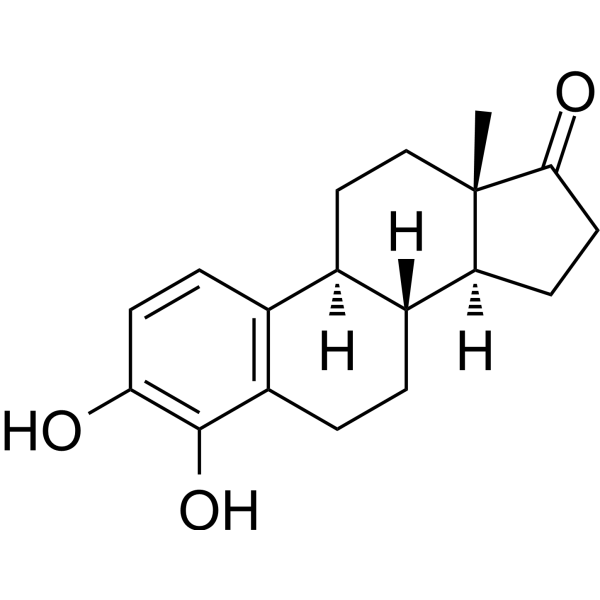
4-Hydroxyestrone (4-OHE1) is a brain-penetrant estrogen metabolite. 4-Hydroxyestrone shows neuroprotective effects involving increased cytoplasmic localization of p53 resulting from SIRT1-mediated p53 deacetylation. 4-Hydroxyestrone relies on PDI to mediate its protective effect against chemically induced ferroptosis in estrogen receptor-negative cancer cells. 4-Hydroxyestrone inhibits lipid peroxidation and lipid-ROS accumulation. 4-Hydroxyestrone blocks preovulatory luteinizing hormone surges in Rattus norvegicus. 4-Hydroxyestrone can be used for the researches of neurodegeneration, breast cancer and endocrine disease .
loading...
    loading...
Cat. No.: HY-170316
Target:  

Ras

Research Areas:  

Cancer

Ibetazol is a Importin β1 (KPNB1) inhibitor and nucleocytoplasmic transport disruptor. Ibetazol binds covalently to Cys585 of Importin β1, blocks both Importin β1-mediated direct transport and Importin α-dependent nuclear import processes, without affecting transport mediated by other nucleocytoplasmic transport proteins. Ibetazol induces cytoplasmic accumulation of Importin α1, and inhibits nuclear import of substrates carrying nuclear localization signals (NLS), including the NLS-cMyc reporter gene, RelA/p65 and SREBP1. Ibetazol triggers spindle malformation and chromosome misalignment by disrupting the mitotic function of Importin β1. Ibetazol inhibits the proliferation of cells expressing wild-type Importin β1. Ibetazol has a high activity-cytotoxicity window, lacks intrinsic fluorescence, and acts rapidly on nucleocytoplasmic transport processes. Ibetazol serves as a tool compound for investigating nuclear import processes specifically mediated by Importin β1 .
loading...
    loading...
Cat. No.: HY-118563
CAS No.: 135784-48-4
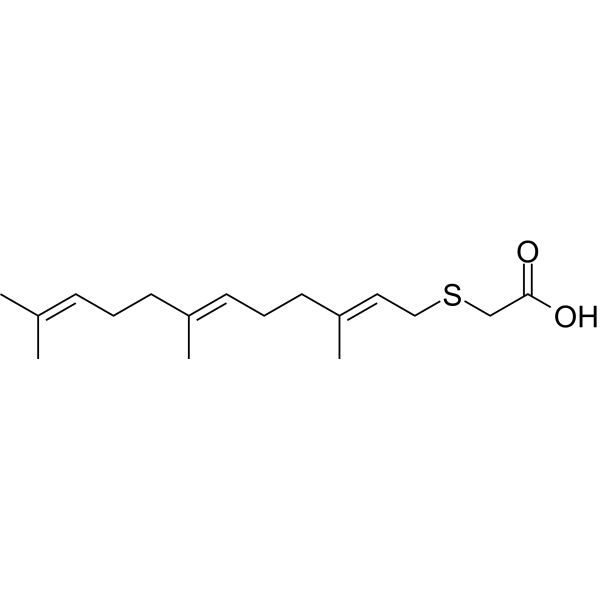
Farnesylthioacetic acid is a competitive, non-substrate inhibitor of Prenylcysteine α-carboxyl methyltransferase. It acts as a non-substrate competitive inhibitor of Arabidopsis thaliana Prenylcysteine α-carboxyl methyltransferase and blocks methyltransferase activity. Farnesylthioacetic acid does not inhibit protein farnesyltransferase activity in Arabidopsis. It induces Apoptosis. Farnesylthioacetic acid regulates the subcellular localization of Ras protein, reducing the proportion of cytoplasmic Ras protein without disrupting membrane binding. It enhances ABA-induced seed dormancy, delays seed germination, and promotes maximum stomatal closure at lower exogenous ABA concentrations. Farnesylthioacetic acid can be used in studies related to promyelocytic leukemia .
loading...
    loading...
Cat. No.: HY-P4098
CAS No.: 1207092-86-1
Target:  

Peptides

Research Areas:  

Infection Neurological Disease Cancer

SynB1 is a cell-penetrating peptide with blood-brain barrier permeability, derived from the antimicrobial peptide Protegrin 1. SynB1 enhances the cellular uptake efficiency and cytoplasmic localization level of conjugated constructs. SynB1 can be used in studies related to rabies and glioblastoma .
loading...
    loading...
Cat. No.: HY-134963
CAS No.: 864431-36-7
Target:  

PKC

Research Areas:  

Cancer

SBI-0087702 promots the cytoplasmic localization of ATF2 in melanoma cells. SBI-0087702-induced translocation of ATF2 to the mitochondria results in increased apoptosis due to loss of mitochondrial membrane integrity. SBI-0087702 also inhibits growth and motility of melanoma cells. SBI-0087702 was shown to inhibit ATF2 phosphorylation on Thr52 by PKCε .
loading...
    loading...
Cat. No.: HY-169081
Research Areas:  

Cancer

QS-57 is a heterobifunctional targeted protein localization (TPL) agent. QS-57 binds to BRD4 via its JQ1 domain and covalently targets 14-3-3σ to form a ternary complex. QS-57 sequesters nuclear BRD4 in the cytoplasm, impairing the nuclear transcriptional regulatory function mediated by BRD4. QS-57 significantly reduces the nuclear BRD4 protein level and increases the cytoplasmic BRD4 protein abundance in cancer cells. QS-57 can be used for research on breast cancer and colorectal cancer .
loading...
    loading...
Cat. No.: HY-W009300S
CAS No.: 81586-98-3
Synonyms: 4-OHE1-d4
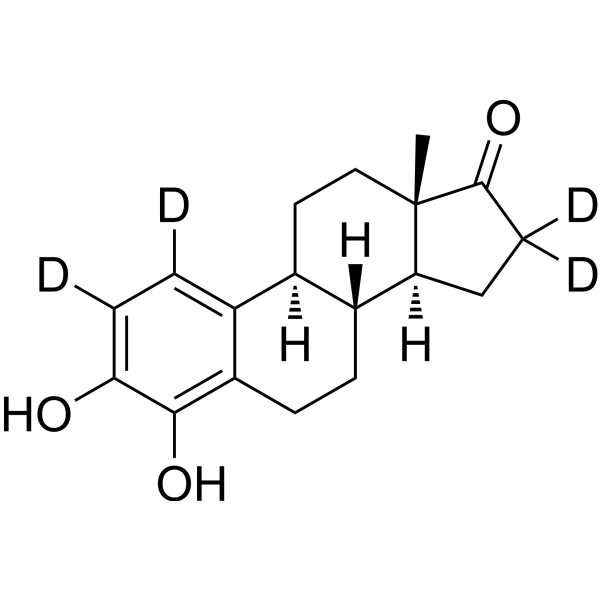
4-Hydroxyestrone (4-OHE1)-d4 is the deuterium labeled 4-Hydroxyestrone (HY-W009300). 4-Hydroxyestrone is a brain-penetrant estrogen metabolite. 4-Hydroxyestrone shows neuroprotective effects involving increased cytoplasmic localization of p53 resulting from SIRT1-mediated p53 deacetylation. 4-Hydroxyestrone relies on PDI to mediate its protective effect against chemically induced ferroptosis in estrogen receptor-negative cancer cells. 4-Hydroxyestrone inhibits lipid peroxidation and lipid-ROS accumulation. 4-Hydroxyestrone blocks preovulatory luteinizing hormone surges in Rattus norvegicus. 4-Hydroxyestrone can be used for the researches of neurodegeneration, breast cancer and endocrine disease .
loading...
    loading...
Cat. No.: HY-W009300S1
Synonyms: 4-OHE1-13C6
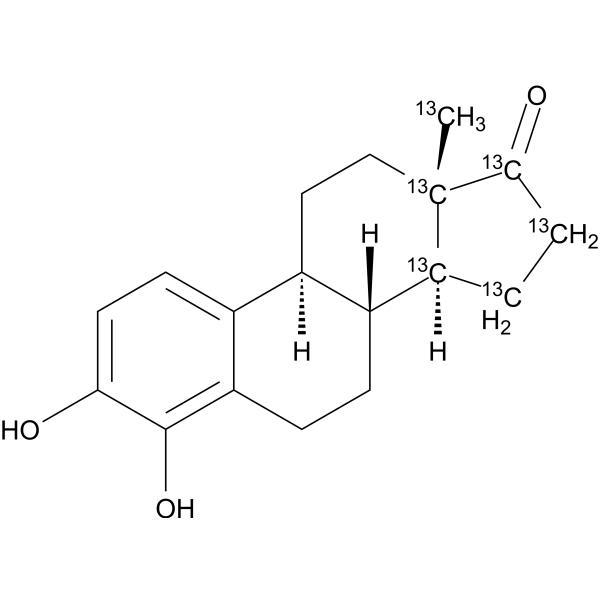
4-Hydroxyestrone (4-OHE1)- 13C6 is a 13C-labeled 4-Hydroxyestrone (HY-W009300). 4-Hydroxyestrone is a brain-penetrant estrogen metabolite. 4-Hydroxyestrone shows neuroprotective effects involving increased cytoplasmic localization of p53 resulting from SIRT1-mediated p53 deacetylation. 4-Hydroxyestrone relies on PDI to mediate its protective effect against chemically induced ferroptosis in estrogen receptor-negative cancer cells. 4-Hydroxyestrone inhibits lipid peroxidation and lipid-ROS accumulation. 4-Hydroxyestrone blocks preovulatory luteinizing hormone surges in Rattus norvegicus. 4-Hydroxyestrone can be used for the researches of neurodegeneration, breast cancer and endocrine disease .
loading...
    loading...
Cat. No.: HY-W248121
CAS No.: 131083-16-4
Synonyms: PM567
Pyrromethene 567 is a commercially available BODIPY dye with a photodynamic cytotoxicity IC50 of 6.8 ± 1.8 μM.Pyrromethene 567 shows cytoplasmic localization and limited cellular uptake in cancer cells.Pyrromethene 567 can be used for the research of lung cancer .
loading...
    loading...
Cat. No.: HY-183623
CAS No.: 1296670-84-2
Target:  

ADC Payloads Apoptosis

Research Areas:  

Cancer

ProAlk01 is a protein alkylating agent that serves as a toxin payload for ADCs. ProAlk01 localizes to the cytoplasm and exerts cytotoxic effects mainly by alkylating cytoplasmic proteins rather than binding to DNA. ProAlk01 induces cell cycle arrest, apoptosis, and immunogenic cell death. ProAlk01 can be used in the research of solid tumors .
loading...
    loading...
Cat. No.: HY-D3251
LCP is a polar-responsive fluorescent probe for the cellular microenvironment. LCP responds to polarity changes in the cellular microenvironment via fluorescence resonance energy transfer, emitting blue fluorescence in low-polarity environments (Ex/Em = 420 nm/550 nm) and red fluorescence (Ex/Em = 500 nm/662 nm) in high-polarity environments. LCP enables dual-color visualization of dynamic changes in lysosomes and cytoplasmic membranes during cell apoptosis, and monitors cell viability through localization and emission color changes. LCP can be used in cancer research .
loading...
    loading...
Cat. No.: HY-182743
CAS No.: 2803349-61-1
Target:  

AMPK MARK YAP

Research Areas:  

Cancer

OICR19451 is an orally active dual NUAK1/NUAK2 and MARK2/MARK3 kinase inhibitor, with IC50 values of 12 nM and 10 nM against NUAK1 and NUAK2, and 101 nM and 124 nM against MARK2 and MARK3, respectively. OICR19451 modulates the Hippo signaling pathway, increases the phosphorylation level of YAP, enhances the cytoplasmic localization of YAP/TAZ, and inhibits the expression of oncogenes. OICR19451 inhibits cancer cell growth, reduces metastasis, promotes tumor capsule formation, and improves mouse survival in an orthotopic breast cancer model. OICR19451 can be used for research related to triple-negative breast cancer .
loading...
    loading...
Cat. No.: HY-187172
Target:  

hnRNP

Research Areas:  

Neurological Disease

BDF34019555 is a blood-brain barrier-permeable binder targeting the conserved region (amino acid residues 320-340) of TDP-43, with a Kd of 10.4 μM for full-length TDP-43 and 7.8 μM for the CR polypeptide, respectively. BDF34019555 binds to the conserved α-helical region of TDP-43 in a Trp334-dependent manner, inhibits liquid-liquid phase separation, aggregation and mitochondrial localization of TDP-43, restores mitochondrial function, reduces cytoplasmic and insoluble TDP-43 levels, without affecting the splicing activity of TDP-43. BDF34019555 exerts neuroprotective effects, alleviates motor neuron loss and improves motor neuron function. BDF34019555 can be used in studies related to amyotrophic lateral sclerosis .
loading...
    loading...
  • 1

