15 Results for "

dendritic spines

" in MedChemExpress (MCE) Product Catalog:
Products (15)

15 Results for "dendritic spines" in MCE Product Catalog:

4
4 Cited Publications
Cat. No.: HY-B1752
CAS No.: 80373-22-4
Synonyms: LY 171555; (-)-LY 141865
Quinpirole (LY 171555; (-)-LY 141865) is a D2/D3 dopamine receptor agonist and a CaV1.3 calcium channel modulator. Quinpirole normalizes dendritic spine density in dopamine-depleted striatum, upregulates the protein expression of BCL2 and GluR2, downregulates the protein expression of BAX, and delays the onset of seizures. Quinpirole enhances learning and memory, inhibits neuronal apoptosis (apoptosis), and induces anxiety-like, stereotyped, and compulsive behaviors. Quinpirole disrupts prepulse inhibition in rhesus monkeys, enhances the activity of paraventricular thalamic neurons to promote recovery from Isoflurane anesthesia, and alters the composition of the gut microbiota in rats. Quinpirole can be used in research related to dyskinesia, pain, epilepsy, and neurological disorders including anxiety disorder, obsessive-compulsive disorder, and schizophrenia .
loading...
    loading...
1
1 Cited Publications
Cat. No.: HY-16728
CAS No.: 117928-94-6
Synonyms: GLYX-13
Target:  

iGluR ERK mTOR

Research Areas:  

Neurological Disease Cancer

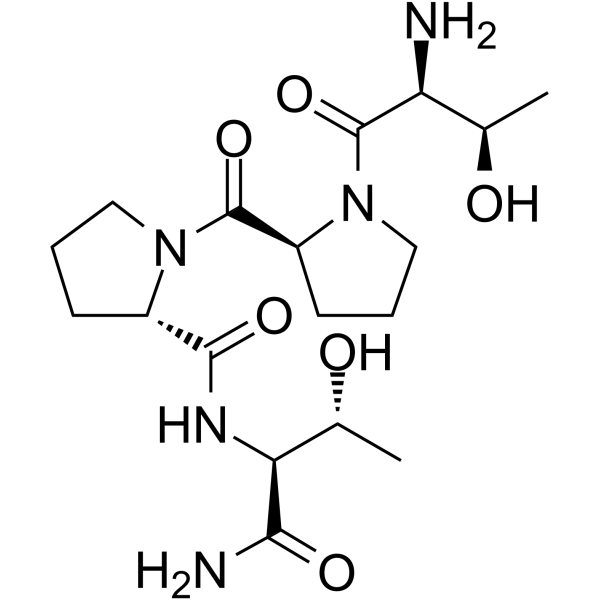
Rapastinel (GLYX-13) is a potent NMDAR modulator capable of crossing the blood-brain barrier, and it exhibits extremely high affinity for human NMDAR (EC50=0.0017-9.9 nM). Rapastinel enhances ERK signaling and activates the mTOR pathway, thereby upregulating the expression of BDNF and VGF, and inducing significant neuroplastic changes such as enhanced LTP and increased mature dendritic spine density in the hippocampus. Rapastinel moderately elevates the efflux of dopamine, norepinephrine and 5-HT in the prefrontal cortex, and uniquely avoids side effects of traditional antidepressants such as dissociation, addiction or sedation. Rapastinel is applicable to the research of major depressive disorder and hepatocellular carcinoma .
loading...
    loading...
1
1 Cited Publications
Cat. No.: HY-16728B
CAS No.: 1435786-04-1
Synonyms: GLYX-13 Trifluoroacetate
Target:  

iGluR mTOR ERK

Research Areas:  

Neurological Disease

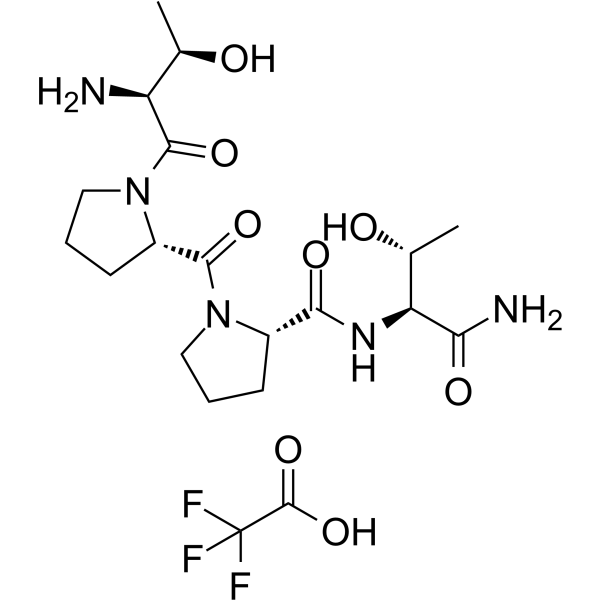
Rapastinel (GLYX-13) Trifluoroacetate is a potent NMDAR modulator capable of crossing the blood-brain barrier, and it exhibits extremely high affinity for human NMDAR (EC50=0.0017-9.9 nM). Rapastinel Trifluoroacetate enhances ERK signaling and activates the mTOR pathway, thereby upregulating the expression of BDNF and VGF, and inducing significant neuroplastic changes such as enhanced LTP and increased mature dendritic spine density in the hippocampus. Rapastinel Trifluoroacetate moderately elevates the efflux of dopamine, norepinephrine and 5-HT in the prefrontal cortex, and uniquely avoids side effects of traditional antidepressants such as dissociation, addiction or sedation. Rapastinel Trifluoroacetate is applicable to the research of major depressive disorder and hepatocellular carcinoma .
loading...
    loading...
Cat. No.: HY-175188
CAS No.: 2404652-82-8
Synonyms: BPN-0027490
Target:  

Myosin

Research Areas:  

Neurological Disease

MT-110 (BPN-0027490) is a non-muscle myosin NMIIB-selective inhibitor with high brain penetration and favorable safety profile. MT-110 specifically disrupts NMIIB-dependent actin dynamics in dendritic spines, while it exerts no significant adverse effects on cardiac myosin II and cardiac functions (such as cardiac output and heart rate) at tested concentrations. A single administration of MT-110 produces long-lasting (sustained for several weeks) blockade of methamphetamine motivation associated with environmental cues. MT-110 exhibits extremely high specificity, with no interference with cocaine motivation, hippocampus-dependent memory, fear memory, or locomotor and anxiety-like behaviors. MT-110 serves as a valuable tool compound for investigating the mechanisms of methamphetamine use disorder .
loading...
    loading...
Cat. No.: HY-10965
CAS No.: 136199-02-5
Purity:  99.68%
Synonyms: KW-3902
Target:  

Adenosine Receptor

Research Areas:  

Neurological Disease

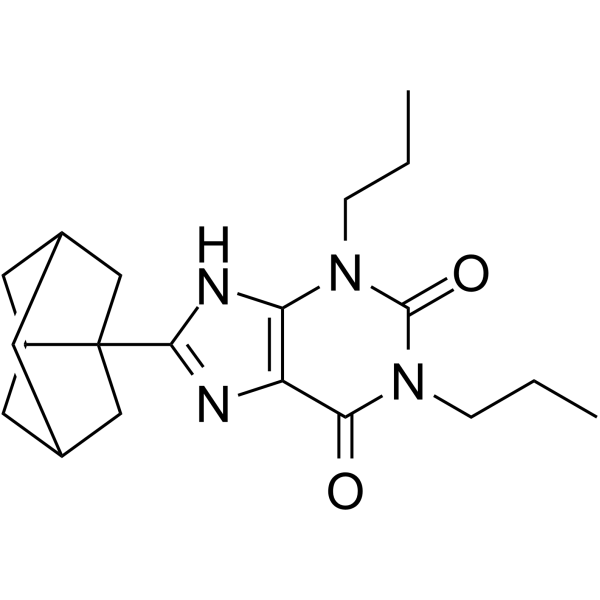
Rolofylline (KW-3902) is a potent, selective adenosine A1 receptor antagonist that is under development for the treatment of patients with acute congestive heart failure and renal impairment. Rolofylline is metabolized primarily to the pharmacologically active M1-trans and M1-cis metabolites by cytochrome P450 (CYP450) . Rolofylline is alleviating the presynaptic dysfunction and restores neuronal activity as well as dendritic spine levels in vitro, is an interesting candidate to combat the hypometabolism and neuronal dysfunction associated with Tau-induced neurodegenerative diseases .
loading...
    loading...
Cat. No.: HY-121872
CAS No.: 222315-88-0
Purity:  ≥95.0%
Research Areas:  

Neurological Disease

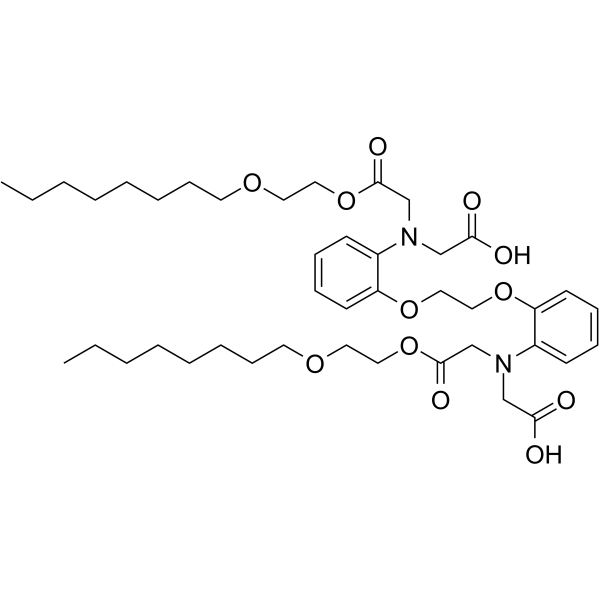
DP-b99 is a blood-brain barrier-permeable inhibitor of CYP2C9 and MMP-9, with a Ki value of 4.655 μM against CYP2C9. DP-b99 inhibits CYP2C9 via apparent non-competitive inhibition, mainly chelates pathological Zn 2+ in the membrane environment, attenuates the elevation of intracellular Zn 2+ and Ca 2+ levels, delays seizure onset and reduces seizure severity, and also prevents MMP-9-dependent dendritic spine remodeling, β-dystroglycan cleavage and gelatinase activity. DP-b99 can be used in the research of acute ischemic stroke, epileptogenesis and stroke .
loading...
    loading...
Cat. No.: HY-101170
CAS No.: 205437-64-5
Purity:  96.35%
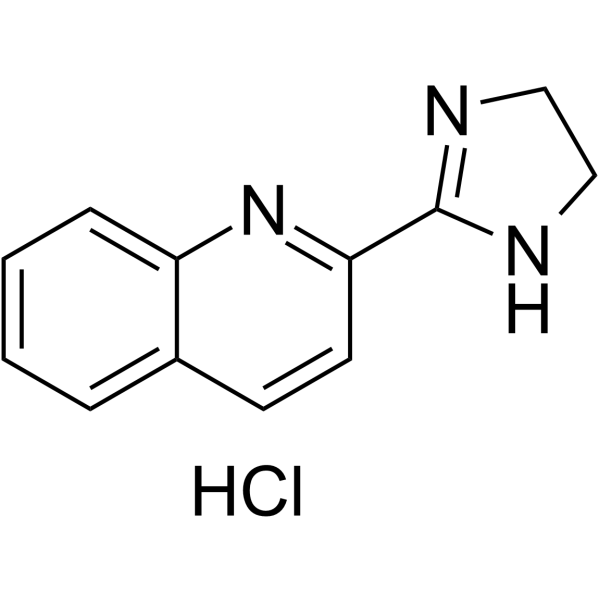
BU224 hydrochloride is a selective and high affinity imidazoline I2 receptor ligand, with a Ki of 2.1 nM. BU224 hydrochloride is sometimes used as an I2 receptor antagonist. BU224 hydrochloride exerts neuroprotective effects, with anti-inflammatory and anti-apoptotic properties. BU224 hydrochloride improves memory in 5XFAD mice, enlarging dendritic spines and reducing Aβ-induced changes in NMDARs. BU224 hydrochloride can be used for Alzheimer's disease research .
loading...
    loading...
Cat. No.: HY-176866
CAS No.: 2222756-46-7
Target:  

HDAC

Research Areas:  

Neurological Disease

Rodin-A is an orally active, brain-penetrant and selective histone deacetylase (HDAC)-co-repressor of repressor element-1 silencing transcription factor (CoREST) complex inhibitor with an IC50 value of 1.80 μM for the CoREST complex, 0.15 μM for HDAC1, and 0.43 μM for HDAC2. Rodin-A increases the acetylation level of histone H3K9, upregulates the expression of neuron-related genes, thereby promoting the increase in dendritic spine density, the colocalization of synaptic proteins (SV2A and PSD95), and the improvement of hippocampal long-term potentiation (LTP), exerting synaptic protection and repair activity. Rodin-A is promising for research of neurodegenerative diseases related to synaptic dysfunction, especially Alzheimer’s disease .
loading...
    loading...
Cat. No.: HY-153172
CAS No.: 2274723-90-7
Synonyms: Phenylbenzothiazole-PEG4-OH; SPG302
Target:  

Drug Intermediate

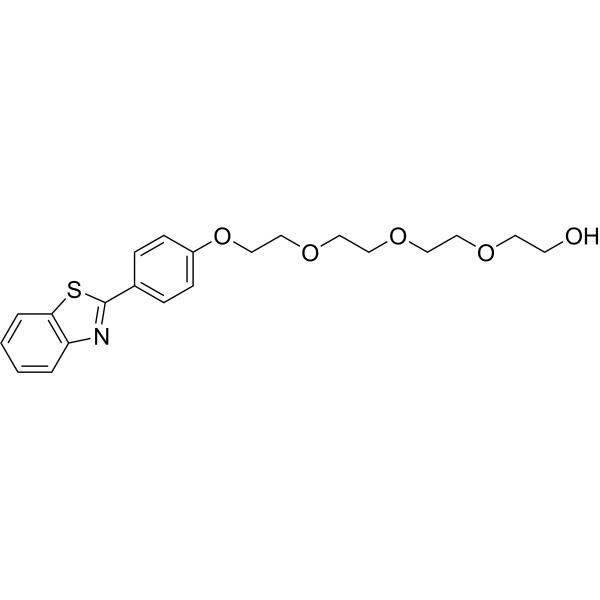
Tazbentetol (Phenylbenzothiazole-PEG4-OH) is a synaptogenic compound. Tazbentetol partially preserves inner retinal neurotransmission function and maintains retinal function. Tazbentetol increases dendritic spine glutamatergic synapses via cytoskeleton signaling pathways, enhances synaptic density both in vitro and in vivo, and restores glutamatergic synapses. Tazbentetol improves the progression of motor symptoms and enhances memory. Tazbentetol can be used in the research of glaucoma, diabetic retinopathy and amyotrophic lateral sclerosis .
loading...
    loading...
Cat. No.: HY-101170R
CAS No.: 205437-64-5
BU224 (hydrochloride) (Standard) is the analytical standard of BU224 (hydrochloride). This product is intended for research and analytical applications. BU224 hydrochloride is a selective and high affinity imidazoline I2 receptor ligand, with a Ki of 2.1 nM. BU224 hydrochloride is sometimes used as an I2 receptor antagonist. BU224 hydrochloride exerts neuroprotective effects, with anti-inflammatory and anti-apoptotic properties. BU224 hydrochloride improves memory in 5XFAD mice, enlarging dendritic spines and reducing Aβ-induced changes in NMDARs. BU224 hydrochloride can be used for Alzheimer's disease research .
loading...
    loading...
Cat. No.: HY-10965R
CAS No.: 136199-02-5
Synonyms: KW-3902 (Standard)
Rolofylline (Standard) is the analytical standard of Rolofylline. This product is intended for research and analytical applications. Rolofylline (KW-3902) is a potent, selective adenosine A1 receptor antagonist that is under development for the treatment of patients with acute congestive heart failure and renal impairment. Rolofylline is metabolized primarily to the pharmacologically active M1-trans and M1-cis metabolites by cytochrome P450 (CYP450) . Rolofylline is alleviating the presynaptic dysfunction and restores neuronal activity as well as dendritic spine levels in vitro, is an interesting candidate to combat the hypometabolism and neuronal dysfunction associated with Tau-induced neurodegenerative diseases .
loading...
    loading...
Cat. No.: HY-16728A
CAS No.: 491872-39-0
Synonyms: GLYX-13 acetate
Target:  

iGluR mTOR ERK

Research Areas:  

Neurological Disease

Rapastinel (GLYX-13) acetate is a potent NMDAR modulator capable of crossing the blood-brain barrier, and it exhibits extremely high affinity for human NMDAR (EC50=0.0017-9.9 nM). Rapastinel acetate enhances ERK signaling and activates the mTOR pathway, thereby upregulating the expression of BDNF and VGF, and inducing significant neuroplastic changes such as enhanced LTP and increased mature dendritic spine density in the hippocampus. Rapastinel acetate moderately elevates the efflux of dopamine, norepinephrine and 5-HT in the prefrontal cortex, and uniquely avoids side effects of traditional antidepressants such as dissociation, addiction or sedation. Rapastinel acetate is applicable to the research of major depressive disorder and hepatocellular carcinoma .
loading...
    loading...
Cat. No.: HY-176867
Target:  

HDAC

Research Areas:  

Neurological Disease

Rodin-B is a selective histone deacetylase (HDAC)-co-repressor of repressor element-1 silencing transcription factor (CoREST) complex inhibitor with an IC50 value of 0.50 μM for the CoREST complex, 0.27 μM for HDAC1, and 0.28 μM for HDAC2. Rodin-B increases the acetylation level of histone H3K9, upregulates the expression of neuron-related genes, thereby promoting the increase in dendritic spine density, the colocalization of synaptic proteins (SV2A and PSD95), and the improvement of hippocampal long-term potentiation (LTP), exerting synaptic protection and repair activity. Rodin-B is promising for research of neurodegenerative diseases related to synaptic dysfunction, especially Alzheimer’s disease .
loading...
    loading...
Cat. No.: HY-P992426

Target:  

Tau Protein

Research Areas:  

Neurological Disease

NS101 is an anti-FAM19A5 antibody with an IC50 of 0.2 nM and a Kd of 111 pM, as well as blood-brain barrier permeability. NS101 binds to key amino acid residues of FAM19A5, thereby blocking the interaction of LRRC4B and disrupting the FAM19A5-LRRC4B complex. NS101 increases the dendritic spine density in hippocampal neurons and the prefrontal cortex, normalizes the dendritic spine elimination rate, elevates the frequencies of mEPSC and fEPSP, and promotes the transport of brain-derived FAM19A5 into the peripheral circulation. NS101 improves cognitive function in mouse models of Alzheimer's disease. NS101 can be used for research on Alzheimer's disease. The recommended isotype control is human IgG1 kappa (HY-P99001) .
loading...
    loading...
Cat. No.: HY-184654
CAS No.: 2169267-60-9
MR-39 is a FPR2 agonist (EC50 = 3.9 μM). MR-39 activates FPR2 to promote neuroinflammation resolution (downregulates IL-1β and TNF-α, modulates NF-κB), upregulates synaptic proteins (synaptic proteins) and improves dendritic spine morphology. MR-39 inhibits MAPK/ERK and AKT phosphorylation in glioblastoma, induces S-phase arrest, and suppresses migration, angiogenesis, and hypoxic adaptation. MR-39 reduces Aβ plaque burden via inhibiting MyD88/NF-κB and NLRP3 inflammasome. MR-39 can be used for research on autism spectrum disorder, Alzheimer's disease, and glioblastoma .
loading...
    loading...
  • 1

