
11 Results for "

endothelial monolayers

" in MedChemExpress (MCE) Product Catalog:
Products (11)

11 Results for "endothelial monolayers" in MCE Product Catalog:

  • Targets Recommended:
2
2 Cited Publications
Cat. No.: HY-158082C
Synonyms: Tetramethyl rhodamine isothiocyanate glucan, MW 70000
TRITC-dextran MW 70000 (Tetramethyl rhodamine isothiocyanate glucan, MW 70000) is a fluorescent dye with a molecular weight of 70 kD. The excitation wavelength of TRITC-dextran MW 70000 is 555 nm, and its emission wavelength is 570 nm. TRITC-dextran MW 70000 is used for drug delivery because TRITC maintains stability over a wide pH range (i.e., pH 2-11) and exhibits photobleaching resistance .
loading...
    loading...
Cat. No.: HY-124404A
CAS No.: 54397-83-0
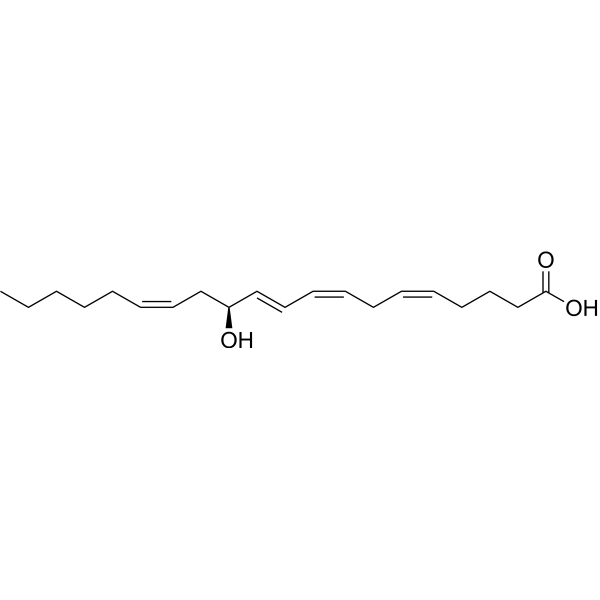
12(S)-HETE is a metabolite of Arachidonic acid, AA (HY-109590). 12(S)-HETE promotes ERK and P38 MAPK phosphorylation, stimulates DNA synthesis and cell proliferation in cancer cells. 12(S)-HETE facilitates wound healing of injured murine-lung-derived microvascular endothelial cell monolayers. 12(S)-HETE can be used for the research of pancreatic cancer .
loading...
    loading...
Cat. No.: HY-P2031
CAS No.: 26645-35-2
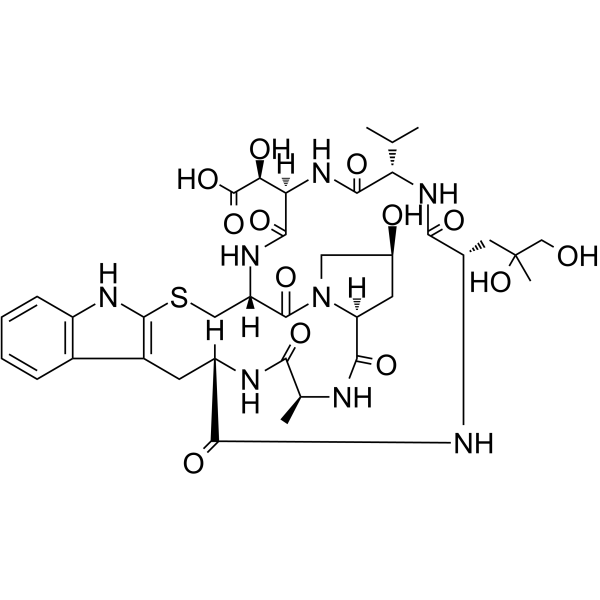
Phallacidin is a natural bicyclic heptapeptide derived from the poisonous mushroom Amanita phalloides. Phallacidin binds to filamentous actin specifically with high affinity, with a Kd of 20 nM. After binding to F-actin, Phallacidin strongly inhibits its depolymerization, stabilizes microfilament structures, and prevents their disruption by drugs such as cytochalasins. When conjugated with a fluorophore, Phallacidin serves as a specific fluorescent probe for F-actin, which is used to clearly visualize the distribution of actin in the cytoskeleton (e.g., stress fibers, cortical peripheral bands) under fluorescence microscopy .
loading...
    loading...
Cat. No.: HY-P991400
GSK1995057 is a human monoclonal antibody (mAb) targeting TNFRSF1A. GSK1995057 selectively binds to TNFR1, blocks the binding of TNF-α and LT-α, and does not interfere with TNFR2 signaling. GSK1995057 inhibits the activation of NF-κB, JNK and MAPK pathways, alleviates apoptosis (apoptosis) and inflammatory responses (inhibiting IL-1β, IL-6, IL-10, TNF-α), and prevents viability loss of human nucleus pulposus cells. GSK1995057 inhibits the expression of cytokines and neutrophil adhesion molecules in human pulmonary microvascular endothelial cell monolayers, and reduces inflammatory responses and lung injury symptoms in non-human primates. GSK1995057 forms complexes with HAVH autoantibodies, thereby activating TNFR1 and triggering the release of cytokines and IL-8 in human cells. GSK1995057 can be used in research related to intervertebral disc degeneration and acute lung injury .
loading...
    loading...
Cat. No.: HY-172163
FITC-dextran sulfate (MW 4kDa) is a dextran sulfate labeled with FITC (HY-66019), with an average molecular weight of 4 kDa. FITC-dextran sulfate (MW 4kDa) serves as an anionic macromolecular tracer. FITC-dextran sulfate (MW 4kDa) can be used for permeability studies .
loading...
    loading...
Cat. No.: HY-108933
CAS No.: 942655-44-9
Purity:  99.72%
Target:  

VEGFR FGFR

Research Areas:  

Cancer

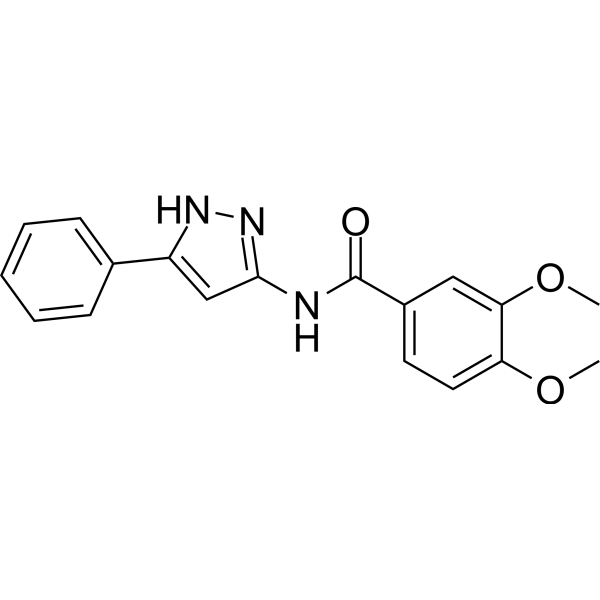
JK-P3 is a potent and pan VEGFR2 inhibitor, with IC50s of 7.83 μM, 27 μM and 5.18 μM for VEGFR2, FGFR1 and FGFR3, respectively. JK-P3 can inhibit VEGF-A-stimulated VEGFR2 activation and intracellular signalling, also inhibits endothelial monolayer wound closure and angiogenesis, as well as fibroblast growth factor receptor kinase activity in vitro. JK-P3 has anti-angiogenic activity .
loading...
    loading...
Cat. No.: HY-115356
CAS No.: 1000852-57-2
Synonyms: 14,15-LTE4; EoxE4
Target:  

Drug Metabolite

Research Areas:  

Cardiovascular Disease

Eoxin E4 (14,15-LTE4) is the metabolite of 14,15-LTC4 and 14,15-LTD4. Eoxin E4 increases vascular permeability of human endothelial cell monolayers with about 10-fold less potency than LTC4, but approximately 100-fold greater potency than histamine .
loading...
    loading...
Cat. No.: HY-108933R
CAS No.: 942655-44-9
Research Areas:  

Cancer

JK-P3 (Standard) is the analytical standard of JK-P3 (HY-108933). This product is intended for research and analytical applications. JK-P3 is a potent and pan VEGFR2 inhibitor, with IC50s of 7.83 μM, 27 μM and 5.18 μM for VEGFR2, FGFR1 and FGFR3, respectively. JK-P3 can inhibit VEGF-A-stimulated VEGFR2 activation and intracellular signalling, also inhibits endothelial monolayer wound closure and angiogenesis, as well as fibroblast growth factor receptor Kinase activity in vitro. JK-P3 has anti-angiogenic activity .
loading...
    loading...
Cat. No.: HY-183448
CAS No.: 117666-86-1
ETMTC is an orally active anti-inflammatory and antioxidant agent. ETMTC inhibits IKK-mediated phosphorylation and degradation of IkBα, blocks nuclear translocation and activation of NF-κB, and reduces the expression of ICAM-1, VCAM-1, E-selectin, Th2 cytokines and eosinophil chemokines. ETMTC abrogates neutrophil adhesion to endothelial monolayers and inhibits TNF-α-induced ROS production. ETMTC activates Nrf2, and enhances the activities of mitochondrial complex I and IV. ETMTC reduces lipid peroxidation levels, oxidative DNA damage, cytochrome c and caspase 9 activity, and decreases goblet cell metaplasia and subepithelial fibrosis. ETMTC can be used for the research of inflammatory diseases and asthma .
loading...
    loading...
Cat. No.: HY-167754
CAS No.: 1609382-32-2
Target:  

GPR84

Research Areas:  

Inflammation/Immunology

Resolvin D5 n-3 DPA is a Docosapentaenoic acid (DPA) derived specialized proresolving lipid mediator (SPM). Resolvin D5 n-3 DPA is a GPR101, GPR12, and GPR84 agonist with EC50s of 4.6 pM, 14 pM, and 1.5 pM, respectively. Resolvin D5 n-3 DPA possesses potent pro-resolution and anti-inflammatory actions. Resolvin D5 n-3 DPA reduces cell adhesion onto TNF-α-activated human endothelial monolayers. Resolvin D5 n-3 DPA displays potent leukocyte-directed activities, upregulating the ability of neutrophils and macrophages to phagocytose bacteria. Resolvin D5 n-3 DPA can be used for the study of intestinal inflammation .
loading...
    loading...
Cat. No.: HY-NP216
Synonyms: LecB
PA-IIL (LecB) is a lectin produced by Pseudomonas aeruginosa. PA-IIL binds to glycosylated β1-integrin, fucose-containing glycosphingolipids, fucosylated/mannosylated neutrophil glycoconjugates, and pre-formed neutrophil extracellular traps. PA-IIL disrupts host defenses: it creates favorable conditions for Pseudomonas aeruginosa infection and dissemination by modulating the bactericidal activity of neutrophils, impairing the trafficking and recruitment of immune cells, and compromising the repair capacity of epithelial barriers. PA-IIL can be used in studies related to Pseudomonas aeruginosa infection .
loading...
    loading...
  • 1

