20 Results for "

enhance radiosensitivity

" in MedChemExpress (MCE) Product Catalog:
Products (20)

20 Results for "enhance radiosensitivity" in MCE Product Catalog:

1
1 Cited Publications
Cat. No.: HY-134594
CAS No.: 2416910-69-3
Purity:  99.55%
Target:  

E1/E2/E3 Enzyme

Research Areas:  

Cancer

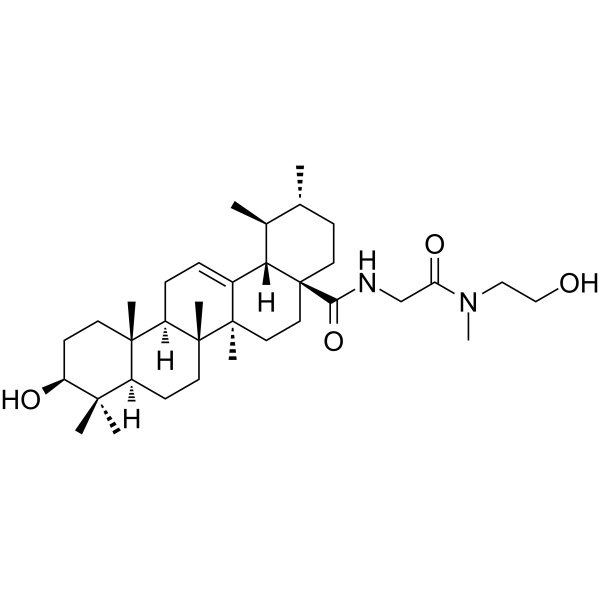
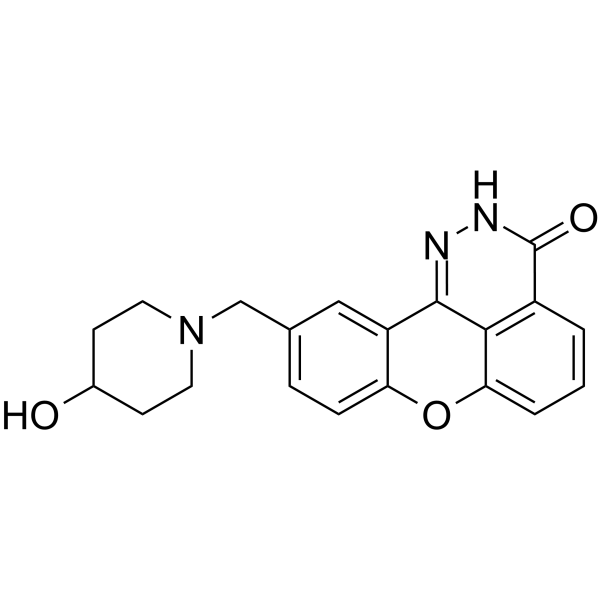
SENP1-IN-1 is a specific deSUMOylation protease 1 (SENP1) inhibitor extracted from patent CN110627860, Compound 29. SENP1-IN-1 is developed for tumor radiosensitivity enhancement .
loading...
    loading...
Cat. No.: HY-N4327
CAS No.: 23062-24-0
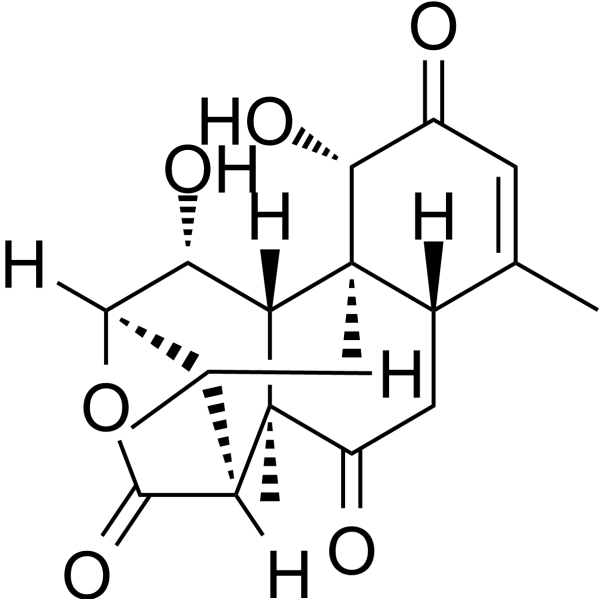
Eurycomalactone is an active quassinoid could be isolated from Eurycoma longifolia Jack. Eurycomalactone is a potent NF-κB inhibitor with an IC50 value of 0.5 μM. Eurycomalactone inhibits protein synthesis and depletes cyclin D1. Eurycomalactone enhances radiosensitivity through arrest cell cycle at G2/M phase and delayed DNA double-strand break repair. Eurycomalactone inhibits the activation of AKT/NF-κB signaling, induces apoptosis and enhances chemosensitivity to Cisplatin (HY-17394) .
loading...
    loading...
Cat. No.: HY-W008449
CAS No.: 6136-37-4
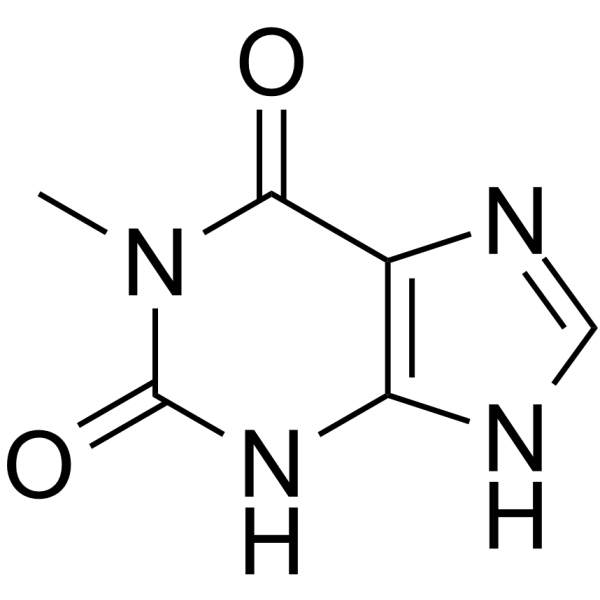
1-Methylxanthine, a caffeine derivative, is an essential human urinary metabolite of caffeine and theophylline (1,3-dimethylxanthine, TP) . 1-Methylxanthine enhances the radiosensitivity of tumor cells .
loading...
    loading...
Cat. No.: HY-100683
CAS No.: 1005129-80-5
Purity:  98.0%
Target:  

Phosphatase

Research Areas:  

Cancer

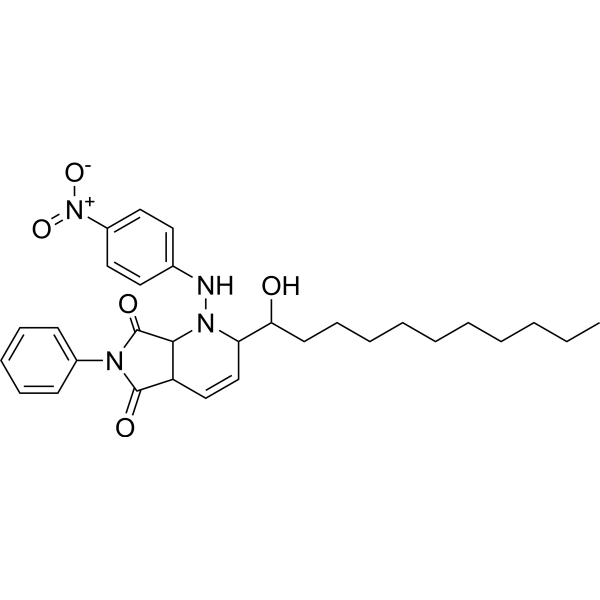
A12B4C3 is a potent human polynucleotide kinase/phosphatase (hPNKP) inhibitor with an IC50 value of 0.06 μM. A12B4C3 has antiproliferative activity against cancer cells. A12B4C3 can also enhance the radiosensitivity of certain cancer cells .
loading...
    loading...
Cat. No.: HY-13540
CAS No.: 902128-92-1
Purity:  98.46%
Synonyms: GPI 21016
Target:  

PARP

Research Areas:  

Cancer

E7016 (GPI 21016) is an orally available PARP inhibitor. E7016 can enhance tumor cell radiosensitivity in vitro and in vivo through the inhibition of DNA repair. E7016 acts as a potential anticancer agent .
loading...
    loading...
Cat. No.: HY-134596
CAS No.: 2416910-59-1
Purity:  99.92%
Target:  

E1/E2/E3 Enzyme

Research Areas:  

Cancer

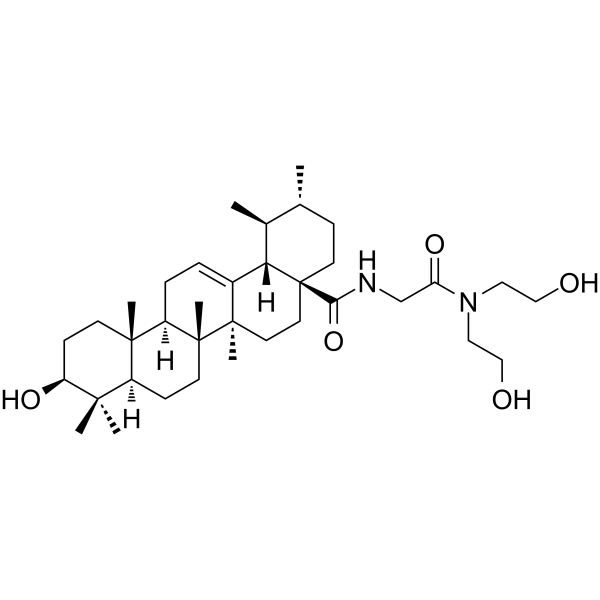
SENP1-IN-3 is a specific deSUMOylation protease 1 (SENP1) inhibitor extracted from patent CN110627860, Compound 17. SENP1-IN-3 is developed for tumor radiosensitivity enhancement .
loading...
    loading...
Cat. No.: HY-176798
CAS No.: 1964516-64-0
NCI-006 is an orally active lactate dehydrogenase (LDH) inhibitor (LDHA IC50 = 0.06 μM; LDHB IC50 = 0.03 μM). NCI-006 inhibits intratumoral LDH activity, lactate production, and tumor growth in a mouse pancreatic cancer model. NCI-006 inhibits glycolysis and induces apoptosis in vitro. NCI-006 enhances the radiosensitivity of glycolytic tumor cell lines while sparing non-glycolytic/normal cells (1522, skin fibroblasts) in combination with ionizing radiation (IR). NCI-006 exhibits synergistic antitumor effects in combination with IACS-010759 (HY-112037) against colorectal and gastric cancers. NCI-006 targets glycolysis by inhibiting lactate dehydrogenase impairs tumor growth in an Ewing sarcoma model .
loading...
    loading...
Cat. No.: HY-134597
CAS No.: 2416910-64-8
Purity:  ≥98.0%
Target:  

E1/E2/E3 Enzyme

Research Areas:  

Cancer

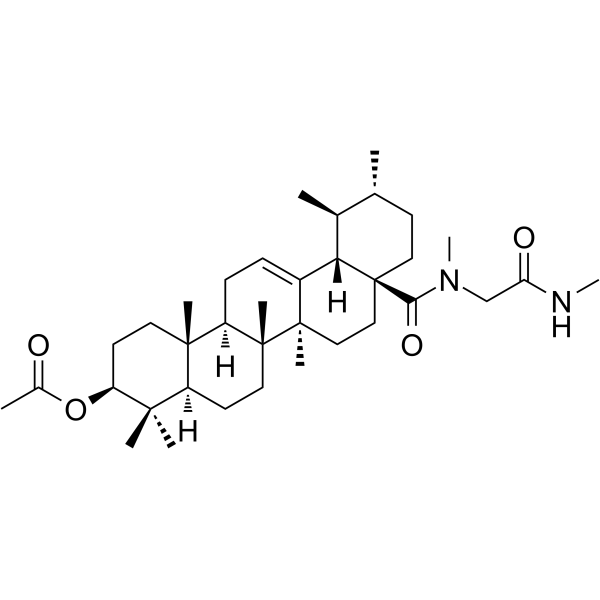
SENP1-IN-4 is a specific deSUMOylation protease 1 (SENP1) inhibitor extracted from patent CN110627860, Compound 21. SENP1-IN-4 is developed for tumor radiosensitivity enhancement .
loading...
    loading...
Cat. No.: HY-139289S
CAS No.: 2607139-85-3
ART899 is a highly specific allosteric inhibitor of the Polθ DNA polymerase domain. ART899 can effectively enhance the radiosensitivity of tumor cells, shows good tolerance when combined with fractionated radiation, and significantly reduces tumor growth compared to radiation alone .
loading...
    loading...
Cat. No.: HY-116428
CAS No.: 160141-09-3
Research Areas:  

Cancer

L-744832 is a farnesyl transferase inhibitor. L-744832 effectively inhibits the farnesylation of H-Ras and N-Ras, but has little effect on K-Ras treatment. L-744832 not only directly targets the oncogenic pathway by inhibiting Ras farnesylation, but also enhances radiosensitivity by restoring TGF-β signaling through epigenetic reprogramming. L-744832 can induce cell cycle arrest and apoptosis. L-744832 can be used in combination therapy studies for Ras-driven tumors such as pancreatic cancer .
loading...
    loading...
Cat. No.: HY-134595
CAS No.: 2416910-70-6
Target:  

E1/E2/E3 Enzyme

Research Areas:  

Cancer

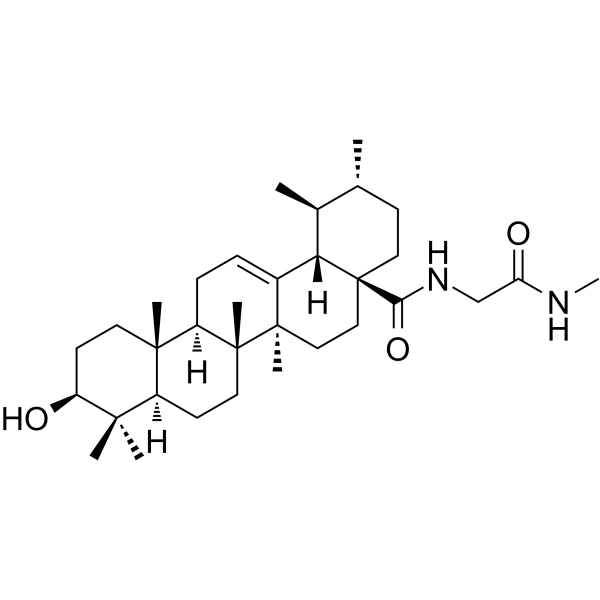
SENP1-IN-2 is a specific deSUMOylation protease 1 (SENP1) inhibitor extracted from patent CN110627860, Compound 30. SENP1-IN-2 is developed for tumor radiosensitivity enhancement .
loading...
    loading...
Cat. No.: HY-122759
CAS No.: 16961-77-6
Research Areas:  

Cancer

CPA7 is a novel Stat3 inhibitor. CPA7 downregulates survivin, Bcl-XL, and Mcl-1. CPA7 induces Apoptosis. CPA7 enhances the radiosensitivity of prostate cancer. CPA7 has anti-cancer effects against prostate cancer .
loading...
    loading...
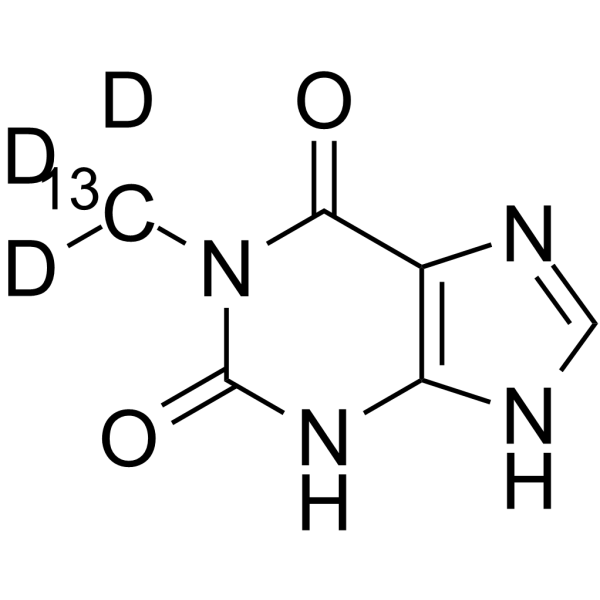
Cat. No.: HY-W008449S
1-Methylxanthine- 13C,d3 is the 13C- and deuterium labeled 1-Methylxanthine. 1-Methylxanthine, a caffeine derivative, is an essential human urinary metabolite of caffeine and theophylline (1,3-dimethylxanthine, TP) . 1-Methylxanthine enhances the radiosensitivity of tumor cells .
loading...
    loading...
Cat. No.: HY-164539
CAS No.: 2231800-32-9
Target:  

HDAC Autophagy

Research Areas:  

Cancer

TMU 35435 is a histone deacetylase (HDAC) inhibitor. TMU-35435 inhibits the NHEJ pathway through ubiquitination of DNA-dependent protein kinase catalytic subunit (DNA-PKcs). In addition, TMU 35435 enhances radiosensitivity by inducing misfolded protein aggregation and autophagy in TNBC .
loading...
    loading...
Cat. No.: HY-W008449R
CAS No.: 6136-37-4
1-Methylxanthine (Standard) is the analytical standard of 1-Methylxanthine. This product is intended for research and analytical applications. 1-Methylxanthine, a caffeine derivative, is an essential human urinary metabolite of caffeine and theophylline (1,3-dimethylxanthine, TP) . 1-Methylxanthine enhances the radiosensitivity of tumor cells .
loading...
    loading...
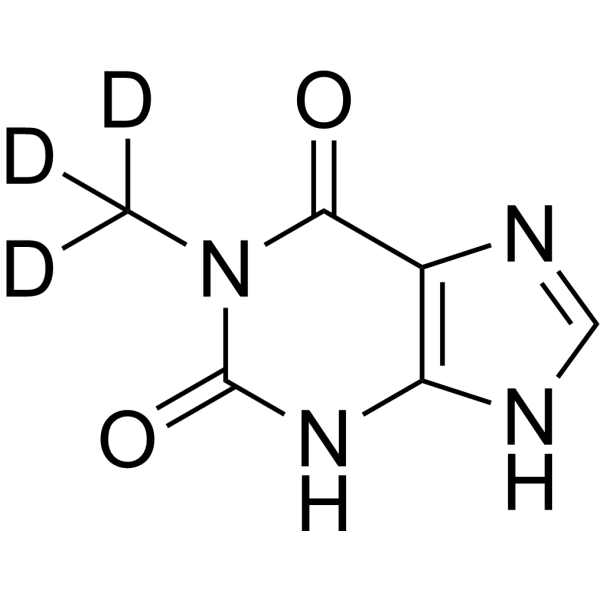
Cat. No.: HY-W008449S2
CAS No.: 1216430-61-3
1-Methylxanthine-d3 is deuterated labeled 1-Methylxanthine (HY-W008449). 1-Methylxanthine, a caffeine derivative, is an essential human urinary metabolite of caffeine and theophylline (1,3-dimethylxanthine, TP) . 1-Methylxanthine enhances the radiosensitivity of tumor cells .
loading...
    loading...
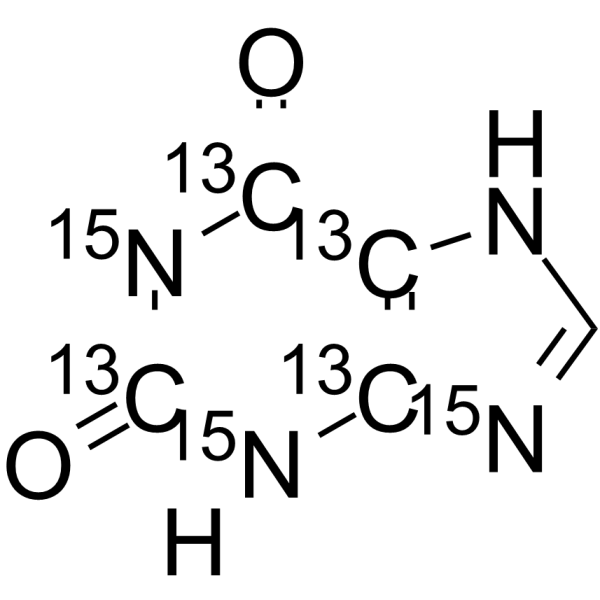
Cat. No.: HY-W008449S1
CAS No.: 1173018-69-3
1-Methylxanthine- 13C4, 15N3 is the 13C-labeled and 15N-labeled 1-Methylxanthine. 1-Methylxanthine, a caffeine derivative, is an essential human urinary metabolite of caffeine and theophylline (1,3-dimethylxanthine, TP) . 1-Methylxanthine enhances the radiosensitivity of tumor cells .
loading...
    loading...
Cat. No.: HY-10180A
CAS No.: 869366-15-4
Target:  

Aurora Kinase

Research Areas:  

Cancer

MLN8054 sodium is an Aurora A inhibitor with radiosensitivity-enhancing activity. MLN8054 sodium can activate the DNA double-strand break reaction of prostate cancer cells in in vitro experiments. The application of MLN8054 sodium is closely related to accumulation in the G2/M phase of the cell cycle and polyploid formation. In vivo experiments show that MLN8054 sodium can significantly delay the growth of prostate cancer tumors and promote tumor cell apoptosis when used in combination with radiotherapy .
loading...
    loading...
Cat. No.: HY-105095
CAS No.: 149838-23-3
Synonyms: PR 350; RP 343
Research Areas:  

Cancer

Doranidazole (PR 350) is a radiosensitizer. Doranidazole increases the radiosensitivity of hypoxic SCCVII cells. Doranidazole significantly enhances radiation-induced growth delay in SCCVII tumors when administered intravenously before tumor irradiation. Doranidazole radiosensitizes tumors to an extent that depends on the tumor's oxygenation status. Doranidazole can be used for the study of lymphoma and hypoxic pancreatic tumors .
loading...
    loading...
Cat. No.: HY-L179
40 compounds

Radiotherapy is a common treatment for various cancers, and more than 50% of cancer patients require radiotherapy during the disease treatment. With advances in radiation technology and a better understanding of tumor biology, the efficacy of radiation therapy has gradually improved, and more and more patients have benefited from it. However, even with the use of advanced radiotherapy techniques, there are still many malignant tumor cells with low sensitivity to radiation, leading to the radiation effect is not ideal. To solve this problem, radiosensitizers have received more and more attention. Radiosensitizer is a kind of drug that can enhance the radiosensitivity of tumor cells and improve the effect of radiotherapy. Radiation sensitizers act in a variety of ways, such as killing hypoxic cells, enhancing DNA damage, inhibiting DNA damage repair, and blocking cell cycle progression, making tumor cells more susceptible to radiation damage and death than surrounding normal cells.

MCE designs a unique collection of 40 compounds with definite reported radiosensitization. It can be used for drug combination research in anti-cancer treatment.

  • 1

