
Search Result
Results for "
fabric
" in MedChemExpress (MCE) Product Catalog:
8
Biochemical Assay Reagents
2
Isotope-Labeled Compounds
| Cat. No. |
Product Name |
Target |
Research Areas |
Chemical Structure |
-
- HY-131119
-
|
Dioctadecyldimethylammonium bromide; DODAB
|
Liposome
|
Others
|
|
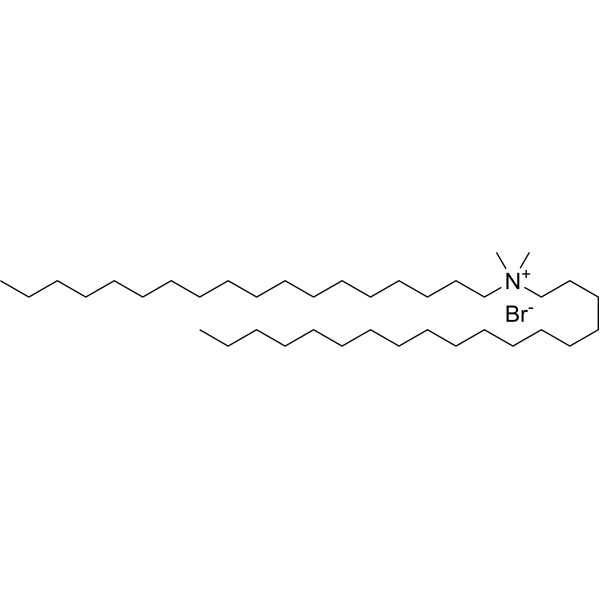
Dimethyldioctadecylammonium bromide is a synthetic cationic lipid commonly used in gene delivery and vaccine development. Also known as DODAB or DDAB, it consists of a positively charged ammonium head group and two long hydrophobic tails. These properties make it useful for forming liposomes and other lipid-based nanoparticles that can efficiently deliver genetic material into cells. In addition to its applications in biotechnology, DDAB is also used in surfactants, emulsifiers and fabric softeners. However, due to its potential toxicity and irritation, extreme care should be taken when handling DDAB.
|
-
-
- HY-N0563
-
|
|
AMPK
VEGFR
PI3K
Akt
NF-κB
Cytochrome P450
|
Cardiovascular Disease
Cancer
|
|
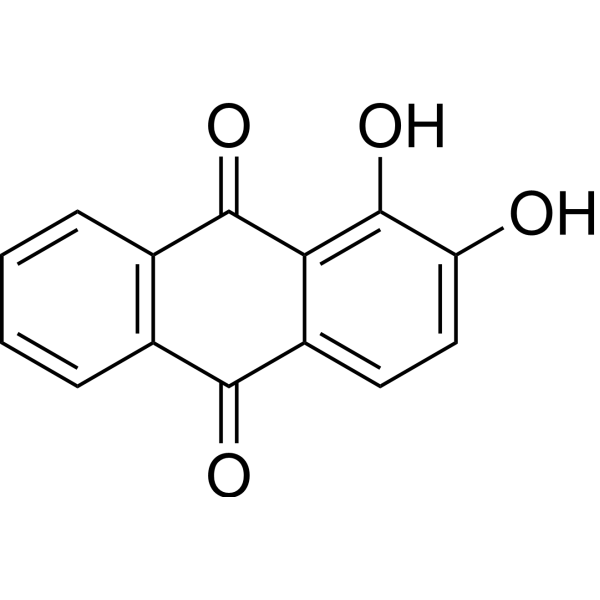
Alizarin is a natural dye. Alizarin can be extracted from the roots of madder plant. Alizarin activates AMPK and VEGFR2/eNOS pathway. Alizarin regulates PI3K/Akt and inhibits NF-κB pathway. Alizarin enhances CYP1A1 enzyme activity. Alizarin has protective effects on hypertension and vascular endothelial dysfunction. Alizarin has anti-tumor activity against multiple cancers including pancreatic cancer, breast cancer, osteosarcoma and liver cancer. Alizarin has been widely used as a pigment in textile fabrics and paintings .
|
-
-
- HY-D0342
-
|
|
Fluorescent Dye
|
Others
|
|
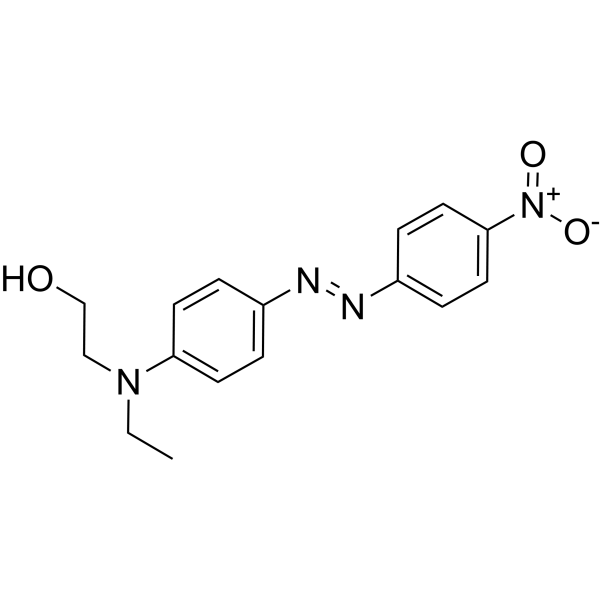
Disperse Red 1, an azobenzene derivative, is an azo textile dye extensively used for dyeing polyester fabrics in textile industry .
|
-
-
- HY-W099594
-
|
Benzyldimethyldodecylammonium bromide
|
Environmental Pollutants
Biochemical Assay Reagents
|
Others
|
|
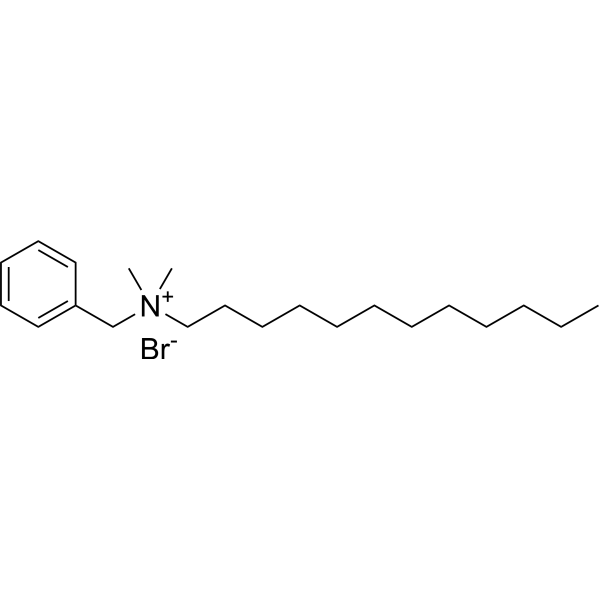
N-Benzyl-N, N-dimethyldodecan-1-aminium bromide, also known as Benzalkonium Chloride (BAC), is a quaternary ammonium compound widely used as an antimicrobial and surfactant in various industries. BAC is commonly used as a disinfectant and antiseptic in a variety of products including hand sanitizers, disinfectant wipes and eye drops. Its ability to kill bacteria, viruses and fungi makes it an effective tool in preventing the spread of infection. BAC is also used as a preservative and disinfectant in the food industry. It is added to food packaging and processing equipment to prevent the growth of microorganisms and increase the shelf life of foods. Additionally, BACs are found in many household products such as cleaning solutions, fabric softeners and personal care products. Its surfactant properties allow it to be used to reduce surface tension and increase the effectiveness of cleaning agents. Although BAC has many uses, ingestion or exposure to high concentrations of BAC can cause skin irritation and other adverse effects.
|
-
-
- HY-D0953
-
|
Solvent Blue 38
|
Environmental Pollutants
Fluorescent Dye
|
Neurological Disease
|
|
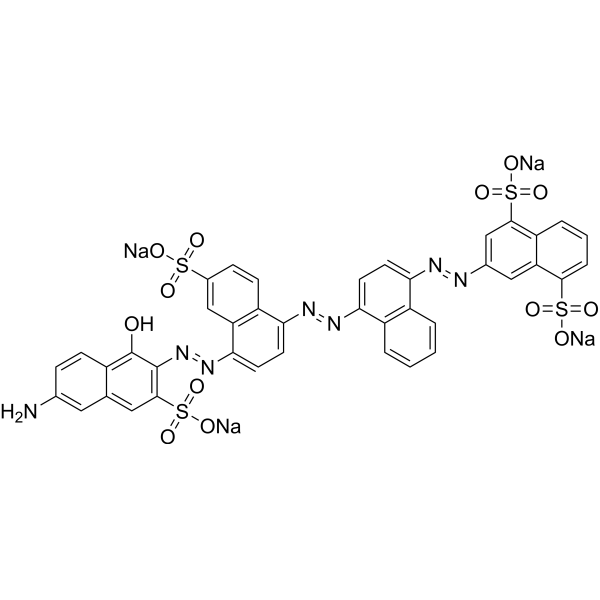
Direct Blue 86 (Solvent Blue 38) is a myelin-sheath stain, commonly utilized in microscopy to detect demyelination in the central nervous system. Direct Blue 86 also is a dye with various applications including as a commercial dye in the printing of cotton and mucilage glue fabrics .
|
-
-
- HY-D1196
-
|
|
Fluorescent Dye
|
|
|
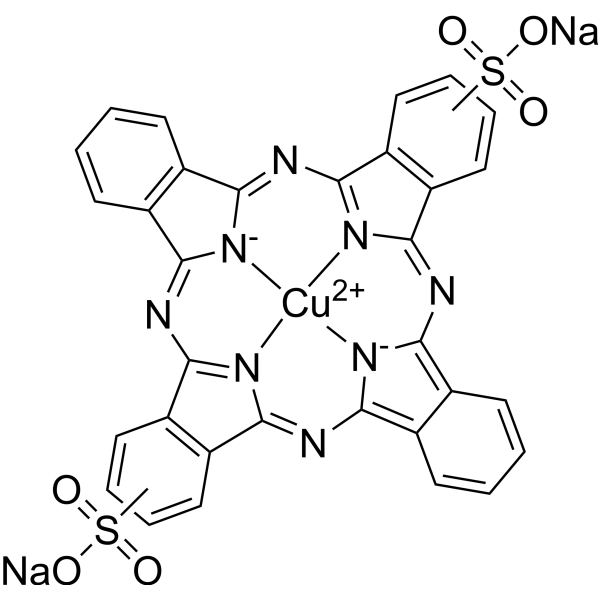
Direct Blue 71 is a good dyeing agent for cotton fabrics and can be adsorbed by palm ash and removed from the aqueous solution.
|
-
-
- HY-W011087
-
|
|
Environmental Pollutants
Biochemical Assay Reagents
|
Others
|
|
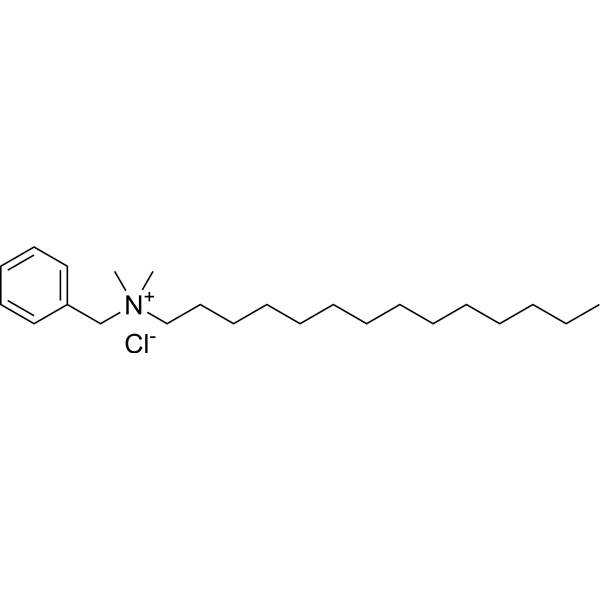
Benzyldimethyltetradecylammonium chloride is a quaternary ammonium salt consisting of a positively charged N-benzyl-N,N-dimethyltetradecyl-1-amine cation and a negatively charged chloride anion. The compound is commonly used as a surfactant and emulsifier in a variety of applications including detergents, fabric softeners and personal care products. It also has antimicrobial properties and is used as a disinfectant or antiseptic in some products.
|
-
-
- HY-D0245
-
-
-
- HY-W127653
-
|
Dimethylditetradecylammonium bromide
|
Biochemical Assay Reagents
|
Others
|
|
Dimethyldimyristylammonium bromide is a quaternary ammonium compound commonly used as a surfactant or emulsifier in a variety of industrial applications, including the production of detergents, fabric softeners and hair conditioners. In addition, it can also be used as an intermediate in the synthesis of various organic compounds. Its unique chemical properties make it an important ingredient in a variety of industrial processes, especially in the manufacture of personal care products and pharmaceuticals.
|
-
-
- HY-D0485
-
|
|
Fluorescent Dye
|
Others
|
|
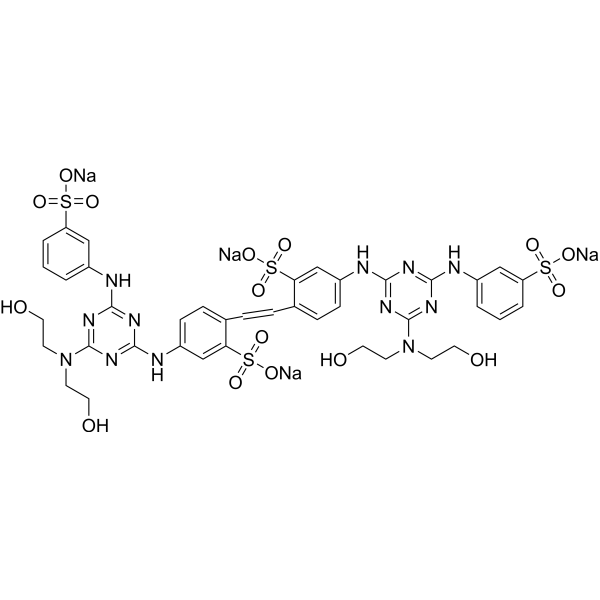
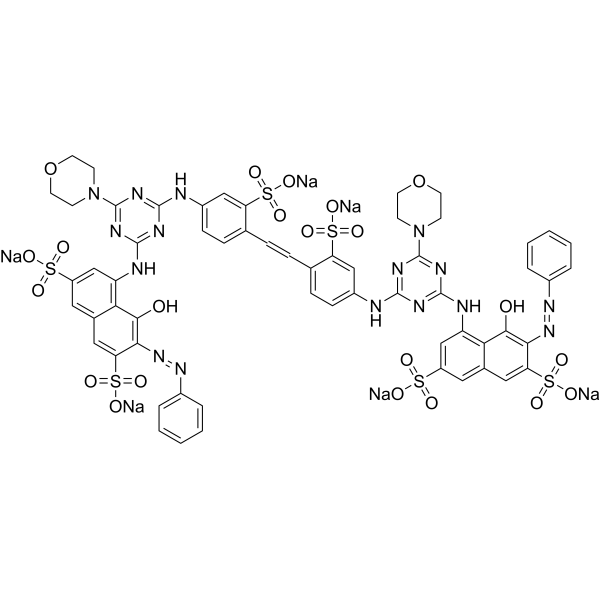
Fluorescent brightener 24 is a stilbene-type fluorescent brightener and fading regulator .
|
-
-
- HY-D0350
-
-
-
- HY-N0563R
-
|
|
Fluorescent Dye
Reference Standards
|
Others
|
|
Alizarin (Standard) is the analytical standard of Alizarin. This product is intended for research and analytical applications. Alizarin is a natural dye extracted from the roots of madder plant and has been widely used as a pigment in textile fabrics and paintings .
|
-
-
- HY-129197
-
|
|
Environmental Pollutants
Bacterial
|
Infection
|
|
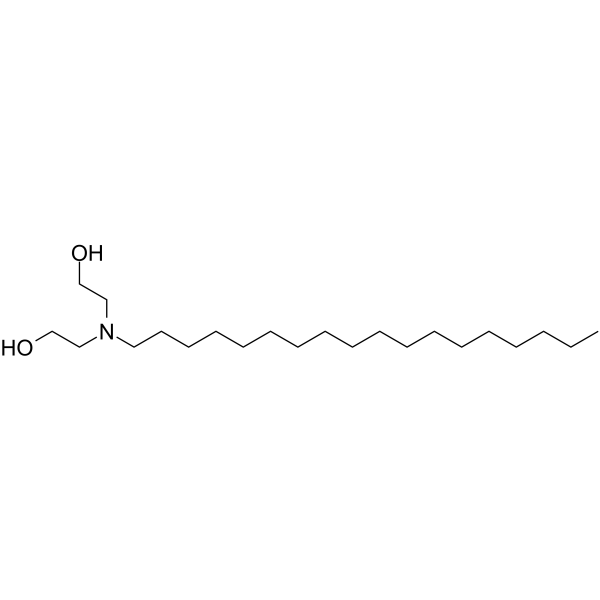
Stearyldiethanolamine is a typical amine-based surfactant used in development for antibacterial freshness-keeping film or antibacterial nonwoven fabric. Stearyldiethanolamine can be used as a collector towards the surfaces of quartz and malachite, to recover efficiently malachite from quartz. Stearyldiethanolamine can disrupt bacterial cell membrane with the alkyl chain, leading to irreversible damage and cell death .
|
-
-
- HY-D0312
-
|
Sunchromine Fast Blue MB
|
Biochemical Assay Reagents
|
Others
|
|
Mordant Blue 13 is a synthetic dye used in the textile industry. It belongs to a class of metal complex dyes that are able to form strong bonds with fabrics and other materials. Mordant Blue 13 is commonly used for dyeing cotton, wool and silk fibres, it produces a fast blue color. It can be applied to textiles by a variety of methods including impregnation, padding and printing.
|
-
-
- HY-D0518
-
-
-
- HY-D0539
-
-
-
- HY-D1183
-
-
-
- HY-D1207
-
|
|
Fluorescent Dye
|
|
|
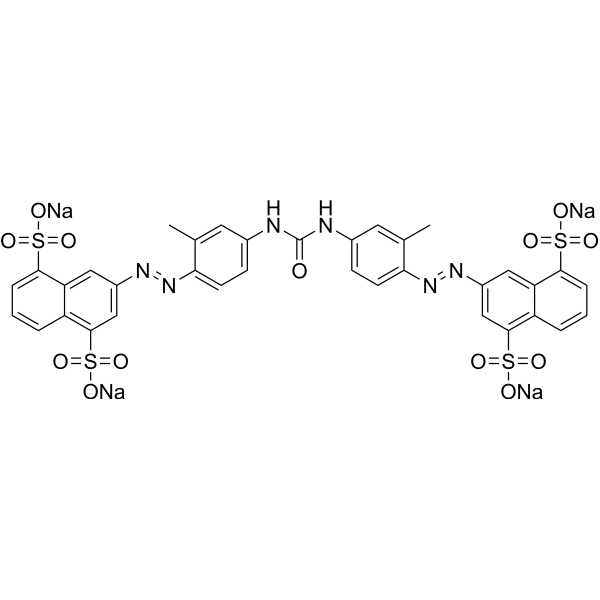
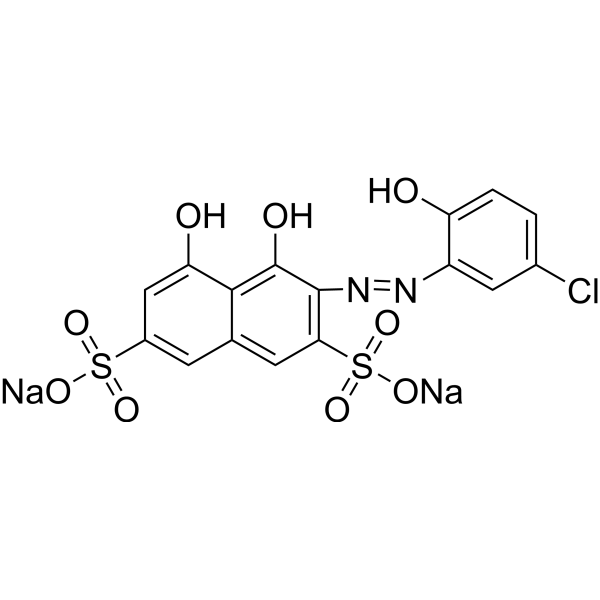
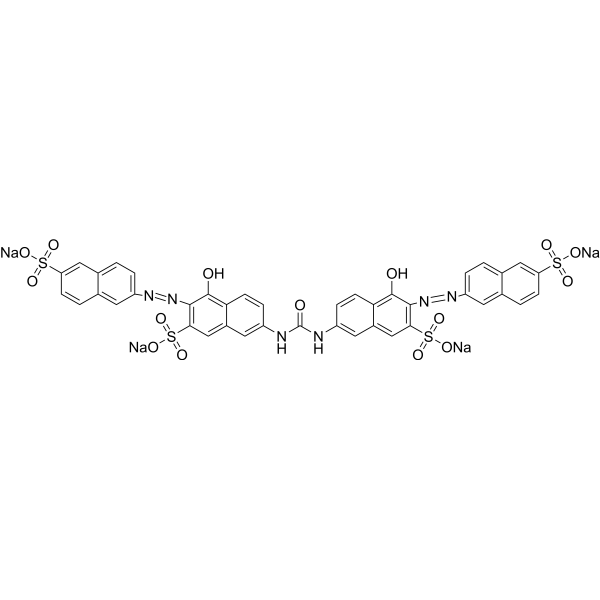
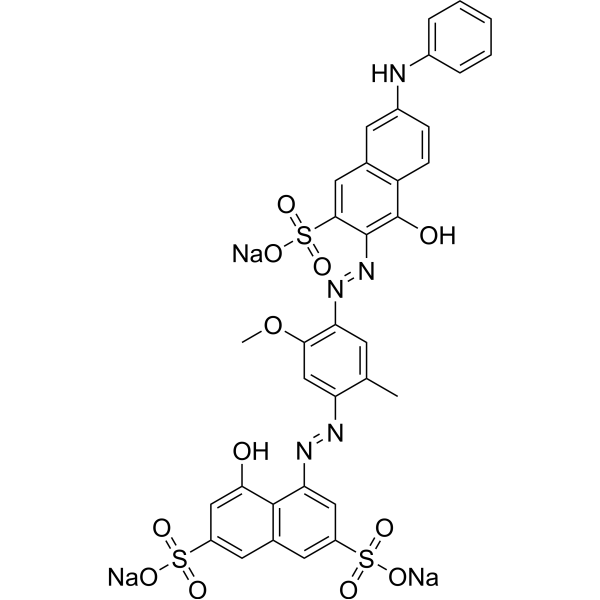
Direct Orange 26 is a good dyeing agent for cotton fabrics.
|
-
-
- HY-D0648
-
-
-
- HY-D0774
-
|
|
Fluorescent Dye
|
|
|
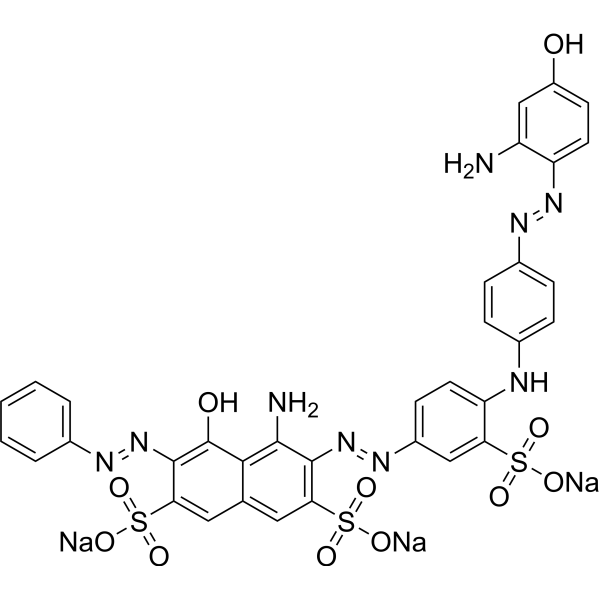
Direct Black 168 is a good dyeing agent for cotton fabrics.
|
-
-
- HY-D0465
-
|
|
Fluorescent Dye
|
|
|
C.I. Direct black 80 is a good dyeing agent for cotton fabrics.
|
-
-
- HY-D0482
-
|
|
Fluorescent Dye
|
|
|
C.I. Direct blue 80 is a good dyeing agent for cotton fabrics.
|
-
-
- HY-D0419
-
|
|
Fluorescent Dye
|
|
|
C.I. Direct green 26 is a good dyeing agent for cotton fabrics.
|
-
-
- HY-D0240
-
|
C. I. Vat Yellow 1
|
Fluorescent Dye
|
|
|
Flavanthrone is a vat dye that appears yellow under certain conditions and is used for dyeing fabrics.
|
-
-
- HY-D2424
-
|
|
Fluorescent Dye
|
Others
|
|
Disperse Red 343 is an azo dye widely used in the textile industry for dyeing polyester fabrics .
|
-
-
- HY-D1273
-
-
-
- HY-D2253
-
|
|
Fluorescent Dye
|
Others
|
|
Direct Blue 108 has the structure of triphenyl two oxazine, and can be used in dyeing of cotton, viscose fiber, silk and its blended fabrics .
|
-
-
- HY-N15601
-
|
NSC 257450
|
Biochemical Assay Reagents
|
Others
|
|
Dermocybin (NSC 257450) is a natural anthraquinone isolated from the fungus Derniocybe sarzgiiirzea. Dermocybin can be used as a high-temperature disperse dye for polyester and polyamide fabrics .
|
-
-
- HY-W087913
-
|
|
Biochemical Assay Reagents
|
Others
|
|
alpha-Naphtholphthalein is an indicator that is light yellow at pH 6 and gradually shows a clear color change with increasing pH to light green-green-blue. alpha-Naphtholphthalein can be impregnated into cotton-blend fabrics and used to develop medical supplies for wound pH monitoring, such as medical gauze, hospital gowns and compression bandages .
|
-
-
- HY-W011122
-
|
|
Biochemical Assay Reagents
|
Others
|
|
Tributylbenzylammonium bromide is a quaternary ammonium salt composed of a positively charged N-benzyl-N,N-dibutylbutan-1-amine cation and a negatively charged bromide anion composition. The compound is commonly used as a surfactant and emulsifier in a variety of applications including detergents, fabric softeners and personal care products. It also has antimicrobial properties and is used as a disinfectant or antiseptic in some products.
|
-
-
- HY-W014536
-
|
Trimethyl-n-octylammonium Chloride
|
Biochemical Assay Reagents
|
Others
|
|
N,N,N-Trimethyloctan-1-aminium chloride is a quaternary ammonium salt consisting of a positively charged N,N,N-trimethyloctan-1-aminium cation and a negatively charged chloride anion. The compound is commonly used as a surfactant and emulsifier in a variety of applications including detergents, fabric softeners and personal care products. It can also be used as a phase transfer catalyst in organic chemical reactions, facilitating the transfer of reactants between immiscible phases. Additionally, it has antimicrobial properties and is used as a disinfectant or antiseptic in some products.
|
-
-
- HY-D1035
-
-
-
- HY-D0401
-
-
-
- HY-D0361
-
-
-
- HY-D0658
-
-
-
- HY-D0483
-
|
|
Fluorescent Dye
|
|
|
Direct yellow 106 is a good dyeing agent for cotton fabrics.
|
-
-
- HY-D1165
-
-
-
- HY-D0338
-
|
|
Fluorescent Dye
|
|
|
Direct Yellow 26 is a good dyeing agent for cotton fabrics.
|
-
-
- HY-D0432
-
|
|
Fluorescent Dye
|
|
|
Direct yellow 34 is a good dyeing agent for cotton fabrics.
|
-
-
- HY-D1238
-
-
-
- HY-D0329
-
-
-
- HY-D0325
-
|
|
Fluorescent Dye
|
|
|
Direct Black BH sodium is a good dyeing agent for cotton fabrics.
|
-
-
- HY-D0540
-
-
-
- HY-D0683
-
|
|
Fluorescent Dye
|
|
|
Direct yellow 28 is a good dyeing agent for cotton fabrics.
|
-
-
- HY-D1226
-
|
|
Fluorescent Dye
|
|
|
Direct violet 51 is a good dyeing agent for cotton fabrics.
|
-
-
- HY-D0436
-
|
|
Fluorescent Dye
|
|
|
C.I. Direct black 32 is a good dyeing agent for cotton fabrics.
|
-
-
- HY-D0440
-
|
|
Fluorescent Dye
|
|
|
C.I. Direct green 28 is a good dyeing agent for cotton fabrics.
|
-
-
- HY-D0443
-
|
|
Fluorescent Dye
|
|
|
C.I. Direct black 22 is a good dyeing agent for cotton fabrics.
|
-
-
- HY-D0437
-
|
|
Fluorescent Dye
|
|
|
C.I. Direct blue 75 is a good dyeing agent for cotton fabrics.
|
-
-
- HY-D0396
-
|
DR16
|
Fluorescent Dye
|
|
|
C.I. Direct red 16 is a good dyeing agent for cotton fabrics.
|
-
- HY-D0451
-
|
|
Fluorescent Dye
|
|
|
C.I. Direct orange 102 is a good dyeing agent for cotton fabrics.
|
-
- HY-D0425
-
-
- HY-D1242
-
-
- HY-W011087R
-
|
|
Biochemical Assay Reagents
Reference Standards
|
Others
|
|
Benzyldimethyltetradecylammonium (chloride) (Standard) is the analytical standard of Benzyldimethyltetradecylammonium (chloride). This product is intended for research and analytical applications. Benzyldimethyltetradecylammonium chloride is a quaternary ammonium salt consisting of a positively charged N-benzyl-N,N-dimethyltetradecyl-1-amine cation and a negatively charged chloride anion. The compound is commonly used as a surfactant and emulsifier in a variety of applications including detergents, fabric softeners and personal care products. It also has antimicrobial properties and is used as a disinfectant or antiseptic in some products.
|
-
- HY-W587519
-
|
|
Biochemical Assay Reagents
Bacterial
|
|
|
Bisphenol A bis(3-chloro-2-hydroxypropyl) ether is an organic compound with potential antimicrobial activity. Bisphenol A bis(3-chloro-2-hydroxypropyl) ether can be widely used in coatings and plastics to improve the strength and durability of materials. Bisphenol A bis(3-chloro-2-hydroxypropyl) ether also plays an important role in textile processing, improving the wrinkle resistance and abrasion resistance of fabrics.
|
-
- HY-W587519S
-
|
|
Isotope-Labeled Compounds
Bacterial
|
Others
|
|
Bisphenol A bis(3-chloro-2-hydroxypropyl) ether-d14 is deuterium labeled Bisphenol A bis(3-chloro-2-hydroxypropyl) ether. Bisphenol A bis(3-chloro-2-hydroxypropyl) ether is an organic compound with potential antimicrobial activity. Bisphenol A bis(3-chloro-2-hydroxypropyl) ether can be widely used in coatings and plastics to improve the strength and durability of materials. Bisphenol A bis(3-chloro-2-hydroxypropyl) ether also plays an important role in textile processing, improving the wrinkle resistance and abrasion resistance of fabrics .
|
-
- HY-176551
-
|
|
Drug Intermediate
|
Others
|
|
N-(1-Oxotetradecyl)-L-aspartic acid is a N-acyl amino acid. N-(1-Oxotetradecyl)-L-aspartic acid can be used for fabric cleaning agent development .
|
-
- HY-W761989
-
|
|
Fluorescent Dye
|
Others
|
|
Direct Brown 95, a synthetic dye, finds extensive application in the textile industry for imparting color to fabrics. It serves as a stain in histology and cytology, aiding in the differentiation of diverse cell types. Additionally, it serves as a marker in molecular biology, facilitating the detection of DNA and RNA.
|
-
- HY-121774
-
|
C.I. 37550
|
Biochemical Assay Reagents
|
Others
|
|
Naphthol AS-ITR (C.I. 37550) is used as a dyeing base agent for cotton and has a high affinity for cotton. Naphthol AS-ITR can also be used for dyeing viscose fibers, silk, nylon, and printing cotton fabrics, as well as for manufacturing lake pigments .
|
-
- HY-W724291
-
|
Dioctadecyldimethylammonium-d3 bromide; DODAB-d3
|
Isotope-Labeled Compounds
Liposome
|
Others
|
|
Dimethyldioctadecylammonium-d3 bromide (Dioctadecyldimethylammonium-d3 bromide) is the deuterium labeled Dimethyldioctadecylammonium bromide (HY-131119). Dimethyldioctadecylammonium bromide is a synthetic cationic lipid commonly used in gene delivery and vaccine development. Also known as DODAB or DDAB, it consists of a positively charged ammonium head group and two long hydrophobic tails. These properties make it useful for forming liposomes and other lipid-based nanoparticles that can efficiently deliver genetic material into cells. In addition to its applications in biotechnology, DDAB is also used in surfactants, emulsifiers and fabric softeners. However, due to its potential toxicity and irritation, extreme care should be taken when handling DDAB.
|
-
- HY-W008583
-
|
DBDPA
|
Fluorescent Dye
Biochemical Assay Reagents
|
Others
|
|
Bis (4-tert-butylphenyl) amine (DBDPA) is a C4 alkyl-substituted diphenylamine-based amino antioxidant. Bis (4-tert-butylphenyl) amine serves as a polymer additive in car seats. Bis (4-tert-butylphenyl) amine acts as a synthetic precursor for donor-acceptor-donor (D-A-D) type π-conjugated fluorophores .
|
-
| Cat. No. |
Product Name |
Type |
| Cat. No. |
Product Name |
Type |
-
- HY-131119
-
|
Dioctadecyldimethylammonium bromide; DODAB
|
Biochemical Assay Reagents
|
|
Dimethyldioctadecylammonium bromide is a synthetic cationic lipid commonly used in gene delivery and vaccine development. Also known as DODAB or DDAB, it consists of a positively charged ammonium head group and two long hydrophobic tails. These properties make it useful for forming liposomes and other lipid-based nanoparticles that can efficiently deliver genetic material into cells. In addition to its applications in biotechnology, DDAB is also used in surfactants, emulsifiers and fabric softeners. However, due to its potential toxicity and irritation, extreme care should be taken when handling DDAB.
|
-
- HY-W099594
-
|
Benzyldimethyldodecylammonium bromide
|
Biochemical Assay Reagents
|
|
N-Benzyl-N, N-dimethyldodecan-1-aminium bromide, also known as Benzalkonium Chloride (BAC), is a quaternary ammonium compound widely used as an antimicrobial and surfactant in various industries. BAC is commonly used as a disinfectant and antiseptic in a variety of products including hand sanitizers, disinfectant wipes and eye drops. Its ability to kill bacteria, viruses and fungi makes it an effective tool in preventing the spread of infection. BAC is also used as a preservative and disinfectant in the food industry. It is added to food packaging and processing equipment to prevent the growth of microorganisms and increase the shelf life of foods. Additionally, BACs are found in many household products such as cleaning solutions, fabric softeners and personal care products. Its surfactant properties allow it to be used to reduce surface tension and increase the effectiveness of cleaning agents. Although BAC has many uses, ingestion or exposure to high concentrations of BAC can cause skin irritation and other adverse effects.
|
-
- HY-W011087
-
|
|
Biochemical Assay Reagents
|
|
Benzyldimethyltetradecylammonium chloride is a quaternary ammonium salt consisting of a positively charged N-benzyl-N,N-dimethyltetradecyl-1-amine cation and a negatively charged chloride anion. The compound is commonly used as a surfactant and emulsifier in a variety of applications including detergents, fabric softeners and personal care products. It also has antimicrobial properties and is used as a disinfectant or antiseptic in some products.
|
-
- HY-W127653
-
|
Dimethylditetradecylammonium bromide
|
Biochemical Assay Reagents
|
|
Dimethyldimyristylammonium bromide is a quaternary ammonium compound commonly used as a surfactant or emulsifier in a variety of industrial applications, including the production of detergents, fabric softeners and hair conditioners. In addition, it can also be used as an intermediate in the synthesis of various organic compounds. Its unique chemical properties make it an important ingredient in a variety of industrial processes, especially in the manufacture of personal care products and pharmaceuticals.
|
-
- HY-W087913
-
|
|
Biochemical Assay Reagents
|
|
alpha-Naphtholphthalein is an indicator that is light yellow at pH 6 and gradually shows a clear color change with increasing pH to light green-green-blue. alpha-Naphtholphthalein can be impregnated into cotton-blend fabrics and used to develop medical supplies for wound pH monitoring, such as medical gauze, hospital gowns and compression bandages .
|
-
- HY-W011122
-
|
|
Biochemical Assay Reagents
|
|
Tributylbenzylammonium bromide is a quaternary ammonium salt composed of a positively charged N-benzyl-N,N-dibutylbutan-1-amine cation and a negatively charged bromide anion composition. The compound is commonly used as a surfactant and emulsifier in a variety of applications including detergents, fabric softeners and personal care products. It also has antimicrobial properties and is used as a disinfectant or antiseptic in some products.
|
-
- HY-W014536
-
|
Trimethyl-n-octylammonium Chloride
|
Biochemical Assay Reagents
|
|
N,N,N-Trimethyloctan-1-aminium chloride is a quaternary ammonium salt consisting of a positively charged N,N,N-trimethyloctan-1-aminium cation and a negatively charged chloride anion. The compound is commonly used as a surfactant and emulsifier in a variety of applications including detergents, fabric softeners and personal care products. It can also be used as a phase transfer catalyst in organic chemical reactions, facilitating the transfer of reactants between immiscible phases. Additionally, it has antimicrobial properties and is used as a disinfectant or antiseptic in some products.
|
-
- HY-W011087R
-
|
|
Biochemical Assay Reagents
|
|
Benzyldimethyltetradecylammonium (chloride) (Standard) is the analytical standard of Benzyldimethyltetradecylammonium (chloride). This product is intended for research and analytical applications. Benzyldimethyltetradecylammonium chloride is a quaternary ammonium salt consisting of a positively charged N-benzyl-N,N-dimethyltetradecyl-1-amine cation and a negatively charged chloride anion. The compound is commonly used as a surfactant and emulsifier in a variety of applications including detergents, fabric softeners and personal care products. It also has antimicrobial properties and is used as a disinfectant or antiseptic in some products.
|
| Cat. No. |
Product Name |
Category |
Target |
Chemical Structure |
| Cat. No. |
Product Name |
Chemical Structure |
-
- HY-W587519S
-
|
|
|
Bisphenol A bis(3-chloro-2-hydroxypropyl) ether-d14 is deuterium labeled Bisphenol A bis(3-chloro-2-hydroxypropyl) ether. Bisphenol A bis(3-chloro-2-hydroxypropyl) ether is an organic compound with potential antimicrobial activity. Bisphenol A bis(3-chloro-2-hydroxypropyl) ether can be widely used in coatings and plastics to improve the strength and durability of materials. Bisphenol A bis(3-chloro-2-hydroxypropyl) ether also plays an important role in textile processing, improving the wrinkle resistance and abrasion resistance of fabrics .
|
-
-
- HY-W724291
-
|
|
|
Dimethyldioctadecylammonium-d3 bromide (Dioctadecyldimethylammonium-d3 bromide) is the deuterium labeled Dimethyldioctadecylammonium bromide (HY-131119). Dimethyldioctadecylammonium bromide is a synthetic cationic lipid commonly used in gene delivery and vaccine development. Also known as DODAB or DDAB, it consists of a positively charged ammonium head group and two long hydrophobic tails. These properties make it useful for forming liposomes and other lipid-based nanoparticles that can efficiently deliver genetic material into cells. In addition to its applications in biotechnology, DDAB is also used in surfactants, emulsifiers and fabric softeners. However, due to its potential toxicity and irritation, extreme care should be taken when handling DDAB.
|
-
| Cat. No. |
Product Name |
|
Classification |
-
- HY-131119
-
|
Dioctadecyldimethylammonium bromide; DODAB
|
|
Cationic Lipids
|
|
Dimethyldioctadecylammonium bromide is a synthetic cationic lipid commonly used in gene delivery and vaccine development. Also known as DODAB or DDAB, it consists of a positively charged ammonium head group and two long hydrophobic tails. These properties make it useful for forming liposomes and other lipid-based nanoparticles that can efficiently deliver genetic material into cells. In addition to its applications in biotechnology, DDAB is also used in surfactants, emulsifiers and fabric softeners. However, due to its potential toxicity and irritation, extreme care should be taken when handling DDAB.
|
-
- HY-W127653
-
|
Dimethylditetradecylammonium bromide
|
|
Cationic Lipids
|
|
Dimethyldimyristylammonium bromide is a quaternary ammonium compound commonly used as a surfactant or emulsifier in a variety of industrial applications, including the production of detergents, fabric softeners and hair conditioners. In addition, it can also be used as an intermediate in the synthesis of various organic compounds. Its unique chemical properties make it an important ingredient in a variety of industrial processes, especially in the manufacture of personal care products and pharmaceuticals.
|
Your information is safe with us. * Required Fields.
Inquiry Information
- Product Name:
- Cat. No.:
- Quantity:
- MCE Japan Authorized Agent:

