



Alizarin
Based on 1 publication(s) in Google Scholar
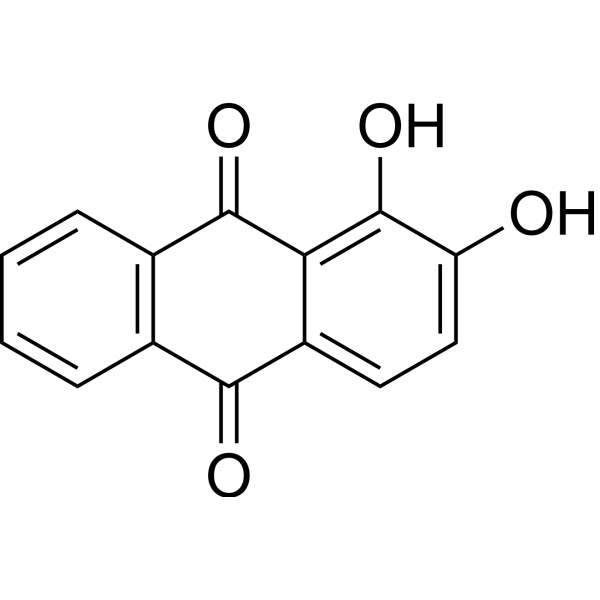
Alizarin is a natural dye. Alizarin can be extracted from the roots of madder plant. Alizarin activates AMPK and VEGFR2/eNOS pathway. Alizarin regulates PI3K/Akt and inhibits NF-κB pathway. Alizarin enhances CYP1A1 enzyme activity. Alizarin has protective effects on hypertension and vascular endothelial dysfunction. Alizarin has anti-tumor activity against multiple cancers including pancreatic cancer, breast cancer, osteosarcoma and liver cancer. Alizarin has been widely used as a pigment in textile fabrics and paintings.
For research use only. We do not sell to patients.
- Purity : 99.48%
- CAS No.: 72-48-0
- Formula: C14H8O4
- Molecular Weight:240.21
-
Storage:Powder -20°C, 3 years , 4°C, 2 years ; In solvent -80°C, 6 months , -20°C, 1 month

To place orders, for customer services and technical support, please contact: MedChemExpress USA
Tel: 609-228-6898 E-mail: [email protected] [email protected]


-
 Biological Activity
-
Chemical Information
-
Solvent & Solubility
- Protocols
- Purity & Documentation
- References
-
 Help & FAQs


-
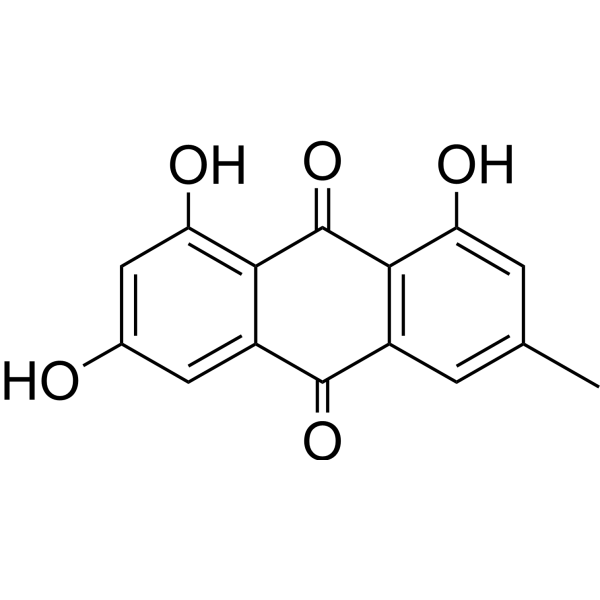
HY-14393
EmodinNatural Anthraquinone -
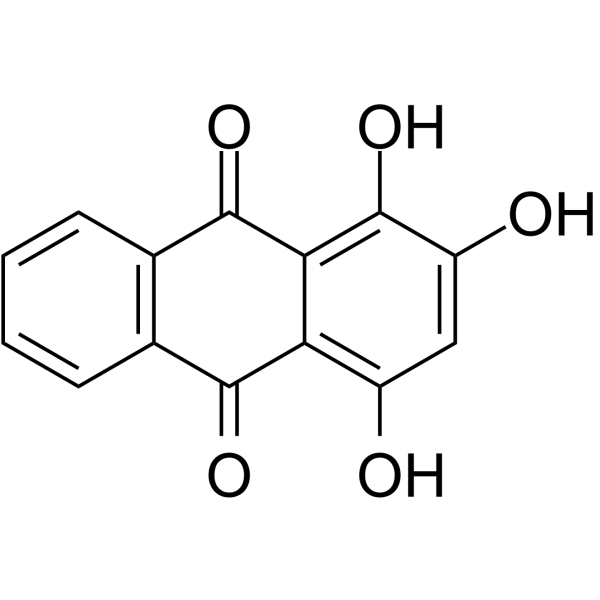
HY-N0571
PurpurinAntidepressant-like Drug -
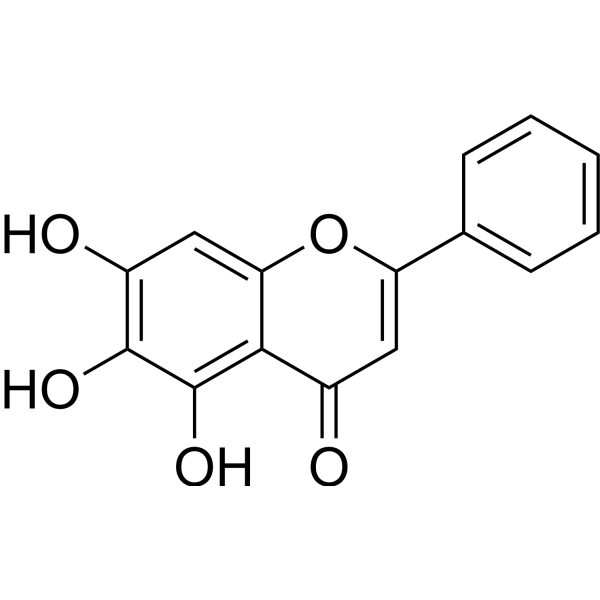
HY-N0196
BaicaleinXanthine Oxidase Inhibitor -
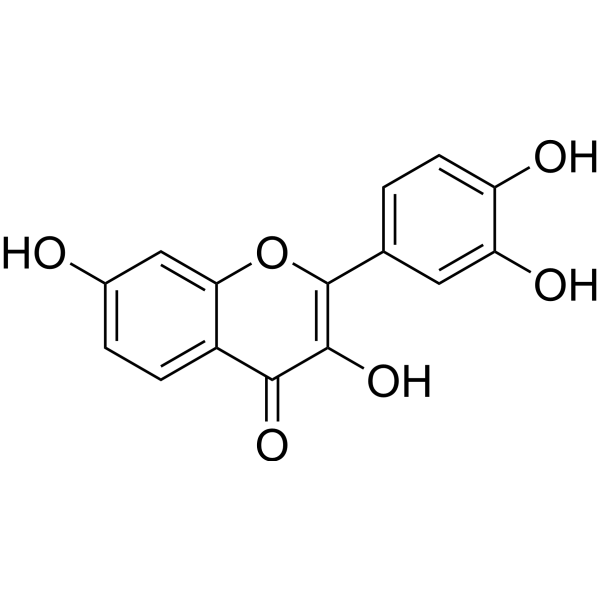
HY-N0182
FisetinTNF Receptor Inhibitor -
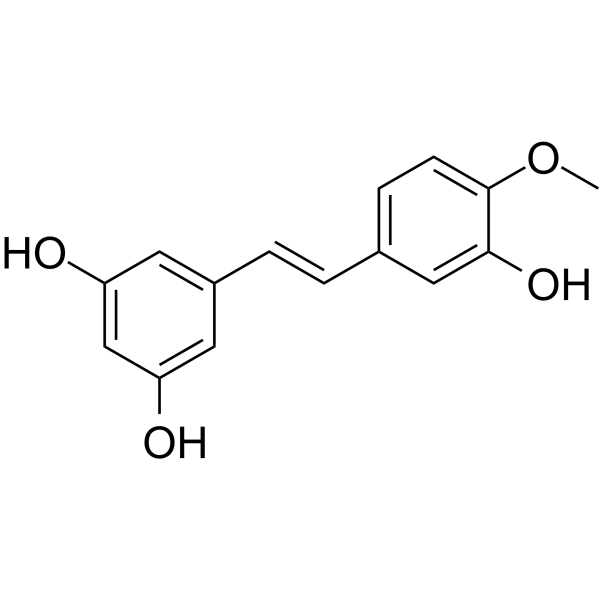
HY-N2229
RhapontigeninCytochrome P450 1A1 Inactivator -
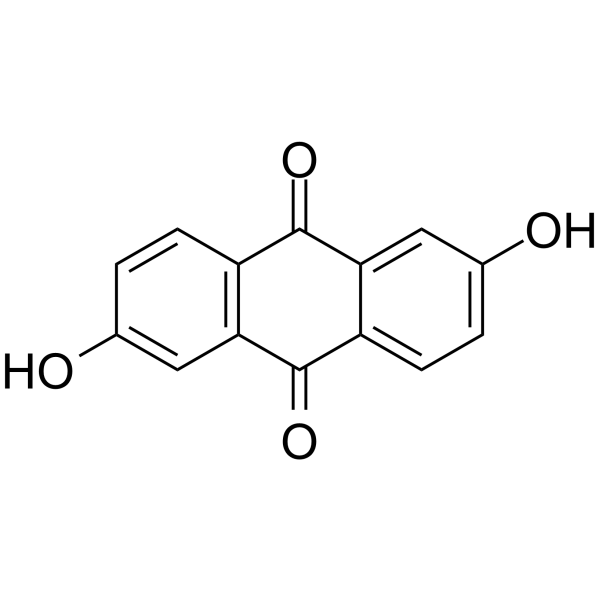
HY-W006230
Anthraflavic acidcytochrome P-448 Inhibitor -
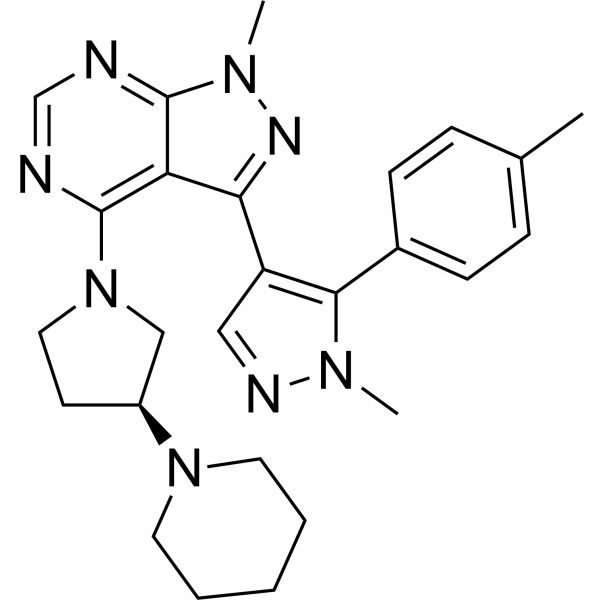
HY-18642
CYP3cideCYP3A4 Inhibitor -
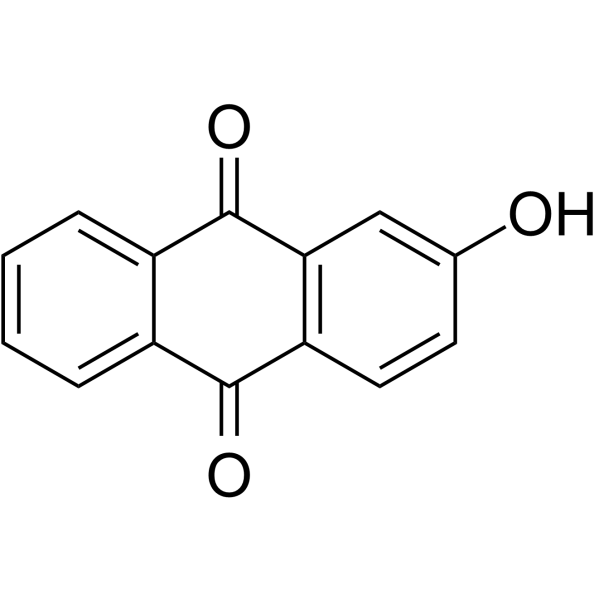
HY-W012352
2-HydroxyanthraquinoneWnt/β-catenin Inhibitor -

HY-N0563R
Alizarin (Standard)natural dye -
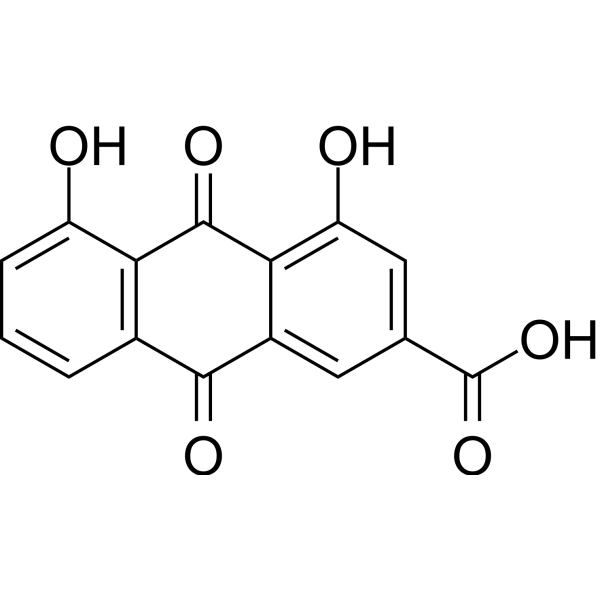
HY-N0105
RheinAntioxidant -
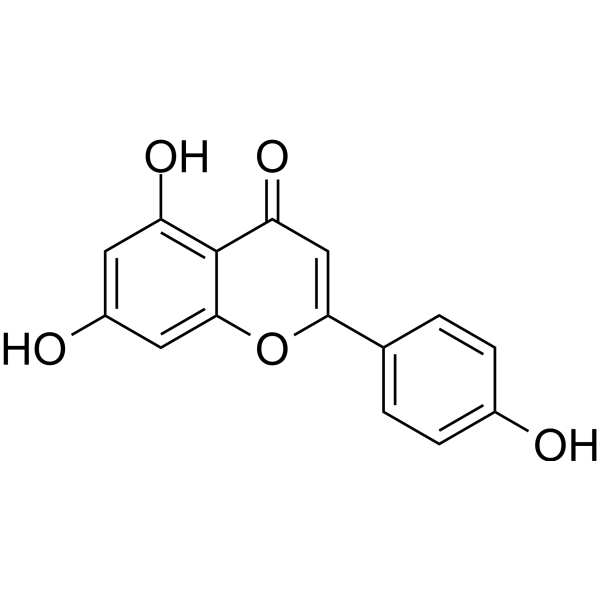
HY-N1201
ApigeninCytochrome P450 Inhibitor -
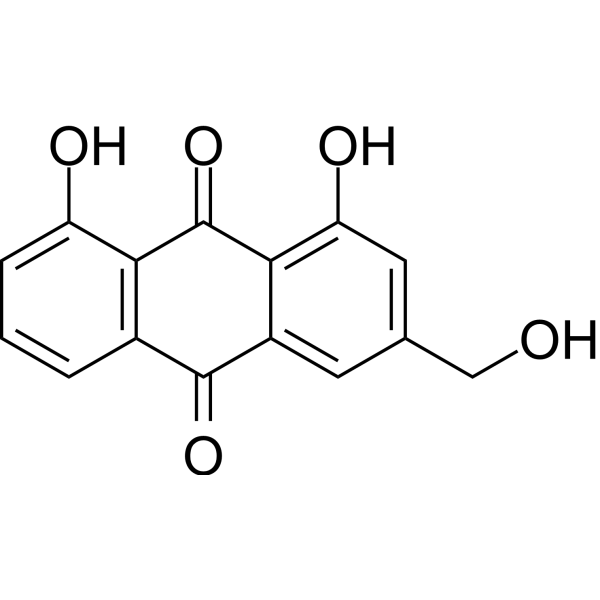
HY-N0189
Aloe emodinmTORC2 Inhibitor
Publications Citing Use of MedChemExpress (MCE) Alizarin
MoreAll AMPK Isoforms
MoreAll VEGFR Isoforms
More

Biological Activity
Description
Cellular Effect
|
Cell Line

|
Type | Value | Description | References |
|---|---|---|---|---|
| A549 | IC50 |
>50 μM
Compound: Alizarin
|
Cytotoxicity against human A549 cells after 48 hrs by MTT assay
Cytotoxicity against human A549 cells after 48 hrs by MTT assay
|
[PMID: 24953029] |
| CNE | IC50 |
>100 μM
Compound: Alizarin
|
Cytotoxicity against human CNE cells after 48 hrs by MTT assay
Cytotoxicity against human CNE cells after 48 hrs by MTT assay
|
[PMID: 24953029] |
| HCT-116 | IC50 |
>50 μM
Compound: Alizarin
|
Cytotoxicity against human HCT116 cells after 48 hrs by MTT assay
Cytotoxicity against human HCT116 cells after 48 hrs by MTT assay
|
[PMID: 24953029] |
| HeLa | IC50 |
>100 μM
Compound: Alizarin
|
Cytotoxicity against human HeLa cells after 48 hrs by MTT assay
Cytotoxicity against human HeLa cells after 48 hrs by MTT assay
|
[PMID: 24953029] |
| HepG2 | IC50 |
>50 μM
Compound: Alizarin
|
Cytotoxicity against human HepG2 cells after 48 hrs by MTT assay
Cytotoxicity against human HepG2 cells after 48 hrs by MTT assay
|
[PMID: 24953029] |
| HUVEC | IC50 |
>50 μM
Compound: Alizarin
|
Cytotoxicity against HUVEC after 48 hrs by MTT assay
Cytotoxicity against HUVEC after 48 hrs by MTT assay
|
[PMID: 24953029] |
| KB | IC50 |
15.65 μM
Compound: Alizarin
|
Cytotoxicity against human KB cells after 48 hrs by MTT assay
Cytotoxicity against human KB cells after 48 hrs by MTT assay
|
[PMID: 24953029] |
| KG-1a | EC50 |
60.2 μM
Compound: 2
|
Antiproliferative activity against human KG-1a cells assessed as decrease in cell viability incubated for 72 hrs by trypan blue exclusion assay
Antiproliferative activity against human KG-1a cells assessed as decrease in cell viability incubated for 72 hrs by trypan blue exclusion assay
|
[PMID: 36215859] |
| MGC-803 | IC50 |
39.35 μM
Compound: Alizarin
|
Cytotoxicity against human MGC803 cells after 48 hrs by MTT assay
Cytotoxicity against human MGC803 cells after 48 hrs by MTT assay
|
[PMID: 24953029] |
| NCI-H460 | IC50 |
>50 μM
Compound: Alizarin
|
Cytotoxicity against human NCI-H460 cells after 48 hrs by MTT assay
Cytotoxicity against human NCI-H460 cells after 48 hrs by MTT assay
|
[PMID: 24953029] |
In Vitro
Alizarin (5-80 μM, 24-72 h) inhibits the growth of pancreatic cancer cells by abrogating NF-κB activation[1].
Alizarin (0.01-200 μM, 48 h) enhances CYP1A1 enzyme activity and induces transcriptional changes in hepatoma cells HepG2[2].
Alizarin (5-50 µg/mL, 24-144 h) strongly inhibits the osteosarcoma (IC50 for Saos-2, MG-63, and U-2OS cells, 27.5, 29.0, and 69.9 µg/ml, respectively) and breast carcinoma (IC50 for MDA-MB-231 cells, 62.1 µg/mL) cell proliferation[3].
MedChemExpress (MCE) has not independently confirmed the accuracy of these methods. They are for reference only.
-
Cell Line:Saos-2, MG-63, and U-2 OS
-
Concentration:5, 10, 25, 50 µg/mL
-
Incubation Time:24, 48, 72, and 144 h
-
Result:Induced a dose-dependent inhibition of cell growth over time in osteosarcoma and breast cancer cell lines.
Showed lower effect in respect with the two osteosarcoma cell lines MG-63 and Saos-2 at the higher concentration.
In Vivo
Alizarin (100 mg/kg/d, p.o., 6 weeks) shows antihypertensive effect in SHR by activating VEGFR2/eNOS pathway, attenuating oxidative stress-induced mitochondrial damage and premature senescence[5].
Alizarin (10 mg/kg, p.o., 4 weeks) shows protective effect on vascular endothelial dysfunction in rats via inhibiting the type 2 diabetes-induced synthesis of THBS1 and activating the AMPK signaling pathway[6].
MedChemExpress (MCE) has not independently confirmed the accuracy of these methods. They are for reference only.
-
Animal Model:Male spontaneously hypertensive rat (SHR) (200-300 g)[5]
-
Dosage:100 mg/kg
-
Administration:Oral gavage (p.o.), 6 weeks
-
Result:Reduced blood pressure in SHR, attenuated thoracic aortic injury, and increased endothelial dependent relaxation (EDR) in aortic rings.
Elevated activity and phosphorylation level of VEGFR2 and eNOS.
Attenuated endothelial dysfunction caused by hypertension through suppressing oxidative stress.
Ameliorated oxidative stress-induced mitochondrial damage.
Clinical Trial
| NCT Number | Sponsor | Condition | Start Date |
Phase
|
|---|---|---|---|---|
| NCT01329991 | 2011-05 | PHASE1 |


Chemical Information
-
CAS No. 72-48-0
-
Appearance Solid
-
Molecular Weight 240.21
-
Formula C14H8O4
-
Color Orange to reddish brown
-
SMILES
O=C1C2=C(C=CC=C2)C(C3=CC=C(O)C(O)=C13)=O
-
Structure Classification
-
Initial Source
-
Shipping
Room temperature in continental US; may vary elsewhere.
-
Storage
Powder -20°C 3 years 4°C 2 years In solvent -80°C 6 months -20°C 1 month


Publications (1)
-
Journal Impact Factor
-
Most Recent
-
Molecules
Alizarin, an Agonist of AHR Receptor, Enhances CYP1A1 Enzyme Activity and Induces Transcriptional Changes in Hepatoma Cells. [Abstract]2023 Oct 31;28(21):7373. PMID: 37959792


Solvent & Solubility
In Vitro:
DMSO : 25 mg/mL (104.08 mM; Need ultrasonic; Hygroscopic DMSO has a significant impact on the solubility of product, please use newly opened DMSO)
H2O : < 0.1 mg/mL (insoluble)
Please refer to the solubility information to select the appropriate solvent. Once prepared, please aliquot and store the solution to prevent product inactivation from repeated freeze-thaw cycles.
Storage method and period of stock solution: -80°C, 6 months; -20°C, 1 month. When stored at -80°C, please use it within 6 months. When stored at -20°C, please use it within 1 month.
Please refer to the solubility information to select the appropriate solvent. Once prepared, please aliquot and store the solution to prevent product inactivation from repeated freeze-thaw cycles.
Storage method and period of stock solution: -80°C, 6 months; -20°C, 1 month. When stored at -80°C, please use it within 6 months. When stored at -20°C, please use it within 1 month.
Concentration (start) × Volume (start) = Concentration (final) × Volume (final)


Purity & Documentation
-
Data Sheet (281 KB)
-
SDS (758 KB)
- English - EN (758 KB)
- Français - FR (758 KB)
- Deutsch - DE (758 KB)
- Norwegian - NO (758 KB)
- Español - ES (758 KB)
- Swedish - SV (758 KB)
- Italian - IT (758 KB)
- Korean - KR (758 KB)
- Portuguese - PT (758 KB)
-
Handling Instructions (2659 KB)
References
[1]. Xu Z, et al. Alizarin, a nature compound, inhibits the growth of pancreatic cancer cells by abrogating NF-κB activation. Int J Biol Sci. 2022 Mar 28;18(7):2759-2774. [Content Brief]
[2]. Liang S, et al. Alizarin, an Agonist of AHR Receptor, Enhances CYP1A1 Enzyme Activity and Induces Transcriptional Changes in Hepatoma Cells. Molecules. 2023 Oct 31;28(21):7373. [Content Brief]
[3]. Fotia C, et al. The natural compound Alizarin as an osteotropic drug for the treatment of bone tumors. J Orthop Res. 2012 Sep;30(9):1486-92. [Content Brief]
[4]. Xu L, et al. Alizarin increase glucose uptake through PI3K/Akt signaling and improve alloxan-induced diabetic mice. Future Med Chem. 2019 Mar;11(5):395-406. [Content Brief]
[5]. Qian YW, et al. The antihypertensive effect of Alizarin is achieved by activating VEGFR2/eNOS pathway, attenuating oxidative stress-induced mitochondrial damage and premature senescence. Life Sci. 2024 Aug 15;351:122862. [Content Brief]
[6]. Zhu ML, et al. Protective effect of alizarin on vascular endothelial dysfunction via inhibiting the type 2 diabetes-induced synthesis of THBS1 and activating the AMPK signaling pathway. Phytomedicine. 2024 Jun;128:155557. [Content Brief]
[7]. Jen M, et al. Ultrafast Intramolecular Proton Transfer of Alizarin Investigated by Femtosecond Stimulated Raman Spectroscopy. J Phys Chem B. 2017 Apr 27;121(16):4129-4136. [Content Brief]


Complete Stock Solution Preparation Table
Please refer to the solubility information to select the appropriate solvent. Once prepared, please aliquot and store the solution to prevent product inactivation from repeated freeze-thaw cycles.
Storage method and period of stock solution: -80°C, 6 months; -20°C, 1 month. When stored at -80°C, please use it within 6 months. When stored at -20°C, please use it within 1 month.
| Optional Solvent | Concentration Solvent Mass | 1 mg | 5 mg | 10 mg | 25 mg |
|---|---|---|---|---|---|
| DMSO | 1 mM | 4.1630 mL | 20.8151 mL | 41.6302 mL | 104.0756 mL |
| 5 mM | 0.8326 mL | 4.1630 mL | 8.3260 mL | 20.8151 mL | |
| 10 mM | 0.4163 mL | 2.0815 mL | 4.1630 mL | 10.4076 mL | |
| 15 mM | 0.2775 mL | 1.3877 mL | 2.7753 mL | 6.9384 mL | |
| 20 mM | 0.2082 mL | 1.0408 mL | 2.0815 mL | 5.2038 mL | |
| 25 mM | 0.1665 mL | 0.8326 mL | 1.6652 mL | 4.1630 mL | |
| 30 mM | 0.1388 mL | 0.6938 mL | 1.3877 mL | 3.4692 mL | |
| 40 mM | 0.1041 mL | 0.5204 mL | 1.0408 mL | 2.6019 mL | |
| 50 mM | 0.0833 mL | 0.4163 mL | 0.8326 mL | 2.0815 mL | |
| 60 mM | 0.0694 mL | 0.3469 mL | 0.6938 mL | 1.7346 mL | |
| 80 mM | 0.0520 mL | 0.2602 mL | 0.5204 mL | 1.3009 mL | |
| 100 mM | 0.0416 mL | 0.2082 mL | 0.4163 mL | 1.0408 mL |


Alizarin Related Classifications
HY-N0563 Related Classifications
 Powered by Bioz