


13 Results for "

glucose clearance

" in MedChemExpress (MCE) Product Catalog:
Products (13)

13 Results for "glucose clearance" in MCE Product Catalog:

Cat. No.: HY-112624B
CAS No.: 9004-54-0
Synonyms: Dextran 70; Dextran D70; Dextran T70(MW 64000-76000)
Dextran 70,000 is a high molecular weight polysaccharide formed by glucose linked by α-(1→6) glycosidic bonds. Dextran 70,000 can expand blood volume through colloidal osmotic pressure effect and inhibit cell adhesion and platelet aggregation through steric hindrance. At the same time, Dextran 70,000 can be used as a drug carrier to achieve targeted delivery through endocytosis. Dextran 70,000 is biologically inert and has low immunogenicity. It can be used for clinical blood volume expansion, anti-thrombotic research, and evaluation of vascular permeability in in vitro experiments. It can also be combined with fluorescent dyes for cell tracking and drug delivery research. The Dextran series of compounds are also natural polysaccharide drug carriers that can be connected to drugs through covalent bonding methods such as ester bonds, amide bonds or click chemistry, or self-assembled to form carriers such as nanoparticles and hydrogels. Dextran is biodegradable and biocompatible, and can achieve targeted delivery and controlled release of drugs. Dextran derivatives can prolong the half-life of drugs, increase local concentrations, and reduce the activity of immune clearance.
loading...
    loading...
Cat. No.: HY-160734
CAS No.: 2685823-26-9
Synonyms: GSBR-1290
Target:  

GLP Receptor

Research Areas:  

Metabolic Disease

Aleniglipron (GSBR-1290) is an orally active glucagon-like peptide-1 receptor (GLP-1R) agonist, with an EC50 value of less than 0.1 nM in HDB cell lines in cAMP stimulation assays. Aleniglipron selectively activates the Gαs-cAMP signaling pathway of GLP-1R without β-arrestin recruitment. Aleniglipron induces insulin release, promotes glucose clearance, reduces food intake and decreases body weight. Aleniglipron is applicable to research related to type 2 diabetes and obesity .
loading...
    loading...
Cat. No.: HY-106539
CAS No.: 182815-44-7
Purity:  ≥95.0%
Colesevelam hydrochloride is an orally active bile acid sequestrant, lipid-lowering agent, and glycemic control agent. Colesevelam hydrochloride binds bile acids in the gastrointestinal tract to form nonabsorbable complexes, interrupts enterohepatic recirculation and increases fecal bile acid elimination. Colesevelam hydrochloride modulates FXR, TGR5, and Cyp7a1 activity and triggers cAMP signaling and GLP-1 release. Colesevelam hydrochloride alters hepatic lipid and glucose metabolism, suppresses hepatic glycogenolysis, reduces hepatic triglyceride and cholesterol levels, and increases LDL-C (low-density lipoprotein cholesterol) clearance. Colesevelam hydrochloride can be used for the research of type 2 diabetes mellitus, hypercholesterolemia, and alcohol-related liver disease .
loading...
    loading...
Cat. No.: HY-112624H
CAS No.: 9004-54-0
Synonyms: Dextran 2; Dextran D2; Dextran T2(MW 1600-2400)
Dextran T2 (Dextran 2; Dextran T2(MW 1600-2400)) is a natural high molecular weight polysaccharide, the glycosidic bonds in its structure can be recognized by endo-dextranase and exo-dextranase. Dextran T2 (MW 2,000) breaks the glycosidic bonds in the enzymatic hydrolysis mechanism, releasing products such as D-glucose, Isomaltose (IM2), and Isomaltotriose (IM3). Dextran T2 (MW 2,000) can be used as a model substrate to characterize the catalytic properties of dextranase (such as optimal pH, temperature and product specificity), and to study enzymatic mechanism research and polysaccharide degradation pathways in glycobiology. The Dextran series of compounds are also a natural polysaccharide drug carrier, which can be connected to drugs through covalent bonding methods such as ester bonds, amide bonds or click chemistry, or self-assembled to form carriers such as nanoparticles and hydrogels. Dextran is biodegradable and biocompatible, and can achieve targeted delivery and controlled release of drugs. Dextran derivatives can prolong drug half-life, increase local concentration and reduce immune clearance activity .
loading...
    loading...
Cat. No.: HY-106181
CAS No.: 185428-18-6
Purity:  98.59%
Synonyms: R-106056
Target:  

PPAR

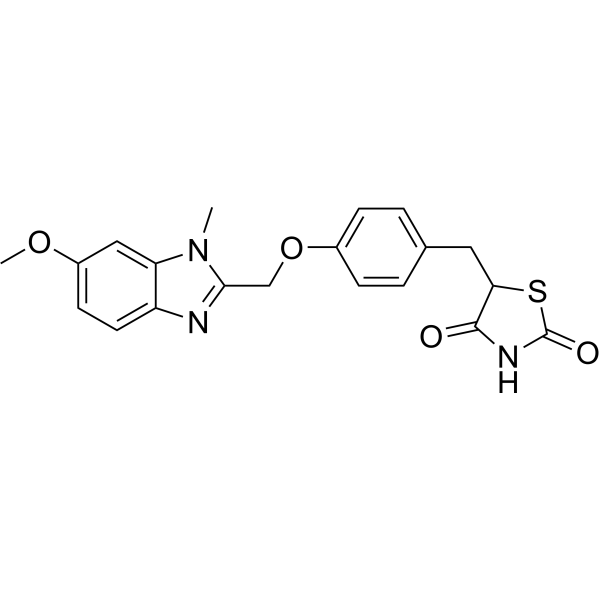
Rivoglitazone (R-106056) is an orally active, selective PPARγ agonist with an EC50 of 0.22 μM for hPPARγ. Rivoglitazone regulates fatty acid storage and uptake, glucose homeostasis, and cardiac glucose/fatty acid metabolism. Rivoglitazone reduces levels of hyperglycemia, hyperinsulinemia, and hypertriglyceridemia, decreases hepatic glucose production, and accelerates plasma triglyceride clearance. Rivoglitazone induces a reduction in glycated hemoglobin A1C, while causing peripheral edema and weight gain. Rivoglitazone can be used in research related to type 2 diabetes .
loading...
    loading...
Cat. No.: HY-117912
CAS No.: 1431553-15-9
Target:  

Endogenous Metabolite

Research Areas:  

Cardiovascular Disease

TRC210258 is a TGR5 agonist with activity to improve diabetes-associated hyperglycemia and dyslipidemia. TRC210258 promotes energy expenditure by enhancing the release of glucagon-like peptide-1. TRC210258 is able to improve glucose metabolic control in high-fat diet-induced obese mice. TRC210258 also showed improvement in lipid parameters in high-fat-fed hamsters, including reductions in plasma triglyceride and low-density lipoprotein cholesterol levels. TRC210258 improved emerging lipid-related cardiovascular risk parameters including remnant cholesterol and triglyceride clearance .
loading...
    loading...
Cat. No.: HY-124557
CAS No.: 21104-28-9
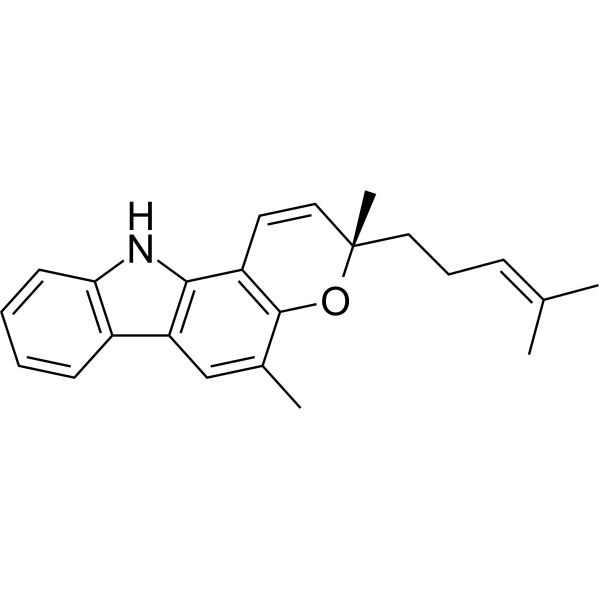
Mahanimbine is an orally active alkaloid from Murraya koenigii. Mahanimbine inhibits progression of high-fat diet (HFD)-induced metabolic complications in mice .
loading...
    loading...
Cat. No.: HY-P11321A
Synonyms: acyl-GIP hydrochloride
Target:  

GLP Receptor

Research Areas:  

Metabolic Disease

IUB0271 hydrochloride (acyl-GIP hydrochloride) is a glucose-dependent insulinotropic polypeptide receptor (GIPR) agonist with blood-brain barrier permeability. IUB0271 hydrochloride activates the GIPR signaling pathway, inhibits food intake and weight gain, and induces cFos neuron activation in the area postrema. IUB0271 hydrochloride enhances lipid clearance and induces systemic fatty acid oxidation. IUB0271 hydrochloride improves dyslipidemia, reduces atherosclerotic plaque formation and decreases adipocyte volume. IUB0271 hydrochloride can be used in studies related to obesity, dyslipidemia and atherosclerosis .
loading...
    loading...
Cat. No.: HY-P11321
Synonyms: acyl-GIP
Target:  

GLP Receptor

Research Areas:  

Metabolic Disease

IUB0271 (acyl-GIP) is a glucose-dependent insulinotropic polypeptide receptor (GIPR) agonist with blood-brain barrier permeability. IUB0271 activates the GIPR signaling pathway, inhibits food intake and weight gain, and induces cFos neuron activation in the area postrema. IUB0271 enhances lipid clearance and induces systemic fatty acid oxidation. IUB0271 improves dyslipidemia, reduces atherosclerotic plaque formation and decreases adipocyte volume. IUB0271 can be used in studies related to obesity, dyslipidemia and atherosclerosis .
loading...
    loading...
Cat. No.: HY-P5878
Research Areas:  

Metabolic Disease

RG33 Peptide is a diabetes inhibitor that significantly improves glucose clearance in insulin-resistant mice. RG33 Peptide effectively solubilizes lipid vesicles and promotes cholesterol efflux in cultured macrophages. RG33 Peptide is used in research into type 2 diabetes (T2D) .
loading...
    loading...
Cat. No.: HY-121845
CAS No.: 1654775-71-9
Purity:  99.46%
Target:  

HSP

Research Areas:  

Metabolic Disease

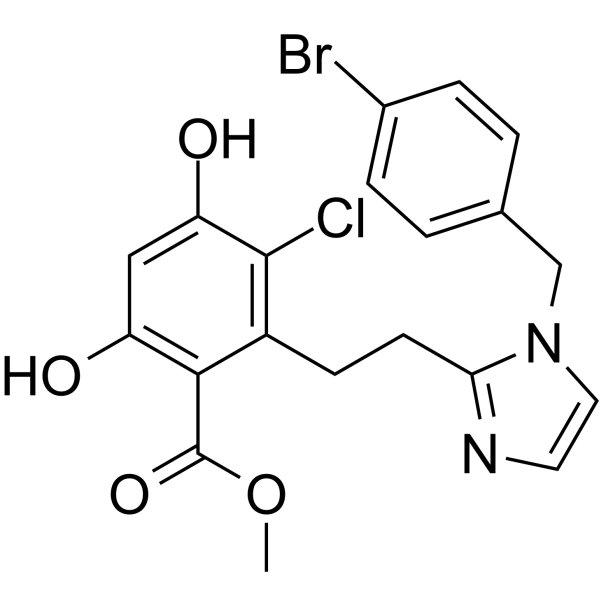
4-Br-Bnlm is a selective inhibitor of glucose-regulated protein 94 (Grp94) with an EC50 value of 0.96 µM. 4-Br-Bnlm reduces the levels of mutant myocilin proteins as well as wild-type myocilin misfold in cells. 4-Br-Bnlm promotes the clearance of toxic formsof myocilin and reduces myocilin toxicity .
loading...
    loading...
Cat. No.: HY-182454
CAS No.: 1353004-92-8
Target:  

GPR119

Research Areas:  

Metabolic Disease

GPR119 agonist 4 is a GPR119 agonist and oral glucose-lowering agent with a human GPR119 EC50 of 42 nM.GPR119 agonist 4 activates GPR119.GPR119 agonist 4 reduces blood glucose area under the curve in an oral glucose tolerance test.GPR119 agonist 4 exhibits improved clearance in liver microsomes.GPR119 agonist 4 can be used for the research of type 2 diabetes mellitus .
loading...
    loading...
Cat. No.: HY-182014
CAS No.: 2408041-54-1
Target:  

LXR

TLC-2716 is an orally available, gut- and liver-restricted inhibitor against LXRα and LXRβ, with EC50 values of 7 nM and 15 nM, respectively. TLC-2716 represses LXRα/β transcriptional activity, downregulates genes involved in lipogenesis, lipid absorption and lipoprotein metabolism, and preserves peripheral reverse cholesterol transport. TLC-2716 reduces lipid accumulation, suppresses inflammation and fibrotic gene expression, enhances triglyceride-rich lipoprotein clearance, and improves glucose homeostasis and insulin sensitivity. TLC-2716 lowers serum and hepatic triglycerides, plasma cholesterol and other atherogenic lipid profiles in experimental models and humanized liver mice. TLC-2716 can be used for the research of dyslipidemia and related cardiometabolic disorders .
loading...
    loading...
  • 1

