1. Search Result
Search Result
Results for "

green light

" in MedChemExpress (MCE) Product Catalog:

15

Inhibitors & Agonists

9

Fluorescent Dyes

1

Biochemical Assay Reagents

1

MCE Kits

2

Natural
Products

Cat. No. Product Name Target Research Areas Chemical Structure
  • HY-112697
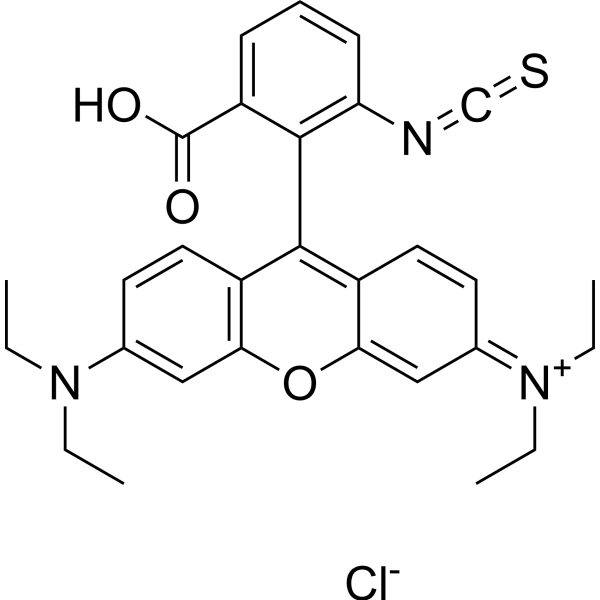
    Rhodamine B isothiocyanate
    1 Publications Verification

    Biochemical Assay Reagents Others
    Rhodamine B isothiocyanate (RBITC) is a fluorescent dye commonly used in biological imaging and labeling applications. It has an isothiocyanate functional group that can be covalently attached to amino groups on proteins and other biomolecules, making it useful for fluorescent labeling of cells and tissues. RBITC fluoresces bright orange-red under green light excitation, which makes it easy to detect and track labeled molecules in complex samples. Due to its stability and sensitivity, RBITC has been widely used in various research fields, including cell biology, immunology, and neurobiology.
    Rhodamine B isothiocyanate
  • HY-126367
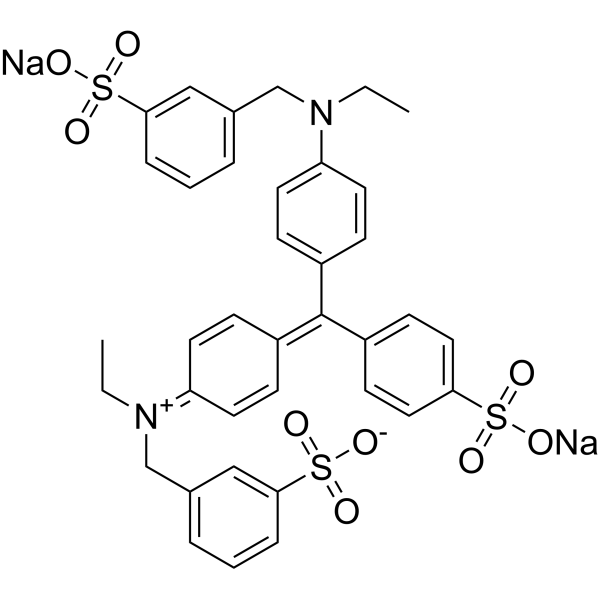
    Light green SF yellowish
    1 Publications Verification

    Acid green 5

    Fluorescent Dye Cancer
    Light green SF yellowish (Acid Green 5) is a water-soluble triarylmethane dye. Light green SF yellowish serves as a histological stain that selectively labels mitochondria, collagen, and cartilage, while being an essential component of Papanicolaou staining. Light green SF yellowish is commonly used as a cytoplasmic counterstain for nuclear stains, and is applied in Masson's trichrome staining for collagen fibers, Pap staining, and cytological polychromatic staining in histopathology. Light green SF yellowish also induces growth inhibition and local fibrosarcomas in rats and exerts mild pulmonary tumorigenicity in mice .
    Light green SF yellowish
  • HY-D2264

    Fluorescent Dye Others
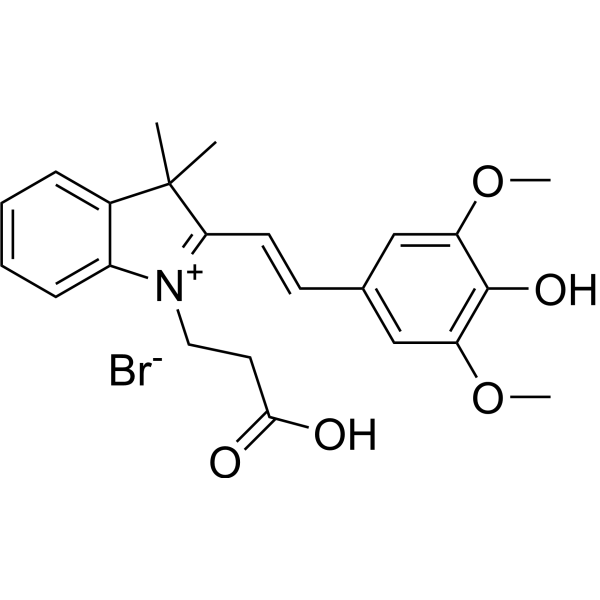
    Caffeine orange (Compound 1) is an aqueous-phase fluorescence turn-on sensor for caffeine that is highly selective to caffeine. Caffeine orange makes caffeinated coffee appear orange when exposed to 532 nM of green excitation light. Caffeine orange has excellent photophysical properties such as high extinction coefficient, high light stability and narrow emission bandwidth, which can be used in the research of caffeine detection devices .
    Caffeine orange
  • HY-157036

    Fluorescent Dye Others
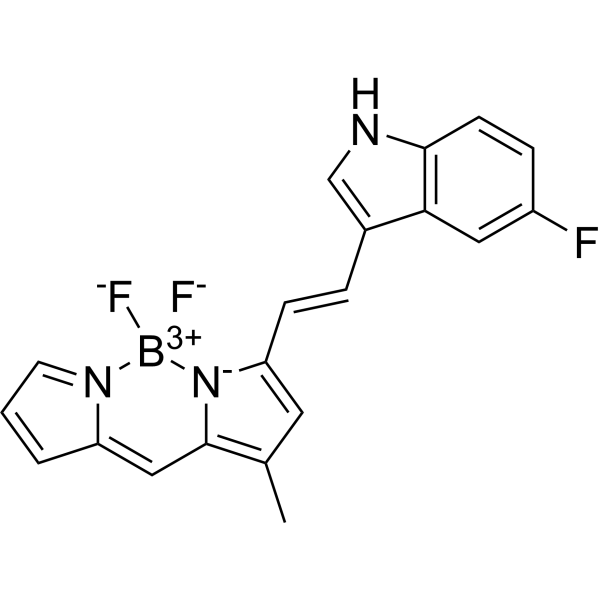
    INSA is a a pH-sensitive fluorescent probe. INSA can simultaneously light up mitochondria (red emission) and lysosomes (green emission) for their internal pH differences .
    INSA
  • HY-N7523

    DNA/RNA Synthesis Apoptosis Cancer
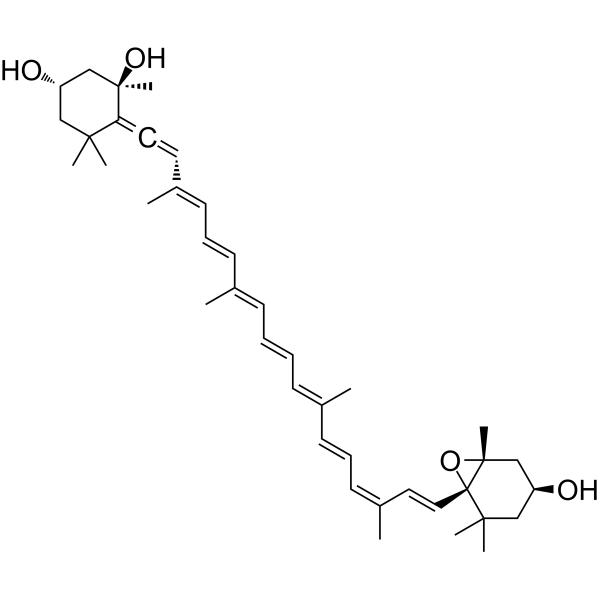
    Neoxanthin is a major xanthophyll carotenoid and a precursor of the plant hormone abscisic acid in dark green leafy vegetables. Neoxanthin is a potent antioxidant and light-harvesting pigment. Neoxanthin induces apoptosis and has anticancer actions .
    Neoxanthin
  • HY-D1343

    Fluorescent Dye
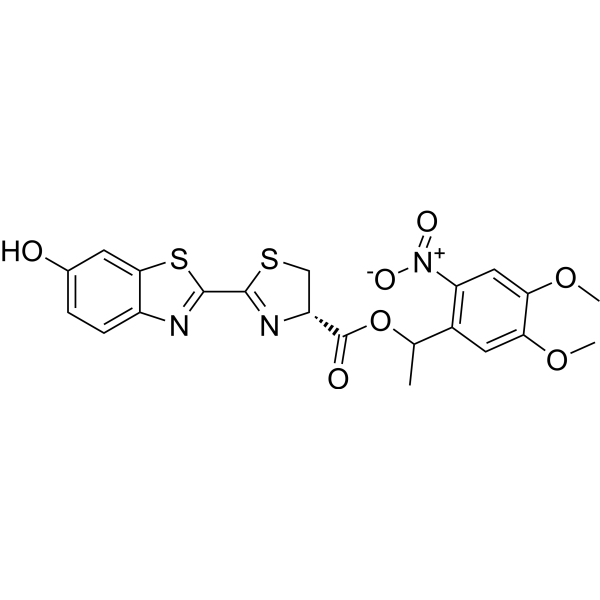
    DMNPE-caged D-luciferin is a heterocyclic luminescent compound that is a natural ligand for luciferase, an enzyme used to detect cell activity. Its reaction requires ATP and emits yellow-green light with a peak wavelength of about 530 nm. The luciferin in the DMNPE cage easily crosses the cell membrane.
    DMNPE-caged D-luciferin
  • HY-D1608

    Calcium Channel Others
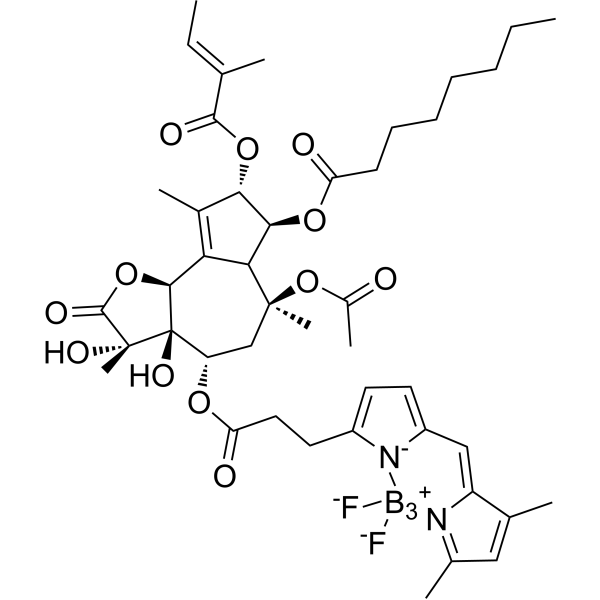
    BODIPY FL Thapsigargin is a potent green fluorescent dye. BODIPY FL Thapsigargin inhibits intracellular SERCA-type Ca2+ pumps present in the sarcoplasmic/endoplasmic reticulum. BODIPY FL Thapsigargin used for investigation of thapsigargin binding sites in live cells .
    BODIPY FL Thapsigargin
  • HY-156786

    Reactive Oxygen Species (ROS) Influenza Virus SARS-CoV HSV Infection
    TLD-1433 is the fourth-generation ruthenium (II) based photodynamic compound (PDC). TLD-1433 is activated by green light (525 ± 25 nm) and efficiently generates ROS to achieve pathogen inactivation. After photoinactivation, TLD-1433 significantly induces lipid peroxidation of the cell membrane, which can directly damage the integrity of the viral envelope. TLD-1433 has ID50 for enveloped viruses (such as H1N1 influenza virus, coronavirus OC43, HSV-1, Zika virus) is as low as nanomolar level; for non-enveloped viruses (such as adenovirus Ad5, mammalian rotavirus MRV), a concentration of micro-molar level is required for inactivation. TLD-1433 has antigen retention property and can be used for the preparation of inactivated vaccines .
    TLD-1433
  • HY-W087913

    Biochemical Assay Reagents Others
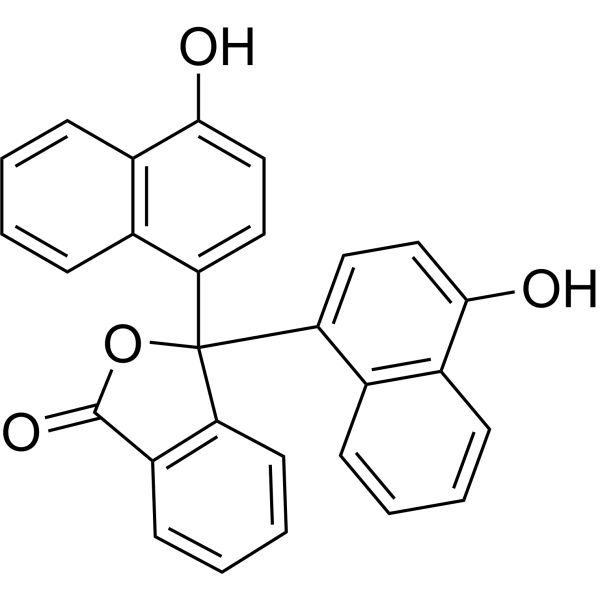
    alpha-Naphtholphthalein is an indicator that is light yellow at pH 6 and gradually shows a clear color change with increasing pH to light green-green-blue. alpha-Naphtholphthalein can be impregnated into cotton-blend fabrics and used to develop medical supplies for wound pH monitoring, such as medical gauze, hospital gowns and compression bandages .
    alpha-Naphtholphthalein
  • HY-D1189

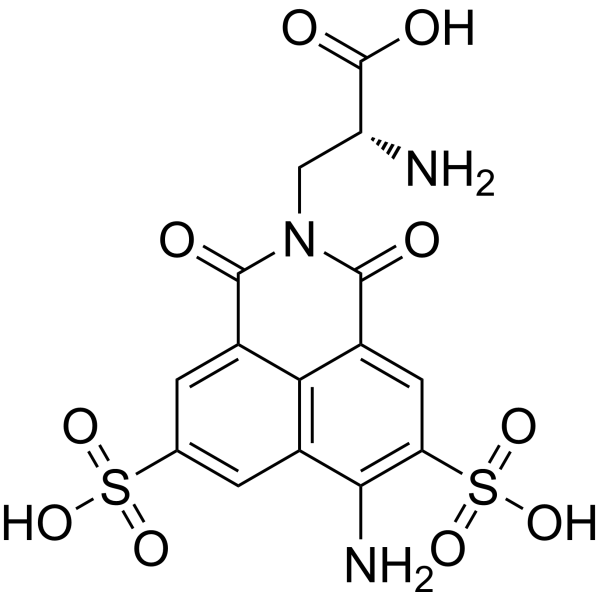
    Lucifer Yellow 3-amino-D-alanine

    Fluorescent Dye Others
    YADA (Lucifer Yellow 3-amino-D-alanine) is a conjugate of the fluorescent dyes Lucifer yellow and D-alanine, which is a green-yellow fluorescent dye. YADA is suitable for labeling peptidoglycans in living bacteria that can be incorporated into the cell wall where they are being synthesized. YADA has a large Stokes shift and a wide emission spectrum, allowing excitation through a purple light source and detection using a green filter. YADA showed good water solubility, light stability and thermal stability.
    YADA
  • HY-125667

    Photoamiloride-1

    Sodium Channel Metabolic Disease
    PA1 is a photoswitchable epithelial sodium channel (ENaC) blocker. PA1 can switch to cis-PA1 at 400nm and trans-PA1 at 500nm. PA1 inhibits δ/αENaC, αβγENaC, and δβγENaC, with IC50 values of 4.3nM, 90 nM, and 390 nM, respectively .
    PA1
  • HY-D1242

    Biochemical Assay Reagents Others
    CI Vat green 1 is a vat dye used in fabric with good wash, light and rubbing fastness .
    CI Vat green 1
  • HY-N15170

    Drug Derivative Others
    Neochrome, 5,8-epoxide derivative, is a Carotenoid. Neochrome is a chimeric photoreceptor between phytochrome and phototropin. Neochrome can be extracted from the fruit of Malpighia emarginata DC. syn. Malpighia glabra L. Neochrome can be found in some advanced ferns and in the green alga M. scalaris. Neochrome can serve as the red light receptor for chloroplast movement in ferns and green algae .
    Neochrome
  • HY-176859

    Apoptosis Cancer
    [Ru(dpp)(bpy)(mtmp)](PF6)2 (Compound 5) is a trisheteroleptic ruthenium complex. [Ru(dpp)(bpy)(mtmp)](PF6)2 has a light-activated anticancer activity. [Ru(dpp)(bpy)(mtmp)](PF6)2 can selectively cleave off upon green light irradiation, thereby releasing a phototoxic ruthenium-based photoproduct that binds to nuclear DNA, induces DNA damage and apoptosis in cancer cells. [Ru(dpp)(bpy)(mtmp)](PF6)2 can be used for phototherapy of cancers like conjunctival melanoma research .
    [Ru(dpp)(bpy)(mtmp)](PF6)2
  • HY-D3275

    Fluorescent Dye Others
    PE-Cy5.5 is a far-red emitting tandem dye designed based on the principle of fluorescence resonance energy transfer (FRET), and is widely used in multicolor flow cytometry. PE-Cy5.5 consists of phycoerythrin (PE) as the energy donor and the cyanine dye Cy5.5 as the energy acceptor. Upon excitation by blue or green laser light, PE absorbs energy and transfers it to Cy5.5 via FRET, ultimately resulting in Cy5.5 emitting characteristic far-red fluorescence (Ex/Em = 450-500 nm/698 nm) .
    PE-Cy5.5

Inquiry Online

Your information is safe with us. * Required Fields.

Salutation


Country or Region *

Applicant Name *


Organization Name *

Department *


Email Address *


Product Name *

Cat. No.


Requested quantity *

Phone Number *


Remarks

Inquiry Online

Inquiry Information

Product Name:
Cat. No.:
Quantity:
MCE Japan Authorized Agent:

