1. Search Result
Search Result
Results for "

hepatitis B

" in MedChemExpress (MCE) Product Catalog:

284

Inhibitors & Agonists

2

Screening Libraries

2

Fluorescent Dye

2

Biochemical Assay Reagents

15

Peptides

13

Inhibitory Antibodies

38

Natural
Products

10

Recombinant Proteins

13

Isotope-Labeled Compounds

1

Antibodies

22

Oligonucleotides

Cat. No. Product Name Target Research Areas Chemical Structure
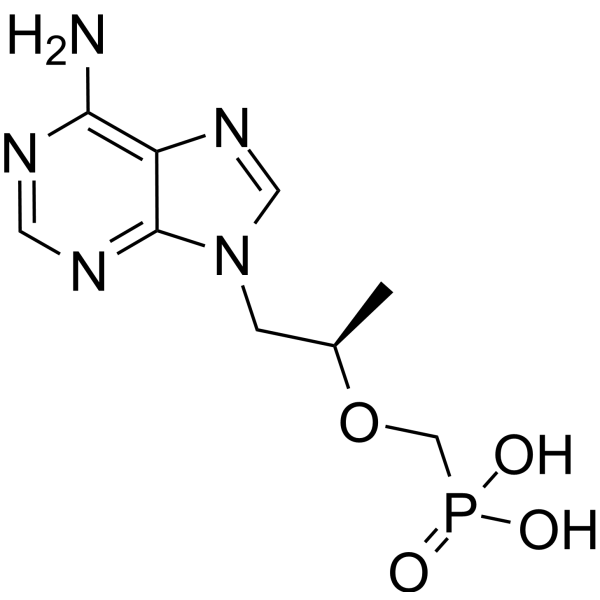
  • HY-13910
    Tenofovir
    5+ Cited Publications

    GS 1278; PMPA

    Reverse Transcriptase HIV HBV Infection Neurological Disease Cancer
    Tenofovir (GS 1278) is a nucleotide reverse transcriptase inhibitor to treat HIV and chronic Hepatitis B (HBV) .
    Tenofovir
  • HY-13782
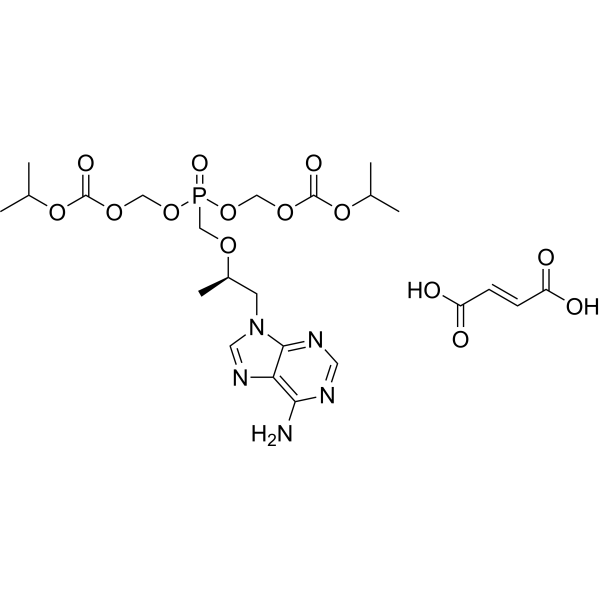
    Tenofovir Disoproxil fumarate
    5+ Cited Publications

    Tenofovir DF; Bis(POC)-PMPA fumarate; GS 4331 fumarate

    HIV Reverse Transcriptase HBV Infection
    Tenofovir Disoproxil fumarate is a nucleotide reverse transcriptase inhibitor used to treat HIV and chronic Hepatitis B.
    Tenofovir Disoproxil fumarate
  • HY-109168
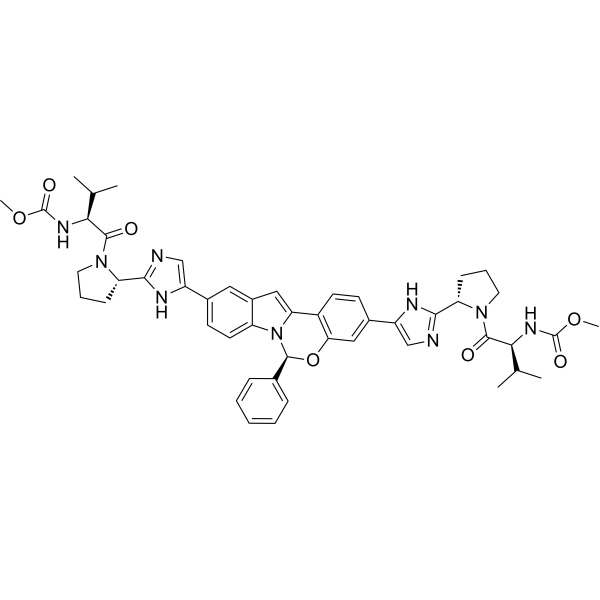
    Bersacapavir
    2 Publications Verification

    JNJ-6379; JNJ-56136379

    HBV DNA/RNA Synthesis Infection
    Bersacapavir (JNJ-6379) is an HBV capsid assembly modulator. Bersacapavir exerts a dual mechanism of action against both early and late stages of HBV infection by forming complete genome-free empty capsids and inhibiting de novo synthesis of cccDNA. Bersacapavir inhibits HBV replication. Bersacapavir can be used in the research of hepatitis B .
    Bersacapavir
  • HY-Y0073
    4-Hydroxyacetophenone
    1 Publications Verification

    P-hydroxyacetophenone

    HBV Myosin Infection Inflammation/Immunology Cancer
    4-Hydroxyacetophenone (P-hydroxyacetophenone) is a major hepatoprotective and choleretic compound found in Artemisia and Illicium plants, exhibiting antiviral and anti-inflammatory effects against hepatitis B virus. Additionally, 4-Hydroxyacetophenone inhibits cancer cell adhesion, invasion, and migration by remodeling actin. 4-Hydroxyacetophenone holds promise for research in the fields of inflammatory diseases and cancer .
    4-Hydroxyacetophenone
  • HY-B0017
    Telbivudine
    1 Publications Verification

    Epavudine; L-Thymidine; NV 02B

    HBV Infection
    Telbivudine (Epavudine), an orally active thymidine nucleoside analog, is a potent antiviral inhibitor of hepatitis B virus (HBV) replication .
    Telbivudine
  • HY-N0699
    Daphnoretin
    3 Publications Verification

    Dephnoretin; Thymelol

    PKC Influenza Virus NOD-like Receptor (NLR) Apoptosis HBV JNK PI3K Akt CDK Caspase Bcl-2 Family Infection Inflammation/Immunology Cancer
    Daphnoretin (Dephnoretin; Thymelol) is a protein kinase C (PKC) activator that inhibits the expression of hepatitis B virus (HBV) surface antigen (HBsAg) and exhibits antiviral activity. Daphnoretin exerts its antitumor effects by inhibiting the activation of the PI3K/AKT signaling pathway and triggers the mitochondrial apoptosis pathway. Daphnoretin alleviates chondrocyte apoptosis and inflammatory responses by inhibiting endoplasmic reticulum stress and activation of the NLRP3 inflammasome. Daphnoretin regulates the differentiation and maturation of dendritic cells, inhibits their immunostimulatory function by downregulating the phosphorylation level of JNK, and thus exerts a protective effect in skin graft rejection .
    Daphnoretin
  • HY-W018791
    Bifendate
    2 Publications Verification

    DDB

    HBV Autophagy Cytochrome P450 Atg8/LC3 p62 P-glycoprotein Infection Cardiovascular Disease Cancer
    Bifendate (DDB), extracted from Schisandrae chinensis, is an orally active anti-HBV agent against chronic hepatitis B. Bifendate inhibits ATG5-dependent autophagy and attenuates oleic acid-induced lipid accumulation with anti-oxidant properties in vitro. Bifendate can decrease alanine transaminase (ALT) level in mice. Bifendate attenuates hepatic steatosis in cholesterol/bile salt- and high-fat diet-induced hypercholesterolemia in mice. Bifendate potently increases the activity of cytochrome proteins (CYPs) and reverse P-gp-mediated multi-drug resistance (MDR) .
    Bifendate
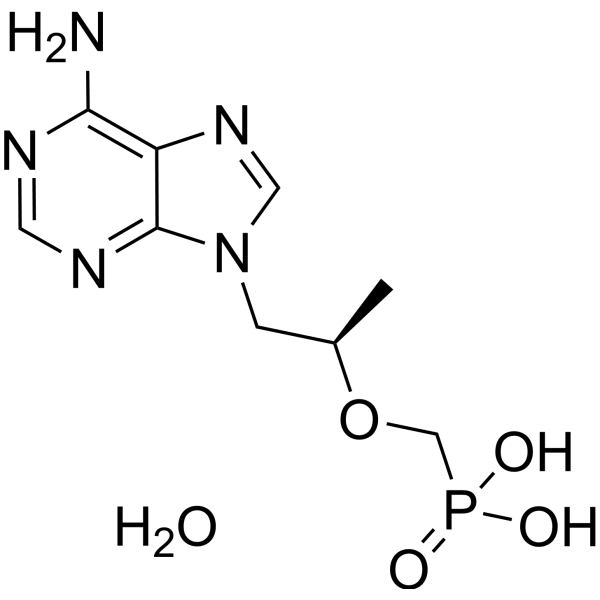
  • HY-13910A
    Tenofovir hydrate
    5+ Cited Publications

    GS 1278 hydrate; PMPA hydrate

    HIV Reverse Transcriptase Infection Cancer
    Tenofovir hydrate is a nucleotide reverse transcriptase inhibitor to treat HIV and chronic Hepatitis B.
    Tenofovir hydrate
  • HY-13782A
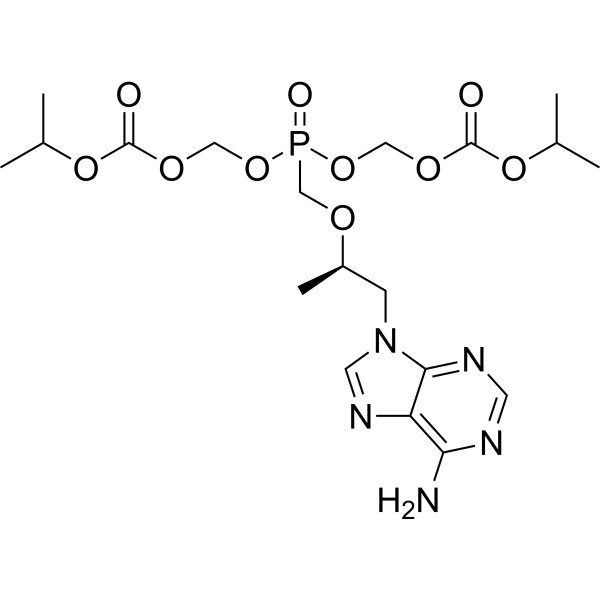
    Tenofovir Disoproxil
    5+ Cited Publications

    Bis(POC)-PMPA; GS 4331

    HIV Reverse Transcriptase HBV Cancer
    Tenofovir Disoproxil (Bis(POC)-PMPA) is a nucleotide reverse transcriptase inhibitor to treat HIV and chronic Hepatitis B.
    Tenofovir Disoproxil
  • HY-177022

    HBV Infection
    ALG-001075, a capsid assembly modulator (CAM), is an orally active HBV inhibitor. ALG-001075 effectively blocks not only HBV DNA production but also extracellular HBsAg/HBeAg and intracellular HBV RNA in primary human hepatocytes. ALG-001075 shows pronounced reductions of circulating HBV DNA in the AAV-HBV mouse model. ALG-001075 can be used for the study of Chronic hepatitis B (CHB) .
    ALG-001075
  • HY-147255

    ZM-H1505R

    HBV Infection
    Canocapavir (ZM-H1505R) is an orally active HBV core protein-targeting antiviral agent. Canocapavir binds to the hydrophobic pocket at the dimer-dimer interface of HBV core protein (HBc), stimulating intracellular accumulation of nonfunctional HBV capsids, disrupting viral replication. Canocapavir interferes with the interaction between HBc and HBV large surface protein, resulting in diminished
    production of empty virionsis. Canocapavir can be used for the research of hepatitis B virus (HBV) infection .
    Canocapavir
  • HY-148348

    HBV Infection
    AB-836 is an orally active HBV capsid inhibitor. AB-836 inhibits viral replication by interacting with HBV core protein. AB-836 can be used in research related to chronic hepatitis B .
    AB-836
  • HY-124600
    NVR 3-778
    3 Publications Verification

    HBV Infection
    NVR 3-778 is a first-in-Class and oral bioavailable HBV CAM (capsid assembly modulator) belonging to the SBA (sulfamoylbenzamide) class, with anti-HBV activity .
    NVR 3-778
  • HY-112564
    JNJ-632
    2 Publications Verification

    HBV Infection
    JNJ-632 is a hepatitis B virus (HBV) capsid assembly modulator (CAM).
    JNJ-632
  • HY-N10543

    HBV Infection
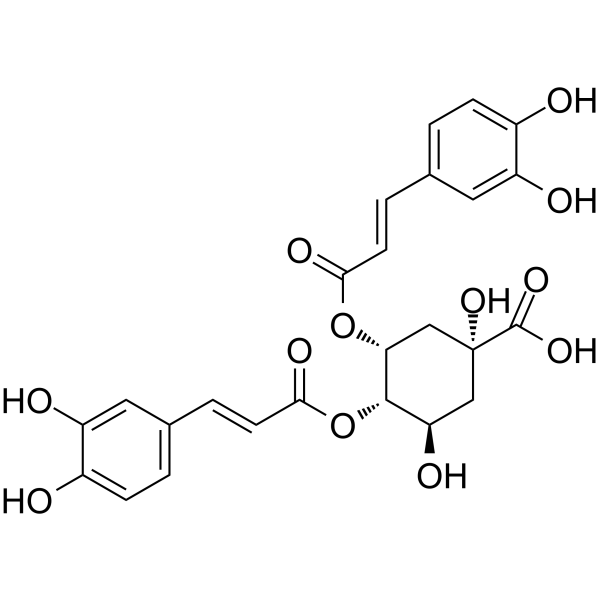
    5-O-(E)-p-Coumaroylquinic acid, a quinic acid derivative, is a potent phytochemical agent against hepatitis B virus .
    5-O-(E)-p-Coumaroylquinic acid
  • HY-P99693

    GC1102

    HBV Infection
    Lenvervimab (GC1102) is a IgG1-type recombinant human hepatitis B Immunoglobulin. Lenvervimab can be used for research of hepatitis B virus infection .
    Lenvervimab
  • HY-169993

    HBV DNA/RNA Synthesis Drug Intermediate Infection
    ALG-000184 is an orally effective inhibitor of hepatitis B virus (HBV), and it is also a prodrug of ALG-001075 (HY-177022). ALG-000184 can inhibit the production of HBV DNA in liver cells. ALG-000184 can be used in the research of chronic hepatitis B .
    ALG-000184
  • HY-145638A

    RO7445482 sodium

    HBV Infection
    Xalnesiran (RO7445482) sodium is a small interfering RNA molecule that targets a conserved region of the
    hepatitis B virus (HBV) genome . Xalnesiran sodium can be used for the research of chronic hepatitis B infection .
    Xalnesiran sodium
  • HY-19447
    Besifovir
    1 Publications Verification

    LB80331

    HBV Infection
    Besifovir (LB80331), a parent agent converted by LB80380 (HY-19447A), further metabolizes to its active form, LB80317 (HY-106235). Besifovir is an orally active, novel antiviral agent against hepatitis B virus (HBV) .
    Besifovir
  • HY-148560A

    HBV DNA/RNA Synthesis Infection
    trans-ccc_R08 (Compound 1-B) is a cccDNA inhibitor with anti-HBV activity, with an IC50 of 0.14 μM for HBeAg and an IC50 of 0.08 μM for HBsAg in in vitro assays. trans-ccc_R08 inhibits covalently closed circular DNA (cccDNA). trans-ccc_R08 is applicable to research related to hepatitis B virus infection .
    trans-ccc_R08
  • HY-142989

    Liposome HIV HCV HBV Infection Cancer
    1,2-Didocosahexaenoyl-sn-glycero-3-phosphocholine is a polyunsaturated phospholipid that serves as a component of lipid monolayers and small unilamellar vesicles. 1,2-Didocosahexaenoyl-sn-glycero-3-phosphocholine can be used to prepare endoplasmic reticulum-targeted liposomes (PERLs), which are composed of 1,2-didocosahexaenoyl-sn-glycero-3-phosphoethanolamine, l-α-phosphatidylinositol and l-α-phosphatidylserine at a molar ratio of 1.5:1.5:1:1. PERLs reduce cholesterol levels in human peripheral blood mononuclear cells (PBMCs) and decrease HIV-1 particle secretion from HIV-1-infected PBMCs. Liposomes formed from 1,2-Didocosahexaenoyl-sn-glycero-3-phosphocholine exhibit cytotoxicity against leukemia cells. 1,2-Didocosahexaenoyl-sn-glycero-3-phosphocholine is applicable to studies related to hepatitis C virus infection, HIV infection, hepatitis B virus infection and leukemia .
    1,2-Didocosahexaenoyl-sn-glycero-3-phosphocholine
  • HY-14775
    Nesbuvir
    5+ Cited Publications

    HCV-796

    HCV Infection
    Nesbuvir is a nonnucleoside inhibitor of the hepatitis C virus (HCV) nonstructural protein 5B (NS5B) polymerase.
    Nesbuvir
  • HY-100029
    Bay 41-4109
    10+ Cited Publications

    HBV Infection
    BAY 41-4109 is a potent inhibitor of human hepatitis B virus (HBV) with an IC50 of 53 nM.
    Bay 41-4109
  • HY-P991674

    BJT-778

    HBV Infection Inflammation/Immunology
    Brelovitug (BJT-778) is a humanized IgG1 neutralizing monoclonal antibody targeting hepatitis B surface antigen (HBsAg). Brelovitug binds with high affinity to HBsAg purified from HBV serotypes ad and ay, with Kd values of 0.22 nM and 0.39 nM, respectively. Brelovitug binds with high affinity to HBsAg of HBV genotypes A, B, C and D, with IC50 values of 0.07, 0.02, 0.02 and 0.07 nM, respectively. Brelovitug can be used in research related to chronic hepatitis B and chronic hepatitis D .
    Brelovitug
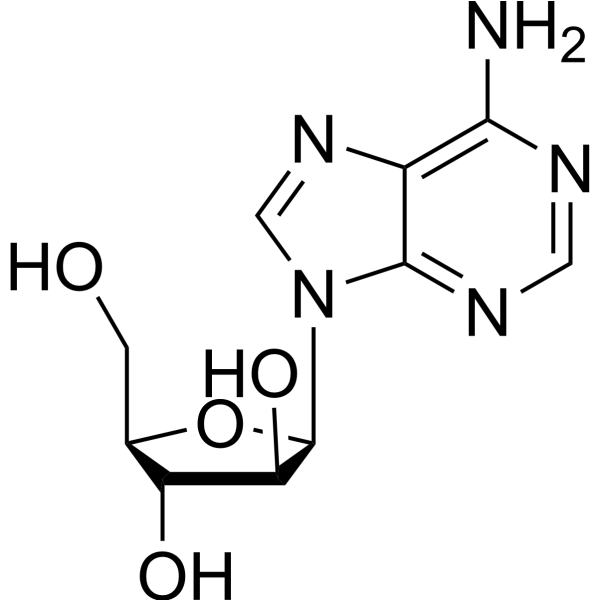
  • HY-W352344

    HBV Infection
    2'-Deoxy-L-adenosine is an orally active synthon for modified oligodeoxyribonucleotides. 2'-Deoxy-L-adenosine is a potent, specific and selective inhibitor of the replication of hepatitis B virus (HBV) as well as the closely related duck and woodchuck hepatitis viruses (WHV) .
    2'-Deoxy-L-adenosine
  • HY-133721

    HBV Infection Inflammation/Immunology
    Chamaechromone is a biflavonoid ingredient isolated from the roots of Stellera chamaejasme L. (Thymelaeaceae). Chamaechromone possesses anti-hepatitis B virus (HBV) effects against the surface antigen of HBV (HBsAg) secretion and has insecticidal activities .
    Chamaechromone
  • HY-P99541

    anti-hepatitis B; OST 577; SDZ-OST 577

    HBV Infection
    Tuvirumab (OST 577; SDZ-OST 577) is a human IgG1 subclass monoclonal antibody directed against HBV surface antigen (HBsAg). Tuvirumab binds specifically and with high affinity (K=3.6 nM) to HBsAg. Tuvirumab has the potential for chronic hepatitis B research .
    Tuvirumab
  • HY-P1774

    HBV Infection
    Hepatitis B Virus Core (128-140) is a peptide of hepatitis B virus core protein.
    Hepatitis B Virus Core (128-140)
  • HY-114314

    HBV Infection
    BA-53038B is a HBV core protein allosteric modulator (CpAM), binding to the HAP pocket and modulating HBV capsid assembly. BA-53038B has antiviral activity for hepatitis B virus (HBV) with an EC50 value of 3.32 μM. BA-53038B can be used for the research of chronic hepatitis B .
    BA-53038B
  • HY-116999

    HBV Infection
    IR415 is a potent anti-HBV agent and inhibits HBV replication by blocking the HBx activity. IR415 selectively interacts with HBx (Kd=2 nM) and blocks HBV-mediated RNAi suppression, reverses the inhibitory effect of HBx protein on the activity of the dicer endoribonuclease . HBx: hepatitis B virus X protein.
    IR415
  • HY-16680

    Helioxanthin analogue 8-1

    HBV Infection
    Helioxanthin 8-1(Helioxanthin analogue 8-1) is an anti-HBV agent. Helioxanthin 8-1 exhibits anti-hepatitis B virus activity in both in vitro human hepatitis B virus models and animal models. Helioxanthin 8-1 inhibits the synthesis of duck hepatitis B virus (DHBV) DNA, covalently closed circular DNA, RNA and proteins, thereby blocking DHBV replication. Helioxanthin 8-1 shows higher cytotoxicity in virus-induced cells than in non-induced cells. Helioxanthin 8-1 can be used in studies related to hepatitis B virus infection .
    Helioxanthin 8-1
  • HY-103487

    IDX21437; MK-3682

    HCV Infection
    Uprifosbuvir is an antiviral agent. Uprifosbuvir is a NS5b inhibitor developed for the research of chronic hepatitis C virus .
    Uprifosbuvir
  • HY-12634

    BI 207127

    HCV Infection
    Deleobuvir (BI 207127), a chemical probe, is a potent non-nucleoside hepatitis C virus (HCV) NS5B polymerase inhibitor.
    Deleobuvir
  • HY-121513

    2'-Deoxy-L-cytidine; L-dC

    HBV Infection
    Torcitabine (2'-Deoxy-L-cytidine) is an antiviral agent. Torcitabine has the potential for chronic hepatitis B virus infection treatment .
    Torcitabine
  • HY-149158

    HBV Inflammation/Immunology
    CCC-0975 is a hepatitis B virus (HBV) inhibitor (EC50=10 μM). CCC-0975 interferes with the conversion of relaxed circular DNA (rcDNA) to cccDNA, synchronously reducing cccDNA and its precursor deproteinized rcDNA (DP-rcDNA) without promoting their intracellular degradation. CCC-0975 is promising for research of chronic hepatitis B .
    CCC-0975
  • HY-114247

    D-FMAU

    Nucleoside Antimetabolite/Analog Infection Cancer
    FMAU is a nucleoside analog and cell proliferation marker that can be phosphorylated by human thymidine kinase and subsequently incorporated into DNA. FMAU is applicable to research related to herpes simplex virus infection, various cancers, hepatitis B virus infection, and Epstein-Barr virus infection .
    FMAU
  • HY-145620

    ADC Linker Inflammation/Immunology Cancer
    Zuvotolimod is a myeloid cell agonist compound-linker for antibody conjugate. Zuvotolimod can be used in the research of cancer and hepatitis .
    Zuvotolimod
  • HY-P991112

    Transmembrane Glycoprotein Infection
    Anti-Mouse CD8α Antibody (YTS169.4) is an IgG2 monoclonal antibody targeting mouse CD8α. Anti-Mouse CD8α Antibody (YTS169.4) rapidly depletes or downregulates CD8 + T cells in the spleens of Biozzi AB/H mice. Anti-Mouse CD8α Antibody (YTS169.4) is applicable to research related to hepatitis B virus infection . Recommended isotype control: Rat IgG2b kappa, Isotype Control (HY-P990682).
    Anti-Mouse CD8α Antibody (YTS169.4)
  • HY-19643

    HCV Protease Infection
    JTK-109 is a potent inhibitor of hepatitis C virus NS5B RNA-dependent RNA polymerase. JTK-109 has NS5B inhibitory activity with IC50 value of 0.017μM. JTK-109 can be used for the research of hepatitis C virus (HCV) .
    JTK-109
  • HY-P4051

    HBV Infection Inflammation/Immunology
    HBV Seq1 aa:141-151 is a peptide. HBV Seq1 aa:141-151 can be used for the research of chronic hepatitis B virus (HBV) .
    HBV Seq1 aa:141-151
  • HY-119691

    LY582563; MCC-478

    HBV Infection
    Alamifovir (LY582563; MCC-478), a purine nucleotide analogue proagent, shows potent activity against wild type and lamivudine resistant hepatitis B virus (HBV). Alamifovir has high activity against HBV replication and sustained antiviral effect .
    Alamifovir
  • HY-113586

    LB-80380

    HBV DNA/RNA Synthesis Drug Derivative Infection
    Besifovir Dipivoxil (LB-80380), an analog of guanosine monophosphate, is an acyclic nucleotide phosphonate with antiviral effect. Besifovir Dipivoxil is rapidly converted by the liver and intestine to the intermediate metabolite LB80331 via the esterification process, subsequently phosphorylated into the di- and triphosphate forms, which act as antiviral DNA synthesis inhibitors. Besifovir Dipivoxil is promising for research of chronic hepatitis B .
    Besifovir Dipivoxil
  • HY-N8107
    Matairesinol monoglucoside
    2 Publications Verification

    STING IFNAR HBV Infection
    Matairesinol monoglucoside is a STING activator. Matairesinol monoglucoside modulates the STING-TBK1-IRF3 signaling axis, promotes STING transcriptional expression, increases TBK1 and IRF3 phosphorylation. Matairesinol monoglucoside induces IFN-α and IFN-β production, reduces HBV DNA, HBsAg, and HBeAg expression. Matairesinol monoglucoside can be used for the research of hepatitis b virus (hbv) infection .
    Matairesinol monoglucoside
  • HY-145638

    RO7445482

    HBV Infection
    Xalnesiran (RO7445482) is a small interfering RNA molecule that targets a conserved region of the
    hepatitis B virus (HBV) genome. Xalnesiran can be used for the research of chronic hepatitis B infection .
    Xalnesiran
  • HY-P99608

    HBV Infection
    Exbivirumab is a monoclonal antibody directed against highly conserved HBsAg epitopes. Exbivirumab enhances the antiviral activity of hepatitis B immunoglobulin (HBIG). Exbivirumab combined with Libivirumab (HY-P99703) decreases circulating HBsAg and hepatitis B virus (HBV) DNA levels in a chronically infected chimpanzee. Exbivirumab can be used for HBV re-infection in liver transplant .
    Exbivirumab
  • HY-126970

    HBV Infection
    HBF-0259 is a potent and selective inhibitor of hepatitis B virus (HBV) surface antigen (HBsAg) secretion, with an EC50 of 1.5 μM in HepG2.2.15 cells. HBF-0259 has no effect on HBV DNA synthesis .
    HBF-0259
  • HY-156578

    DGK HIV Infection Cancer
    DGKα-IN-8 (Example 51) is a DGKα inhibitor (IC50=22.491 nM; EC50=0.256 nM). DGKα-IN-8 can be used to study cancer, including solid tumors, and viral infections, such as HIV or hepatitis B virus infection .
    DGKα-IN-8
  • HY-P4042

    hepatitis B peptide 4980

    HBV Infection Inflammation/Immunology
    Hepatitis B Virus Receptor Binding Fragment (hepatitis B peptide 4980) is a synthetic peptide analog which specifically binds to Hep G2 cells. Hepatitis B Virus Receptor Binding Fragment is a promising immunogen expected to elicit protective antibodies based on the concept of the attachment blockade pathway of virus neutralization .
    Hepatitis B Virus Receptor Binding Fragment
  • HY-Y0073R

    P-hydroxyacetophenone (Standard)

    Reference Standards HBV Myosin Infection Inflammation/Immunology Cancer
    4-Hydroxyacetophenone (Standard) is the analytical standard of 4-Hydroxyacetophenone. This product is intended for research and analytical applications. 4-Hydroxyacetophenone (P-hydroxyacetophenone) is a major hepatoprotective and choleretic compound found in Artemisia and Illicium plants, exhibiting antiviral and anti-inflammatory effects against hepatitis B virus. Additionally, 4-Hydroxyacetophenone inhibits cancer cell adhesion, invasion, and migration by remodeling actin. 4-Hydroxyacetophenone holds promise for research in the fields of inflammatory diseases and cancer .
    4-Hydroxyacetophenone (Standard)
  • HY-126033

    HBV RSV Infection
    Sophoranol is an alkaloid that can be isolated from S. flavescens, with antiviral activity. Sophoranol has anti-HBV (hepatitis B virus) activity. Sophoranol shows potent antiviral activities against respiratory syncytial virus (RSV) with an IC50 of 10.4 μg/mL .
    Sophoranol

Inquiry Online

Your information is safe with us. * Required Fields.

Salutation


Country or Region *

Applicant Name *


Organization Name *

Department *


Email Address *


Product Name *

Cat. No.


Requested quantity *

Phone Number *


Remarks

Inquiry Online

Inquiry Information

Product Name:
Cat. No.:
Quantity:
MCE Japan Authorized Agent:

