1. Search Result
Search Result
Results for "

human GPR119

" in MedChemExpress (MCE) Product Catalog:

15

Inhibitors & Agonists

1

Natural
Products

1

Oligonucleotides

Cat. No. Product Name Target Research Areas Chemical Structure
  • HY-12066
    GSK1292263
    5 Publications Verification

    GPR119 Metabolic Disease Inflammation/Immunology
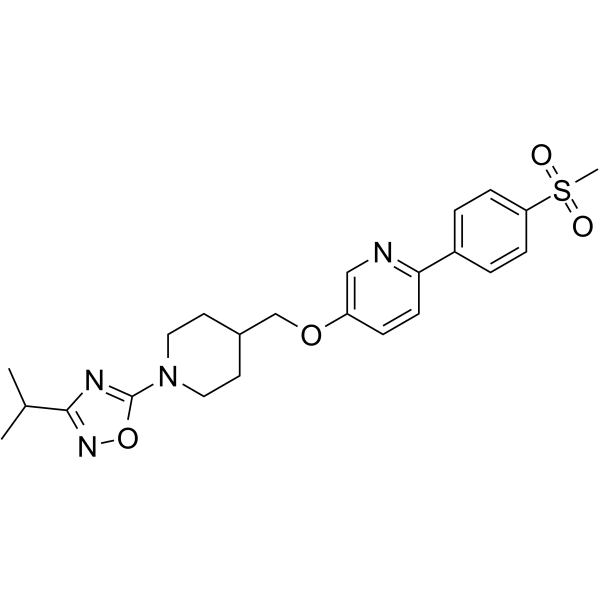
    GSK-1292263 is an orally available GPR119 agonist with pEC50s of 6.9 and 6.7 for human and rat GPR119, respectively. GSK-1292263 can be used for the research of type 2 diabetes mellitus (T2DM) .
    GSK1292263
  • HY-108258

    GPR119 Endocrinology
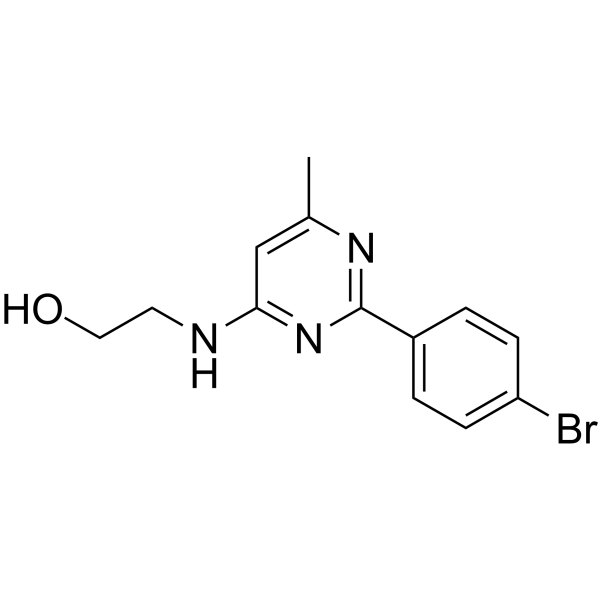
    PSN 375963 is a potent GPR119 agonist, with EC50s of 8.4 and 7.9 μM for human and mouse GPR119, respectively. PSN 375963 shows similar potency to the endogenous agonist oleoylethanolamide (OEA) .
    PSN 375963
  • HY-RS05652

    Small Interfering RNA (siRNA) Others

    GPR119 Human Pre-designed siRNA Set A contains three designed siRNAs for GPR119 gene (Human), as well as a negative control, a positive control, and a FAM-labeled negative control.

    GPR119 Human Pre-designed siRNA Set A
    GPR119 Human Pre-designed siRNA Set A
  • HY-107535

    GPR119 TRP Channel Metabolic Disease
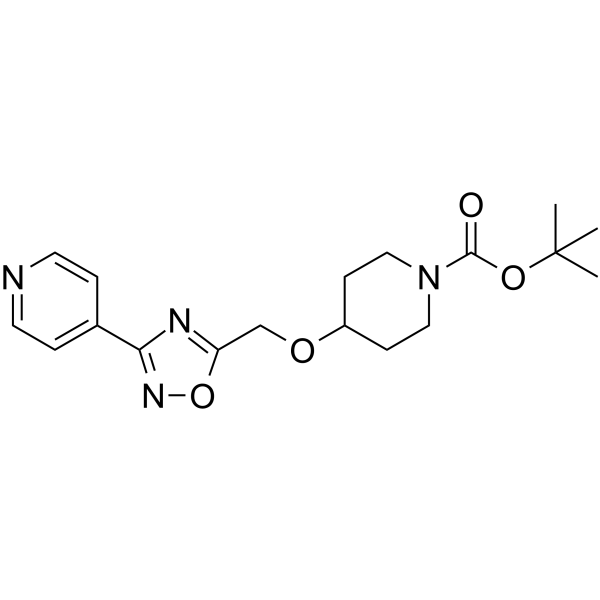
    AS1269574 is a potent, orally available GPR119 agonist, with an EC50 of 2.5 μM in HEK293 cells expressing human GPR119. AS1269574 activates TRPA1 cation channels to stimulate glucagon-like peptide-1 (GLP-1) secretion. AS1269574 specifically induces glucose-dependent insulin secretion from pancreatic β-cells only under high-glucose conditions. AS1269574 has the potential for the research of type 2 diabetes .
    AS1269574
  • HY-16673

    GPR119 Metabolic Disease
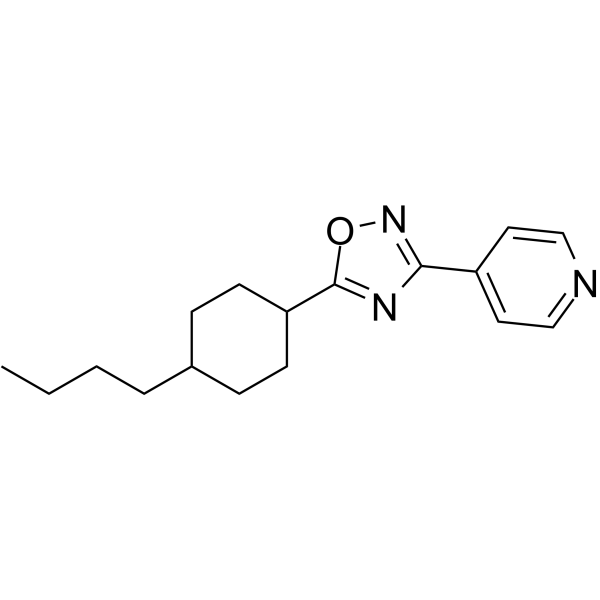
    PSN632408, a selective, orally active GPR119 agonist, shows similar potency to OEA at both recombinant mouse and human GPR119 receptors (EC50=5.6 and 7.9 uM, respectively). PSN632408 can stimulate β-cell replication and improve islet graft function. PSN632408 has the potential for the research of obesity and related metabolic disorders .
    PSN632408
  • HY-W727728

    Free Fatty Acid Receptor Metabolic Disease
    MK-8666 is a potent and selective partial GPR40 agonist (EC50 = 0.54 nM for human GPR40). MK-8666 shows selectivity over GPR119, GPR43, GPR41, GPR120, and other G-protein-coupled receptors (GPCRs). MK-8666 reduces glucose in the rodent. MK-8666 can be used for type 2 diabetes research [1][2].
    MK-8666
  • HY-175422

    GPR119 Metabolic Disease
    K-833 is a GPR119 agonist with EC50 values of 39.8 nM (human), 100nM (mouse), 75.4 nM (rat) and 12.6 nM (dog). K-833 demonstrates a modest increase in GLP-1 secretion and leads to a synergistic increase in GLP-1 levels when combined with AM-5262 (HY-16619) in acute gut peptide secretion assays in mice. K-833 can be used in studies on weight loss .
    K-833
  • HY-12066A

    GPR119 Metabolic Disease
    GSK-1292263 (hydrochloride) is an orally active GPR119 agonist (pEC50 of approximately 6.9 and 6.7 nM for human and rat GPR119, respectively). GSK-1292263 is used in the research of type 2 diabetes and dyslipidemia .
    GSK-1292263 hydrochloride
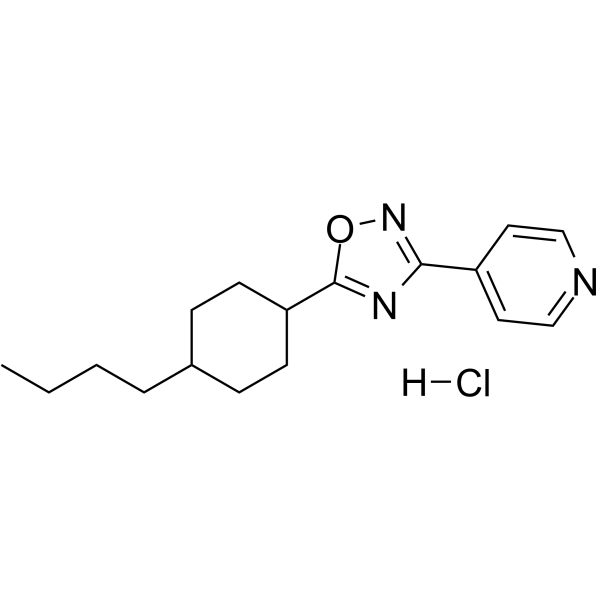
  • HY-108258A

    GPR119 Endocrinology
    PSN 375963 hydrochloride is a potent GPR119 agonist, with EC50s of 8.4 and 7.9 μM for human and mouse GPR119, respectively. PSN 375963 hydrochloride shows similar potency to the endogenous agonist oleoylethanolamide (OEA) .
    PSN 375963 hydrochloride
  • HY-182454

    GPR119 Metabolic Disease
    GPR119 agonist 4 is a GPR119 agonist and oral glucose-lowering agent with a human GPR119 EC50 of 42 nM.GPR119 agonist 4 activates GPR119.GPR119 agonist 4 reduces blood glucose area under the curve in an oral glucose tolerance test.GPR119 agonist 4 exhibits improved clearance in liver microsomes.GPR119 agonist 4 can be used for the research of type 2 diabetes mellitus .
    GPR119 agonist 4
  • HY-12066R

    GPR119 Metabolic Disease Inflammation/Immunology
    GSK1292263 (Standard) is the analytical standard of GSK1292263. This product is intended for research and analytical applications. GSK-1292263 is an orally available GPR119 agonist with pEC50s of 6.9 and 6.7 for human and rat GPR119, respectively. GSK-1292263 can be used for the research of type 2 diabetes mellitus (T2DM) .
    GSK1292263 (Standard)
  • HY-113513

    Others Cancer
    5(S)-HEPE is an active metabolite of eicosapentaenoic acid. It is formed from EPA by 5-lipoxygenase (5-LO). 5(S)-HEPE is an agonist of G protein-coupled receptor 119 (GPR119). It increases cAMP accumulation in CHO-K1 cells expressing human GPR119 when used at a concentration of 10 μM. 5(S)-HEPE increases glucose-induced insulin secretion from MING6 insulinoma pancreatic islets and glucagon-like peptide 1 (GLP-1) secretion from HuTu 80 adenocarcinoma cells when used at a concentration of 10 μM. Serum levels of 5(S)-HEPE are elevated in patients with hyperlipidemia.
    5-HEPE
  • HY-108258R

    Reference Standards GPR119 Endocrinology
    PSN 375963 (Standard) is the analytical standard of PSN 375963 (HY-108258). This product is intended for research and analytical applications. PSN 375963 is a potent GPR119 agonist, with EC50s of 8.4 and 7.9 μM for human and mouse GPR119, respectively. PSN 375963 shows similar potency to the endogenous agonist oleoylethanolamide (OEA) .
    PSN 375963 (Standard)
  • HY-107535R

    Reference Standards GPR119 TRP Channel Metabolic Disease
    AS1269574 (Standard) is the analytical standard of AS1269574 (HY-107535). This product is intended for research and analytical applications. AS1269574 is a potent, orally available GPR119 agonist, with an EC50 of 2.5 μM in HEK293 cells expressing human GPR119. AS1269574 activates TRPA1 cation channels to stimulate glucagon-like peptide-1 (GLP-1) secretion. AS1269574 specifically induces glucose-dependent insulin secretion from pancreatic β-cells only under high-glucose conditions. AS1269574 has the potential for the research of type 2 diabetes .
    AS1269574 (Standard)
  • HY-182580

    GPR119 Dipeptidyl Peptidase Metabolic Disease Inflammation/Immunology
    HBK001 is an orally active and selective dual GPR119 agonist and DPP-IV inhibitor. HBK001 triggers cAMP production, PKA activation, CREB phosphorylation, glucose-stimulated insulin secretion, plasma incretin elevation, β-cell proliferation, and β-cell function gene up-regulation. HBK001 reduces blood glucose, ameliorates hyperglycemia, improves glucose tolerance, and enhances islet morphology. HBK001 can be used for the research of type 2 diabetes mellitus .
    HBK001

Inquiry Online

Your information is safe with us. * Required Fields.

Salutation


Country or Region *

Applicant Name *


Organization Name *

Department *


Email Address *


Product Name *

Cat. No.


Requested quantity *

Phone Number *


Remarks

Inquiry Online

Inquiry Information

Product Name:
Cat. No.:
Quantity:
MCE Japan Authorized Agent:

