Search Result
Results for "
human renin
" in MedChemExpress (MCE) Product Catalog:
3
Isotope-Labeled Compounds
| Cat. No. |
Product Name |
Target |
Research Areas |
Chemical Structure |
-
- HY-13948
-
|
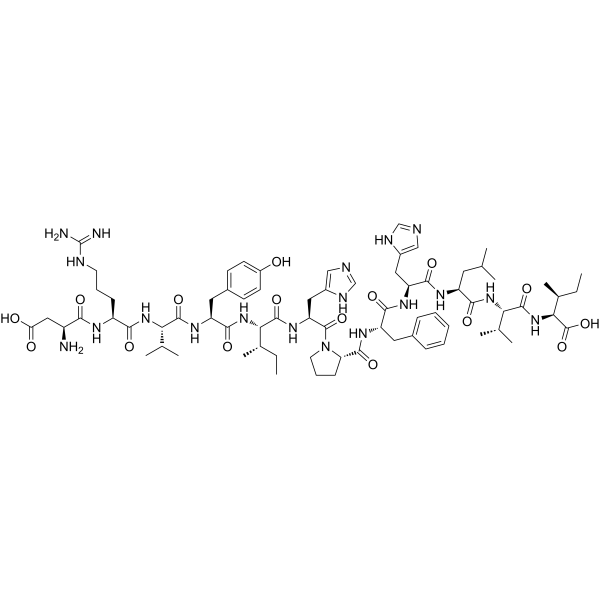
Angiotensin II; Ang II; DRVYIHPF
|
Angiotensin Receptor
Apoptosis
|
Cardiovascular Disease
Infection
Metabolic Disease
Inflammation/Immunology
Cancer
|
|
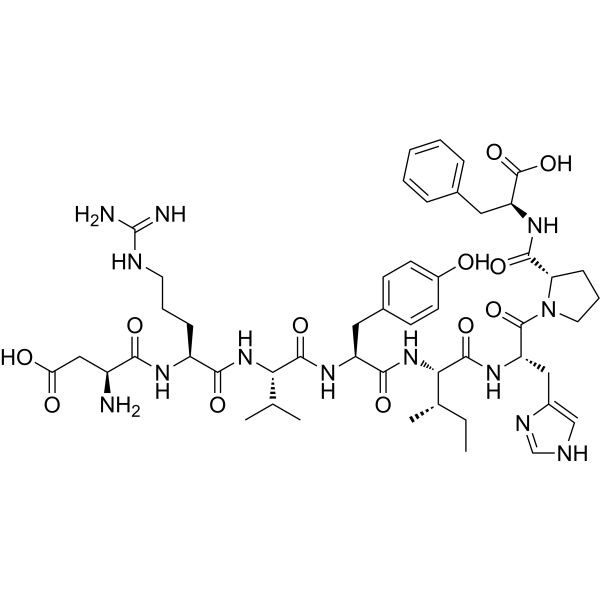
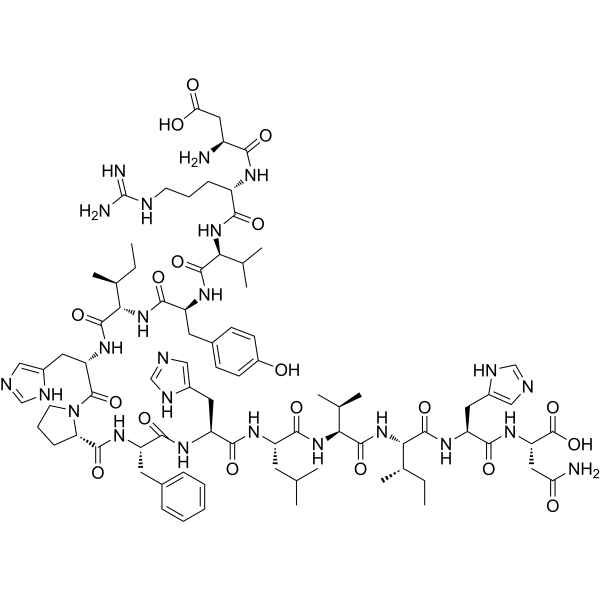
Angiotensin II (Angiotensin II) is a vasoconstrictor and a major bioactive peptide of the renin/angiotensin system. Angiotensin II human plays a central role in regulating human blood pressure, which is mainly mediated by interactions between Angiotensin II and the G-protein-coupled receptors (GPCRs) Angiotensin II type 1 receptor (AT1R) and Angiotensin II type 2 receptor (AT2R). Angiotensin II human stimulates sympathetic nervous stimulation, increases aldosterone biosynthesis and renal actions. Angiotensin II human induces growth of vascular smooth muscle cells, increases collagen type I and III synthesis in fibroblasts, leading to thickening of the vascular wall and myocardium, and fibrosis. Angiotensin II human also induces apoptosis. Angiotensin II induces capillary formation from endothelial cells via the LOX-1 dependent redox-sensitive pathway .
|
-
-
- HY-13948A
-
|
Angiotensin II acetate; Ang II acetate; DRVYIHPF acetate
|
Angiotensin Receptor
Apoptosis
|
Cardiovascular Disease
Infection
Metabolic Disease
Inflammation/Immunology
Cancer
|
|
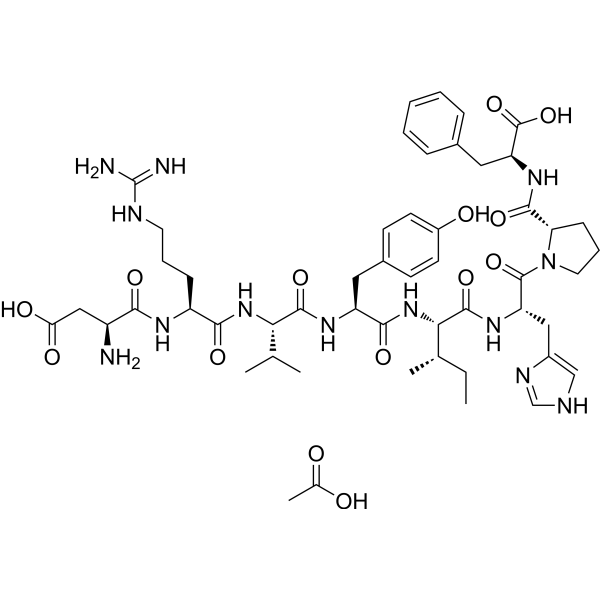
Angiotensin II human (Angiotensin II) acetate is a vasoconstrictor and a major bioactive peptide of the renin/angiotensin system. Angiotensin II human acetate plays a central role in regulating human blood pressure, which is mainly mediated by interactions between Angiotensin II and the G-protein-coupled receptors (GPCRs) Angiotensin II type 1 receptor (AT1R) and Angiotensin II type 2 receptor (AT2R). Angiotensin II human acetate stimulates sympathetic nervous stimulation, increases aldosterone biosynthesis and renal actions. Angiotensin II human acetate induces growth of vascular smooth muscle cells, increases collagen type I and III synthesis in fibroblasts, leading to thickening of the vascular wall and myocardium, and fibrosis. Angiotensin II human acetate also induces apoptosis. Angiotensin II human acetate induces capillary formation from endothelial cells via the LOX-1 dependent redox-sensitive pathway .
|
-
-
- HY-13240
-
|
|
Beta-secretase
|
Neurological Disease
|
|
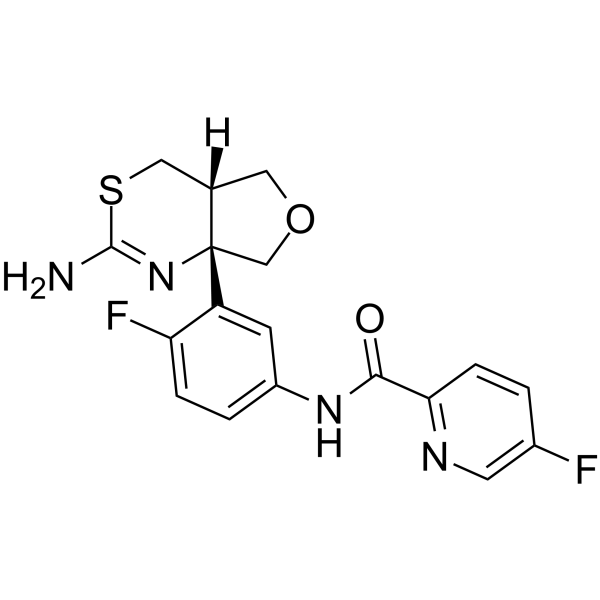
LY2886721 is a potent, selective and orally active beta-site amyloid precursor protein cleaving enzyme 1 (BACE1) inhibitor with an IC50 of 20.3 nM for recombinant human BACE1. LY2886721 is selectivity against cathepsin D, pepsin, and renin, but lacking selectivity against BACE2 (IC50 of 10.2 nM). LY2886721 can across blood-brain barrier and has the potential for Alzheimer's disease treatment .
|
-
-
- HY-12765
-
|
E-3174; EXP-3174
|
Drug Metabolite
Angiotensin Receptor
|
Cardiovascular Disease
|
|
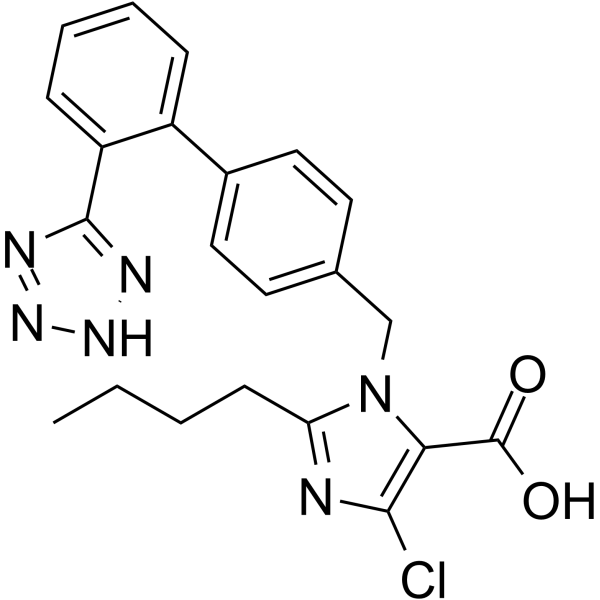
Losartan Carboxylic Acid (E-3174), an active carboxylic acid metabolite of Losartan, is an angiotensin II receptor type 1 (AT1) antagonist. The Ki values are 0.97, 0.57, 0.67 nM for rat AT1B/AT1A and human AT1, respectively. Losartan Carboxylic Acid blocks the angiotensin II-induced responses in vascular smoothmuscle cells (VSMC). Losartan Carboxylic Acid elevates plasma renin activities and reduces mean arterial pressure .
|
-
-
- HY-13948B
-
|
Angiotensin II TFA; Ang II TFA; DRVYIHPF TFA
|
Angiotensin Receptor
Apoptosis
|
Cardiovascular Disease
Metabolic Disease
Cancer
|
|
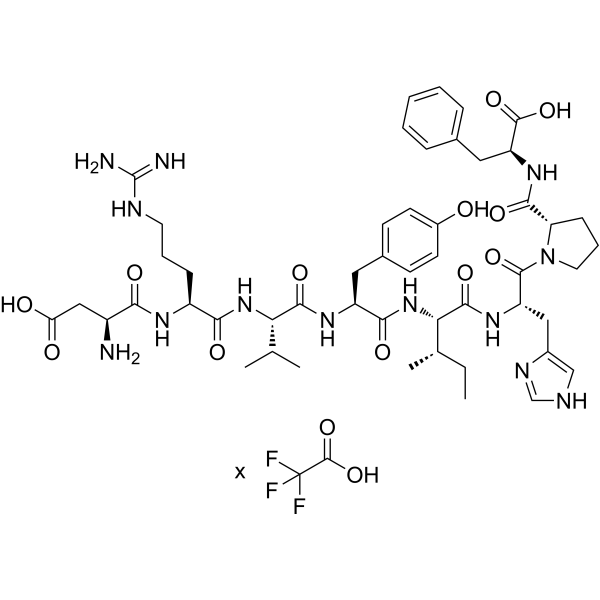
Angiotensin II human (Angiotensin II) TFA is a vasoconstrictor and a major bioactive peptide of the renin/angiotensin system. Angiotensin II human TFA plays a central role in regulating human blood pressure, which is mainly mediated by interactions between Angiotensin II and the G-protein-coupled receptors (GPCRs) Angiotensin II type 1 receptor (AT1R) and Angiotensin II type 2 receptor (AT2R). Angiotensin II human TFA stimulates sympathetic nervous stimulation, increases aldosterone biosynthesis and renal actions. Angiotensin II human TFA induces growth of vascular smooth muscle cells, increases collagen type I and III synthesis in fibroblasts, leading to thickening of the vascular wall and myocardium, and fibrosis. Angiotensin II human TFA also induces apoptosis. Angiotensin II human TFA induces capillary formation from endothelial cells via the LOX-1 dependent redox-sensitive pathway .
|
-
-
- HY-B0384
-
|
|
Angiotensin-converting Enzyme (ACE)
|
Cardiovascular Disease
|
|
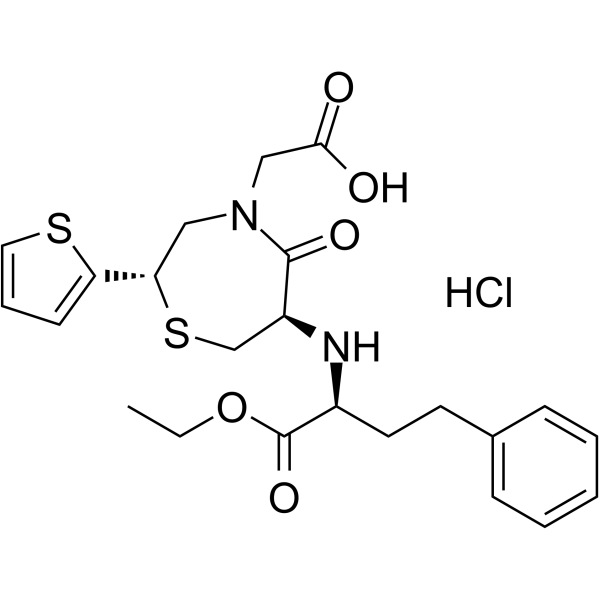
Temocapril hydrochloride is an orally active angiotensin-converting enzyme (ACE) inhibitor. Temocapril hydrochloride can be used for the research of hypertension, congestive heart failure, acute myocardial infarction, insulin resistance, and renal diseases .
|
-
-
- HY-12765S
-
|
E-3174 d4; EXP-3174 d4
|
Angiotensin Receptor
|
Cardiovascular Disease
Endocrinology
Cancer
|
|
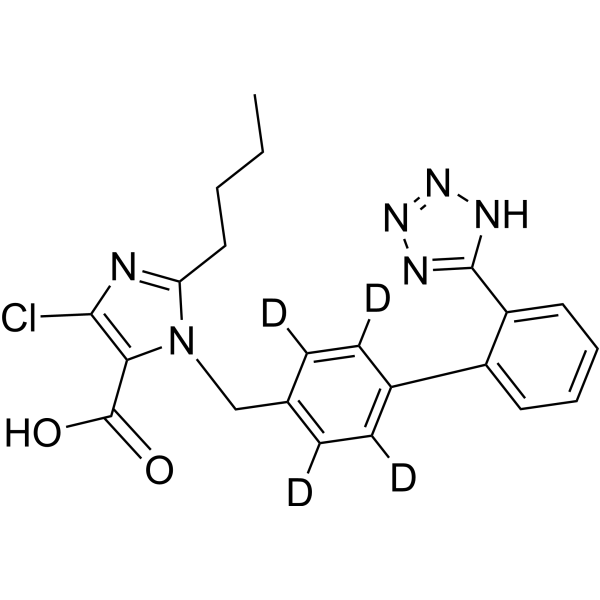
Losartan-d4 carboxylic acid (E-3174-d4) is the deuterium labeled Losartan Carboxylic Acid (HY-12765). Losartan Carboxylic Acid (E-3174), an active carboxylic acid metabolite of Losartan, is an angiotensin II receptor type 1 (AT1) antagonist. The Ki values are 0.97, 0.57, 0.67 nM for rat AT1B/AT1A and human AT1, respectively. Losartan Carboxylic Acid blocks the angiotensin II-induced responses in vascular smoothmuscle cells (VSMC). Losartan Carboxylic Acid elevates plasma renin activities and reduces mean arterial pressure.
|
-
-
- HY-100713
-
|
|
Angiotensin-converting Enzyme (ACE)
|
Cardiovascular Disease
|
|
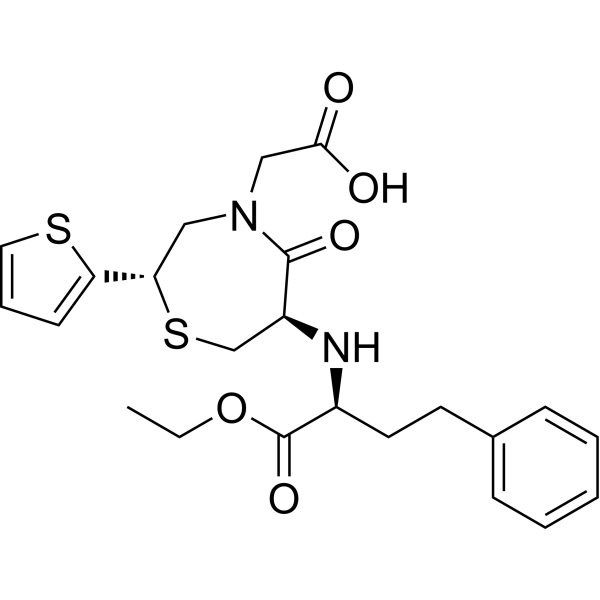
Temocapril is an orally active angiotensin-converting enzyme (ACE) inhibitor. Temocapril can be used for the research of hypertension, congestive heart failure, acute myocardial infarction, insulin resistance, and renal diseases .
|
-
-
- HY-P1486
-
|
|
Endogenous Metabolite
|
Cardiovascular Disease
|
|
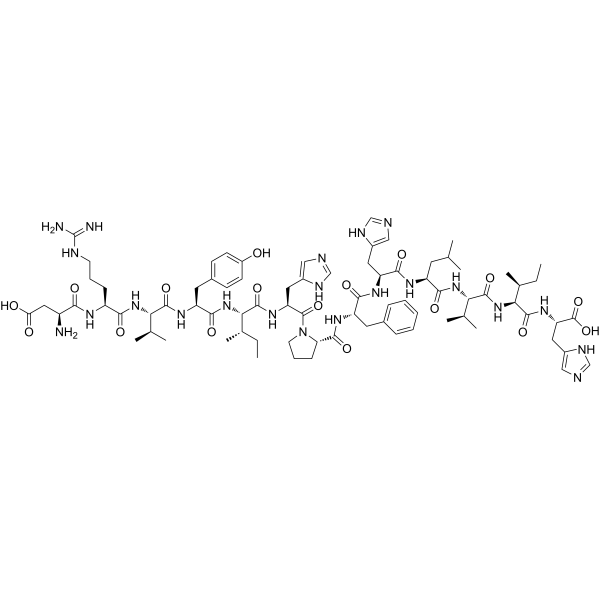
Angiotensinogen (1-14), human is a fragment of the renin substrate angiotensinogen. Angiotensinogen is naturally occurring substrate for renin and a precursor for all angiotensin peptides .
|
-
-
- HY-151111
-
|
|
Renin
|
Cardiovascular Disease
|
|
SPH3127 (DRI 18) is a novel, highly potent, and orally active direct renin inhibitor (recombinant human-renin IC50=0.4 nM, human plasma renin activity IC50=0.45 nM). SPH3127 shows antihypertensive effect and can be used in essential hypertension research .
|
-
-
- HY-P5123A
-
|
|
Angiotensin Receptor
|
Others
|
|
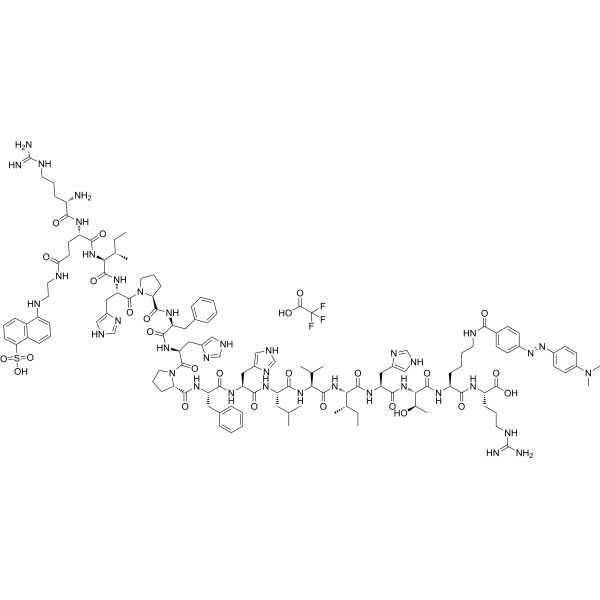
Arg-Glu(edans)-Ile-His-Pro-Phe-His-Pro-Phe-His-Leu-Val-Ile-His-Thr-Lys(dabcyl)-Ar TFA is a fluorogenic renin substrate based on the N-terminal tetradecapeptide sequence of human angiotensinogen (hTDP) .
|
-
-
- HY-13948BS
-
|
Angiotensin II-13C6,15N TFA; Ang II-13C6,15N TFA; DRVY(I-13C6,15N)HPF TFA
|
Isotope-Labeled Compounds
|
Cancer
|
|
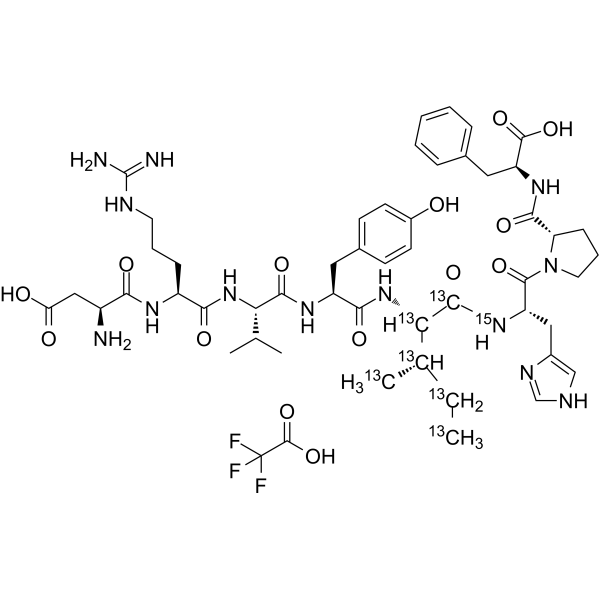
Angiotensin II human- 13C6, 15N TFA (Ang II- 13C6, 15N TFA) is 13C- and 15N-labeled Angiotensin II human (TFA) (HY-13948B). Angiotensin II human (Angiotensin II) TFA is a vasoconstrictor and a major bioactive peptide of the renin/angiotensin system. Angiotensin II human TFA plays a central role in regulating human blood pressure, which is mainly mediated by interactions between Angiotensin II and the G-protein-coupled receptors (GPCRs) Angiotensin II type 1 receptor (AT1R) and Angiotensin II type 2 receptor (AT2R). Angiotensin II human TFA stimulates sympathetic nervous stimulation, increases aldosterone biosynthesis and renal actions .
|
-
-
- HY-P5939
-
|
|
Angiotensin Receptor
|
Cardiovascular Disease
|
|
Angiotensinogen (1-13) (human) is a fragment of the renin substrate angiotensinogen. Angiotensinogen is naturally occurring substrate for renin and a precursor for all angiotensin peptides .
|
-
-
- HY-105205
-
|
CP-80,794
|
Renin
|
Cardiovascular Disease
|
|
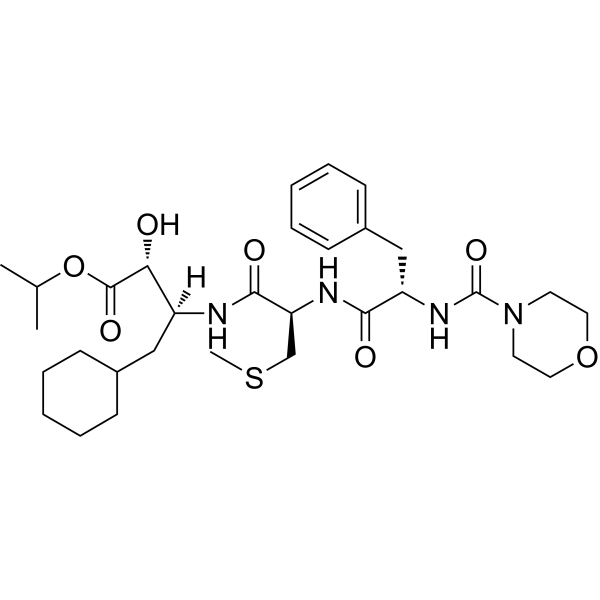
Terlakiren (CP-80,794) is an orally active inhibitor of renin. Terlakiren inhibits the efficacy of human renin with an IC50 value of 0.7 nM. Terlakiren has potential applications in hypertension .
|
-
-
- HY-A0184
-
|
Ro 42-5892; Ro 42-5892/001
|
Renin
|
Cardiovascular Disease
|
|
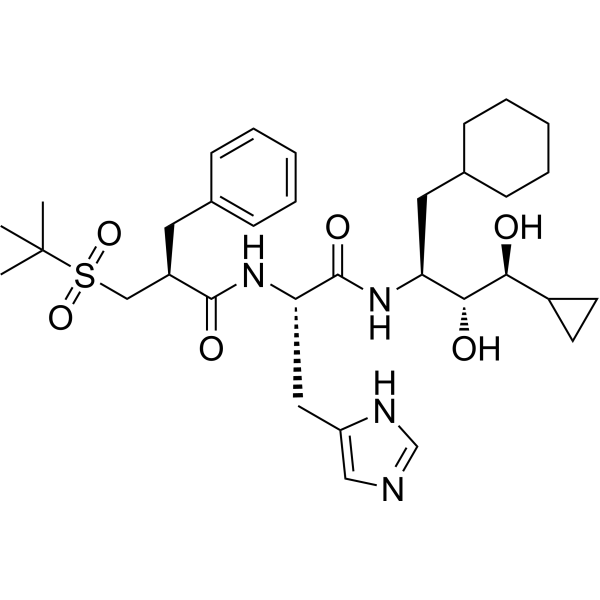
Remikiren (Ro 42-5892) is an orally active and highly specific renin inhibitor. Remikiren specifically inhibits human reninand human plasma renin with IC50 values of 0.7 and 0.8 nM, respectively. Remikiren also reduces mean arterial blood pressure in sodium-depleted marmosets and squirrel monkeys. Remikiren can be used in study of hypertension .
|
-
-
- HY-105503
-
|
|
Renin
|
Cardiovascular Disease
|
|
SQ 33800 is a potent inhibitor of human renin with an IC50 of 0.35 nM. SQ 33800 can be used for the research of cardiovascular disease .
|
-
-
- HY-177329
-
|
|
Renin
|
Cardiovascular Disease
|
|
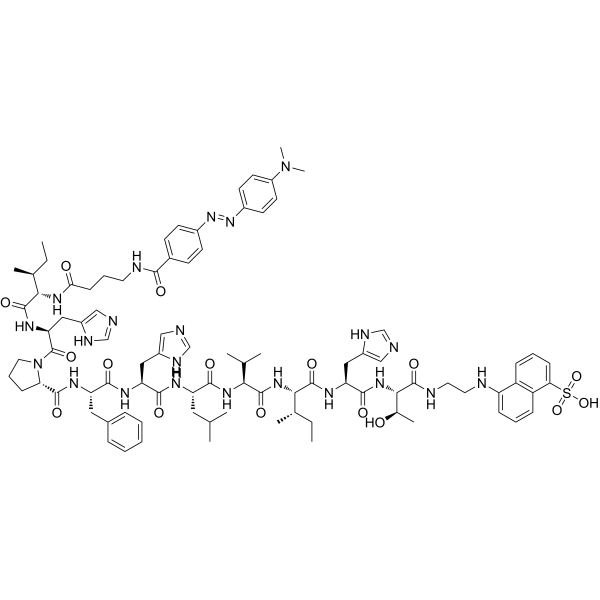
U80215, a dansylated peptide, is a competitive human renin inhibitor with the IC50 of 2.3 μM. U80215 shows excitation and emission maxima at 340 and 530 nm .
|
-
-
- HY-P2492
-
|
|
Angiotensin Receptor
|
Metabolic Disease
|
|
Renin FRET Substrate I is a substrate of human renin. Renin FRET Substrate I is designed to incorporate the renin cleavage site that occurs in the N-terminal peptide of human angiotensinogen .
|
-
-
- HY-P1486A
-
|
|
Endogenous Metabolite
|
Cardiovascular Disease
|
|
Angiotensinogen (1-14), human TFA is a fragment of the renin substrate angiotensinogen. Angiotensinogen is naturally occurring substrate for renin and a precursor for all angiotensin peptides .
|
-
-
- HY-P4891
-
|
|
Angiotensin Receptor
|
Others
|
|
Angiotensin (1-12) (human) is an endogenous substrate for the production of biologically active angiotensin peptides by a non-renin-dependent mechanism .
|
-
-
- HY-P5123
-
|
|
Angiotensin Receptor
|
Others
|
|
Arg-Glu(edans)-Ile-His-Pro-Phe-His-Pro-Phe-His-Leu-Val-Ile-His-Thr-Lys(dabcyl)-Ar is a fluorogenic renin substrate based on the N-terminal tetradecapeptide sequence of human angiotensinogen (hTDP) .
|
-
-
- HY-125625
-
|
|
Renin
|
Cardiovascular Disease
|
|
ES 6864 is an orally active, competitive inhibitor for human renin, with an IC50 of 6.9 nM and a Ki of 7.3 nM. ES 6864 exhibits high species-specific and enzyme-specific properties. ES 6864 exhibits metabolic stability in rat tissue homogenates. ES 6864 reduces blood pressure in rats and sodium-depleted awake marmosets .
|
-
-
- HY-13240A
-
|
|
Beta-secretase
|
Neurological Disease
|
|
LY2886721 hydrochloride is a potent, selective and orally active beta-site amyloid precursor protein cleaving enzyme 1 (BACE1) inhibitor with an IC50 of 20.3 nM for recombinant human BACE1. LY2886721 hydrochloride is selectivity against cathepsin D, pepsin, and renin, but lacking selectivity against BACE2 (IC50 of 10.2 nM). LY2886721 hydrochloride can across blood-brain barrier and has the potential for Alzheimer's disease treatment .
|
-
-
- HY-76652
-
|
|
Renin
|
Cardiovascular Disease
Inflammation/Immunology
|
|
VTP-27999 Hydrochloride is an orally active renin inhibitor. VTP-27999 Hydrochloride functionally inhibits renin and acid-activated prorenin, suppresses plasma renin activity and modulates plasma and urinary aldosterone levels. VTP-27999 Hydrochloride reduces mean arterial blood pressure, induces plasma renin concentration increases, decreases plasma angiotensin II levels and enhances renin immunoreactivity. VTP-27999 (Hydrochloride) can be used for the research of hypertension and chronic renal disease .
|
-
-
- HY-183978
-
|
|
Renin
|
Cardiovascular Disease
|
|
KRI-1314 is an orally active human renin inhibitor with selectivity for primate renin over non-primate renin. KRI-1314 competitively inhibits the binding of recombinant human renin to its substrate, reduces plasma renin activity, lowers blood pressure, and exhibits high stability in tissue homogenates. KRI-1314 is applicable to research on renin-dependent hypertension and hypertension-related studies .
|
-
-
- HY-12765S1
-
|
|
Isotope-Labeled Compounds
Angiotensin Receptor
|
Cardiovascular Disease
|
|
Losartan carboxylic acid-d4 (hydrochloride) is deuterium labeled Losartan Carboxylic Acid. Losartan Carboxylic Acid (E-3174), an active carboxylic acid metabolite of Losartan, is an angiotensin II receptor type 1 (AT1) antagonist. The Ki values are 0.97, 0.57, 0.67 nM for rat AT1B/AT1A and human AT1, respectively. Losartan Carboxylic Acid blocks the angiotensin II-induced responses in vascular smoothmuscle cells (VSMC). Losartan Carboxylic Acid elevates plasma renin activities and reduces mean arterial pressure .
|
-
-
- HY-12765R
-
|
E-3174 (Standard); EXP-3174 (Standard)
|
Drug Metabolite
Reference Standards
Angiotensin Receptor
|
Cardiovascular Disease
|
|
Losartan Carboxylic Acid (Standard) is the analytical standard of Losartan Carboxylic Acid. This product is intended for research and analytical applications. Losartan Carboxylic Acid (E-3174), an active carboxylic acid metabolite of Losartan, is an angiotensin II receptor type 1 (AT1) antagonist. The Ki values are 0.97, 0.57, 0.67 nM for rat AT1B/AT1A and human AT1, respectively. Losartan Carboxylic Acid blocks the angiotensin II-induced responses in vascular smoothmuscle cells (VSMC). Losartan Carboxylic Acid elevates plasma renin activities and reduces mean arterial pressure [4].
|
-
-
- HY-100713R
-
|
|
Reference Standards
Angiotensin-converting Enzyme (ACE)
|
Cardiovascular Disease
|
|
Temocapril (Standard) is the analytical standard of Temocapril. This product is intended for research and analytical applications. Temocapril is an orally active angiotensin-converting enzyme (ACE) inhibitor. Temocapril can be used for the research of hypertension, congestive heart failure, acute myocardial infarction, insulin resistance, and renal diseases .
|
-
-
- HY-153515
-
|
|
Renin
|
Cardiovascular Disease
|
|
Renin IN-2 (compound 27) is a human renin inhibitor with an IC50 of 0.059 μM. Renin IN-2 exhibits oral efficacy. Renin IN-2 can be used in the research of hypertension .
|
-
-
- HY-182301
-
|
|
Renin
|
Cardiovascular Disease
|
|
CP 71362 is a renin inhibitor, a highly potent substrate-analog transition state mimic with antihypertensive properties. CP 71362 exhibits significant inhibitory activity against plasma renin from rats, dogs, and humans (IC50 values are 3 nM, 0.0033 nM, and 20 nM, respectively). CP 71362 reduces the mean arterial pressure of anesthetized and conscious sodium-depleted animals in a dose-dependent manner, and has pharmacokinetic characteristics of rapid elimination and short duration of action. CP 71362 can be used in research related to hypertension and congestive heart failure .
|
-
-
- HY-P1609
-
|
|
Renin
Enteropeptidase
|
Cardiovascular Disease
|
|
CP-69799 is an azahomostatine-containing oligopeptide transition-state analogue inhibitor with a hog renin IC50 of 6e-9 M, human plasma renin IC50 of 3e-7 M and Ki of 0.310 μM, and endothiapepsin Ki of 0.27 μM. CP-69799 binds endothiapepsin’s active site cleft in extended conformation, fills S4 to S3' pockets, displaces native solvent molecules, induces domain rotation, and reduces thermal mobility of endothiapepsin’s flap and helix regions. CP-69799 acts as a transition-state analogue inhibitor of hog renin and human plasma renin. CP-69799 contains a polar lysine residue at the P2' position, with a nitrogen atom replacing the P1' Cα atom of the hydroxyethylene dipeptide isostere. CP-69799 can be used for the research of hypertension .
|
-
-
- HY-117641
-
|
|
Ser/Thr Protease
|
Cardiovascular Disease
|
|
CP 81282 is a tripeptide aspartic protease inhibitor, with an IC50 of 1 nM against human renin and an IC50 of 11 nM against endopeptidase. CP 81282 is applicable to the research of hypertension .
|
-
-
- HY-B0384R
-
|
|
Angiotensin-converting Enzyme (ACE)
Reference Standards
|
Cardiovascular Disease
|
|
Temocapril (hydrochloride) (Standard) is the analytical standard of Temocapril (hydrochloride). This product is intended for research and analytical applications. Temocapril hydrochloride is an orally active angiotensin-converting enzyme (ACE) inhibitor. Temocapril hydrochloride can be used for the research of hypertension, congestive heart failure, acute myocardial infarction, insulin resistance, and renal diseases .
|
-
| Cat. No. |
Product Name |
Target |
Research Area |
-
- HY-13948
-
|
Angiotensin II; Ang II; DRVYIHPF
|
Angiotensin Receptor
Apoptosis
|
Cardiovascular Disease
Infection
Metabolic Disease
Inflammation/Immunology
Cancer
|
|
Angiotensin II (Angiotensin II) is a vasoconstrictor and a major bioactive peptide of the renin/angiotensin system. Angiotensin II human plays a central role in regulating human blood pressure, which is mainly mediated by interactions between Angiotensin II and the G-protein-coupled receptors (GPCRs) Angiotensin II type 1 receptor (AT1R) and Angiotensin II type 2 receptor (AT2R). Angiotensin II human stimulates sympathetic nervous stimulation, increases aldosterone biosynthesis and renal actions. Angiotensin II human induces growth of vascular smooth muscle cells, increases collagen type I and III synthesis in fibroblasts, leading to thickening of the vascular wall and myocardium, and fibrosis. Angiotensin II human also induces apoptosis. Angiotensin II induces capillary formation from endothelial cells via the LOX-1 dependent redox-sensitive pathway .
|
-
- HY-13948A
-
|
Angiotensin II acetate; Ang II acetate; DRVYIHPF acetate
|
Angiotensin Receptor
Apoptosis
|
Cardiovascular Disease
Infection
Metabolic Disease
Inflammation/Immunology
Cancer
|
|
Angiotensin II human (Angiotensin II) acetate is a vasoconstrictor and a major bioactive peptide of the renin/angiotensin system. Angiotensin II human acetate plays a central role in regulating human blood pressure, which is mainly mediated by interactions between Angiotensin II and the G-protein-coupled receptors (GPCRs) Angiotensin II type 1 receptor (AT1R) and Angiotensin II type 2 receptor (AT2R). Angiotensin II human acetate stimulates sympathetic nervous stimulation, increases aldosterone biosynthesis and renal actions. Angiotensin II human acetate induces growth of vascular smooth muscle cells, increases collagen type I and III synthesis in fibroblasts, leading to thickening of the vascular wall and myocardium, and fibrosis. Angiotensin II human acetate also induces apoptosis. Angiotensin II human acetate induces capillary formation from endothelial cells via the LOX-1 dependent redox-sensitive pathway .
|
-
- HY-13948B
-
|
Angiotensin II TFA; Ang II TFA; DRVYIHPF TFA
|
Angiotensin Receptor
Apoptosis
|
Cardiovascular Disease
Metabolic Disease
Cancer
|
|
Angiotensin II human (Angiotensin II) TFA is a vasoconstrictor and a major bioactive peptide of the renin/angiotensin system. Angiotensin II human TFA plays a central role in regulating human blood pressure, which is mainly mediated by interactions between Angiotensin II and the G-protein-coupled receptors (GPCRs) Angiotensin II type 1 receptor (AT1R) and Angiotensin II type 2 receptor (AT2R). Angiotensin II human TFA stimulates sympathetic nervous stimulation, increases aldosterone biosynthesis and renal actions. Angiotensin II human TFA induces growth of vascular smooth muscle cells, increases collagen type I and III synthesis in fibroblasts, leading to thickening of the vascular wall and myocardium, and fibrosis. Angiotensin II human TFA also induces apoptosis. Angiotensin II human TFA induces capillary formation from endothelial cells via the LOX-1 dependent redox-sensitive pathway .
|
-
- HY-P1486
-
|
|
Endogenous Metabolite
|
Cardiovascular Disease
|
|
Angiotensinogen (1-14), human is a fragment of the renin substrate angiotensinogen. Angiotensinogen is naturally occurring substrate for renin and a precursor for all angiotensin peptides .
|
-
- HY-P5123A
-
|
|
Angiotensin Receptor
|
Others
|
|
Arg-Glu(edans)-Ile-His-Pro-Phe-His-Pro-Phe-His-Leu-Val-Ile-His-Thr-Lys(dabcyl)-Ar TFA is a fluorogenic renin substrate based on the N-terminal tetradecapeptide sequence of human angiotensinogen (hTDP) .
|
-
- HY-13948BS
-
|
Angiotensin II-13C6,15N TFA; Ang II-13C6,15N TFA; DRVY(I-13C6,15N)HPF TFA
|
Isotope-Labeled Compounds
|
Cancer
|
|
Angiotensin II human- 13C6, 15N TFA (Ang II- 13C6, 15N TFA) is 13C- and 15N-labeled Angiotensin II human (TFA) (HY-13948B). Angiotensin II human (Angiotensin II) TFA is a vasoconstrictor and a major bioactive peptide of the renin/angiotensin system. Angiotensin II human TFA plays a central role in regulating human blood pressure, which is mainly mediated by interactions between Angiotensin II and the G-protein-coupled receptors (GPCRs) Angiotensin II type 1 receptor (AT1R) and Angiotensin II type 2 receptor (AT2R). Angiotensin II human TFA stimulates sympathetic nervous stimulation, increases aldosterone biosynthesis and renal actions .
|
-
- HY-P5939
-
|
|
Angiotensin Receptor
|
Cardiovascular Disease
|
|
Angiotensinogen (1-13) (human) is a fragment of the renin substrate angiotensinogen. Angiotensinogen is naturally occurring substrate for renin and a precursor for all angiotensin peptides .
|
-
- HY-P2492
-
|
|
Angiotensin Receptor
|
Metabolic Disease
|
|
Renin FRET Substrate I is a substrate of human renin. Renin FRET Substrate I is designed to incorporate the renin cleavage site that occurs in the N-terminal peptide of human angiotensinogen .
|
-
- HY-P1486A
-
|
|
Endogenous Metabolite
|
Cardiovascular Disease
|
|
Angiotensinogen (1-14), human TFA is a fragment of the renin substrate angiotensinogen. Angiotensinogen is naturally occurring substrate for renin and a precursor for all angiotensin peptides .
|
-
- HY-P4891
-
|
|
Angiotensin Receptor
|
Others
|
|
Angiotensin (1-12) (human) is an endogenous substrate for the production of biologically active angiotensin peptides by a non-renin-dependent mechanism .
|
-
- HY-P5123
-
|
|
Angiotensin Receptor
|
Others
|
|
Arg-Glu(edans)-Ile-His-Pro-Phe-His-Pro-Phe-His-Leu-Val-Ile-His-Thr-Lys(dabcyl)-Ar is a fluorogenic renin substrate based on the N-terminal tetradecapeptide sequence of human angiotensinogen (hTDP) .
|
-
- HY-P1609
-
|
|
Renin
Enteropeptidase
|
Cardiovascular Disease
|
|
CP-69799 is an azahomostatine-containing oligopeptide transition-state analogue inhibitor with a hog renin IC50 of 6e-9 M, human plasma renin IC50 of 3e-7 M and Ki of 0.310 μM, and endothiapepsin Ki of 0.27 μM. CP-69799 binds endothiapepsin’s active site cleft in extended conformation, fills S4 to S3' pockets, displaces native solvent molecules, induces domain rotation, and reduces thermal mobility of endothiapepsin’s flap and helix regions. CP-69799 acts as a transition-state analogue inhibitor of hog renin and human plasma renin. CP-69799 contains a polar lysine residue at the P2' position, with a nitrogen atom replacing the P1' Cα atom of the hydroxyethylene dipeptide isostere. CP-69799 can be used for the research of hypertension .
|
| Cat. No. |
Product Name |
Category |
Target |
Chemical Structure |
-
- HY-13948
-
|
Angiotensin II; Ang II; DRVYIHPF
|
Structural Classification
Natural Products
Classification of Application Fields
Endogenous metabolite
Disease Research Fields
Endocrinology
Source Classification
Cancer
|
Angiotensin Receptor
Apoptosis
|
|
Angiotensin II (Angiotensin II) is a vasoconstrictor and a major bioactive peptide of the renin/angiotensin system. Angiotensin II human plays a central role in regulating human blood pressure, which is mainly mediated by interactions between Angiotensin II and the G-protein-coupled receptors (GPCRs) Angiotensin II type 1 receptor (AT1R) and Angiotensin II type 2 receptor (AT2R). Angiotensin II human stimulates sympathetic nervous stimulation, increases aldosterone biosynthesis and renal actions. Angiotensin II human induces growth of vascular smooth muscle cells, increases collagen type I and III synthesis in fibroblasts, leading to thickening of the vascular wall and myocardium, and fibrosis. Angiotensin II human also induces apoptosis. Angiotensin II induces capillary formation from endothelial cells via the LOX-1 dependent redox-sensitive pathway .
|
-
| Cat. No. |
Compare |
Product Name |
Species |
Source |
Image |
Compare Products
|
| Products |
|
| Cat. No. |
|
| Species |
|
| Source |
|
| Tag |
|
| Accession |
|
| Gene ID |
|
| Molecular Weight |
|
| Purity |
|
| Endotoxin Level |
|
| Biological Activity |
|
| Appearance |
|
| Formulation |
|
| Storage & Stability |
|
| Shipping |
|
| Free Sample |
Yes
No
|
| Size |
* This product has been "discontinued".
Optimized version of product available:
|
| Cat. No. |
Product Name |
Chemical Structure |
-
- HY-12765S
-
|
|
|
Losartan-d4 carboxylic acid (E-3174-d4) is the deuterium labeled Losartan Carboxylic Acid (HY-12765). Losartan Carboxylic Acid (E-3174), an active carboxylic acid metabolite of Losartan, is an angiotensin II receptor type 1 (AT1) antagonist. The Ki values are 0.97, 0.57, 0.67 nM for rat AT1B/AT1A and human AT1, respectively. Losartan Carboxylic Acid blocks the angiotensin II-induced responses in vascular smoothmuscle cells (VSMC). Losartan Carboxylic Acid elevates plasma renin activities and reduces mean arterial pressure.
|
-
-
- HY-13948BS
-
|
|
|
Angiotensin II human- 13C6, 15N TFA (Ang II- 13C6, 15N TFA) is 13C- and 15N-labeled Angiotensin II human (TFA) (HY-13948B). Angiotensin II human (Angiotensin II) TFA is a vasoconstrictor and a major bioactive peptide of the renin/angiotensin system. Angiotensin II human TFA plays a central role in regulating human blood pressure, which is mainly mediated by interactions between Angiotensin II and the G-protein-coupled receptors (GPCRs) Angiotensin II type 1 receptor (AT1R) and Angiotensin II type 2 receptor (AT2R). Angiotensin II human TFA stimulates sympathetic nervous stimulation, increases aldosterone biosynthesis and renal actions .
|
-
-
- HY-12765S1
-
|
|
|
Losartan carboxylic acid-d4 (hydrochloride) is deuterium labeled Losartan Carboxylic Acid. Losartan Carboxylic Acid (E-3174), an active carboxylic acid metabolite of Losartan, is an angiotensin II receptor type 1 (AT1) antagonist. The Ki values are 0.97, 0.57, 0.67 nM for rat AT1B/AT1A and human AT1, respectively. Losartan Carboxylic Acid blocks the angiotensin II-induced responses in vascular smoothmuscle cells (VSMC). Losartan Carboxylic Acid elevates plasma renin activities and reduces mean arterial pressure .
|
-
Your information is safe with us. * Required Fields.
Inquiry Information
- Product Name:
- Cat. No.:
- Quantity:
- MCE Japan Authorized Agent:

