1. Search Result
Search Result
Results for "

indigo

" in MedChemExpress (MCE) Product Catalog:

16

Inhibitors & Agonists

7

Fluorescent Dyes

6

Natural
Products

Cat. No. Product Name Target Research Areas Chemical Structure
  • HY-N0117
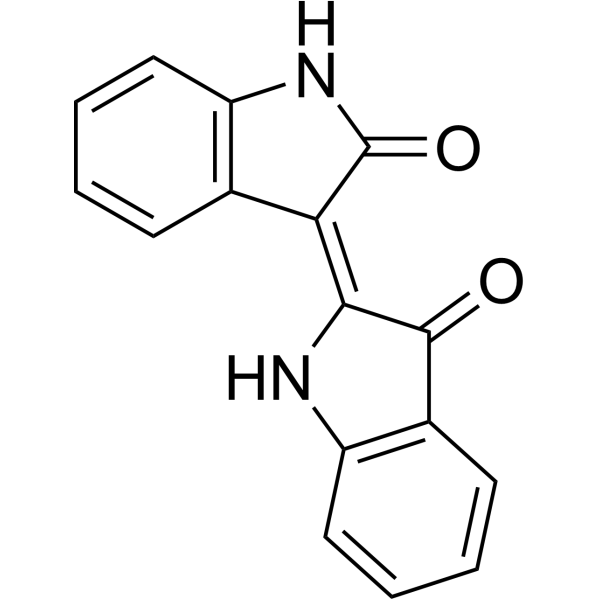
    Indirubin
    Maximum Cited Publications
    12 Publications Verification

    Couroupitine B; indigo red; indigopurpurin

    Apoptosis Cancer
    Indirubin (Couroupitine B) is a bis-indole alkaloid and has emarkable anticancer activity against chronic myelocytic leukemia .
    Indirubin
  • HY-W040226

    indigotindisulfonate sodium; C.I.Acid Blue 74

    Environmental Pollutants Fluorescent Dye Cancer
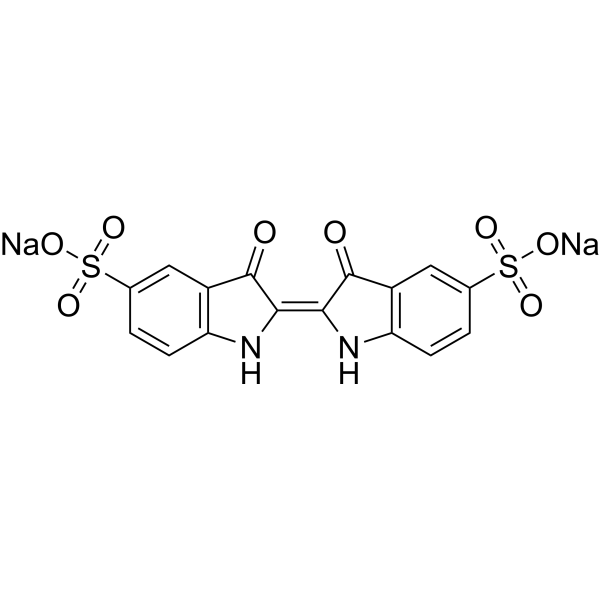
    Indigo carmine is an efficient reagent for the determination of ozone by chemlluminescence (CL) .
    Indigo carmine
  • HY-N0335
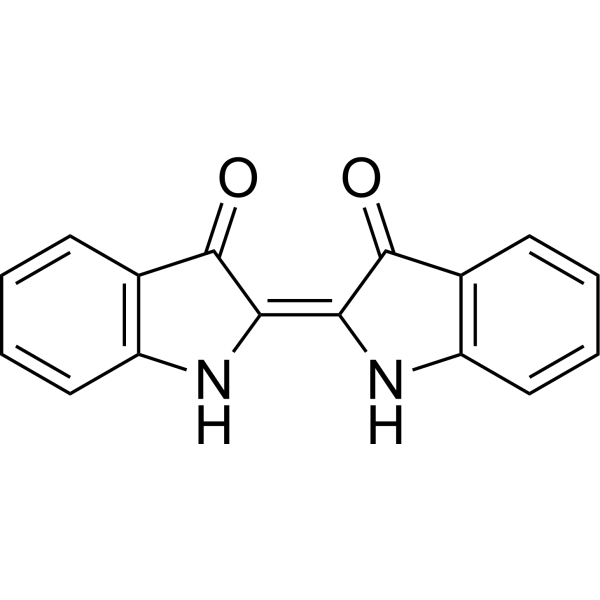
    Indigo
    1 Publications Verification

    Fluorescent Dye Others
    Indigo is a blue dye. Indigo stains cellulose fibers such as cotton. Indigo stains food or biological samples to visualize and quantify the uptake or distribution of substances by organisms .
    Indigo
  • HY-N6607
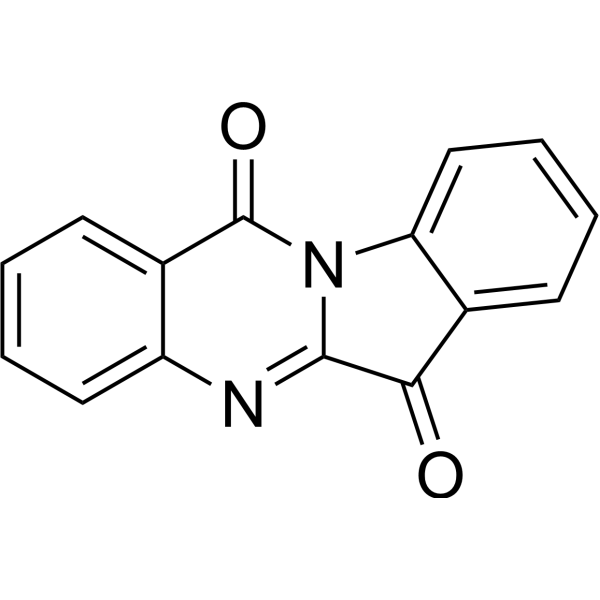
    Tryptanthrin
    5+ Cited Publications

    Leukotriene Receptor NO Synthase NF-κB COX TNF Receptor Interleukin Related Inflammation/Immunology Cancer
    Tryptanthrin is an indole quinazoline that could be an alkaloid from indigo-bearing plants. Tryptanthrin is a potent and orally active cellular Leukotriene (LT) biosynthesis inhibitor. Tryptanthrin has anticancer activity. Tryptanthrin suppresses the expression levels of NOS1, COX-2, and NF-κB and regulates the expression levels of IL-2, IL-10, and TNF-α .
    Tryptanthrin
  • HY-107869

    Fluorescent Dye Cancer
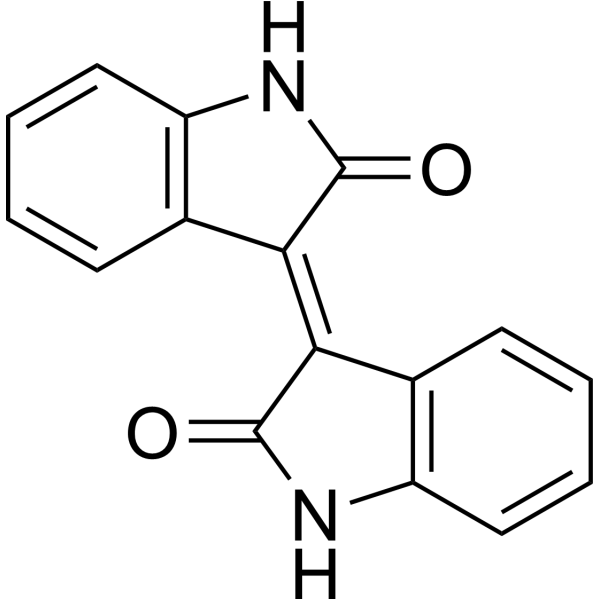
    Isoindigo acts as the acceptor unit in donor-acceptor (D-A) conjugated polymers and belongs to the indigo dye family. Isoindigo contains two lactam rings and exhibits strong electron-withdrawing properties. Isoindigo can be used in dyeing and pigment preparation. Isoindigo shows high mobility and excellent environmental stability in field-effect transistors (FETs). Isoindigo possesses the activity to inhibit tumor cell proliferation and has certain anti-tumor activity .
    Isoindigo
  • HY-N0117A

    (Z)-Couroupitine B; (Z)-indigo red; (Z)-indigopurpurin

    Apoptosis Cancer
    (Z)-Indirubin is an isomer of Indirubin (HY-N0117). Indirubin is a bis-indole alkaloid and has emarkable anticancer activity against chronic myelocytic leukemia .
    (Z)-Indirubin
  • HY-N0117AR

    (Z)-Couroupitine B (Standard); (Z)-indigo red (Standard); (Z)-indigopurpurin (Standard)

    Reference Standards Apoptosis Cancer
    (Z)-Indirubin (Standard) is the analytical standard of (Z)-Indirubin (HY-N0117A). (Z)-Indirubin is an isomer of Indirubin (HY-N0117). Indirubin is a bisindole alkaloid with significant anticancer activity against chronic myeloid leukemia.
    (Z)-Indirubin (Standard)
  • HY-N6607R

    Reference Standards Leukotriene Receptor NO Synthase NF-κB COX TNF Receptor Interleukin Related Inflammation/Immunology Cancer
    Tryptanthrin (Standard) is the analytical standard of Tryptanthrin. This product is intended for research and analytical applications. Tryptanthrin is an indole quinazoline that could be an alkaloid from indigo-bearing plants. Tryptanthrin is a potent and orally active cellular Leukotriene (LT) biosynthesis inhibitor. Tryptanthrin has anticancer activity. Tryptanthrin suppresses the expression levels of NOS1, COX-2, and NF-κB and regulates the expression levels of IL-2, IL-10, and TNF-α .
    Tryptanthrin (Standard)
  • HY-D1195

    Fluorescent Dye Others
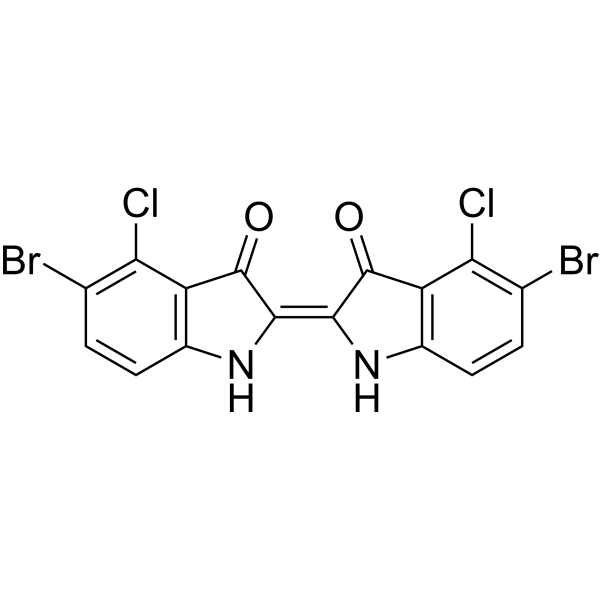
    Vat Blue 2, a indigo (HY-N0335) derivative, is a dark blue 5,5'-dibromo-4,4'-dichloroindigo dye .
    Vat Blue 2
  • HY-N0117R

    Couroupitine B (Standard); indigo red (Standard); indigopurpurin (Standard)

    Reference Standards Apoptosis Cancer
    Indirubin (Standard) is the analytical standard of Indirubin. This product is intended for research and analytical applications. Indirubin (Couroupitine B) is a bis-indole alkaloid and has emarkable anticancer activity against chronic myelocytic leukemia .
    Indirubin (Standard)
  • HY-W040226R

    indigotindisulfonate sodium (Standard); C.I.Acid Blue 74 (Standard)

    Fluorescent Dye Reference Standards Cancer
    Indigo carmine (Standard) is the analytical standard of Indigo carmine. This product is intended for research and analytical applications. Indigo carmine is an efficient reagent for the determination of ozone by chemlluminescence (CL) .
    Indigo carmine (Standard)
  • HY-W009458

    3-IP sodium

    Phosphatase Metabolic Disease
    3-Indoxyl phosphate (3-IP) is a chromogenic and electrochemical substrate for alkaline phosphatase. Upon enzymatic cleavage by alkaline phosphatase, 3-indoxyl is released and subsequently oxidized to produce water-insoluble indigo, which can be quantified by colorimetric detection at 660 nm as a measure of alkaline phosphatase activity. 3-Indoxyl phosphate can also be converted to water-soluble leucoindigo by reduction of indigo in alkaline solution by sodium dithionite, which can be quantified by colorimetric detection at 415 nm or voltametric detection as a measure of alkaline phosphatase activity.2 3-Indoxyl phosphate has been used in ELISAs.
    3-Indoxyl phosphate sodium
  • HY-W154295

    Fluorescent Dye Others
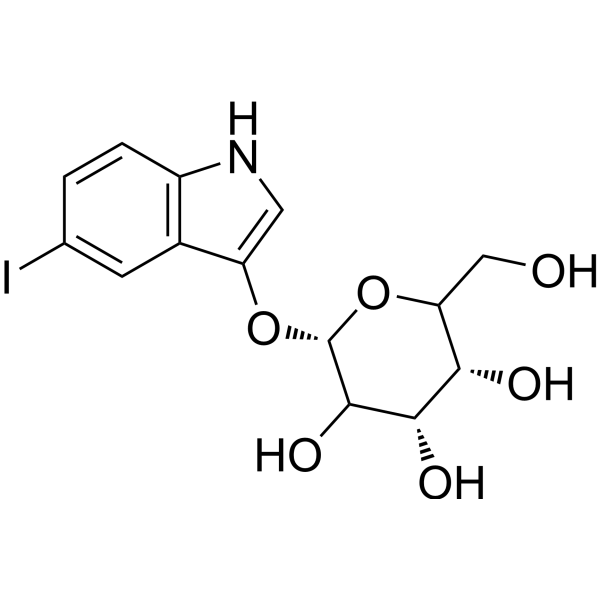
    Purple-β-D-Gal is a chromogenic β-galactosidase substrate. Intracellular enzymatic hydrolysis of Purple-β-D-Gal generates free indoxyl molecules, which undergo in situ oxidation and subsequent dimerization to produce chromogenic, water-insoluble, indigo precipitates. Purple-β-D-Gal can be used for the detection of β-galactosidase activity .
    Purple-β-D-Gal
  • HY-W011422

    NSC 528

    Fluorescent Dye Others
    2,6-Dibromo-4-(chloroimino)cyclohexa-2,5-dienone (NSC 528) is a colorimetric dye used for the detection of phenolic compounds. 2,6-Dibromo-4-(chloroimino)cyclohexa-2,5-dienone reacts with phenolic compounds at a pH of about 9.4 to produce an indigo dye. 2,6-Dibromo-4-(chloroimino)cyclohexa-2,5-dienone has been used as a Gibbs reagent for the colorimetric detection of phenolic compounds. 2,6-Dibromo-4-(chloroimino)cyclohexa-2,5-dienone has also been used in a colorimetric reaction for the quantitative colorimetric detection of aflatoxins, turning the colorless aflatoxins green with an absorption band at 673 nm.
    2,6-Dibromo-4-(chloroimino)cyclohexa-2,5-dienone
  • HY-N12481

    Others Inflammation/Immunology
    Cephalandole B is an indigo alkaloid that has the activity of inhibiting IL-17A gene expression. Cephalandole B significantly inhibited the activity of IL-17A luciferase reporter gene in Jukat cells, and this inhibitory effect was dose-dependent. Cephalandole B may have important application prospects in inflammation-related research .
    Cephalandole B
  • HY-107869R

    Reference Standards Fluorescent Dye Cancer
    Isoindigo (Standard) is the analytical standard of Isoindigo (HY-107869). This product is intended for research and analytical applications. Isoindigo acts as the acceptor unit in donor-acceptor (D-A) conjugated polymers and belongs to the indigo dye family. Isoindigo contains two lactam rings and exhibits strong electron-withdrawing properties. Isoindigo can be used in dyeing and pigment preparation. Isoindigo shows high mobility and excellent environmental stability in field-effect transistors (FETs). Isoindigo possesses the activity to inhibit tumor cell proliferation and has certain anti-tumor activity .
    Isoindigo (Standard)

Inquiry Online

Your information is safe with us. * Required Fields.

Salutation


Country or Region *

Applicant Name *


Organization Name *

Department *


Email Address *


Product Name *

Cat. No.


Requested quantity *

Phone Number *


Remarks

Inquiry Online

Inquiry Information

Product Name:
Cat. No.:
Quantity:
MCE Japan Authorized Agent:

