
1. Search Result
Search Result
Results for "

intracellular localization

" in MedChemExpress (MCE) Product Catalog:

15

Inhibitors & Agonists

5

Fluorescent Dye

3

Peptides

2

Natural
Products

1

Click Chemistry

Cat. No. Product Name Target Research Areas Chemical Structure
  • HY-P4121

    Potassium Channel Inflammation/Immunology Cancer
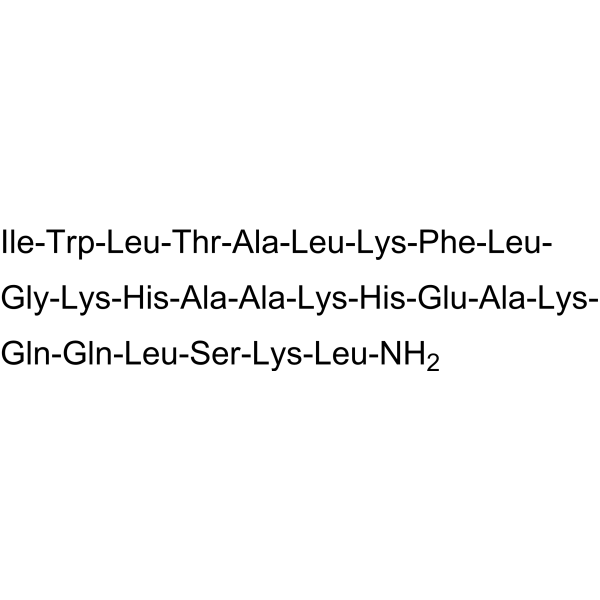
    L17E is an attenuated cationic amphiphilic lytic (ACAL) peptide that can be used to deliver a variety of macromolecules, including proteins, antibodies, and DNA nanostructures. L17E inserts and cleaves the membrane structure through electrostatic interaction, enabling intracellular escape. The efficiency of L17E-mediated delivery is strongly correlated with the expression level of KCNN4 (the gene encoding the calcium-activated potassium channel KCa3.1). L17E also promotes the cellular uptake of macromolecules by inducing micropinocytosis. L17E can be further optimized and improved through dimerization strategies and in combination with other delivery systems, such as nuclear localization signal peptides and cell membrane-coated nanoparticles .
    L17E
  • HY-P4076

    HIV DNA Alkylator/Crosslinker Infection
    MPG peptides, Pβ is an amphipathic cell-penetrating peptide. MPG peptides, Pβ consists of three components: the hydrophobic fusion sequence (GALFLGFLGAAGSTMGA) of HIV glycoprotein 41, a spacer domain (WSQP), and the nuclear localization signal (KKKRKV) of the large T antigen of Simian virus 40. MPG peptides, Pβ can form stable non-covalent complexes with nucleic acids (including DNA) through electrostatic interactions and improve their intracellular delivery. MPG peptides, Pβ can be used in studies of HIV-1-related immune responses .
    MPG peptides, Pβ
  • HY-139646

    Fluorescent Dye Neurological Disease
    KMG-104 is a cell-impermeant highly selective fluorescent Mg 2+ probe. KMG-104 has been used widely and revealed Mg 2+ mobilization in cytoplasm in various types of cells .
    KMG-104
  • HY-N9362

    EmodAN

    Ferroptosis Antibiotic Cardiovascular Disease Infection
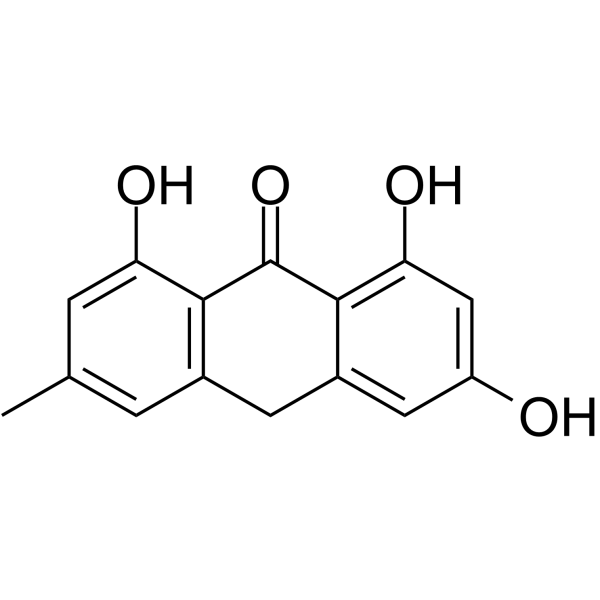
    Emodinanthrone (EmodAn) is a MARCH7 stabilizer that inhibits ferroptosis (EC50=70 nM). Emodinanthrone is also a precursor to Emodin (HY-14393) and possesses antibiotic activity. Emodinanthrone directly binds to MARCH7 and blocks its ubiquitination-mediated degradation at the K608 site; this action enhances MARCH7-mediated K48 ubiquitination and degradation of NCOA4, as well as its regulation of the intracellular localization of TFR1 via K63 ubiquitination, thereby reducing the intracellular labile iron pool and blocking ferroptosis. Emodinanthrone demonstrates in vivo cardioprotective effects and exhibits a favorable safety profile. Emodinanthrone is applicable to research on ferroptosis-related cardiovascular diseases, including Doxorubicin (HY-15142A)-induced cardiomyopathy and myocardial ischemia-reperfusion injury .
    Emodinanthrone
  • HY-139286

    Pacsph; Pacsphingosine (d18:1)

    Biochemical Assay Reagents Others
    Photoclick sphingosine (Pacsph) is a photosensitizing and clickable sphingosine analog. Photoclick sphingosine is metabolized in cells into endogenous lipid metabolic pathways and can be visualized by its clickable alkyne group. Photoclick sphingosine can be used to study intracellular sphingolipid metabolism and subcellular localization .
    Photoclick sphingosine
  • HY-D1575

    Fluorescent Dye Others
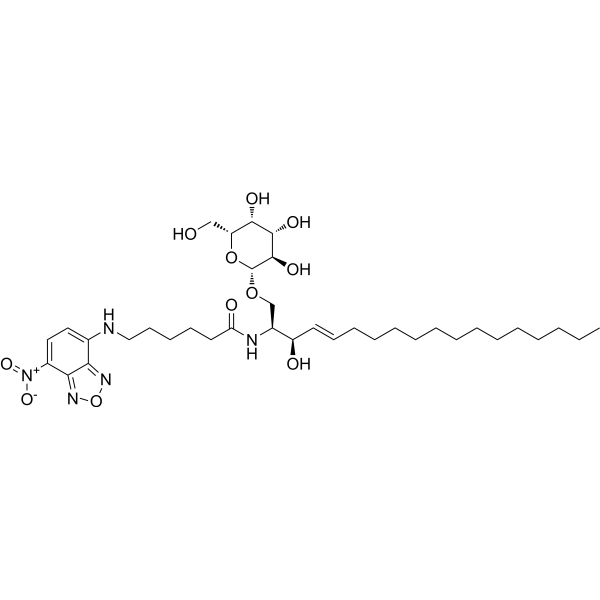
    C6 NBD galactosylceramide is an active derivative of galactosylceramide that is tagged with fluorescent C6 nitrobenzoxadiazole (C6 NBD). C6 NBD galactosylceramide can be used as a substrate for neutral β-glycosylceramidase (GCase) to study intracellular localization and metabolism of galactosylceramide (Ex=nm, Em=525) .
    C6 NBD Galactosylceramide
  • HY-171417

    CD38 Cancer
    6-Alkyne-F-araNAD is an irreversible inhibitor of CD38. 6-Alkyne-F-araNAD helps other fluorescent probes (such as SR101−F-araNMN) to more clearly observe the localization of intracellular CD38 .
    6-Alkyne-F-araNAD
  • HY-P10319

    PKA Cardiovascular Disease Cancer
    RI-STAD-2 is a high-affinity interfering peptide that regulates the subunit RI of protein kinase A (PKA). RI-STAD-2 interferes with the binding of AKAPs and PKA-RI by simulating the interaction between AKAPs' α-helix domain and PKA-RI's dimerization/anchoration (D/D) domain, thereby affecting PKA activity and intracellular localization. RI-STAD-2 can be used to study the role of AKAPs interaction with PKA-RI in pathological processes such as cardiovascular disease and cancer .
    RI-STAD-2
  • HY-124317

    Fluorescent Dye Others
    PF-06649283 is a drug with potential intracellular activity. The effects of PF-06649283 may be affected by factors such as cellular metabolism, protein-protein interactions, post-translational modifications, and asymmetric intracellular localization. The potency of PF-06649283 at the cellular level may show different activity compared to the recombinant enzyme, and this difference needs to be considered in the drug discovery process. Increased intracellular potency of PF-06649283 may be critical for the development of this drug as a probe or drug .
    PF-06649283
  • HY-N9362R

    EmodAN (Standard)

    Reference Standards Antibiotic Ferroptosis Infection
    Pro-xylane (Standard) is the analytical standard of Pro-xylane. This product is intended for research and analytical applications. Emodinanthrone (EmodAn) is a MARCH7 stabilizer that inhibits ferroptosis (EC50=70 nM). Emodinanthrone is also a precursor to Emodin (HY-14393) and possesses antibiotic activity. Emodinanthrone directly binds to MARCH7 and blocks its ubiquitination-mediated degradation at the K608 site; this action enhances MARCH7-mediated K48 ubiquitination and degradation of NCOA4, as well as its regulation of the intracellular localization of TFR1 via K63 ubiquitination, thereby reducing the intracellular labile iron pool and blocking ferroptosis. Emodinanthrone demonstrates in vivo cardioprotective effects and exhibits a favorable safety profile. Emodinanthrone is applicable to research on ferroptosis-related cardiovascular diseases, including Doxorubicin (HY-15142A)-induced cardiomyopathy and myocardial ischemia-reperfusion injury .
    Emodinanthrone (Standard)
  • HY-D2982

    Fluorescent Dye Infection
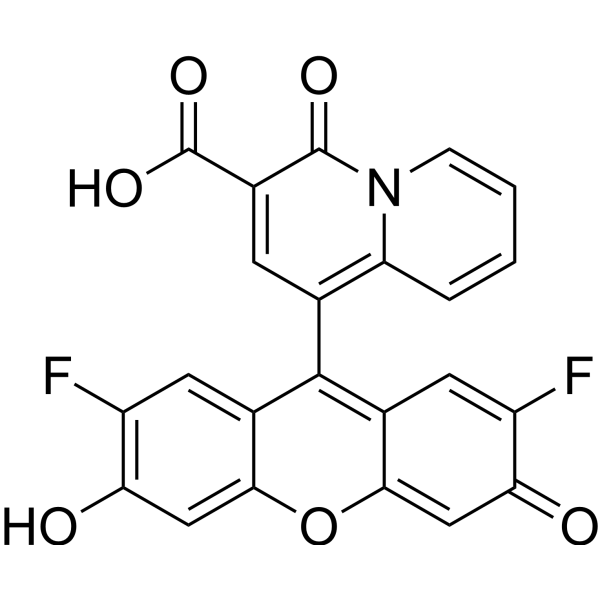
    BTP9-Neu5Ac is a fluorescent imaging probe specifically designed for detecting the neuraminidase (NA) sialidase activity of influenza viruses. BTP9-Neu5Ac can visualize the intracellular Golgi localization of the viral NA activity. BTP9-Neu5Ac can be used for precise and temporal monitoring of the key enzyme activities during the viral life cycle .
    BTP9-Neu5Ac
  • HY-183364

    Methylenetetrahydrofolate Dehydrogenase (MTHFD) Reactive Oxygen Species (ROS) Apoptosis Mitochondrial Metabolism Cancer
    MTHFD2-IN-8 is a selective MTHFD2 inhibitor with an IC50 of 0.066 μM. MTHFD2-IN-8 directly binds to intracellular mitochondrially localized protein MTHFD2 and accumulates selectively in tumor mitochondria. MTHFD2-IN-8 increases intracellular ROS levels, induces mitochondrial membrane potential depolarization, arrests cell cycle at G0/G1 phase, promotes apoptosis in cancer cells. MTHFD2-IN-8 inhibits tumor growth in a mouse colon cancer graft model .
    MTHFD2-IN-8
  • HY-D3179

    Fluorescent Dye BCRP Neurological Disease
    CDg13 is a fluorescent probe that specifically detects living neural stem/progenitor cells. CDg13 localizes to the endoplasmic reticulum via its dihexyl moiety, with no interaction with endoplasmic reticulum biomolecules. CDg13 undergoes selective efflux by active ABCG2 transporters, with increased intracellular accumulation following ABCG2 inhibition or knockdown. CDg13 isolates and enriches self-renewable neural stem/progenitor cells from embryonic mouse brain tissue, stains neural stem/progenitor cells brightly, and sorts ABCG2low cell populations from heterogeneous populations . (Ex/Em = 520/553 nm)
    CDg13
  • HY-D3311

    Fluorescent Dye Cancer
    M1219 is a GSH/ATP dual near-infrared activated fluorescent probe that enables independent real-time monitoring of dynamic changes in intracellular GSH and ATP without spectral crosstalk (GSH: Ex=640 nm, Em=740~800 nm; ATP: Ex=594 nm/610 nm, Em=650~700 nm). M1219 not only visualizes the metabolic regulatory mechanism of TNBC under single/dual-target inhibition of SLC7A11/GLUT1 and accurately evaluates its in vivo efficacy, but also achieves precise localization of the TNBC tumor invasion boundary. M1219 can be used for the research of triple-negative breast cancer .
    M1219
  • HY-D3198

    Fluorescent Dye Endogenous Metabolite Cancer
    NIR-fluorescent ceramide is a neutral near-infrared (NIF) fluorescent probe (λem=650 nm) based on the C-bridged nitrobenzoxadiazole SCOTfluor core, which enables visualization of lipid metabolic processes such as sphingolipid trafficking. The emission signal of NIR-fluorescent ceramide increases significantly in liposomal environments. NIR-fluorescent ceramide acts as an intracellular trafficking tracer, localizing to regions surrounding the endoplasmic reticulum and Golgi apparatus within a short period, and then translocating to recycling lysosomes over a longer period, thus enabling real-time visualization of sphingolipid trafficking and biological lipid functions in living cells. NIR-fluorescent ceramide also generates metabolic uptake profiles and provides multiple metabolic readouts in human cancer cell lines .
    NIR‐fluorescent ceramide

Inquiry Online

Your information is safe with us. * Required Fields.

Salutation


Country or Region *

Applicant Name *


Organization Name *

Department *


Email Address *


Product Name *

Cat. No.


Requested quantity *

Phone Number *


Remarks

Inquiry Online

Inquiry Information

Product Name:
Cat. No.:
Quantity:
MCE Japan Authorized Agent:

