1. Search Result
Search Result
Results for "

laccase

" in MedChemExpress (MCE) Product Catalog:

26

Inhibitors & Agonists

1

Fluorescent Dyes

1

Biochemical Assay Reagents

1

Peptides

3

Natural
Products

4

Isotope-Labeled Compounds

1

Oligonucleotides

Cat. No. Product Name Target Research Areas Chemical Structure
  • HY-P2890

    Denilite IIS

    Endogenous Metabolite Others
    Laccase, Microorganisms (Denilite IIS) is a multi-copper oxidase (MCOs), which widely exists in microorganisms, plants and fungi, and can catalyze the oxidation of one electron of various phenolic compounds. Laccase can promote the oxidative coupling of single lignin, which plays an important role in the formation and biodegradation of lignin, and also has the potential to cross-link food polymers .
    Laccase, Microorganisms
  • HY-W002116

    TRP Channel COX Phosphatase Bacterial Infection Metabolic Disease Inflammation/Immunology Cancer
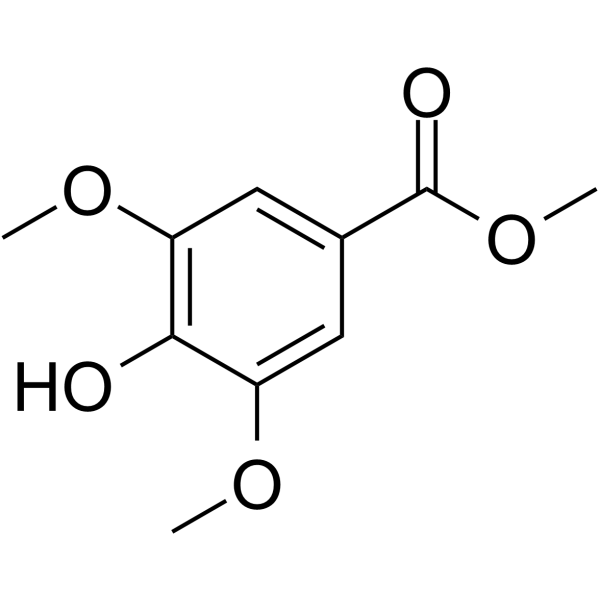
    Methyl syringate is a selective TRPA1 agonist. Methyl syringate regulates food intake and gastric emptying through a TRPA1-mediated pathway. Methyl syringate is an efficient phenolic mediator for bacterial and fungal laccases. Methyl syringate is a chemical marker of Asphodel monofloral honey. Methyl syringate contributes to the antibacterial activity of honey. Methyl syringate inhibits aflatoxin production. Methyl syringate can contribute to weight suppression. Methyl syringate can be studies for cancer prevention (e.g. lung cancer), suppression of hypoxia-induced inflammatory response and tumorigenesis .
    Methyl syringate
  • HY-W003972

    Syringol

    Biochemical Assay Reagents Others
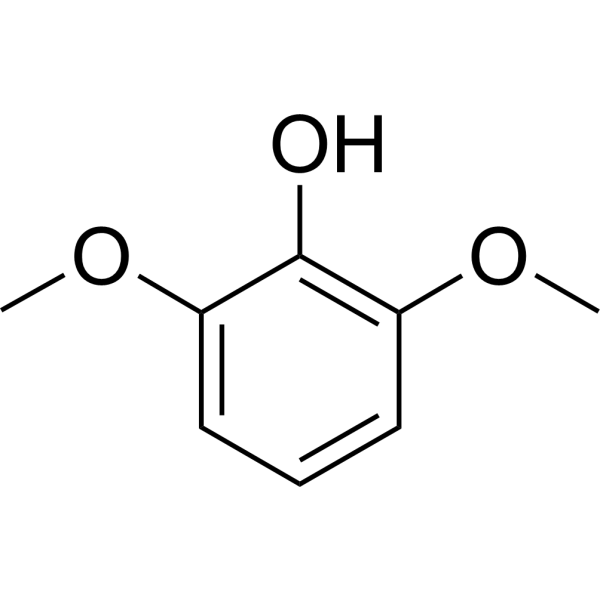
    2,6-Dimethoxyphenol (Syringol) is a phenolic compound that scavenges free radicals and exhibits antioxidant activity. 2,6-Dimethoxyphenol is the substrate for determining laccase activity .
    2,6-Dimethoxyphenol
  • HY-W097009

    Biochemical Assay Reagents Others
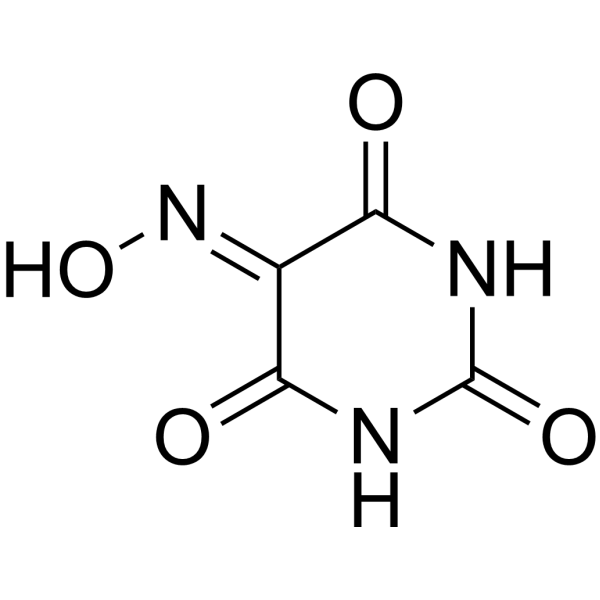
    Violuric acid is a redox mediator used in the laccase system. The violuric acid assay is a method to ascertain that the high-redox potential of laccase is not lost during directed evolution .
    Violuric acid
  • HY-157745

    mPEG40000-SC; mPEG40000-Succinimidyl ester

    Biochemical Assay Reagents Others
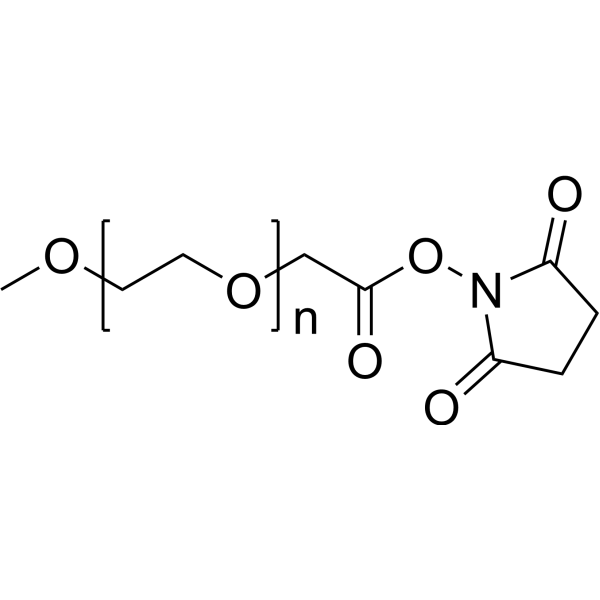
    m-PEG-NHS ester (mPEG-SC; mPEG-Succinimidyl ester) (MW 40000) is a polyethylene glycol derivative. m-PEG-NHS ester serves as a modifying agent that reacts with free amino groups on the surface of protein or polypeptide molecules to form stable amide bonds, thereby covalently linking PEG chains to biomacromolecules, improving their antigenicity and immunogenicity, and facilitating the preparation of injectable formulations .
    m-PEG40000-NHS ester
  • HY-P2890A

    Endogenous Metabolite Others
    Laccase, Recombinant Microbial (High activity) is a multicopper oxidase. Laccase, Recombinant Microbial (High activity) catalyzes the oxidation of multiple substrates, including phenolic compounds, polyphenolic compounds, lignin, etc. Laccase, Recombinant Microbial (High activity) is involved in the lignin degradation, cell wall synthesis, pigment synthesis, and antioxidant/immune defense. Laccase, Recombinant Microbial (High activity) can be used in paper/textile/food industry, bioremediation, biomedicine and agriculture .
    Laccase, Recombinant Microbial (High activity)
  • HY-W002116S

    TRP Channel COX Phosphatase Bacterial Infection Metabolic Disease Inflammation/Immunology Cancer
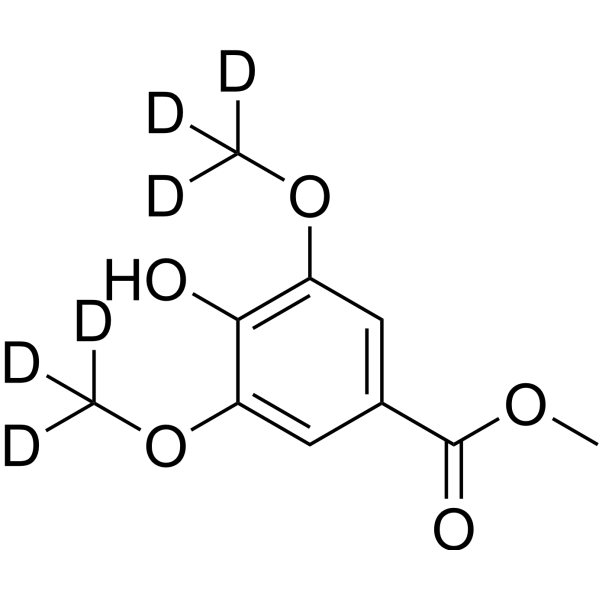
    Methyl syringate-d6 is the deuterium labeled Methyl syringate. Methyl syringate is a selective TRPA1 agonist. Methyl syringate regulates food intake and gastric emptying through a TRPA1-mediated pathway. Methyl syringate is an efficient phenolic mediator for bacterial and fungal laccases. Methyl syringate is a chemical marker of Asphodel monofloral honey. Methyl syringate contributes to the antibacterial activity of honey. Methyl syringate inhibits aflatoxin production. Methyl syringate can contribute to weight suppression. Methyl syringate can be studies for cancer prevention (e.g. lung cancer), suppression of hypoxia-induced inflammatory response and tumorigenesis .
    Methyl syringate-d6
  • HY-D0015

    Fluorescent Dye Others
    Cresol red, 97% is an acidic phenolsulfonphthalein triphenylmethane dye. Cresol red, 97% generates reactive oxygen species and singlet oxygen under ultrasonic irradiation, interacts with bovine serum albumin, alters the structure of bovine serum albumin, and oxidizes the fluorescent amino acid residues of bovine serum albumin. Cresol red, 97% can be decolorized and biodegraded by *Absidia spinosa* M15, producing phenylacetic acid and benzoic acid metabolites. Cresol red, 97% serves as a pH indicator (orange at pH 1.8-yellow at pH 2.0, yellow at pH 7.0-purple at pH 8.8). Cresol red, 97% can be used to indicate pH, temperature and salinity .
    Cresol red, 97%
  • HY-156338

    Fungal Infection
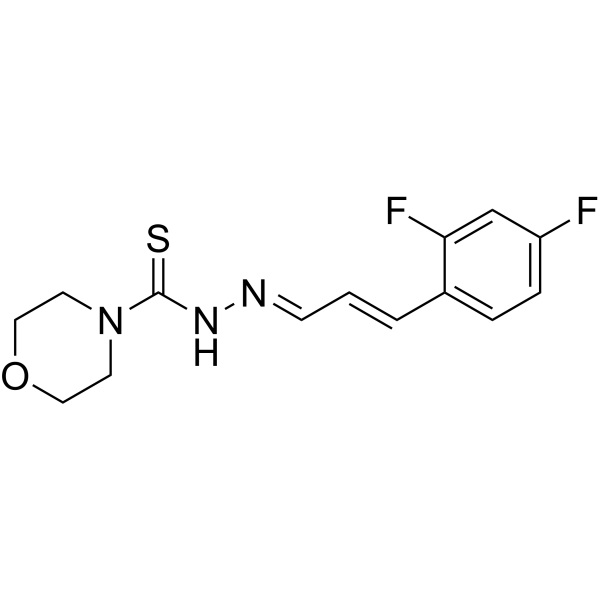
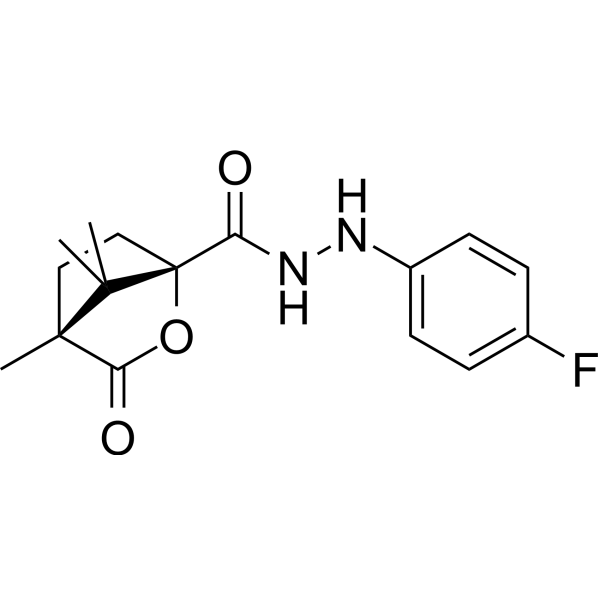
    Laccase-IN-2 is an inhibitor of laccase. Laccase-IN-2 has excellent antifungal activity against Magnaporthe oryzae in vitro and in vivo .
    Laccase-IN-2
  • HY-149614

    Endogenous Metabolite Fungal Infection
    Laccase-IN-1 (compound 4b) is an orally active inhibitor of laccase, with the IC50 of 11.3 μM. Laccase-IN-1 displays protective and curative effects on apple fruits infected by B. dothidea. Laccase-IN-1 enhances the cell membrane permeability, destroys the mycelial surface morphology and the cell ultrastructure, and reduces the ergosterol and exopolysaccharide contents of B. dothidea .
    Laccase-IN-1
  • HY-162488

    Fungal Infection
    Laccase-IN-3 (Compound 2b) is a laccase inhibitor (IC50 = 1.02= μM) with significant antifungal activity. Laccase-IN-3 shows superior inhibitory effect on Botryosphaeria dothidea (EC50 = 0.17 mg/L). Laccase-IN-3 effectively blocks the catalytic function of laccase by binding to its active center. Laccase-IN-3 also disrupts pathogen cell membrane integrity and increases ROS .
    Laccase-IN-3
  • HY-178189

    Fungal Infection
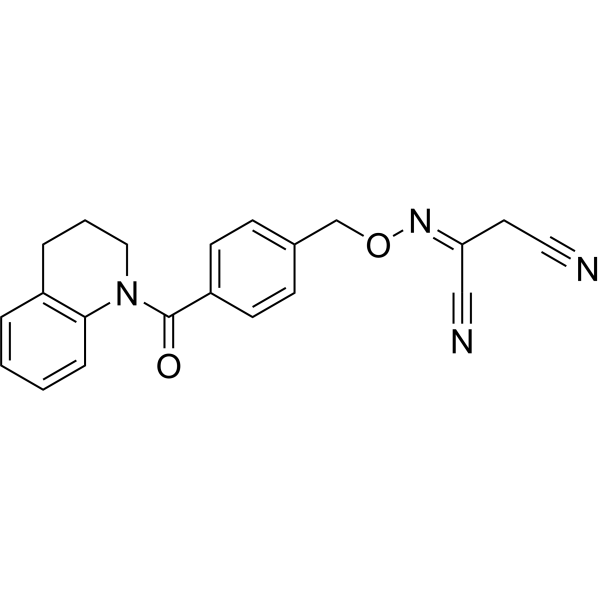
    Laccase-IN-6 is a laccase inhibitor with an IC50 of 0.097 nM. Laccase-IN-6 exhibits broad-spectrum anti-fungal effect and can destroy the normal morphology of the fungi. Laccase-IN-6 can be used for the research of infection .
    Laccase-IN-6
  • HY-155096

    Bacterial Infection
    Antibacterial agent 149 (Compd 3j) is a laccase inhibitor with high fungicidal activity and can be used in the study of rice sheath blight .
    Antibacterial agent 149
  • HY-N6725S

    Endogenous Metabolite Apoptosis Antibiotic Bacterial DNA/RNA Synthesis Isotope-Labeled Compounds Cancer
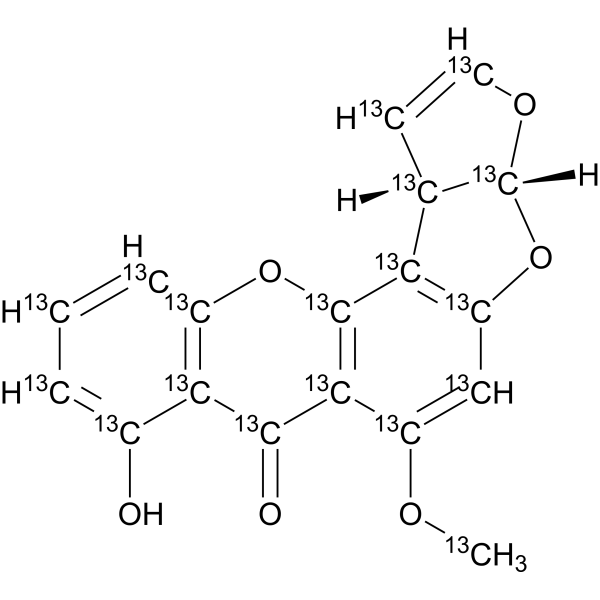
    Sterigmatocystine- 13C18 is 13C labeled 2,6-Dimethoxyphenol (HY-W003972). 2,6-Dimethoxyphenol is a phenolic compound that is extensively used for the measurement of laccase activity .
    Sterigmatocystine-13C18
  • HY-W003972S1

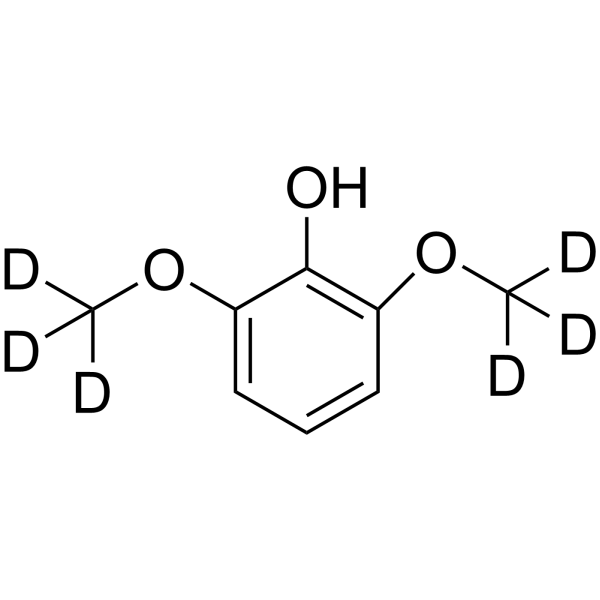
    Syringol-d6

    Isotope-Labeled Compounds Biochemical Assay Reagents Others
    2,6-Dimethoxyphenol-d6 (Syringol-d6) is deuterated labeled 2,6-Dimethoxyphenol (HY-W003972). 2,6-Dimethoxyphenol is a phenolic compound that scavenges free radicals and exhibits antioxidant activity. 2,6-Dimethoxyphenol is the substrate for determining laccase activity .
    2,6-Dimethoxyphenol-d6
  • HY-W003972R

    Syringol (Standard)

    Biochemical Assay Reagents Reference Standards Others
    2,6-Dimethoxyphenol (Standard) (Syringol (Standard)) is the analytical standard of 2,6-Dimethoxyphenol (HY-W003972). This product is intended for research and analytical applications. 2,6-Dimethoxyphenol is a phenolic compound that scavenges free radicals and exhibits antioxidant activity. 2,6-Dimethoxyphenol is the substrate for determining laccase activity .
    2,6-Dimethoxyphenol (Standard)
  • HY-W003972S

    Syringol-d3

    Isotope-Labeled Compounds Biochemical Assay Reagents Others
    2,6-Dimethoxyphenol-d3 (Syringol-d3) is the deuterium labeled 2,6-Dimethoxyphenol (HY-W003972) . 2,6-Dimethoxyphenol is a phenolic compound that scavenges free radicals and exhibits antioxidant activity. 2,6-Dimethoxyphenol is the substrate for determining laccase activity .
    2,6-Dimethoxyphenol-d3
  • HY-162953

    Fungal Cancer
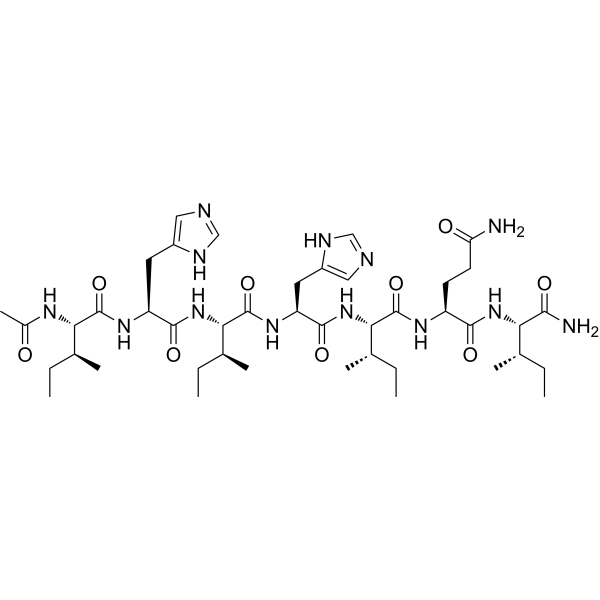
    Laccase-IN-4 (compund 5g) exhibits significant Laccase inhibitory activity .
    Laccase-IN-4
  • HY-P2890D

    Biochemical Assay Reagents Metabolic Disease
    Laccase, Agaricus bisporus (EC 1.10.3.2) is a blue copper oxidase that reduces molecular oxygen to water. Laccase oxidizes polyphenols, methoxy-substituted phenols and diamines, but not tyrosine. Oxidation by laccase is an one-electron reaction that generates a free radical.
    Laccase, Agaricus bisporus
  • HY-P2890B

    Fungal Metabolic Disease
    Laccase, Trametes versicolor (EC 1.10.3.2), is a blue copper oxidase that reduces molecular oxygen to water. Laccase can oxidize polyphenols, methoxylated phenolic compounds, and diamines, but not tyrosine. Laccase's oxidation reaction is a single-electron reaction and produces free radicals.
    Laccase, Trametes versicolor
  • HY-P2890C

    Fungal Metabolic Disease
    Laccase, Trametes versicolor (EC 1.10.3.2), is a blue copper oxidase that reduces molecular oxygen to water. Laccase can oxidize polyphenols, methoxylated phenolic compounds, and diamines, but not tyrosine. Laccase's oxidation reaction is a single-electron reaction and produces free radicals.
    Laccase, Rhus vernicifera
  • HY-170378

    Fungal Infection
    Laccase-IN-5 (Compound 2b) is the inhibitor for Laccase with an IC50 of 0.82 μM. Laccase-IN-5 increases the cell membrane permeability, limits the growth of hyphae, destorys the cell wall, and induces oxidative stress responses. Laccase-IN-5 exhibits antifungal activity against various plant pathogenic fungi and oomycetes, inhibits B. dothidea with an EC50 of 0.96 mg/L .
    Laccase-IN-5
  • HY-W002116R

    Reference Standards TRP Channel COX Phosphatase Bacterial Infection Metabolic Disease Inflammation/Immunology Cancer
    Methyl syringate is a selective TRPA1 agonist. Methyl syringate regulates food intake and gastric emptying through a TRPA1-mediated pathway. Methyl syringate is an efficient phenolic mediator for bacterial and fungal laccases. Methyl syringate is a chemical marker of Asphodel monofloral honey. Methyl syringate contributes to the antibacterial activity of honey. Methyl syringate inhibits aflatoxin production. Methyl syringate can contribute to weight suppression. Methyl syringate can be studies for cancer prevention (e.g. lung cancer), suppression of hypoxia-induced inflammatory response and tumorigenesis .
    Methyl syringate (Standard)
  • HY-P2890H

    Biochemical Assay Reagents Metabolic Disease
    Laccase, Pleurotus ostreatus (mushroom) (EC 1.10.3.2) is a blue copper oxidase that reduces molecular oxygen to water. Laccase oxidizes polyphenols, methoxy-substituted phenols and diamines, but not tyrosine. Oxidation by laccase is an one-electron reaction that generates a free radical.
    Laccase, Pleurotus ostreatus (mushroom)
  • HY-P2890I

    Biochemical Assay Reagents Metabolic Disease
    Laccase, White rot fungi (EC 1.10.3.2) is a blue copper oxidase that reduces molecular oxygen to water. Laccase oxidizes polyphenols, methoxy-substituted phenols and diamines, but not tyrosine. Oxidation by laccase is an one-electron reaction that generates a free radical.
    Laccase, White rot fungi
  • HY-P2890E

    Biochemical Assay Reagents Metabolic Disease
    Laccase, Coriolus versicolor is a copper-containing oxidase enzyme that are found in many plants, fungi, and microorganisms. The copper is bound in several sites; Type 1, Type 2, and/or Type 3. The ensemble of types 2 and 3 copper is called a trinuclear cluster. Type 1 copper is available to action of solvents, such as water.
    Laccase, Coriolus versicolor

Inquiry Online

Your information is safe with us. * Required Fields.

Salutation


Country or Region *

Applicant Name *


Organization Name *

Department *


Email Address *


Product Name *

Cat. No.


Requested quantity *

Phone Number *


Remarks

Inquiry Online

Inquiry Information

Product Name:
Cat. No.:
Quantity:
MCE Japan Authorized Agent:

