

1. Search Result
Search Result
Results for "

mCRPC

" in MedChemExpress (MCE) Product Catalog:

25

Inhibitors & Agonists

1

Peptides

4

Inhibitory Antibodies

1

Click Chemistry

Cat. No. Product Name Target Research Areas Chemical Structure
  • HY-158101
    BMS-986365
    1 Publications Verification

    CC-94676

    PROTACs Androgen Receptor Cancer
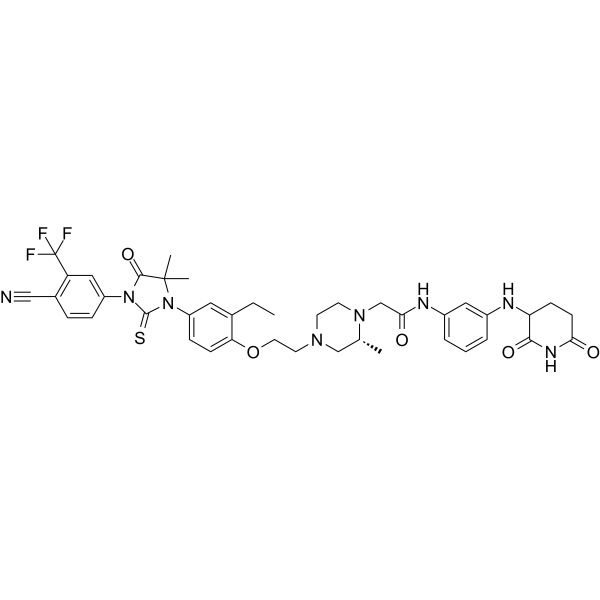
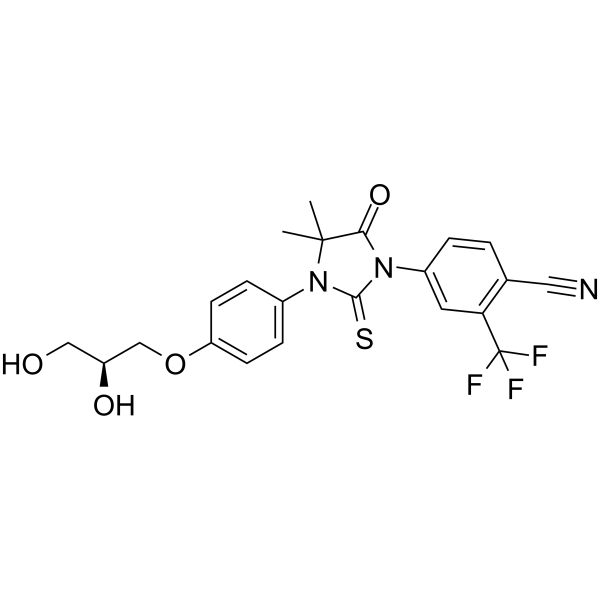
    BMS-986365 (CC-94676) is an orally active and selective targeted androgen receptor (AR) PROTAC degrader (DC50 of 10-40 nM). BMS-986365 is capable of inducing cereblon (CRBN) E3 ligase-dependent ubiquitination and degradation of the androgen receptor (AR), as well as various AR mutants. BMS-986365 shows no degradation of the close AR family members estrogen receptor (ER), progesterone receptor (PR), and glucocorticoid receptor (GR). BMS-986365 shows significant in vivo potency, degrading AR, inhibiting AR signaling, and restricting tumor growth in animal models of advanced prostate cancer. BMS-986365 can be used for the study of metastatic castration-resistant prostate cancer (mCRPC) .
    BMS-986365
  • HY-156628

    MK-5684; ODM-208

    Cytochrome P450 Cancer
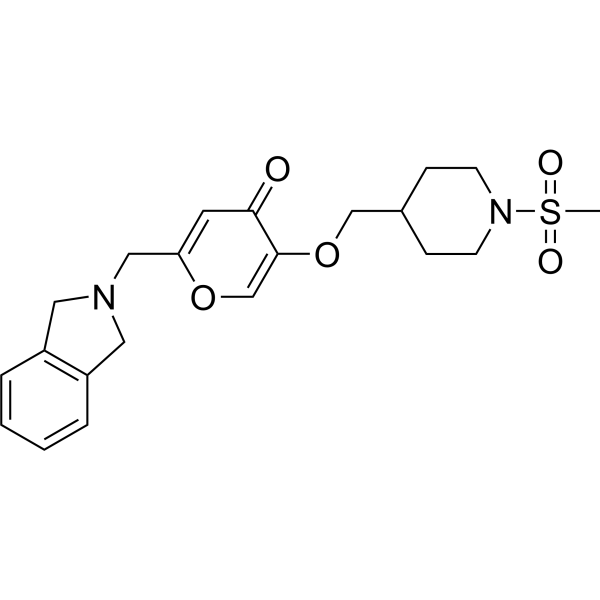
    Opevesostat (MK-5684; ODM-208) is an orally active and selective CYP11A1 inhibitor. Opevesostat has the potential for the research of metastatic castration-resistant prostate cancer (mCRPC) .
    Opevesostat
  • HY-P990673

    DSTP-3086S Antibody; RG-7450 Antibody

    ADC Antibody Transmembrane Glycoprotein Mitosis Cancer
    Vandortuzumab (DSTP-3086S Antibody; RG-7450 Antibody) is a humanized anti-STEAP1 IgG1 antibody and antimitotic agent that can be conjugated with MMAE (HY-15162) to form the antibody-drug conjugate (ADC) Vandortuzumab vedotin. Vandortuzumab vedotin specifically binds to STEAP1 and drives internalization of the complex, releasing the MMAE (HY-15162) payload intracellularly. After binding to tubulin, MMAE inhibits cell division and induces cell death. Vandortuzumab exhibits antitumor activity in preclinical xenograft models of prostate cancer and can be used for research related to metastatic castration-resistant prostate cancer (mCRPC) .
    Vandortuzumab
  • HY-P99802
    Pasotuxizumab
    1 Publications Verification

    BAY 2010112; AMG 212; MT112

    CD3 Cancer
    Pasotuxizumab (BAY 2010112) is a PSMA and CD3 bispecific T-cell engager (BiTE). Pasotuxizumab binds to CD3 and PSMA with KDs of 9.4 nM and 47.0 nM for human CD3 and PSMA. Pasotuxizumab can be used for research of metastatic castration-resistant prostate cancer (mCRPC) .
    Pasotuxizumab
  • HY-109050
    Alobresib
    2 Publications Verification

    GS-5829

    Epigenetic Reader Domain Cancer
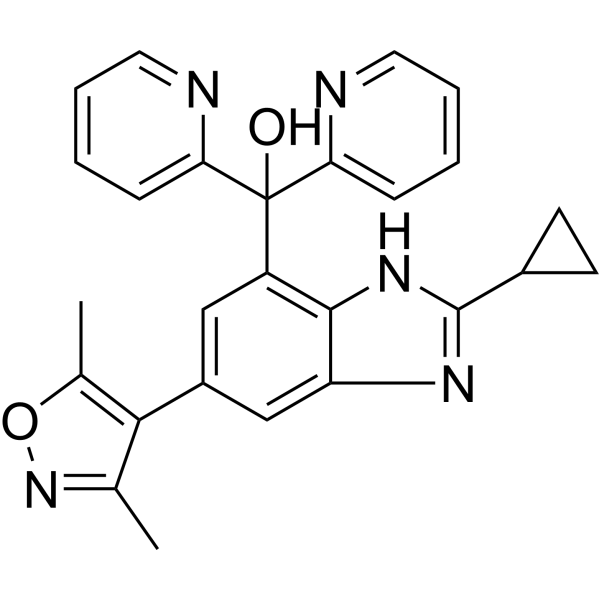
    Alobresib (GS-5829) is a BET bromodomain inhibitor, which represents a highly effective therapeutics agent against recurrent/chemotherapy resistant uterine serous carcinoma (USC) overexpressing c-Myc. Alobresib can be used in the metastatic castration-resistant prostate cancer (mCRPC) research .
    Alobresib
  • HY-114402

    PROTACs Androgen Receptor Cancer
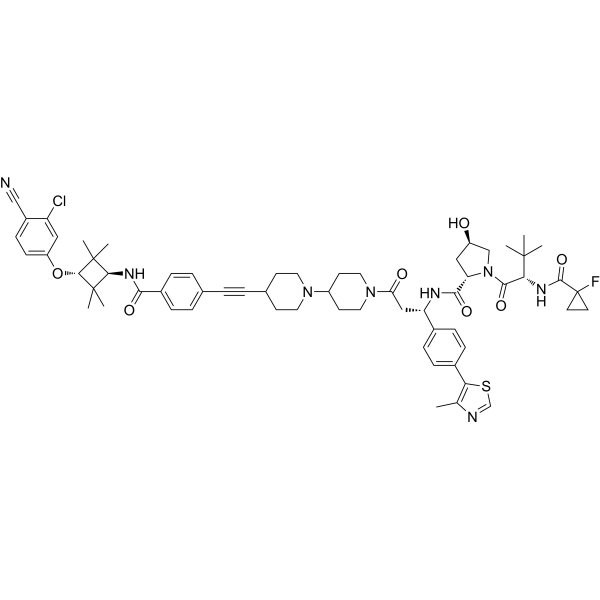
    ARD-69 is a PROTAC degrader based on the E3 ubiquitin ligase VHL and targeting the androgen receptor, which can induce androgen receptor (AR) protein degradation in AR-positive prostate cancer cells. ARD-69 inhibits AR-regulated gene expression, binds to the AR ligand binding domain at one end and binds to VHL at the other end, prompting AR to be recruited to the E3 ubiquitin ligase complex, triggering proteasome degradation, thereby inhibiting AR signaling pathways and downstream gene expression (such as PSA, TMPRSS2). ARD-69 can be used to study of castration-resistant prostate cancer (mCRPC) .
    ARD-69 is composed of a target protein ligand (pink part) AR antagonist 14 (HY-172624), a PROTAC linker (black part) tert-Butyl 4-ethynyl-[1,4'-bipiperidine]-1'-carboxylate (HY-W442074), and a VHL-type E3 ubiquitinase ligand (blue part) VH 101, acid (HY-47070); among them, the VHL ligand and the linker can form a conjugate VH 101-amide-piperidine-Pip-alkyne (HY-172625).
    ARD-69
  • HY-P99714

    MGD019

    PD-1/PD-L1 CTLA-4 Cancer
    Lorigerlimab (MGD019) is a bispecific IgG4 dual-affinity re-targeting antibody (DART). Lorigerlimab can block PD-1 and CTLA-4, and improves T-cell responses. Lorigerlimab can be used for research of metastatic castration-resistant prostate cancer (mCRPC) .
    Lorigerlimab
  • HY-137448

    SHR3680

    Androgen Receptor Cancer
    Rezvilutamide (SHR3680) is an orally active androgen receptor antagonist. Rezvilutamide (SHR3680) is used for the study of prostate cancer .
    Rezvilutamide
  • HY-158123

    PSMA Cancer
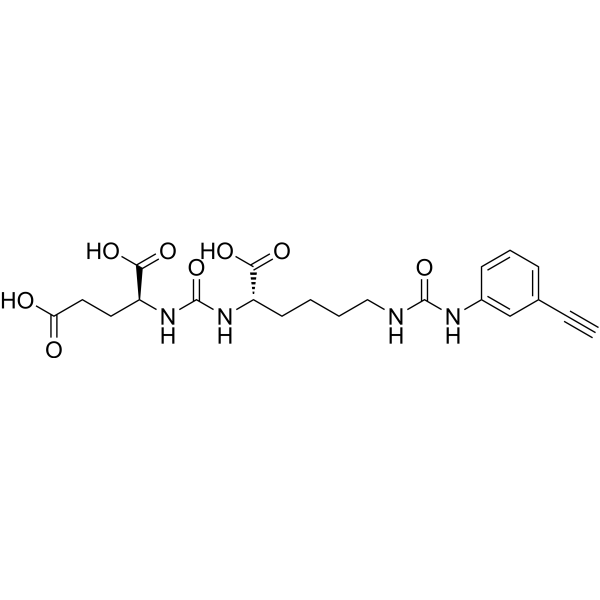
    PSMA binder-1 is a ligand for PSMA and can be used to synthesize PSMA targeting molecule, such as Ac-PSMA-trillium .
    PSMA binder-1
  • HY-P991359

    MEDI3726 antibody; ADCT-401 antibody

    PSMA ADC Antibody Cancer
    Anti-FOLH1/PSMA Antibody (J591) (MEDI3726 antibody) is a human monoclonal antibody (mAb) targeting FOLH1/PSMA. Anti-FOLH1/PSMA Antibody (J591) can be used in Prostate cancer research .
    Anti-FOLH1/PSMA Antibody (J591)
  • HY-158118

    DNA-PK Cancer
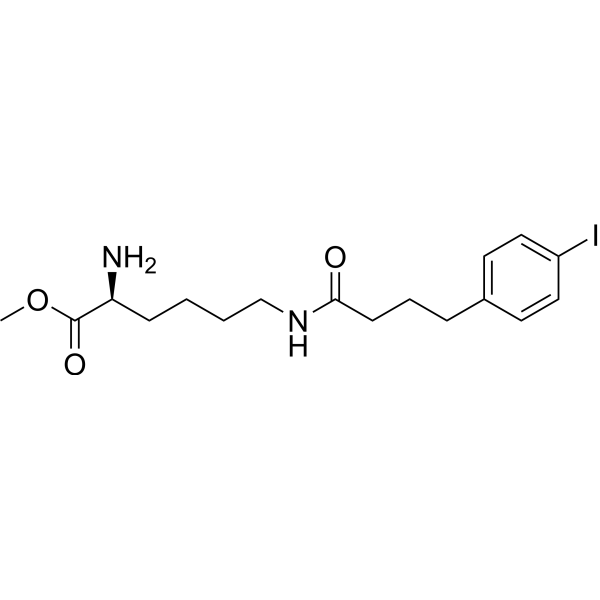
    Lys(CO-C3-p-I-Ph)-OMe is a pharmacokinetic modifier (PK modifier) that can improve the PK properties of PSMA ligand molecules (such as Ac-PSMA-trillium). Lys(CO-C3-p-I-Ph)-OMe can increase the residence time of Ac-PSMA-trillium in plasma by increasing its binding capacity to albumin. Lys(CO-C3-p-I-Ph)-OMe also reduces salivary gland absorption of Ac-PSMA-trillium, potentially extending its half-life. Ac-PSMA-trillium is a suitable PSMA-targeting compound that has different biological applications after modification with different radioactive isotopes. If labeled with 111In, it can be used as DOTA chelating agent and imaging agent. Or labeled with 225Ac as a Macropa chelator for targeted radionuclide therapy (TRT) in the study of metastatic castration-resistant prostate cancer (mCRPC) .
    Lys(CO-C3-p-I-Ph)-OMe
  • HY-158119A

    Felivotide mopaxetan

    PSMA Cancer
    PSMA-trillium is a PSMA targeting compound, consisting of a PSMA targeting molecule (PSMA binder), a Macropa chelating molecule, and a group that regulates pharmacokinetics (PK modifier). PSMA-trillium is a non-radioactive form of Actinium-225-PSMA-Trillium (BAY 3563254) with improved PSMA targeting and pharmacokinetic properties. PSMA-trillium can bind Ac through the Macropa chelating molecule, or the radioactive isotope 225Actinium. Actinium-225-PSMA-Trillium is a potent inhibitor of metastatic castration-resistant prostate cancer (mCRPC) .
    PSMA-trillium
  • HY-158125

    PSMA Cancer
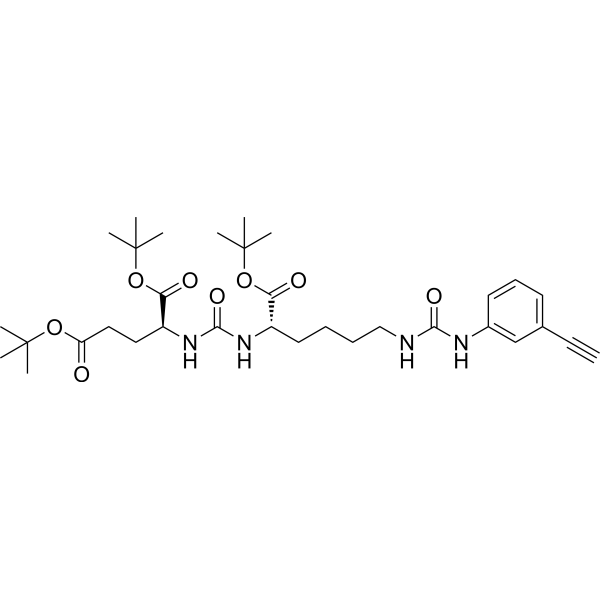
    PSMA binder-2 is a ligand for PSMA and can be used to synthesize Ac-PSMA-trillium. Ac-PSMA-trillium is a suitable PSMA-targeting compound with improved PSMA binding properties and pharmacokinetic properties. PSMA ligands have different biological applications after being modified with different radioactive isotopes. If labeled with 111In, it can be used as DOTA chelating agent and imaging agent. Or labeled with 225Ac as a Macropa chelator for targeted radionuclide therapy (TRT) in the study of metastatic castration-resistant prostate cancer (mCRPC) .
    PSMA binder-2
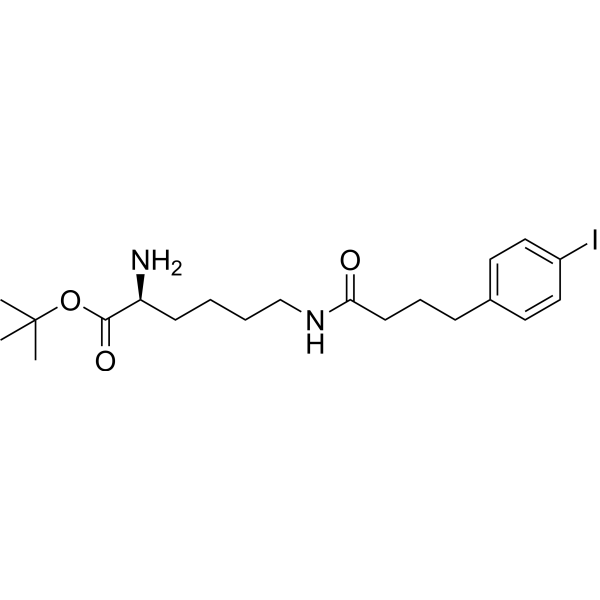
  • HY-158122

    DNA-PK Cancer
    Lys(CO-C3-p-I-Ph)-O-tBu is a pharmacokinetic modifier (PK modifier) that can improve the pharmacokinetic properties of PSMA ligand molecules. Lys(CO-C3-p-I-Ph)-O-tBu can increase the residence time of PSMA ligand in plasma by increasing its binding capacity to albumin. Lys(CO-C3-p-I-Ph)-O-tBu also reduces salivary gland absorption, possibly extending the half-life of the active compound .
    Lys(CO-C3-p-I-Ph)-O-tBu
  • HY-P10743

    Radionuclide-Drug Conjugates (RDCs) PSMA Cancer
    BQ7876 is a probe targeting prostate-specific membrane antigen (PSMA) that contains a DOTA chelator. BQ7876, after being radiolabeled with radionuclide (177Lu), functions in both radionuclide imaging and tumor cell destruction by specifically binding to PSMA. BQ7876 shows potential for research in the field of metastatic castration-resistant prostate cancer (mCRPC) . BQ7876 can be used for the synthesis/research of Radionuclide-Drug Conjugates (RDCs).
    BQ7876
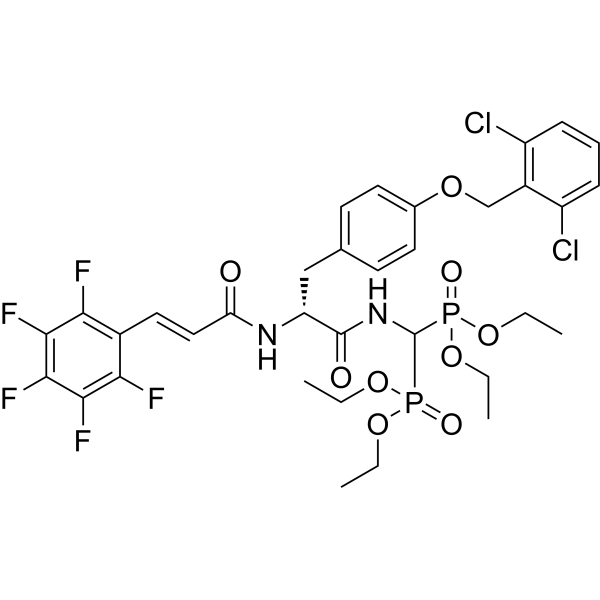
  • HY-119001

    Survivin Cancer
    BKM1644, an acyl-tyrosine bisphosphonate amide derivative, exhibits potent anti-cancer activity. BKM1644 effectively inhibits the proliferation of metastatic, castration-resistant prostate cance (mCRPC) cells. BKM1644 sensitizes mCRPC cells to Docetaxel (HY-B0011) and retards the bone metastatic growth of prostate cance .
    BKM1644
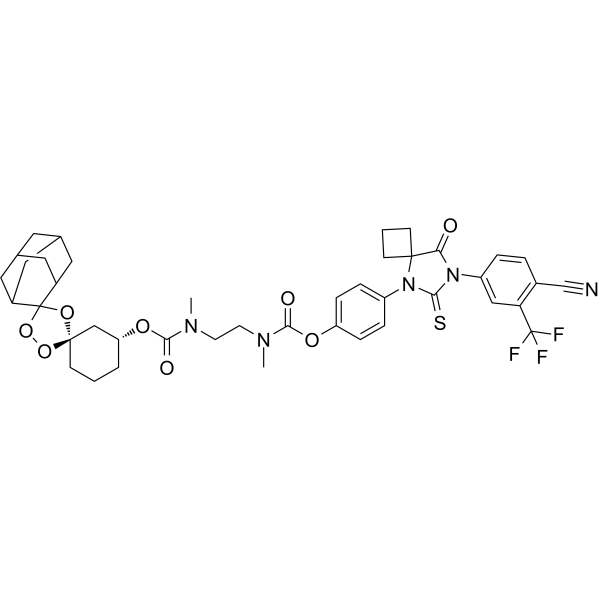
  • HY-152520

    Androgen Receptor Cancer
    RLA-5331 is an iron activator containing anti-androgen. RLA-5331 has anti-proliferative activity on metastatic castration-resistant prostate cancer (mCRPC) cell line .
    RLA-5331
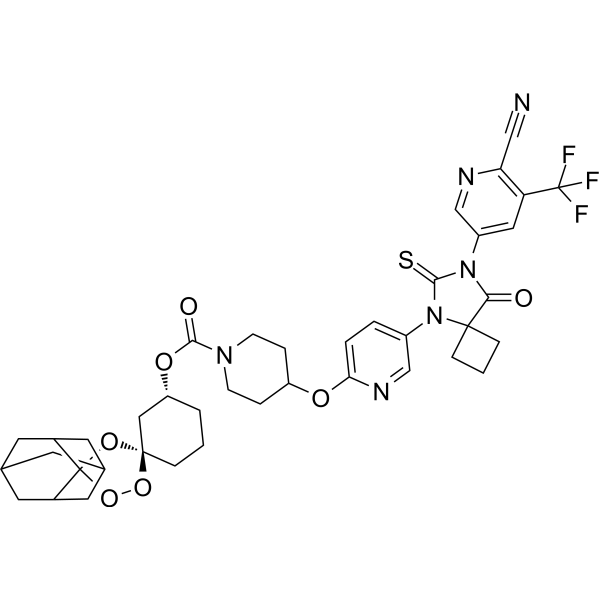
  • HY-152512

    Androgen Receptor Cancer
    RLA-4842 is an iron activator containing anti-androgen. RLA-4842 has anti-proliferative activity on metastatic castration-resistant prostate cancer (mCRPC) cell line .
    RLA-4842
  • HY-128938A

    ADC Linker Cancer
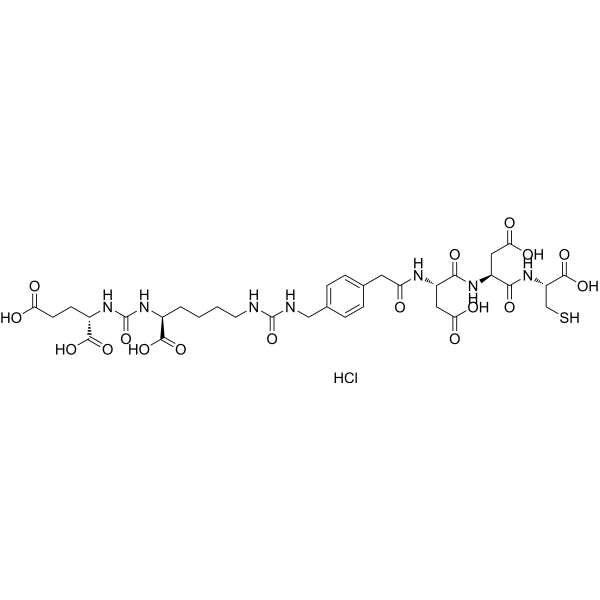
    EC1167 hydrochloride is the linker for EC1169. EC1169 is prostate-specific membrane antigen targeting-tubulysin conjugate. EC1169 hydrochloride has the potential to treat recurrent metastatic, castration-resistant prostate cancer (MCRPC) .
    EC1167 hydrochloride
  • HY-128938

    ADC Linker Cancer
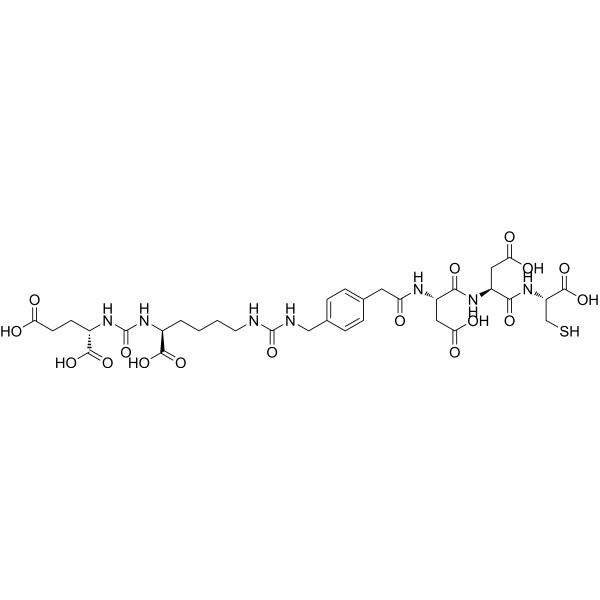
    EC1167 is the linker for EC1169. EC1169 is prostate-specific membrane antigen targeting-tubulysin conjugate. EC1169 has the potential to treat recurrent metastatic, castration-resistant prostate cancer (MCRPC) .
    EC1167
  • HY-172624

    Ligands for Target Protein for PROTAC Cancer
    AR antagonist 14 is is a PROTAC target protein ligand (Ligands for Target Protein for PROTAC). AR antagonist 14 can be combined with VH 101-amide-piperidine-Pip-alkyne (HY-172625) to synthesize PROTAC degraders (ARD-69 (HY-114402)) .
    AR antagonist 14
  • HY-164395

    Phosphatase Inflammation/Immunology Cancer
    Sipuleucel-T is a cancer vaccine. Sipuleucel-T recognizes prostatic acid phosphatase (PAP), present PAP antigens, and stimulates the immune response against prostate cancer cells .
    Sipuleucel-T
  • HY-172625

    E3 Ligase Ligand-Linker Conjugates Cancer
    VH 101-amide-piperidine-Pip-alkyne is an E3 Ligase Ligand-Linker Conjugates that can be used to synthesize PROTAC degrader. The linker part of VH 101-amide-piperidine-Pip-alkyne is tert-Butyl 4-ethynyl-[1,4'-bipiperidine]-1'-carboxylate (HY-W442074), and the VHL-type E3 ubiquitinase ligand is VH 101, acid (HY-47070) .
    VH 101-amide-piperidine-Pip-alkyne
  • HY-151266

    Androgen Receptor Cancer
    AR antagonist 4 (Compound 67-b) is an orally active androgen receptor (AR) antagonist with an IC50 of 246.6 nM against wt-AR, and is also an AR degrader with a DC50 of 2.84 μM .
    AR antagonist 4
  • HY-109050R

    GS-5829 (Standard)

    Reference Standards Epigenetic Reader Domain Cancer
    Alobresib (Standard) is the analytical standard of Alobresib (HY-109050). This product is intended for research and analytical applications. Alobresib (GS-5829) is a BET bromodomain inhibitor, which represents a highly effective therapeutics agent against recurrent/chemotherapy resistant uterine serous carcinoma (USC) overexpressing c-Myc. Alobresib can be used in the metastatic castration-resistant prostate cancer (mCRPC) research .
    Alobresib (Standard)

Inquiry Online

Your information is safe with us. * Required Fields.

Salutation


Country or Region *

Applicant Name *


Organization Name *

Department *


Email Address *


Product Name *

Cat. No.


Requested quantity *

Phone Number *


Remarks

Inquiry Online

Inquiry Information

Product Name:
Cat. No.:
Quantity:
MCE Japan Authorized Agent:

