1. Search Result
Search Result
Results for "

microglial polarization

" in MedChemExpress (MCE) Product Catalog:

8

Inhibitors & Agonists

1

Peptides

4

Natural
Products

Cat. No. Product Name Target Research Areas Chemical Structure
  • HY-Y0836
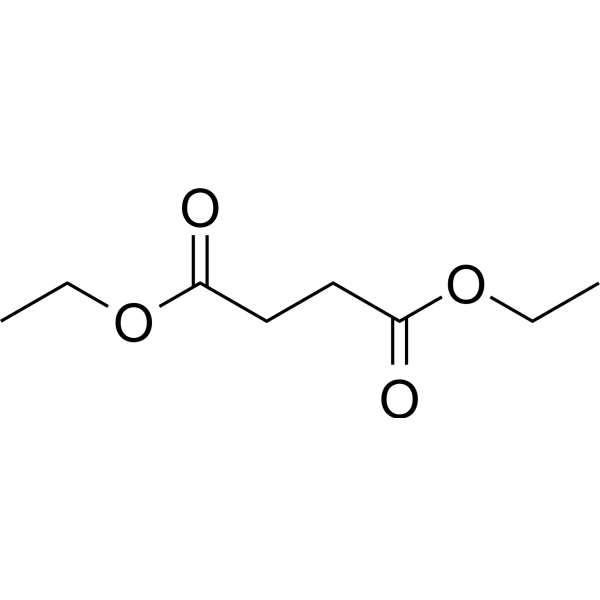
    Diethyl succinate
    3 Publications Verification

    Diethyl Butanedioate

    Environmental Pollutants Biochemical Assay Reagents Reactive Oxygen Species (ROS) Metabolic Disease Inflammation/Immunology
    Diethyl succinate (Diethyl Butanedioate) can be utilized at physiological pH, allowing it to penetrate biological membranes and integrate into the cells of tissue cultures, where it is metabolized via the tricarboxylic acid cycle. Diethyl succinate modulates the polarization and activation of microglial cells by reducing mitochondrial fission and the levels of reactive oxygen species (ROS), thereby exerting an inflammatory protective effect in primary microglial cells. Furthermore, Diethyl succinate is non-toxic and can be used in flavorings and seasonings .
    Diethyl succinate
  • HY-N0730

    Autophagy Apoptosis Neurological Disease Inflammation/Immunology
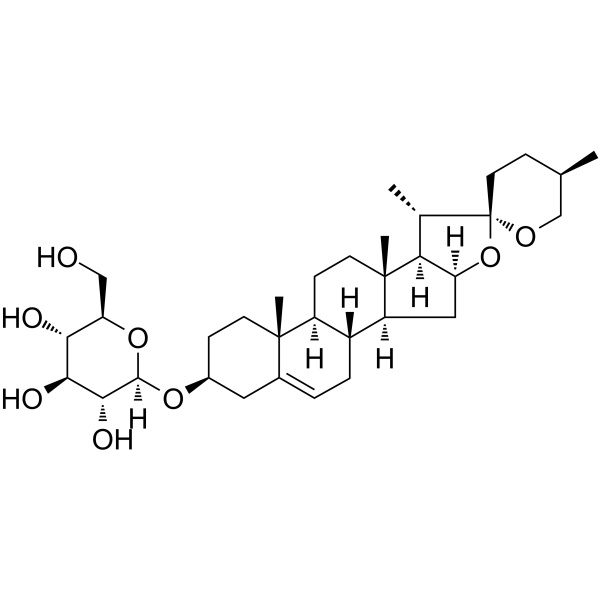
    Diosgenin glucoside, a saponin compound extracted from Trillium tschonoskii, provides neuroprotection by regulating microglial M1 polarization. Diosgenin glucoside protects against spinal cord injury by regulating autophagy and alleviating apoptosis .
    Diosgenin glucoside
  • HY-101318
    β-Funaltrexamine hydrochloride
    2 Publications Verification

    β-FNA hydrochloride

    Opioid Receptor p38 MAPK STAT NF-κB NO Synthase Toll-like Receptor (TLR) Cardiovascular Disease Neurological Disease
    β-Funaltrexamine (β-FNA) hydrochloride is a blood-brain barrier-permeable, selective and irreversible μ-opioid receptor antagonist with immunomodulatory, anti-inflammatory and neuroprotective activities. β-Funaltrexamine hydrochloride inhibits p38 MAPK and TLR4 signaling by blocking μ-opioid receptors, and reduces the transcriptional activities of NF-κB, AP-1, CREB and Stat. Furthermore, β-Funaltrexamine hydrochloride inhibits iNOS activation and pro-inflammatory microglial polarization, converting microglia to an anti-inflammatory phenotype, thereby downregulating neuroinflammation and ameliorating neuronal degeneration. β-Funaltrexamine hydrochloride is widely applicable to research related to stroke, cerebral ischemia/reperfusion injury and neurodegenerative diseases .
    β-Funaltrexamine hydrochloride
  • HY-W092110

    Angiotensin-converting Enzyme (ACE) Cardiovascular Disease
    Phe-Tyr is an ACE inhibitor. Phe-Tyr can be isolated from wakame. Phe-Tyr exhibits mild concentration-dependent toxicity to fibroblasts. Phe-Tyr can be used in studies related to hypertension and cardiovascular diseases .
    Phe-Tyr
  • HY-N0730R

    Reference Standards Autophagy Apoptosis Neurological Disease Inflammation/Immunology
    Diosgenin glucoside (Standard) is the analytical standard of Diosgenin glucoside. This product is intended for research and analytical applications. Diosgenin glucoside, a saponin compound extracted from Trillium tschonoskii, provides neuroprotection by regulating microglial M1 polarization. Diosgenin glucoside protects against spinal cord injury by regulating autophagy and alleviating apoptosis .
    Diosgenin glucoside (Standard)
  • HY-Y0836R

    Diethyl Butanedioate (Standard)

    Biochemical Assay Reagents Reference Standards Reactive Oxygen Species (ROS) Metabolic Disease Inflammation/Immunology
    Diethyl succinate (Standard) is the analytical standard of Diethyl succinate. This product is intended for research and analytical applications. Diethyl succinate (Diethyl Butanedioate) can be utilized at physiological pH, allowing it to penetrate biological membranes and integrate into the cells of tissue cultures, where it is metabolized via the tricarboxylic acid cycle. Diethyl succinate modulates the polarization and activation of microglial cells by reducing mitochondrial fission and the levels of reactive oxygen species (ROS), thereby exerting an inflammatory protective effect in primary microglial cells. Furthermore, Diethyl succinate is non-toxic and can be used in flavorings and seasonings .
    Diethyl succinate (Standard)
  • HY-162020

    Tau Protein Neurological Disease Inflammation/Immunology
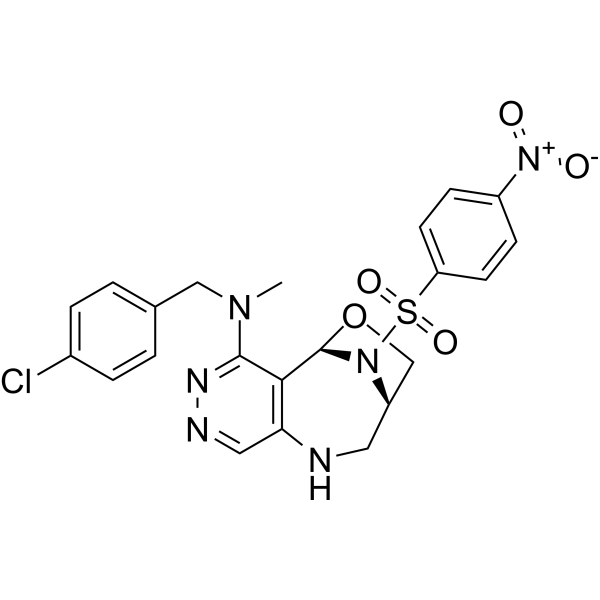
    SB1617 is a neuroinflammation-modulating agent, and has neuroprotective effect by reducing pathogenic tau levels through microglia-mediated anti-inflammatory activity .
    SB1617
  • HY-160938

    β-FNA

    Opioid Receptor STAT NF-κB Toll-like Receptor (TLR) NO Synthase p38 MAPK Cardiovascular Disease Neurological Disease
    β-Funaltrexamine (β-FNA) is a blood-brain barrier-permeable, selective and irreversible μ-opioid receptor antagonist with immunomodulatory, anti-inflammatory and neuroprotective activities. β-Funaltrexamine inhibits p38 MAPK and TLR4 signaling by blocking μ-opioid receptors, and reduces the transcriptional activities of NF-κB, AP-1, CREB and Stat. Furthermore, β-Funaltrexamine inhibits iNOS activation and pro-inflammatory microglial polarization, converting microglia to an anti-inflammatory phenotype, thereby downregulating neuroinflammation and ameliorating neuronal degeneration. β-Funaltrexamine is widely applicable to research related to stroke, cerebral ischemia/reperfusion injury and neurodegenerative diseases .
    β-Funaltrexamine

Inquiry Online

Your information is safe with us. * Required Fields.

Salutation


Country or Region *

Applicant Name *


Organization Name *

Department *


Email Address *


Product Name *

Cat. No.


Requested quantity *

Phone Number *


Remarks

Inquiry Online

Inquiry Information

Product Name:
Cat. No.:
Quantity:
MCE Japan Authorized Agent:

