10 Results for "

mitochondrial-dependent pathway

" in MedChemExpress (MCE) Product Catalog:
Products (10)

10 Results for "mitochondrial-dependent pathway" in MCE Product Catalog:

4
4 Cited Publications
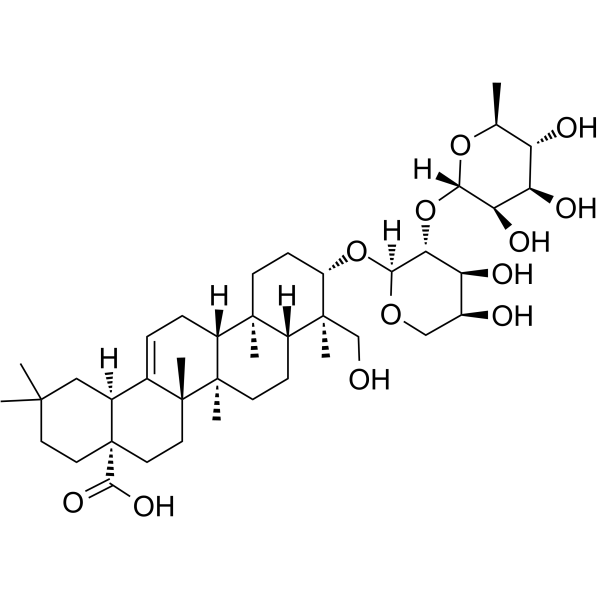
Cat. No.: HY-N0255
CAS No.: 27013-91-8
Synonyms: α-Hederin
alpha-Hederin (α-Hederin), a monodesmosidic triterpenoid saponin, exhibits promising antitumor potential against a variety of human cancer cell lines. alpha-Hederin could inhibit the proliferation and induce apoptosis of gastric cancer accompanied by glutathione decrement and reactive oxygen species generation via activating mitochondrial dependent pathway .
loading...
    loading...
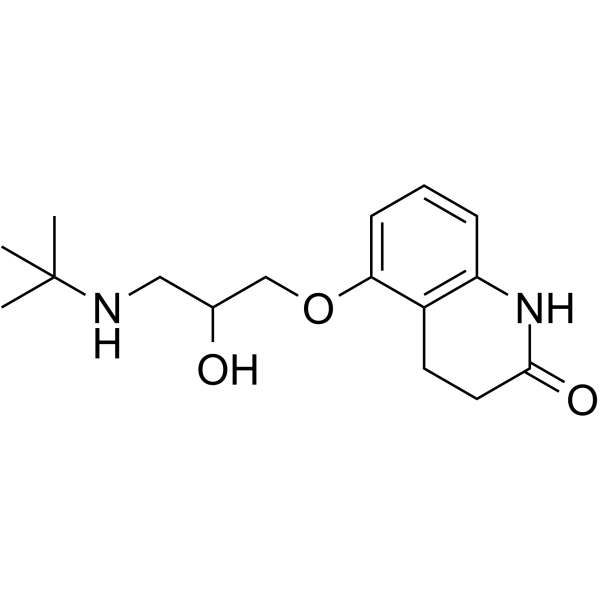
Cat. No.: HY-17495
CAS No.: 51781-06-7
Synonyms: OPC-1085
Carteolol is a non-selective β-adrenoceptor antagonist. Carteolol induces apoptosis via a caspase activated and mitochondrial-dependent pathway. Carteolol can be used for glaucoma research .
loading...
    loading...
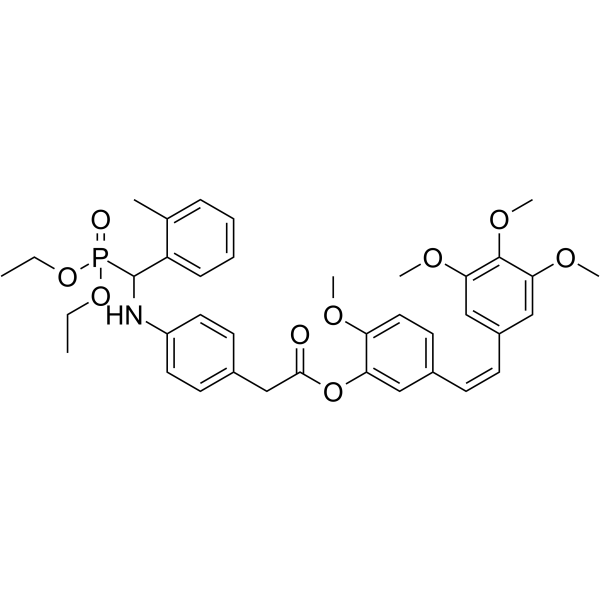
Cat. No.: HY-146006
CAS No.: 3034896-75-5
Target:  

Microtubule/Tubulin MMP

Research Areas:  

Cancer

Tubulin/MMP-IN-1 (compound 15g) is a potent inhibitor of tubulin and MMP. Tubulin/MMP-IN-1 has the potential for the research of cancer diseases. Tubulin/MMP-IN-1 suppresses tubulin polymerization, induces cell cycle arrest at the G2/M phase, leads to reactive oxidative stress (ROS) generation of HepG2 cells, and results in apoptosis by the mitochondrial-dependent apoptotic pathway .
loading...
    loading...
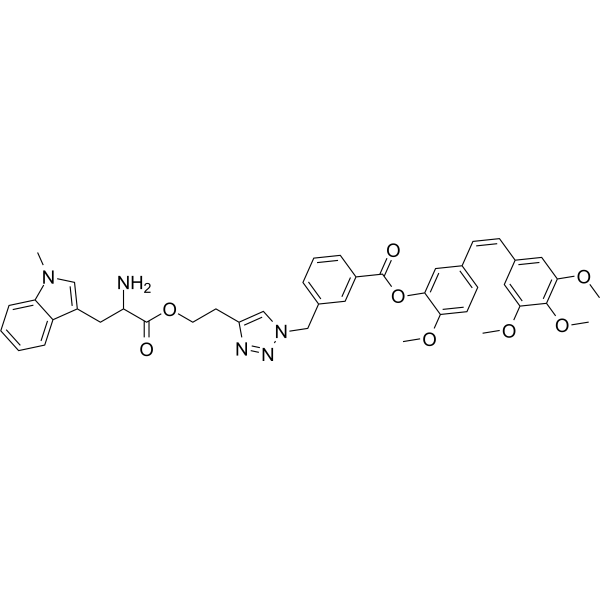
Cat. No.: HY-172088
Research Areas:  

Cancer

Tubulin/MMP-IN-3 (Compound 15j) is the dual inhibitor for tubulin polymerization and MMP, and inhibits MMP-2 and MMP-9 with IC50 of 21.13 μM and 19.24 μM. Tubulin/MMP-IN-3 inhibits NF-κB signaling pathway, causes mitochondrial dysfunction and the apoptosis through a mitochondrial-dependent pathway. Tubulin/MMP-IN-3 exhibits antiproliferative activity in a variety of cancer cells, arrests the cell cycle at G2/M phase, and exhibits antitumor efficacy in mouse models .
loading...
    loading...
Cat. No.: HY-124068
CAS No.: 1219104-20-7
LQB-118 is an orally active compound derived from sandalwood. LQB-118 can inhibit the migration of glioblastoma cells and induce cell death. LQB-118 can suppress the migration and invasion of prostate cancer cells by regulating the AKT/GSK3β pathway and the expression of the MMP-9/reck genes. LQB-118 can also inhibit yeast polysaccharide-induced inflammation both in vivo and in vitro. Additionally, LQB-118 selectively induces ROS-triggered and mitochondrial-dependent apoptosis in Leishmania amazonensis. LQB-118 can be used in studies related to inflammation, infections, and cancer diseases .
loading...
    loading...
Cat. No.: HY-123357
CAS No.: 1456807-80-9
Target:  

Apoptosis

Research Areas:  

Neurological Disease

IMM-H004, a coumarin derivative, possesses neuroprotective and potent free radical scavenging abilities. IMM-H004 significantly inhibits amyloid-β (Aβ)-induced cytotoxicity and apoptosis, offering potential value for research into neurodegenerative diseases such as Alzheimer's disease. Additionally, IMM-H004 is also capable of effectively blocking the calcium mobilization and chemotaxis induced by CKLF1-C27 (HY-P3418), thereby alleviating asthmatic pathological changes in the lung tissue of CKLF1 transgenic mice .
loading...
    loading...
Cat. No.: HY-173437
Target:  

PROTACs PARP

Research Areas:  

Cancer

CW-2 is a CRBN-recruited PARP1 PROTAC degrader. CW-2 triggers multiple downstream biological effects including DNA damage accumulation, impaired DNA repair, mitochondrial-mediated apoptosis, intracellular ROS buildup and G1/S cell cycle arrest, as well as the regulation of oxidative phosphorylation, p53, PI3K-Akt and MAPK alongside ubiquitin proteolysis pathways. CW-2 enhances cell membrane permeability and intracellular platinum enrichment, exhibits detectable pharmacokinetic profiles after intraperitoneal administration in rats and drives differential gene expression. CW-2 can be applied to research on triple-negative breast cancer, non-small cell lung cancer, cisplatin-resistant non-small cell lung cancer, colon cancer and pancreatic cancer .
loading...
    loading...
Cat. No.: HY-N0255R
CAS No.: 27013-91-8
Synonyms: α-Hederin (Standard)
alpha-Hederin (Standard) is the analytical standard of alpha-Hederin. This product is intended for research and analytical applications. alpha-Hederin (α-Hederin), a monodesmosidic triterpenoid saponin, exhibits promising antitumor potential against a variety of human cancer cell lines. alpha-Hederin could inhibit the proliferation and induce apoptosis of gastric cancer accompanied by glutathione decrement and reactive oxygen species generation via activating mitochondrial dependent pathway .
loading...
    loading...
Cat. No.: HY-146261
CAS No.: 2411548-90-6
HI5 is a potent tublin and IDO inhibitor, with an IC50 value of 70 nM in HeLa cells. HI5 inhibit IDO expression and decrease kynurenine production, leading to stimulating T cells activation and proliferation. HI5 can inhibit tubulin polymerization and cell migration, cause G2/M phase arrest, and induce apoptosis via the mitochondrial dependent apoptosis pathway and cause reactive oxidative stress generation in HeLa cells. HI5 can be used for researching anticancer .
loading...
    loading...
Cat. No.: HY-184415
Syk/HDAC6-IN-1 is a dual SYK/HDAC6 selective inhibitor with IC50 values of 0.19 nM (SYK) and 0.66 nM (HDAC6). Syk/HDAC6-IN-1 downregulates p-SYK to block downstream AKT/FOXO1 signaling, elevates acetylated histone H3 and α-tubulin via HDAC suppression, represses SREBF1 -mediated lipid biosynthetic pathways, triggers G0/G1 cell cycle arrest and robust mitochondrial-dependent caspase-3-mediated apoptosis in leukemia cells. Syk/HDAC6-IN-1 can be used for the research of FLT3-mutant acute myeloid leukemia .
loading...
    loading...

