



1. Search Result
Search Result
Results for "

penetrate

" in MedChemExpress (MCE) Product Catalog:

534

Inhibitors & Agonists

4

Screening Libraries

22

Fluorescent Dyes

25

Biochemical Assay Reagents

53

Peptides

1

Inhibitory Antibodies

33

Natural
Products

64

Isotope-Labeled Compounds

3

Click Chemistry

9

Oligonucleotides

Cat. No. Product Name Target Research Areas Chemical Structure
  • HY-13909
    RGFP966
    50+ Cited Publications

    HDAC Cancer
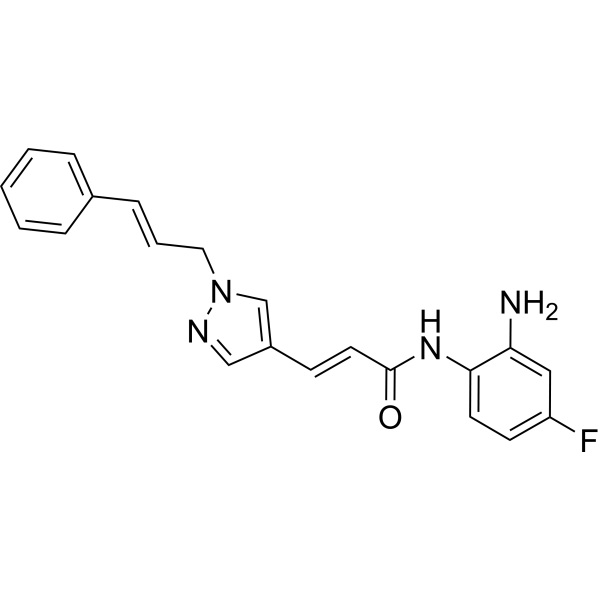
    RGFP966 is a highly selective HDAC3 inhibitor with an IC50 of 80 nM and shows no inhibition to other HDACs at concentrations up to 15 μM. RGFP966 can penetrate the blood brain barrier (BBB).
    RGFP966
  • HY-14136
    Rimonabant
    10+ Cited Publications

    SR141716

    Cannabinoid Receptor Bacterial Infection Metabolic Disease Cancer
    Rimonabant (SR141716) is a highly potent, brain penetrated and selective central cannabinoid receptor (CB1) antagonist with a Ki of 1.8 nM. Rimonabant (SR141716) also inhibits Mycobacterial membrane protein Large 3 (MMPL3).
    Rimonabant
  • HY-14842B

    ITF-2357 hydrochloride monohydrate

    HDAC Infection Neurological Disease Inflammation/Immunology Cancer
    Givinostat hydrochloride monohydrate (ITF-2357 hydrochloride monohydrate) is a HDAC inhibitor with an IC50 of 198 and 157 nM for HDAC1 and HDAC3, respectively. Givinostat hydrochloride monohydrate can penetrate the blood-brain barrier (BBB) .
    Givinostat hydrochloride monohydrate
  • HY-P1178
    Cyclotraxin B
    3 Publications Verification

    Trk Receptor p38 MAPK Neurological Disease
    Cyclotraxin B is a BBB-penetrable and selective TrkB inhibitor. Cyclotraxin B inhibits BDNF-induced TrkB activity in a non-competitive manner, with an IC50 of 0.30 nM. Cyclotraxin B has analgesic and anxiolytic effects .
    Cyclotraxin B
  • HY-W014423
    L-Histidine hydrochloride hydrate
    3 Publications Verification

    H-His-OH.HCl.H2O

    Endogenous Metabolite Apoptosis Reactive Oxygen Species (ROS) Inflammation/Immunology Cancer
    L-Histidine hydrochloride hydrate is an endogenous metabolite. L-Histidine hydrochloride hydrate scavenges hydroxyl radicals and singlet oxygen, regulate the absorption of zinc, copper and iron, exhibits anti-inflammatory and antioxidant activities. L-Histidine hydrochloride hydrate is blood brain barrier penetrable .
    L-Histidine hydrochloride hydrate
  • HY-119624

    PIKfyve Cancer
    MOMIPP, a macropinocytosis inducer, is a PIKfyve inhibitor. MOMIPP penetrates the blood-brain barrier (BBB) .
    MOMIPP
  • HY-114452
    LY2940094
    1 Publications Verification

    BTRX-246040

    Opioid Receptor Neurological Disease
    LY2940094 (BTRX-246040) is a potent, selective and orally available nociceptin receptor (NOP receptor) antagonist with high affinity (Ki=0.105 nM) and antagonist potency (Kb=0.166 nM). LY2940094 reduces ethanol self-administration in animal models .
    LY2940094
  • HY-158082
    TRITC-dextran, MW 4000
    2 Publications Verification

    Tetramethyl rhodamine isothiocyanate glucan, MW 4000

    Fluorescent Dye Others
    TRITC-dextran MW 4000 (Tetramethyl rhodamine isothiocyanate glucan, MW 4000) is a fluorescent dye, with the molecular weight of 4 kD. TRITC-dextran MW 4000 exhibits an excitation wavelength of 555 nm. TRITC-dextran MW 4000 is vessel penetrate, which could label blood plasma to visualize the vasculature. TRITC-dextran MW 4000 is utilized in drug delivery for the stability of TRITC over a wide pH range (i.e. pH 2–11) and resistance to photo-bleaching .
    TRITC-dextran, MW 4000
  • HY-P2297

    Transferrin Receptor Metabolic Disease
    TfR-T12 is a BBB-penetrated transferrin receptor (TfR) binding peptide, displaying a binding affinity in the nM range .
    TfR-T12
  • HY-14842A
    Givinostat hydrochloride
    10+ Cited Publications

    ITF-2357 hydrochloride

    HDAC Inflammation/Immunology Cancer
    Givinostat (ITF-2357) hydrochloride is a HDAC inhibitor with an IC50 of 198 and 157 nM for HDAC1 and HDAC3, respectively. Givinostat hydrochloride can penetrate the blood-brain barrier (BBB). .
    Givinostat hydrochloride
  • HY-120085
    PFE-360
    3 Publications Verification

    PF-06685360

    LRRK2 Neurological Disease
    PFE-360 (PF-06685360) is a potent, selective, brain penetrated and orally active leucine-rich repeat kinase 2 (LRRK2) inhibitor with a mean IC50 of 2.3 nM in vivo .
    PFE-360
  • HY-131703
    UGT8-IN-1
    1 Publications Verification

    UGT Metabolic Disease
    UGT8-IN-1 is a brain penetrable and orally active inhibitor of ceramide galactosyltransferase enzyme (UGT8). UGT8-IN-1 can be used in the study for lysosomal storage disorders .
    UGT8-IN-1
  • HY-116477

    FAAH Neurological Disease Inflammation/Immunology
    URB937 is an orally active and peripherally restricted FAAH inhibitor (IC50=26.8 nM) and increases anandamide levels. URB937 fails to affect FAAH activity in the brain (not penetrate the blood-brain barrier) .
    URB937
  • HY-W040971

    2-Methoxy-4-methylphenol

    Environmental Pollutants ERK Endogenous Metabolite p38 MAPK Akt Reactive Oxygen Species (ROS) FAK Cardiovascular Disease Neurological Disease Metabolic Disease
    Creosol (2-Methoxy-4-methylphenol) is an endogenous metabolite that acts as an important chemical intermediate and potential biofuel mainly derived from lignocellulosic biomass. Creosol is blood brain barrier penetrable .
    Creosol
  • HY-14130

    CRFR Neurological Disease Endocrinology
    CP 376395 is a potent, selective, and brain-penetrable Corticotropin releasing factor 1 (CRF1) receptor antagonist .
    CP 376395
  • HY-158082A

    Tetramethyl rhodamine isothiocyanate glucan, MW 20000

    Fluorescent Dye Others
    TRITC-dextran, MW 20000 (Tetramethyl rhodamine isothiocyanate glucan, MW 20000) is a fluorescent dye, with the molecular weight of 20 kD. TRITC-dextran MW 20000 exhibits an excitation wavelength of 555 nm. TRITC-dextran MW 20000 is vessel penetrate, which could label blood plasma to visualize the vasculature. TRITC-dextran MW 20000 is utilized in drug delivery for the stability of TRITC over a wide pH range (i.e. pH 2–11) and resistance to photo-bleaching .
    TRITC-dextran, MW 20000
  • HY-164284

    Sodium Channel Neurological Disease
    LK-2 is an antagonist for ASIC1a with a Kd of 1.9 μM. LK-2 reduces glutamate-induced ASIC1a current-enhancement with an IC50 of 6.6 μM. LK-2 exhibits neuroprotective efficacy in mouse ischemic stroke model, with improved motor and coordination skills. LK-2 is blood-brain barrier (BBB) penetrable .
    LK-2
  • HY-114452A
    LY2940094 tartrate
    1 Publications Verification

    BTRX-246040 tartrate

    Opioid Receptor Neurological Disease
    LY2940094 (BTRX-246040) tartrate is a potent, brain penetrant, selective and orally available N/OFQ peptide (NOP) receptor antagonist with high affinity (Ki=0.105 nM) and antagonist potency (Kb=0.166 nM). LY2940094 tartrate reduces Ethanol self-administration and Ethanol seeking in animal models .
    LY2940094 tartrate
  • HY-106000

    Histamine Receptor Neurological Disease
    GSK239512 is a potent and brain penetrated H3 receptor antagonist. GSK239512 can be used for the research of mild-to-moderate Alzheimer's disease (AD) .
    GSK239512
  • HY-147045

    TNF Receptor Inflammation/Immunology
    UCB-5307 is a potent TNF signaling inhibitor with a KD of 9 nM for human TNFα. UCB-5307 can penetrate the preformed hTNF/hTNFR1 complex .
    UCB-5307
  • HY-D0918

    Fluorescent Dye Others
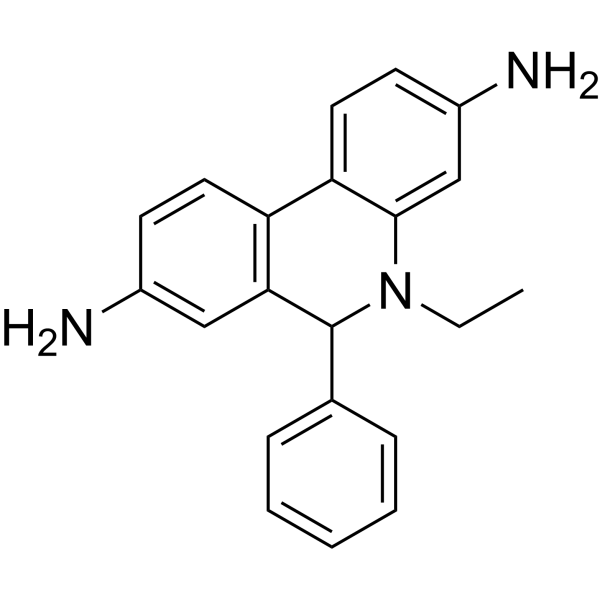
    YO-PRO-1 is a non-cell-membrane-penetrating green fluorescent dye. YO-PRO-1 cannot penetrate normal cell membranes but can penetrate the membranes of apoptotic and necrotic cells. YO-PRO-1 has a high affinity for DNA. When it is not bound to DNA, it emits almost no fluorescence, and when it binds to DNA, it can emit green fluorescence (Ex/Em: 488/530±30 nM). YO-PRO-1 is often used together with Propidium Iodide (HY-D0815) to analyze and identify apoptotic and necrotic cells .
    YO-PRO-1
  • HY-10900
    TCS 1102
    1 Publications Verification

    Orexin Receptor (OX Receptor) Neurological Disease Endocrinology
    TCS 1102 is a potent, dual orexin receptor antagonist, with Ki values of 0.2 nM and 3 nM for OX2 and OX1 receptors, respectively. TCS 1102 demonstrates excellent blood-brain barrier penetrability and moderate bioavailability in rats .
    TCS 1102
  • HY-148787

    SAR443820; DNL788

    RIP kinase Neurological Disease Inflammation/Immunology
    Oditrasertib (SAR443820) is an orally active, BBB-penetrable and selective reversible inhibitor of RIPK1. Oditrasertib can be used in the research of chronic inflammatory central nervous system diseases, such as amyotrophic lateral sclerosis and multiple sclerosis .
    Oditrasertib
  • HY-158082D

    Tetramethyl rhodamine isothiocyanate glucan, MW 150000

    Fluorescent Dye Others
    TRITC-dextran, MW 150000 (Tetramethyl rhodamine isothiocyanate glucan, MW 150000) is a fluorescent dye, with the molecular weight of 150 kD. TRITC-dextran, MW 150000 exhibits an excitation wavelength of 555 nm. TRITC-dextran, MW 150000 is follicular and vessel penetrate, which is dependent on the molecular weight. TRITC-dextran, MW 150000 is utilized in drug delivery for the stability of TRITC over a wide pH range (i.e. pH 2–11) and resistance to photo-bleaching .
    TRITC-dextran, MW 150000
  • HY-143896

    STING Cancer
    STING agonist-7 is a non-nucleotide STING agonist. STING agonist-7 binds selectively to mouse STING but not human STING. STING agonist-7 penetrates cell membrane poorly .
    STING agonist-7
  • HY-160959

    nAChR Neurological Disease
    AN317 is a selective agonist for α6β2-containing nicotinic acetylcholine receptor (nAChR) with Ki of 6.2 nM and 4.1 nM, for α6/α3β2β3 receptor and α4β2 receptor, respectively. AN317 induces dopamine release in the synaptosomes of the rat striatum, enhances dopaminergic neuronal activity in substantia nigra, and exhibits protective efficacy to rat neurons against dopamine neurotoxin MPP +. AN317 exhibits good pharmacokinetic characteristics in rats. AN317 penetrates the blood-brain barrier (BB) .
    AN317
  • HY-162565

    STK33 CDK RET Endocrinology
    CDD-2807 is an inhibitor for serine/threonine kinase 33 (STK33) with IC50 of 9.2 nM. CDD-2807 exhibits no significant toxicity in mice and can cross the blood-testis barrier without accumulating in the brain. CDD-2807 induces a reversible contraceptive effect and has potential for the development of the male contraceptive .
    CDD-2807
  • HY-134665

    Flavivirus Dengue Virus DNA/RNA Synthesis Infection
    NITD-2, a dengue virus (DENV) polymerase inhibitor, inhibits the DENV RdRp-mediated RNA elongation. NITD-2 penetrates cell membrane poorly .
    NITD-2
  • HY-153175

    RET Neurological Disease
    BT44 is a selective RET activator. BT44 can penetrate through the blood-brain barrier and can be used for the research of neurodegenerative disorders and diabetes mellitus .
    BT44
  • HY-108012

    Fungal Infection
    ME1111 is an antifungal agent that is active against dermatophytes. ME1111 is an inhibitor of the succinate dehydrogenase of Trichophyton species. ME1111 has an excellent ability to penetrate human nails and is used for onychomycosis research .
    ME1111
  • HY-136146

    nAChR Neurological Disease
    SUVN-911 is a potent, selective, brain penetrated and orally bioavailable neuronal nicotinic acetylcholine α4β2 receptor antagonist, with a Ki of 1.5 nM. SUVN-911 has antidepressant activity .
    SUVN-911
  • HY-153773
    Z4P
    3 Publications Verification

    IRE1 Cancer
    Z4P is a BBB-penetrable IRE1 inhibitor with an IC50 of 1.13 μM. Z4P in combination with Temozolomide (HY-17364) inhibits the growth and recurrence of glioblastoma and has anti-tumor activity .
    Z4P
  • HY-N4134

    NO Synthase Inflammation/Immunology
    Ciwujianoside C3, an orally active and brain penetrated compound, is isolated the leaves of Acanthopanax henryi Harms. Ciwujianoside C3 has anti-inflammatory effect and can reinforces object recognition memory .
    Ciwujianoside C3
  • HY-101059

    GABA Receptor Neurological Disease
    FGIN 1-27, an indoleacetamide, is a specific peripheral benzodiazepine receptor (PBR) ligand with a Ki of 5.0 nM. FGIN 1-27 can penetrate the blood brain barrier (BBB). FGIN 1-27 inhibits the onset of Isoniazid-induced convulsions .
    FGIN 1-27
  • HY-158082E

    Tetramethyl rhodamine isothiocyanate glucan, MW 500000

    Fluorescent Dye Others
    TRITC-dextran, MW 500000 (Tetramethyl rhodamine isothiocyanate glucan, MW 500000) is a fluorescent dye, with the molecular weight of 500 kD. TRITC-dextran, MW 500000 exhibits an excitation wavelength of 555 nm. TRITC-dextran, MW 500000 is follicular and vessel penetrate, which is dependent on the molecular weight. TRITC-dextran, MW 500000 is utilized in drug delivery for the stability of TRITC over a wide pH range (i.e. pH 2–11) and resistance to photo-bleaching .
    TRITC-dextran, MW 500000
  • HY-158082H

    Tetramethyl rhodamine isothiocyanate glucan, MW 2000000

    Fluorescent Dye Others
    TRITC-dextran, MW 2000000 (Tetramethyl rhodamine isothiocyanate glucan, MW 2000000) is a fluorescent dye, with the molecular weight of 2000 kD. TRITC-dextran, MW 2000000 exhibits an excitation wavelength of 555 nm. TRITC-dextran, MW 2000000 is follicular and vessel penetrate, which is dependent on the molecular weight. TRITC-dextran, MW 2000000 is utilized in drug delivery for the stability of TRITC over a wide pH range (i.e. pH 2–11) and resistance to photo-bleaching .
    TRITC-dextran, MW 2000000
  • HY-P10235

    Amylin Receptor Neurological Disease
    Cyclic AC253 is an antagonist for amylin receptor, with IC50 of 0.3 μM. Cyclic AC253 exhibits neuroprotective efficacy against Aβ toxicity and abrogates Aβ-induced impairment of hippocampal long-term potentiation. Cyclic AC253 penetrate blood-brain barrier (BBB) .
    Cyclic AC253
  • HY-101188

    Histamine Receptor Infection
    INCB38579 is an orally active, highly brain penetrable, and selective histamine H4 receptor (HH4R) antagonist (hH4R IC50=4.8 nM, mH4R IC50=42 nM, rH4R IC50=32 nM). INCB38579 shows anti-inflammatory pain and anti-pruritic activities .
    INCB38579
  • HY-101281

    mAChR Neurological Disease
    VU 6008667 is a selective negative allosteric modulator of M5 NAM with IC50s of 1.2 μM and 1.6 μM for human M5 and rat M5, respectively. High CNS penetration .
    VU 6008667
  • HY-134228

    Biochemical Assay Reagents Cancer
    4-Hydroperoxyifosfamide is an anticancer agent that can penetrate the blood-brain barrier (BBB) .
    4-Hydroperoxyifosfamide
  • HY-128351
    SHR1653
    1 Publications Verification

    Oxytocin Receptor Neurological Disease Endocrinology
    SHR1653 is a highly potent, selective and brain penetrated oxytocin receptor (OTR) antagonist, with an IC50 of 15 nM for hOTR .
    SHR1653
  • HY-137279
    Naloxone methiodide
    1 Publications Verification

    Opioid Receptor Inflammation/Immunology
    Naloxone methiodide is a peripherally restricted, nonselective, and competitive opioid receptor antagonist. Naloxone methiodide does not penetrate the blood-brain barrier .
    Naloxone methiodide
  • HY-131204

    Caspase Neurological Disease
    CZL80, a brain-penetrable caspase-1 inhibitor with an IC50 of 0.01 μM, could be used in the study of febrile seizures and later enhanced epileptogenic susceptibility .
    CZL80
  • HY-105552

    Biochemical Assay Reagents Others
    Prolonium (iodide) is membrane impermeant. Prolonium (iodide) can easily penetrate dead or damaged cells. Prolonium (iodide) is a probe that can be used for fluorescence microscopy and flow cytometry .
    Prolonium iodide
  • HY-129980

    PKC Neurological Disease
    NPC-15437 dihydrochloride is a selective, penetrable and reversible protein kinase C (PKC) inhibitor, with an IC50 of 19 μM. NPC-15437 dihydrochloride interferes with mechanisms underlying memory consolidation .
    NPC-15437 dihydrochloride
  • HY-100605

    mGluR Others
    VU0483605 is a potent and brain-penetrated mGlu1 receptor positive allosteric modulator (PAM). VU0483605 shows excellent mGlu1 PAM activity at both human and rat, with EC50 values of 390 and 356 nM, respectively .
    VU0483605
  • HY-P2297A

    Transferrin Receptor Metabolic Disease
    TfR-T12 TFA is a BBB-penetrated transferrin receptor (TfR) binding peptide, displaying a binding affinity in the nM range .
    TfR-T12 TFA
  • HY-103253

    Reactive Oxygen Species (ROS) Neurological Disease
    LY231617 is a potent and blood-brain barrier penetrable antioxidant. LY231617 is a neuroprotective agent in brain, it can be used for the research of nervous disease .
    LY231617
  • HY-P4247

    Amino Acid Derivatives Others
    Hexa-arginine, consisting of six arginines, is a polycationic peptide that can penetrate cells efficiently and is mainly used for the intracellular delivery of low-molecular-weight agents, biomolecules, and particles .
    Hexaarginine
  • HY-152839A

    BLU-263 phosphate

    c-Kit Cancer
    Elenestinib (BLU-263) phosphate is an orally active inhibitor of Tyrosine kinase with an IC50 of 0.2 nM for KIT D816V. Elenestinib phosphate minimally penetrates the blood-brain barrier. Elenestinib phosphate can be used in the study of systemic mastocytosis .
    Elenestinib phosphate

Inquiry Online

Your information is safe with us. * Required Fields.

Salutation


Country or Region *

Applicant Name *


Organization Name *

Department *


Email Address *


Product Name *

Cat. No.


Requested quantity *

Phone Number *


Remarks

Inquiry Online

Inquiry Information

Product Name:
Cat. No.:
Quantity:
MCE Japan Authorized Agent:

