



104821-25-2
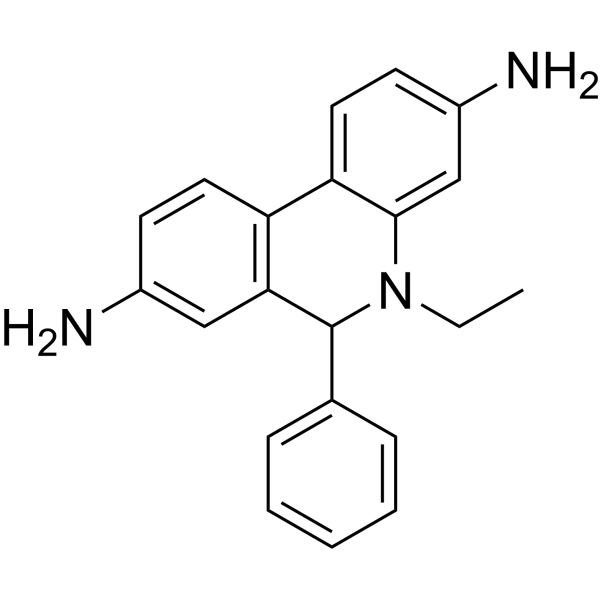
Chemical Structure
Dihydroethidium
Synonym(s): Hydroethidine; PD-MY 003
- CAS. Nr.: 104821-25-2
- Formula:C21H21N3
- Molecular Weight:315.42
IUPAC Name: 5-ethyl-6-phenyl-5,6-dihydrophenanthridine-3,8-diamine
InChIKey: XYJODUBPWNZLML-UHFFFAOYSA-N
SMILES: NC1=CC=C2C3=C(C=C(N)C=C3)C(C4=CC=CC=C4)N(CC)C2=C1
Biological Activity: Dihydroethidium, also known as DHE, is a peroxide indicator. Dihydroethidium penetrates cell membranes to form a fluorescent protein complex with blue fluoresces. After entering the cells, Dihydroethidium is mainly localized in the cell membrane, cytoplasm and nucleus, and the staining effect is the strongest in the nucleus. Dihydroethidium produces inherent blue fluorescence with a maximum excitation wavelength of 370 nm and a maximum emission wavelength of 420 nm; after dehydrogenation, Dihydroethidium combines with RNA or DNA to produce red fluorescence with a maximum excitation wavelength of 300 nm and a maximum emission wavelength of 610 nm. 535 nm can also be used as the excitation wavelength for actual observation[1].
| Art. -Nr. | Produktname | Reinheit | Beschreibung | Pricing | |||||||||||||||||||
|---|---|---|---|---|---|---|---|---|---|---|---|---|---|---|---|---|---|---|---|---|---|---|---|
|
|
Dihydroethidium | 98.83% | Dihydroethidium, also known as DHE, is a peroxide indicator. Dihydroethidium penetrates cell membranes to form a fluorescent protein complex with blue fluoresces. After entering the cells, Dihydroethidium is mainly localized in the cell membrane, cytoplasm and nucleus, and the staining effect is the strongest in the nucleus. Dihydroethidium produces inherent blue fluorescence with a maximum excitation wavelength of 370 nm and a maximum emission wavelength of 420 nm; after dehydrogenation, Dihydroethidium combines with RNA or DNA to produce red fluorescence with a maximum excitation wavelength of 300 nm and a maximum emission wavelength of 610 nm. 535 nm can also be used as the excitation wavelength for actual observation. | ||||||||||||||||||||
|
loading...
/
|
|||||||||||||||||||||||
|
|
Dihydroethidium (solution) | Dihydroethidium (solution) , also known as DHE, is a peroxide indicator. Dihydroethidium penetrates cell membranes to form a fluorescent protein complex with blue fluoresces. After entering the cells, Dihydroethidium is mainly localized in the cell membrane, cytoplasm and nucleus, and the staining effect is the strongest in the nucleus. Dihydroethidium produces inherent blue fluorescence with a maximum excitation wavelength of 370 nm and a maximum emission wavelength of 420 nm; after dehydrogenation, Dihydroethidium combines with RNA or DNA to produce red fluorescence with a maximum excitation wavelength of 300 nm and a maximum emission wavelength of 610 nm. 535 nm can also be used as the excitation wavelength for actual observation. Solvent and concentration: DMSO: 5 mM |
|||||||||||||||||||||
|
loading...
/
|
|||||||||||||||||||||||
-
Similarity Score 0.56
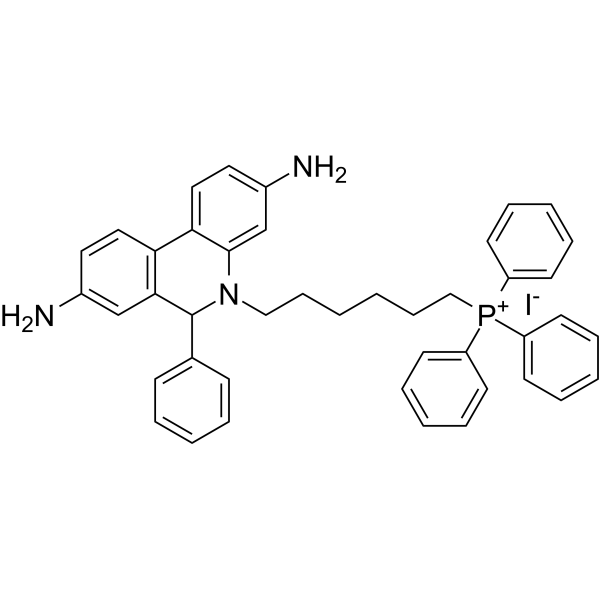 HY-D1055MitoSOX Red
-
Similarity Score 0.50
 HY-164726Estrogen receptor modulator 11
-
Similarity Score 0.48
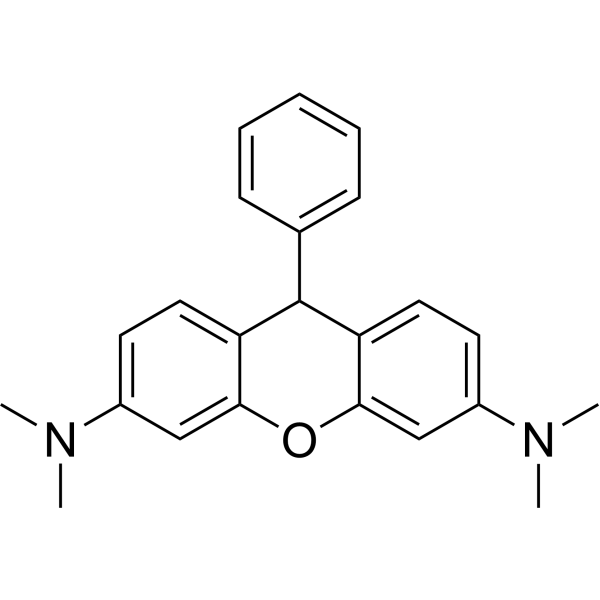 HY-D1740Dihydrotetramethylrosamine
-
Similarity Score 0.47
 HY-117518AParanyline hydrochloride
-
Similarity Score 0.47
 HY-118851NSC-77053
-
Similarity Score 0.46
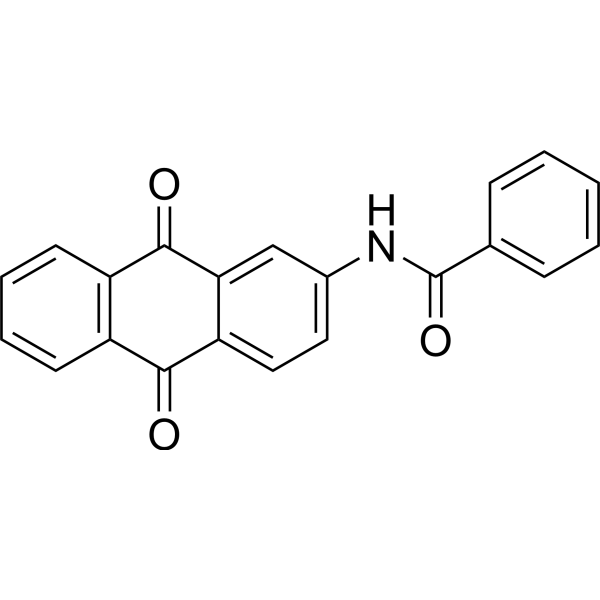 HY-138102SSAA09E3
-
Similarity Score 0.46
 HY-124072HL001
-
Similarity Score 0.46
 HY-117518Paranyline
-
Similarity Score 0.46
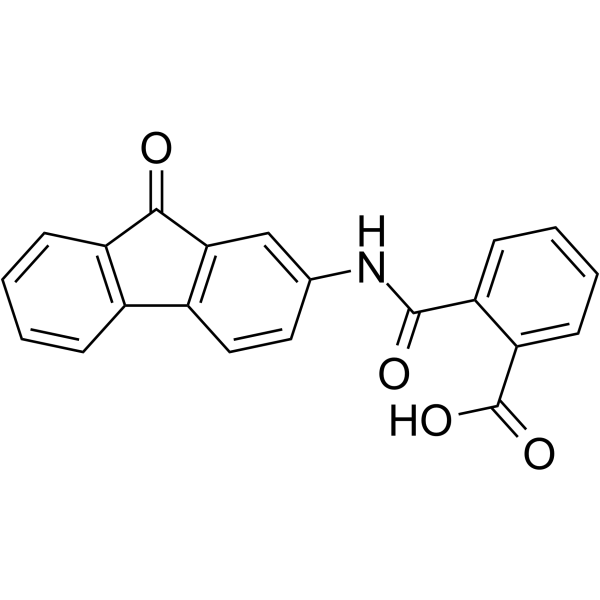 HY-118539NSC12404
-

Explore the MedChemAI to find more analogs




