



150347-59-4
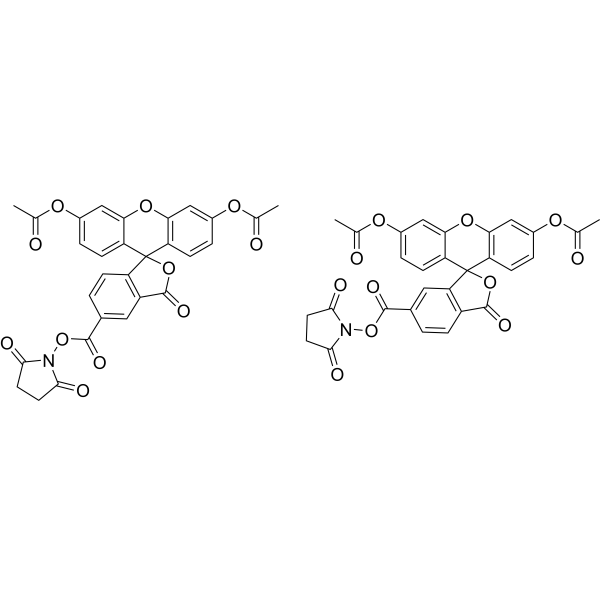
Chemical Structure
CFDA-SE
Synonym(s): CFSE; 5(6)-Carboxyfluorescein diacetate succinimidyl ester; 5(6)-CFDA N-succinmidyl ester
- CAS No.: 150347-59-4
- Formula:C29H19NO11
- Molecular Weight:557.46
IUPAC Name: 5-(((2,5-dioxopyrrolidin-1-yl)oxy)carbonyl)-3-oxo-3H-spiro[isobenzofuran-1,9'-xanthene]-3',6'-diyl diacetate compound with 6-(((2,5-dioxopyrrolidin-1-yl)oxy)carbonyl)-3-oxo-3H-spiro[isobenzofuran-1,9'-xanthene]-3',6'-diyl diacetate (1:1)
InChIKey: LZFDYQHOQDFMOA-UHFFFAOYSA-N
SMILES: CC(OC1=CC=C(C2(C(C=CC(C(ON3C(CCC3=O)=O)=O)=C4)=C4C(O2)=O)C(C=CC(OC(C)=O)=C5)=C5O6)C6=C1)=O.CC(OC7=CC=C(C8(C(C=C(C(ON9C(CCC9=O)=O)=O)C=C%10)=C%10C(O8)=O)C(C=CC(OC(C)=O)=C%11)=C%11O%12)C%12=C7)=O
Biological Activity: CFDA-SE is a fluorescent dye that can penetrate the cell membrane. It can react with the free amine group in the cytoskeleton protein inside the cell, and finally form a protein complex with fluorescence. After entering the cell, CFDA-SE locates in the cell membrane, cytoplasm and nucleus, and the fluorescence staining is strongest in the nucleus[1]. CFDA-SE dye can be uniformly inherited by the cells with cell division and proliferation, and its attenuation is proportional to the number of cell divisions. This phenomenon can be detected and analyzed by flow cytometry under the excitation light of 488 nm, and can be used to detect the proliferation of cells[1].
| Cat. No. | Product Name | Purity | Description | Pricing | |||||||||||||||||||
|---|---|---|---|---|---|---|---|---|---|---|---|---|---|---|---|---|---|---|---|---|---|---|---|
|
|
CFDA-SE | 97.21% | CFDA-SE is a fluorescent dye that can penetrate the cell membrane. It can react with the free amine group in the cytoskeleton protein inside the cell, and finally form a protein complex with fluorescence. After entering the cell, CFDA-SE locates in the cell membrane, cytoplasm and nucleus, and the fluorescence staining is strongest in the nucleus. CFDA-SE dye can be uniformly inherited by the cells with cell division and proliferation, and its attenuation is proportional to the number of cell divisions. This phenomenon can be detected and analyzed by flow cytometry under the excitation light of 488 nm, and can be used to detect the proliferation of cells. | ||||||||||||||||||||
|
loading...
/
|
|||||||||||||||||||||||
|
|
CFDA-SE (solution) | CFDA-SE (solution) is a fluorescent dye that can penetrate the cell membrane. It can react with the free amine group in the cytoskeleton protein inside the cell, and finally form a protein complex with fluorescence. After entering the cell, CFDA-SE locates in the cell membrane, cytoplasm and nucleus, and the fluorescence staining is strongest in the nucleus. CFDA-SE dye can be uniformly inherited by the cells with cell division and proliferation, and its attenuation is proportional to the number of cell divisions. This phenomenon can be detected and analyzed by flow cytometry under the excitation light of 488 nm, and can be used to detect the proliferation of cells. Solvent and concentration: DMSO: 5 mM |
|||||||||||||||||||||
|
loading...
/
|
|||||||||||||||||||||||
-
Similarity Score 0.79
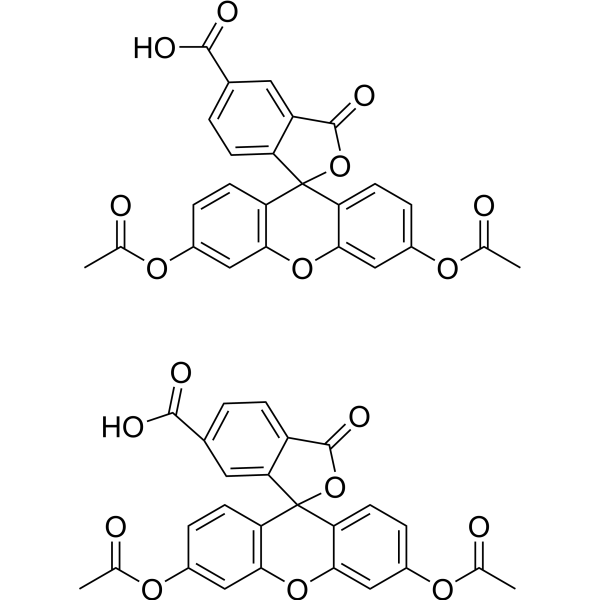 HY-D07225(6)-CFDA
-
Similarity Score 0.78
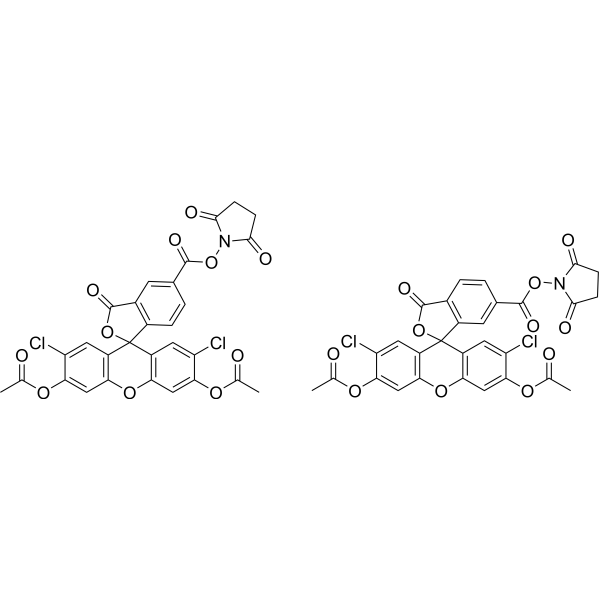 HY-D00505(6)-Carboxy-2',7'-dichlorofluorescein diacetate N-succinimidyl ester
-
Similarity Score 0.71
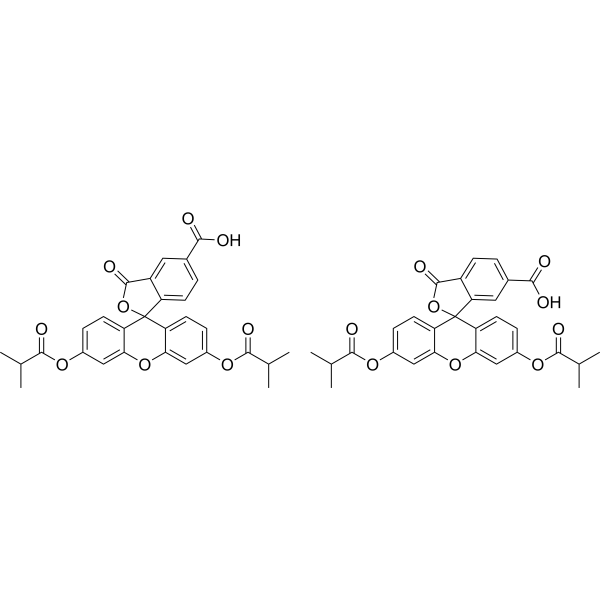 HY-D14775(6)-Carboxyfluorescein diisobutyrate
-
Similarity Score 0.66
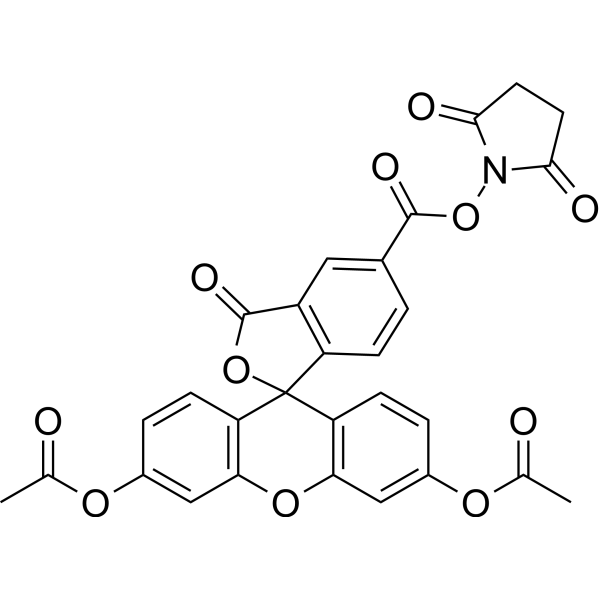 HY-D00565-Carboxyfluorescein diacetate N-succinimidyl ester
-
Similarity Score 0.64
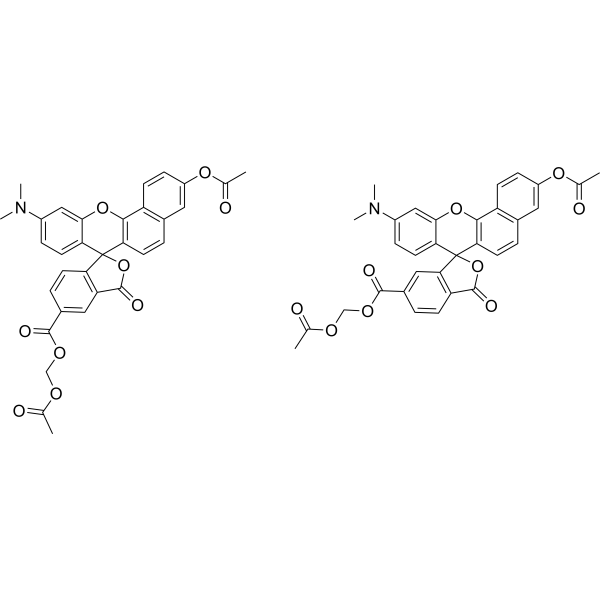 HY-D1093Carboxy SNARF-1, acetoxymethyl ester (5/6-mixture)
-
Similarity Score 0.64
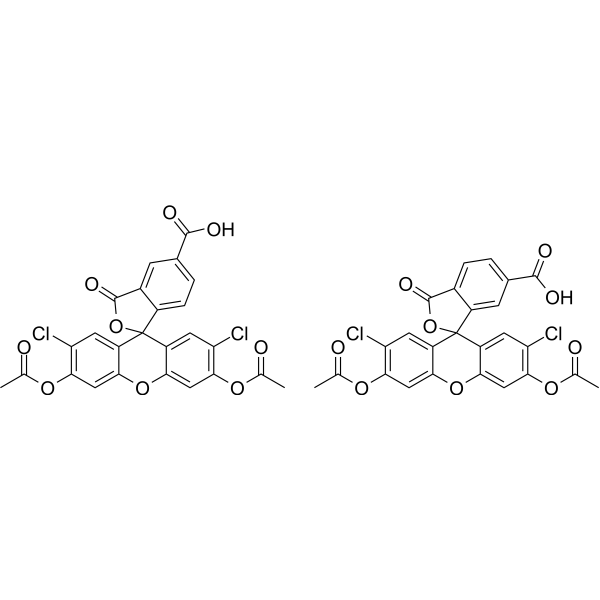 HY-D10785(6)-Carboxy-2',7'-dichlorofluorescein diacetate
-
Similarity Score 0.63
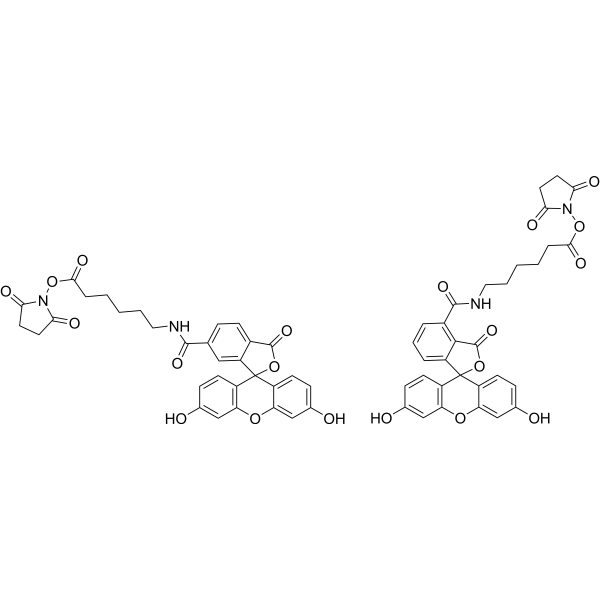 HY-D11095(6)-SFX ,SE
-
Similarity Score 0.60
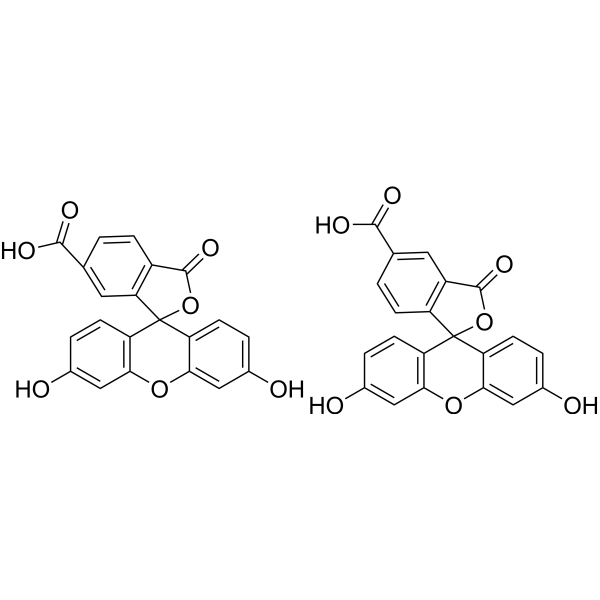 HY-159405(6)-Carboxyfluorescein
-
Similarity Score 0.59
 HY-DY10855(6)-TAMRA (solution)
-

Explore the MedChemAI to find more analogs




