
18 Results for "

pharmaceutical development

" in MedChemExpress (MCE) Product Catalog:
Products (18)

18 Results for "pharmaceutical development" in MCE Product Catalog:

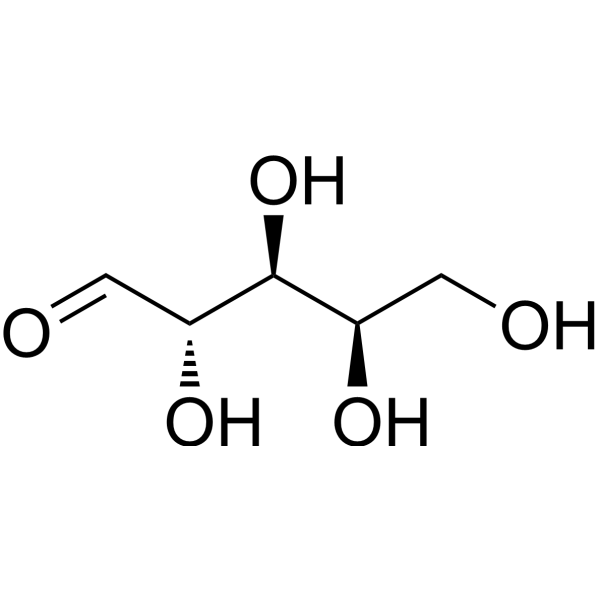
Cat. No.: HY-128753
CAS No.: 1114-34-7
Purity:  ≥98.0%
D-Lyxose is an endogenous metabolite. D-Lyxose is a rare pentose with significant potential for pharmaceutical synthesis. D-Lyxose serves as a starting material for antitumor agents (such as α-galactosylceramide-based immunostimulants). D-Lyxose acts as a precursor for L-nucleoside analogs used in the development of antiviral drugs. D-Lyxose can be used as a synthetic intermediate for other rare sugars (such as L-ribose) .
loading...
    loading...
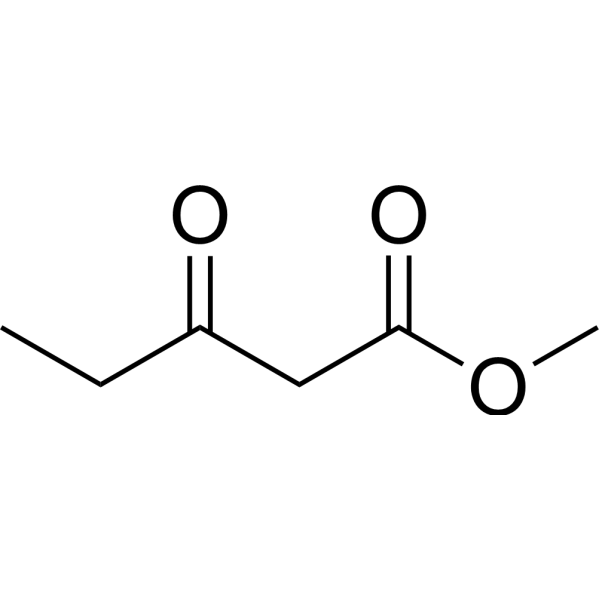
Cat. No.: HY-W010394
CAS No.: 30414-53-0
Methyl 3-oxopentanoate, which is also known as diethyl acetylmalonate or MEAM, Methyl 3-oxopentanoate is commonly used as a building block for the synthesis of various organic compounds, including pharmaceuticals, agrochemicals, and flavorings, and it can also Used as a reagent in organic chemical reactions, especially the formation of carbon-carbon bonds through malonate synthesis, the researchers also investigated the potential use of Methyl 3-oxopentanoate in the development of chiral auxiliaries that can aid in the selection of Controlling the stereochemistry of chemical reactions.
loading...
    loading...
Cat. No.: HY-Y0319B3
CAS No.: 127-08-2
Potassium acetate, meets analytical specification of Ph. Eur. BP E261 is a high-purity grade reagent suitable for a wide range of research applications, particularly in pharmaceutical development, organic synthesis, and biochemistry .
loading...
    loading...
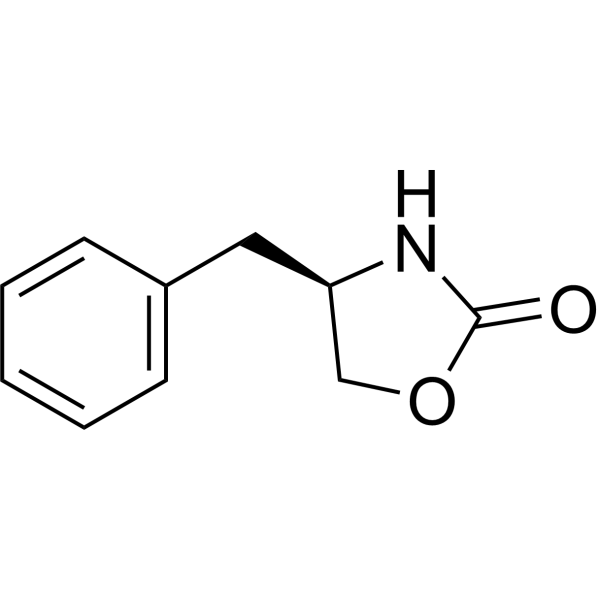
Cat. No.: HY-W007664
CAS No.: 102029-44-7
(R)-4-Benzyl-2-oxazolidinone is an oxazolidinone-type auxiliary that enables highly stereoselective asymmetric alkylation reactions. (R)-4-Benzyl-2-oxazolidinone is applied in the total synthesis of natural products and pharmaceutical preparations. Especially in pharmaceutical research and development, (R)-4-Benzyl-2-oxazolidinone not only serves as a key precursor for the synthesis of aromatase inhibitors, but also can be used in studies related to estrogen-dependent breast cancer .
loading...
    loading...
Cat. No.: HY-W190923
CAS No.: 2353409-70-6
Research Areas:  

Others

MMAF-methyl ester is a methylated derivative of the tubulin inhibitor MMAF (HY-15579), and serves as a pharmaceutical intermediate for the development of antibody-drug conjugates (ADCs) and small-molecule drug conjugates (SMDCs) .
loading...
    loading...
Cat. No.: HY-W743862
CAS No.: 5241-24-7
Synonyms: Demethyldihydrolanosterol
Category:  

Lipids

Demethyldihydrolanosterol belongs to the class of sterols and is a derivative of lanosterol. Demethyldihydrolanosterol can be studied in research on cholesterol biosynthesis and the development of pharmaceuticals targeting cholesterol-related pathways.
loading...
    loading...
Cat. No.: HY-141253
CAS No.: 146651-71-0
Research Areas:  

Others

N-Boc-Tris is a protective reagent. N-Boc-Tris can utilize the Boc protecting group to protect amino groups in fields such as organic synthesis and pharmaceutical research and development, thereby avoiding unnecessary side reactions.
loading...
    loading...
Cat. No.: HY-118626
CAS No.: 284030-47-3
Target:  

MEK p38 MAPK

Research Areas:  

Cancer

PD-254552 is a MEK inhibitor. PD-254552 exhibits hepatotoxicity and gastrointestinal toxicity in mice .
loading...
    loading...
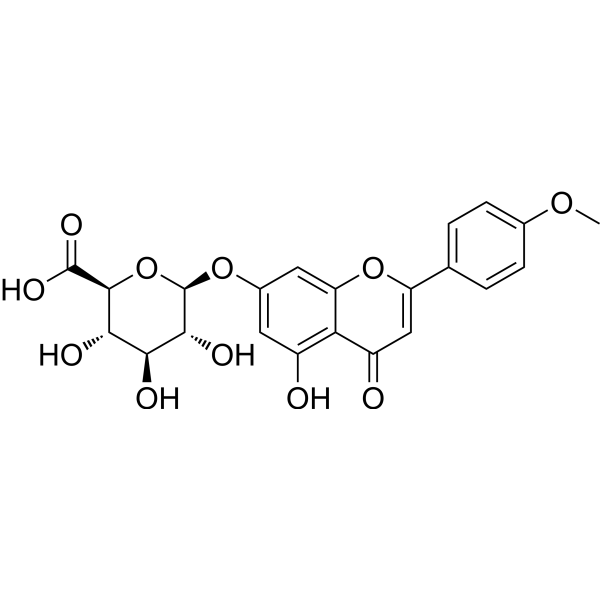
Cat. No.: HY-N12028
CAS No.: 38226-83-4
Acacetin 7-O-glucuronide is a glucuronide isolated from the methanolic leaf extract of Acacetin. Acacetin 7-O-glucuronide has potential applications in the development of nutraceuticals and pharmaceutical formulations .
loading...
    loading...
Cat. No.: HY-W007174A
CAS No.: 53448-53-6
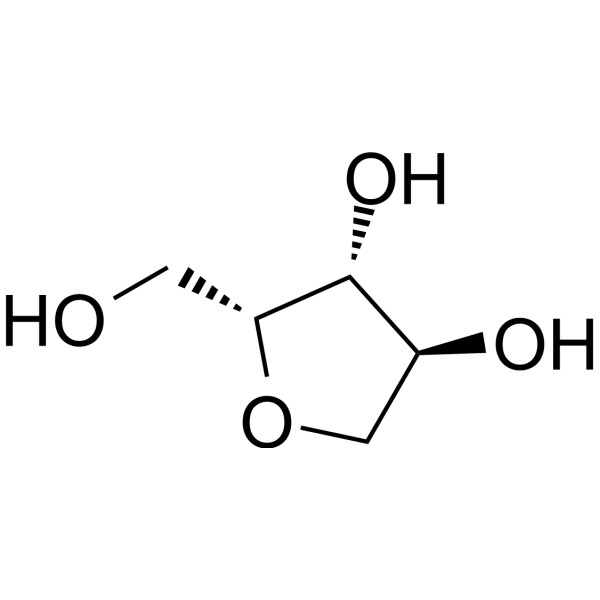
1,4-Anhydro-D-xylitol is a compound belonging to the class of sugar alcohols. It is derived from xylitol, a natural sweetener found in many fruits and vegetables. 1,4-Anhydro-D-xylitol is commonly used as a low-calorie sweetener and excipient in the food and pharmaceutical industries, and as a filler or binder in pharmaceutical formulations. It has also been investigated for its potential use in the development of biodegradable plastics and other sustainable materials.
loading...
    loading...
Cat. No.: HY-143421
CAS No.: 2171091-50-0
Synonyms: CMG
Target:  

Drug Metabolite

Research Areas:  

Cancer

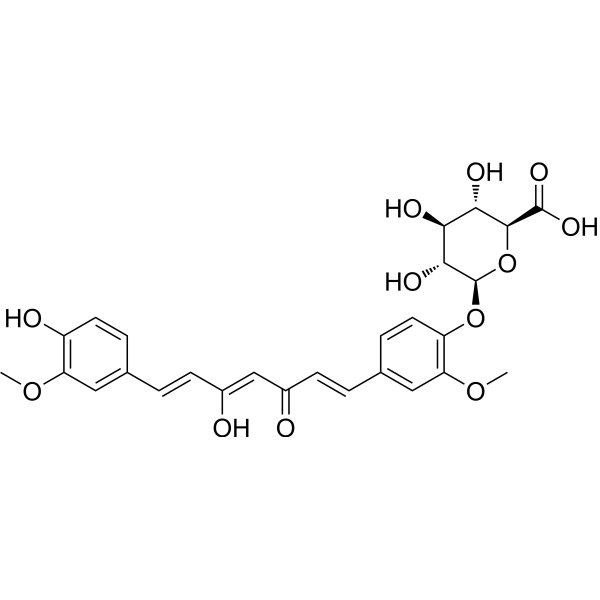
Curcumin monoglucuronide is known as a glucuronic acid conjugate, which is one of the in vivo metabolites of curcumin. Curcumin monoglucuronide is used for research on the metabolism of curcumin and examination of its development as a pharmaceutical. Curcumin monoglucuronide has the potential for the research of cancer disease (extracted from patent WO2022004873A1) .
loading...
    loading...
Cat. No.: HY-155368
CAS No.: 1428439-79-5
Target:  

Cholinesterase (ChE)

Research Areas:  

Neurological Disease

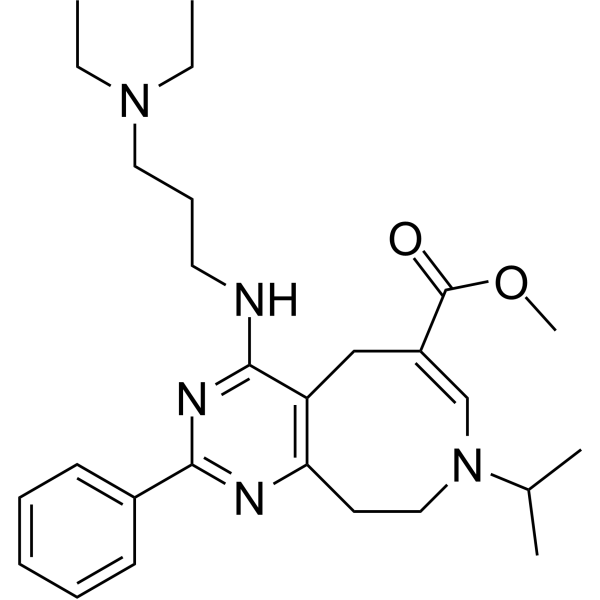
BChE-IN-20 (compound 7c) is a highly potent BChE-selective inhibitor and exhibits IC50s of 105 and 2.3 nM for eqBChE and hBChE, respectively. BChE-IN-20 inhibits P glycoprotein with IC50 of 0.27 μM. BChE-IN-20 is a promising template to improve design and development of BChE-selective ligands of pharmaceutical interest, including inhibitors and fluorogenic probes.
loading...
    loading...
Cat. No.: HY-W127434A
CAS No.: 1466461-81-3
Synonyms: (12R)-Octadecane-1,12-diol
Research Areas:  

Others

(12R)-1,12-Octadecanediol ((12R)-Octadecane-1,12-diol) is a compound characterized by a linear chain of 18 carbon atoms with two hydroxyl groups (C18H38O2). This colorless substance has unique properties owing to the presence of two hydroxyl groups in its molecular structure. Whether derived from natural sources or synthesized chemically, 12-Octadecanediol finds applications in various industries. It is often utilized in the formulation of cosmetics, personal care products, and pharmaceuticals due to its emollient properties, enhancing moisturization and conditioning effects in different formulations. The compound's distinctive structure may make it suitable for specific uses in research or industrial processes. In industrial contexts, 12-Octadecanediol serves as a valuable chemical intermediate for synthesizing other compounds. Its specialized structure and adaptability in formulations make it a significant component across diverse industries, contributing to the development of products for various purposes.
loading...
    loading...
Cat. No.: HY-L242
494 compounds

Flavors and fragrances serve as indispensable enhancing elements in modern industries, playing multidimensional roles in the fields of food, cosmetics, and pharmaceutical development. In the food industry, flavors and fragrances are not only used to compensate for flavor loss during processing but also to create novel sensory experiences and enhance product appeal. Natural flavors such as vanilla and citrus oils impart rich, layered aromas to foods, while synthetic flavors can precisely replicate specific tastes, meeting the demands of standardized production and extending the flavor stability of food products. In the cosmetics sector, flavors and fragrances are key to emotional design. They enhance product recognition and elevate the pleasure of use through pleasant scents. In pharmaceutical development, the application of flavors and fragrances focuses on improving compliance. Especially in formulations such as oral liquids and chewable tablets, the addition of mint, fruit, and other flavoring components effectively masks the bitter or irritating taste of medications, increasing patient acceptance. Additionally, some natural flavors may themselves possess auxiliary therapeutic benefits.

MCE contains 494 kinds of flavors and fragrances, which can be used in fields such as food, cosmetics and drug development.

Cat. No.: HY-L096
179 compounds

An inactive ingredient is any component of a drug product other than the active ingredient. Inactive ingredients are added during the manufacturing process of pharmaceutical products such as tablets, capsules, suppositories, and injections. In new drug development, once an inactive ingredient has appeared in an approved drug product for a particular route of administration, the inactive ingredient is not considered new and may require a less extensive review the next time it is included in a new drug product.

MCE offers a unique collection of 179 inactive ingredients, which only contain inactive ingredients of the final dosage forms of the drug. MCE Inactive Ingredient library is a powerful tool for aiding in the development of the drug and saving unnecessary time.

Cat. No.: HY-L198
136 compounds

Unlike the 20 natural amino acids commonly found within living organisms, non-natural amino acids are synthesized through chemical or biosynthetic methods, thereby being endowed with unique chemical properties or biological activities. In drug development, these amino acids can be utilized to design novel pharmaceutical molecules that may exhibit superior pharmacological characteristics, such as increased selectivity, improved pharmacokinetic profiles, or reduced toxicity. In biomedical research, uon-natural amino acids can act as biological markers or probes for investigating biological processes like cell signaling, protein conformation, and protein-protein interactions. In addition, non-natural amino acids can also be used in the field of agriculture to develop new pesticides, plant growth regulators and so on.

Cat. No.: HY-L0123V
30,300 compounds

The incidence and significance of central nervous system diseases are increasing at an alarming rate all over the world. Although substantial research efforts have been applied to develop new CNS-active drugs, only a few CNS disorders are addressed satisfactorily, while the remaining ones pose significant clinical challenges. Blood-brain barrier (BBB) permeability is one of the most important limiting factors in the design and development of novel CNS-targeted pharmaceuticals for the treatment of neurological disorders.

Carefully selected from the HTS Compound Collection to meet the parameters optimized for high BBB-permeability, our CNS Focused Screening Library comprising over 30,300 structurally-diverse and potentially CNS-active screening compounds. This original Screening Compound Library is aimed at supporting CNS drug design projects and HTS efforts in search for novel neurotherapeutics.

Cat. No.: HY-L006
3,474 compounds

GPCRs are a large family of cell surface receptors that respond to a variety of external signals. Binding of a signaling molecule to a GPCR results in G protein activation, which in turn triggers the production of any number of second messengers. GPCRs play an important role in the human body, and increased understanding of these receptors has greatly affected modern medicine. In fact, researchers estimate that between one-third to one-half of all approved drugs act by binding to GPCRs. GPCRs are a large group of drug targets in drug discovery.

MCE provides a unique collection of 3,474 small molecules targeting GPCRs that can be used in the screening for various GPCRs-related research and drug development projects.

  • 1

