1. Search Result
Search Result
Results for "

phospholipid vesicles

" in MedChemExpress (MCE) Product Catalog:

27

Inhibitors & Agonists

1

Screening Libraries

2

Fluorescent Dyes

8

Biochemical Assay Reagents

3

Peptides

1

Natural
Products

1

Isotope-Labeled Compounds

12

Oligonucleotides

Cat. No. Product Name Target Research Areas Chemical Structure
  • HY-D1736

    Fluorescent Dye Others
    BODIPY FL-C16 is a BODIPY-labeled analog of Palmitic acid (HY-N0830), which serves as a fluorescent lipid tracer. BODIPY FL-C16 also acts as a ligand for liver fatty acid-binding protein (L-FABP) and intestinal fatty acid-binding protein (I-FABP) , with Kd values of 270 nM and 330 nM, respectively. BODIPY FL-C16 is rapidly taken up by cells, and after metabolic conversion to phospholipids, it is incorporated into the membrane structures of intracellular organelles and extracellular vesicles .
    BODIPY FL-C16
  • HY-143202

    Liposome Biochemical Assay Reagents Others
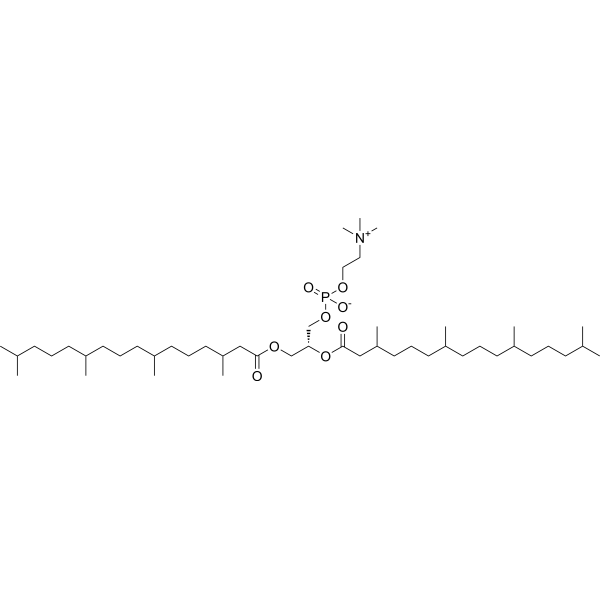
    DPhPC is a phospholipid compound characterized by high mechanical and chemical stability, broad temperature phase stability, and high electrical resistance. DPhPC readily forms unilamellar vesicles and solid-supported bilayers. DPhPC is commonly used as a component of nanoliposomal drug carriers or as a model membrane material for studies on membrane proteins/ion channels .
    DPhPC
  • HY-N1136

    Bacterial Infection
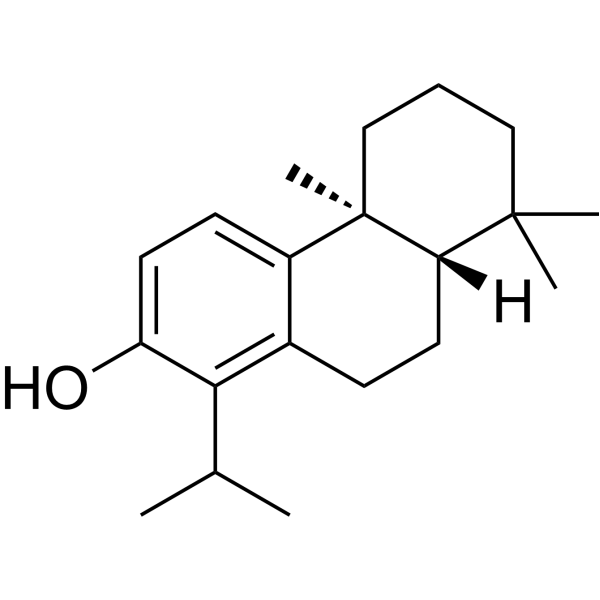
    (+)-Totarol is a diterpenoid membrane-disrupting agent and membrane structure regulator found in plants of the genus Podocarpus spp. (+)-Totarol inserts into phospholipid model membranes, disrupts phospholipid packing, and impairs the functional integrity of membranes. (+)-Totarol exhibits antibacterial activity against a variety of bacterial species and β-lactam-resistant strains, and its action is associated with changes in membrane physical properties. (+)-Totarol can be used in studies related to bacterial infections .
    (+)-Totarol
  • HY-150220

    Liposome Others
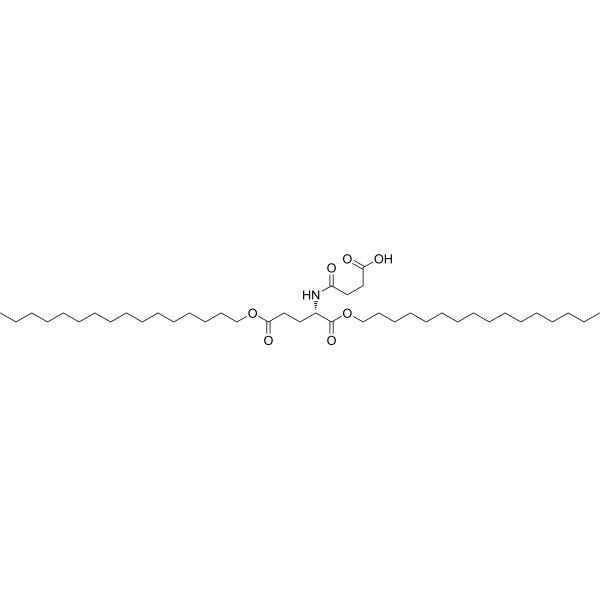
    1,5-Dihexadecyl N-(3-carboxy-1-oxopropyl)-L-glutamate is a lipid used in the synthesis of phospholipid vesicles. 1,5-Dihexadecyl N-(3-carboxy-1-oxopropyl)-L-glutamate works with other lipids to convert polydisperse vesicles into vesicles of uniform size by freeze-thaw and extrusion techniques. 1,5-Dihexadecyl N-(3-carboxy-1-oxopropyl)-L-glutamate can enhance protein encapsulation efficiency for drug delivery and biochemical applications .
    1,5-Dihexadecyl N-(3-carboxy-1-oxopropyl)-L-glutamate
  • HY-142980

    Dioleoylphosphatidylglycerol

    Liposome Inflammation/Immunology
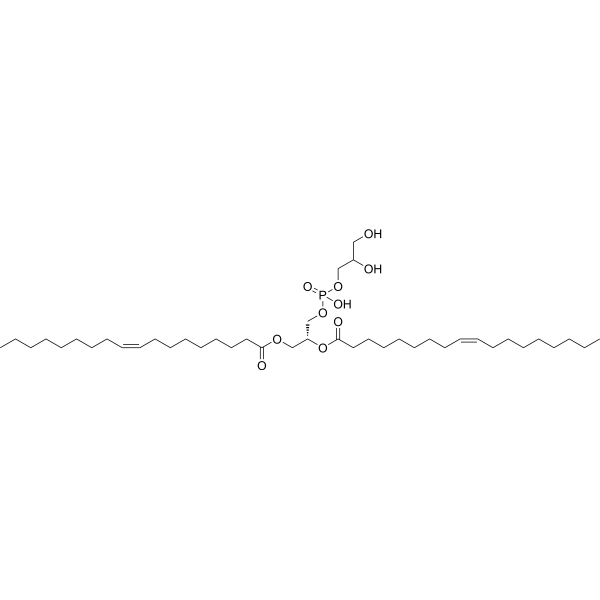
    DOPG (Dioleoylphosphatidylglycerol) is a negatively charged phosphatidylglycerol phospholipid. DOPG is abundant in prokaryotic cell membranes and mitochondria, and has a low phase transition temperature and a tendency to form stable vesicles. DOPG inhibits the production of inflammatory mediators in macrophages in response to heat shock protein B4 (HSPB4)-activated toll-like receptor 2 (TLR2). DOPG is applicable to studies of membrane biology, drug-membrane interactions (especially in systems targeting negatively charged membranes), construction of drug delivery carriers, as well as research on sterile corneal inflammation and wound healing promotion .
    DOPG
  • HY-W440986

    DSPS sodium

    Liposome Others
    Distearoylphosphatidylserine sodium is an anionic phospholipid with stearic acid tails (18:0) and contains a carboxylic acid (COOH) and amine (NH2) in their head group. It has been used in the preparation of lipid-mixing vesicles, liposome, or artificial membrane. Due to the medium size of fatty acid chain, DLPS is used to form thinner membranes/walls.
    Distearoylphosphatidylserine sodium
  • HY-W714524

    16:0-18:1 PS (POPS)

    Liposome Others
    2-Oleoyl-1-palmitoyl-sn-glycero-3-phospho-L-serine sodium (16:0-18:1 PS (POPS)) is an anionic phospholipid with oleic acid (18:1) and palmitic acid (16:0) tails containing a carboxylic acid (COOH) and amine (NH2) in their head group. 2-Oleoyl-1-palmitoyl-sn-glycero-3-phospho-L-serine sodium has been used in the preparation of lipid-mixing vesicles, liposomes, and artificial membranes .
    1-Palmitoyl-2-oleoyl-sn-glycero-3-PS sodium
  • HY-142989

    Liposome HIV HCV HBV Infection Cancer
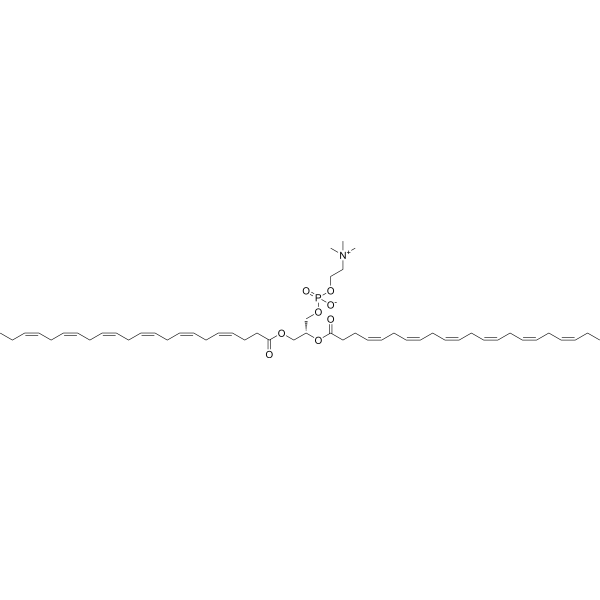
    1,2-Didocosahexaenoyl-sn-glycero-3-phosphocholine is a polyunsaturated phospholipid that serves as a component of lipid monolayers and small unilamellar vesicles. 1,2-Didocosahexaenoyl-sn-glycero-3-phosphocholine can be used to prepare endoplasmic reticulum-targeted liposomes (PERLs), which are composed of 1,2-didocosahexaenoyl-sn-glycero-3-phosphoethanolamine, l-α-phosphatidylinositol and l-α-phosphatidylserine at a molar ratio of 1.5:1.5:1:1. PERLs reduce cholesterol levels in human peripheral blood mononuclear cells (PBMCs) and decrease HIV-1 particle secretion from HIV-1-infected PBMCs. Liposomes formed from 1,2-Didocosahexaenoyl-sn-glycero-3-phosphocholine exhibit cytotoxicity against leukemia cells. 1,2-Didocosahexaenoyl-sn-glycero-3-phosphocholine is applicable to studies related to hepatitis C virus infection, HIV infection, hepatitis B virus infection and leukemia .
    1,2-Didocosahexaenoyl-sn-glycero-3-phosphocholine
  • HY-W440988

    Liposome Others
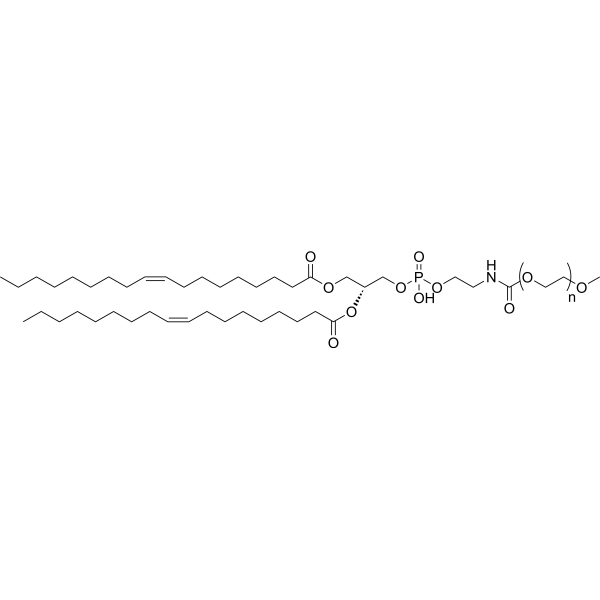
    DOPE-mPEG2000 is a phospholipid polydisperse PEG (or DOPE liposome), can be used for preparation of targeted delivery of liposomal drug and giant unilamellar vesicles (GUVs). DOPE-mPEG2000 significantly reduces the pH-sensitivity of the liposome in a concentration dependent manner .
    DOPE-mPEG2000
  • HY-157624

    18:0-22:6 PE

    Liposome Others
    1-Stearoyl-2-docosahexaenoyl-sn-glycero-3-phosphoethanolamine (18:0-22:6 PE) is a lipid compound that can be used for liposome preparation. Liposomes are the main component of vesicles with concentric phospholipid bilayer membranes, which can be used to construct drug delivery systems for anti-cancer and anti-infection fields. Highly polar water-soluble loads can be captured in the internal aqueous space of liposomes, while lipophilic loads can be distributed into the lipid bilayer and become part of the lipid bilayer. Especially for the delivery of antisense oligonucleotides, it can overcome the problems of inefficient cellular uptake and rapid loss in the body.
    1-Stearoyl-2-docosahexaenoyl-sn-glycero-3-phosphoethanolamine
  • HY-P11430

    Biochemical Assay Reagents Infection
    UBI (31-38) is a Ubiquicidin-derived octapeptide and anti-bacterial agent. UBI (31-38) selectively interacts with anionic phospholipid membranes and restricts lipid lateral motion. UBI (31-38) induces anionic vesicle aggregation via electrostatic repulsion screening, and undergoes conformational changes in membrane-mimicking environments. UBI (31-38) can be used for the research of infection imaging probes .
    UBI (31-38)
  • HY-167811

    16:0 Lysyl PG hydrochloride

    Biochemical Assay Reagents
    1,2-Dipalmitoyl-sn-glycero-3-[phospho-rac-(3-lysyl(1-glycerol))] hydrochloride (16:0 Lysyl PG hydrochloride) is a synthetic phospholipid with the activity of promoting the preparation of artificial vesicles.
    1,2-Dipalmitoyl-sn-glycero-3-[phospho-rac-(3-lysyl(1-glycerol))] hydrochloride
  • HY-W440985

    1,2-dilauroyl-sn-glycero-3-phospho-L-serine

    Liposome Cancer
    DLPS is an anionic phospholipid with lauric acid tails (12:0) and contains a carboxylic acid (COOH) and amine (NH2) in their head group. It has been used in the preparation of lipid-mixing vesicles, liposome, or artificial membrane. Due to the medium size of fatty acid chain, DLPS is used to form thinner membranes/walls.
    DLPS
  • HY-W591449

    Liposome Cancer
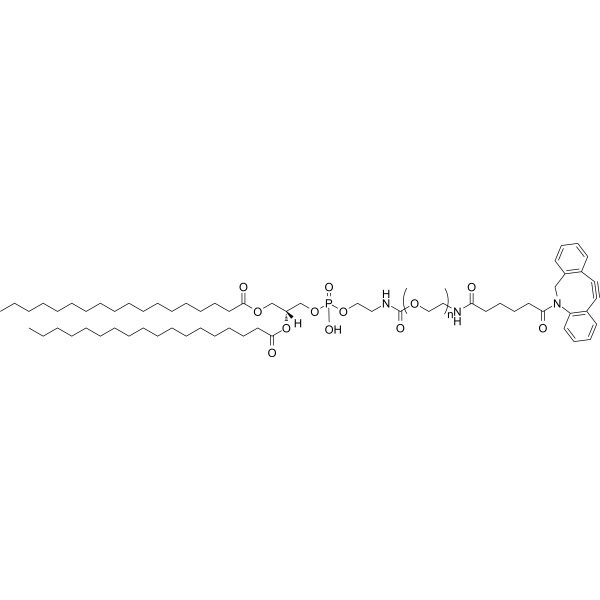
    DOPE-PEG2000-Azide is a liposome to simulate biological phospholipid membrane. Liposomes are the main component of vesicles with concentric phospholipid bilayer membranes, which can be used to construct drug delivery systems for anti-cancer and anti-infection fields. Highly polar water-soluble payloads can be trapped in the internal aqueous space of liposomes, while lipophilic payloads can partition into and become part of the lipid bilayer. Especially for delivering antisense oligonucleotides, it can overcome problems such as inefficient cellular uptake and rapid loss in the body .
    DOPE-PEG2000-Azide
  • HY-40118

    Boc-L-proline methyl ester

    Liposome Others
    Boc-Pro-OMe (Boc-L-proline methyl ester) is a lipid compound that can be used for liposome preparation. Liposomes are the main component of vesicles with concentric phospholipid bilayer membranes, which can be used to construct drug delivery systems for anti-cancer and anti-infection fields. Highly polar water-soluble loads can be captured in the internal aqueous space of liposomes, while lipophilic loads can be distributed into the lipid bilayer and become part of the lipid bilayer. Especially for the delivery of antisense oligonucleotides, it can overcome the problems of inefficient cellular uptake and rapid loss in the body.
    Boc-Pro-OMe
  • HY-165975

    (2S)-3-Keto-C6-dihydrosphingosine hydrochloride

    Liposome Others
    (2S)-3-Keto sphinganine (d6:0) ((2S)-3-Keto-C6-dihydrosphingosine) hydrochloride is a lipid compound that can be used for liposome preparation. Liposomes are the main component of vesicles with concentric phospholipid bilayer membranes, which can be used to construct drug delivery systems for anti-cancer and anti-infection fields. Highly polar water-soluble loads can be captured in the internal aqueous space of liposomes, while lipophilic loads can be distributed into the lipid bilayer and become part of the lipid bilayer. Especially for the delivery of antisense oligonucleotides, it can overcome the problems of inefficient cellular uptake and rapid loss in the body.
    (2S)-3-Keto sphinganine (d6:0) hydrochloride
  • HY-153725

    Liposome Cancer
    17:1 Lyso PC is a liposome to simulate biological phospholipid membrane. Liposomes are the main component of vesicles with concentric phospholipid bilayer membranes, which can be used to construct drug delivery systems for anti-cancer and anti-infection fields. Highly polar water-soluble payloads can be trapped in the internal aqueous space of liposomes, while lipophilic payloads can partition into and become part of the lipid bilayer. Especially for delivering antisense oligonucleotides, it can overcome problems such as inefficient cellular uptake and rapid loss in the body .
    17:1 Lyso PC
  • HY-P1376A
    G-Protein antagonist peptide TFA
    1 Publications Verification

    mAChR Adrenergic Receptor Endocrinology
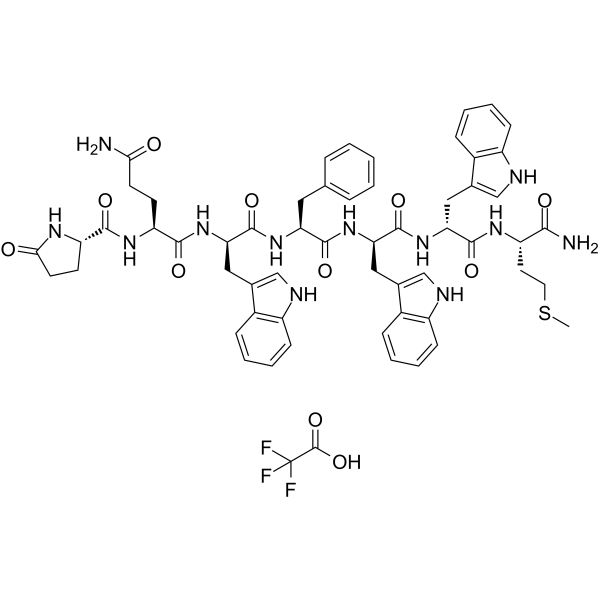
    G-Protein antagonist peptide TFA is a truncated substance P-related peptide, competes with receptor for G protein binding. G-Protein antagonist peptide TFA inhibits the activation of Gi or Go by M2 muscarinic cholinergic receptor (M2 mAChR) or of Gs by beta-adrenergic receptor in the reconstituted phospholipid vesicles, assayed by receptor-promoted GTP hydrolysis .
    G-Protein antagonist peptide TFA
  • HY-125619

    Liposome Others
    1,2-dioctanoyl-sn-glycero-3-phosphocholine, is a phospholipid commonly used as a component of liposome formulations and drug delivery systems. 1,2-dioctanoyl-sn-glycero-3-phosphocholine has unique chemical properties that allow it to form stable bilayers and vesicles, allowing drug encapsulation and delivery to specific targets in the body. It acts as a stabilizer and emulsifier, which can improve the solubility and bioavailability of drugs.
    1,2-Dioctanoyl-sn-glycero-3-phosphocholine
  • HY-185564

    Biochemical Assay Reagents Others
    F6OM, a nonionic fluorinated octyl maltoside derivative, is a surfactant. F6OM readily interacts with and completely solubilizes phospholipid vesicles via a heterogeneous solubilization mechanism, without compromising membrane order at subsolubilizing concentrations. F6OM promotes bilayer insertion of an integral membrane enzyme in the absence of micelles to support functional refolding of integral membrane proteins. F6OM can be used for membrane-protein applications .
    F6OM
  • HY-167807

    Biochemical Assay Reagents
    1-Palmitoyl-2-(6,7-dibromo)stearoyl-sn-glycero-3-phosphocholine is a phospholipid with good biocompatibility. 1-Palmitoyl-2-(6,7-dibromo)stearoyl-sn-glycero-3-phosphocholine can be used to prepare large unilamellar vesicles.
    1-Palmitoyl-2-(6,7-dibromo)stearoyl-sn-glycero-3-phosphocholine
  • HY-143202S1

    Isotope-Labeled Compounds Others
    DPhPC-d78 is the deuterium labeled DPhPC (HY-143202). DPhPC is a phospholipid compound characterized by high mechanical and chemical stability, broad temperature phase stability, and high electrical resistance. DPhPC readily forms unilamellar vesicles and solid-supported bilayers. DPhPC is commonly used as a component of nanoliposomal drug carriers or as a model membrane material for studies on membrane proteins/ion channels .
    DPhPC-d78
  • HY-W339816

    Lipocalin Family Endogenous Metabolite Others
    (S,R)-Bis(monomyristoylglycero)phosphate ammonium actively contributes to cargo sorting by promoting the degradation and sorting of lipids, and it plays a critical role in the sorting of polyunsaturated fatty acids (PUFAs) within acidic organelles. This phospholipid features two phosphate-linked glycerol molecules arranged in a unique sn-1 glycerophospho-sn-1′ glycerol stereoconformation, with each glycerol molecule esterified to a myristic acid. Typically, it is found in the intraluminal vesicles (ILVs) of late endosomes and lysosomes.
    (S,R)-Bis(monomyristoylglycero)phosphate ammonium
  • HY-W714524A

    16:0-18:1 PS (POPS) free acid

    Liposome Others
    2-Oleoyl-1-palmitoyl-sn-glycero-3-phospho-L-serine (16:0-18:1 PS (POPS) free acid) is an anionic phospholipid with oleic acid (18:1) and palmitic acid (16:0) tails containing a carboxylic acid (COOH) and amine (NH2) in their head group. 2-Oleoyl-1-palmitoyl-sn-glycero-3-phospho-L-serine has been used in the preparation of lipid-mixing vesicles, liposomes, and artificial membranes .
    1-Palmitoyl-2-oleoyl-sn-glycero-3-PS
  • HY-164579

    Liposome Others
    NH2-GG-DSPE is a lipid compound that can be used for liposome preparation. Liposomes are the main component of vesicles with concentric phospholipid bilayer membranes, which can be used to construct drug delivery systems for anti-cancer and anti-infection fields. Highly polar water-soluble loads can be captured in the internal aqueous space of liposomes, while lipophilic loads can be distributed into the lipid bilayer and become part of the lipid bilayer. Especially for the delivery of antisense oligonucleotides, it can overcome the problems of inefficient cellular uptake and rapid loss in the body.
    NH2-GG-DSPE
  • HY-DY1102

    Fluorescent Dye Others
    BODIPY FL-C16 (solution) is a BODIPY-labeled analog of Palmitic acid (HY-N0830), which serves as a fluorescent lipid tracer. BODIPY FL-C16 (solution) also acts as a ligand for liver fatty acid-binding protein (L-FABP) and intestinal fatty acid-binding protein (I-FABP) , with Kd values of 270 nM and 330 nM, respectively. BODIPY FL-C16 (solution) is rapidly taken up by cells, and after metabolic conversion to phospholipids, it is incorporated into the membrane structures of intracellular organelles and extracellular vesicles .
    Solvent and concentration: DMSO: 5 mM
    BODIPY FL-C16 (solution)
  • HY-157678

    18:2 PS sodium

    Liposome Others
    1,2-Dilinoleoyl-sn-glycero-3-phospho-L-serine sodium (18:2 PS sodium) is a lipid compound that can be used for liposome preparation. Liposomes are the main component of vesicles with concentric phospholipid bilayer membranes, which can be used to construct drug delivery systems for anti-cancer and anti-infection fields. Highly polar water-soluble loads can be captured in the internal aqueous space of liposomes, while lipophilic loads can be distributed into the lipid bilayer and become part of the lipid bilayer. Especially for the delivery of antisense oligonucleotides, it can overcome the problems of inefficient cellular uptake and rapid loss in the body.
    1,2-Dilinoleoyl-sn-glycero-3-phospho-L-serine sodium

Inquiry Online

Your information is safe with us. * Required Fields.

Salutation


Country or Region *

Applicant Name *


Organization Name *

Department *


Email Address *


Product Name *

Cat. No.


Requested quantity *

Phone Number *


Remarks

Inquiry Online

Inquiry Information

Product Name:
Cat. No.:
Quantity:
MCE Japan Authorized Agent:

