1. Search Result
Search Result
Results for "

polyphenol compound

" in MedChemExpress (MCE) Product Catalog:

23

Inhibitors & Agonists

3

Screening Libraries

16

Natural
Products

1

Isotope-Labeled Compounds

1

Oligonucleotides

Cat. No. Product Name Target Research Areas Chemical Structure
  • HY-N1579
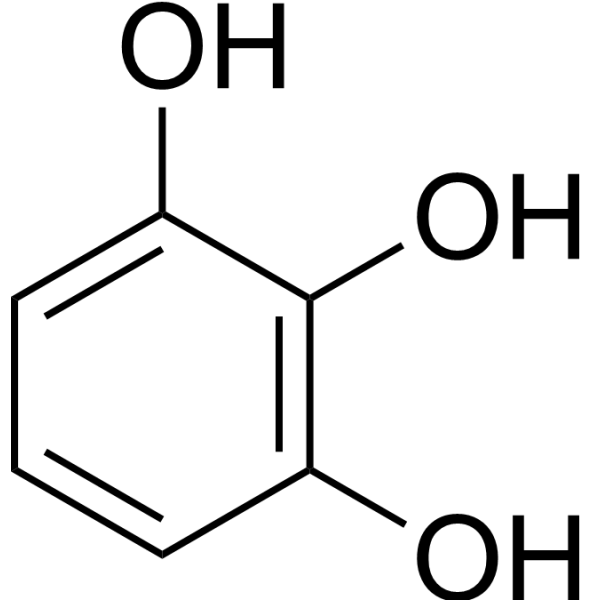
    Pyrogallol
    4 Publications Verification

    Endogenous Metabolite Fungal Apoptosis Infection
    Pyrogallol is a polyphenol compound, which has anti-fungal and anti-psoriatic properties. Pyrogallol is a reductant that is able to generate free radicals, in particular superoxide anions.
    Pyrogallol
  • HY-N0295
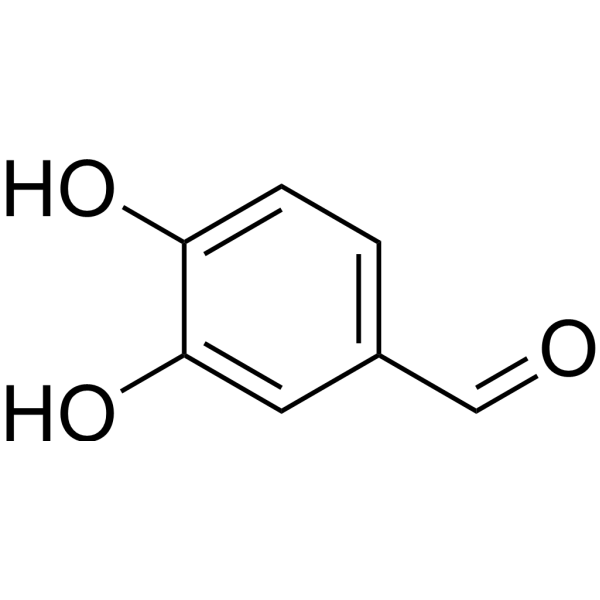
    Protocatechualdehyde
    1 Publications Verification

    Catechaldehyde; Protocatechuic aldehyde; Rancinamycin IV

    Reactive Oxygen Species (ROS) Bacterial Endogenous Metabolite Infection Cancer
    Protocatechualdehyde (Catechaldehyde), a natural polyphenol compound isolated from the roots of radix Salviae Miltiorrhizae, is associated with a wide variety of biological activities and has been widely used in medicine as an antioxidant, anti-aging, an antibacterial and anti-inflammatory agent .
    Protocatechualdehyde
  • HY-N0521A
    (+)-Gallocatechin
    1 Publications Verification

    Others Cancer
    (+)-Gallocatechin is a polyphenol compound from green tea, possesses anticancer activity .
    (+)-Gallocatechin
  • HY-N1925
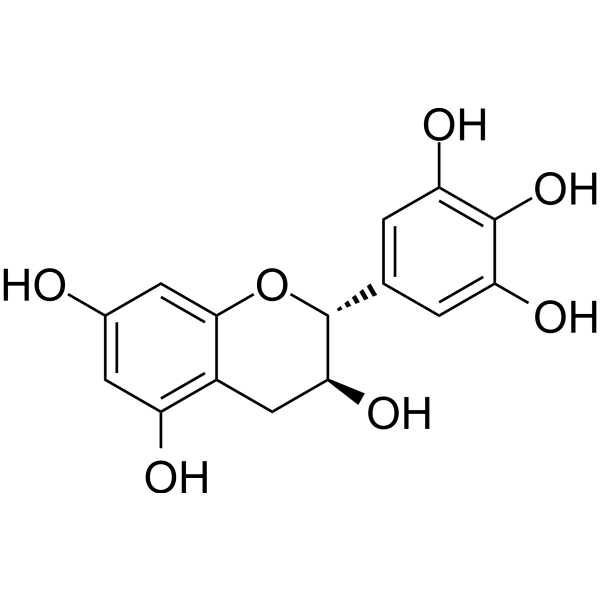
    Tea polyphenol
    2 Publications Verification

    Apoptosis Autophagy Neurological Disease Inflammation/Immunology Cancer
    Tea polyphenol is the floorboard of phenolic compounds in tea. Tea polyphenol exhibits biological activity including antioxidant and anti-cancer activities, inhibition of cell proliferation, induction of apoptosis, cell cycle arrest and modulation of carcinogen metabolism .
    Tea polyphenol
  • HY-N1579R

    Reference Standards Endogenous Metabolite Fungal Apoptosis Infection
    Pyrogallol (Standard) is the analytical standard of Pyrogallol. This product is intended for research and analytical applications. Pyrogallol is a polyphenol compound, which has anti-fungal and anti-psoriatic properties. Pyrogallol is a reductant that is able to generate free radicals, in particular superoxide anions.
    Pyrogallol (Standard)
  • HY-N10668

    Others Others
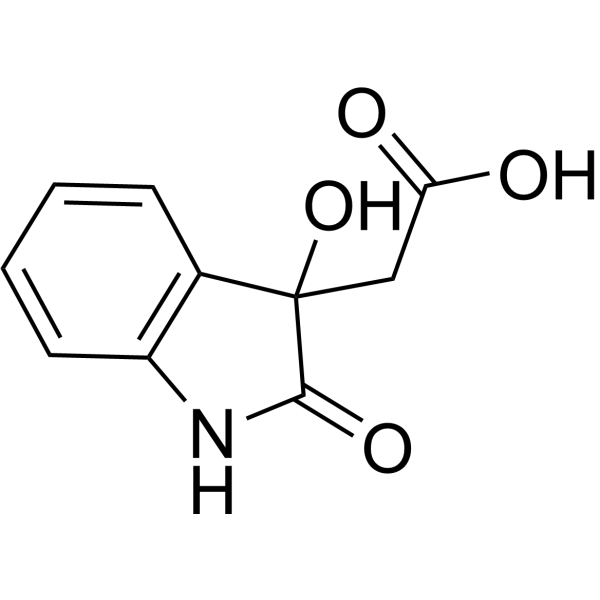
    2-(3-Hydroxy-2-oxoindolin-3-yl)-acetic acid (compound 29) is a natural polyphenol compound found in hop bract .
    2-(3-Hydroxy-2-oxoindolin-3-yl)-acetic acid
  • HY-N0521AS

    Isotope-Labeled Compounds Cancer
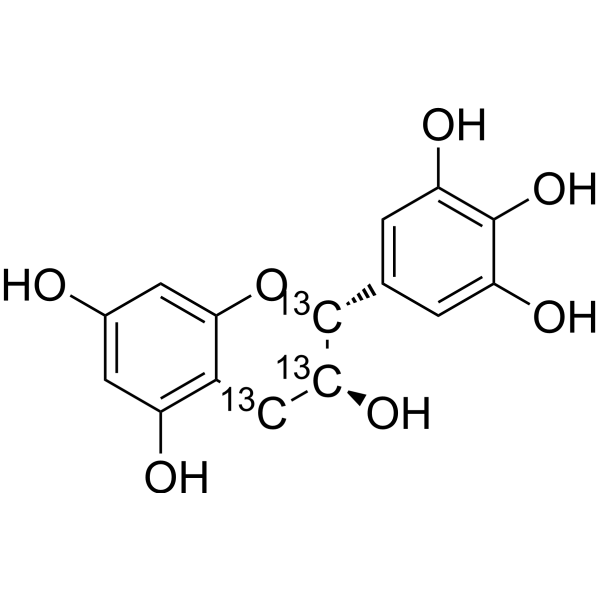
    (+)-Gallocatechin- 13C3 is the 13C-labeled (+)-Gallocatechin. (+)-Gallocatechin is a polyphenol compound from green tea, possesses anticancer activity .
    (+)-Gallocatechin-13C3
  • HY-177840

    Liposome Inflammation/Immunology
    Liposomal Curcumin is a specialized delivery system that encapsulates curcumin within tiny liposomes. These liposomes act as protective shells, enhancing the absorption and bioavailability of curcumin. Curcumin is a polyphenol compound extracted from the
    Liposomal Curcumin
  • HY-N13117

    Others Cancer
    Pinocembrin 7-O-[4′′,6′′-(S)-HHDP]-β-D-glucoside (compound 3) is a polyphenol that has weak antiproliferative activity in PDGF-induced HSC-T6 cells (IC50: 200 μM) .
    Pinocembrin 7-O-[4′′,6′′-(S)-HHDP]-β-D-glucoside
  • HY-N0295R

    Catechaldehyde (Standard); Protocatechuic aldehyde (Standard); Rancinamycin IV (Standard)

    Reference Standards Reactive Oxygen Species (ROS) Bacterial Endogenous Metabolite Infection Cancer
    Protocatechualdehyde (Standard) is the analytical standard of Protocatechualdehyde. This product is intended for research and analytical applications. Protocatechualdehyde (Catechaldehyde), a natural polyphenol compound isolated from the roots of radix Salviae Miltiorrhizae, is associated with a wide variety of biological activities and has been widely used in medicine as an antioxidant, anti-aging, an antibacterial and anti-inflammatory agent .
    Protocatechualdehyde (Standard)
  • HY-174260

    NO Synthase COX Caspase MDM-2/p53 Neurological Disease
    Neuroprotective agent 11 (Compound 1a) is an orally active polyphenol compound with significant protective effects against cerebral ischemia. The main activities of Neuroprotective agent 11 include inhibiting neuronal inflammation and apoptosis, reducing cerebral infarction volume, and improving behavioral symptoms of cerebral ischemic mice. Neuroprotective agent 11 exerts its regulatory mechanism by downregulating the expression of inflammatory factors (iNOSCOX-2) and apoptotic proteins (cleaved-Caspase3, p53). Neuroprotective agent 11 can be used in the study of cerebral ischemia-related diseases (such as ischemic stroke) .
    Neuroprotective agent 11
  • HY-178055

    Tyrosinase Others
    Tyrosinase-IN-44 (Compound 3) is a Tyrosinase inhibitor with IC50s of 0.47  and 0.53 μM for monophenolase and diphenolase, respectively. Tyrosinase-IN-44 has superior glutathione peroxidase-like catalytic and DPPH radical scavenging activity. Tyrosinase-IN-44 has potent antibrowning activity in banana and apple juices by directly inhibiting polyphenol oxidase (PPO) and offering antioxidant activity. Tyrosinase-IN-44 can be used for redox regulation and food preservation .
    Tyrosinase-IN-44
  • HY-N19082

    Others Inflammation/Immunology
    Tecomella undulata extract is a natural antioxidant, digestive aid, and potential anti-aging agent. It is rich in bioactive compounds such as flavonoids, polyphenols, tannins, and vitamin C.
    Triphala extract
  • HY-N18803

    Others Cardiovascular Disease
    Grape seed oil is a natural compound rich in antioxidants and polyphenols. It is a high-quality byproduct extracted from grape seeds and can be used in research on cardiovascular diseases.
    Grape seed oil
  • HY-N18740

    Bacterial Infection Inflammation/Immunology
    The active ingredients in Andrographis paniculata extract include flavonoids, polyphenols, and diterpenoid lactones, such as andrographolide, dehydroandrographolide, and neoandrographolide. These compounds are known for their anti-inflammatory, antioxidant, immune-boosting, antiviral, and antibacterial properties.
    Andrographis paniculata extract
  • HY-N12476

    Drug Derivative Others
    Tenaxin II (Compound 3) is a flavonoid compound found in the Scutellaria baicalensis Georgi. Flavonoids are a class of plant secondary metabolites with polyphenol structures, possessing antioxidant, anti-inflammatory, antimutagenic and anticarcinogenic properties, as well as the ability to regulate the function of key cellular enzymes .
    Tenaxin II
  • HY-N18760

    Bacterial Infection Inflammation/Immunology
    Vitex negundo extract is rich in bioactive compounds such as alkaloids, flavonoids, glycosides, volatile oils, triterpenoids, tannins, polyphenols, flavonoids, and iridoid glycosides. Vitex negundo extract possesses anti-inflammatory, antioxidant, antibacterial, and detoxifying properties.
    Vitex negundo extract
  • HY-N13001

    Others Cancer
    7-O-Galloylcatechin is a polyphenol compound found in the seeds of Rhynchosia volubilis. 7-O-Galloylcatechin shows antiproliferative activity against cancer cells. 7-O-Galloylcatechin can be used for the research of cancer, such as melanoma .
    7-O-Galloylcatechin
  • HY-P2890B

    Fungal Metabolic Disease
    Laccase, Trametes versicolor (EC 1.10.3.2), is a blue copper oxidase that reduces molecular oxygen to water. Laccase can oxidize polyphenols, methoxylated phenolic compounds, and diamines, but not tyrosine. Laccase's oxidation reaction is a single-electron reaction and produces free radicals.
    Laccase, Trametes versicolor
  • HY-P2890C

    Fungal Metabolic Disease
    Laccase, Trametes versicolor (EC 1.10.3.2), is a blue copper oxidase that reduces molecular oxygen to water. Laccase can oxidize polyphenols, methoxylated phenolic compounds, and diamines, but not tyrosine. Laccase's oxidation reaction is a single-electron reaction and produces free radicals.
    Laccase, Rhus vernicifera
  • HY-116562

    Drug Derivative Cancer
    DK-139 is a polyphenol compound bearing a cinnamaldehyde scaffol. DK-139 inhibits clonogenic growth of Cisplatin (HY-17394)-resistant human ovarian cancer. DK-139 can be used for the research of Cisplatin-resistant ovarian cancer .
    DK-139
  • HY-N18732

    Others Cardiovascular Disease
    Terminalia arjuna extract is a precious natural compound derived from the bark of the Terminalia arjuna tree, rich in bioactive components such as triterpenoids, flavonoids, tannins, and polyphenols. Terminalia arjuna extract has cardioprotective effects, helping to strengthen the heart muscle, lower cholesterol levels, stabilize blood pressure, and prevent thrombosis.
    Terminalia arjuna extract
  • HY-N19065

    Bacterial Infection Inflammation/Immunology
    Dalchini extract is rich in various bioactive compounds, including cinnamaldehyde, eugenol, tannins, polyphenols, and aromatic essential oils. Dalchini extract helps regulate blood sugar levels and improve insulin sensitivity. It also possesses anti-inflammatory, antioxidant, and antibacterial properties, which help enhance immune function, prevent infection, and reduce inflammation.
    Dalchini extract

Inquiry Online

Your information is safe with us. * Required Fields.

Salutation


Country or Region *

Applicant Name *


Organization Name *

Department *


Email Address *


Product Name *

Cat. No.


Requested quantity *

Phone Number *


Remarks

Inquiry Online

Inquiry Information

Product Name:
Cat. No.:
Quantity:
MCE Japan Authorized Agent:

