Search Result
Results for "
potentiator
" in MedChemExpress (MCE) Product Catalog:
1
Biochemical Assay Reagents
6
Isotope-Labeled Compounds
| Cat. No. |
Product Name |
Target |
Research Areas |
Chemical Structure |
-
- HY-13017
-
Ivacaftor
Maximum Cited Publications
27 Publications Verification
VX-770
|
CFTR
Autophagy
|
Endocrinology
|
|
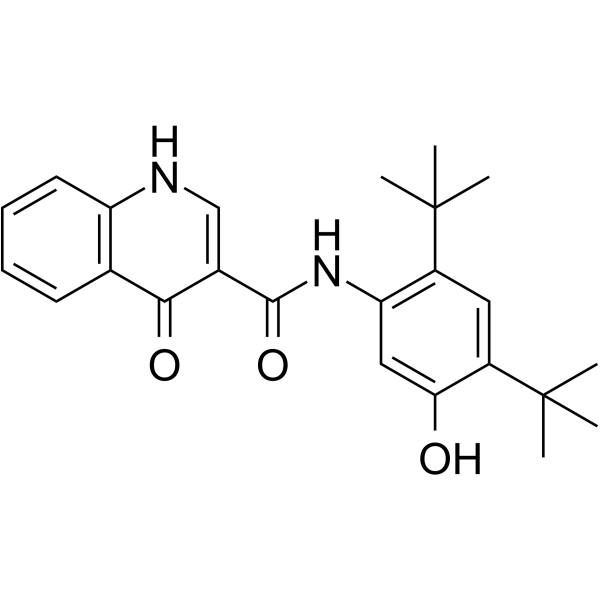
Ivacaftor (VX-770) is a potent and orally bioavailable CFTR potentiator, targeting G551D-CFTR and F508del-CFTR with EC50s of 100 nM and 25 nM, respectively.
|
-
-
- HY-15448
-
|
VX-661
|
CFTR
|
Cancer
|
|
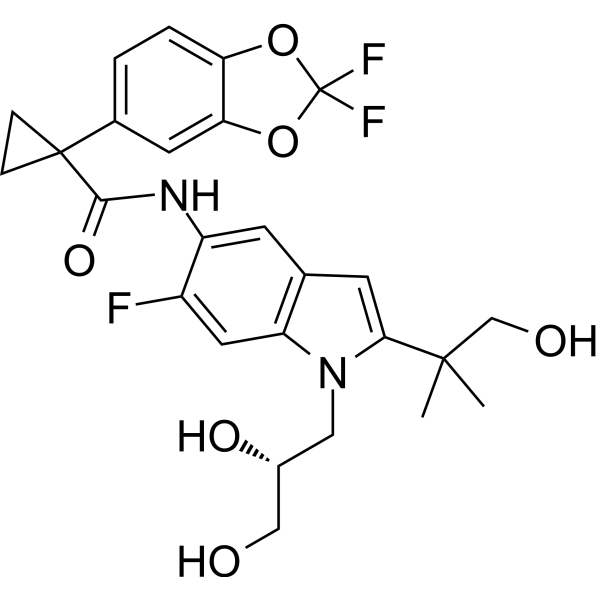
Tezacaftor (VX-661) is a F508del CFTR corrector. It helps CFTR protein reach the cell surface. However, Ivacaftor (VX-770, HY-13017), a CFTR potentiator, helps to prolong the opening time of cell surface CFTR protein channels. Tezacaftor combining with Ivacaftor, shows potent efficacy against cystic fibrosis and diseases with homozygous for the CFTR Phe508del mutation. Moreover, Elexacaftor (VX-445, HY-111772) is also a CFTR corrector. Elexacaftor-Tezacaftor-Ivacaftor aims at with cystic fibrosis (CF) with at least one Phe508del mutation, often avoids the indication for lung transplantation .
|
-
-
- HY-13667
-
|
Calcium levofolinate; CL307782
|
Antifolate
|
Cancer
|
|
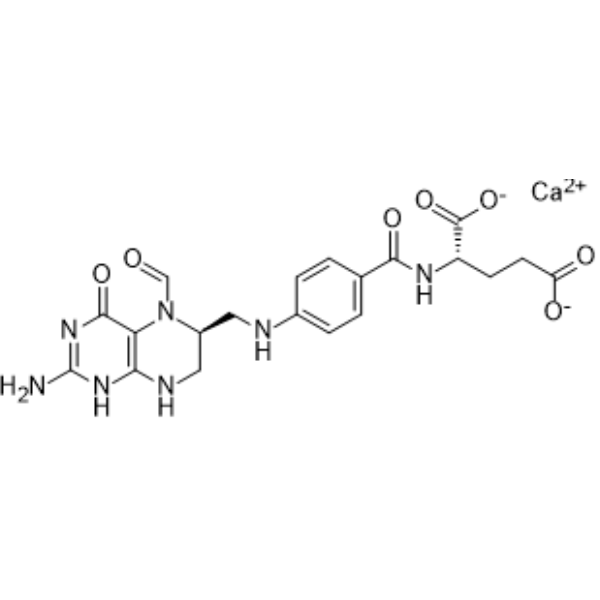
Levoleucovorin Calcium (Calcium levofolinate) is the active form of calcium Folinic acid (HY-13664) and has anti-tumor effects. Levoleucovorin Calcium is also a potentiator of the anti-cancer toxicity of 5-Fluorouracil (HY-90006) .
|
-
-
- HY-108450
-
-
-
- HY-P1649
-
SPR741
3 Publications Verification
NAB741
|
Bacterial
Antibiotic
|
Infection
|
|
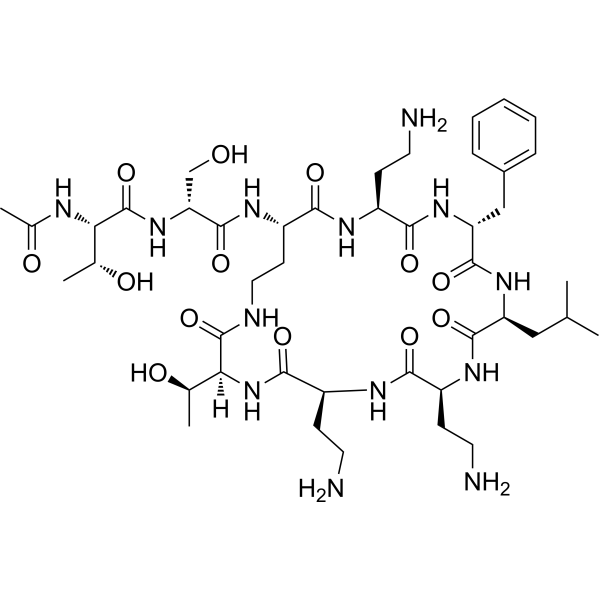
SPR741 (NAB741) is a cationic peptide derived from polymyxin B and is a potentiator molecule. SPR741 increases the permeability of the outer membrane of Gram-negative bacteria and is used to treat severe Gram-negative bacteria infections. SPR741 inhibits multidrug-resistant Gram-negative bacteria. The spectrum of activity of the antibiotic can be widened when used in combination with SPR741 .
|
-
-
- HY-111099
-
|
ABBV-974
|
CFTR
Autophagy
|
Others
|
|
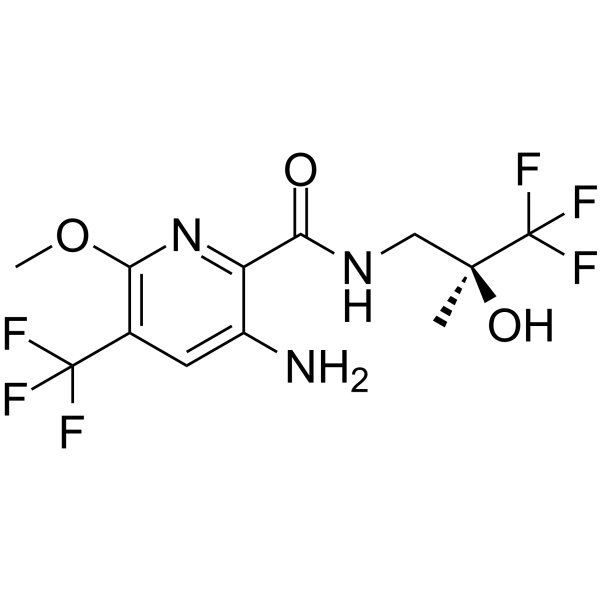
GLPG1837 is a potent and reversible CFTR potentiator, with EC50s of 3 nM and 339 nM for F508del and G551D CFTR, respectively.
|
-
-
- HY-107701
-
|
|
iGluR
|
Neurological Disease
|
|
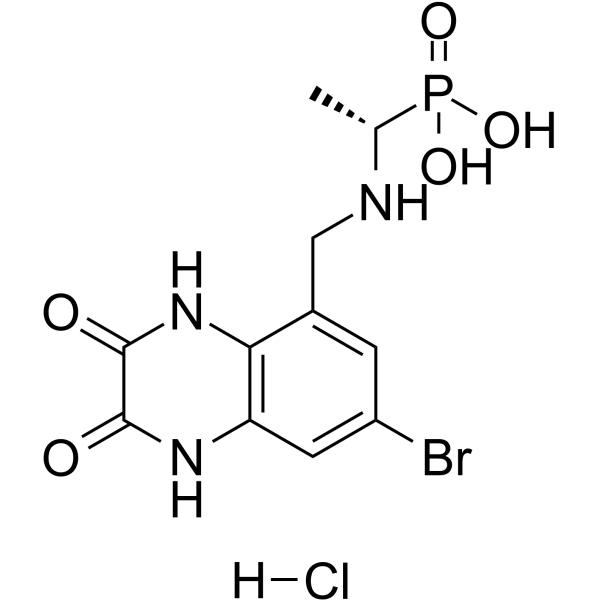
CGP 78608 hydrochloride is a highly potent and selective antagonist at the glycine-binding site of the NMDA receptor, with an IC50 of 6 nM. CGP 78608 hydrochloride acts as a potentiator of GluN1/GluN3A-mediated glycine currents, with an estimated EC50 in the low nM range (26.3 nM). Anticonvulsant activity .
|
-
-
- HY-P1649B
-
|
NAB741 acetate
|
Bacterial
Antibiotic
|
Infection
|
|
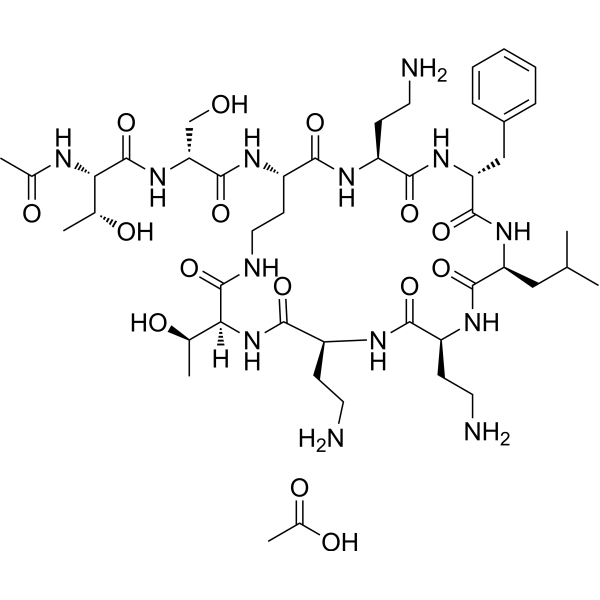
SPR741 acetate (NAB741 acetate) is a cationic peptide derived from polymyxin B and is a potentiator molecule. SPR741 acetate increases the permeability of the outer membrane of Gram-negative bacteria and is used to treat severe Gram-negative bacteria infections. SPR741 acetate inhibits multidrug-resistant Gram-negative bacteria. The spectrum of activity of the antibiotic can be widened when used in combination with SPR741 acetate .
|
-
-
- HY-10934
-
|
LY451395
|
iGluR
|
Neurological Disease
|
|
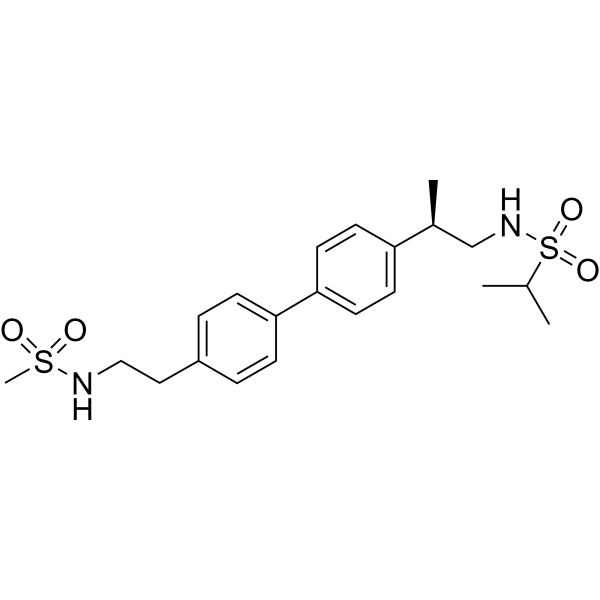
Mibampator (LY451395) is a potent and highly selective potentiator of the AMPA receptors.
|
-
-
- HY-18699
-
CIQ
2 Publications Verification
|
iGluR
|
Neurological Disease
|
|
CIQ is a subunit-selective potentiator of NMDA receptors containing the NR2C or NR2D subunit.
|
-
-
- HY-12509
-
|
|
iGluR
|
Neurological Disease
|
|
PEPA is an AMPA receptor allosteric potentiator. PEPA shows preferential action of PEPA on the flop form of AMPA receptors. PEPA is a more potent suppressor of desensitization of receptors containing GluR3 and GluR4 as opposed to those containing GluR1. PEPA has antianxiety effects .
|
-
-
- HY-171844
-
|
|
iGluR
|
Neurological Disease
Inflammation/Immunology
|
|
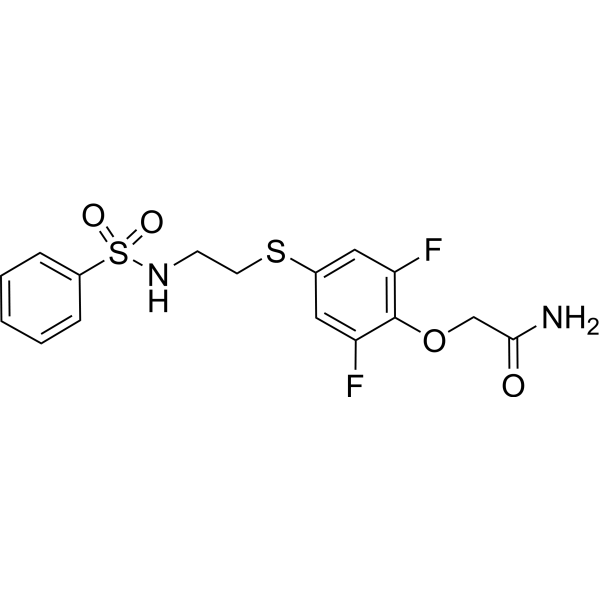
CX1739 is an orally active, blood-brain barrier permeable, low-efficacy AMPA-glutamate receptor (AMPAR) potentiator. CX1739 enhances excitatory neurotransmission by potentiating glutamate-induced excitatory currents and promoting in vivo long-term potentiation. CX1739 eliminates amphetamine-induced locomotor activity, reverses opioid-, pentobarbital- and ethanol-induced respiratory depression, and exerts pro-cognitive effects in animals. CX1739 impairs motor function recovery and increases the risk of post-injury complications. CX1739 can be used in research related to attention-deficit/hyperactivity disorder, dementia, respiratory depression and spinal cord injury .
|
-
-
- HY-169929
-
|
|
NKCC
|
Neurological Disease
|
|
KCC2 potentiators-1 (Compound 2) is a Potassium chloride cotransporter-2 (KCC2) potentiator. KCC2 potentiators-1 is promising for research of neurological disorder .
|
-
-
- HY-109177
-
|
QBW251
|
CFTR
|
Inflammation/Immunology
|
|
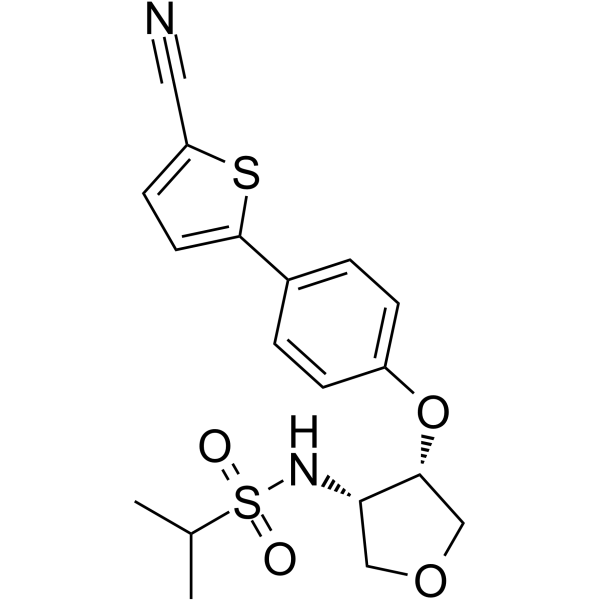
Icenticaftor (QBW251) is an orally active CFTR channel potentiator, with EC50s of 79 nM and 497 nM for F508del and G551D CFTR, respectively. Icenticaftor can be used for chronic obstructive pulmonary disease (COPD) and cystic fibrosis research .
|
-
-
- HY-123068
-
|
SQ 14551
|
Drug Derivative
|
Cardiovascular Disease
|
|
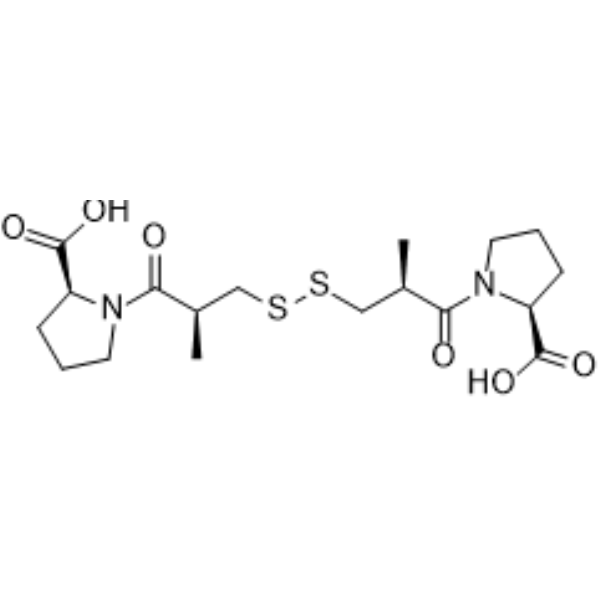
Captopril disulfide (SQ 14551) is an orally active disulfide dimer prodrug. Captopril disulfide is metabolized to Captopril and acts as a Bradykinin potentiator. Captopril disulfide enhances the vasodilatory effect of Bradykinin in anesthetized rats and the contractile response of isolated guinea pig ileum to Bradykinin. Captopril disulfide exhibits antihypertensive activity in spontaneously hypertensive rats. Captopril disulfide can be used in hypertension-related research .
|
-
-
- HY-N9517
-
|
QS 7 Api
|
Others
|
Inflammation/Immunology
Cancer
|
|
QS 7 (QS 7 Api) is a triterpene saponin found in the bark of Quillaja saponaria and immune adjuvant with immune response potentiator activity. QS 7 can be used as vaccine adjuvant for the research of antitumor and antiviral vaccine development .
|
-
-
- HY-112781
-
|
PF-04958242
|
iGluR
|
Neurological Disease
|
|
Pesampator (PF-04958242) is a potent and highly selective positive allosteric modulator of AMPA receptor (an AMPA potentiator) with an EC50 of 310 nM and a Ki of 170 nM .
|
-
-
- HY-119936
-
|
|
CFTR
Autophagy
|
Inflammation/Immunology
|
|
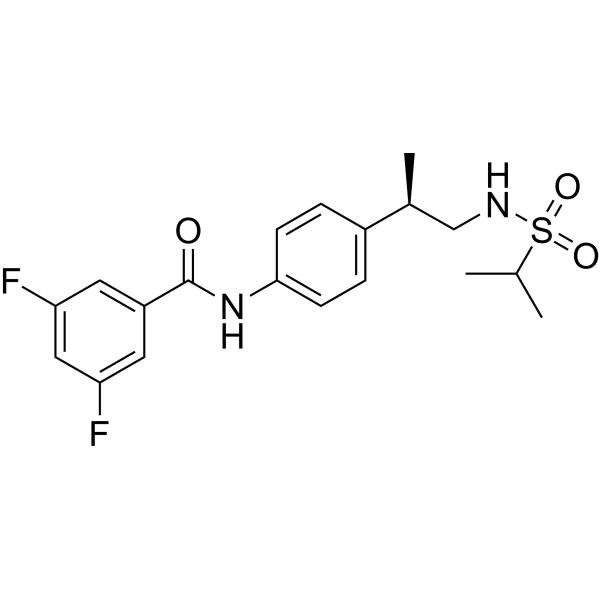
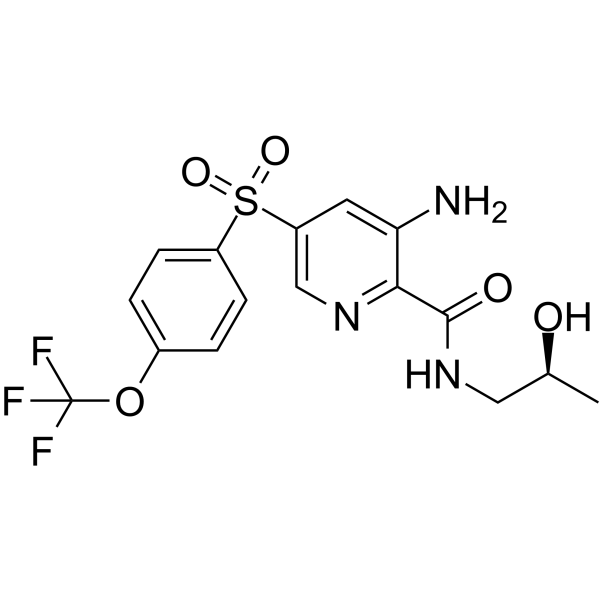
GLPG2451 is a cystic fibrosis transmembrane conductance regulator (CFTR) potentiator, which effectively potentiates low temperature rescued F508del CFTR with an EC50 of 11.1 nM .
|
-
-
- HY-122742
-
|
|
iGluR
|
Neurological Disease
|
|
HBT1 is an effective AMPA receptor AMPA-R potentiator. HBT1 specifically binds to the ligand-binding domain (LBD) of AMPAR and enhances receptor activity only when AMPA is present., HBT1 has almost no agonistic effect (i.e., reaching the optimal concentration, and then the efficacy decreases as the concentration continues to increase) compared with traditional AMPA-R potentiator, avoiding the bell-shaped reaction of brain-derived neurotrophic factor (BDNF) production in primary neurons. HBT1 can be applicable to a wider range of neurological and psychiatric diseases (such as depression, Alzheimer's disease, etc.) .
|
-
-
- HY-13017S2
-
|
VX-770-d18
|
Autophagy
CFTR
|
Endocrinology
|
|
Ivacaftor-d18 is the deuterium labeled Ivacaftor . Ivacaftor (VX-770) is a potent and orally bioavailable CFTR potentiator, targeting G551D-CFTR and F508del-CFTR with EC50s of 100 nM and 25 nM, respectively .
|
-
-
- HY-115553
-
|
|
Dopamine Receptor
|
Neurological Disease
|
|
DETQ is a selective, allosteric and orally active dopamine D1 receptor (Dopamine Receptor) potentiator. In HEK293 cells expressing the human D1 receptor, DETQ increases cAMP with an EC50 of 5.8 nM and a Kb of 26 nM. DETQ shows ~30-fold less potent at rat and mouse D1 receptors and is inactive at the human D5 receptor .
|
-
-
- HY-158991
-
|
|
CFTR
|
Inflammation/Immunology
|
|
I1421 is an activator of the cystic fibrosis transmembrane conductance regulator (CFTR) with an EC50 of 64 nM for WT CFTR currents. I1421 also allosterically activates multiple mutants causing cystic fibrosis (CF) with good in vivo potency, with an oral bioavailability of 60% in mice corresponding to a half-life of 75 min. I1421 synergizes with Elexacaftor (HY-111772) to enhance CFTR currents .
|
-
-
- HY-P3985
-
|
Bradykinin potentiating peptide B
|
Angiotensin-converting Enzyme (ACE)
|
Cardiovascular Disease
Others
|
|
Bradykinin potentiator B (Bradykinin potentiating peptide B) is venom of Agkistrodon halys blomhoffi. Bradykinin potentiator B is a potent ACE inhibitor. Bradykinin potentiator inhibits the activity of bradykinin inhibitory peptidase .
|
-
-
- HY-10935
-
|
|
iGluR
|
Neurological Disease
|
|
LY450108 is a potent AMPA receptor potentiator. LY450108 has the potential for depression and Parkinson's disease research .
|
-
-
- HY-13017S3
-
|
VX-770-d4
|
CFTR
|
Endocrinology
|
|
Ivacaftor-d4 (VX-770-d4) is the deuterium labeled-Ivacaftor (HY-13017). Ivacaftor is a potent and orally active CFTR potentiator, targeting G551D-CFTR and F508del-CFTR with EC50s of 100 nM and 25 nM, respectively .
|
-
-
- HY-117517
-
|
|
Trk Receptor
|
Cancer
|
|
NG-012, potentiator of nerve growth factor (NGF), were isolated from the culture broth of Penicillium verruculosum F-4542. NG-012 potentiates the neurite outgrowth induced by NGF in rat pheochromocytoma cell line (PC12) .
|
-
-
- HY-136939
-
|
|
CFTR
|
Metabolic Disease
Inflammation/Immunology
|
|
CFTR corrector 6 is a potent potentiator of Cystic Fibrosis Transmembrane conductance Regulator (CFTR). CFTR corrector 6 has the potential for cystic fibrosis (CF) and other CFTR associated disorders research .
|
-
-
- HY-134598A
-
|
|
Epigenetic Reader Domain
|
Cancer
|
|
653-47 hydrochloride, a potentiator, significantly potentiates the cAMP-response element binding protein (CREB) inhibitory activity of 666-15. 653-47 hydrochloride is also a very weak CREB inhibitor with IC50 of 26.3 μM .
|
-
-
- HY-177552
-
|
|
GABA Receptor
Chloride Channel
Insecticide
|
Infection
|
|
4''-Oxoavermectin B1a is a potentiator targeting GABA (γ-aminobutyric acid) and glutamate-gated chloride channels with insecticidal and acaricidal activities. 4''-Oxoavermectin B1a is promising for research of agricultural pests .
|
-
-
- HY-107508
-
|
|
mGluR
|
Neurological Disease
|
|
VU-29 is a positive allosteric modulator of metabotropic glutamate 5 (mGlu5) receptor (EC50=9 nM and Ki=244 nM for rmGluR5). VU-29 is selective for mGluR5 relative to other mGluR subtypes (EC50: rmGluR1/rmGluR2=557 nM/1.5 μM; hmGluR4=154 nM) .
|
-
-
- HY-14563
-
|
|
mAChR
|
Neurological Disease
|
|
VU10010 is a potent, highly selective and allosteric M4 mAChR potentiator with an EC50 of 400 nM. VU10010 binds to an allosteric site on M4 mAChR and increases affinity for acetylcholine and coupling to G proteins. VU10010 increases carbachol-induced depression of transmission at excitatory but not inhibitory synapses in the hippocampus .
|
-
-
- HY-P3991
-
-
-
- HY-103369
-
|
|
CFTR
|
Endocrinology
|
|
PG01 is a potent CFTR Cl - channel potentiator. PG01 can correct gating defects of CFTR mutants, is effective on b>E193K, G970R and G551D (CFTR mutants) with Kd values of 0.22 μM, 0.45 μM and 1.94 μM, respectively. PG01 is also effective on ΔF508 (Ka of 0.3 μM). PG01 increases ΔF508-CFTR Cl - current after adding Forskolin .
|
-
-
- HY-13017B
-
|
VX-770 hydrate
|
CFTR
Autophagy
|
Endocrinology
|
|
Ivacaftor hydrate (VX-770 hydrate) is an orally bioavailable CFTR potentiator, used for cystic fibrosis treatment.
|
-
-
- HY-145126
-
|
|
CFTR
|
Inflammation/Immunology
|
|
CP-628006, a small molecule CFTR potentiator, restores ATP-dependent channel gating to the cystic fibrosis mutant G551D-CFTR.
|
-
-
- HY-15442
-
|
BINA
|
mGluR
|
Neurological Disease
|
|
Biphenylindanone A (BINA) is a selective human mGluR2 (hmGluR2) potentiator for the treatment of many neurological disorders .
|
-
-
- HY-161839
-
|
|
Aldose Reductase
|
Cancer
|
|
AKR1C2/3-IN-1 (compound 3a) is a potent AKR1C2 and AKR1C3 inhibitor with IC50 values of 90, 50 nM, respectively. AKR1C2/3-IN-1 can be used as a radiation sensitizer and as a potentiator of chemotherapy cytotoxicity .
|
-
-
- HY-161753
-
|
|
CFTR
|
Inflammation/Immunology
|
|
CFTR potentiator 1 (I1421) is a potent CFTR potentiator with an EC50 value of 64 nM. CFTR potentiator 1 allosterically activates a wide range of CF-causing mutants, such as ΔF508 and G551D CFTR .
|
-
-
- HY-P3129
-
|
|
Ras
|
Inflammation/Immunology
Cancer
|
|
KRAS G13D peptide, 25 mer, a KRAS activating oncogene mutation peptide, is an immune potentiator extracted from patent WO2018144775A1. KRAS G13D peptide, 25 mer can be used to prepare KRAS vaccine .
|
-
-
- HY-147367
-
-
-
- HY-107683
-
|
|
nAChR
|
Neurological Disease
|
|
LY-2087101 is an allosteric potentiator of α7 nAChRs. LY-2087101 causes potentiation of agonist-evoked α7 responses by binding within the nAChR transmembrane region .
|
-
-
- HY-116152S
-
-
-
- HY-147352
-
|
|
iGluR
|
Neurological Disease
|
|
NMDA receptor potentiator-1 (Compound 1368) is a subunit selective NMDA receptor potentiator with IC50s of 4 μM and 5 μM against NR2C and NR2D expression, respectively .
|
-
-
- HY-120811
-
|
|
iGluR
|
Neurological Disease
|
|
PF-04701475 is a potent AMPA receptor potentiator with an EC50 of 123 nM. PF-04701475 can be used for the study of neurological disorders .
|
-
-
- HY-149861
-
|
|
Bacterial
|
Infection
|
|
Mip-IN-1(S,S-28i)is a new rapamycin-derived macrophage infectivity potentiator (Mip) inhibitor. Mip-IN-1 displays strong anti-enzymatic activity against the Mip proteins of Neisseria meningitidis and Neisseria gonorrhoeae and substantially improved the ability of macrophages to kill the bacteria .
|
-
-
- HY-P1649A
-
|
NAB741 TFA
|
Bacterial
Antibiotic
|
Infection
|
|
SPR741 TFA (NAB741 TFA) is a cationic peptide derived from polymyxin B and is a potentiator molecule. SPR741 TFA increases the permeability of the outer membrane of Gram-negative bacteria and is used to treat severe Gram-negative bacteria infections. SPR741 TFA inhibits multidrug-resistant Gram-negative bacteria. The spectrum of activity of the antibiotic can be widened when used in combination with SPR741 TFA .
|
-
-
- HY-13017A
-
|
VX-770 benzenesulfonate
|
CFTR
Autophagy
|
Endocrinology
|
|
Ivacaftor benzenesulfonate is an orally bioavailable CFTR potentiator, used for cystic fibrosis treatment.
|
-
-
- HY-169193
-
-
-
- HY-139715
-
|
|
NF-κB
|
Cancer
|
|
IMD-ferulic is a covalently linked NF-κB modulator that improves the adjuvanticity of small molecule immune potentiators.
|
-
-
- HY-139717
-
|
|
NF-κB
|
Cancer
|
|
IMD-biphenylA is a novel imidazoquinolinone-NF-κB immunomodulator dimer that improves the adjuvanticity of small molecule immune potentiators.
|
-
- HY-123371
-
|
|
DNA Alkylator/Crosslinker
|
Cancer
|
|
Ro 07-1902 is an effective antitumor potentiator that can significantly enhance the antitumor effect of CCNU (HY-13669) against KHT sarcoma at low doses .
|
-
- HY-139718
-
|
|
NF-κB
|
Inflammation/Immunology
|
|
IMD-biphenylB is a potent imidazoquinolinone-NF-κB immunomodulator dimer that inhibits tumor proliferation while induces low systemic inflammation and reduces adjuvant toxicity.
|
-
- HY-134598
-
|
|
Epigenetic Reader Domain
|
Cancer
|
|
653-47, a potentiator, significantly potentiates the cAMP-response element binding protein (CREB) inhibitory activity of 666-15. 653-47 is also a very weak CREB inhibitor with IC50 of 26.3 μM .
|
-
- HY-143891
-
|
|
TGF-β Receptor
|
Others
|
|
Chromenone 1 is a potent osteogenic bone morphogenetic protein (BMP) potentiator. Chromenone 1 exhibits a unique mode of action as it induces a pronounced, kinase-independent, negative TGFβ feedback that enhances nuclear BMP-Smad signaling outputs .
|
-
- HY-116152S2
-
-
- HY-182025
-
|
|
Endogenous Metabolite
|
Neurological Disease
|
|
NAD+ potentiator-1 (Compound R-4b) is a NAD potentiator. NAD+ potentiator-1 increases NAD levels in primary cortical neurons. NAD+ potentiator-1 is used for the research of neurodegenerative diseases .
|
-
- HY-13017R
-
|
VX-770 (Standard)
|
CFTR
Autophagy
Reference Standards
|
Endocrinology
|
|
Ivacaftor (Standard) is the analytical standard of Ivacaftor. This product is intended for research and analytical applications. Ivacaftor (VX-770) is a potent and orally bioavailable CFTR potentiator, targeting G551D-CFTR and F508del-CFTR with EC50s of 100 nM and 25 nM, respectively.
|
-
- HY-107701A
-
|
|
iGluR
|
Neurological Disease
|
|
CGP 78608 is a highly potent and selective antagonist at the glycine-binding site of the NMDA receptor, with an IC50 of 6 nM. CGP 78608 acts as a potentiator of GluN1/GluN3A-mediated glycine currents, with an estimated EC50 in the low nM range (26.3 nM). CGP 78608 has anticonvulsant activities .
|
-
- HY-113319R
-
|
|
Reference Standards
Drug Intermediate
|
Cancer
|
|
β-D-Fructose, (Standard) is the analytical standard of β-D-Fructose (HY-113319R). This product is intended for research and analytical applications. β-D-Fructose is a monosaccharide. Derivatives synthesized using β-D-Fructose as the sugar backbone exhibit potent and selective antiproliferative activity against breast cancer MCF-7 cells .
|
-
- HY-168158
-
-
- HY-168157
-
-
- HY-150650
-
|
|
Aldose Reductase
|
Cancer
|
|
S07-2001 is a potent and selective aldo-keto reductase 1C3 (AKR1C3) inhibitor with an IC50 value of 2.08 μM. S07-2001 enhances the activity of Doxorubicin against cancer cells. S07-2001 has potential as a chemotherapeutic potentiator for cancer agent resistance .
|
-
- HY-13017S4
-
|
VX-770-13C6
|
Isotope-Labeled Compounds
CFTR
Autophagy
|
Endocrinology
|
|
Ivacaftor- 13C6 (VX-770- 13C6) is 13C labeled Ivacaftor. Ivacaftor (VX-770) is a potent and orally bioavailable CFTR potentiator, targeting G551D-CFTR and F508del-CFTR with EC50s of 100 nM and 25 nM, respectively.
|
-
- HY-16654
-
|
|
mGluR
|
Neurological Disease
|
|
ML254 is a potent mGlu5 potentiator, with EC50 and pEC50 of 9.3 nM and 8.03 nM for rat mGlu5, respectively. ML254 can be used for researching schizophrenia . ML254 is a click chemistry reagent, it contains an Alkyne group and can undergo copper-catalyzed azide-alkyne cycloaddition (CuAAc) with molecules containing Azide groups.
|
-
- HY-120523
-
|
|
iGluR
|
Neurological Disease
|
|
UBP646 is a potent GluN1/GluN2D receptors potentiator, and also potentiates the other three subtypes, GluN1/GluN2A, GluN1/GluN2B, and GluN1/GluN2C receptors .
|
-
- HY-150649
-
|
|
17β-HSD
|
Cancer
|
|
S07-2005 racemic is a potent and selective aldo-keto reductase 1C3 (AKR1C3) inhibitor with an IC50 value of 0.13 μM and 0.75 μM for AKR1C3 and AKR1C4, respectively. S07-2005 racemic has potential as a chemotherapeutic potentiator for cancer agent resistance .
|
-
- HY-182058
-
|
|
Beta-lactamase
|
Infection
|
|
ATM potentiator-1 (compound 9) is a β-lactamase inhibitor and efflux pump inhibitor, with an IC50 of 1.6 μM against NDM-1, IC50 values of 12.5 μM and 5.4 μM against OXA-10, an IC50 of 5.0 μM against VIM-2, an IC50 of 26.7 μM against KPC-2, and an IC50 of 3.4 μM against OXA-48. ATM potentiator-1 inhibits the efflux pump activity of *Pseudomonas aeruginosa* and exerts a synergistic inhibitory effect when combined with CCCP. ATM potentiators-1 can be used for the research of carbapenem-resistant *Pseudomonas aeruginosa* (CRPA) infections .
|
-
- HY-15448R
-
|
VX-661 (Standard)
|
CFTR
Reference Standards
|
Cancer
|
|
Tezacaftor (Standard) is the analytical standard of Tezacaftor. This product is intended for research and analytical applications. Tezacaftor (VX-661) is a F508del CFTR corrector. It helps CFTR protein reach the cell surface. However, Ivacaftor (VX-770, HY-13017), a CFTR potentiator, helps to prolong the opening time of cell surface CFTR protein channels. Tezacaftor combining with Ivacaftor, shows potent efficacy against cystic fibrosis and diseases with homozygous for the CFTR Phe508del mutation. Moreover, Elexacaftor (VX-445, HY-111772) is also a CFTR corrector. Elexacaftor-Tezacaftor-Ivacaftor aims at with cystic fibrosis (CF) with at least one Phe508del mutation, often avoids the indication for lung transplantation .
|
-
- HY-15448S1
-
|
VX-661-d6
|
Isotope-Labeled Compounds
CFTR
|
Cancer
|
|
Tezacaftor-d6 (VX-661-d6) is deuterium labeled Tezacaftor. Tezacaftor (VX-661) is a F508del CFTR corrector. It helps CFTR protein reach the cell surface. However, Ivacaftor (VX-770, HY-13017), a CFTR potentiator, helps to prolong the opening time of cell surface CFTR protein channels. Tezacaftor combining with Ivacaftor, shows potent efficacy against cystic fibrosis and diseases with homozygous for the CFTR Phe508del mutation. Moreover, Elexacaftor (VX-445, HY-111772) is also a CFTR corrector. Elexacaftor-Tezacaftor-Ivacaftor aims at with cystic fibrosis (CF) with at least one Phe508del mutation, often avoids the indication for lung transplantation .
|
-
- HY-N13170
-
-
- HY-107508R
-
|
|
Reference Standards
mGluR
|
Neurological Disease
|
|
VU-29 (Standard) is the analytical standard of VU-29 (HY-107508). This product is intended for research and analytical applications. VU-29 is a positive allosteric modulator of metabotropic glutamate 5 (mGlu5) receptor (EC50=9 nM and Ki=244 nM for rmGluR5). VU-29 is selective for mGluR5 relative to other mGluR subtypes (EC50: rmGluR1/rmGluR2=557 nM/1.5 μM; hmGluR4=154 nM) .
|
-
- HY-183702
-
|
|
Antibiotic
Bacterial
|
Infection
|
|
BDM91531 is a AcrB inhibitor with an EC50 of 0.16 μM against E. coli. BDM91531 acts as an antibiotic potentiator to restore the sensitivity of wild-type Escherichia coli to multiple AcrB substrate antibiotics. BDM91531 exhibits antibacterial activity. BDM91531 can be used in the research of bacterial infections .
|
-
- HY-204388
-
|
|
iGluR
Calcium Channel
|
Neurological Disease
|
|
TAK-137 is an AMPA receptor potentiator with weak agonistic effect. TAK-137 binds to the AMPA receptor ligand binding domain in a glutamate-dependent manner. TAK-137 potentiates AMPA-induced currents and Ca 2+ influx. TAK-137 can be used for the research of neurological disease .
|
-
- HY-183556
-
|
|
Bacterial
|
Infection
|
|
NSC156565 is a Pycsar immune system inhibitor and phage infection potentiator. NSC156565 blocks PycTM cytotoxic effects via prevention of 3′,5′-cCMP-mediated activation or inhibition of activated effector membrane-perturbing activity. NSC156565 enables bacteriophage Bas34 to overcome Pycsar-mediated resistance, facilitating productive phage infection and replication .
|
-
- HY-181956
-
|
|
Opioid Receptor
|
Neurological Disease
|
|
MPAM-15 is a blood-brain barrier-penetrant pan-orthosteric allosteric modulator (PAM) of opioid receptors, with ≥16-fold selectivity for μOR over δOR and κOR. MPAM-15 acts as an anti-nociceptive potentiator and analgesic, and its activity is observed in mouse models via both intracerebroventricular and intraperitoneal administration. MPAM-15 is applicable for pain-related research .
|
-
- HY-123778
-
|
|
mAChR
|
Neurological Disease
|
|
VU6007678 (compound 18g) is a central nervous system-penetrant muscarinic acetylcholine receptor(mAChR) potentiator. VU6007678 potentiates acetylcholine-mediated signaling at human M1, M3, M5 and rat M1, M3, M4, M5 muscarinic acetylcholine receptors. VU6007678 is applicable to research related to Alzheimer's disease, schizophrenia, and ischemic stroke .
|
-
- HY-P11720
-
|
|
Beta-lactamase
Bacterial
|
Infection
|
|
M104 peptide is an OXA-48 carbapenemase inhibitor and antibiotic potentiator. M104 peptide effectively blocks the binding and active site cavity of OXA-48 . M104 peptide restores Meropenem (HY-13678)’s antibacterial activity against OXA-48-producing Klebsiella pneumoniae. M104 peptide can be used for the research of Carbapenem-resistant Klebsiella pneumoniae infection .
|
-
- HY-126258
-
|
|
Bacterial
DNA/RNA Synthesis
|
Infection
|
|
IMP-1700 is a potent DNA damage potentiator and antibacterial agent. IMP-1700 inhibits the bacterial SOS response to DNA damage. IMP-1700 potently sensitizes MRSA to Ciprofloxacin (HY-B0356) with an EC50 of 5.9 nM. IMP-1700 inhibits the growth of E. coli K-12 BW25113, S. aureus SH1000 and MRSA USA300 JE2 .
|
-
- HY-N15435
-
|
|
Bacterial
|
Infection
|
|
Conimine is a steroidal alkaloid, antibacterial agent and potentiator. Conimine is isolated from the seeds of Holarrhena antidysenteriaca Wall.ex A.DC. Conimine exhibits intrinsic antibacterial activity against methicillin-sensitive Staphylococcus aureus and methicillin-resistant Staphylococcus aureus. When combined with Penicillin, Conimine shows synergistic antibacterial effects against methicillin-resistant Staphylococcus aureus; when combined with Vancomycin (HY-B0671), it exerts synergistic antibacterial effects against both methicillin-sensitive and methicillin-resistant Staphylococcus aureus .
|
-
- HY-183530
-
|
|
p38 MAPK
PKC
Bacterial
|
Infection
Inflammation/Immunology
|
|
p38 MAPK-IN-11 is a CSBP (p38 MAPK) kinase inhibitor with IC50 values of 0.15 μM (binding activity) and 0.21 μM (inhibitory activity). p38 MAPK-IN-11 shows weak inhibitory activity against PKCα kinase, with an IC50 of 7.6 μM. p38 MAPK-IN-11 inhibits the production of IL-1. p38 MAPK-IN-11 also acts as a β-lactam antibiotic potentiator, but has no antibacterial activity itself .
|
-
- HY-124057
-
|
|
nAChR
|
Neurological Disease
|
|
RO5126946 is a selective, orally active α7 nAChR allosteric potentiator with EC50 values of 0.06 μM (hα7 nAChR) and 770 nM (α7 nAChR), and it crosses the blood-brain barrier. RO5126946 enhances synaptic transmission and positively modulates GABA-ergic responses by increasing peak current, slowing current decay, and elevating the frequency of spontaneous inhibitory postsynaptic currents, without affecting the recovery of receptors from the desensitized state. RO5126946 not only enhances subthreshold nicotine effects and improves associative learning, but also does not interfere with the original pro-cognitive effects of nicotine. RO5126946 can be used to study cognitive impairments associated with diseases such as Alzheimer's disease and schizophrenia .
|
-
- HY-N17845
-
|
|
Microtubule/Tubulin
|
Cancer
|
|
3,3'-Dihydroxy-2,6-bis(4-hydroxybenzyl)-5-methoxybibenzyl, a stilbenoid compound, is a tubulin inhibitor with an IC50 of 10 μM. 3,3'-Dihydroxy-2,6-bis(4-hydroxybenzyl)-5-methoxybibenzyl inhibits tubulin polymerization. 3,3'-Dihydroxy-2,6-bis(4-hydroxybenzyl)-5-methoxybibenzyl functions as a potentiator that potentiates SN-38 (HY-13704) cytotoxicity in BCRP-transduced cancer cells. 3,3'-Dihydroxy-2,6-bis(4-hydroxybenzyl)-5-methoxybibenzyl can be used for the study of breast cancer .
|
-
| Cat. No. |
Product Name |
Type |
-
- HY-113319R
-
|
|
Biochemical Assay Reagents
|
|
β-D-Fructose, (Standard) is the analytical standard of β-D-Fructose (HY-113319R). This product is intended for research and analytical applications. β-D-Fructose is a monosaccharide. Derivatives synthesized using β-D-Fructose as the sugar backbone exhibit potent and selective antiproliferative activity against breast cancer MCF-7 cells .
|
| Cat. No. |
Product Name |
Target |
Research Area |
-
- HY-P1649
-
SPR741
3 Publications Verification
NAB741
|
Bacterial
Antibiotic
|
Infection
|
|
SPR741 (NAB741) is a cationic peptide derived from polymyxin B and is a potentiator molecule. SPR741 increases the permeability of the outer membrane of Gram-negative bacteria and is used to treat severe Gram-negative bacteria infections. SPR741 inhibits multidrug-resistant Gram-negative bacteria. The spectrum of activity of the antibiotic can be widened when used in combination with SPR741 .
|
-
- HY-P1649B
-
|
NAB741 acetate
|
Bacterial
Antibiotic
|
Infection
|
|
SPR741 acetate (NAB741 acetate) is a cationic peptide derived from polymyxin B and is a potentiator molecule. SPR741 acetate increases the permeability of the outer membrane of Gram-negative bacteria and is used to treat severe Gram-negative bacteria infections. SPR741 acetate inhibits multidrug-resistant Gram-negative bacteria. The spectrum of activity of the antibiotic can be widened when used in combination with SPR741 acetate .
|
-
- HY-P3985
-
|
Bradykinin potentiating peptide B
|
Angiotensin-converting Enzyme (ACE)
|
Cardiovascular Disease
Others
|
|
Bradykinin potentiator B (Bradykinin potentiating peptide B) is venom of Agkistrodon halys blomhoffi. Bradykinin potentiator B is a potent ACE inhibitor. Bradykinin potentiator inhibits the activity of bradykinin inhibitory peptidase .
|
-
- HY-P3991
-
-
- HY-P3129
-
|
|
Ras
|
Inflammation/Immunology
Cancer
|
|
KRAS G13D peptide, 25 mer, a KRAS activating oncogene mutation peptide, is an immune potentiator extracted from patent WO2018144775A1. KRAS G13D peptide, 25 mer can be used to prepare KRAS vaccine .
|
-
- HY-P1649A
-
|
NAB741 TFA
|
Bacterial
Antibiotic
|
Infection
|
|
SPR741 TFA (NAB741 TFA) is a cationic peptide derived from polymyxin B and is a potentiator molecule. SPR741 TFA increases the permeability of the outer membrane of Gram-negative bacteria and is used to treat severe Gram-negative bacteria infections. SPR741 TFA inhibits multidrug-resistant Gram-negative bacteria. The spectrum of activity of the antibiotic can be widened when used in combination with SPR741 TFA .
|
-
- HY-P11720
-
|
|
Beta-lactamase
Bacterial
|
Infection
|
|
M104 peptide is an OXA-48 carbapenemase inhibitor and antibiotic potentiator. M104 peptide effectively blocks the binding and active site cavity of OXA-48 . M104 peptide restores Meropenem (HY-13678)’s antibacterial activity against OXA-48-producing Klebsiella pneumoniae. M104 peptide can be used for the research of Carbapenem-resistant Klebsiella pneumoniae infection .
|
| Cat. No. |
Product Name |
Category |
Target |
Chemical Structure |
-
- HY-13667
-
-
-
- HY-108450
-
-
-
- HY-N9517
-
-
-
- HY-117517
-
-
-
- HY-113319R
-
-
-
- HY-N13170
-
-
-
- HY-N15435
-
|
|
Apocynaceae
Structural Classification
Alkaloids
Other Alkaloids
Plants
Holarrhena antidysenterica Roth
Source Classification
|
Bacterial
|
|
Conimine is a steroidal alkaloid, antibacterial agent and potentiator. Conimine is isolated from the seeds of Holarrhena antidysenteriaca Wall.ex A.DC. Conimine exhibits intrinsic antibacterial activity against methicillin-sensitive Staphylococcus aureus and methicillin-resistant Staphylococcus aureus. When combined with Penicillin, Conimine shows synergistic antibacterial effects against methicillin-resistant Staphylococcus aureus; when combined with Vancomycin (HY-B0671), it exerts synergistic antibacterial effects against both methicillin-sensitive and methicillin-resistant Staphylococcus aureus .
|
-
-
- HY-N17845
-
|
|
Bletilla striata (Thunb. ex Murray) Rchb. f.
Structural Classification
Simple Phenylpropanols
Orchidaceae
Phenylpropanoids
Plants
Source Classification
|
Microtubule/Tubulin
|
|
3,3'-Dihydroxy-2,6-bis(4-hydroxybenzyl)-5-methoxybibenzyl, a stilbenoid compound, is a tubulin inhibitor with an IC50 of 10 μM. 3,3'-Dihydroxy-2,6-bis(4-hydroxybenzyl)-5-methoxybibenzyl inhibits tubulin polymerization. 3,3'-Dihydroxy-2,6-bis(4-hydroxybenzyl)-5-methoxybibenzyl functions as a potentiator that potentiates SN-38 (HY-13704) cytotoxicity in BCRP-transduced cancer cells. 3,3'-Dihydroxy-2,6-bis(4-hydroxybenzyl)-5-methoxybibenzyl can be used for the study of breast cancer .
|
-
| Cat. No. |
Product Name |
Chemical Structure |
-
- HY-13017S2
-
|
|
|
Ivacaftor-d18 is the deuterium labeled Ivacaftor . Ivacaftor (VX-770) is a potent and orally bioavailable CFTR potentiator, targeting G551D-CFTR and F508del-CFTR with EC50s of 100 nM and 25 nM, respectively .
|
-
-
- HY-13017S3
-
|
|
|
Ivacaftor-d4 (VX-770-d4) is the deuterium labeled-Ivacaftor (HY-13017). Ivacaftor is a potent and orally active CFTR potentiator, targeting G551D-CFTR and F508del-CFTR with EC50s of 100 nM and 25 nM, respectively .
|
-
-
- HY-116152S
-
|
|
|
Cipepofol-d6 (Ciprofol-d6; HSK3486-d6) is deuterium labeled Cipepofol (HY-116152). Cipepofol (HSK3486), a psychomotor stabilizing agent, is a gamma-aminobutyric acid (GABA) receptor potentiator.
|
-
-
- HY-116152S2
-
|
|
|
Cipepofol-d6-2 (Ciprofol-d6-2; HSK3486-d6-2) is deuterium labeled Cipepofol (HY-116152). Cipepofol (HSK3486), a psychomotor stabilizing agent, is a gamma-aminobutyric acid (GABA) receptor potentiator.
|
-
-
- HY-13017S4
-
|
|
|
Ivacaftor- 13C6 (VX-770- 13C6) is 13C labeled Ivacaftor. Ivacaftor (VX-770) is a potent and orally bioavailable CFTR potentiator, targeting G551D-CFTR and F508del-CFTR with EC50s of 100 nM and 25 nM, respectively.
|
-
-
- HY-15448S1
-
|
|
|
Tezacaftor-d6 (VX-661-d6) is deuterium labeled Tezacaftor. Tezacaftor (VX-661) is a F508del CFTR corrector. It helps CFTR protein reach the cell surface. However, Ivacaftor (VX-770, HY-13017), a CFTR potentiator, helps to prolong the opening time of cell surface CFTR protein channels. Tezacaftor combining with Ivacaftor, shows potent efficacy against cystic fibrosis and diseases with homozygous for the CFTR Phe508del mutation. Moreover, Elexacaftor (VX-445, HY-111772) is also a CFTR corrector. Elexacaftor-Tezacaftor-Ivacaftor aims at with cystic fibrosis (CF) with at least one Phe508del mutation, often avoids the indication for lung transplantation .
|
-
Your information is safe with us. * Required Fields.
Inquiry Information
- Product Name:
- Cat. No.:
- Quantity:
- MCE Japan Authorized Agent:

